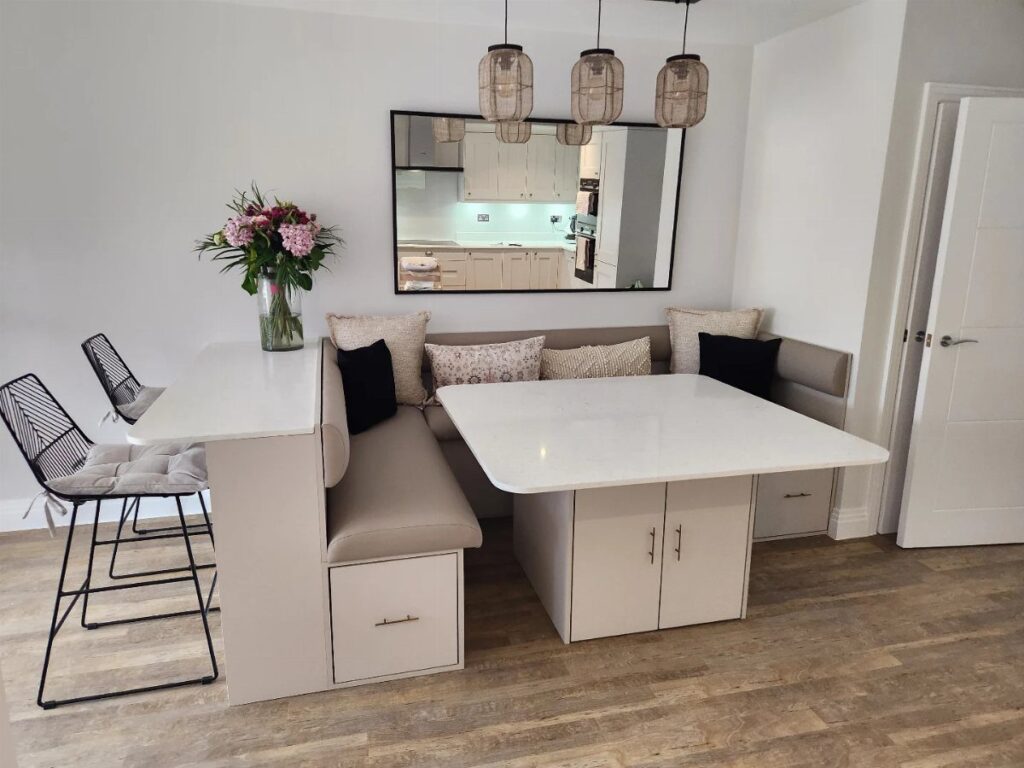
The ideas here run from a mirror on one wall and a few dollars of textiles to built-in seating and a wallpapered accent wall.
Which one suits you depends on how much floor you can spare once a chair slides back, which the post puts at 24–36 inches or so.
Tape the table’s footprint on the floor with painter’s tape and see what the room allows before you buy anything.
1. Hang Mirrors
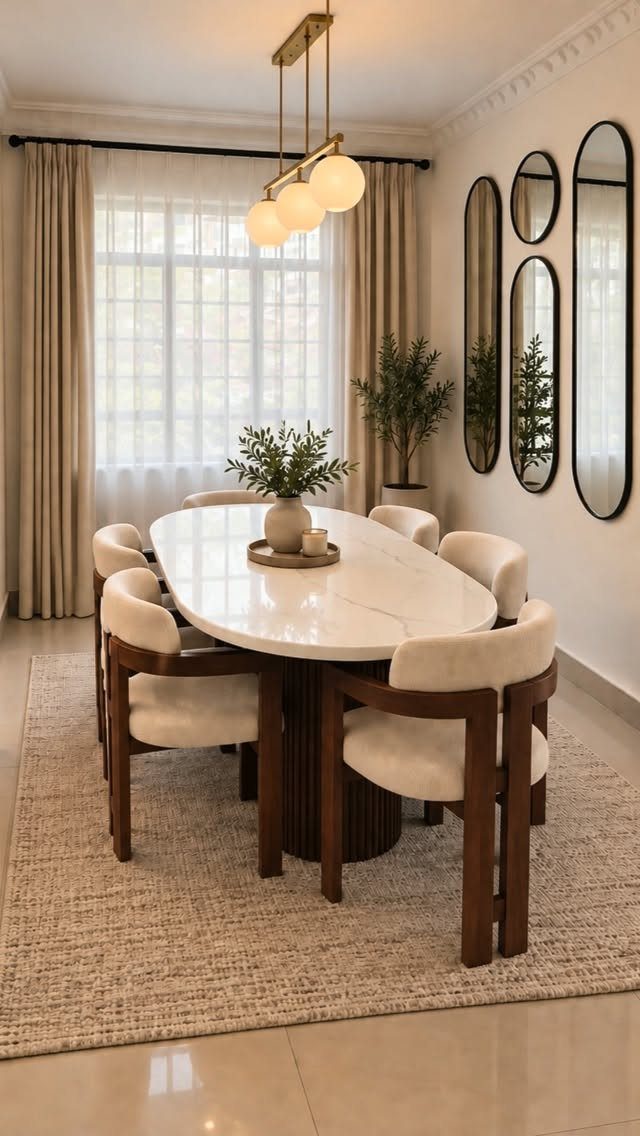
Oval mirrors suit an oval table because their curves repeat its shape, so the wall feels like part of the setup instead of an afterthought.
Hang them in a loose cluster at slightly different heights, centered over the table rather than the wall.
A mirror also bounces light around a small room. Three or four of the same size is easier to hang than a mix, and it keeps a tight space calm.
2. Built-In Seating
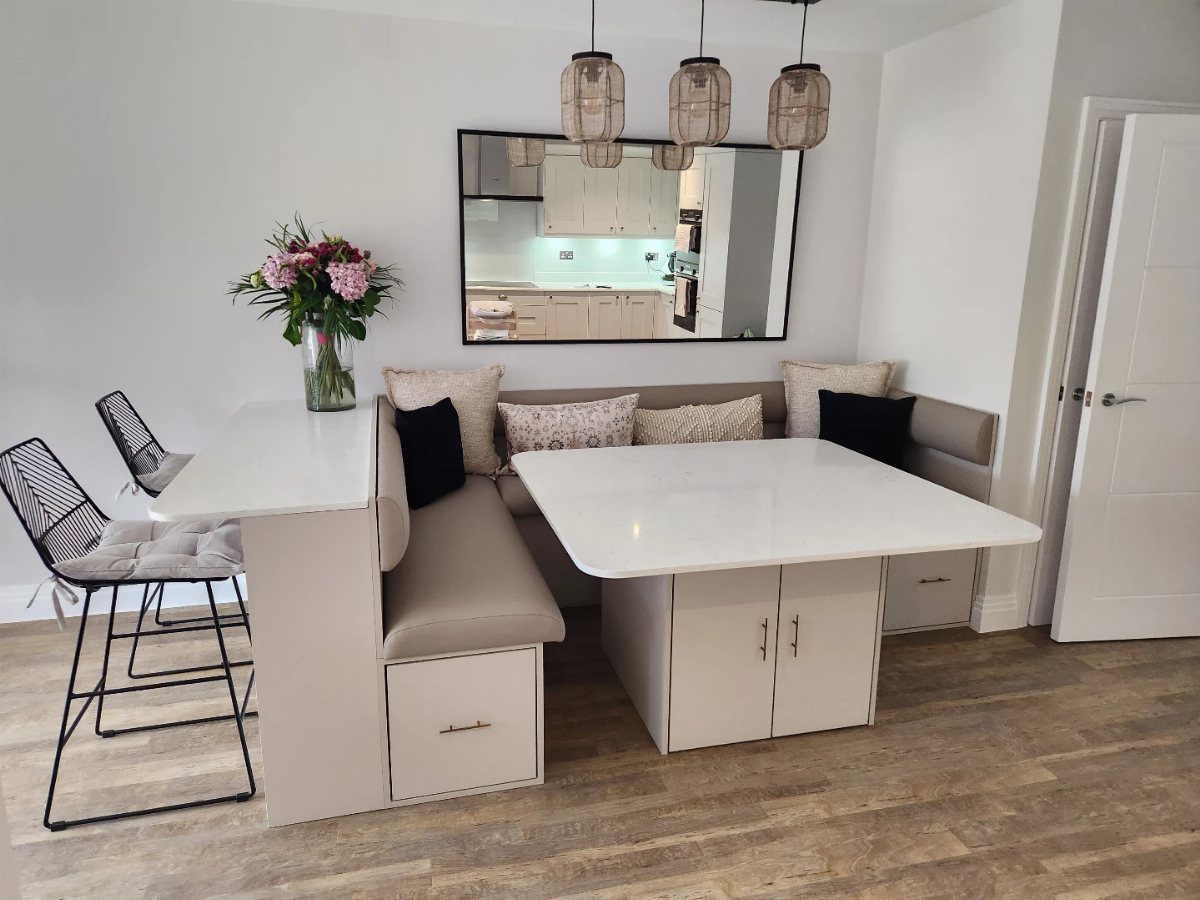
Built-in seating along 2 walls tucks the table into a corner, which frees the floor that chairs would otherwise need to pull out into.
An L-shaped bench in a neutral beige also reads as part of the room instead of as furniture.
Add a mirror above it to open up the corner. Storage under the seat is worth asking for if you build or buy one.
Stools can fill the open side of the table, which saves you from buying a second bench.
3. Colorful Seating
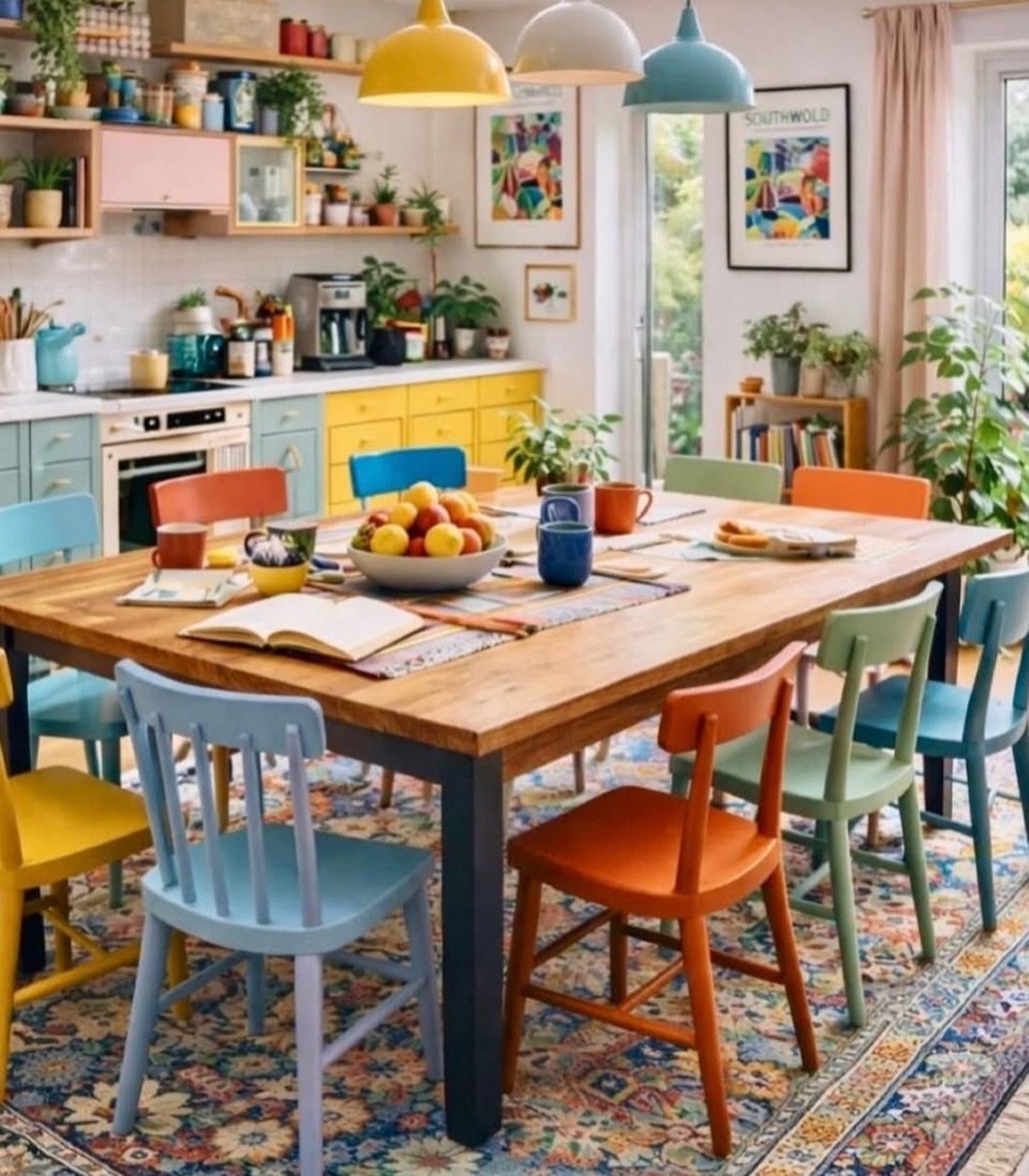
Mismatched chairs in different colors give a plain wooden table a personality that a matching set rarely manages. Pick one shared trait so the group holds together: similar seat height, or a repeated tone.
Secondhand chairs keep the cost low, and a coat of paint can pull odd finds into one palette. Stick to a small handful of colors, or the table starts to feel busy.
4. Round Table
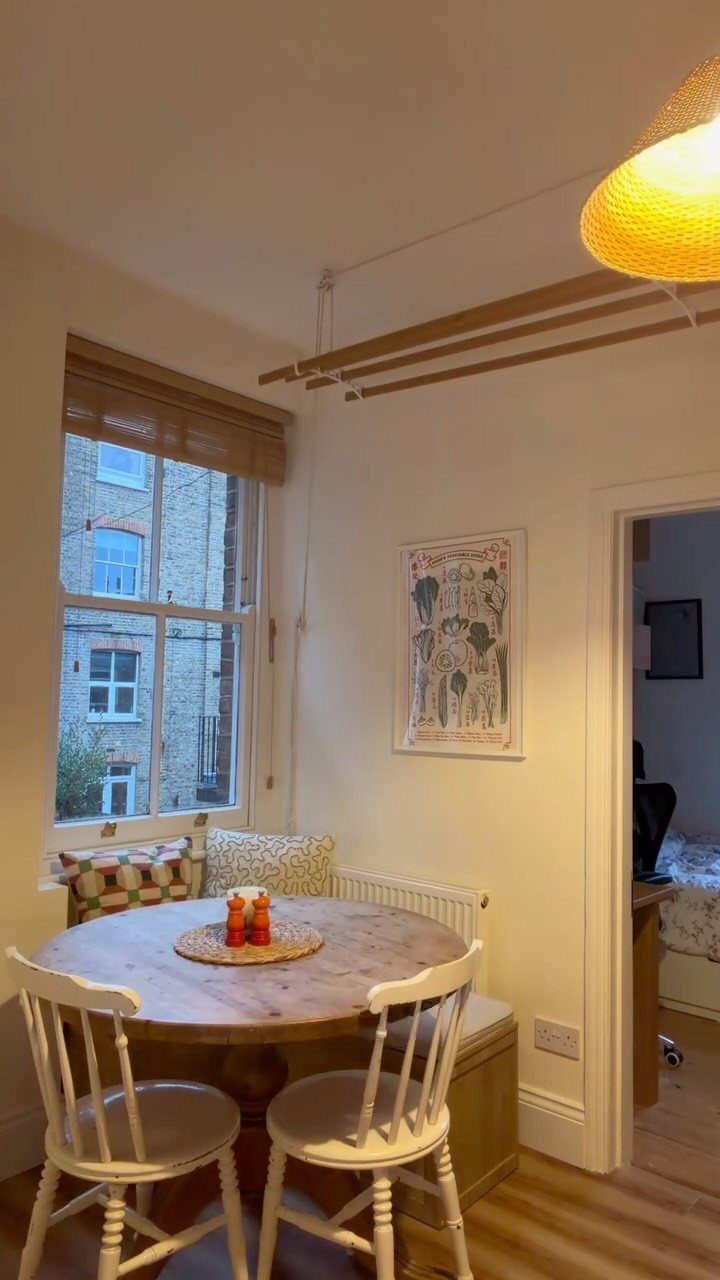
A round table has no corners to bump, so people can slide past it in a narrow nook, and everyone sits at an equal distance from the others.
Pair 2 chairs with a bench and the table takes up less floor.
5. Furniture Against Walls
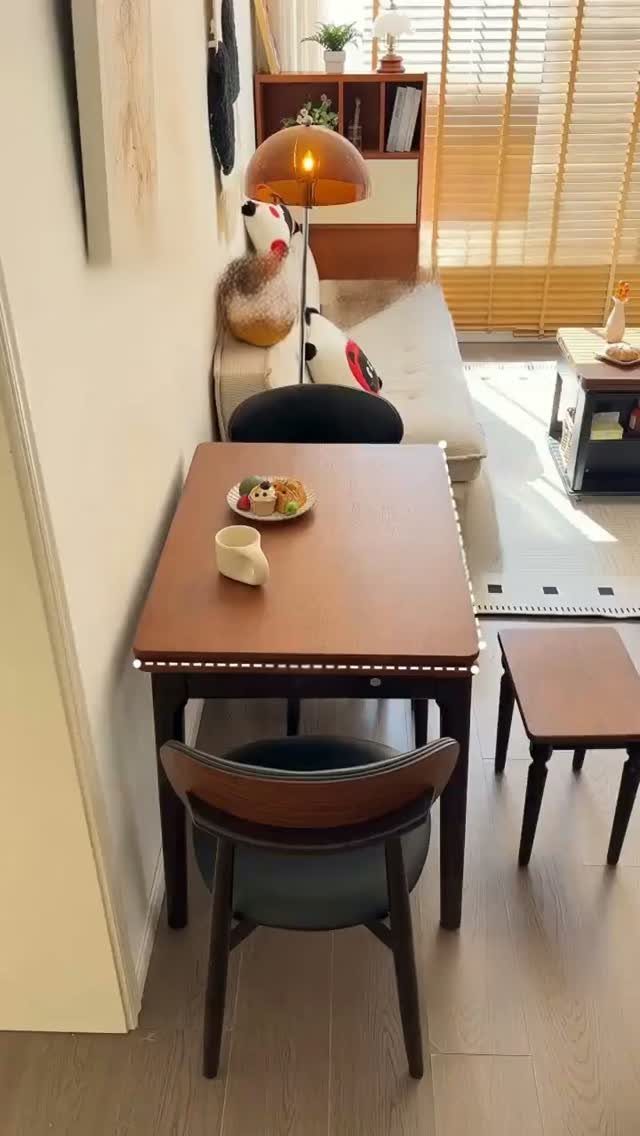
Pushing the table against a wall hands back the floor space a centered table would take, which matters in a room that also holds a sofa.
Keep the decor low and flat on top, such as a single small dish, so nothing crowds the wall.
Seating is the cost: the wall side loses its chairs, so tuck a bench or a pair of stools underneath and pull them out when guests come.
6. Statement Lighting
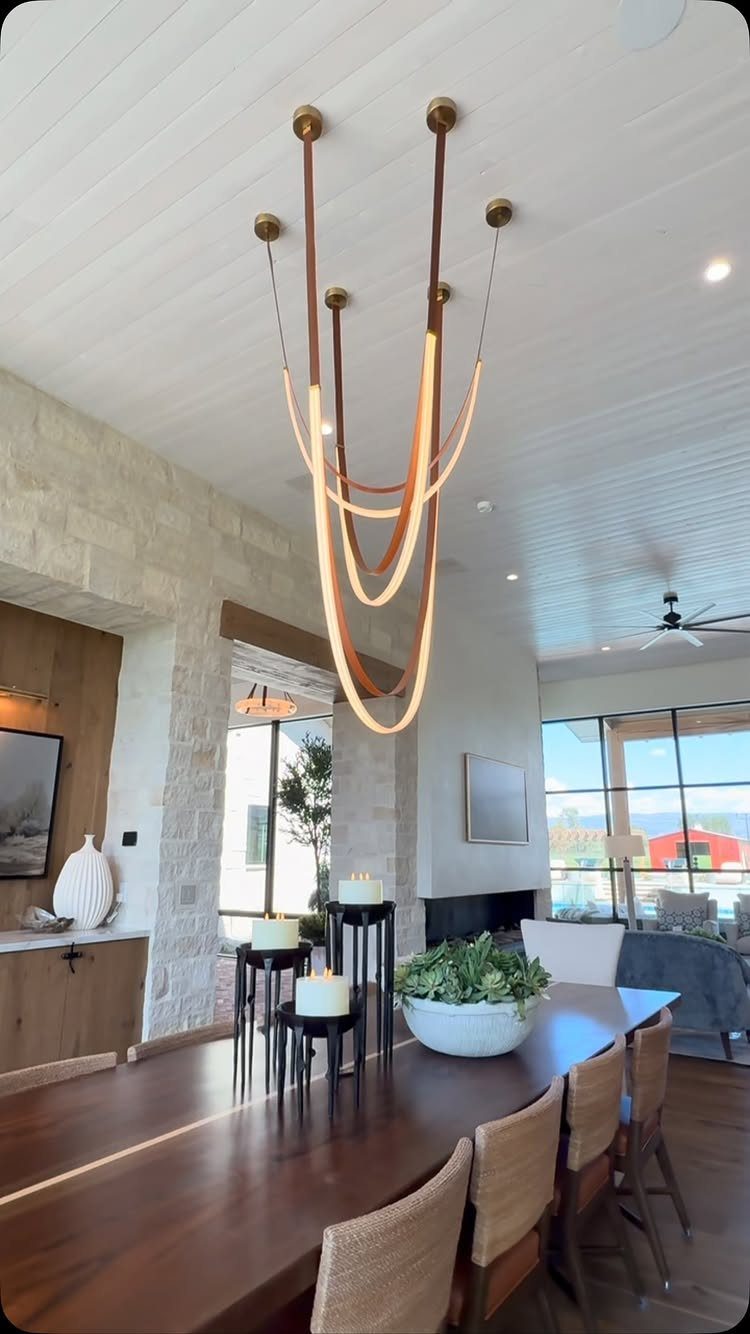
A single sculptural pendant does the decorating for a whole dining room, which is why it suits a small space with little else on the walls. Gold finishes catch light and add warmth over a wooden table.
Hang it low enough to feel connected to the table but high enough to see across it. A rule of thumb is 30–36 inches above the tabletop.
Choose one bold fixture rather than several small ones, which tend to look cluttered.
7. Use a Kitchen Hutch
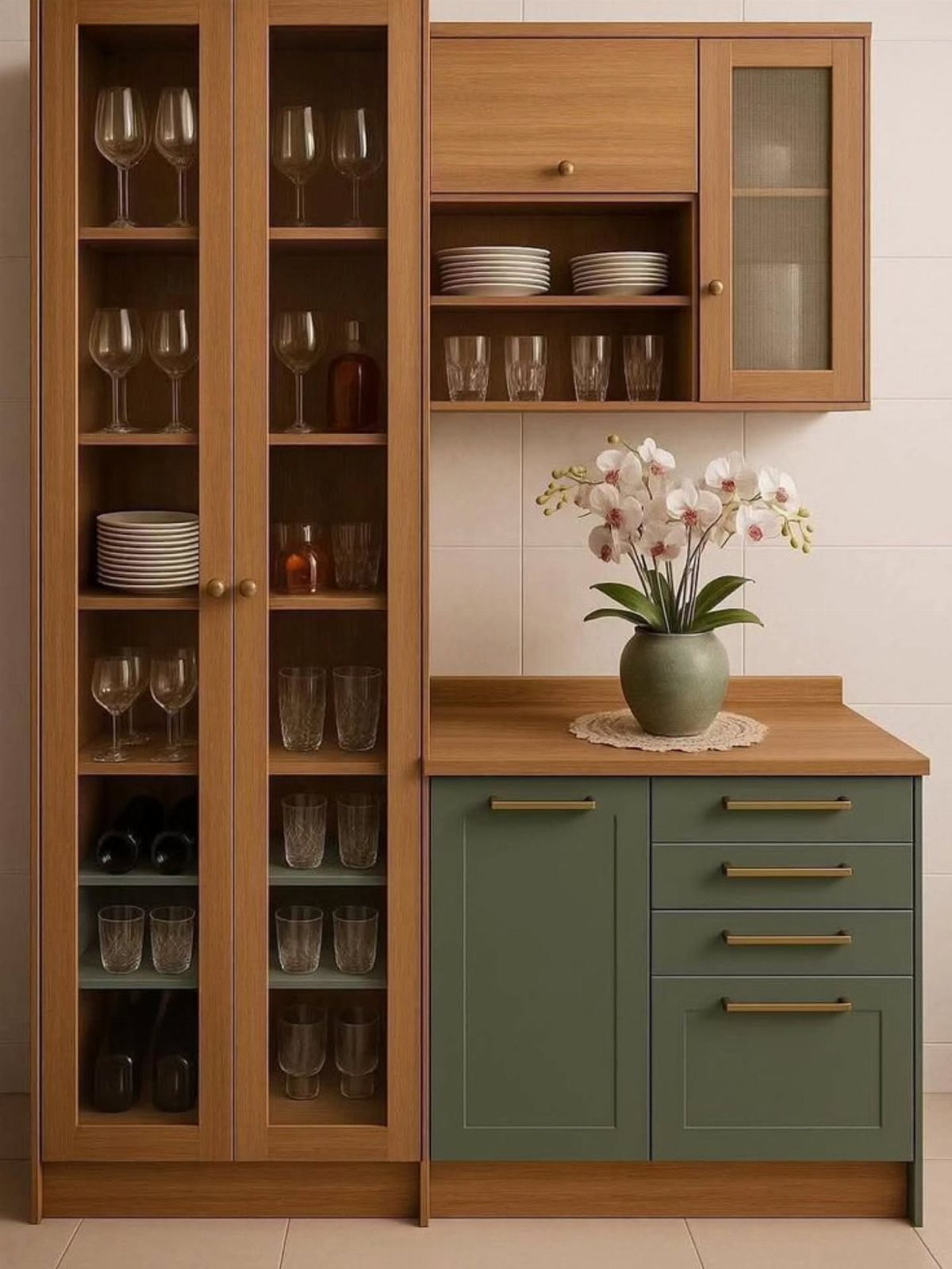
A hutch gives a small dining room a place to keep glassware and plates without taking a wall of shelves.
Glass doors keep dust off the good dishes while still letting them show, and the top becomes a spot for one vase of flowers.
A green base like this one adds color without painting a wall. Secondhand hutches are often the cheapest route, and paint is an easy weekend fix if the finish is tired.
Keep the top to one or two items so the piece stays calm.
8. Get Textural
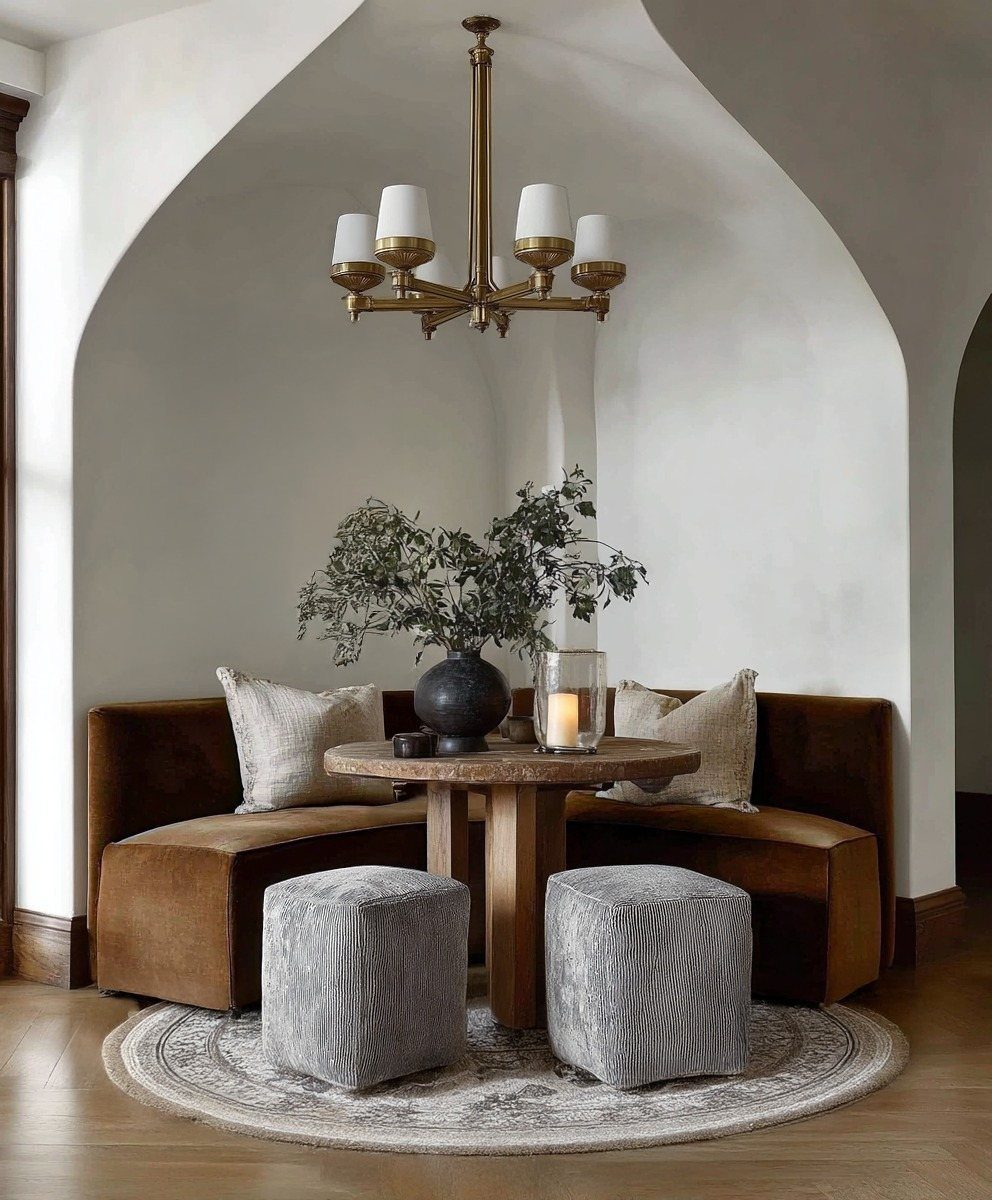
Texture can carry a room that has almost no color. Velvet on a banquette, a grain-heavy wooden table, nubby fabric ottomans and a round rug each feel different underfoot and to the touch, so a brown-and-grey palette never turns flat.
Stick to 2 or 3 tones and vary the surfaces instead. I’d put the softest material on the seating, since that is where people actually touch it.
Ottomans beat extra chairs in a tight space because they tuck fully under the table.
9. Floating Shelves
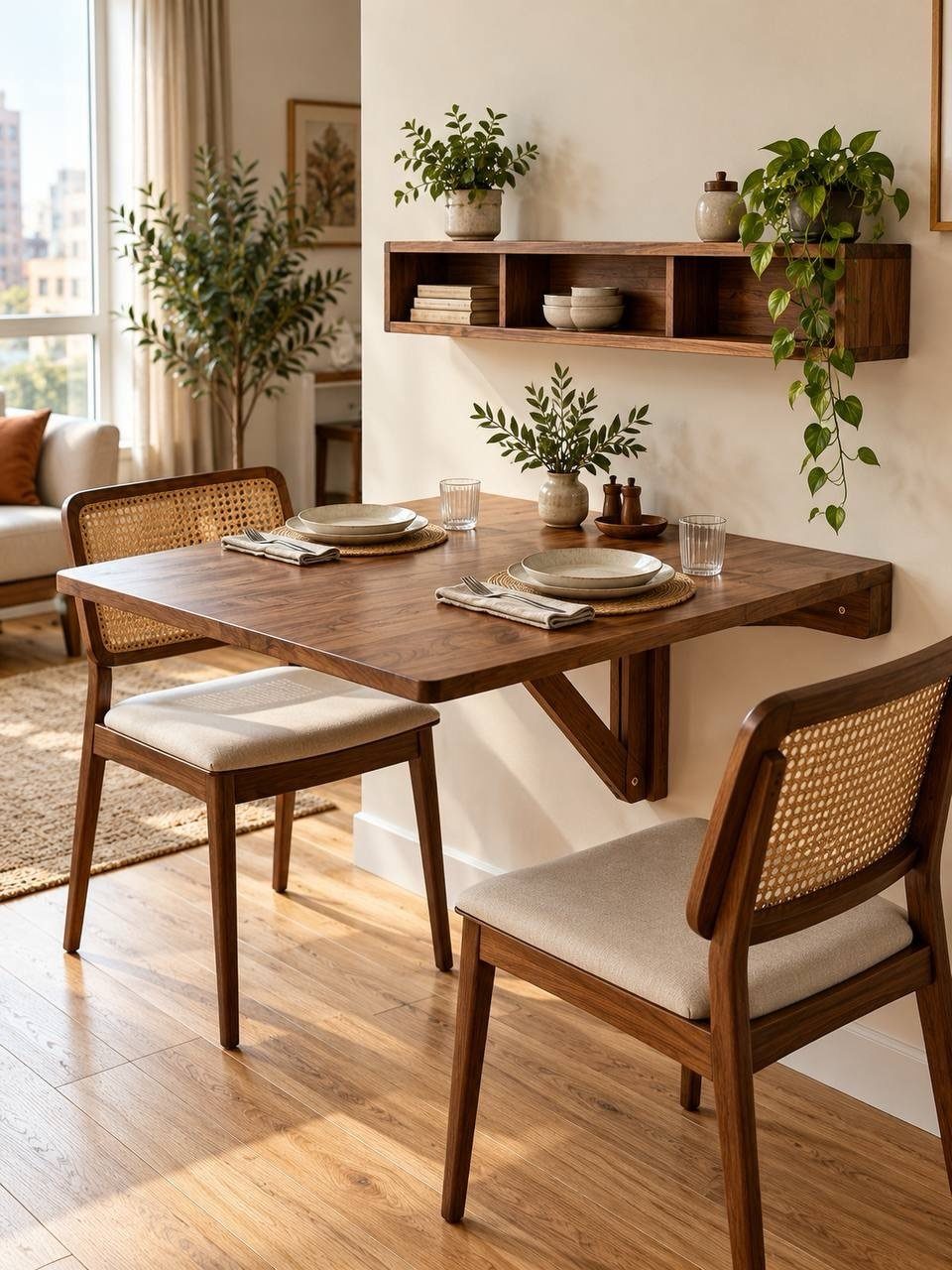
A single floating shelf above the dining table gives you display and storage without a bulky cabinet. Daily dishes stay within reach on the shelf, and plants add green at eye level.
Mount it into studs or use heavy-duty anchors, because plates and potted plants add up in weight. Keep the shelf shallow so nobody bumps their head when standing from the table.
Lining up the shelf’s length with the table looks tidy.
10. Accent Wall with Wallpaper
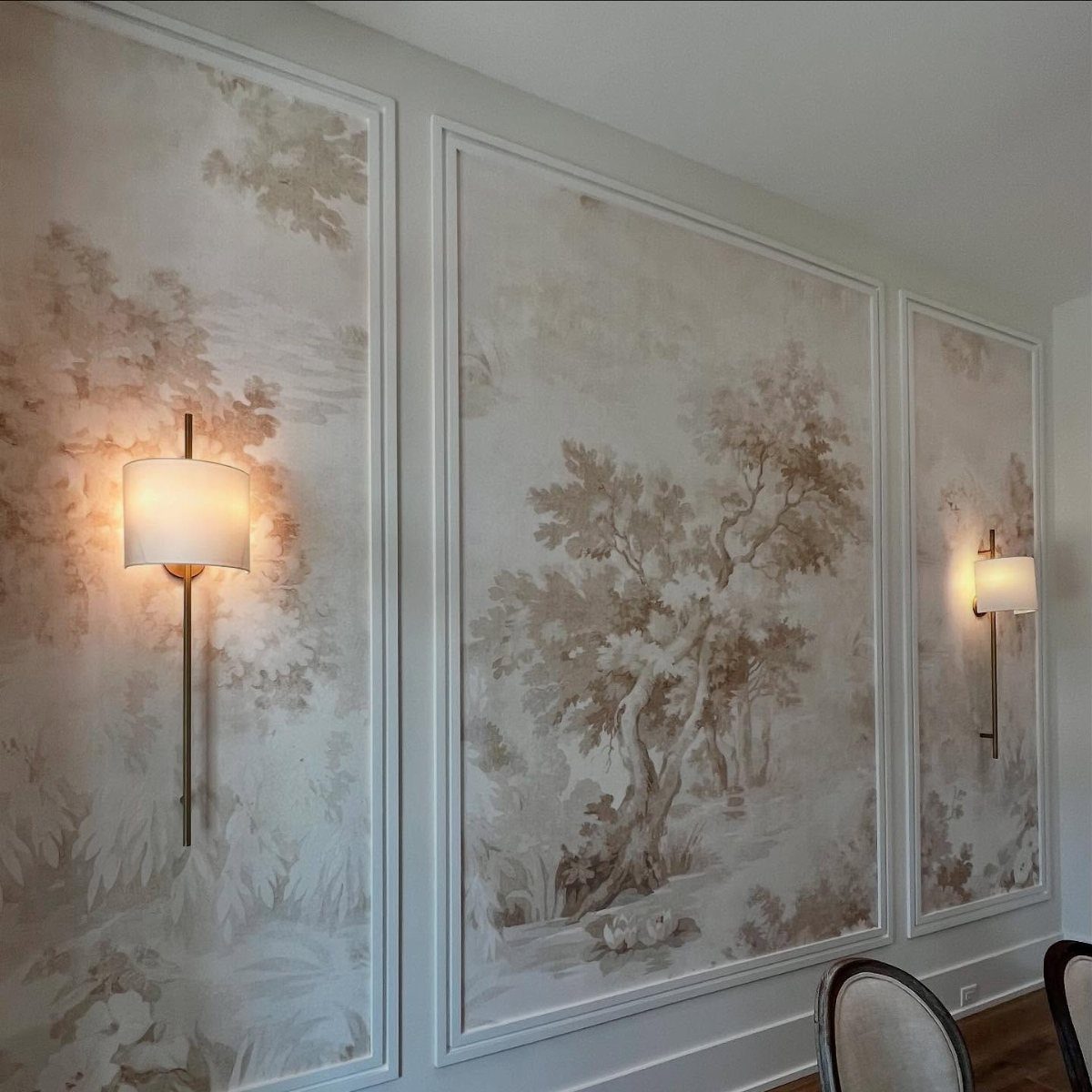
Wallpaper on one wall gives a compact dining area character without the commitment of papering all four.
Scenic panels framed like art are a smart variation: you get a landscape on the wall, and the panels are easier to hang and to take down.
Renters should look at peel-and-stick versions. Flanking the wall with 2 sconces, as here, gives a warm glow and frees the table from needing a lamp.
Pick the wall facing the table, the one you see from your seat, so the pattern gets looked at instead of leaned against.
11. Art and Decor
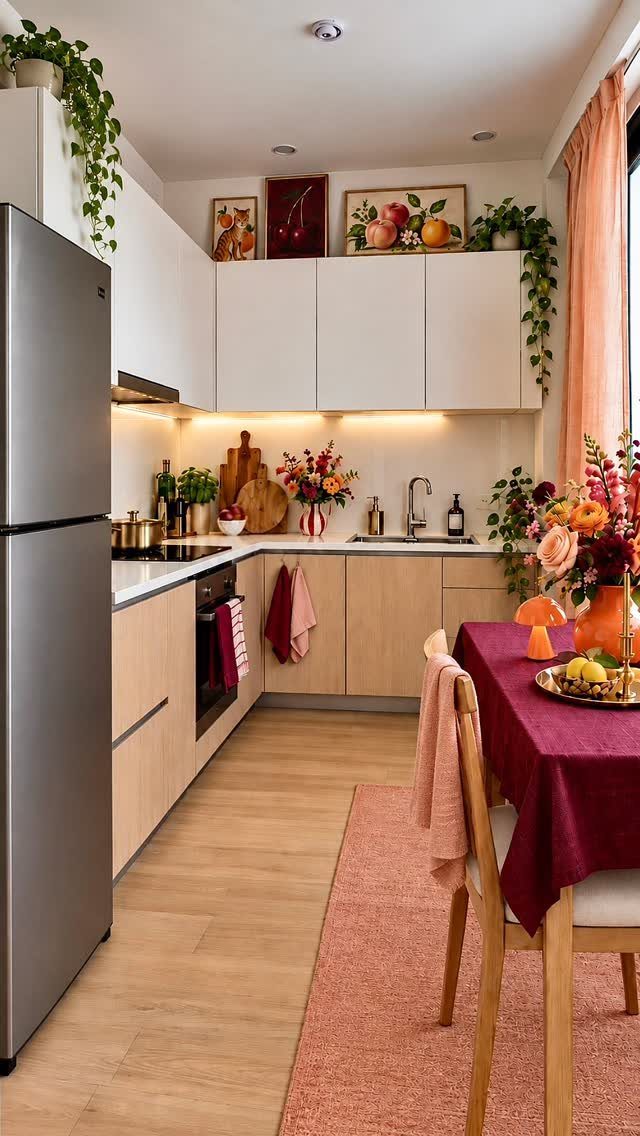
Art does not need wall space if you lean it along the top of your cabinets.
The maker of this setup used 3 vintage-inspired paintings there, including a still life of peaches and oranges in a wooden frame, which makes use of the dead space above the cabinets.
Leaning frames needs no nails, so it suits renters. Pull colors from the room, like the red tablecloth and flowers here, so the art feels chosen.
Fresh flowers on the table finish it for just a few dollars.
12. Mix Patterns in Textiles
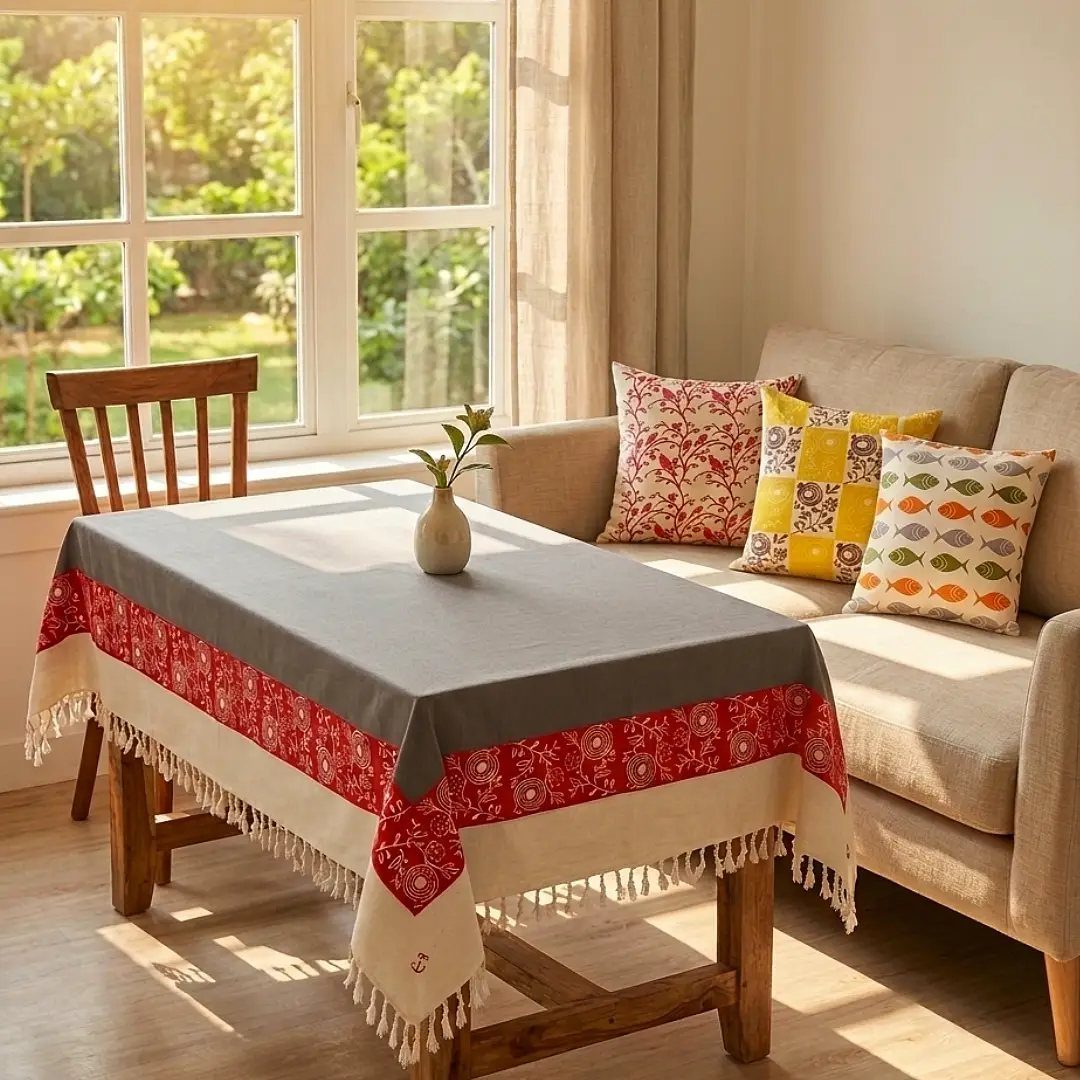
Patterns mix well when they share a color. Mixed prints work when the tones repeat, so pick one or two colors, like grey and red, and carry them through the tablecloth, pillows, and chair cushions even if the patterns differ.
Vary the scale: one large print, one medium, one small.
Matching every scale looks accidental. Pillows are the cheapest place to practice, since swapping a cover costs little and takes a minute.
Start with the tablecloth as your anchor, then pick pillows that borrow its colors. If a mix starts feeling loud, pull one pattern out.
13. Dining Set Near Windows
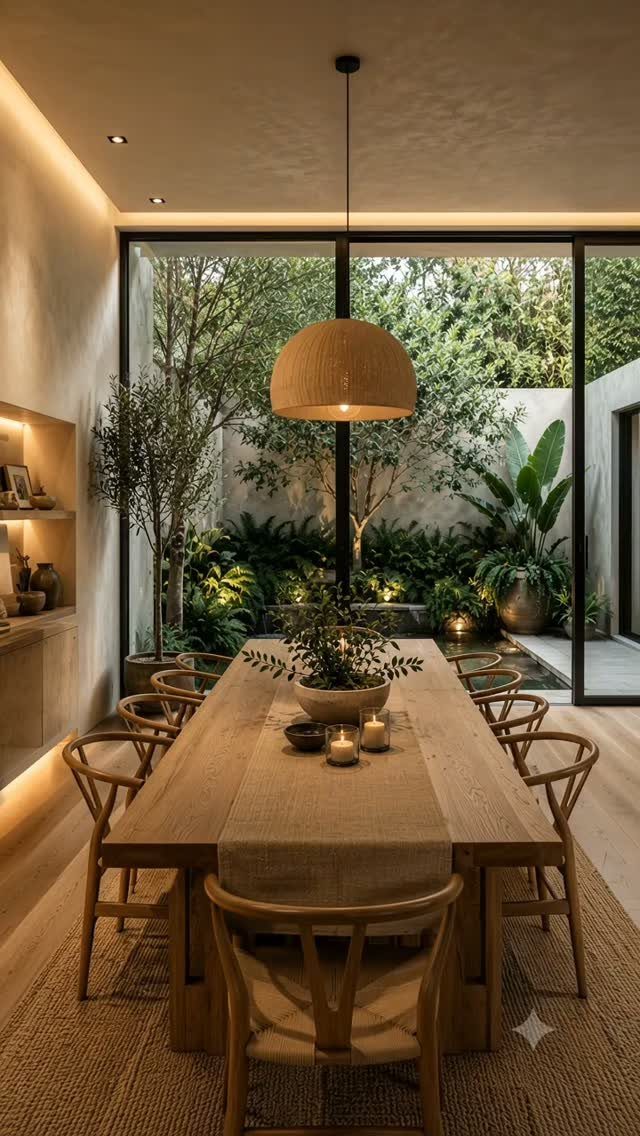
A table beside a large window turns the view into the decor, so the walls need very little else in a room this size. Daylight makes a wooden table and its chairs look warmer at breakfast than any lamp can.
Keep the window clear. Short curtains or none at all let the green outside act as the artwork.
A woven pendant overhead softens the glass and covers you after dark.
“A small dining room can feel larger by enveloping it all in one color or even tenting the space,” says New Orleans–based designer Chad Graci. “Don’t forget: Mirrors add depth and dimension.”
14. Gallery of Decorative Plates
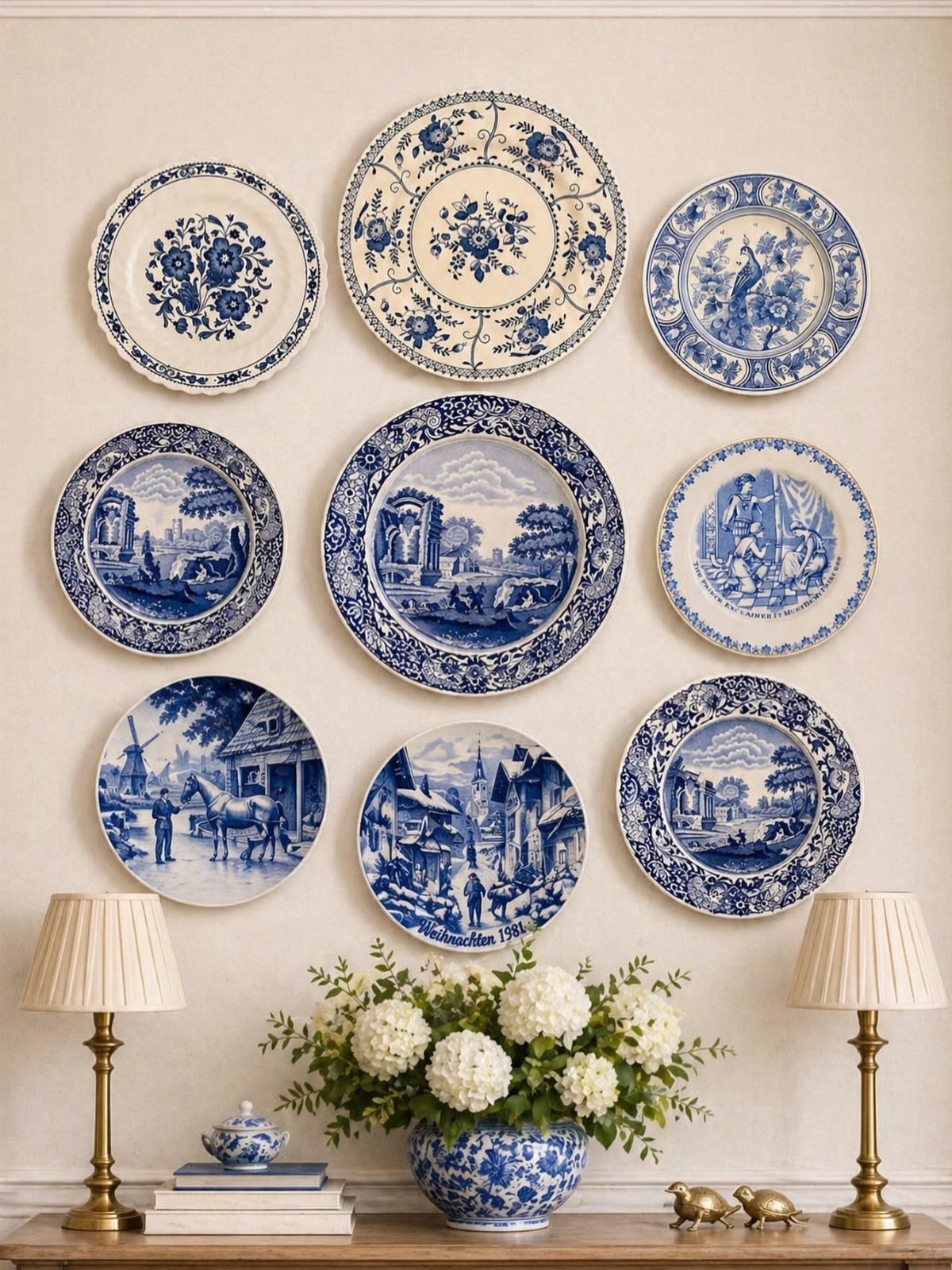
Nine blue and white plates on one wall add pattern without a single shelf or frame. Plates in one color family hold together even when the designs differ, which is why this grouping looks planned.
Lay them on the floor first and shuffle until the gaps are even, then hang. Plate hangers cost a few dollars, and secondhand plates keep the total low.
A console or narrow table beneath, with a lamp and some flowers, anchors the group.
15. Oval Pedestal Dining Table
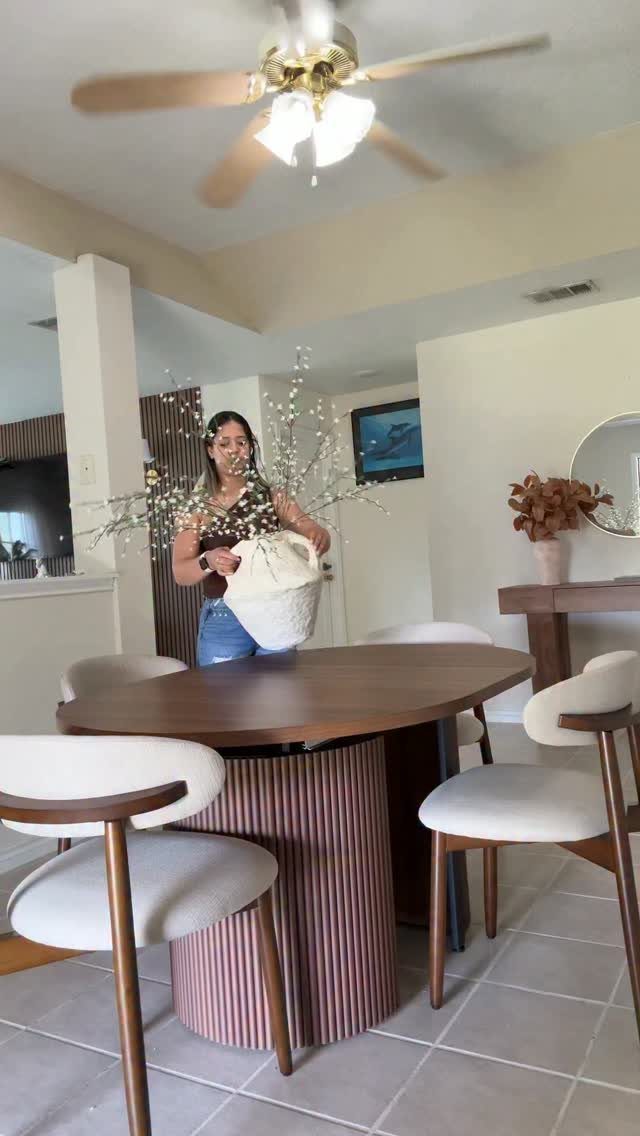
An oval table on a single fluted pedestal leaves the corners and leg spots empty, so chairs slide in from any side. That matters in a compact room, where a four-legged table catches knees.
I’d choose white chairs with it: they read light next to the wood, so the grain stays the focus. The oval also lets people pass more easily than a rectangle of the same length.
Measure the base before buying, since a wide pedestal can limit where chairs tuck.
16. Table with Under-Top Storage
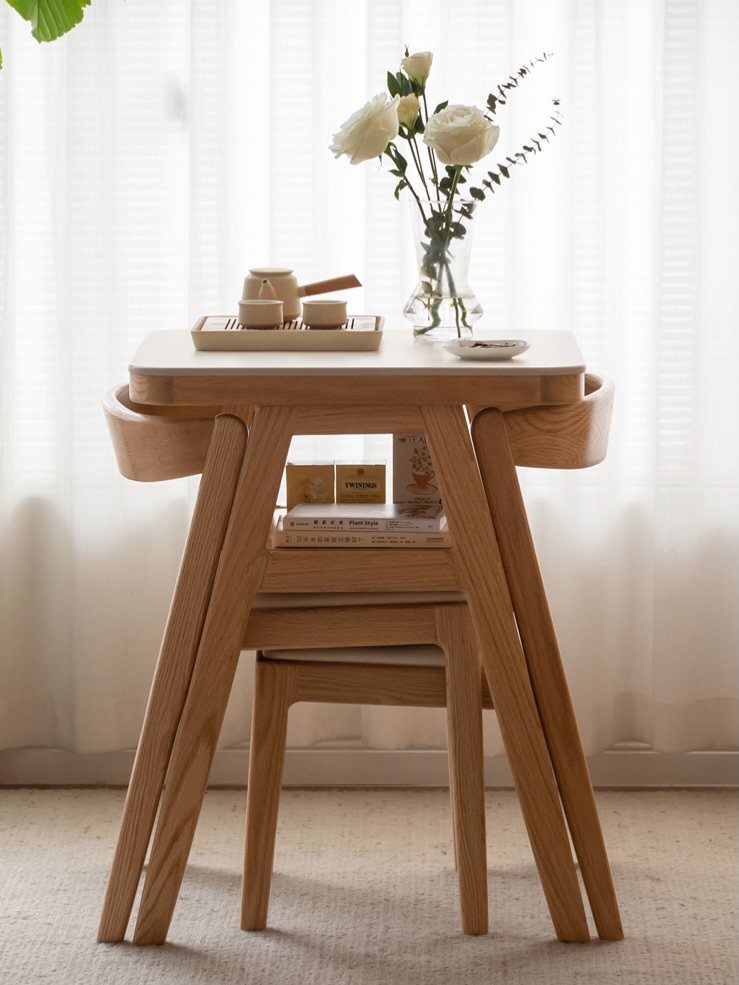
A lower shelf under a small table turns dead space into storage. Books and tea boxes sit right where you use them, so nothing needs a cabinet.
Keep what lives there tidy and in one or two tones, because it is visible from every chair. Stack books by size, and use boxes to hide small items.
Storage below the top is what keeps a small table feeling calm, because the clutter has somewhere to go.
Choosing the Right Table
Before buying any table, mark its footprint on the floor with painter’s tape.
Slide a chair back from every side of the table and watch for anything that blocks it, like a wall, a cabinet door, or the edge of a kitchen island.
In a small room, a round or oval table tends to beat a rectangle, since there are no pointed corners to catch your hip as you walk past.
Square and rectangular tables create dead zones at the corners, where it’s hard to sit. A round table uses every square inch, and four people can fit around a small one.
Long, narrow rooms break that pattern. A slim rectangular table runs with the length of the space, so I’d mark both shapes on the floor with painter’s tape and keep whichever leaves the wider walkway.
Lighting Considerations
Center the fixture over the table, not over the middle of the room.
In a room where the table sits off to one side, those two spots are different, and a light hung in the wrong one looks like a mistake.
Size the fixture at about half the table’s width, so a 60-inch table gets something near 30 inches across.
Put the light on a dimmer.
Full brightness works for homework and takeout, while a dimmer setting makes dinner with friends feel warmer. It’s the cheapest way to make one small room serve several moods.
Lighting from above also keeps the floor clear. That means no floor lamp to tip over when someone tucks in a chair.
Storage Solutions
Depth is what decides whether storage works in a tight dining room. A deep buffet can eat the space you need to pull out chairs, so I’d skip the bulky sideboard and choose a slim console.
Chairs matter just as much. Open-backed chairs make a room look more open, and chairs without arms fit better when space is tight.
If you have a banquette, use it for storage. Seasonal decor and table linens fit well inside, and the bench seat lets you squeeze in extra diners.
Measure how far a piece sticks out from the wall first, then add the 24–36 inches or so a chair needs to slide back, and only then shop.
Frequently Asked Questions
How to make a small dining room look nice?
Start with a round or oval table and a mirror or two. Curved tables have no corners to catch your hip, and a cluster of 3 or 4 same-size mirrors bounces light around a tight room.
Limit the palette to 2 or 3 tones and let texture carry the rest: a velvet chair, a table with visible wood grain and a round rug will keep a small room from looking flat.
What are the dining room decor trends for 2026?
Bold lighting is the clearest one the ideas support: a single sculptural pendant, such as a gold or woven one, can decorate a whole small room.
Mixed, colorful chairs and wallpaper on one accent wall also give a room personality. Furniture that does double duty, like a table with under-top storage or a banquette with a lift-up seat, suits tight spaces too.
What do you put in the middle of your dining room table?
Pick something shallow and light enough to lift off with one hand, like a wide bowl, a bud vase, a candle tray or a few branches clipped for the season.
A grocery store bunch of flowers, usually $5–10, is enough to make a plain table look set. Anything under about 12 inches tall frees up space for plates and platters, and everyone can still see each other across the table.





