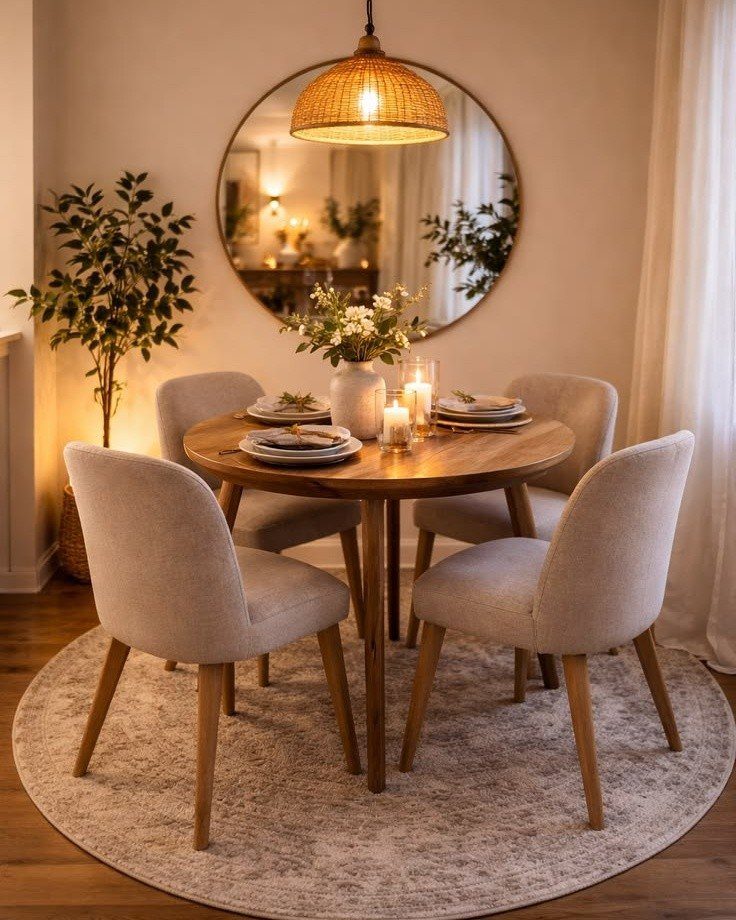
In a small dining area, the floor space you can give up decides which idea fits: a table pushed against a wall or a bench with built-in seating frees the most room, while a round table or an expandable one suits a room where walking space is tight.
The list runs from a weekend of two-tone paint to statement lighting and a grid of mirrors, and you can start with as few as 4. Most of it needs no wiring and nothing permanent, so it works for renters too.
1. Benches or Built-in Seating
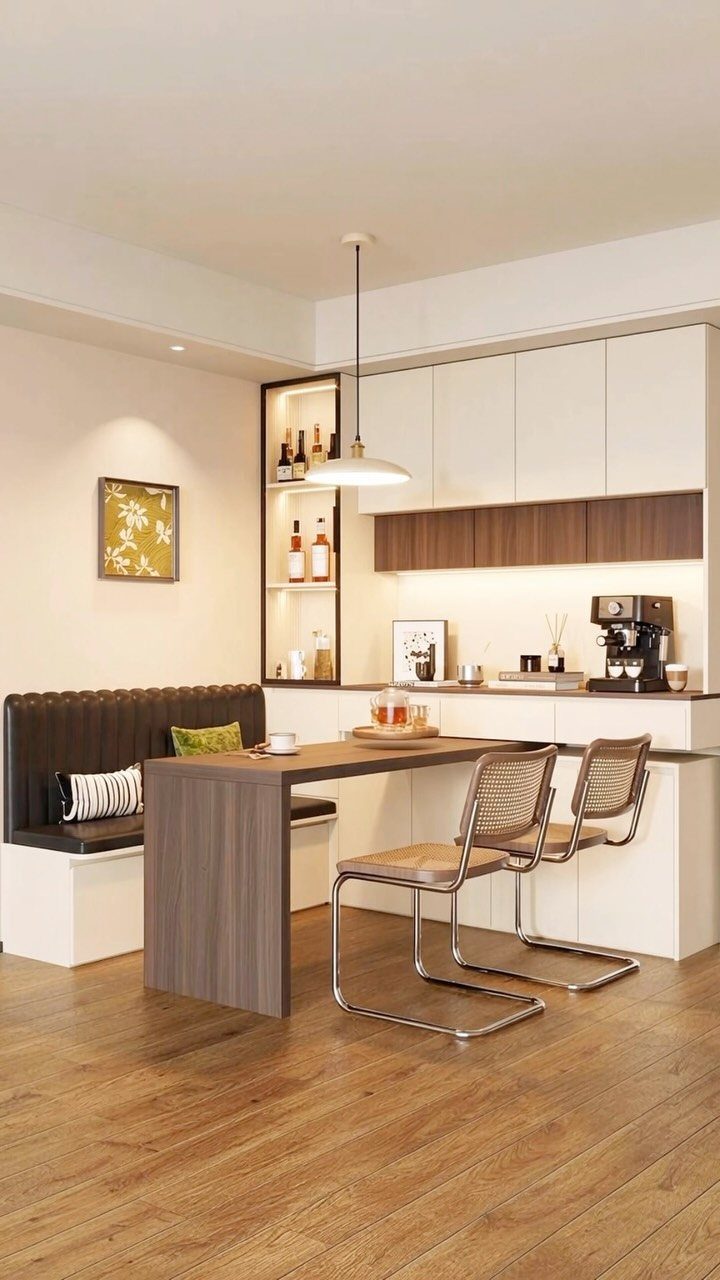
A built-in bench along one wall of a dining nook seats more people than the same run of chairs would, and it pushes the table closer to the wall so the floor stays open.
I like pairing it with a couple of loose chairs on the other side, so the bench does the heavy lifting and the room still feels easy to move through.
Leather wipes clean after spills, which matters on a seat that gets used daily. Add a cushion if the bench feels hard.
2. Mirrors
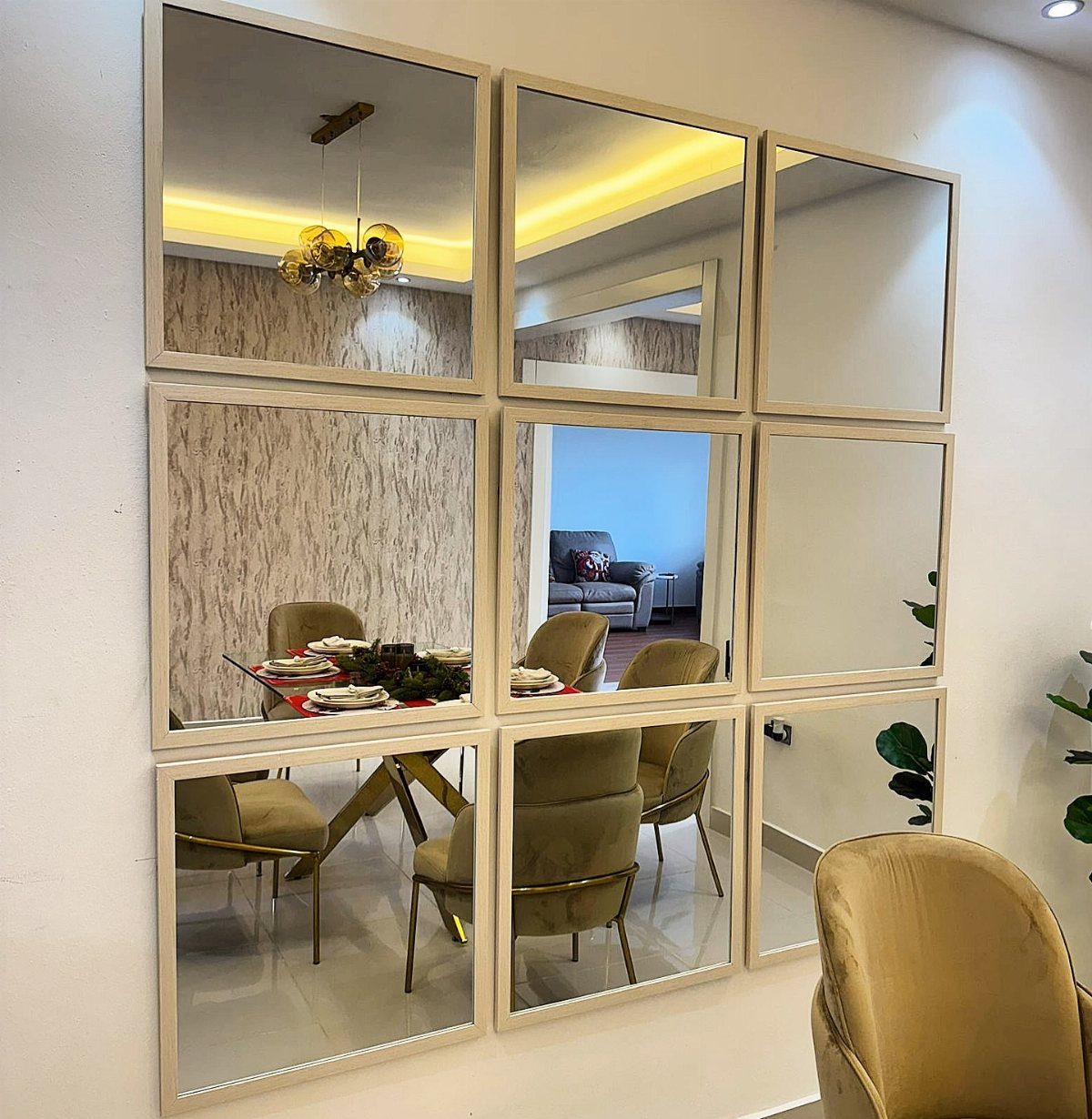
Mirrors make a tight dining area read as deeper, because the eye follows the reflection of the table and light past the actual wall.
A grid of square mirrors works better than one big piece for a renter: each is lighter, easier to hang, and you can start with 4 and add more.
Hang them where they catch the light fixture and the chairs, not the clutter by the door. Thin gold frames pick up warm tones in the room.
3. Wall-mounted Shelves
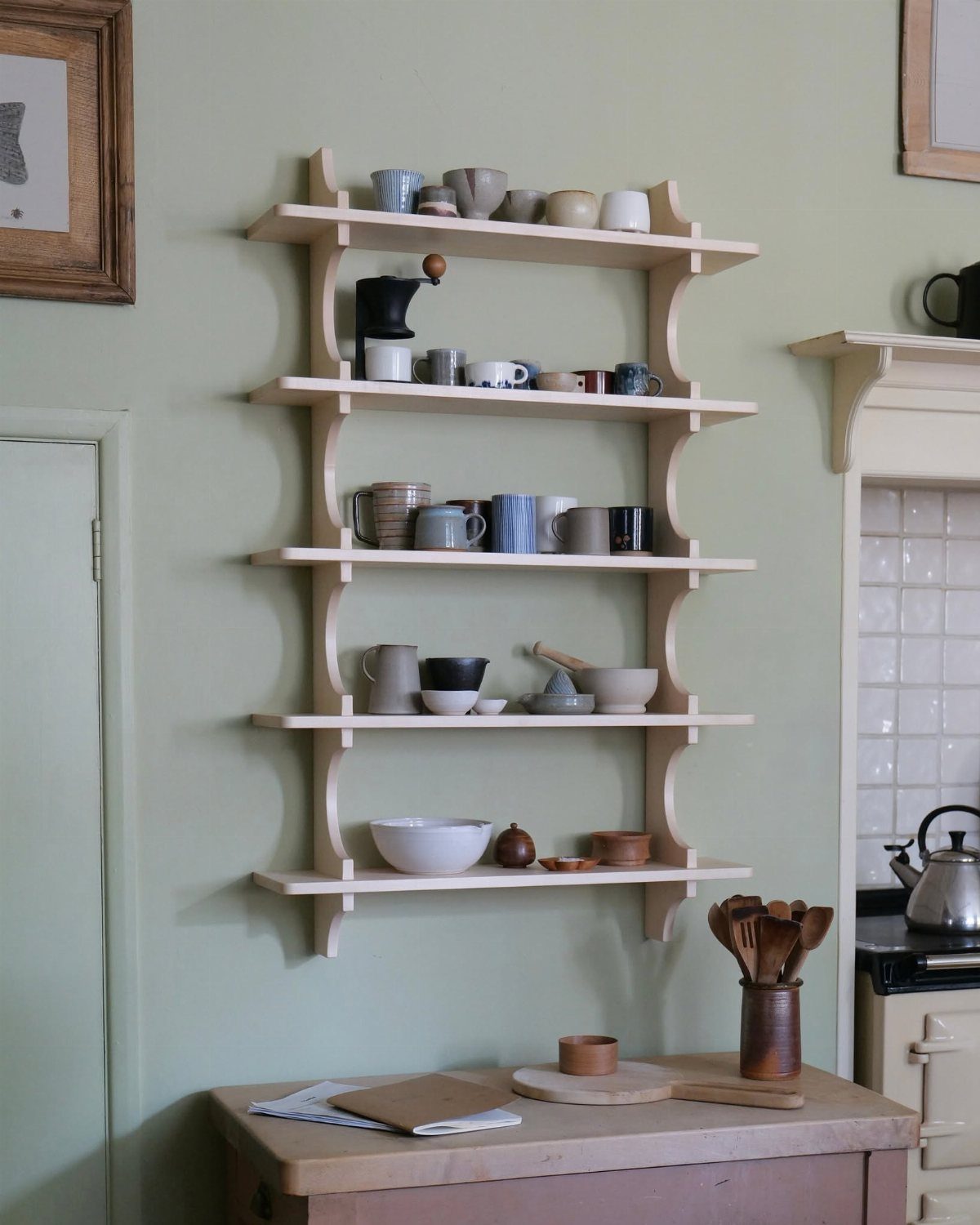
Light wood shelves in a row look tidy against a painted wall, and a pale color behind them makes the dishware stand out.
Keep the items to what you use daily, since a crowded shelf looks like clutter fast. Anchor each bracket into a stud or use proper wall anchors, because ceramic is heavy.
4. Colorful Seating
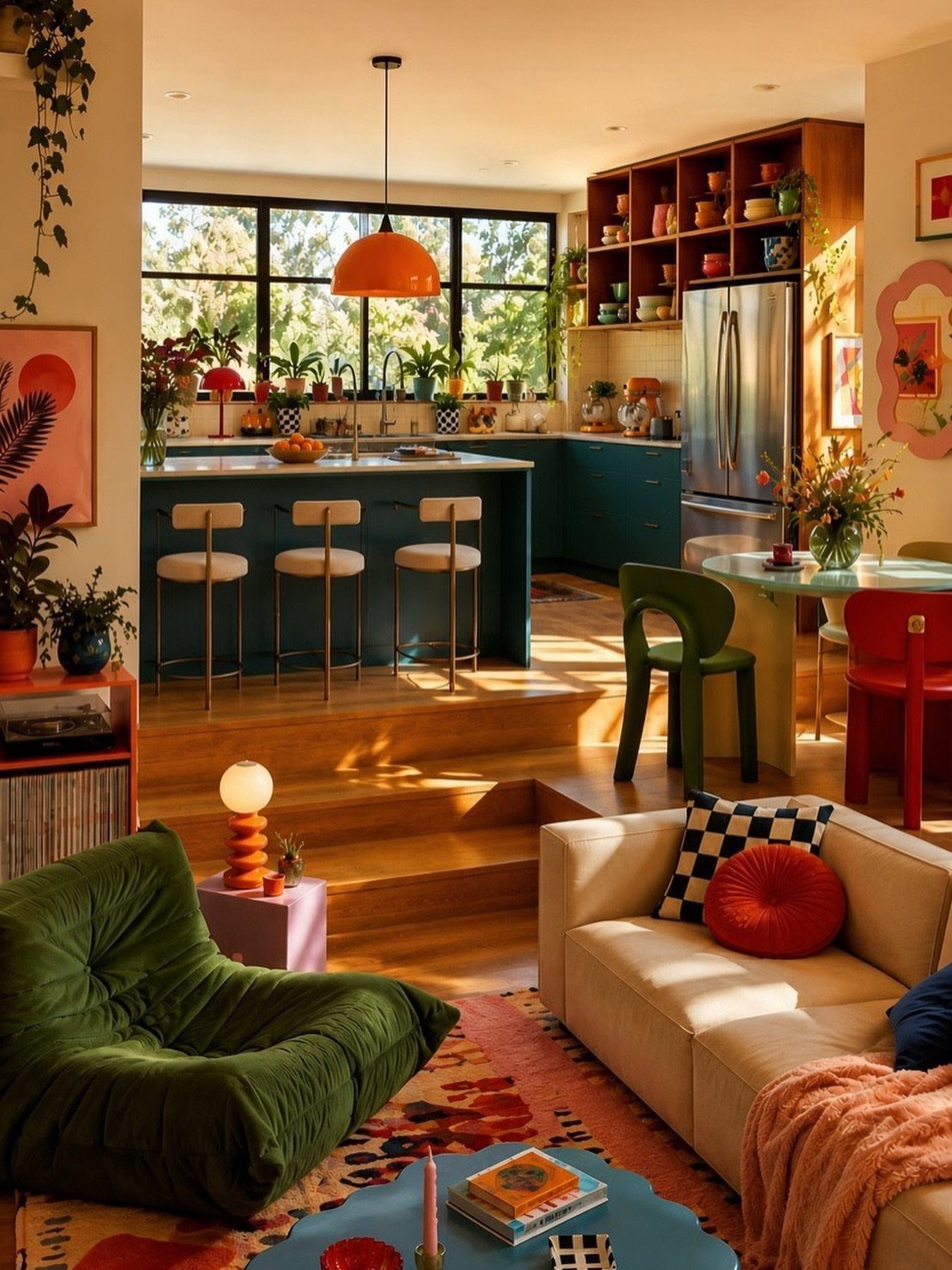
Mismatched chair colors are the cheapest way to give a small glass-top table some personality. 2 colors, such as green and red, feel planned; keep the mix small, because a different color on every chair starts to feel chaotic.
Keep the table itself plain so the chairs do the talking. In an open layout, repeat one of the chair colors elsewhere, like a stool or a pillow, so the seating ties into the rest of the room.
A beanbag in the same green makes a flexible extra seat that can be tucked away.
5. Dining Table by a Window
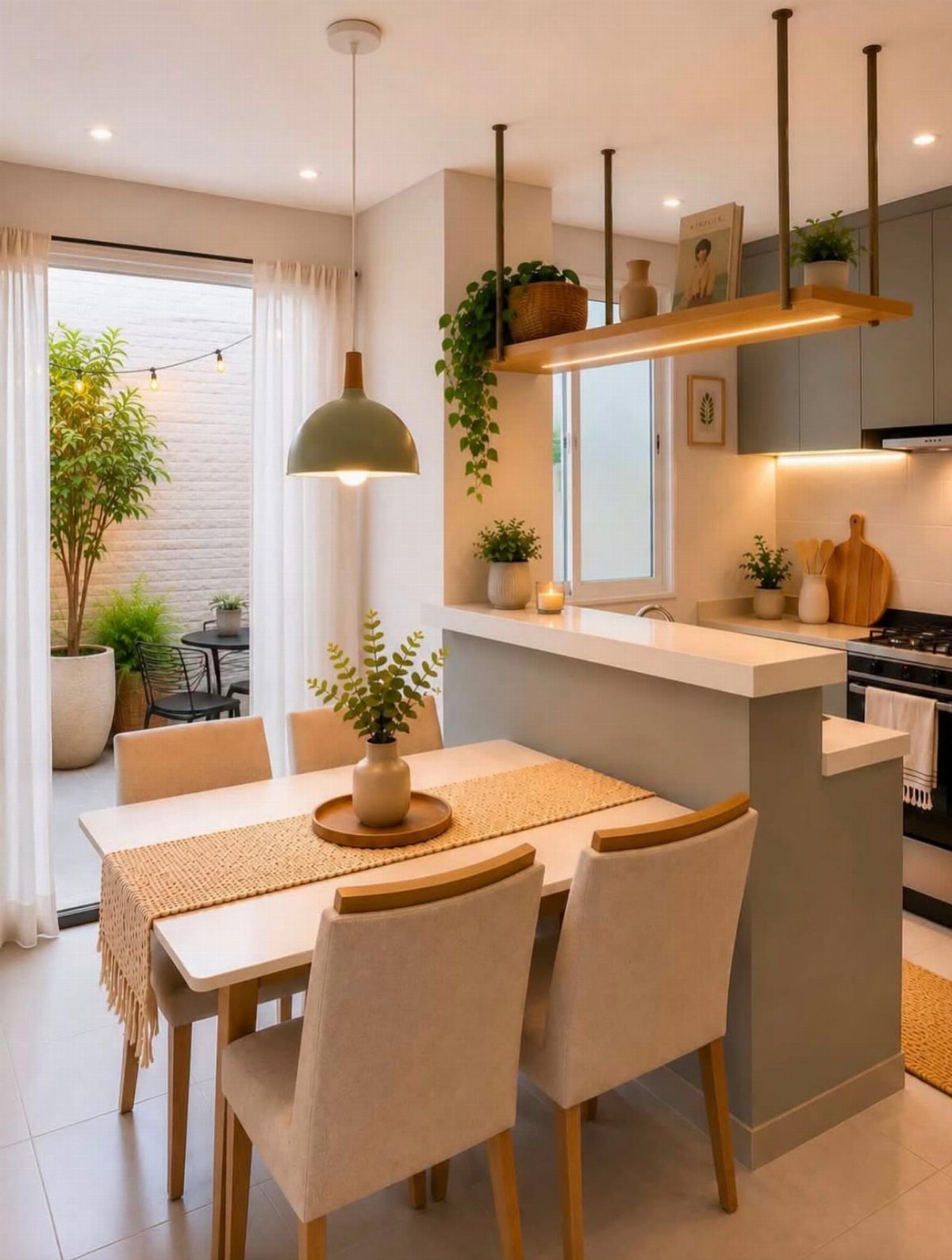
Pushing the table next to a window or glass door pulls daylight onto the meal and makes a small room feel bigger.
A white table with beige chairs suits that brightness, since pale pieces bounce light around instead of soaking it up.
Leave a clear path to the door, because a table that blocks it defeats the purpose. Keep the window treatment light so the view stays the star.
6. Two-tone Walls
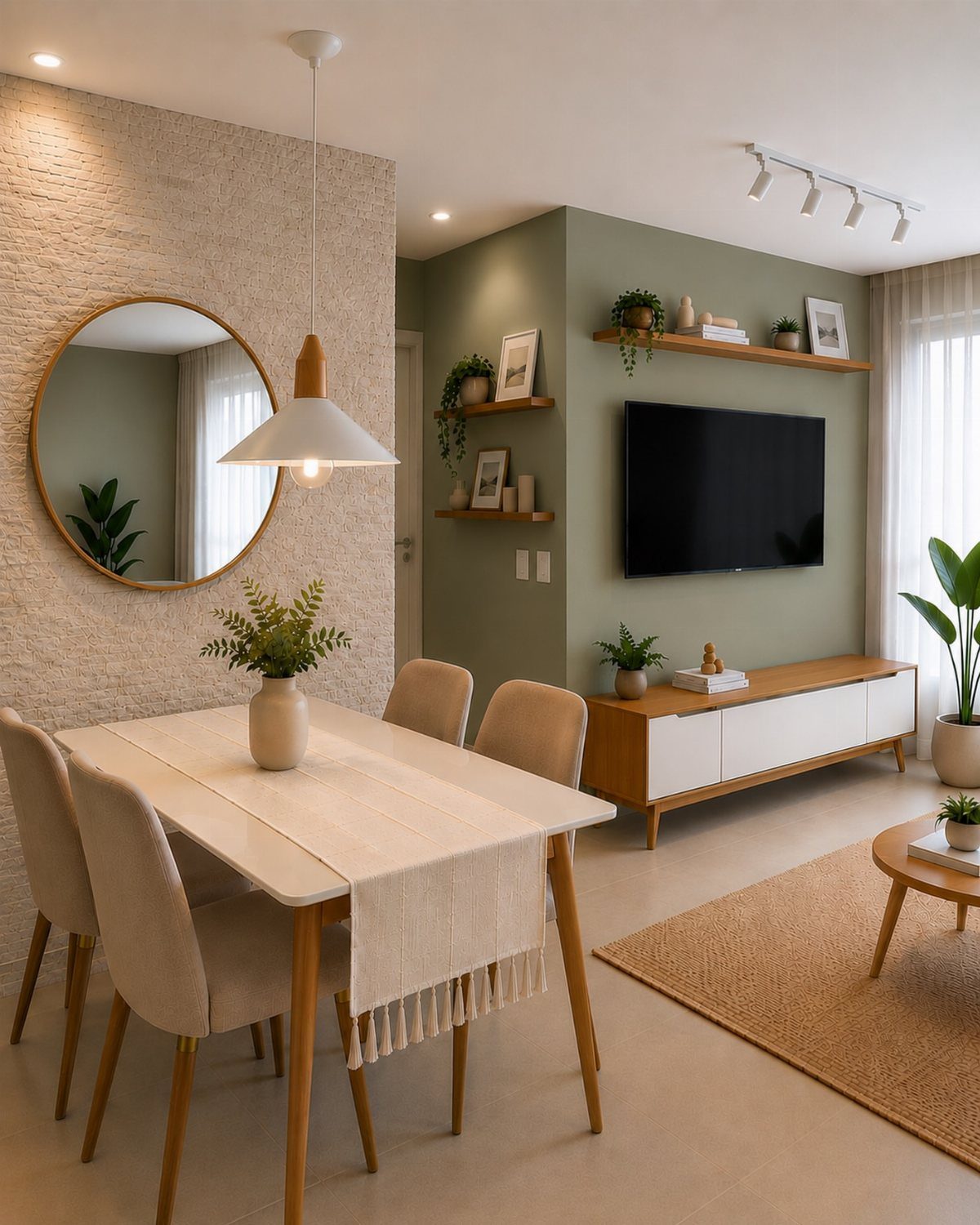
Splitting a wall into 2 colors, such as textured beige beside sage green, gives a small dining spot depth without adding a single piece of furniture. Paint is the cheapest version, and a weekend is plenty for 2 colors.
Pick one warm neutral and one muted color so they sit together calmly.
Put the break at a corner or where the wall already changes plane, since a random line in the middle looks accidental. Tape carefully for a crisp edge.
7. Sheer Curtains
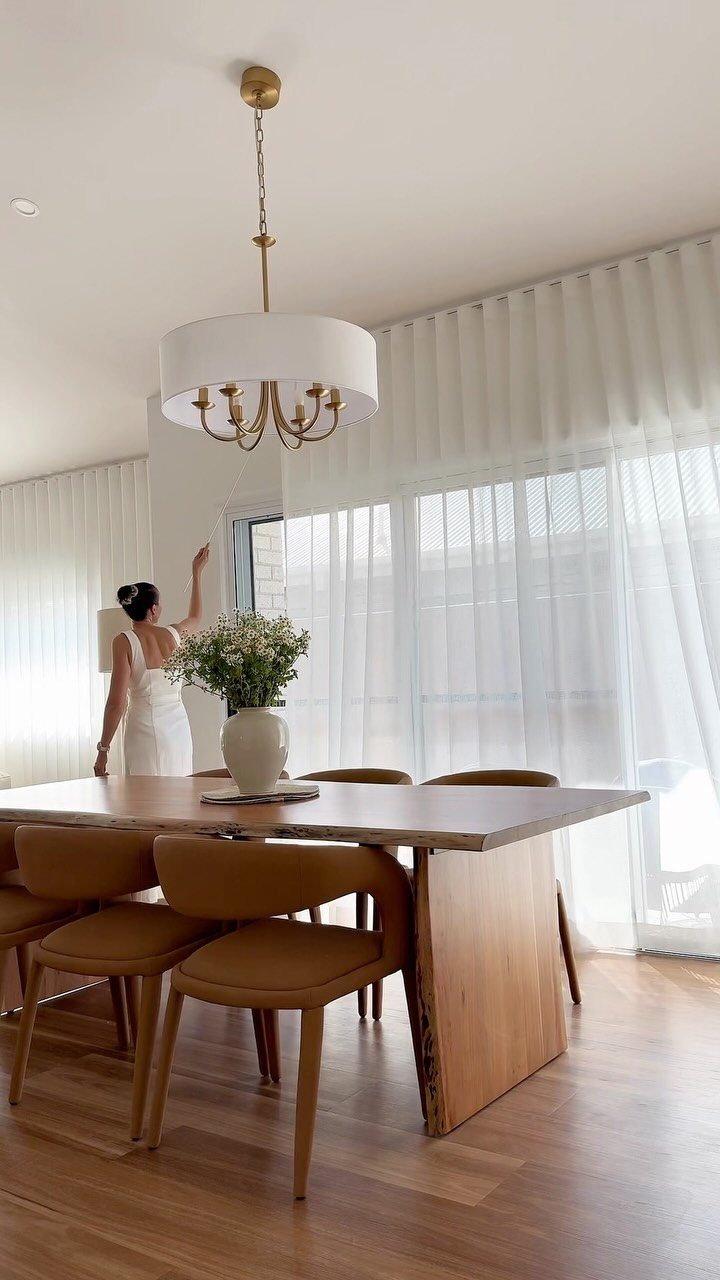
Hang the rod close to the ceiling and let the fabric reach the floor, because a long drop makes the windows look taller.
A clip-on ring set is the easiest renter-friendly option. Pick a fabric light enough that you can still see the shape of the window behind it.
8. Artwork and Plants
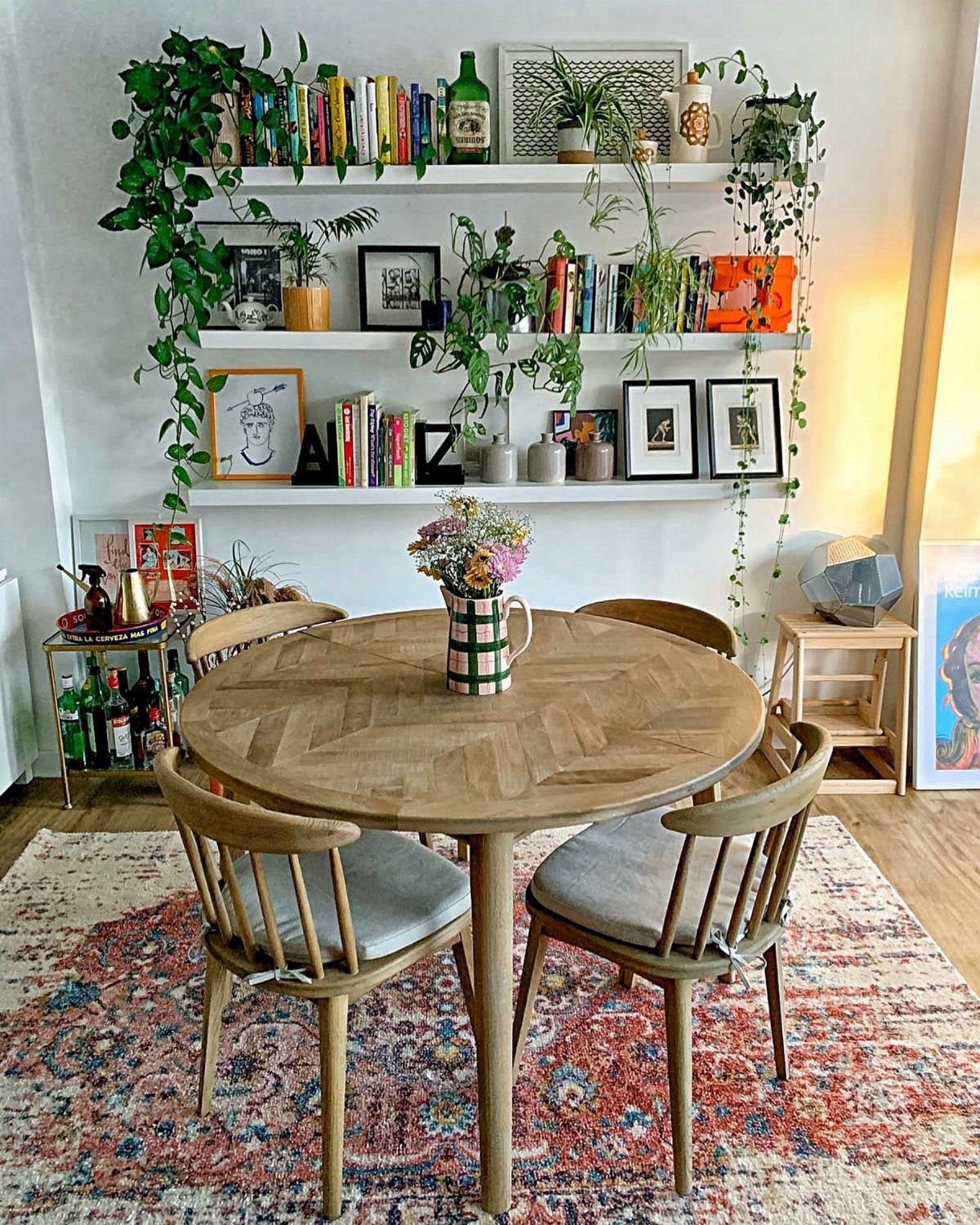
A few plants and framed pieces on white wall shelves give a small dining spot life without taking up floor space.
Mix the two on each shelf: a trailing plant beside a frame, a stack of books under a small pot.
Keep the art in one or two color families so it sits calmly with a busy rug. Plants that need little light are the safer pick if the table sits away from a window.
9. Expandable Tables
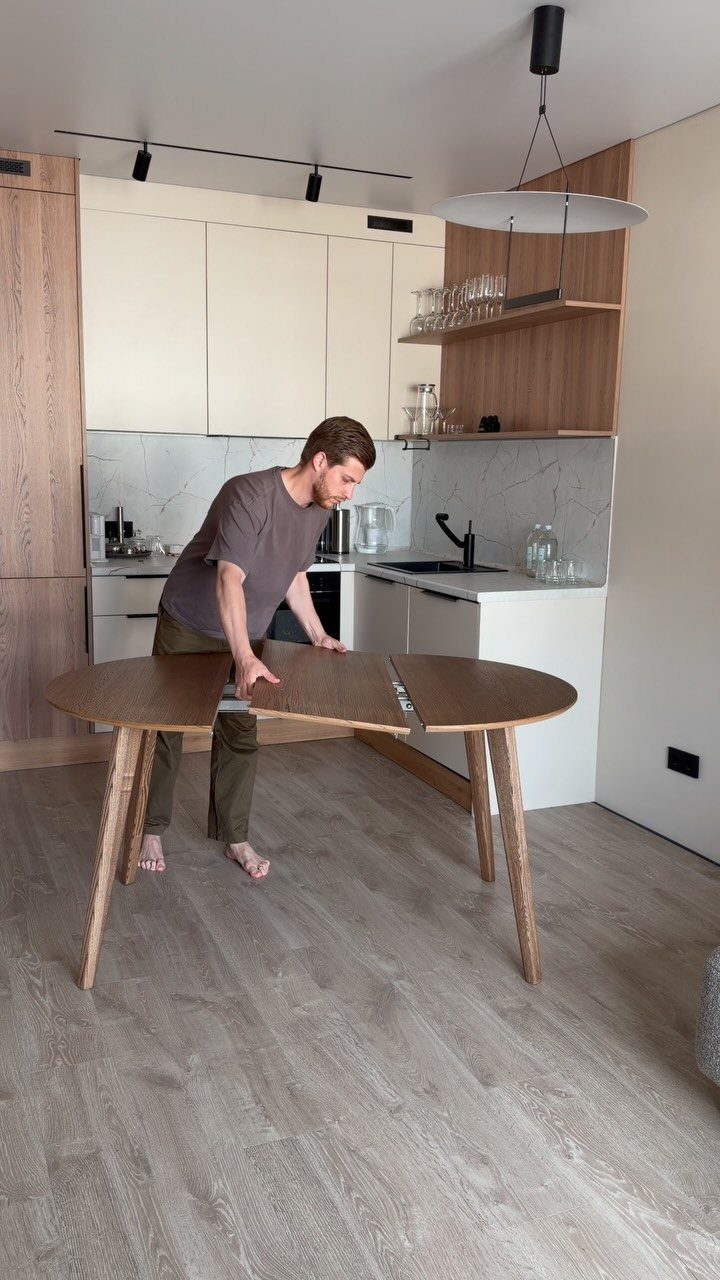
A table that expands lets a small room stay open most days and still seat a crowd for dinner. An oval in light wood suits tight spaces, since the rounded ends are easier to walk around than sharp corners.
Check how the leaf stores or folds before you buy, and measure the room with the table fully open. Chairs need space to pull out, so make sure the extended size still leaves a walkway.
10. Statement Lighting
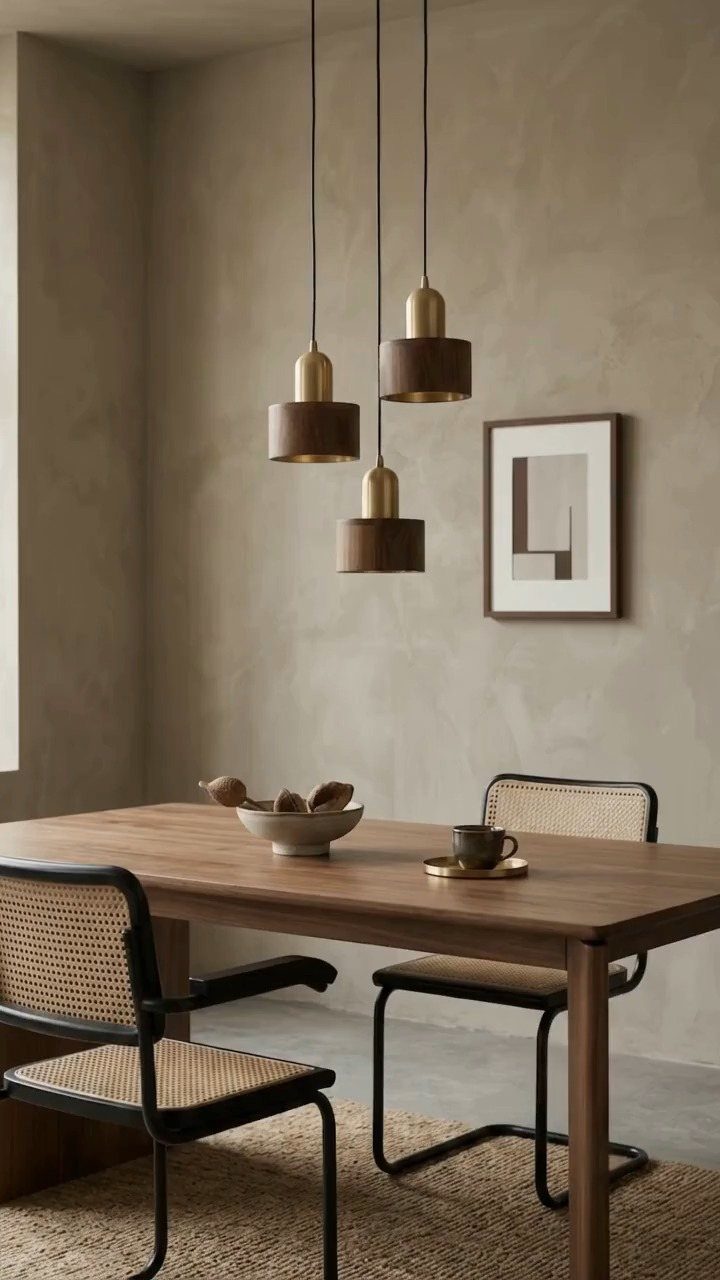
A cluster of three gold and wood pendants over the table does the work of a centerpiece, so the tabletop can stay bare.
Hang them low enough to feel connected to the table but high enough that nobody blocks the view across it.
Plug-in pendants with a ceiling hook are the renter route, no wiring needed. Choose one bold finish and let the chairs stay quiet, so the lights are the only loud thing in the room.
11. Minimalist Decor
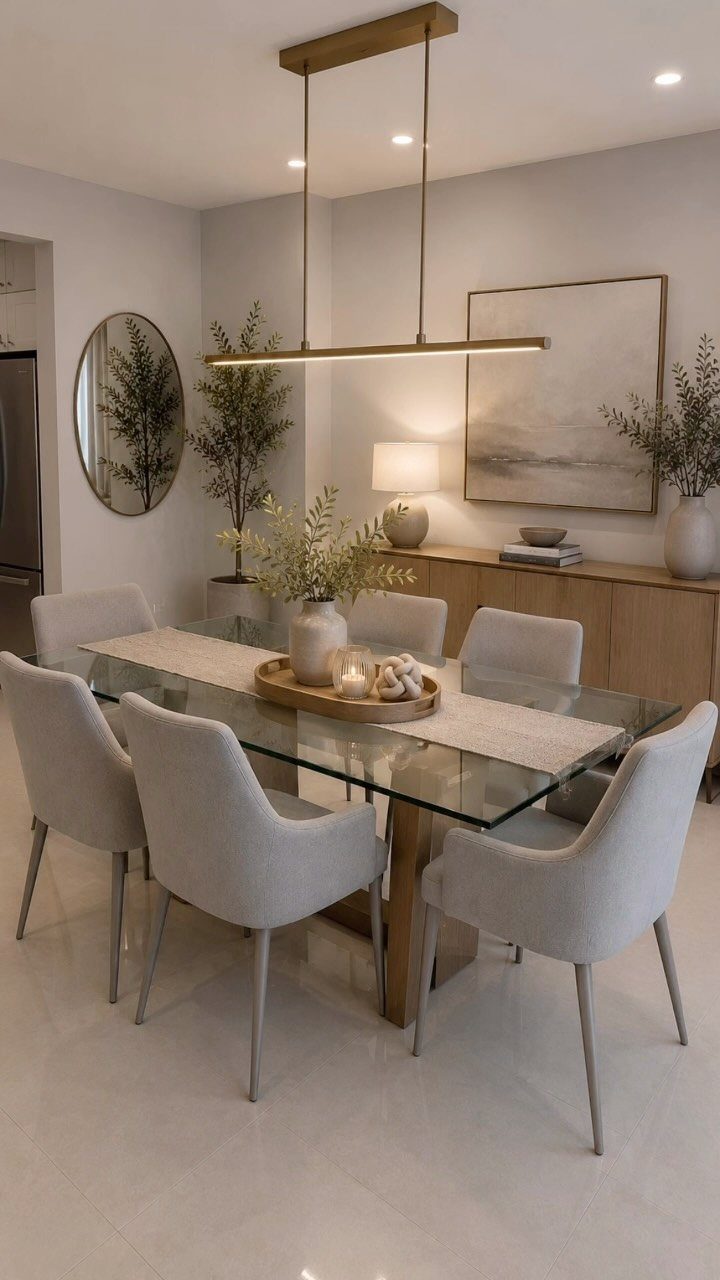
Minimalist decor means every piece earns its spot, and a glass table is a good start because you see through it to the floor.
Stick to one neutral family for the chairs, walls and art, and let a single gold fixture add the warmth.
If the surface looks bare, add a single object rather than a group.
12. Round Tables
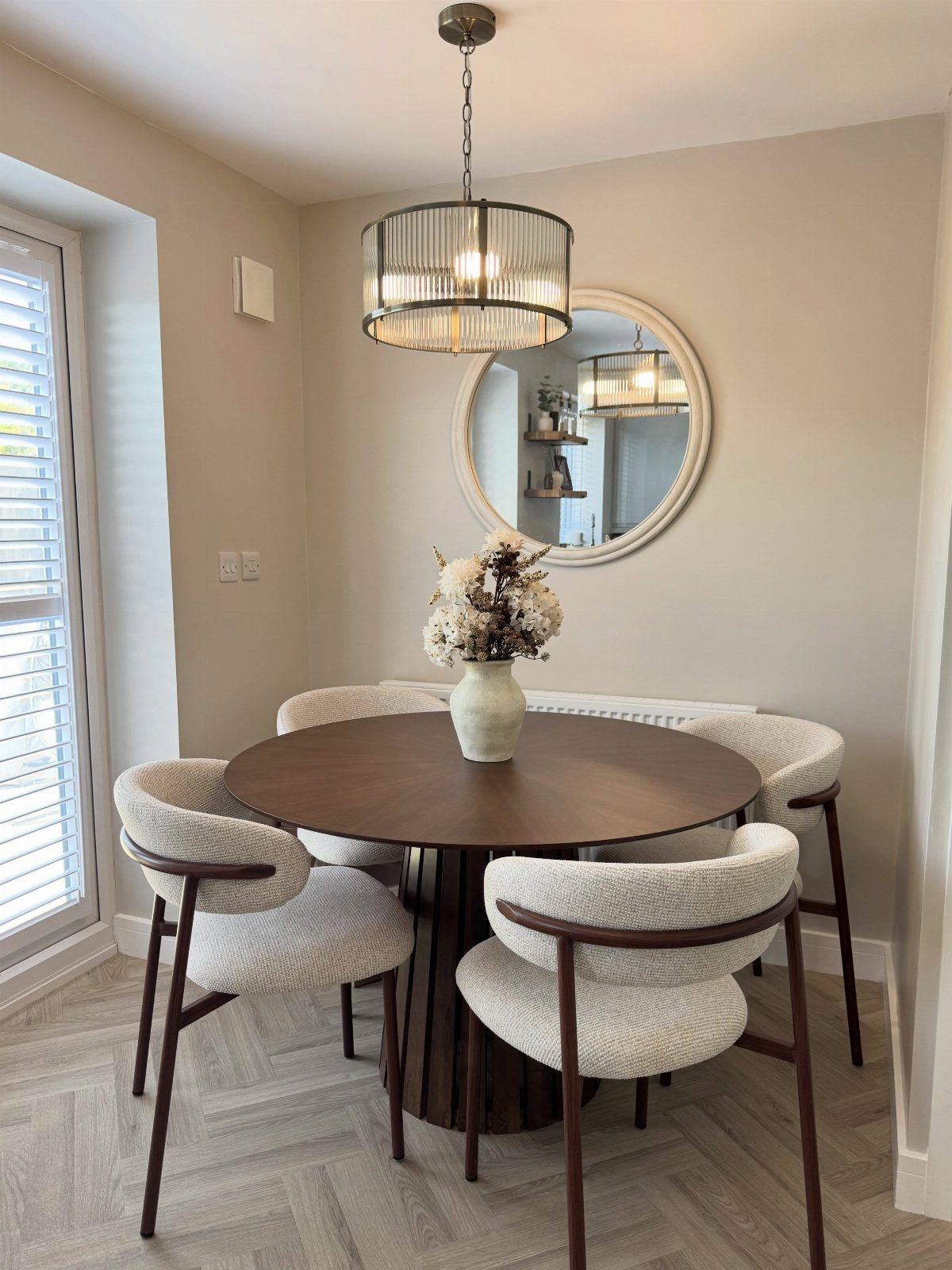
A round table has no corners to bump, so people can slide around it in a tight room. 4 chairs fit comfortably, and a single pedestal base keeps legs from crowding knees.
Center a pendant light above it and the whole setup feels deliberate. I would pick round over rectangular for any room where walking space is short, though it seats fewer people when the table is small.
13. Dining Table Against a Wall
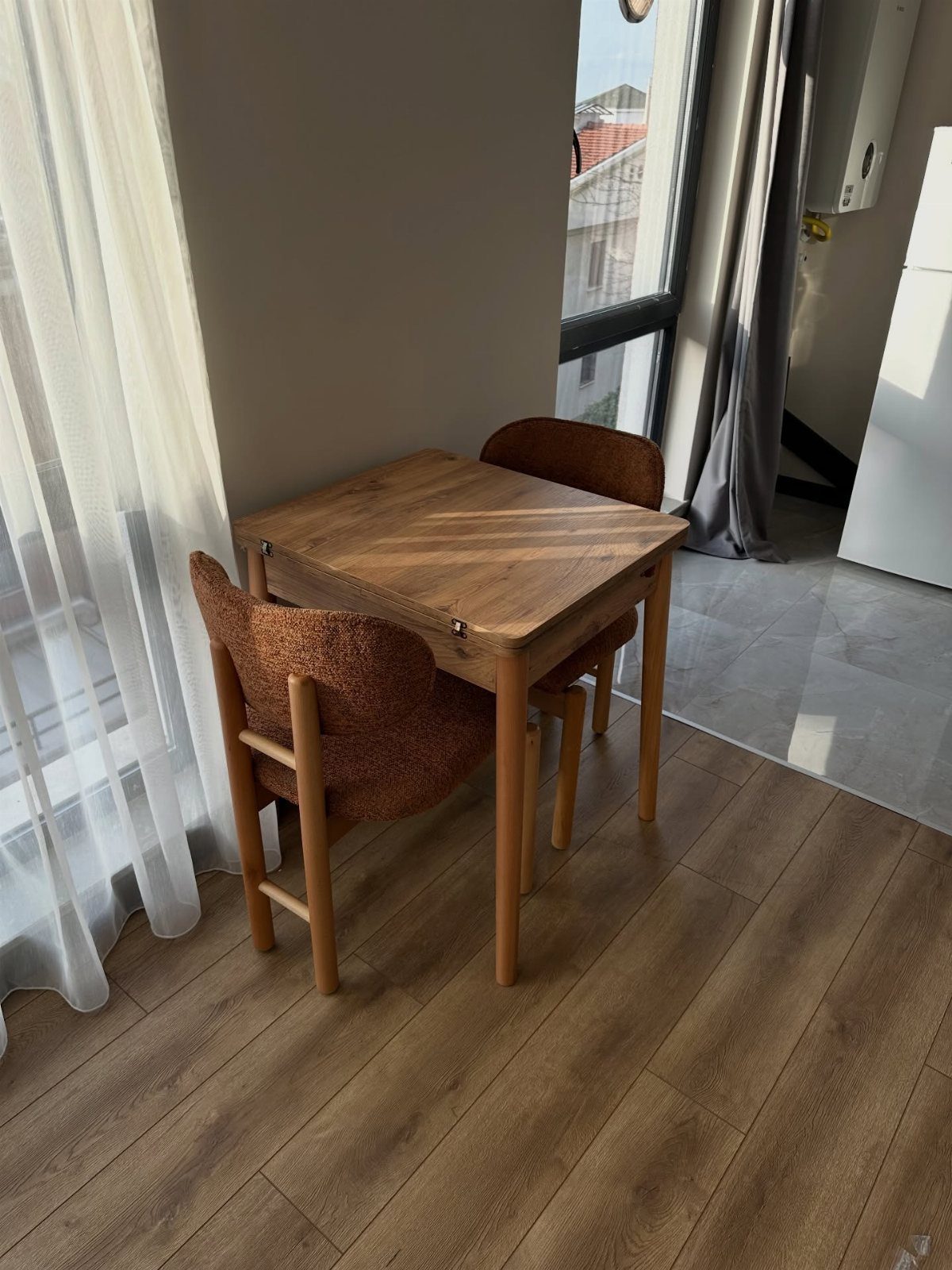
Sliding a small table flush against a wall frees the rest of the floor, and that matters most in a room with little to spare.
2 chairs on the open side are enough for daily meals, and a wood table with brown chairs sits well against a grey wall.
Leave room behind the chairs to pull them out, since a tight gap makes every meal a squeeze. Keep any curtains beside the table light enough that they don’t brush the tabletop.
If you host often, I would pick a table you can pull away from the wall later.
Lighting Considerations
Layer the light in a small dining room instead of relying on one source.
I like a ceiling fixture centered on the table, plus a sconce or a floor lamp in the corner so the room has light even when the main fixture is dark.
Plug-in sconces take up no floor space and need no wiring, which makes them an easy way to light a small dining area.
A dimmer on the overhead light lets one fixture handle both a quick breakfast and a long dinner.
Daylight does the work during the day, so keep window coverings translucent. In the evening, several low lamps and a few candles feel cozier than one bright ceiling light.
Color Choices
Dark paint on all 4 walls can overwhelm a small dining room, so keep the main surfaces light and neutral.
If you want some color, bring it in through small accents rather than big surfaces. A soft-colored vase, napkins or a framed print adds interest without closing the room in.
Pale surfaces also bounce around whatever light the room gets, which is the real reason the trick works. A large mirror on a light wall adds to that effect by reflecting more of it.
Frequently Asked Questions
How to have a dining table in a small space?
An expandable table with drop leaves or a pull-apart center stays compact on weekdays, but measure the room with every leaf up, because that’s the size you’ll live with on holidays.
A light wood oval is easier to squeeze past than a rectangle, since the rounded ends have no corners to catch your hip.
Plan for 36 inches between the table edge and the wall or nearest furniture, so a chair can slide back without hitting anything.
What is a small dining area called?
It is usually called a dining nook or a dining corner.
What to put instead of a dining room?
A breakfast nook or a dining spot inside the kitchen is the usual substitute.
Keep it small and easy to move through: a table pushed against a wall or beside a window, a bench on one side, and light colors that make the area read as larger.
Floating shelves can hold the plates and bowls you use every day, which saves you from buying a bulky cabinet.





