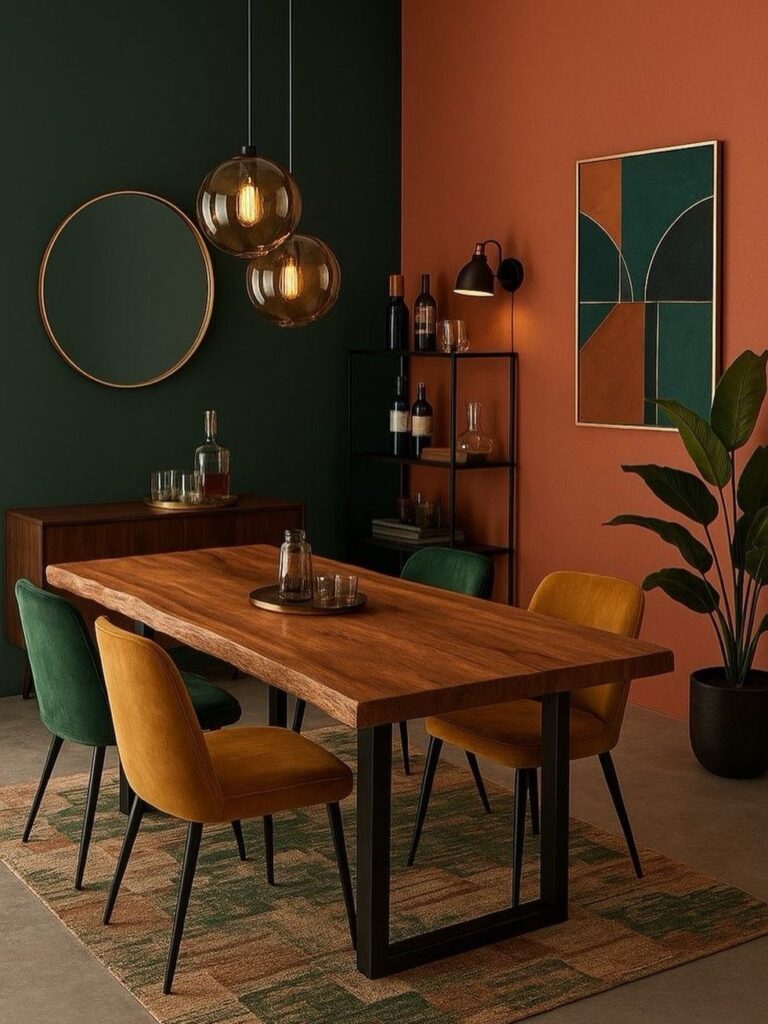
The ideas here run from a two toned table with just the base painted to a hand-painted tropical top, so the real question is how much brush control you have and how much of the surface you’re willing to put plates on.
Beginners do best with stenciled patterns, a two toned look, or a solid sage green, while a freehand mandala top or a botanical motif rewards steadier hands.
Whatever you pick, 2 thin coats and a clear topcoat or wax do more for the finish than the design does.
1. Two Toned Look
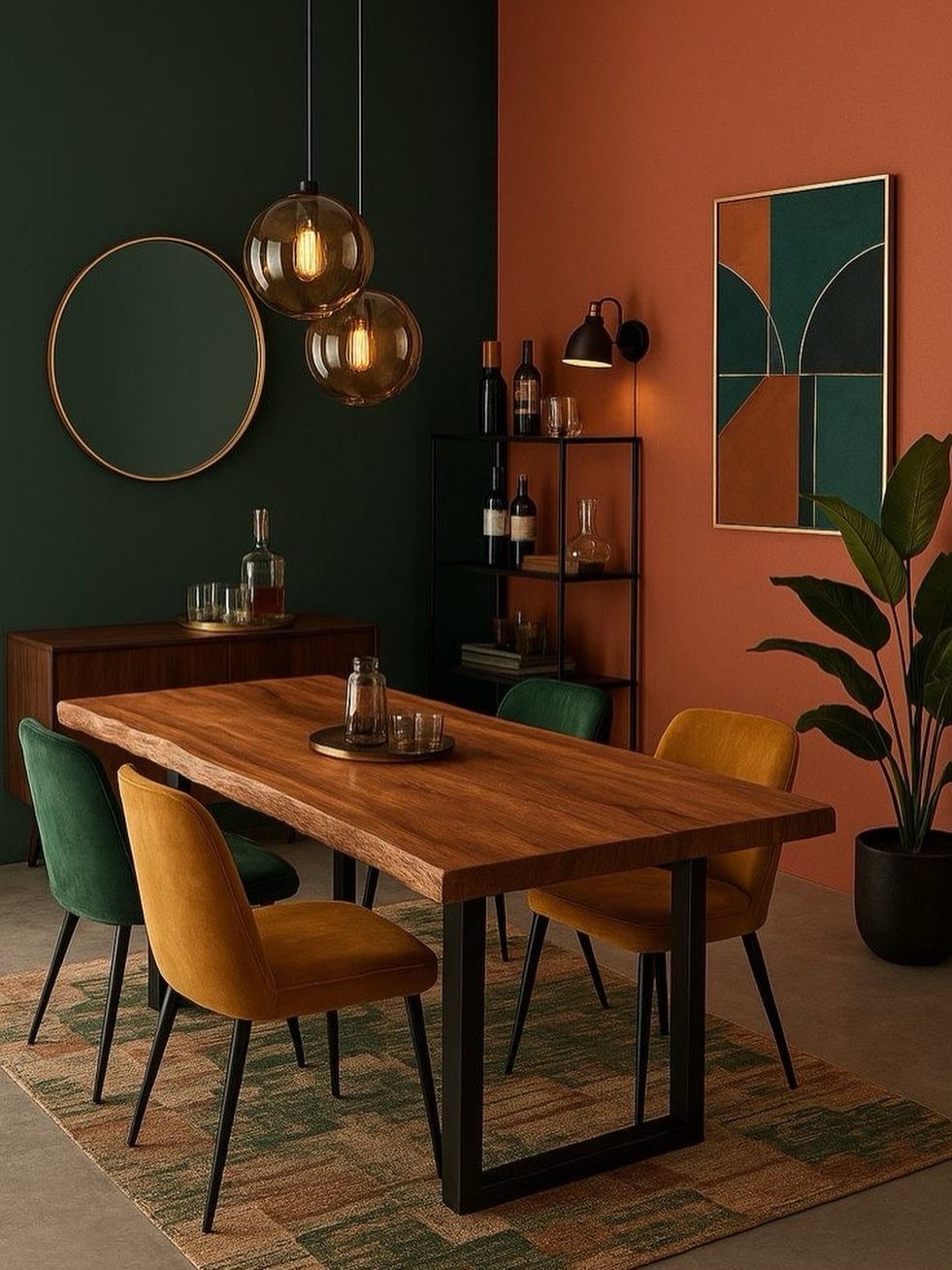
Keep the top in natural wood and paint only the legs black, and the table starts to look like a designed piece instead of a plain one.
A dark base also grounds a room with strong wall colors, since the top stays warm and the legs give the eye a firm anchor.
Sand the legs lightly, wipe off the dust, and brush on two thin coats rather than one thick one. Tape the underside edge of the top so the black doesn’t creep onto the wood.
2. Stenciled Patterns
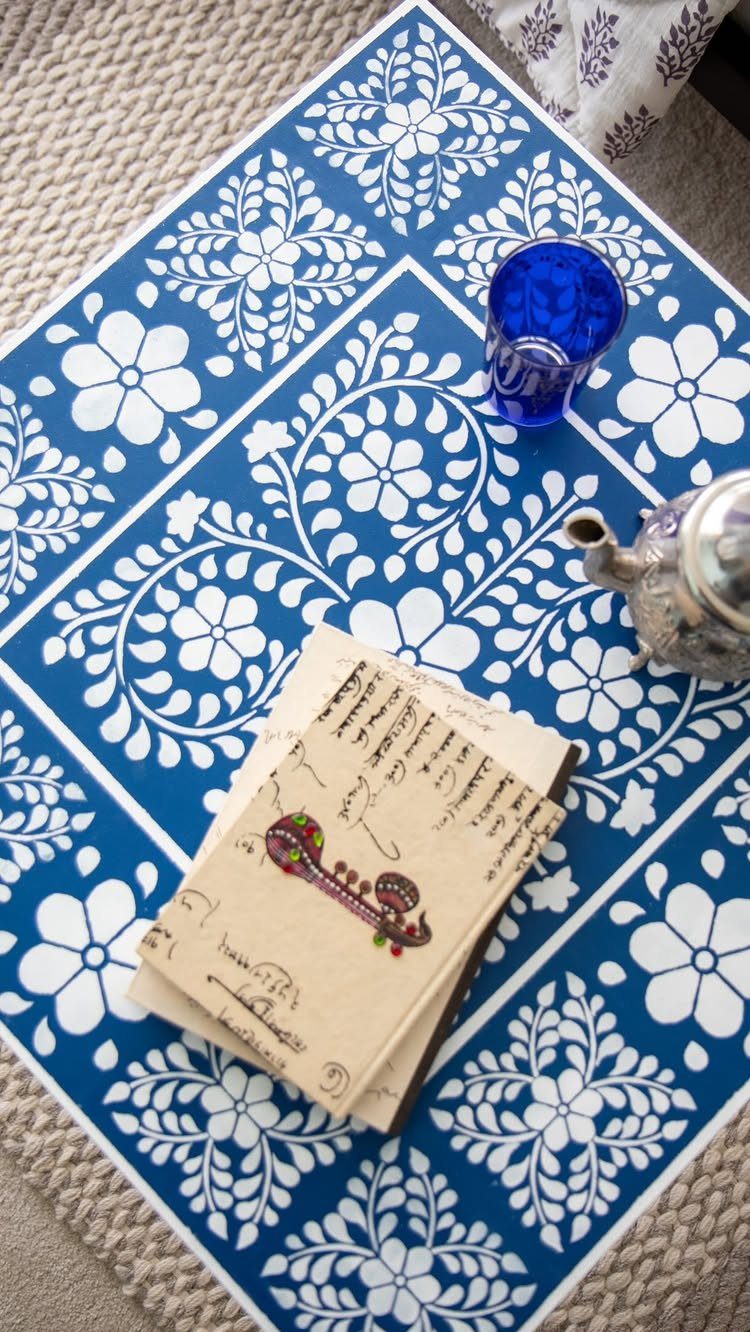
A stencil gives you a repeating floral pattern without any freehand skill, which makes it a good first painted-table project.
White over a blue base reads crisp and clean, and I prefer that two-color pairing because it keeps the pattern from getting busy.
Paint and dry the base coat completely first.
Tape the stencil down, dab paint on with a nearly dry brush or sponge, and lift straight up so the edges stay sharp. Too much paint is what makes designs bleed under the stencil.
3. Distressed Finish
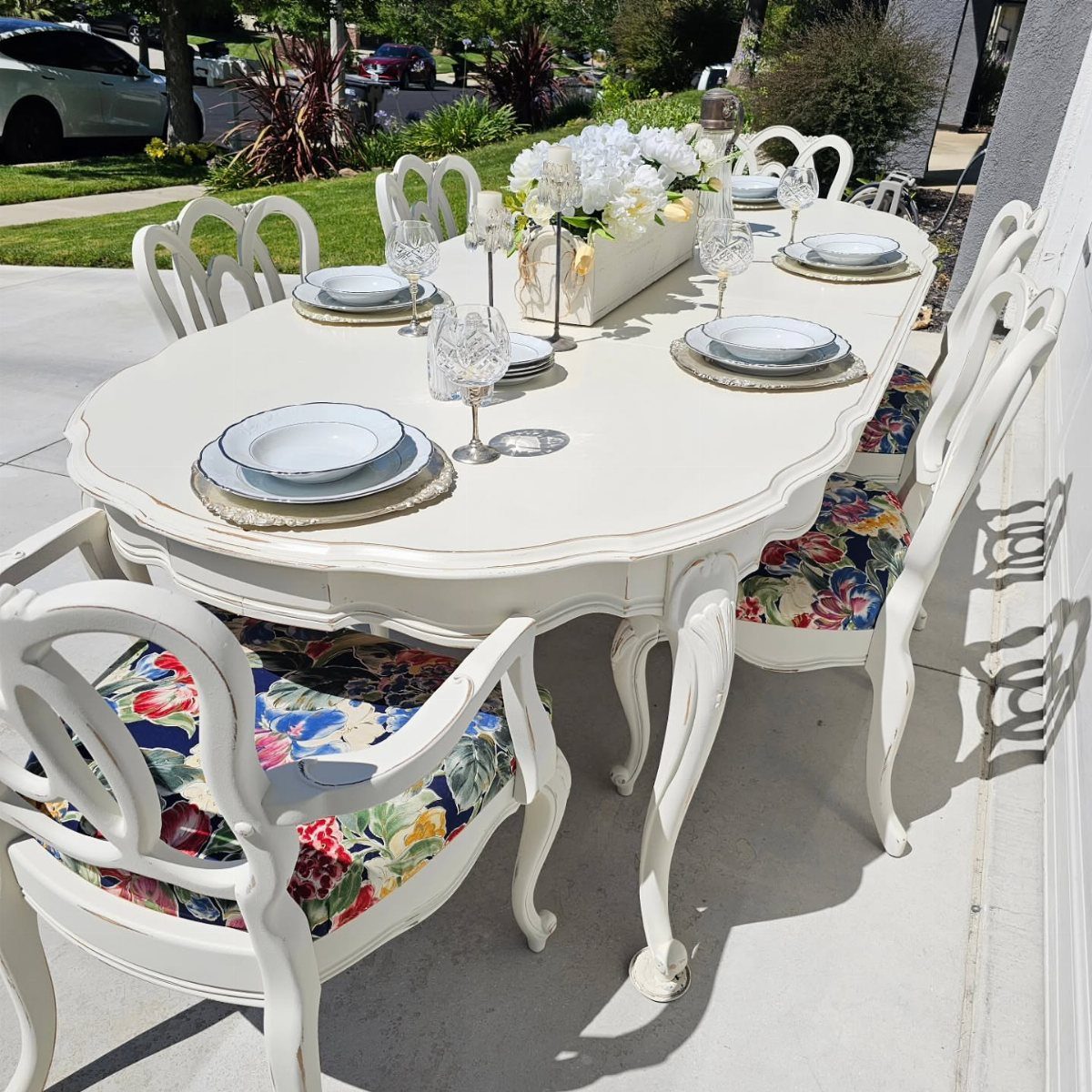
Distressing works best on a white table, because the worn edges show the wood beneath and give a lived-in look that suits a patio or a cottage-style room. Floral chair fabric fits right in.
Paint the table, let it dry, then sand the edges and corners where natural wear would happen.
Stop sooner than you think; you can always sand more, but you can’t put paint back. Seal the top if it will see daily meals.
4. Sage Green Dining Table
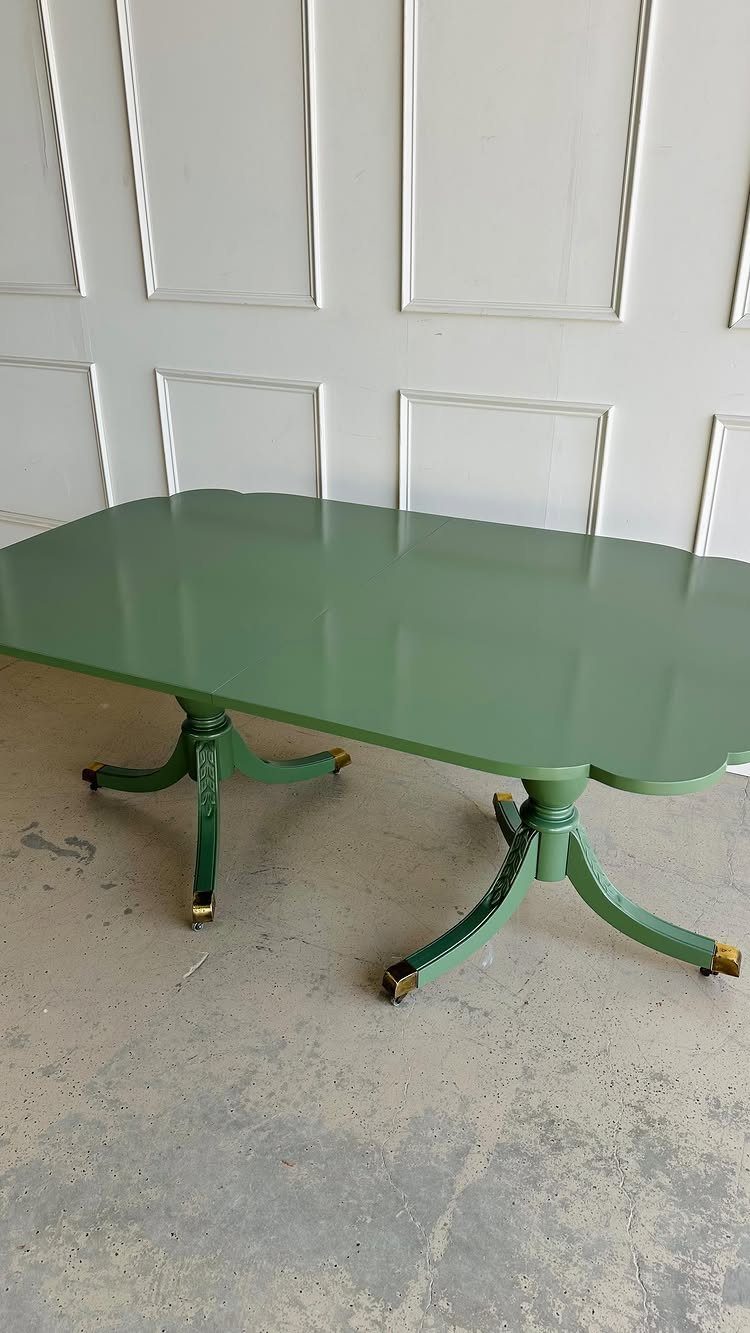
Sage green is a calm color that lets a wooden table feel fresh without shouting.
I like it with a glossy finish, since the sheen makes a solid color look deliberate, and a white paneled wall behind it keeps the whole thing soft.
Gloss shows every flaw, so sand well and fill dings before painting.
Use thin coats and sand lightly between them. Accent the legs with gold paint if you want a small touch of contrast.
5. Mandala Design Top
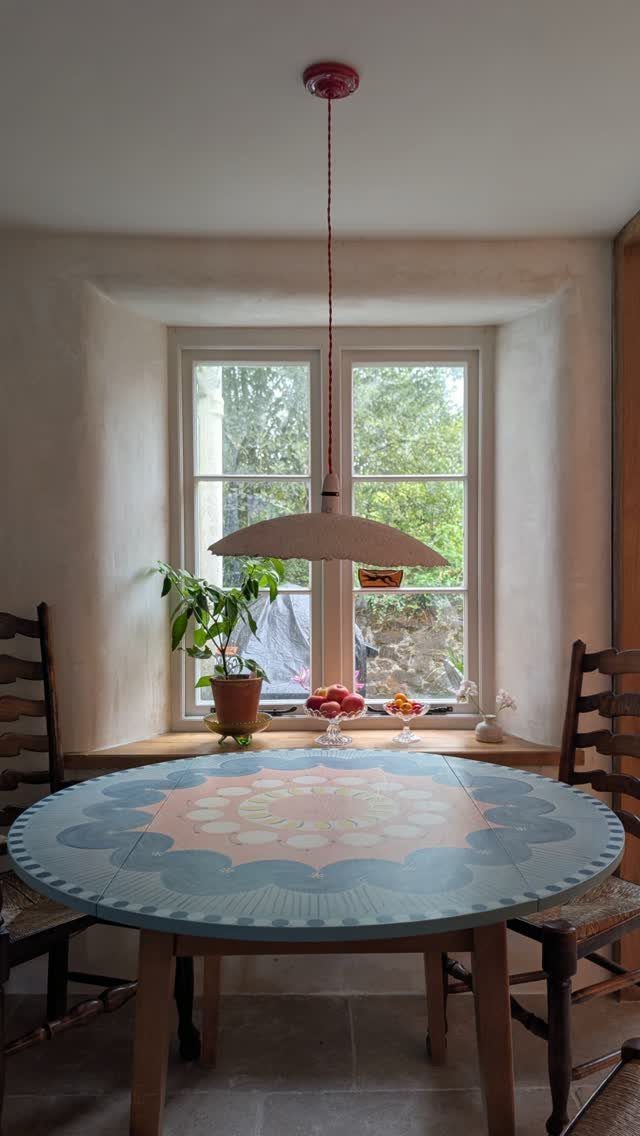
A round top gives a mandala somewhere natural to live: the pattern radiates from the center, and no seat at the table gets a bad view.
Blue and pink make a playful pairing against bare wood, and leaving the wood showing between the shapes keeps the design light.
Mark the center first, then use a pencil and string as a compass to draw rings.
Paint from the center outward, one ring at a time. Finish with a clear topcoat so plates and spills don’t wear the design.
6. Botanical and Tropical Motif
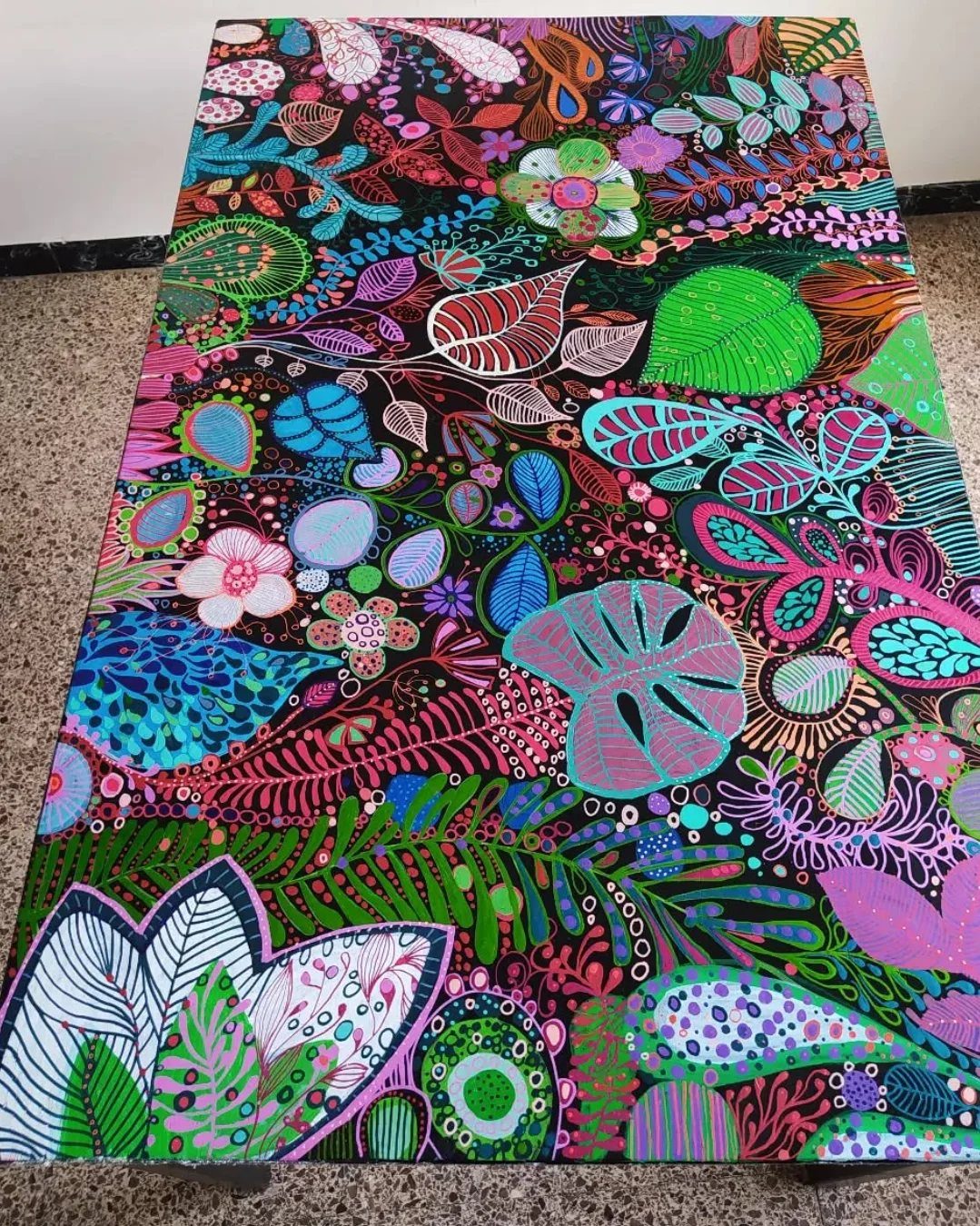
Dark backgrounds make tropical leaves and flowers glow, so a black tabletop is the right canvas for this one.
A botanical or tropical motif is the boldest way to paint a dining table, and I’d pick it for a table that can be the one loud thing in a plain room.
Paint the whole top black and let it cure.
Sketch large leaf shapes in chalk, then fill them in with bright acrylics, light colors first and details last. Seal everything with a clear coat, because the painted art is what you’ll be setting dishes on.
7. Hand-painted Floral Accents
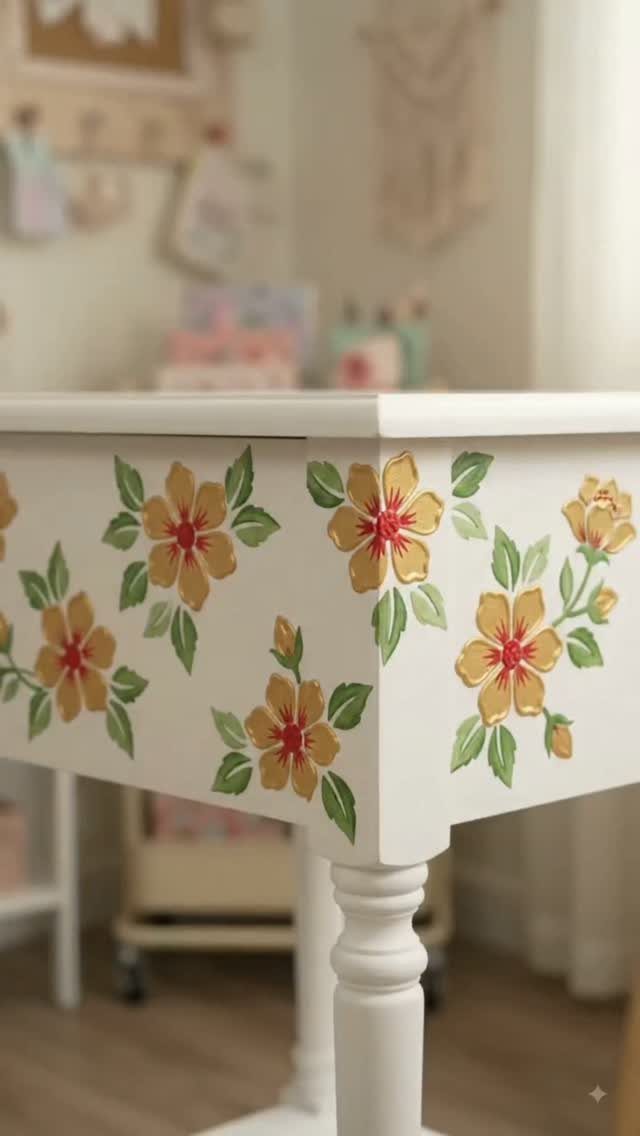
Small flowers painted along the apron and down one leg give a plain white table its detail without touching the top, where plates and spills land.
Yellow and red blooms with green leaves stand out cleanly against white, and I’d keep to those few colors so the vines stay light.
Pencil the flower positions first, then paint the leaves and stems before the blooms.
Use a small round brush and acrylics, letting each color dry before the next so edges stay crisp. A clear coat over the painted areas protects them from scuffs.
Best Paint for Durability
Paint quality decides how long a table keeps looking good, so buy the better can even if it costs a little more. Better paint covers in fewer coats and holds up longer under daily use.
For a table that will see plates and elbows, I go with a water-based acrylic or latex enamel, since both hold up better than most other paints.
Both come in nearly every color and in finishes from flat to high gloss, so matching your room is easy, and a good coat can last for years.
Chalk paint is the pick for a vintage feel. It dries to a matte finish, covers well, and is easy to keep up, which makes it a forgiving first choice.
Either way, seal the finished paint with a clear topcoat or a layer of wax once it has fully dried, because that top layer takes the daily wear.
It guards against scratches and spills, and it sets the final sheen, glossy or satin, depending on the product.
Painting Techniques
2 techniques the list skips are bold solid color and ombre. A single bright shade, like yellow, red, or blue, gives a plain table energy with one can of paint and no pattern work.
Ombre blends two shades of paint across the top so one color fades into the other. It looks unusual and takes patience rather than skill: work while both coats are wet, and blend in small passes.
I’d practice on a scrap board first. A test piece shows how the 2 colors mix before you commit to the tabletop.
If you want more character on any of these, distressing pairs especially well with chalk paint.
Preparation Tips
Prep decides how a painted table turns out, and it is the step people rush. Clean the surface thoroughly before any paint goes on, since grease, food residue, and dust keep paint from gripping.
Work through the stages in order: clean, prep the surface, paint, then seal. Skipping ahead is how peeling and streaks start.
The same routine applies to chairs, and painting them together with the table keeps the set matching. Give every piece the same care, because the chairs get handled as much as the tabletop does.
Frequently Asked Questions
What is the best paint to use for repainting a kitchen table?
Water-based acrylic or latex enamel is what I’d use on a table that sees plates and elbows daily.
Either one cures harder than ordinary wall paint, comes in nearly any color, and runs from flat all the way up to high gloss.
Chalk paint is the pick if you want a vintage look: it dries matte, covers well, and is forgiving for a first project. Whichever you choose, buy the better can, since it covers in fewer coats and lasts longer.
Is painted furniture still in style in 2026?
Painted tables work as a style choice because the options run from quiet to loud.
A two-toned table with a natural wood top and black legs looks designed, while a sage green or a bold tropical top can be the one standout in a room.
Distressed white suits cottage-style rooms and patios. Pick the finish that fits your room, not a trend.
How can I decorate my dining room table?
Paint is one of the cheapest ways to give a plain table personality. The easiest starts are painting only the legs black, using a stencil for a repeating floral pattern, or brushing small flowers along the apron and one leg.
Each one needs only a few colors, so the design stays light. A clear topcoat over the finished paint is what keeps plates, spills and scrubbing from wearing it down.





