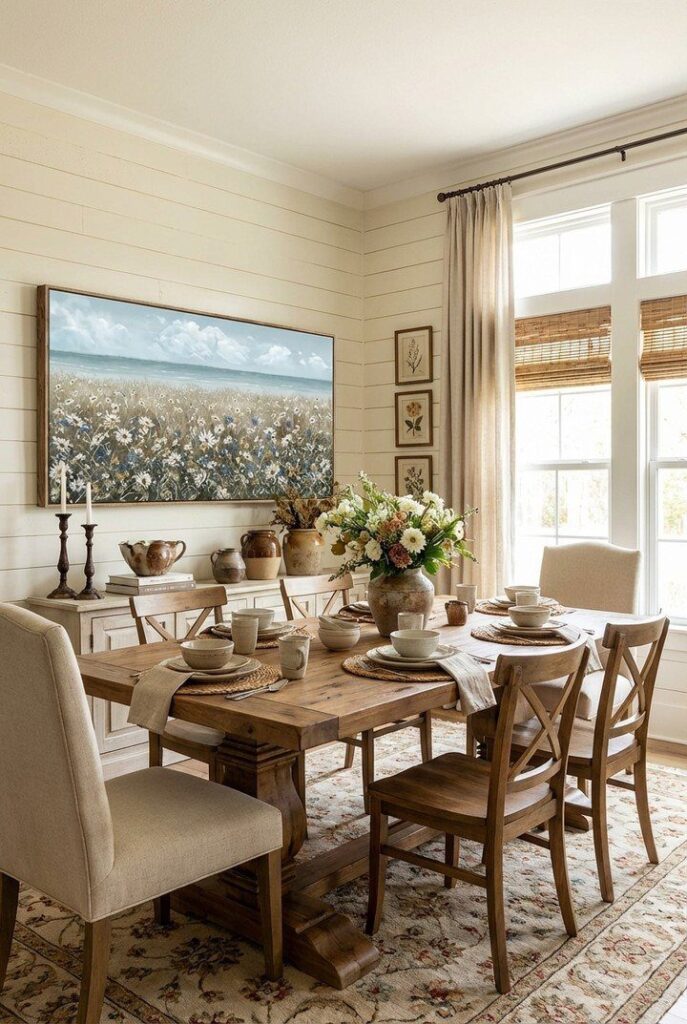
Farmhouse dining rooms range from a free rearrangement of chairs and benches to banquette seating, exposed beams or statement lighting, and what separates them is whether you own or rent.
Renters should stick with pieces that move out with them: a bench against the wall instead of built-in seating, faux beams only with the landlord’s approval, plates and a wooden rack that hang on a single wall.
Owners can commit to the fixed pieces like exposed beams and a banquette, and the list runs from a neutral color palette and vintage dishes on the wall to statement lighting over a long wooden table.
1. Wooden Tables and Chairs
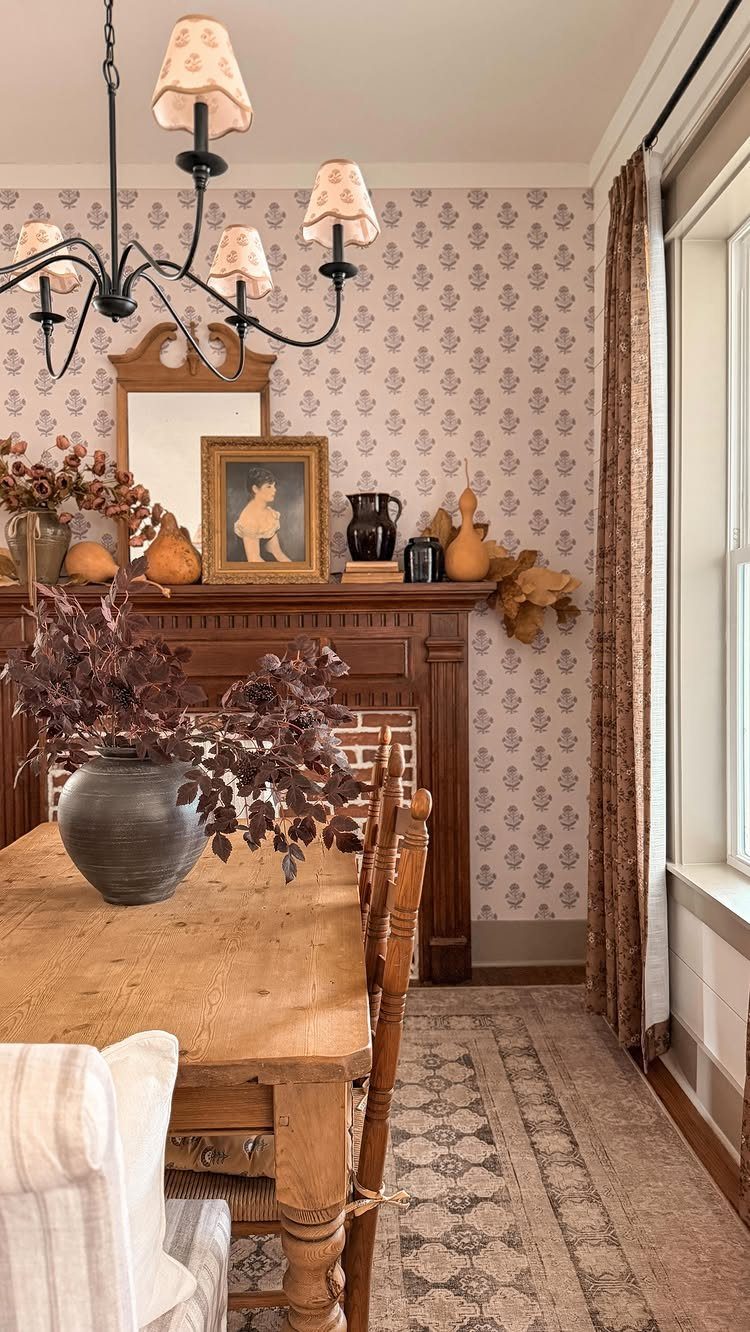
Solid wood does the heavy lifting in a farmhouse dining room, and a table with visible grain and chairs in the same family of tones will anchor floral wallpaper without fighting it.
With a pattern that busy on the walls, I would keep the furniture simple: plain legs, no carved extras.
Buy the table first, then choose chairs to match its tone. A mantel with autumn decor and a chandelier overhead add the warmth, so the wood itself can stay quiet.
On a young family’s horse farm outside of Philadelphia, designer Ellen Hamilton adds a sophisticated touch to rustic style. In the dining area, the circa-1800 table is American, the chairs are from the Danish Design Store, and the rug is by Beauvais.
2. Farmhouse-inspired Decor
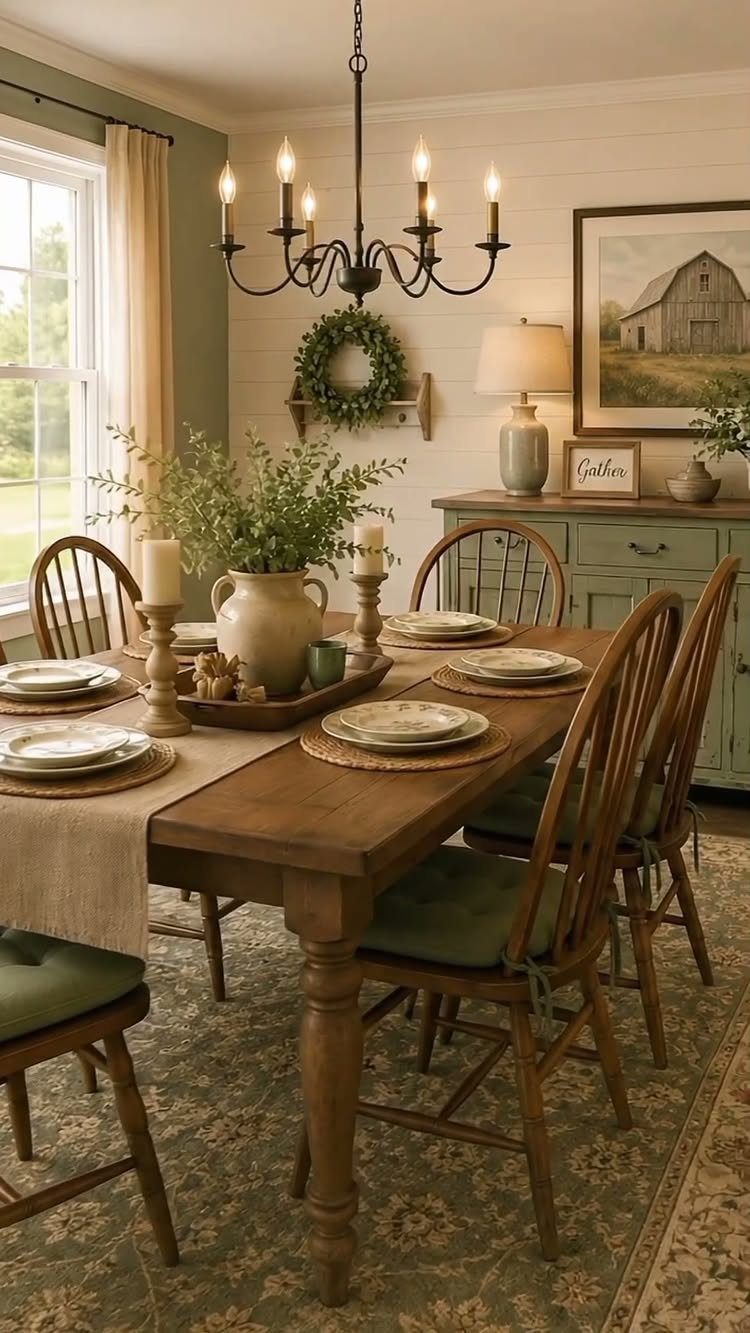
Small decor pieces set the farmhouse mood faster than any furniture swap, and they fit a rental budget. A wreath, a word sign on the sideboard and a dark chandelier over the table each carry the look alone.
I would pick two or three and stop. A sideboard top holds a sign and one other object before it reads as clutter.
Chairs painted a muted green, closer to sage or moss than kelly, are a bolder step if you want color, and they sit well against a wood table and white walls.
3. Oversized Dining Table
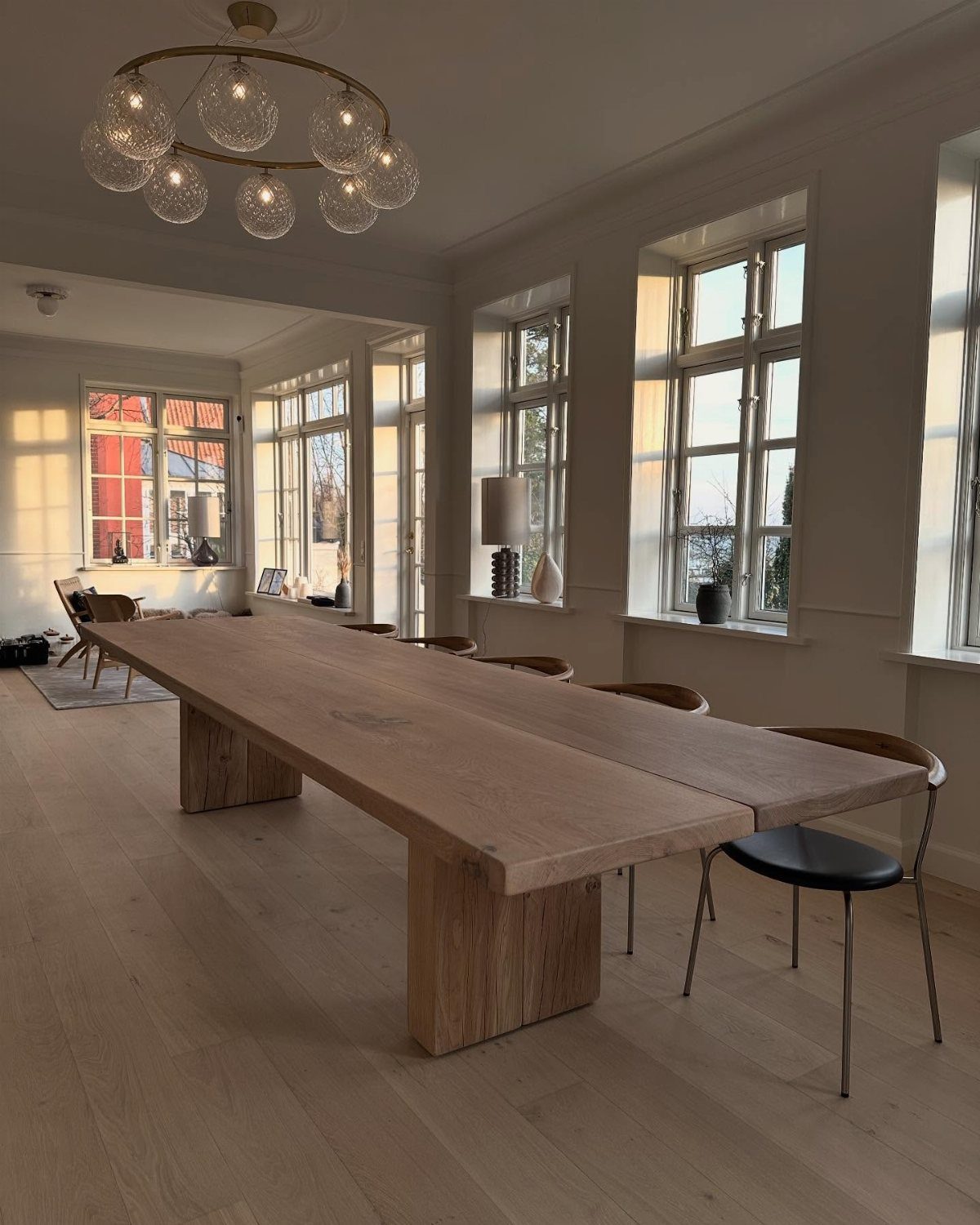
A table sized for a crowd makes the room a gathering spot before anyone sits down.
Measure before you buy, and leave walking space around every side.
If the table crowds the room, a smaller one will serve you better. Simple chairs let the tabletop stay the main feature.
4. Upholstered Chairs
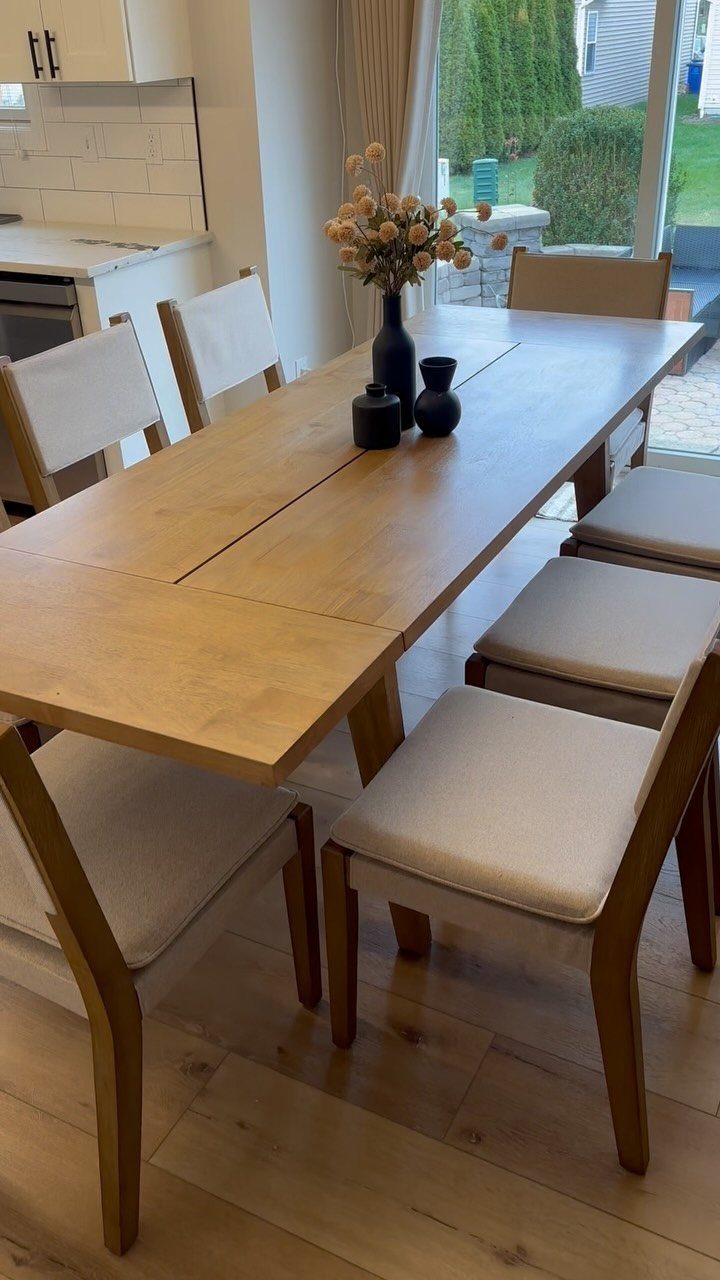
Padded seats keep people at the table after the plates are cleared, which is why I favor them over hard wood for long dinners. Beige upholstery sits easily against a wooden tabletop and lets the wood stay the star.
Set a few dark vases with dried stems down the middle for contrast. Choose a fabric you can wipe or wash, since a dining chair takes spills.
5. Banquette Seating
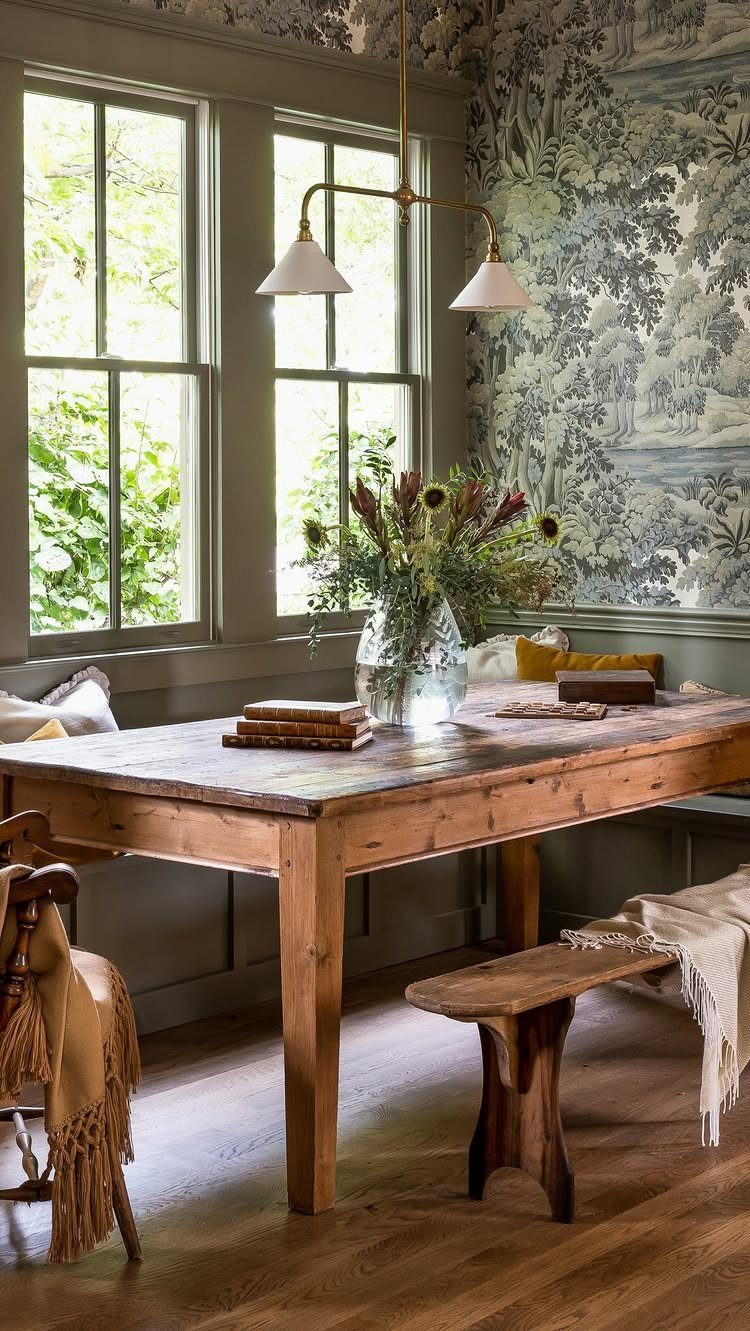
A banquette tucks seating against the wall, so the table can sit closer in and the room feels snug instead of crowded. Pair it with a loose bench or chairs on the open side, as in this rustic setup.
Built-in seating costs more time and money than loose chairs, so a bench against the wall is the cheaper test.
Add cushions for comfort. A patterned wallpaper behind it makes the corner feel finished.
6. Vintage Dishes
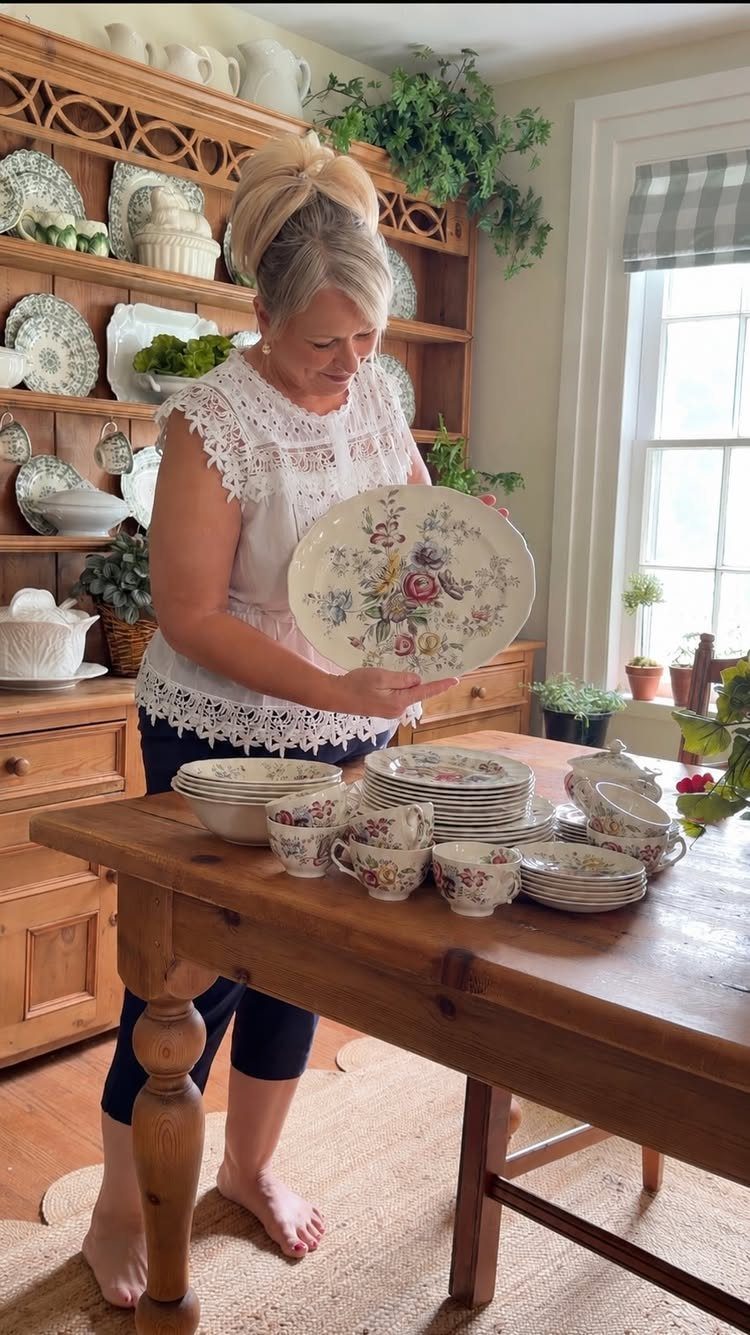
Floral plates in a matching set give a farmhouse table its character without a single new furniture purchase. Setting them out on a wooden table, or storing them in a hutch, puts them to work in both places.
Buy by pattern and stick to one style so the set looks deliberate.
Check for chips before paying. Using them for real meals is what makes them feel at home.
7. Wall-mounted Plates
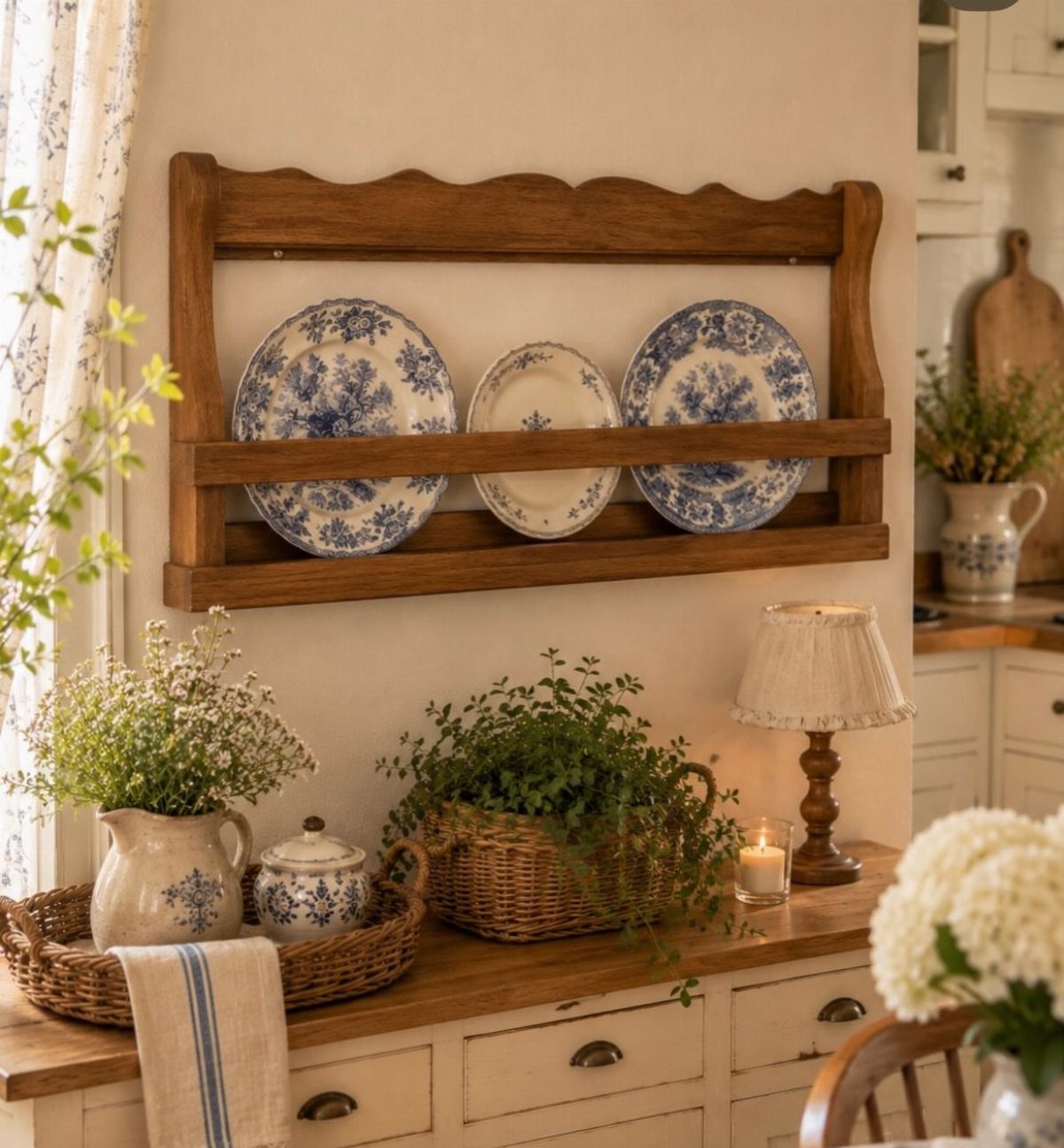
A wooden rack with a few blue and white plates hung above a counter gives a bare wall a focal point for the price of a handful of dishes.
Plates with one color story look deliberate, so I would stay with a single pattern family.
Hang an odd number, three being easy to balance, and keep the rack close above the counter so the plates read as part of the setup.
Check for chips before buying, and skip anything you plan to eat from after it has hung for a while.
8. Harvest Table
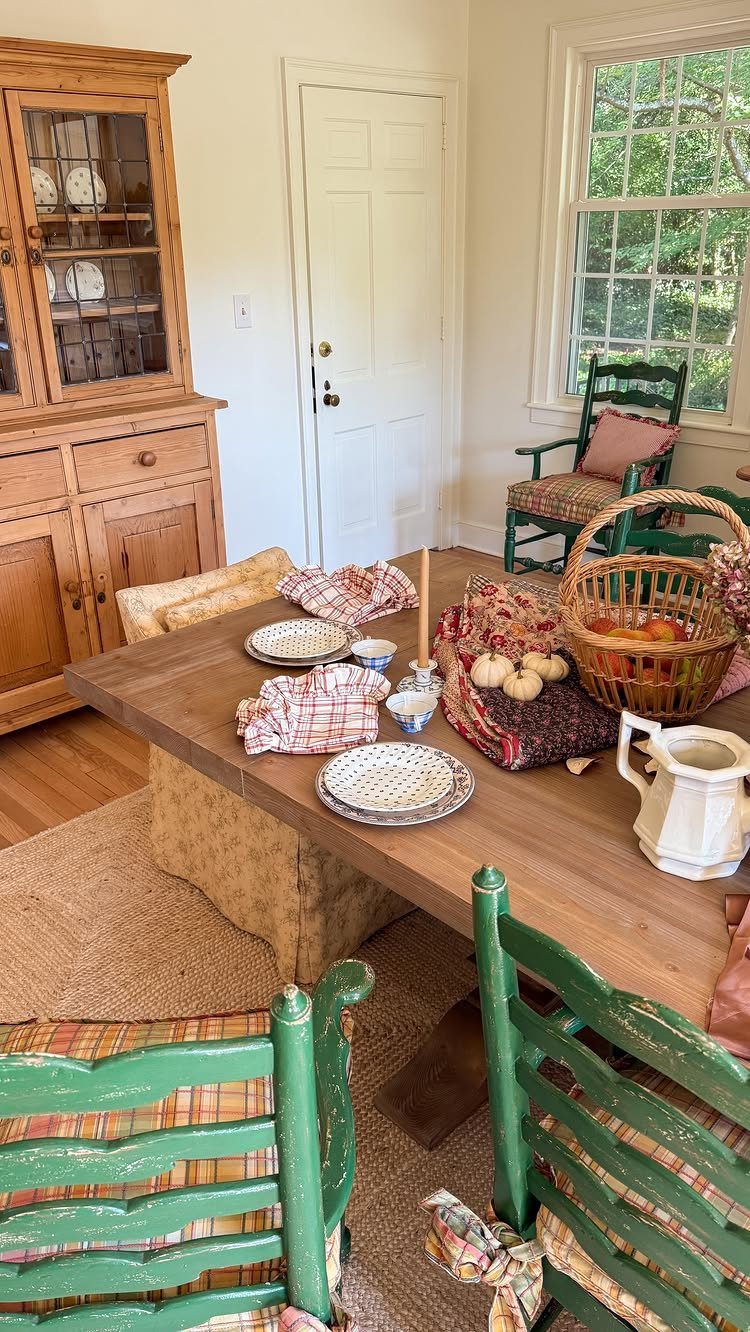
A plain wooden harvest table, set with a basket of fruit in the middle, is the most dependable farmhouse centerpiece I know. The fruit does the decorating, so the table needs nothing else.
Choose fruit you will actually eat, and refill the basket as it empties.
Keep plates and napkins simple so the grain stays visible. Green chairs and a hutch behind the table, as in this room, add color without crowding the wood.
9. Neutral Color Palette Dining Room
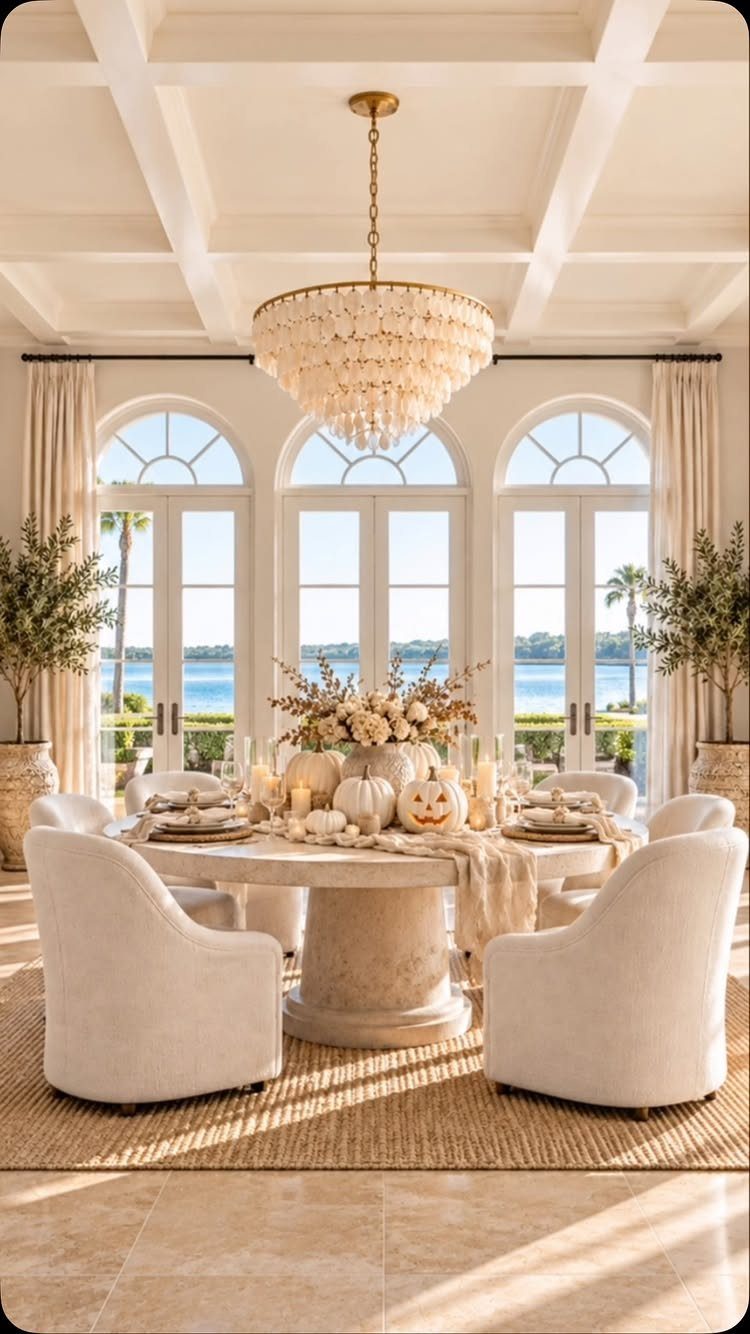
Cream, white and stone tones let the shapes in a room do the talking: a round table, a shell chandelier and arched windows need no competing color.
In a neutral room, texture replaces contrast, so I look for woven, stony and matte surfaces.
Rentals suit this well, since white chairs and neutral decor move with you.
Seasonal touches, like autumn pieces, can change on the table while the backdrop stays calm. Expect to wipe light upholstery often.
10. Mix and Match Chairs and Benches
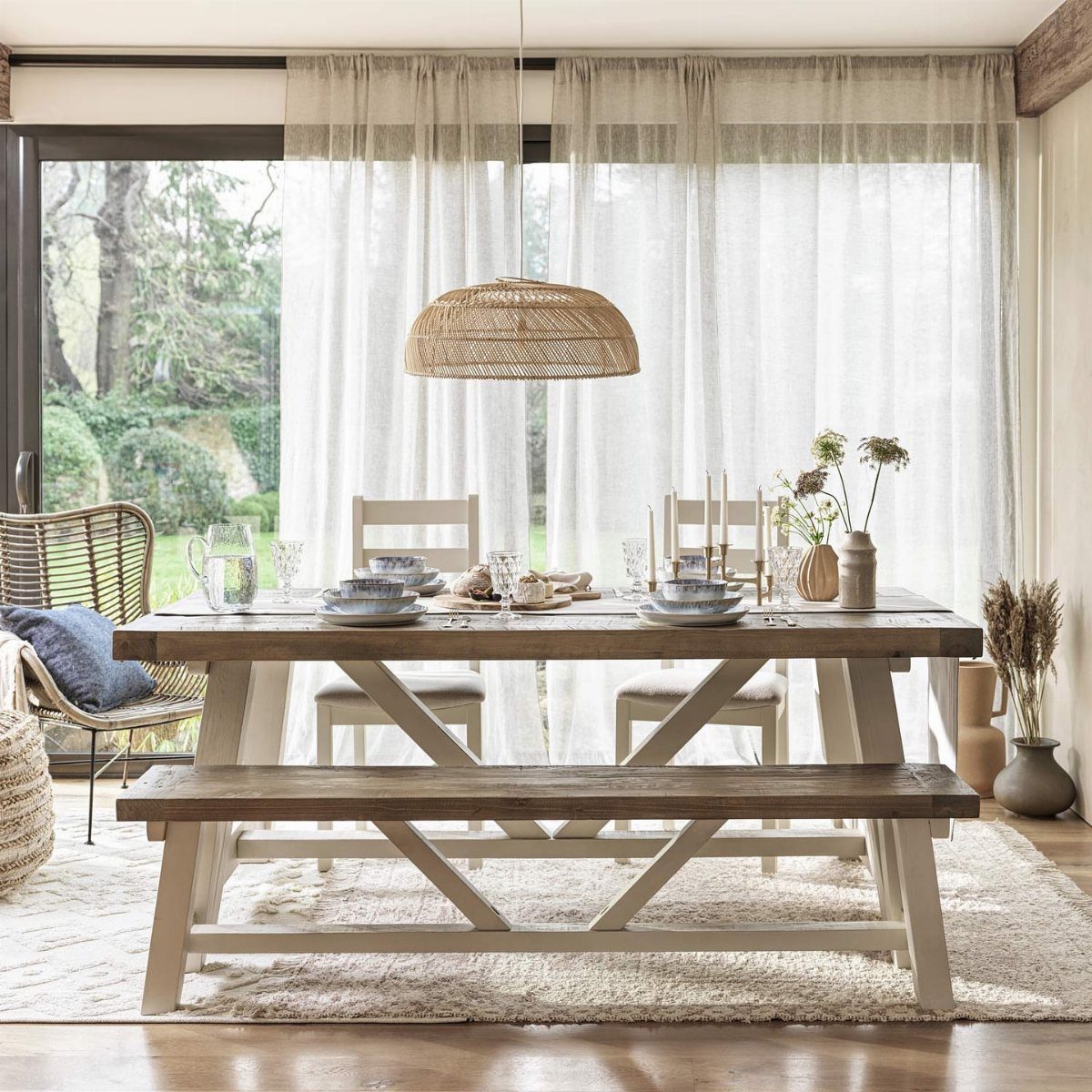
Pairing a bench with a couple of chairs breaks up the matched-set look that makes a dining room feel like a showroom.
A bench in the same wood as the table keeps the mix calm, and white chairs on the other side lighten it.
Benches also slide under the table, which frees floor space. I would add a cushion if dinners run long, since bare wood gets tiring.
11. Different Shades of Wood
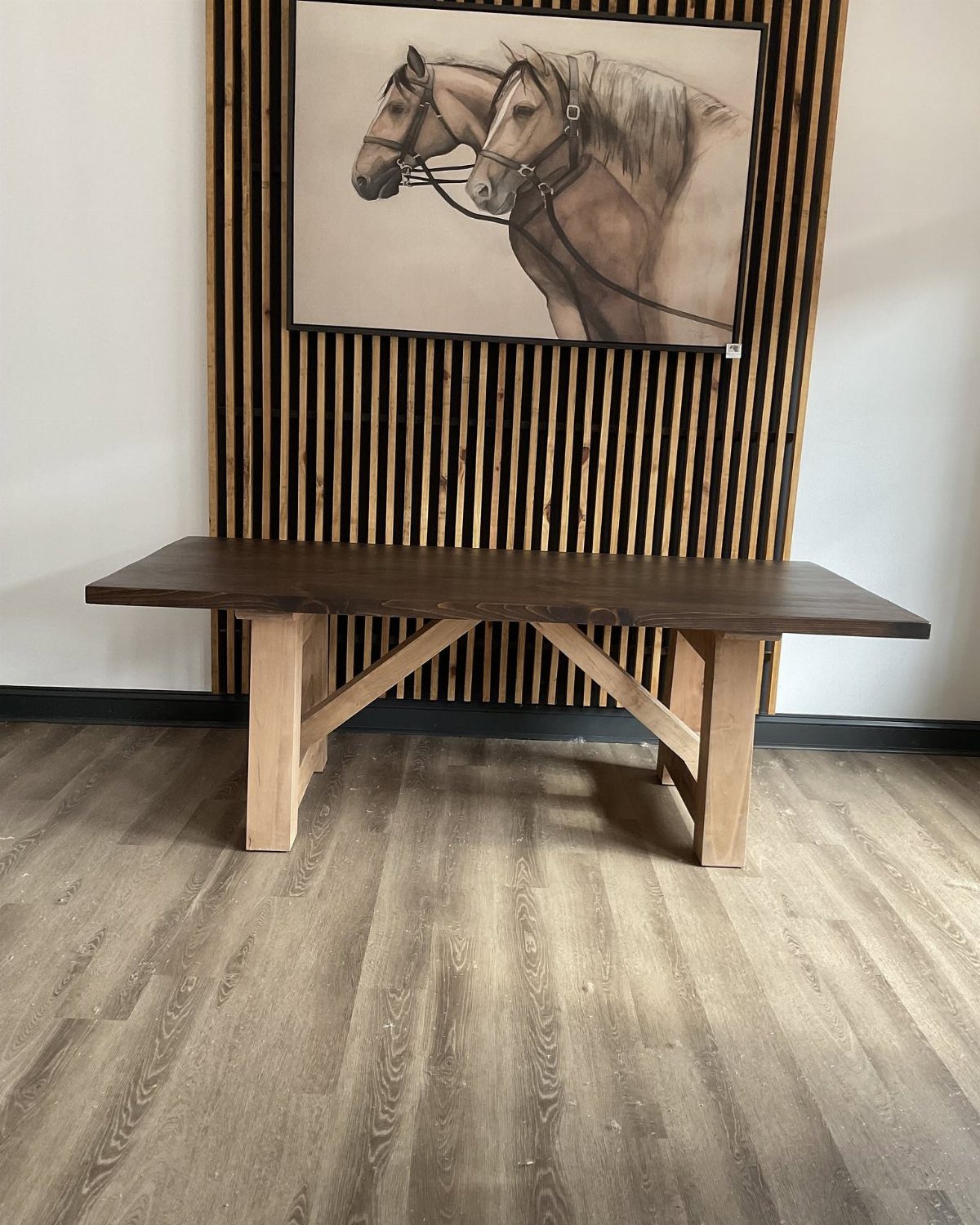
Dark tabletop, light legs: mixing wood tones gives a room depth that a single finish cannot. Keep the split deliberate by repeating each tone elsewhere, such as a slatted wall that echoes the light legs.
Avoid several near-matches, which look like a mistake.
Two or three clearly different shades read as a choice. If the table is already dark, add lighter wood in chairs or a frame rather than refinishing anything.
12. Open Shelving
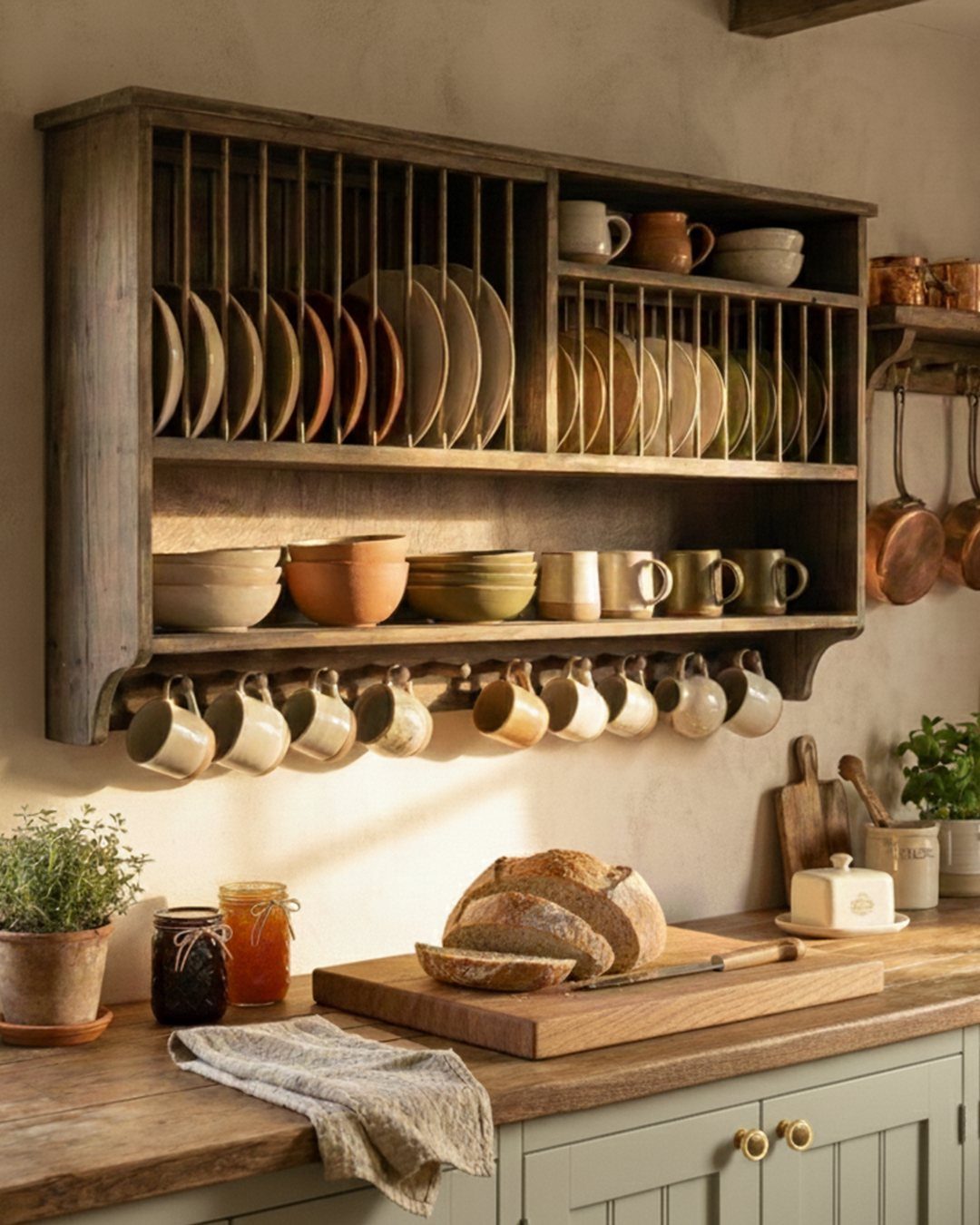
Open shelves put everyday ceramics on display, and they keep a kitchen from feeling closed in. Plates, bowls and mugs in matching tones look tidy even when they are in daily use.
Keep the shelves for items you reach for often, so dust never settles.
Stack plates, hang mugs or line them up, and leave a gap or two for a plant or jar of bread-baking staples. Wood brackets and boards are an affordable weekend project.
13. Statement Lighting
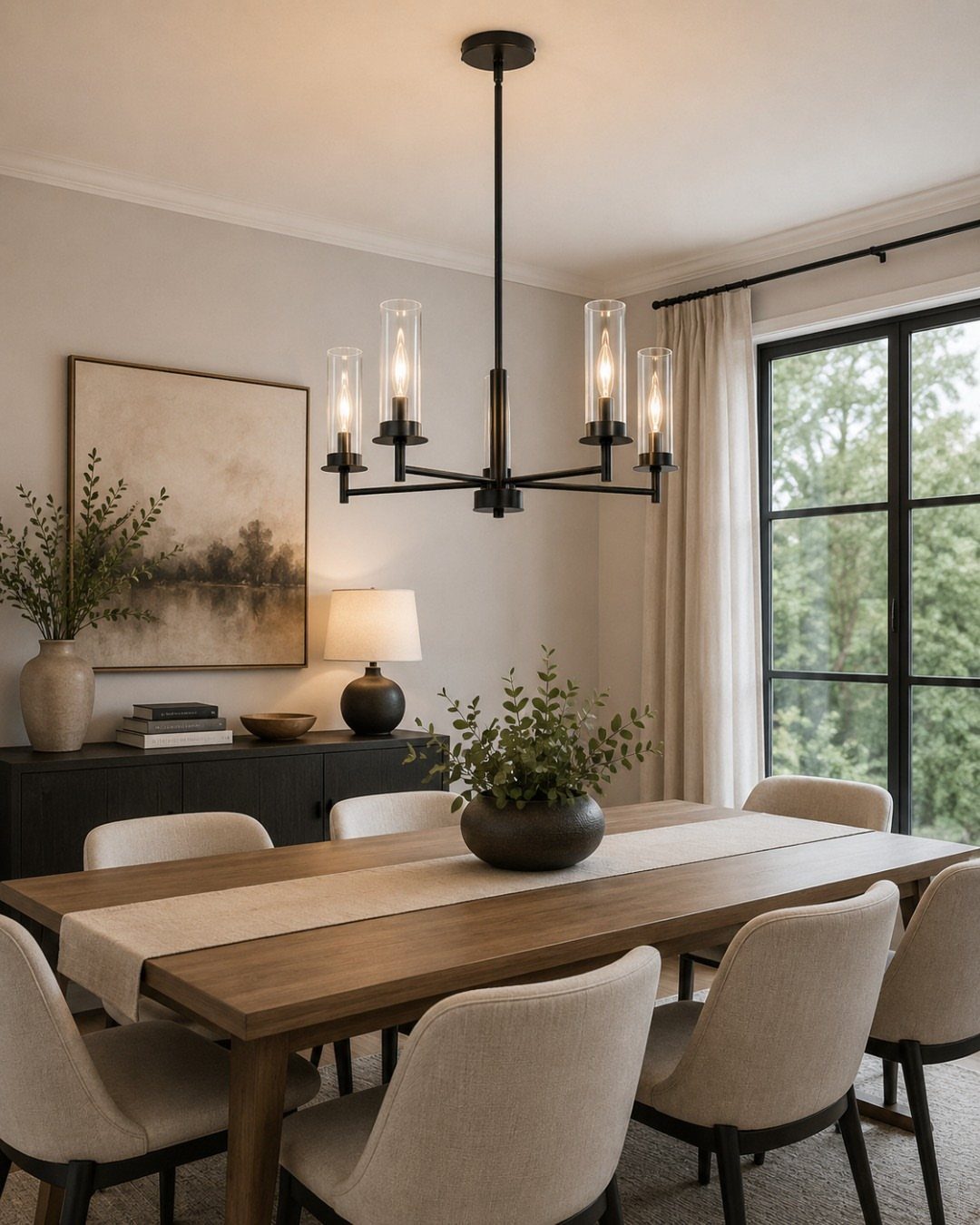
A black linear chandelier with glass shades gives a wooden table a strong overhead line, and it suits a room where the furniture stays simple. Beige chairs and a plain sideboard lamp let the fixture be the one bold piece.
Pick a fixture that runs along the table instead of one small pendant, so the light sits over the whole tabletop.
Hanging it is a job for a confident DIYer, or an electrician if you rent and need permission first. Keep the finish black to match the lamp base.
14. Exposed Beams
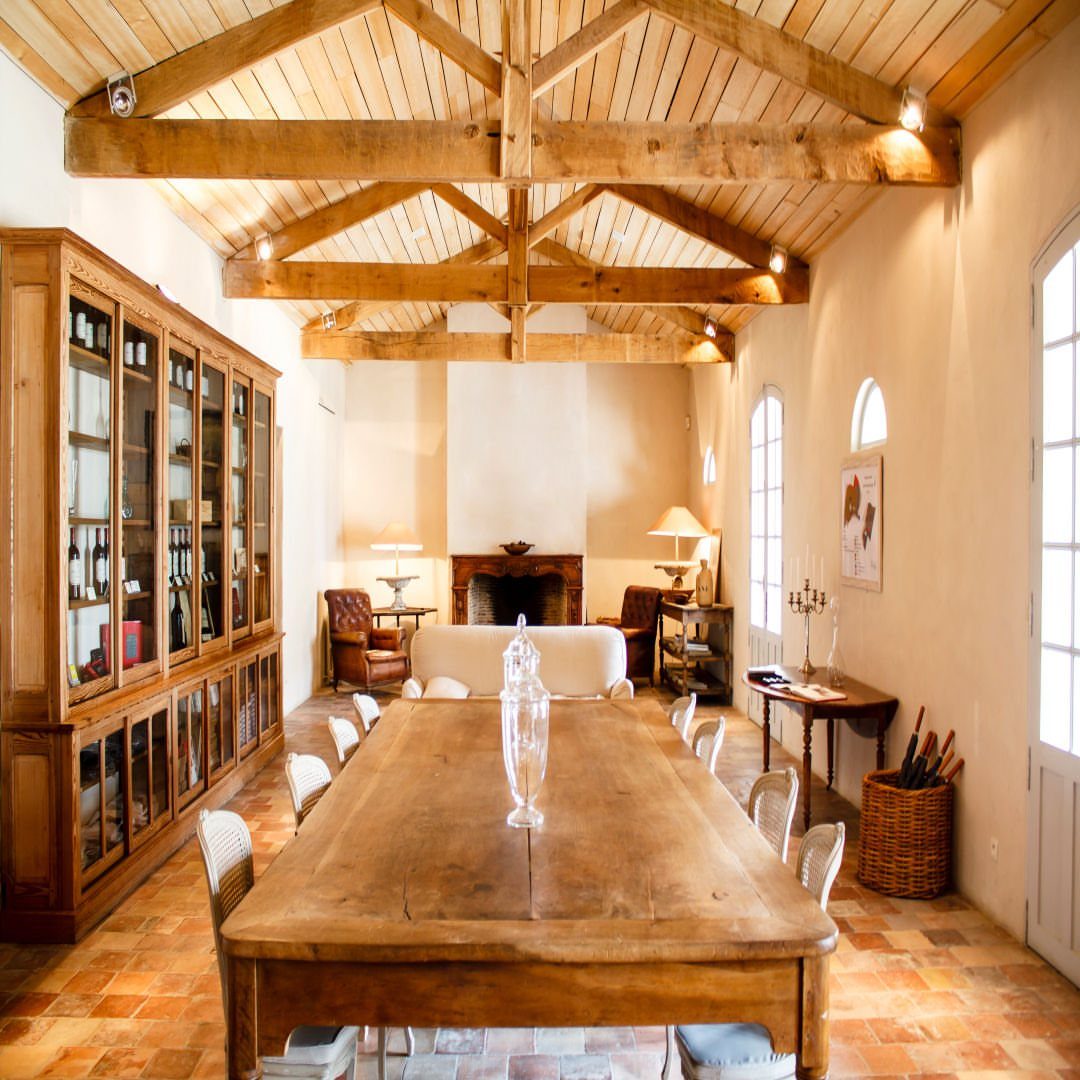
Wood beams overhead give a room character before a single piece of decor goes up, and they pair naturally with a long wooden table and a big hutch.
Where the ceiling already has them, I would leave them bare and let the grain show.
No beams in your place? Faux beams are the version I would test first.
Keep the rest of the room plain, since a fireplace, a hutch and a long table already fill the eye. A rental ceiling needs the landlord’s approval before anything gets fastened to it.
15. Textured Rugs
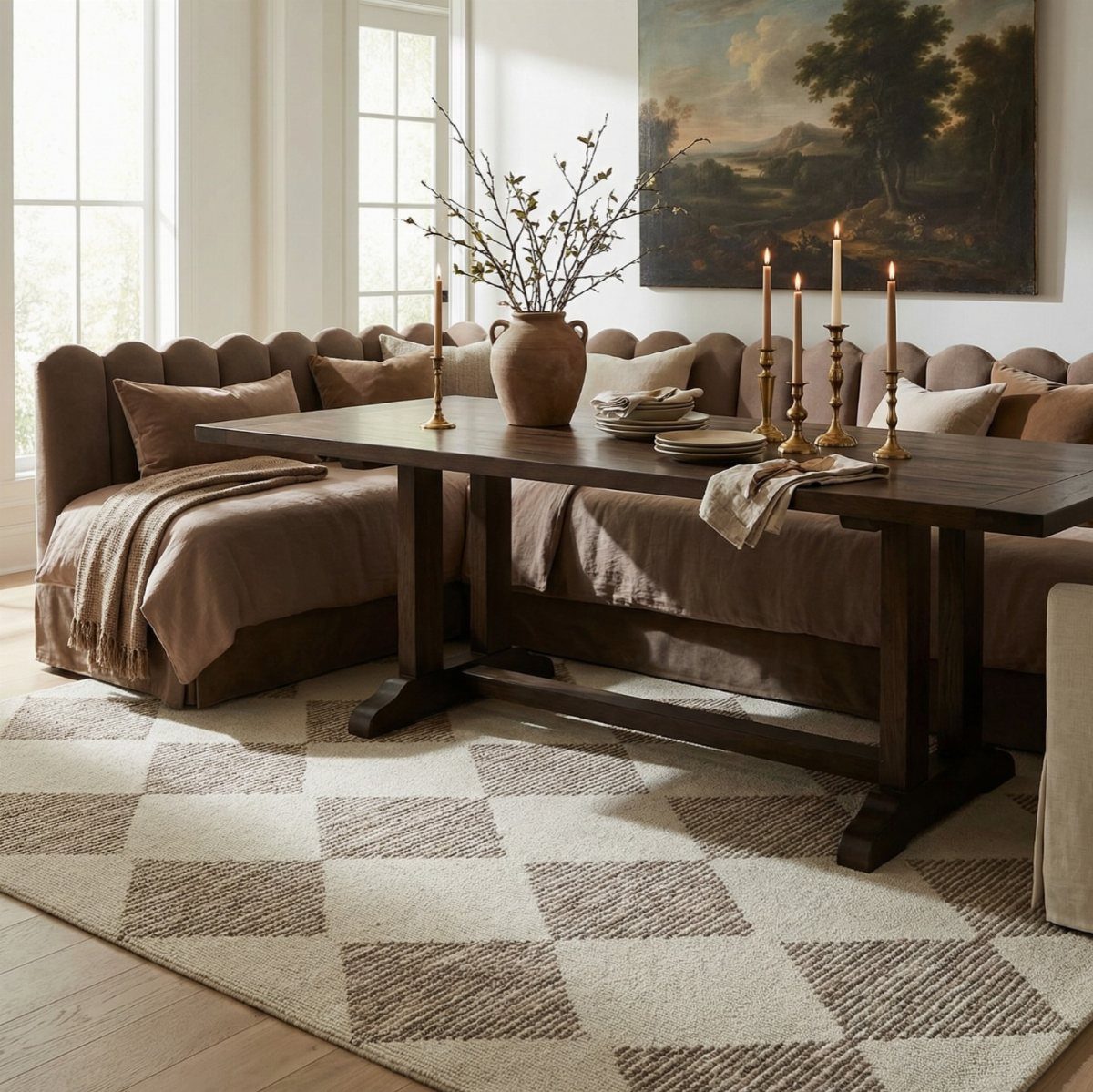
Underfoot, a checkered rug in beige and cream adds warmth and a soft surface, and the pattern stays quiet against a dark wood table.
Texture is what makes it work here: the woven look breaks up the dark wood and brown seating above it.
Choose a rug large enough that the chairs stay on it when pulled out.
Pick a pattern with low contrast, like this one, so the room does not feel busy. Candles and a landscape painting finish the setup.
Creating a Cozy Atmosphere
Farmhouse style is built for long meals, so judge every choice by whether it makes people want to stay. Comfort comes from warmth and character, and you can use as much or as little of the style as you like.
Farmhouse style gets along with almost any other look, from traditional to industrial to a little glam, so one reclaimed-wood piece or a few green stems can anchor the room.
Space matters as much as decor. Real farmhouses tend to be large and full of light, and a smaller modern home can borrow that feeling by leaving ample room between furniture pieces.
I would pull one piece out before adding another. Air moving around the table makes a room feel welcoming, and that is half of what cozy means here.
Choosing the Right Colors
Start the walls and big surfaces in neutrals: white, off-white, cream, gray or greige, plus earthy tones.
These shades make a calm backdrop that lets wood, dishes and metal finishes stand out, and they stay timeless long after trends move on.
Color still has a place, as small pops.
If you want an accent, light blues, yellows and greens are the safe picks. Avoid bold, overly saturated shades, which close the room in and cut against the open, fresh look.
A practical way to test a palette is to buy a sample pot of the paint and brush it on a large piece of poster board. Move it around the room at different hours before committing a whole wall.
Importance of Lighting
Lighting sets the mood of a dining room more than any single piece of furniture.
Pick one fixture with real farmhouse character, like a chandelier trimmed in wood or a set of pendants fitted with vintage-style bulbs, and let it carry the room.
Pick warm bulbs rather than white ones. Warm light flatters food and faces, and it makes a room feel inviting for hosting.
Dropping the pendants a bit lower over the table gives the room a quieter, more settled feel.
If you go that route, cluster several pendants together for impact, and check that they hang clear of sight lines across the table so guests can still see each other.
A dimmer switch is an inexpensive add-on that lets one fixture serve both a quick breakfast and a slow dinner.
Frequently Asked Questions
How do you decorate your home in farmhouse style?
Start with solid wood furniture and a calm backdrop of white, cream or gray walls, then add two or three small pieces such as a wreath, a word sign or a dark chandelier.
Natural wood, linen and handmade or artisan goods bring in the outdoors and a personal touch. Mixing old and new keeps the look relaxed, and stopping at a few pieces keeps it from turning into clutter.
How do you decorate a small dining room?
Choose space-saving furniture and keep the layout open, since a small room feels cozy only when air moves around the table.
A banquette lets the table sit closer to the wall, and a bench slides under the table to free floor space.
What color should I paint my dining room?
For farmhouse style, go with neutrals: white, off-white, cream, gray or greige, plus earthy tones. Those shades stay out of the way, so the wood grain, the dishes and the black or brass hardware get the attention.
Keep bolder color to small pops like light blue, yellow or green, and brush a sample on poster board to check it at different hours before painting a wall.
What is modern farmhouse decor?
Modern farmhouse takes the old country look, with its wood and worn finishes, and trims it down with straight lines and less clutter, so the room stays cozy without looking fussy.
It leans on natural wood, linen, metal accents, mismatched seating and vintage touches, with geometric shapes in lights, mirrors and art. The result is rustic charm without fuss.





