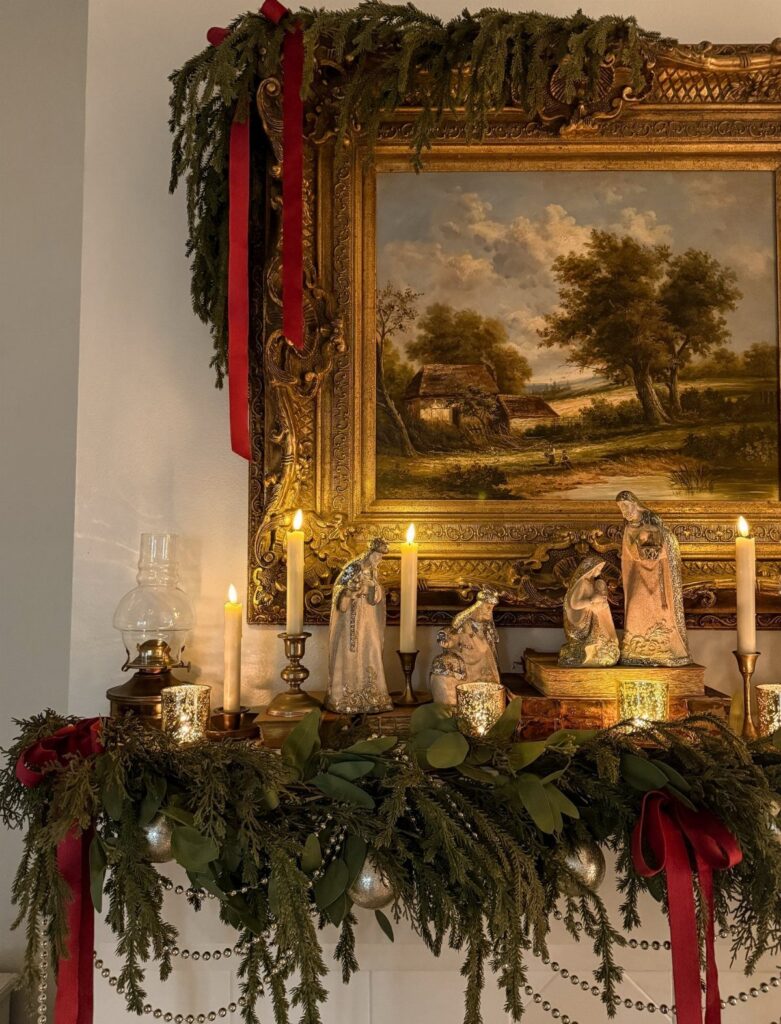
Which of these ideas fits your home depends on what you already have: a mantel calls for gilded candelabras and thick greenery, a dark front door suits a natural wreath, and a dining table or sideboard is the place for a frosted sugared fruit bowl.
The list runs from cheap, hands-on projects like evergreen garlands and a vintage mailbox of antique postcards to a full, decorated Christmas tree.
Prices stay low because a few good pieces mixed with homemade ones carry the look, and glass ornaments in sets run $9 for 4.
1. Decorated Christmas Tree
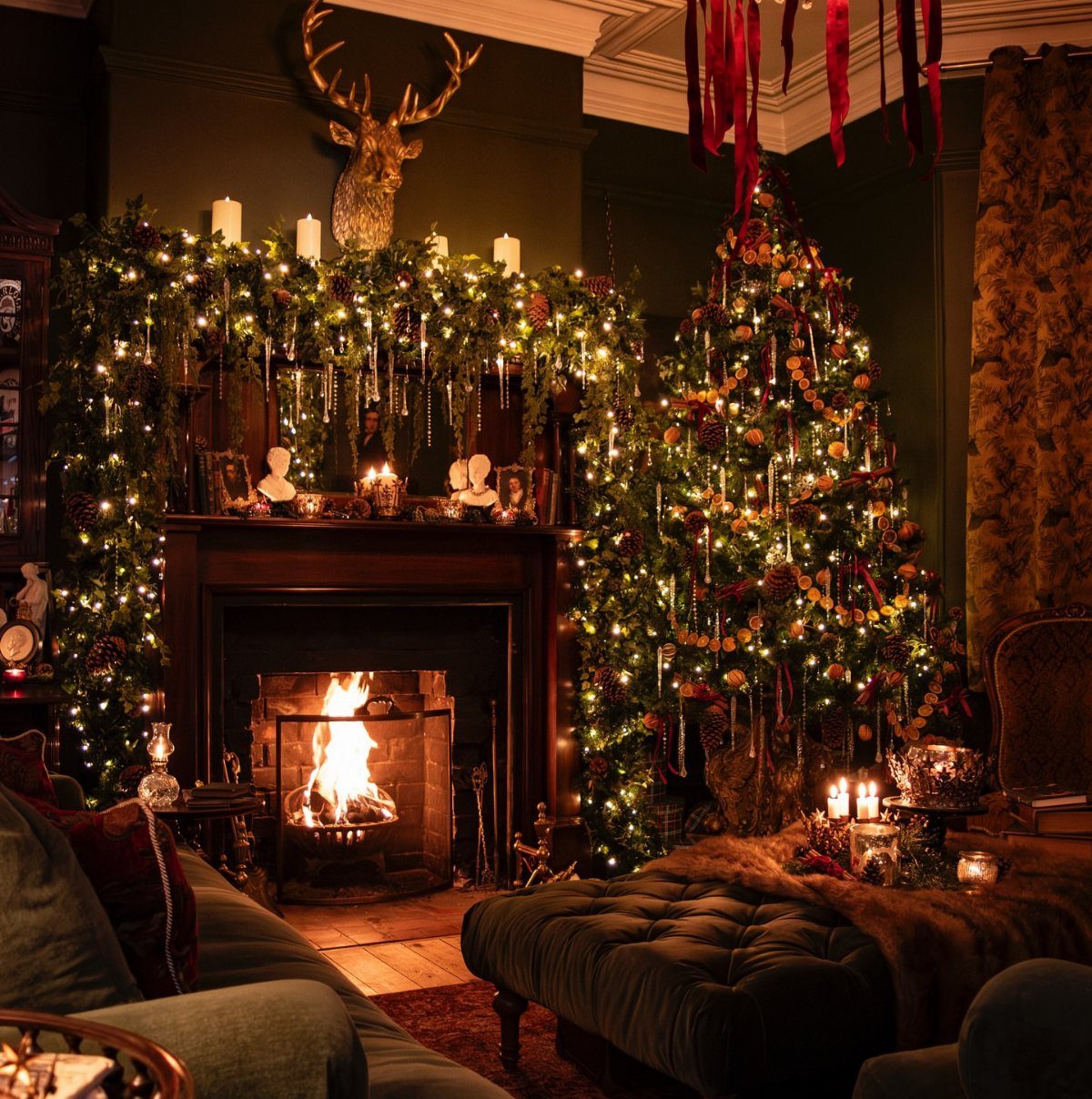
A Victorian tree earns its look through layers: many different ornaments crowded onto the branches rather than one tidy theme.
For a budget, I would mix a few good pieces with homemade ones, like paper ornaments or dried fruit slices, and let kids add their own.
Keep the tree near a low lamp or a few candle-style LED lights, since a moody room suits this style better than bright overhead light.
2. Evergreen Garlands
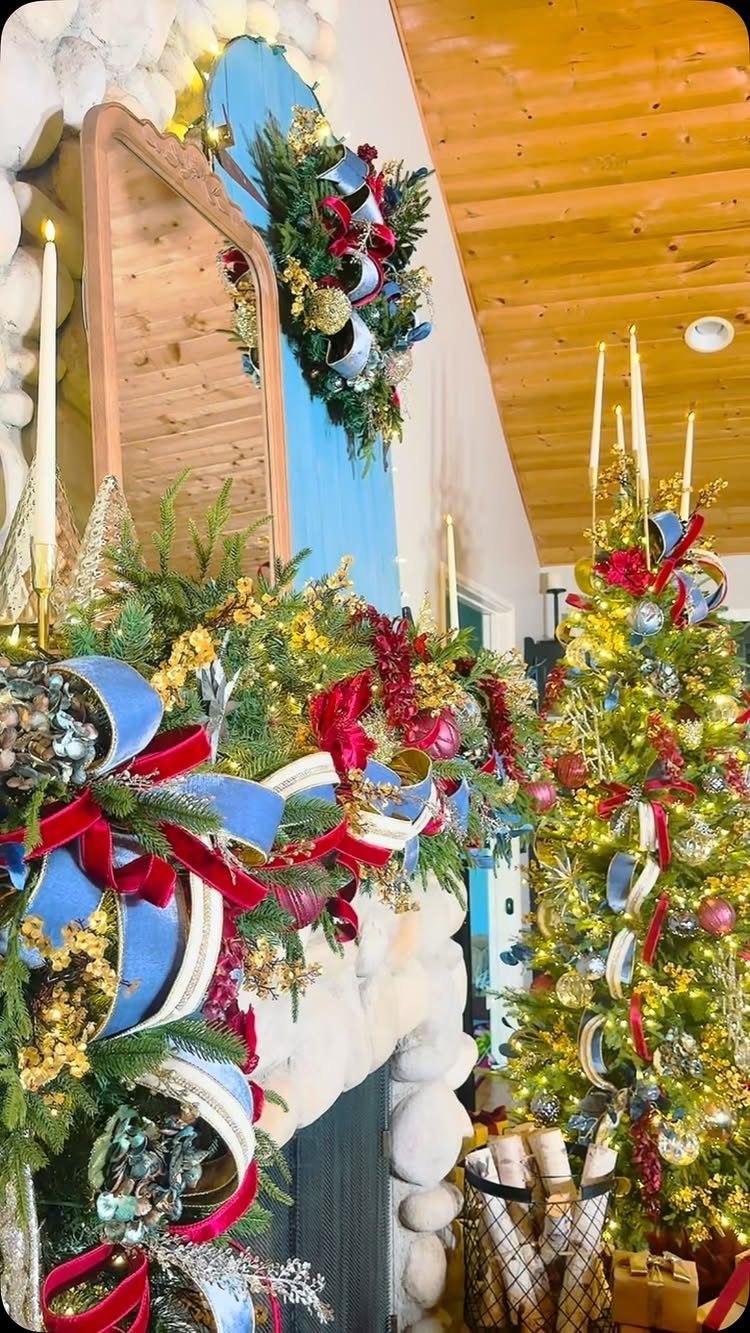
Fresh evergreen garlands are the cheapest way to make a room smell and look like the holidays at once.
Ribbon does the styling, and I like a pair of contrasting colors, such as the red and blue used here, tied in loose bows along the swag.
Drape a garland over a mantel or around a doorway, then tuck a few ribbon tails into the greenery so the bows look grown there. Fresh boughs dry out, so buy them close to the day you hang them.
3. Natural Wreaths
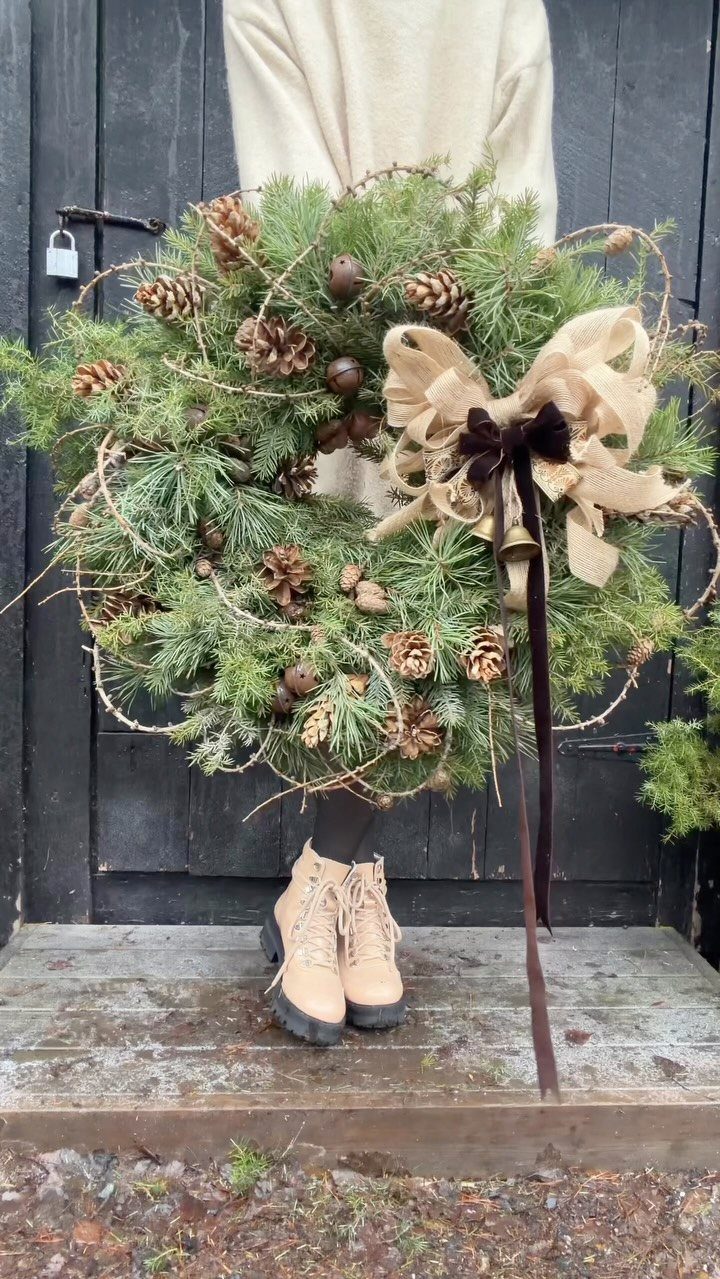
Gather the natural pieces on a walk, then wire them onto an evergreen base and finish with a bow and a small bell.
A dark door makes the greens stand out, so a black or deep-colored entry is the best place to hang one. Craft stores sell plain bases if weaving your own feels like too much for a weekend.
4. Frosted Sugared Fruit Bowls
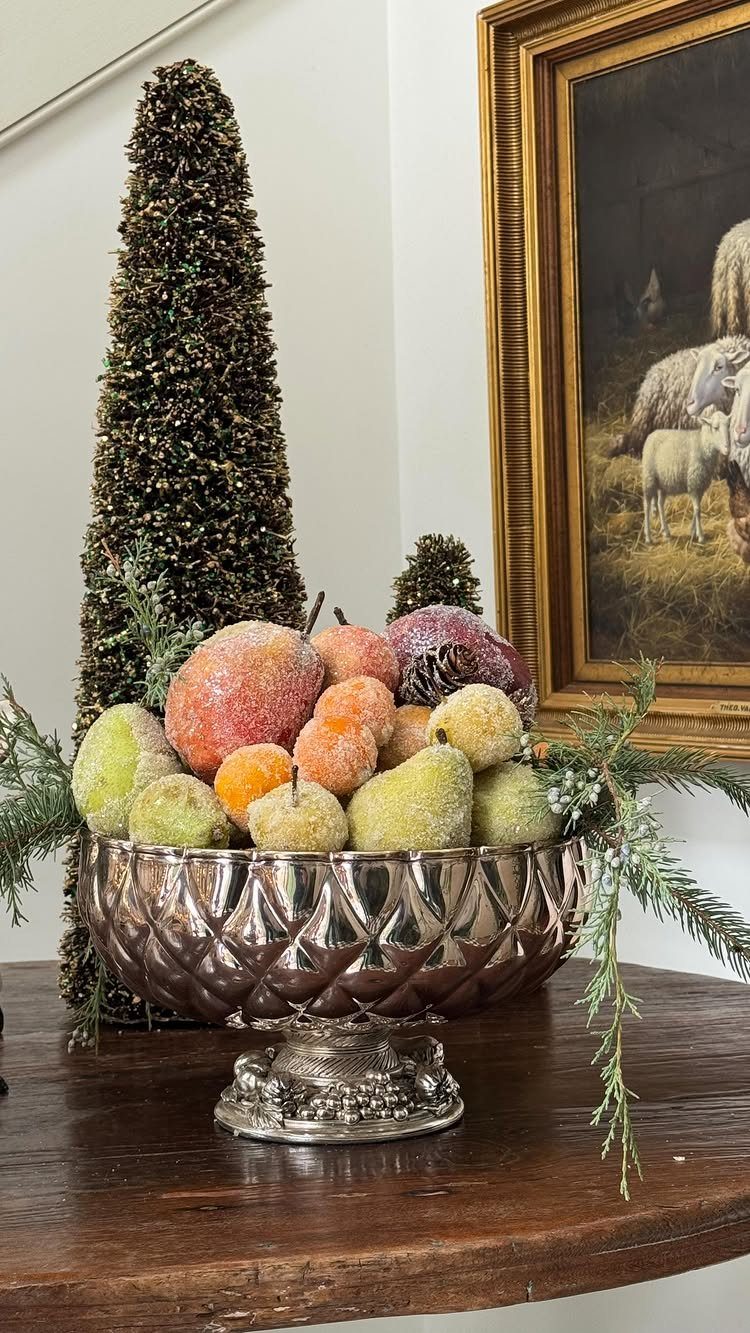
Sugared pears and peaches look like frost on a silver bowl, and they cost little to make. Brush fruit lightly with a sticky coating, roll it in sugar, and let it dry before piling it high.
Tuck evergreen sprigs between the pieces so the fruit has some green to rest against. I would set the bowl on a sideboard or dining table where it can be admired, not touched, since sugared fruit is meant for looking.
5. Gilded Candelabras and Lush Mantel Greenery
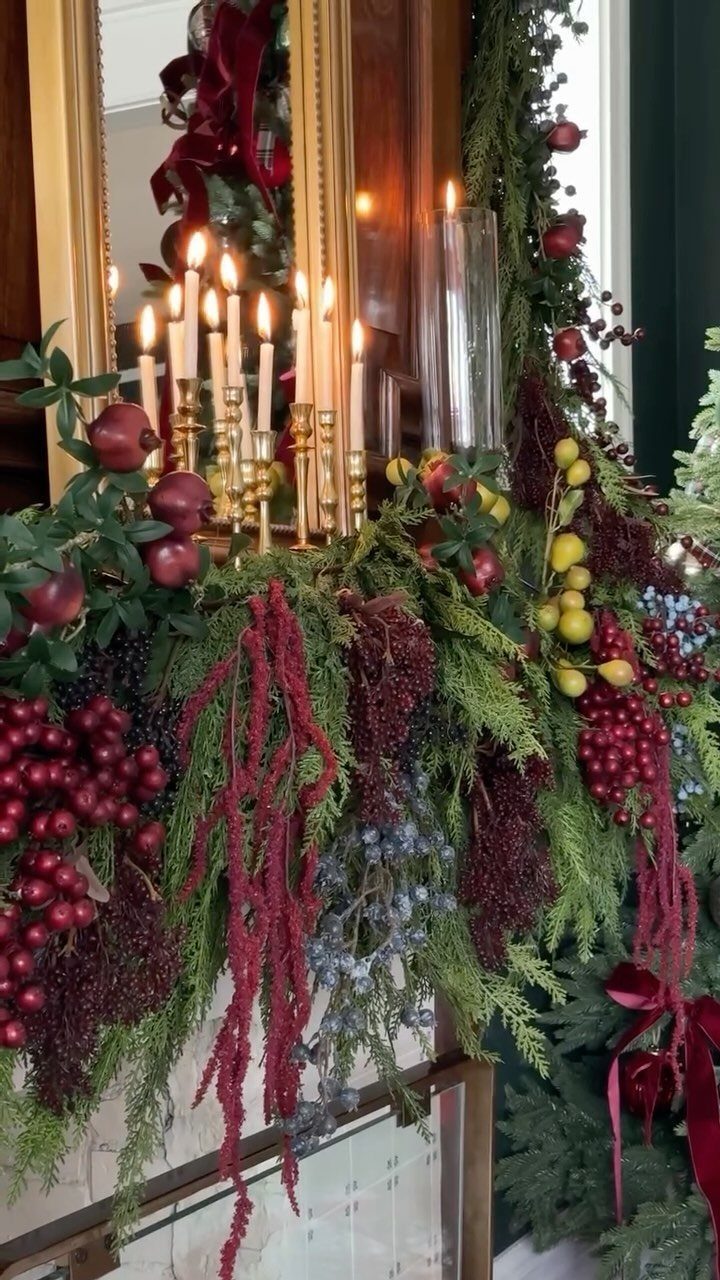
Gold candelabras on a mantel need very little else: thick greenery, a few red berries and pomegranates, and tall tapers. Pile the branches generously around the bases so no bare mantel shows, then set the candles at different heights.
A mirror behind the arrangement doubles the glow. Real flames and dry greenery sit close together, so trim branches well away from the wicks and never leave the candles burning unattended.
6. Vintage Mailbox with Antique Postcards
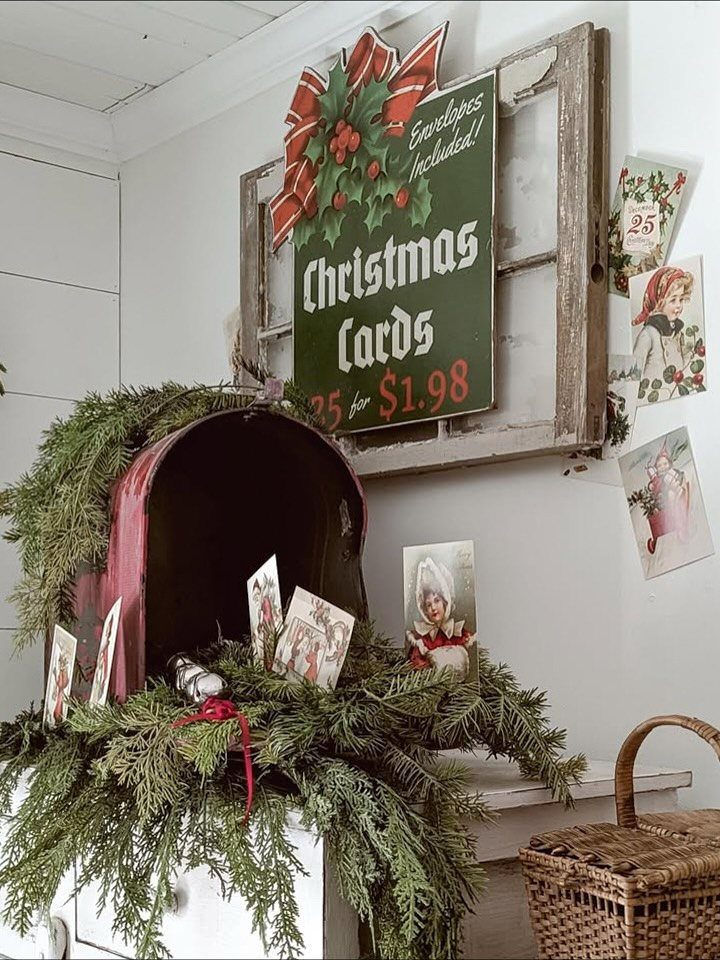
An old red mailbox turns Christmas cards into a decoration. Stuff it with fresh evergreen sprigs, then slip in antique postcards so the images face out.
Flea markets and thrift shops are good places to look for both the mailbox and the postcards, and prices stay modest.
Add a small "Christmas Cards" sign nearby, and the box doubles as a spot where family and guests can drop their own greetings.
Victorian Christmas Traditions
Victorian Christmas looks familiar because so much of it started in that era. Christmas barely registered as a holiday in Britain around 1800, yet by 1900 it was the biggest celebration on the calendar.
The tree took off after an 1848 drawing of Queen Victoria, Prince Albert and their children around one appeared in the Illustrated London News.
Albert came from Germany, where people had long been bringing evergreens indoors and trimming them, so the habit arrived with him.
Christmas cards came from the same period, along with kissing under mistletoe, which stood for romance. Hang a sprig in a doorway and you carry on a tradition that is nearly 2 centuries old.
Also, the era was colorful, not the smoggy gloom people often picture. Bright color suits this style better than a muted palette.
Shopping for Decorations
Start with the places closest to home.
Home decor stores, local floral shops and garden centers all carry glass ornaments, and the prices can be low: sets of hand blown glass for $24 for 16 pieces or $9 for 4, single ornaments at a floral shop for $4–$10, and small clip-on birds for $2 each.
Go when the doors open. You get the full shelf and no crowds.
For true vintage glass, check antique stores, then eBay and Etsy. Old pieces cost more than new ones, so buy a few standouts and fill in around them with the cheaper sets.
Many shops offer curbside pickup, so you can order ahead and skip the browsing.
Online sellers also list sets under $7 for 4 pieces. Those are not precious, but they hold up and can be reused for years.
Creating a Festive Atmosphere
Warmth in a Victorian room comes from 3 things working together: candlelight, rich color and natural greenery. Turn off the overhead light and let the glow do the work.
Rich color means deep tones, and ribbons and baubles in bright colors add sparkle against the green. Victorian life was full of color, so don’t be afraid of saturated reds, blues and golds.
Glittering, reflective ornaments catch candlelight and throw it around the room. That is exactly why Victorians liked them, and it costs nothing to place them where the light reaches.
Use real greenery in layers, then add ribbon so the green looks dressed rather than bare. If you want candles without the risk of open flame, battery tapers give a similar glow.
Frequently Asked Questions
What are some popular Christmas decorations?
Trees, evergreen garlands, wreaths and ornaments are the classics. Garlands are the cheapest of these, since fresh boughs with a few ribbon bows scent and dress a mantel or doorway at once.
Dried-out needles ruin a swag fast, so I buy greenery within a few days of hanging it and keep it in a bucket of water until then.
What did Victorians decorate their Christmas trees with?
The first Victorian trees were dressed with things people had on hand: apples, nuts, dried flowers, twigs, ribbon and real candles, while blown-glass ornaments only showed up later.
Nothing matched on purpose; branches were packed with every kind of ornament instead of following one tidy scheme.
On a tight budget, I’d buy a handful of good glass ornaments and fill the gaps with paper shapes you cut yourself or dried orange slices.
What are some traditional Christmas crafts?
Wreaths, dried fruit slices and paper ornaments are easy ones for a weekend. Start a wreath with a plain evergreen ring, wire on pinecones, berries and clippings from a walk outside, then add a ribbon bow and one small bell.
Sugared fruit is another easy one: brush pears or peaches with a sticky glaze, roll them in sugar, and let them dry on a rack.
How is Victorian Christmas different from now?
Christmas was barely a holiday in Britain around 1800, yet by 1900 it was the biggest celebration of the year.
Victorian celebrations leaned on family gatherings, handmade decorations and charity, and early trees were trimmed with natural items like dried fruit and nuts.
People tend to picture gray, smoky streets, yet the era loved strong color, which is why deep reds, blues and golds fit this style so well.





