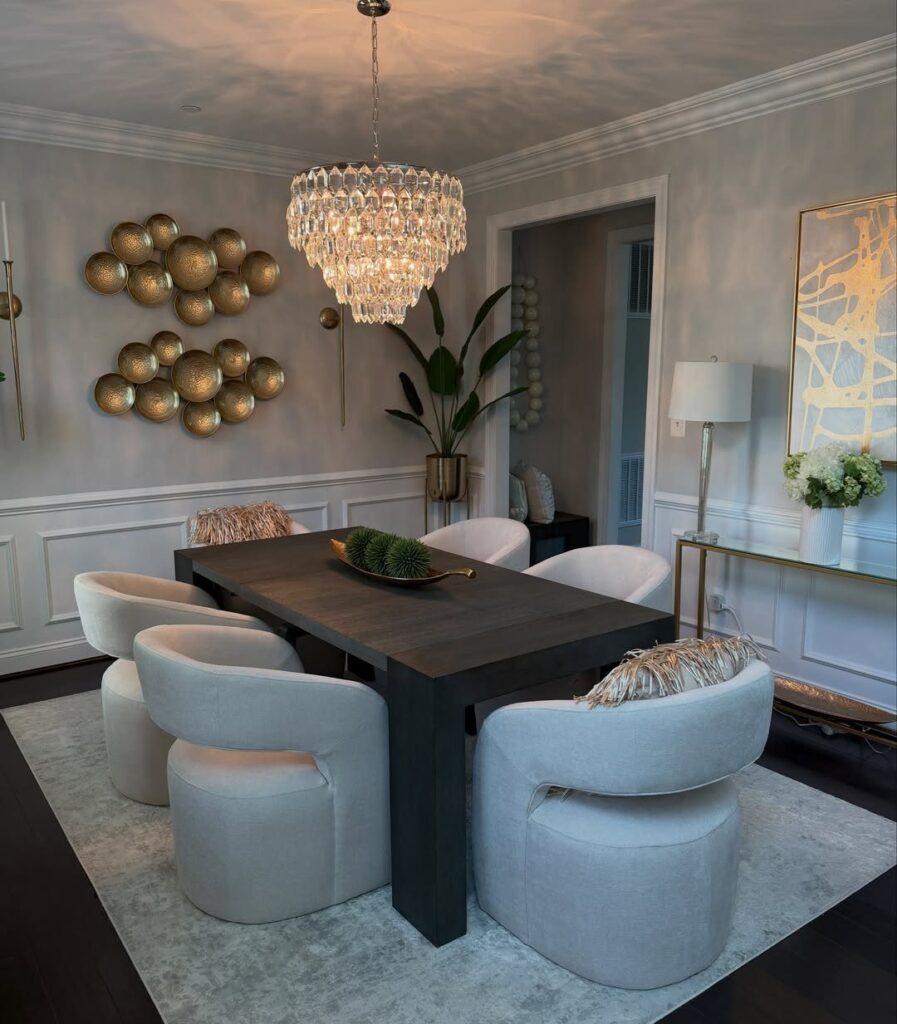
The list covers a lone vase, a bowl of moss balls that needs no upkeep, and a terrarium built into the tabletop, which is a furniture purchase rather than a weekend swap.
Your table’s shape and length decide which one fits: a round table wants a single centered piece, while a long rectangular one can carry a pair or trio of vases, or a row of small candle and greenery arrangements, along its length.
Whatever you pick, keep it low enough that guests can talk across it.
1. Single Large Vase
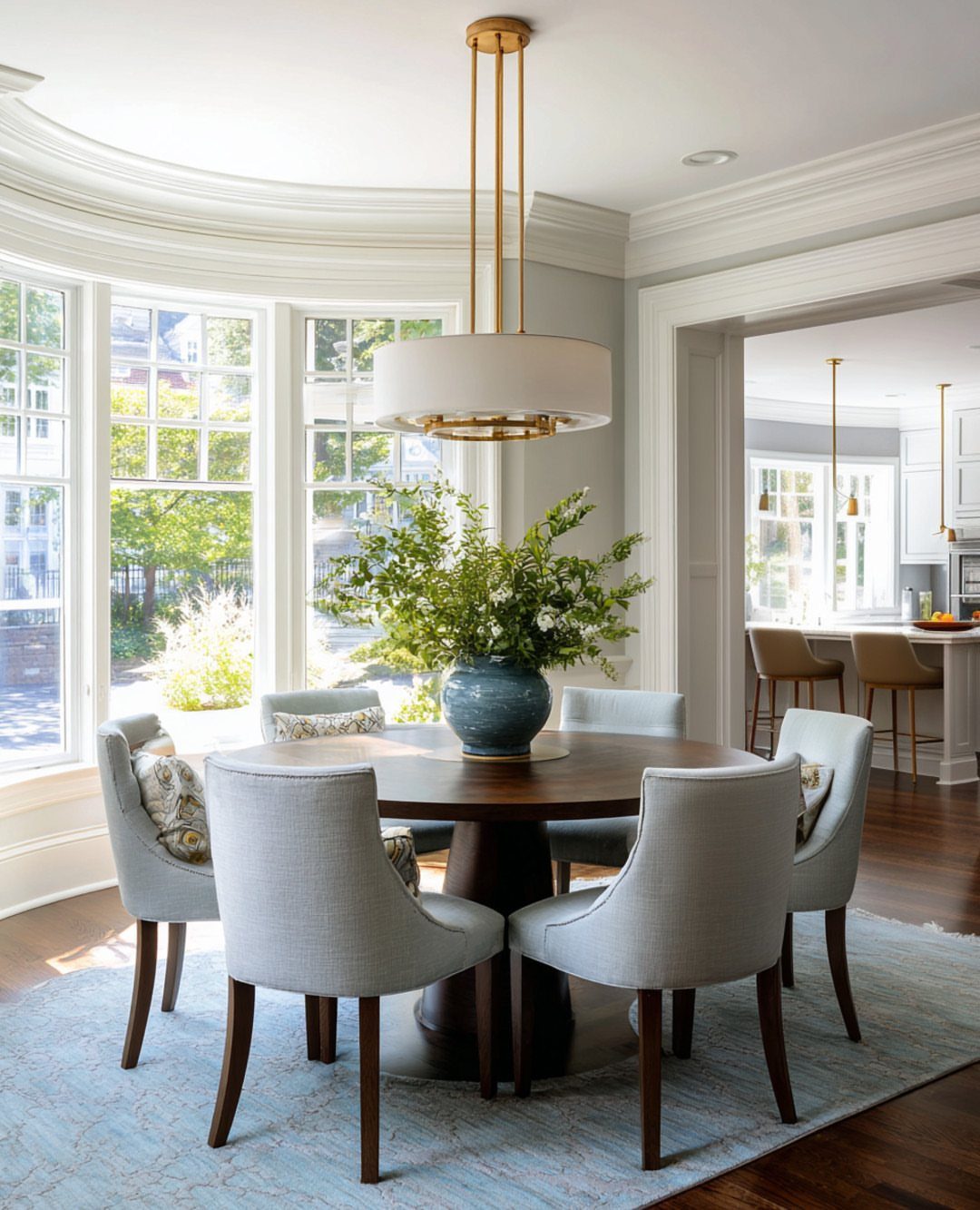
One oversized vase does more for a round table than a scattered handful of small pieces. A round table has no head or foot, so a single centered shape gives the eye an obvious place to land.
Pick a vase tall enough to read from across the room, then fill it with white blooms plus 2–3 branches of greenery so the blue stays the star.
I’d skip a second accent on the table, since the vase works best alone.
2. Tray with Candles, Flowers
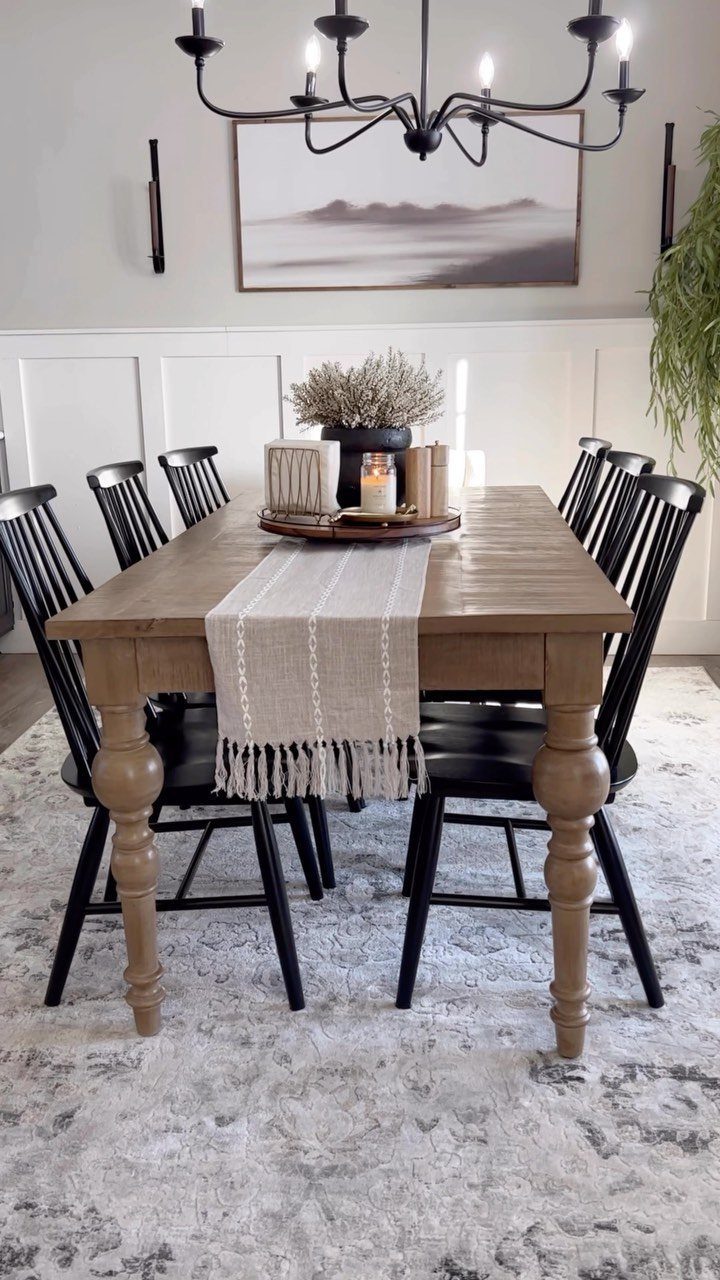
A round tray turns a loose pile of decor into one deliberate unit, and that is why I reach for it on a table with a runner.
Everything sits inside a single edge, so the table looks styled even when the items are ordinary.
Stack a few books, add a vase or small potted plant, and set a candle beside them.
Vary the heights, and keep the tray narrower than the runner so plates still have room. Clearing the table takes one lift.
3. Candle Arrangements
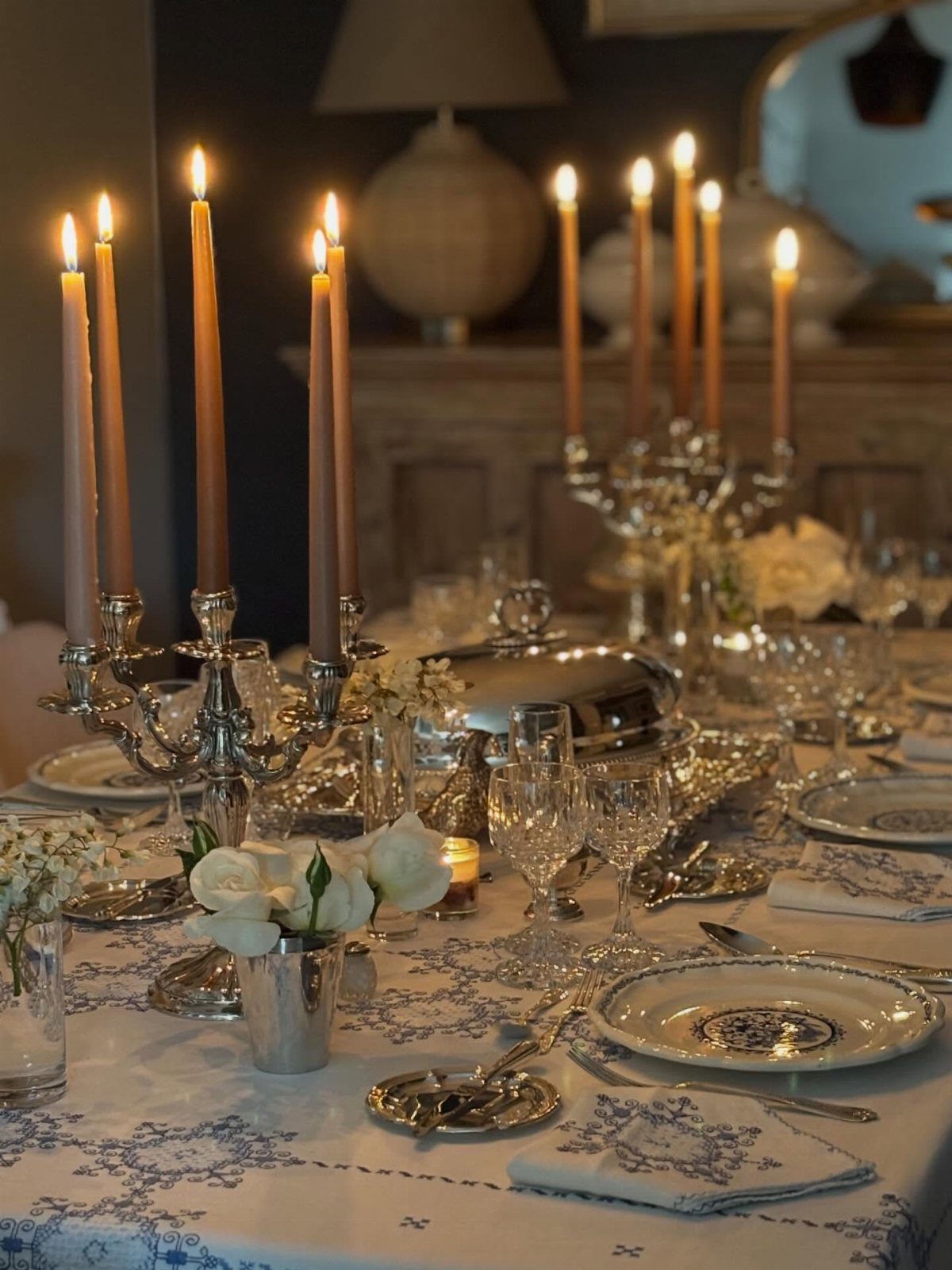
Lit tapers in silver candelabras bring a formal dinner to life, and white roses tucked between them soften all that metal. Candlelight flatters everything on the table, from glassware to faces, which is hard to say about a bulb.
Choose unscented candles for meals, since scent competes with food.
Keep the flowers low enough that guests can see each other past the flames. If real flame worries you in a rental, battery tapers are a decent stand-in.
4. Potted Plants
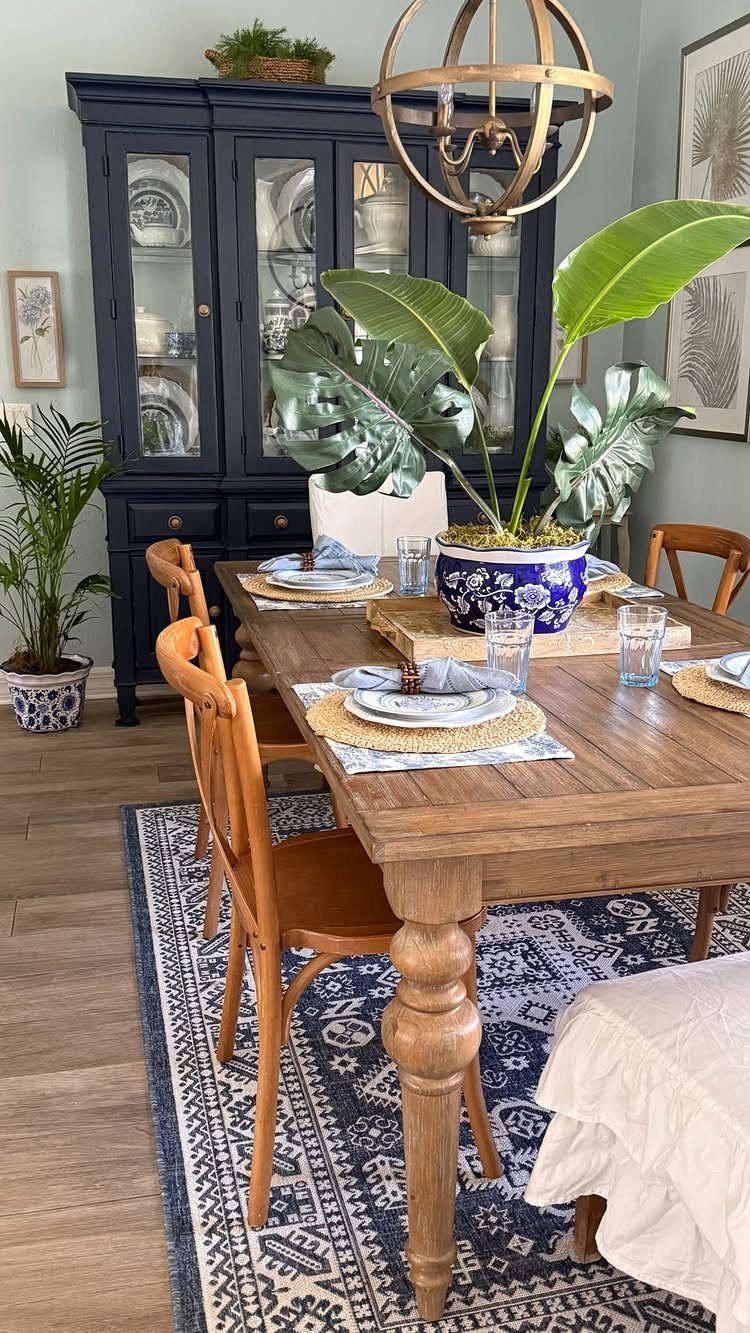
Fresh cuttings die, but a potted plant keeps going, so this is the centerpiece I recommend when you don’t want to rebuy flowers every week. A large leafy plant in a glazed ceramic pot gives a wood table real presence.
A large green plant in a blue ceramic pot works as a centerpiece when it stays low and compact, and I like how the pot’s color gives the table one solid, steady accent.
Pick a pot that suits your hutch or rug colors.
5. Floral Centerpiece
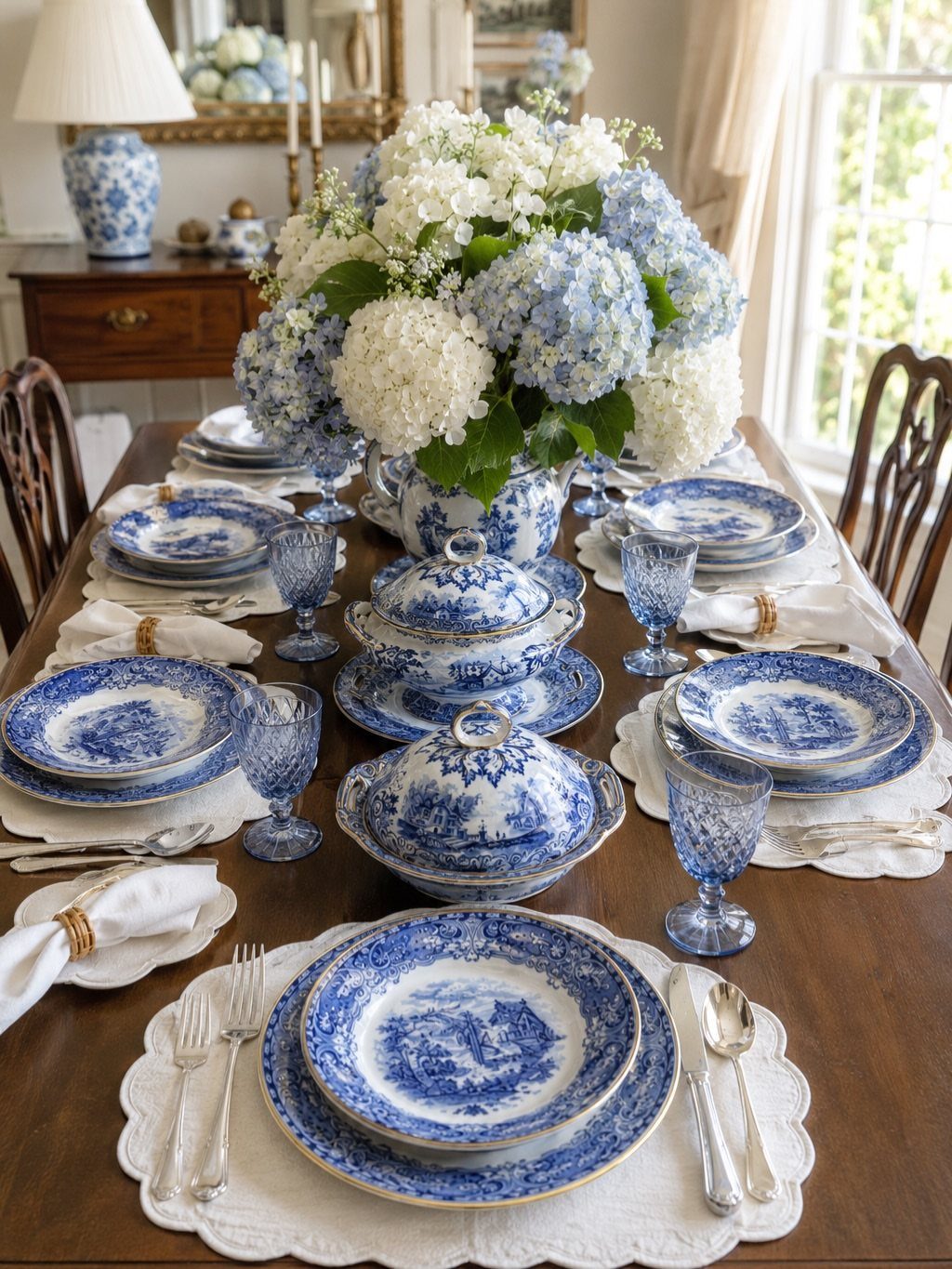
Hydrangeas are a smart pick when you want a big, full centerpiece without buying many stems. Each head is round and dense, so a few fill a bowl or vase quickly, whether fresh or faux.
White and blue blooms echo blue-and-white china well.
Faux costs more up front but lasts through every dinner, while fresh looks softer and needs water changes. Keep the arrangement low enough to talk over.
6. Fruit Centerpiece
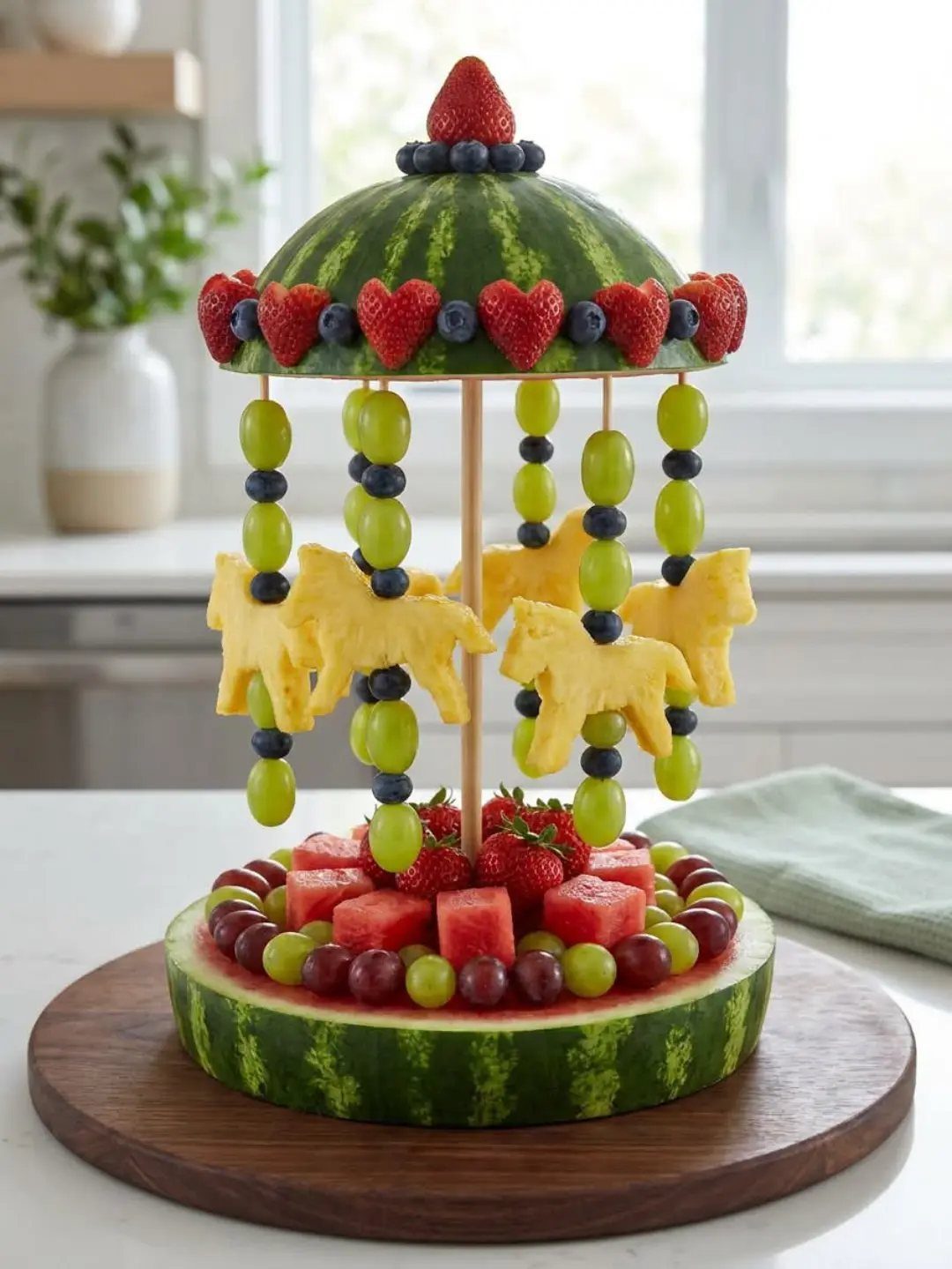
A fruit centerpiece you can eat works well for a summer gathering: pile watermelon, grapes, and strawberries on a tiered stand, add some cheese, and let guests pick from it. It costs about what the snacks would cost anyway.
Build it on a wooden board so it can move from table to counter.
Chill the fruit first, assemble close to serving time, and keep it away from warm spots. It’s a one-meal centerpiece, not something to leave out for days.
7. Use of Greenery
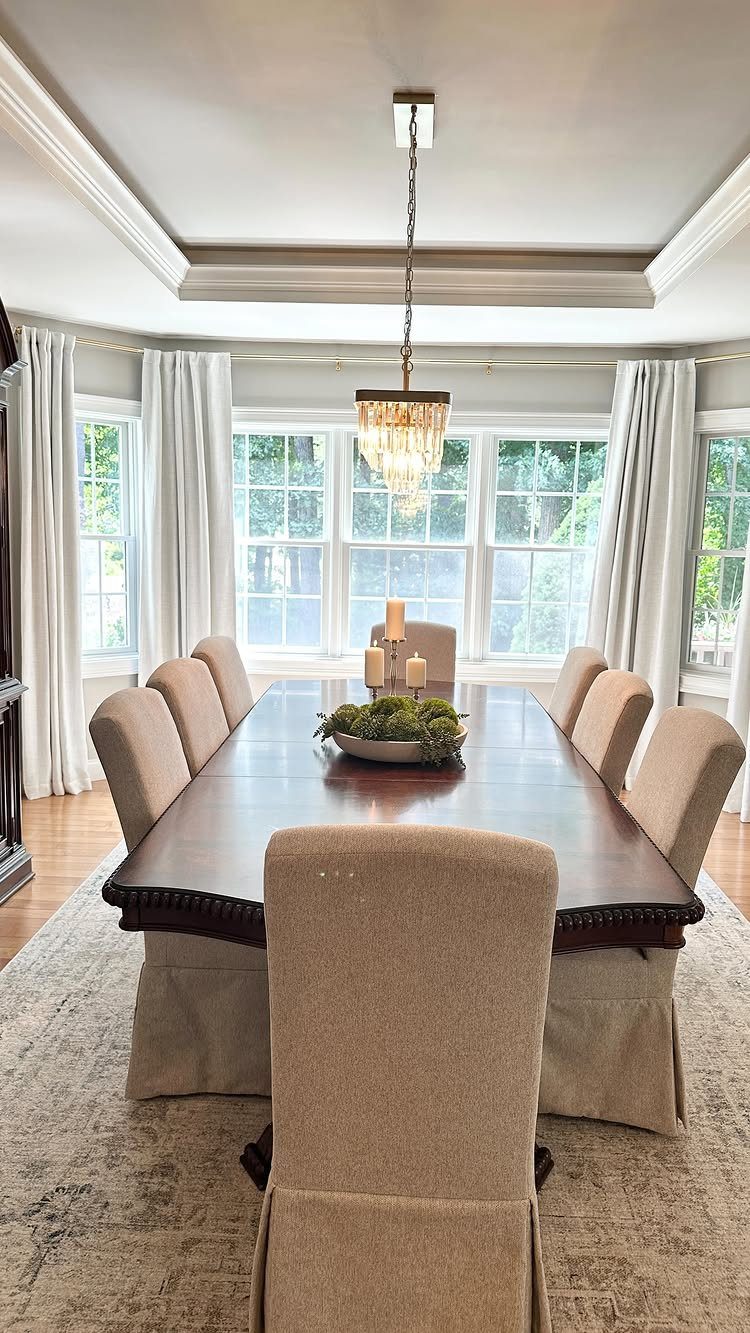
Green against dark wood reads clearly, and the candle keeps the arrangement from looking like a plant dropped on a table.
Keep the greenery below eye level so guests can talk across it. Faux stems hold up through every dinner, while fresh cuttings look looser and need replacing.
8. Unique Vessels and Jars
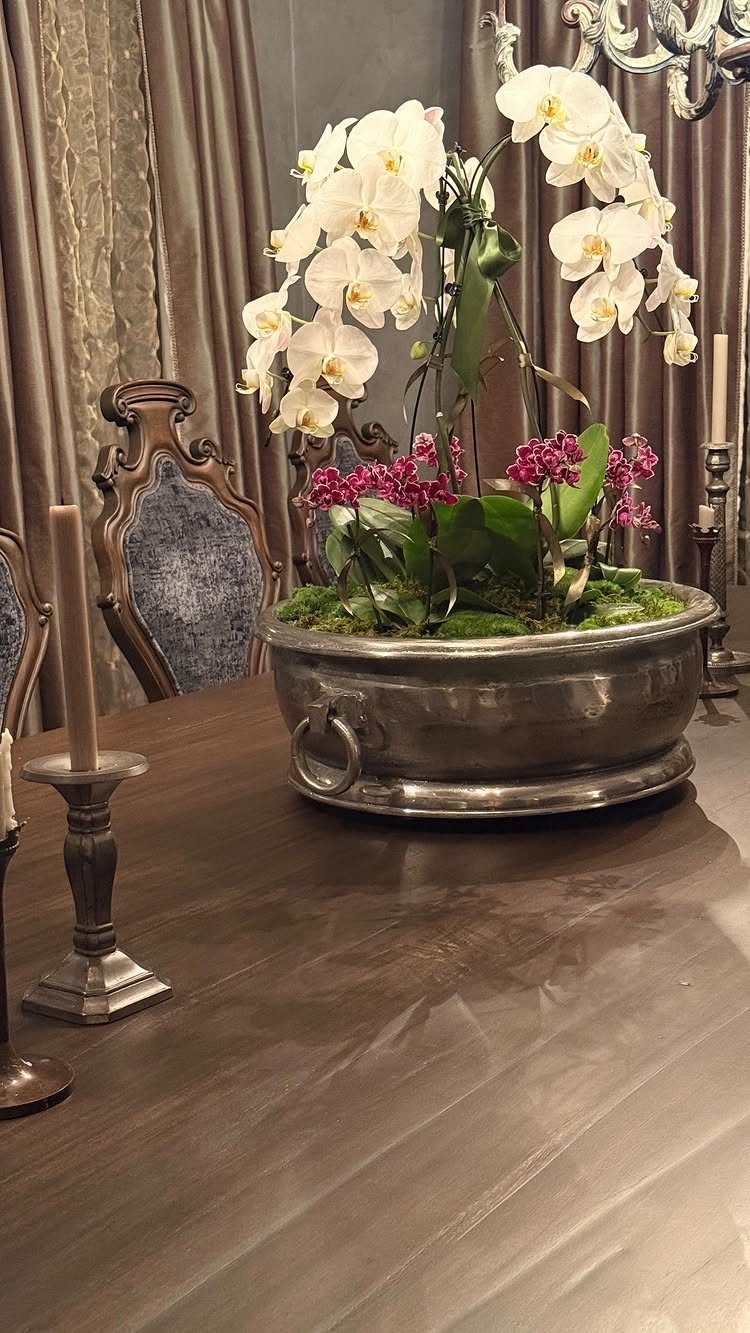
A big metal basin turns a few orchids into a centerpiece with weight, and anything with a lid, spout or odd shape can do the same job. Silver suits a formal room with candles and ornate chairs.
The maker of this one covered the arrangement’s mechanics with lush green moss, and I’d copy that: hide the foam or container inside so only blooms and moss show. Swap the flowers each season and the vessel stays the same.
9. Use of Linens
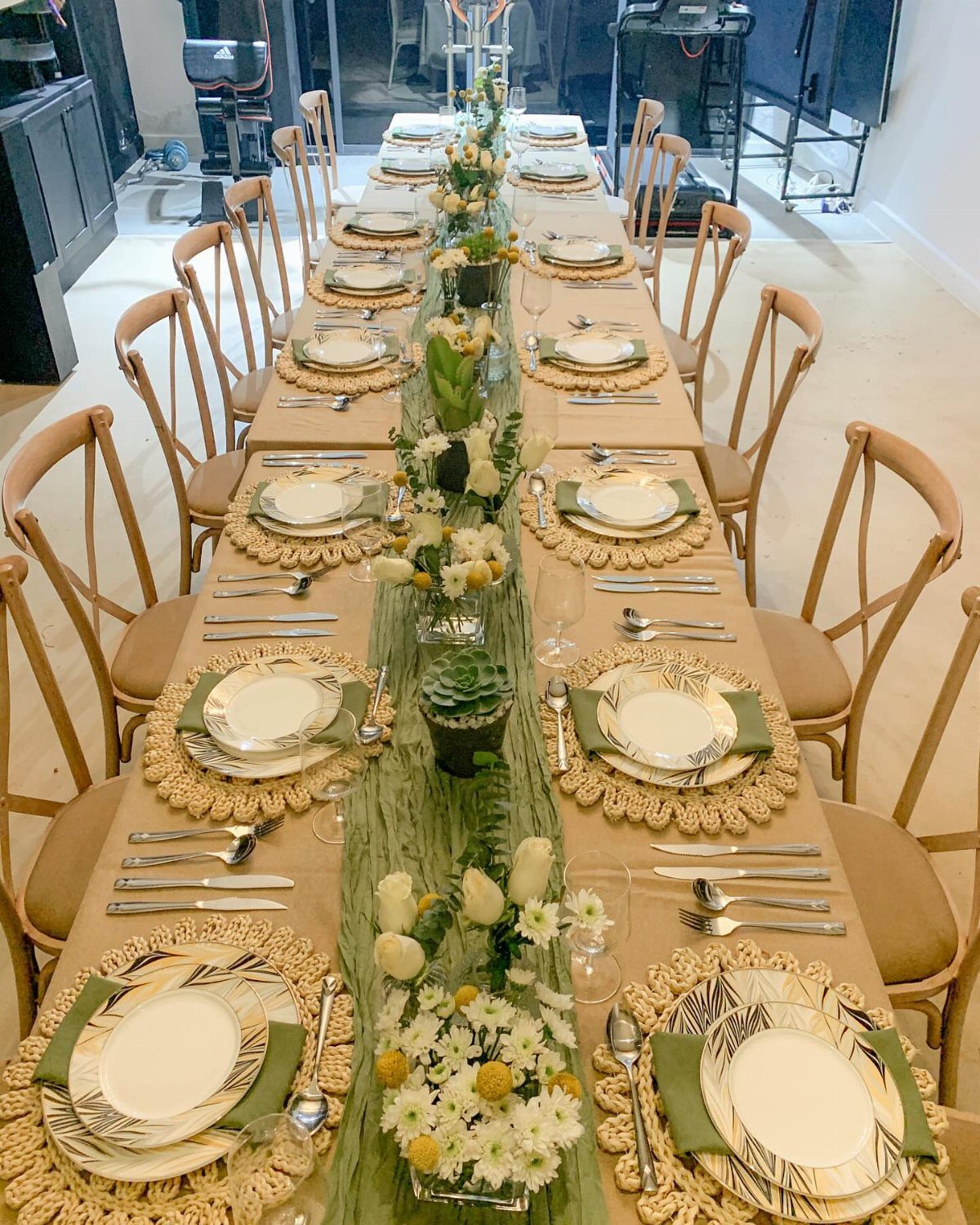
Linens do half the work: a tan tablecloth with a green runner down the middle sets the scheme before a single flower goes out. Small floral arrangements spaced along the runner suit a long table better than one big piece.
Choose a runner color that picks up the greenery in your stems.
Woven placemats add texture, and white plates keep the layers from getting busy. Fabric is the cheap part of this look.
10. Decorative Lanterns
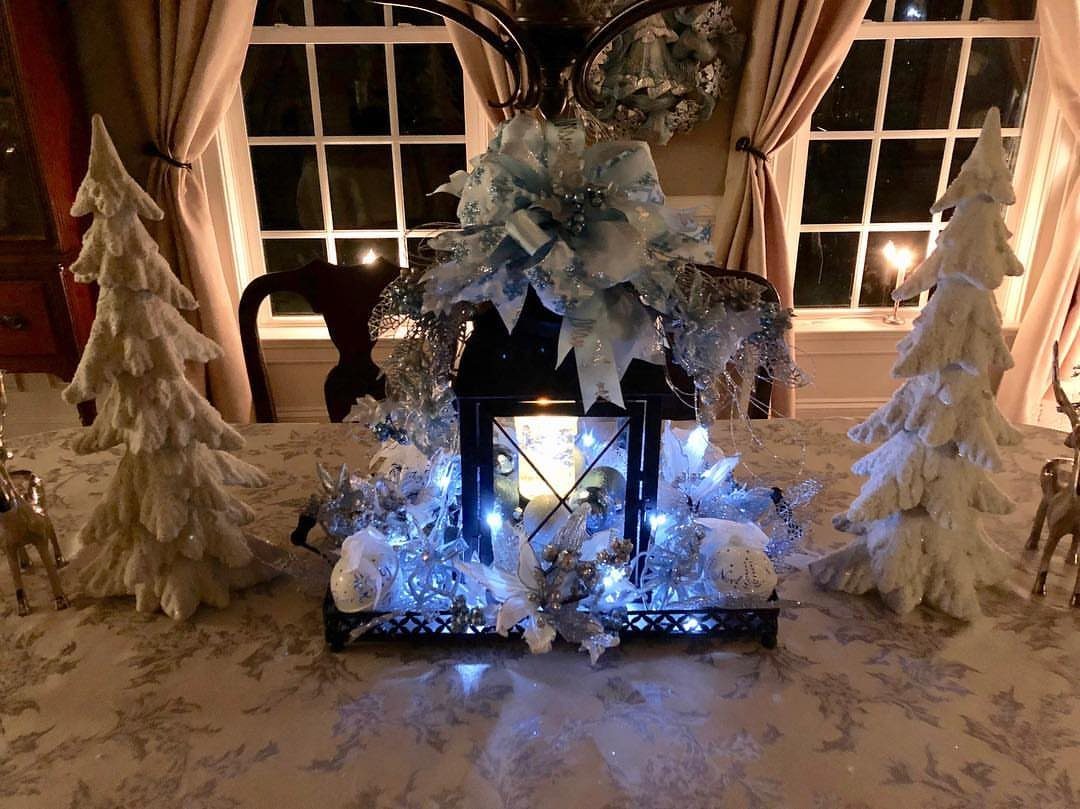
A black lantern with a lit candle adds a warm glow to a dining table that overhead light can’t match. A bow in a single color, such as blue, ties the lantern to the season or to your palette.
Place the lantern in the center and add a small matching pair on either side, as with the 2 white trees here. Battery candles are the easy choice if flame in a rental bothers you.
11. Moss Bowl Centerpiece
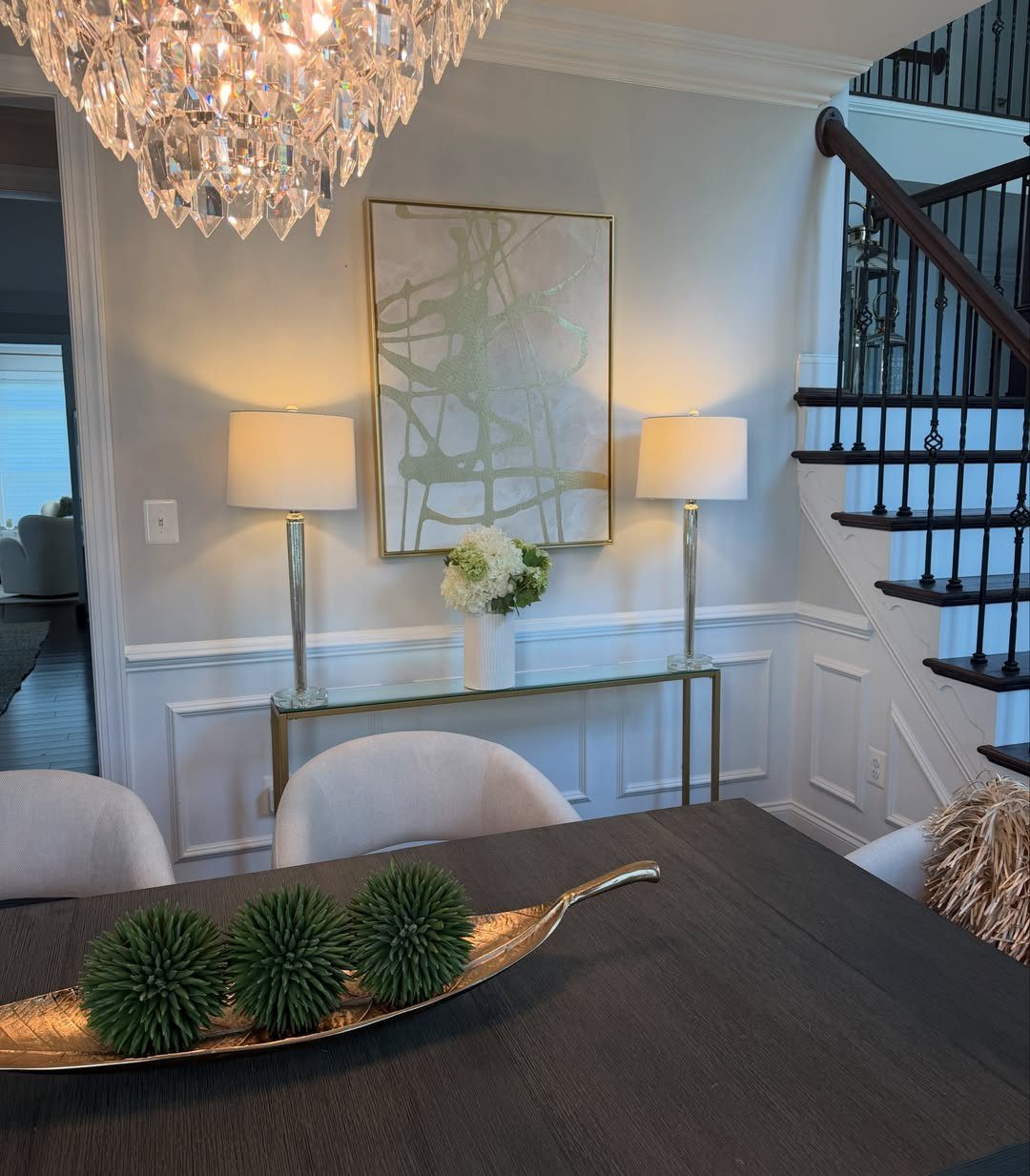
A long gold bowl packed with green moss balls gives a dark wood table a sculptural center for almost nothing. The boat shape follows a rectangular table’s length, so it sits comfortably between place settings.
Fill it loosely with moss balls and leave a bit of gold showing at the rim.
No water, no wilting, no weekly upkeep. I’d pair it with white chairs, as in this room, to keep the green and gold crisp.
12. Built-in Terrarium Table
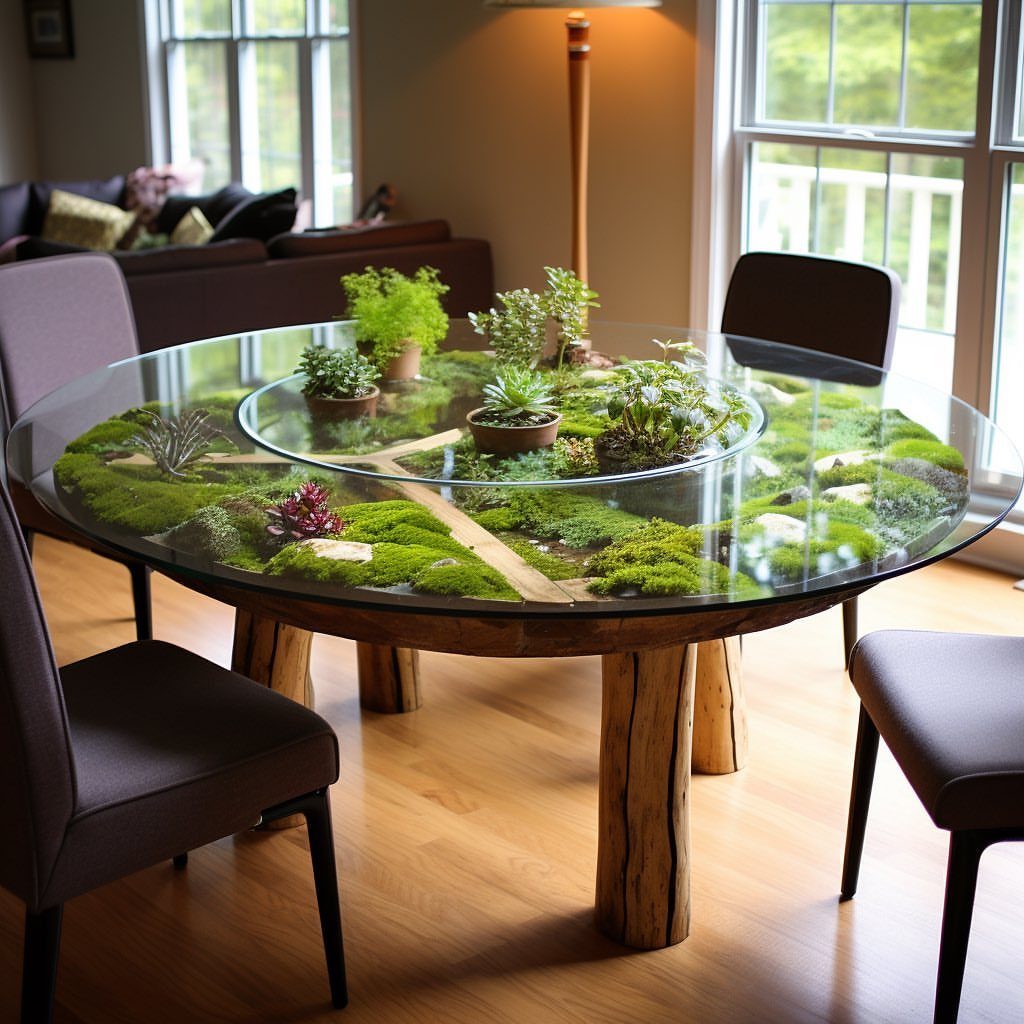
A terrarium built into the tabletop is the permanent version of a centerpiece: moss and small plants sit under a round glass top, so nothing ever crowds the place settings.
Glass keeps the table looking open in a room with windows.
It’s a furniture purchase, not a weekend decor swap, so it suits owners more than renters. If you can’t commit, a moss bowl gives a similar green center for far less.
13. Pair of Sculptural Ceramic Vases
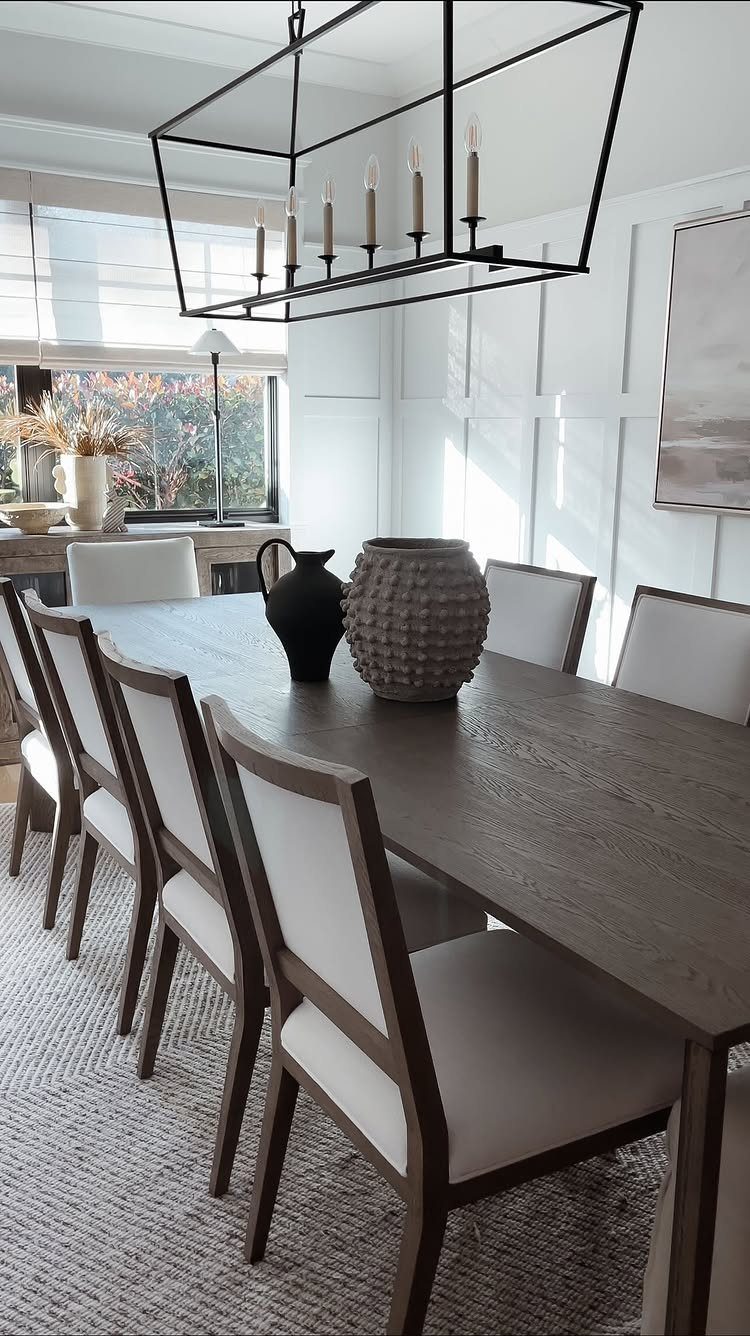
2 vases with no flowers in them make a quieter centerpiece than most people expect. Contrast does the work here: one black, one beige, both with texture, so the pair looks chosen rather than matched.
Set them close together in the center of the table, and pick different heights or shapes so they don’t read as twins. With nothing to water or replace, they cost you a one-time purchase and zero upkeep.
14. Coastal Theme with Starfish
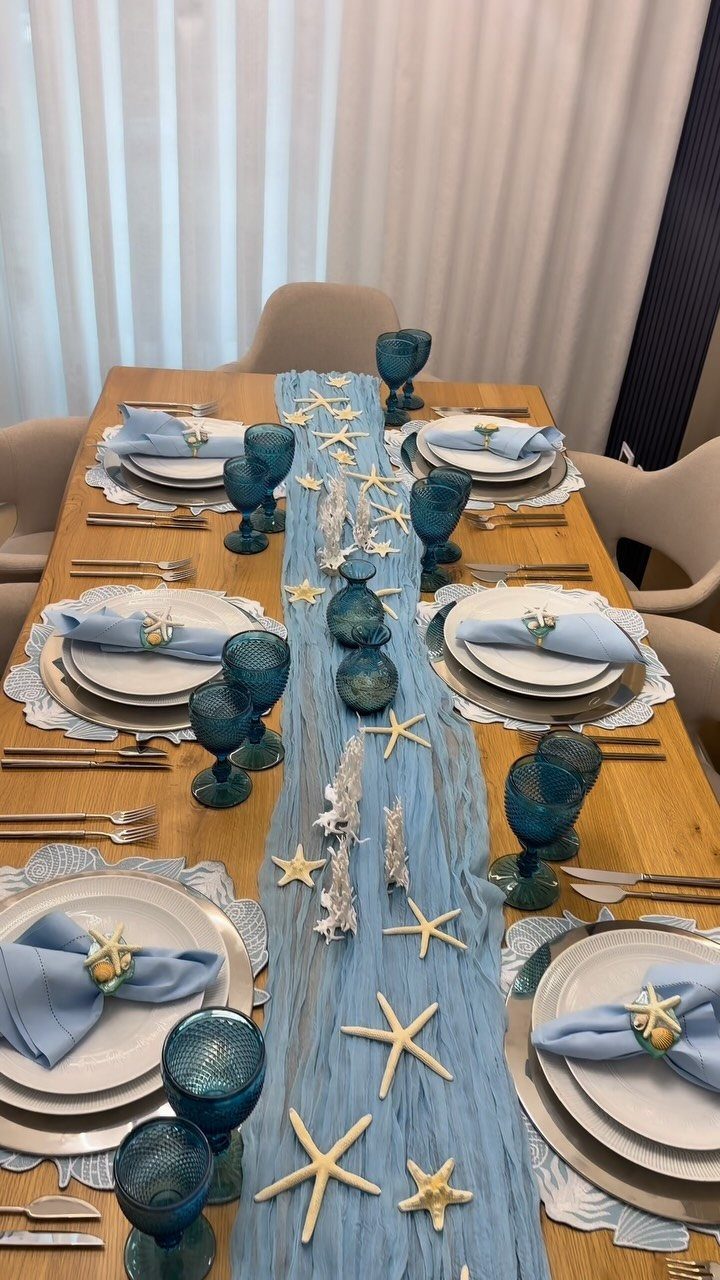
Blue glassware carries a beach theme better than any amount of shells, and I’d start there. A blue runner, real starfish, plus some coral pieces then finish the look without crowding a table set for six.
Keep the sea pieces down the middle of the runner and leave the plates clear. Light blue napkins on white plates tie the palette together, and everything except the glass can be stored flat after the party.
15. Dried Floral Bouquet
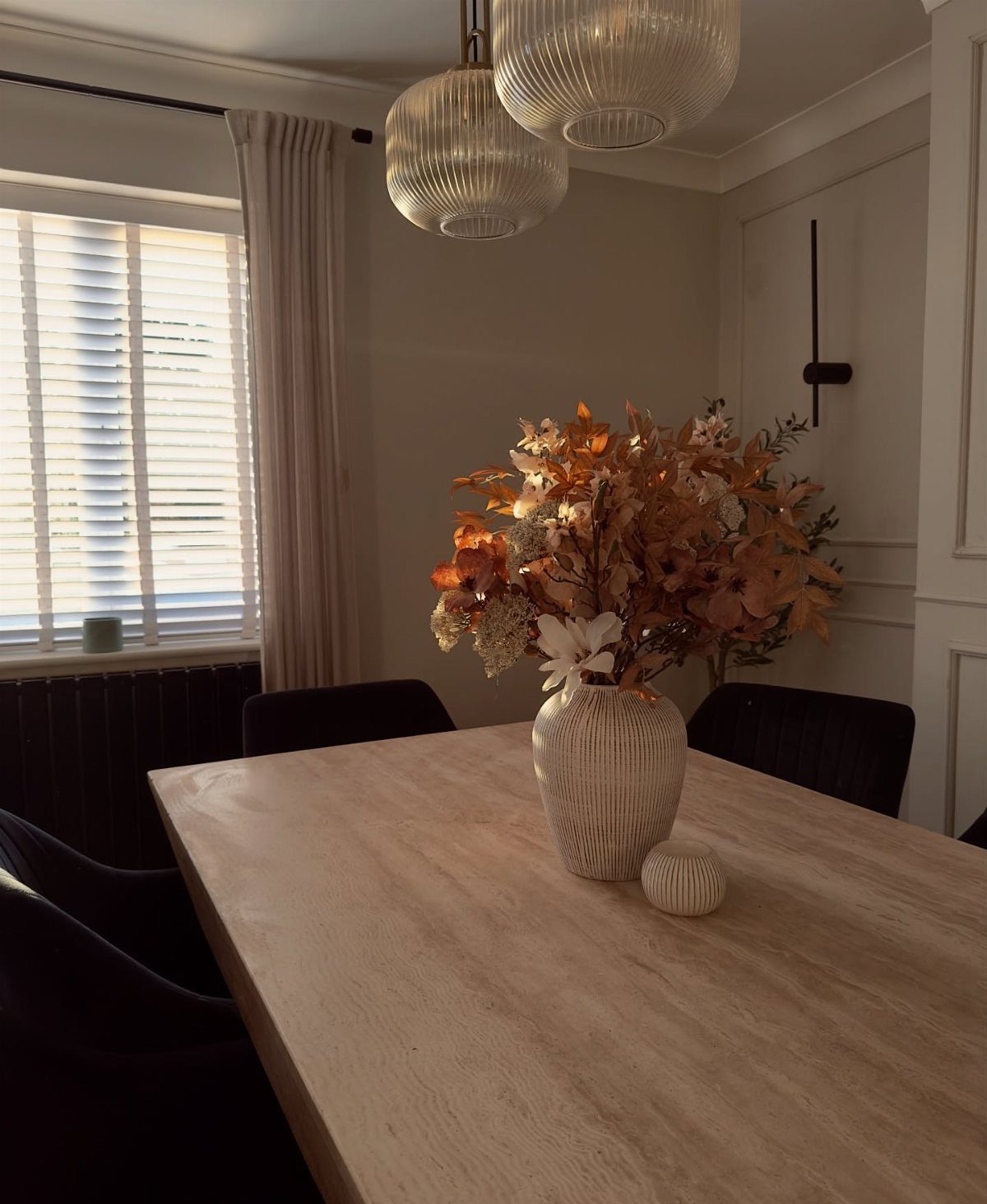
Dried autumn stems in a white ribbed vase give you a centerpiece that never needs fresh water. Warm neutral tones sit well against light wood, and the ribbed texture adds interest without color.
Mix a few different botanicals so the shape looks full rather than stiff.
I’d choose a vase that echoes something else in the room, like the pendant lights, so the table feels planned. Dried stems can simply stay put for the whole season.
16. Festive Ornament Bowl Display
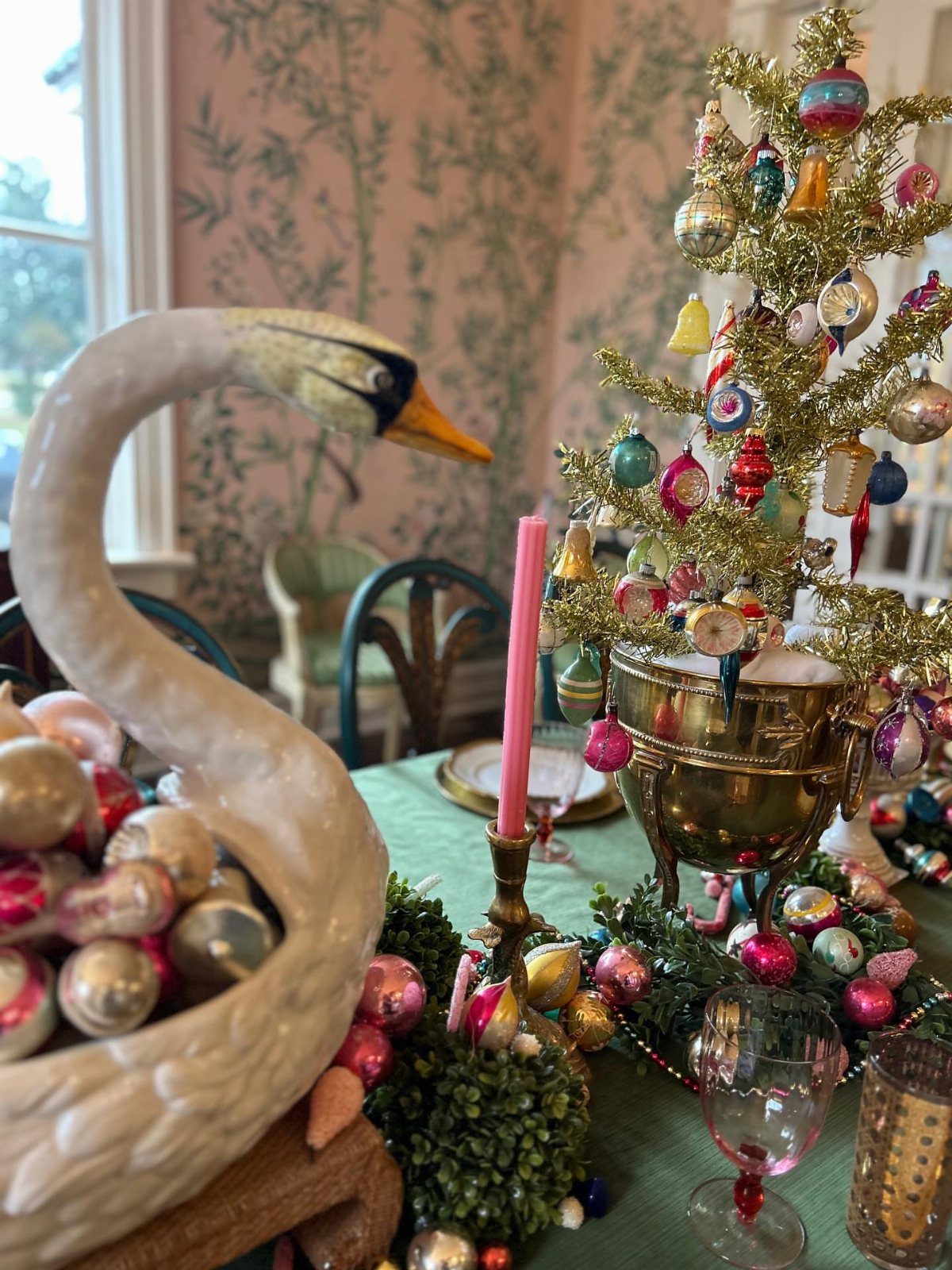
A swan figurine stuffed with ornaments turns leftover holiday baubles from the storage bin into a centerpiece. Use the swan as the anchor and pack the baubles in loosely so the colors spill over the edge.
Add a small gold tree beside it and a candle for height.
I like pink against gold when the walls are busy, because the table picks up the pattern instead of fighting it. Everything packs back into a box in January.
17. Trio of Minimalist Ceramic Vases
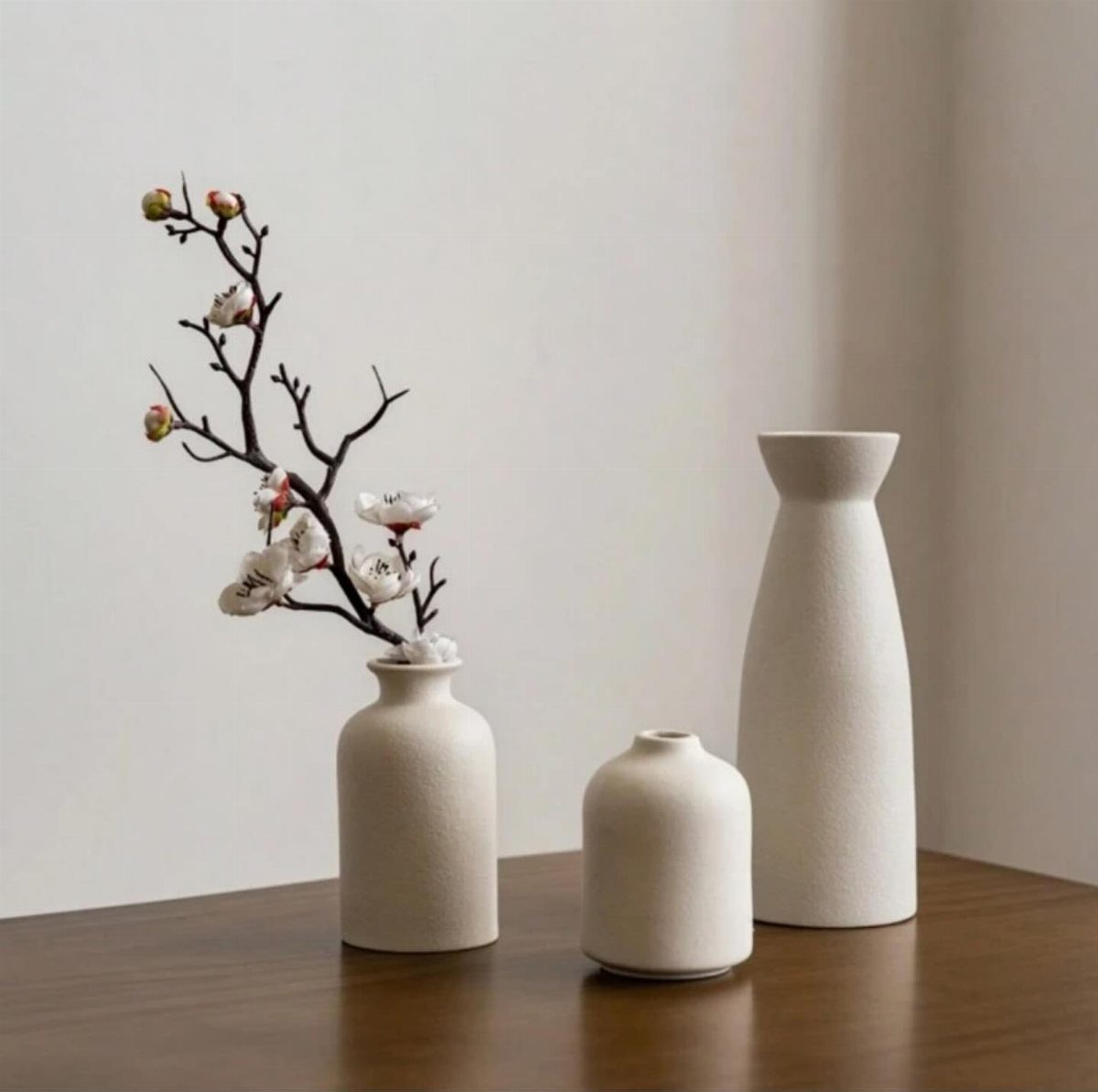
Three matte white vases in different heights and shapes read as one sculpture, and a single flowering branch in just one of them keeps it from looking like a shelf display.
White on wood is simple, and it costs very little to build.
Cluster them tightly rather than spacing them out.
Leave two empty and let the branch supply the only life. Swap in a new branch whenever the old one fades.
18. Layered Decorations
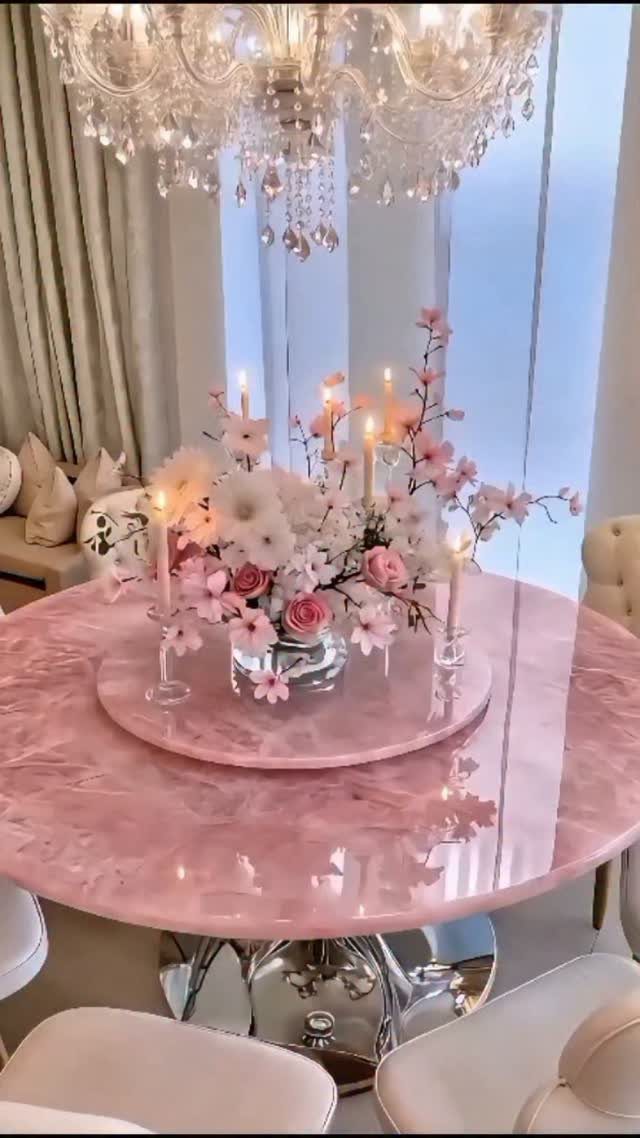
Layering gives a table depth: a tray sets the base, then flowers and candles stand on it at different heights.
Pink marble is a strong surface, so I’d keep the tray in a matching shade and let white blooms stay the focus.
Lit tapers add the tallest layer, so keep the flowers low enough to see past. Start with the tray, place the largest item next, then fill gaps with candles.
19. Low Height Elements
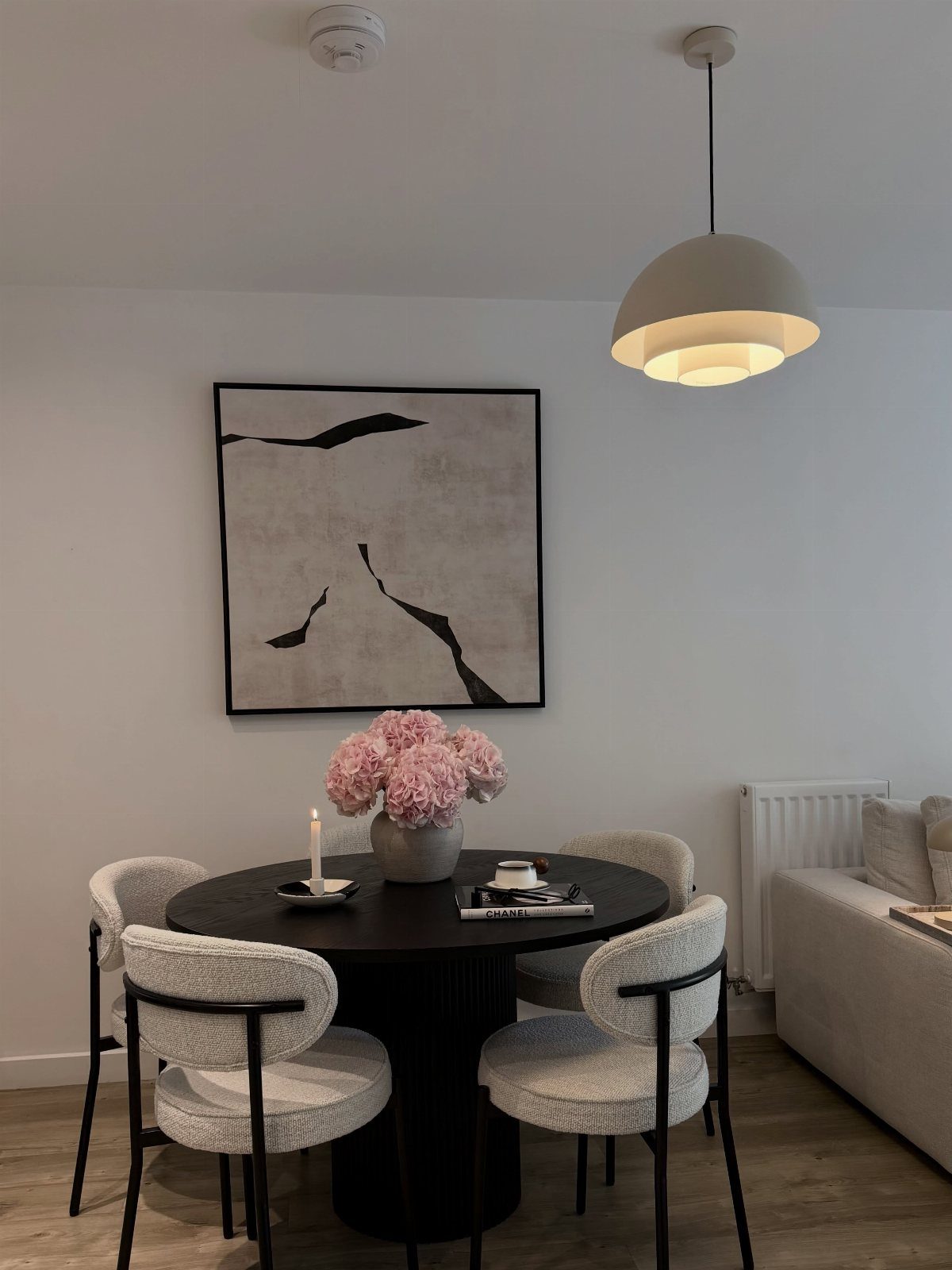
A low arrangement lets a dark round table stay the focus, and pink hydrangeas in a short vase plus one candle is all it takes.
Keeping every piece below conversation height means guests can see and talk to the person seated opposite them.
Keep the vase and candle close together near the center, and let a coffee-table book add a third level without adding height. Under a dome pendant, a low grouping also keeps the light from hitting anything tall.
I’d stop at 3 items. Any more and the table starts to look crowded.
Choosing the Right Size
Size decides whether a centerpiece looks chosen or accidental. Too small and it gets lost on the table; too large and it feels heavy and crowds dinner.
A big table can carry one heavy hitter, like a wide bowl, a stone urn, or a deep woven basket, and it won’t look lost.
Smaller tables still want a single focal piece, just a shrunken one, so there’s room left for plates and serving dishes.
Pick one main container first, then add to it only if the table has room. It keeps the decision simple, and the table looks pulled together right away.
If the table is visible from several rooms, going slightly bigger is forgivable. Tall arrangements block sightlines, so keep them off the table and go with low pieces or clear glass that lets people see each other across the meal.
“Your centerpiece anchors your table, creating a focal point within the room, and it can also set the tone for the meal,” says Michelle Morgan Harrison, the founder of Morgan Harrison Home in New Canaan, Connecticut.
Seasonal Updates
A centerpiece that works year-round saves money. One large bowl, or a row of candlesticks or vases at different heights, looks right in any month, and only the contents need to change.
Greenery helps every season.
Groups of potted florals last longer than cut flowers in a glass vase, and people tend to overlook them for the dining table.
Vintage shops are a cheap place to find a vessel. A woven wastepaper basket holding a big mass of branches works as well as anything bought new, so pick the container first and swap what goes in it.
Creating a Cohesive Look
Look at the room before you pick the piece. A modern room looks best with pared-down pieces, and a traditional one can take more ornate detail.
A trio is the easiest way to make a table look planned, since groups of three feel balanced to the eye. Set 3 containers across the center; they can match or differ slightly.
Repeat something across the pieces to link them: one color, similar shapes, or the same flowers or greenery in every arrangement. 3 simple vases holding the same flowers is a safe start.
This works best on longer tables, where it fills the length without crowding and leads the eye from one end to the other.
Frequently Asked Questions
What do you put in the middle of a dining room table?
One large bowl, a row of candlesticks, or a few vases at different heights all work, and greenery helps in any season.
Because only the contents change, the same vessel looks right in any month. Low arrangements keep sight lines open, so guests can talk to the people seated opposite.
What is the best centerpiece for a dining table?
If I had to pick one safe option for nearly any table, it would be a wide bowl, or a short line of bud vases or candlesticks in mixed heights.
It looks right year-round, and you only swap what goes inside. A trio of containers also reads as planned, since groups of three look balanced.
How tall should a dining table centerpiece be?
Stay under about 12 inches, which keeps faces visible and conversation easy for everyone seated.
If you want height, use lit tapers with low flowers, or clear glass that people can see through. Tall arrangements block sightlines and are best kept off the table.
What is a long-lasting centerpiece that doesn’t need fresh flowers?
Potted plants, moss bowls, dried stems, and faux flowers all last.
Groups of potted florals outlast cut flowers in a glass vase, and a bowl of moss balls needs no water or upkeep. Dried stems in a vase can sit untouched for a full season.





