The tables here run from a walnut 8′ slab to a blue epoxy river, a dark resin inlay, a split slab on metal legs, and a glass center insert, with bases that go from a thick wooden slab to metal legs, plus a set with matching stools.
1. Walnut 8′ Table
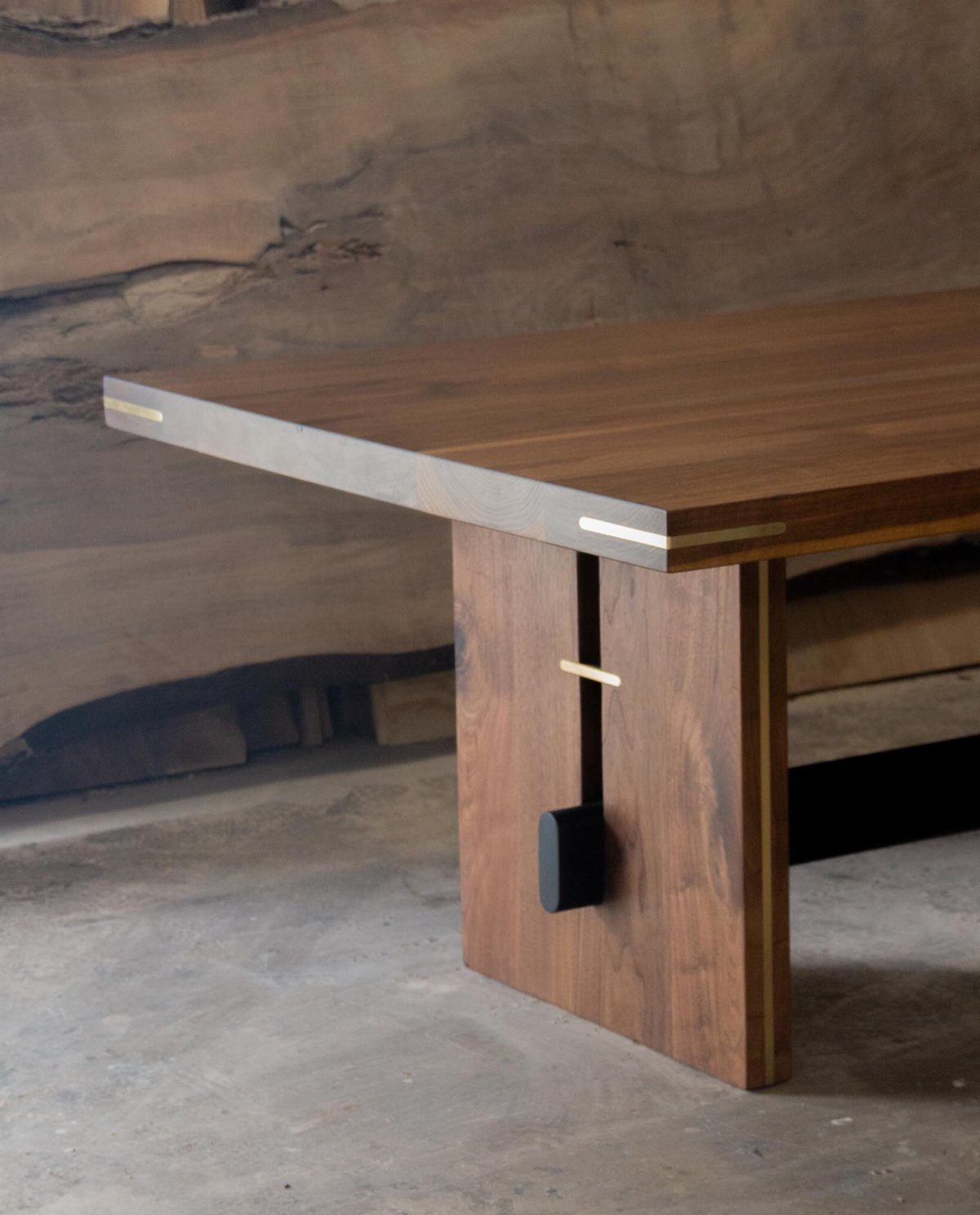
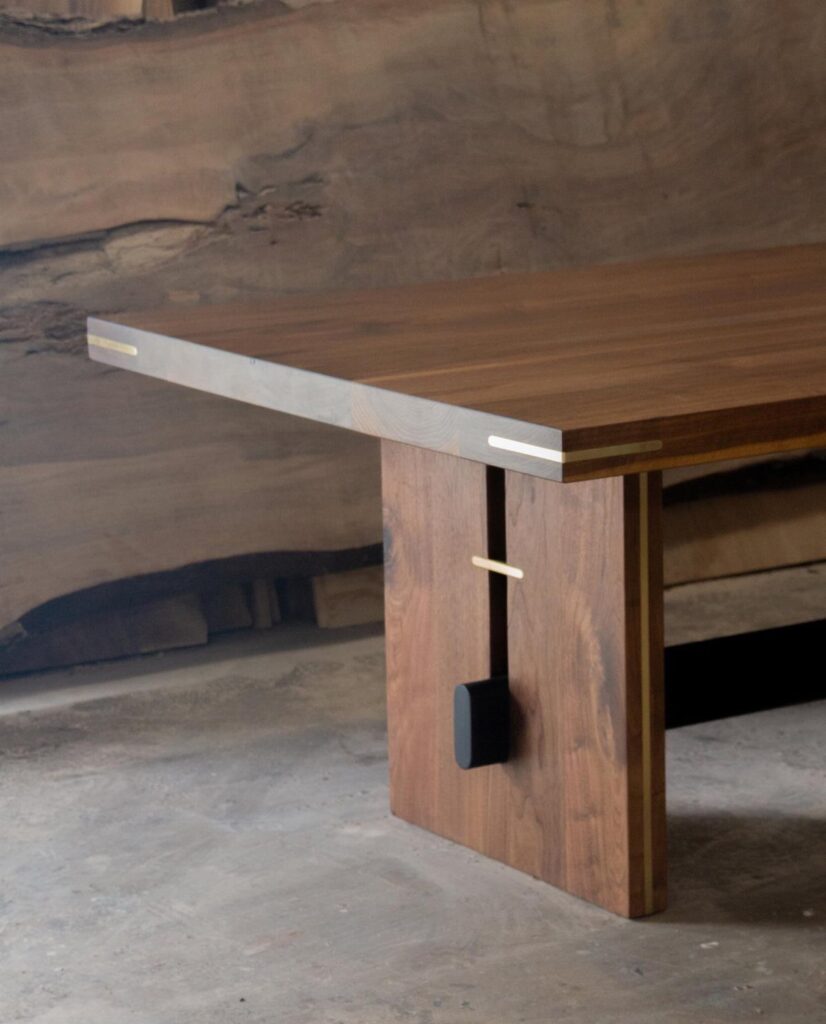
An 8′ walnut slab is a statement piece, and the single thick slab leg in this one makes it feel carved instead of assembled.
Thin metal inlays, whether brass or a gold-toned finish, run along cracks or seams and add a fine line of warmth against dark walnut grain.
Before buying a table this long, tape 8′ on your floor and walk around it. Leave room to pull chairs out and still pass behind them.
2. What Is a Live Edge Dining Table?
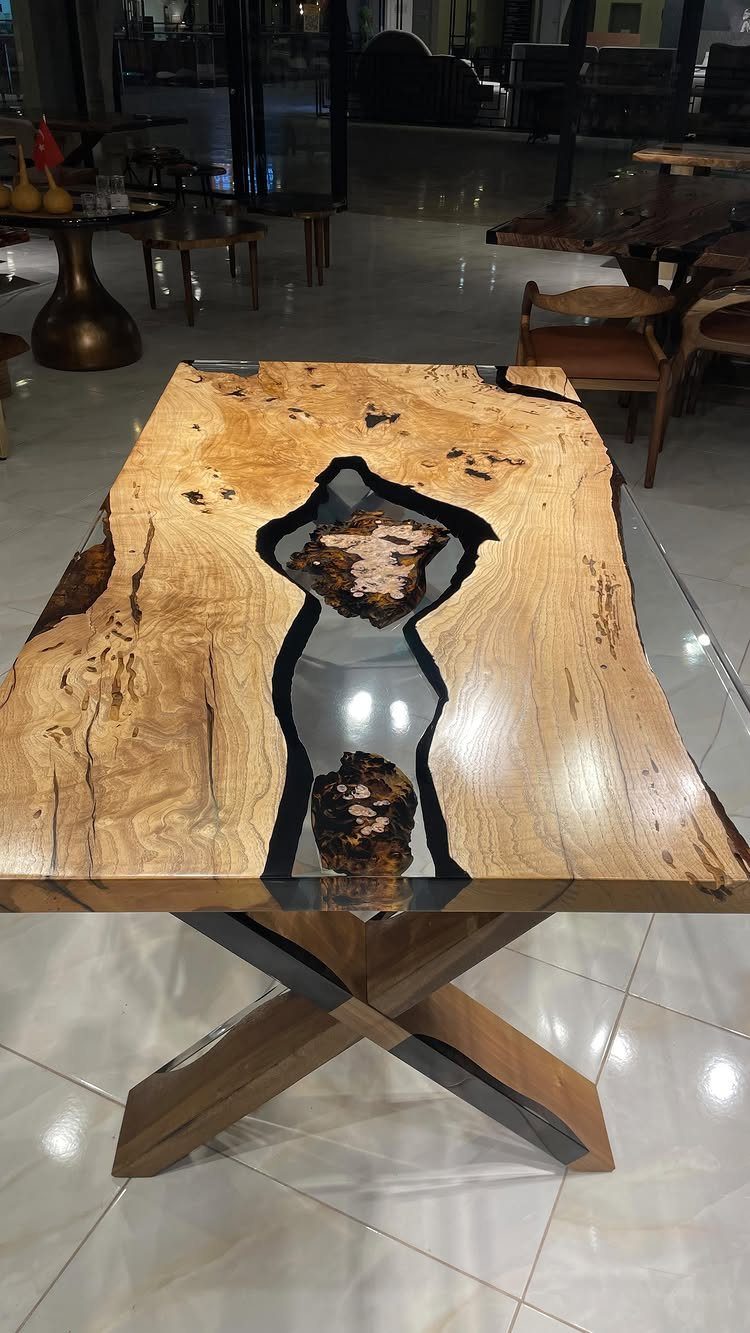
Raw edges are what make a live edge table: the outer curve of the tree stays on the slab instead of being sawn into a straight line.
A live edge slab can also carry a dark resin river down the center, and X-legs underneath keep the base from competing with it.
Real hardwood slabs vary from board to board, so I’d choose the exact slab you’ll own, not a catalog sample. Ask for photos of the piece before paying.
3. Grains, Knots, and Imperfections
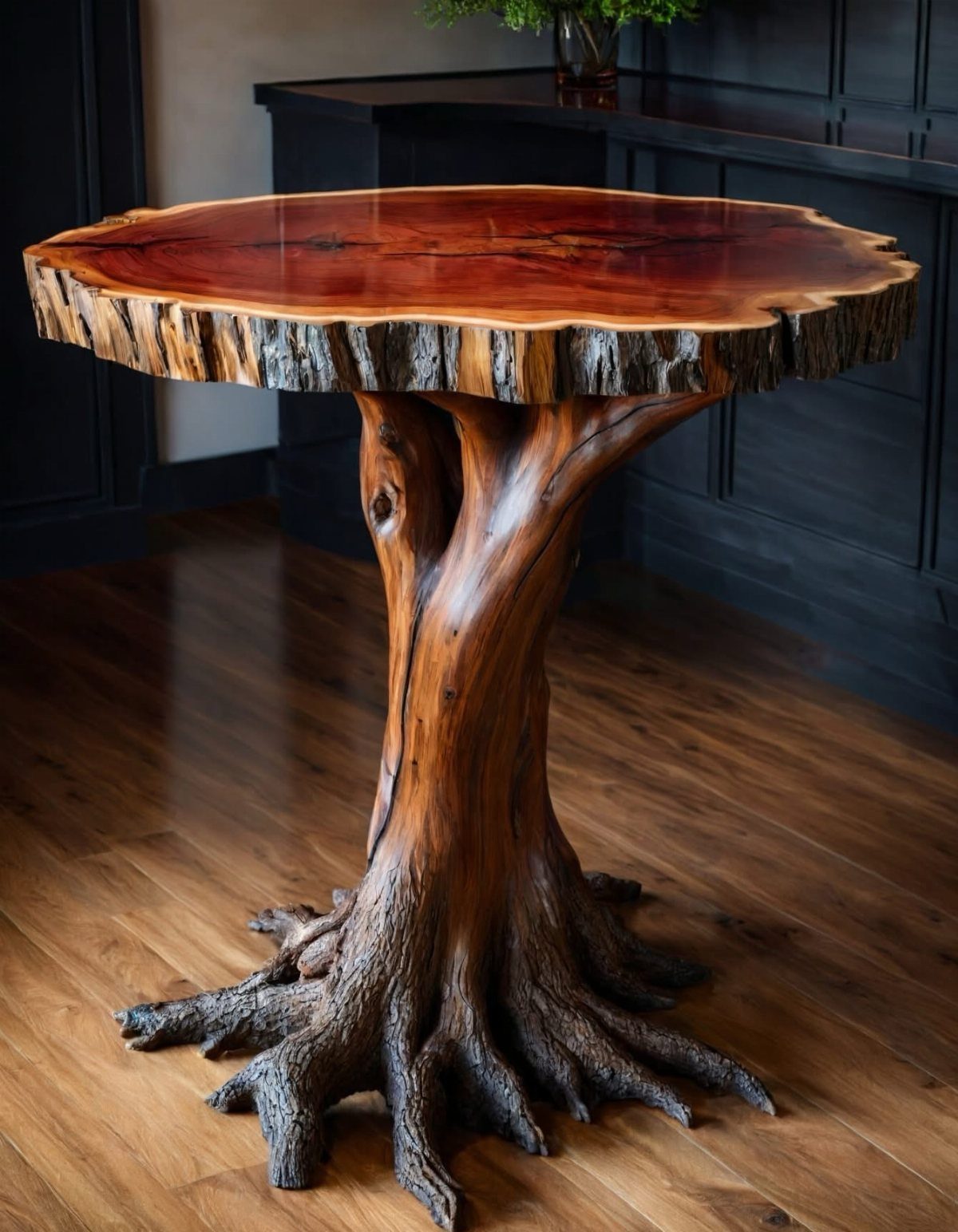
Knots, swirls and small cracks are the reason to buy a slab at all, and a round top on a natural trunk base shows them off from every seat.
Polished smooth, the grain reads as a pattern instead of a flaw.
I’d treat imperfections as the feature. If a crack bothers you, say so before buying, because every slab is different and you can’t swap one for another.
4. Rustic to Modern Interior Styles
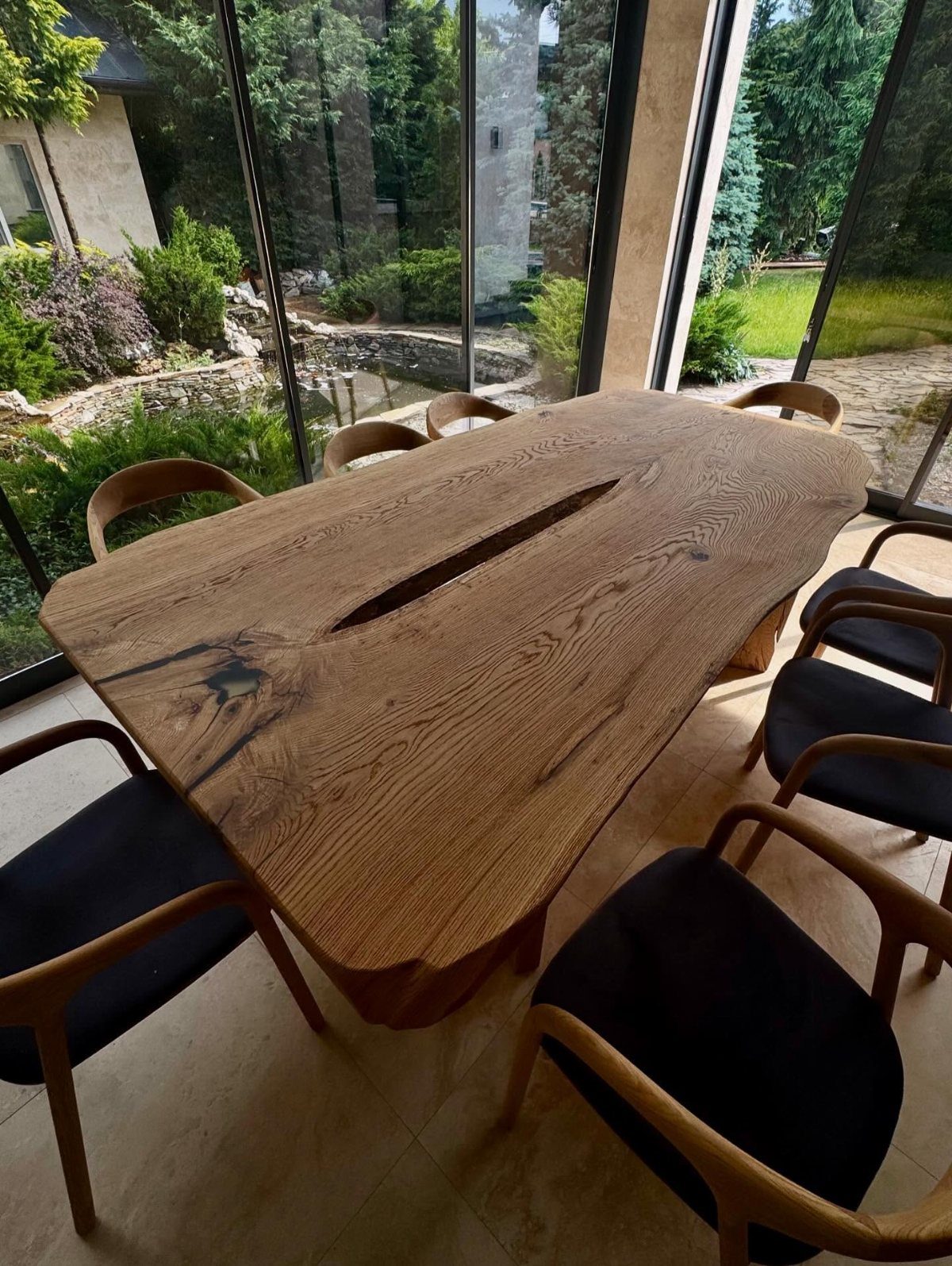
A slab table adapts to the room around it, which is why this one looks as natural in a glass sunroom as it would in a cabin.
Black cushioned chairs keep the look modern and let the wood’s natural edge do the talking.
To push a slab toward modern, keep the chairs simple and the colors few. For rustic, go heavier and warmer on everything else.
5. Open-concept Kitchens Dining Table
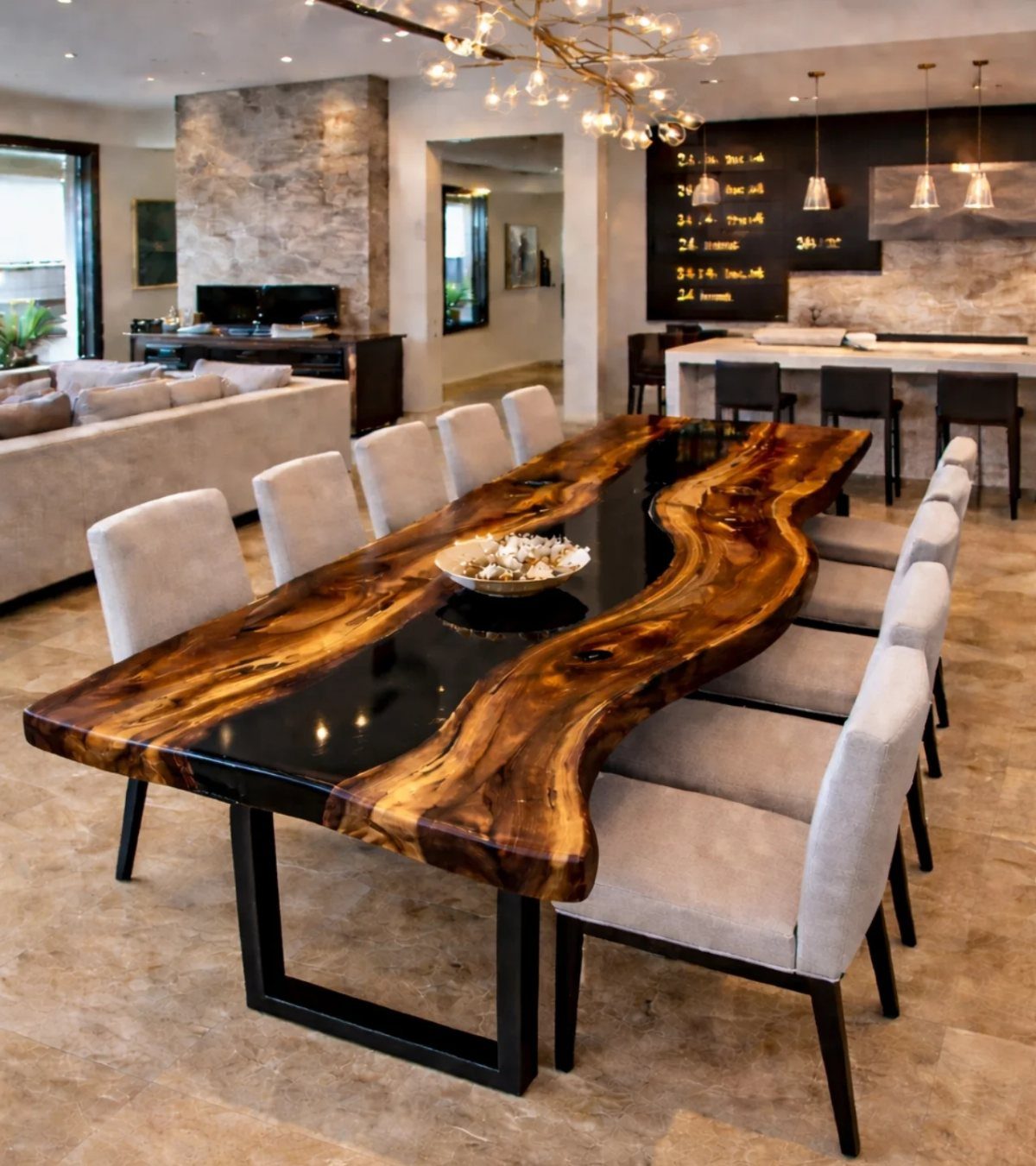
In an open plan, the dining table has to hold its own beside a kitchen island, a sofa and a stone fireplace.
A slab with a black resin river does that well, because the dark center ties into gray chairs and stone counters nearby.
I’d pick chairs in a quiet color so the slab stays the focal point. Busy seating competes with it across such a big room.
6. Blue Epoxy River Table
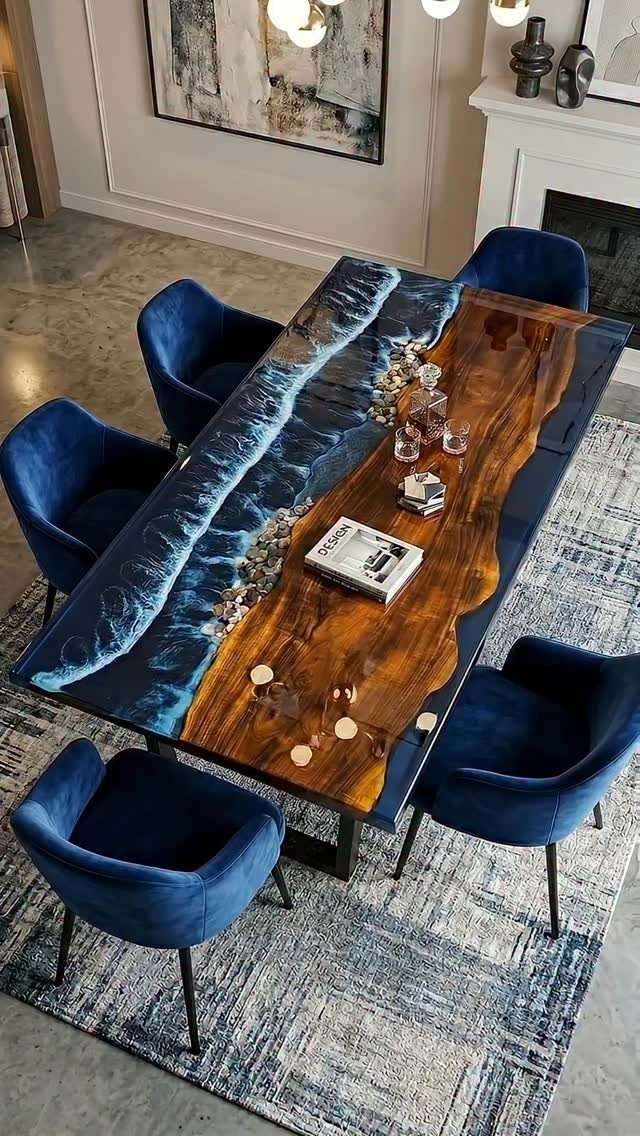
Blue epoxy poured between 2 slab halves reads like a wave cutting through the wood, and matching blue velvet chairs push the idea all the way. A blue rug finishes the room.
It’s bold, so I’d go with one blue family for chairs and rug instead of three different shades. If that feels like too much, keep the rug neutral and let the table carry the color.
7. Split Slab with Metal Legs
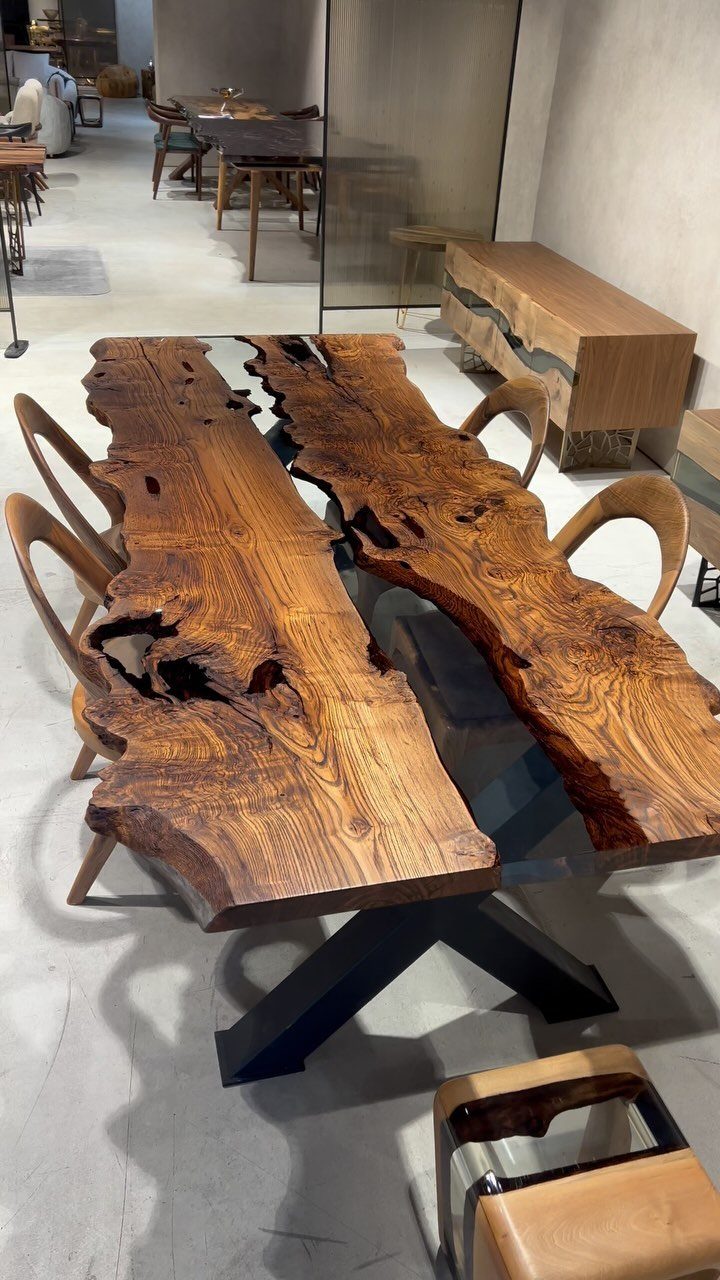
2 live-edge slabs with an open gap between them make a table that reads lighter than a single wide top, and black X-shaped metal legs keep the frame from competing with the wood.
Both outer edges stay raw, so the table shows the tree’s curve on each side.
I’d think about the gap before buying. Crumbs and place settings can slip through it, so plan on runners or placemats that bridge the opening.
8. Glass Center Insert Table
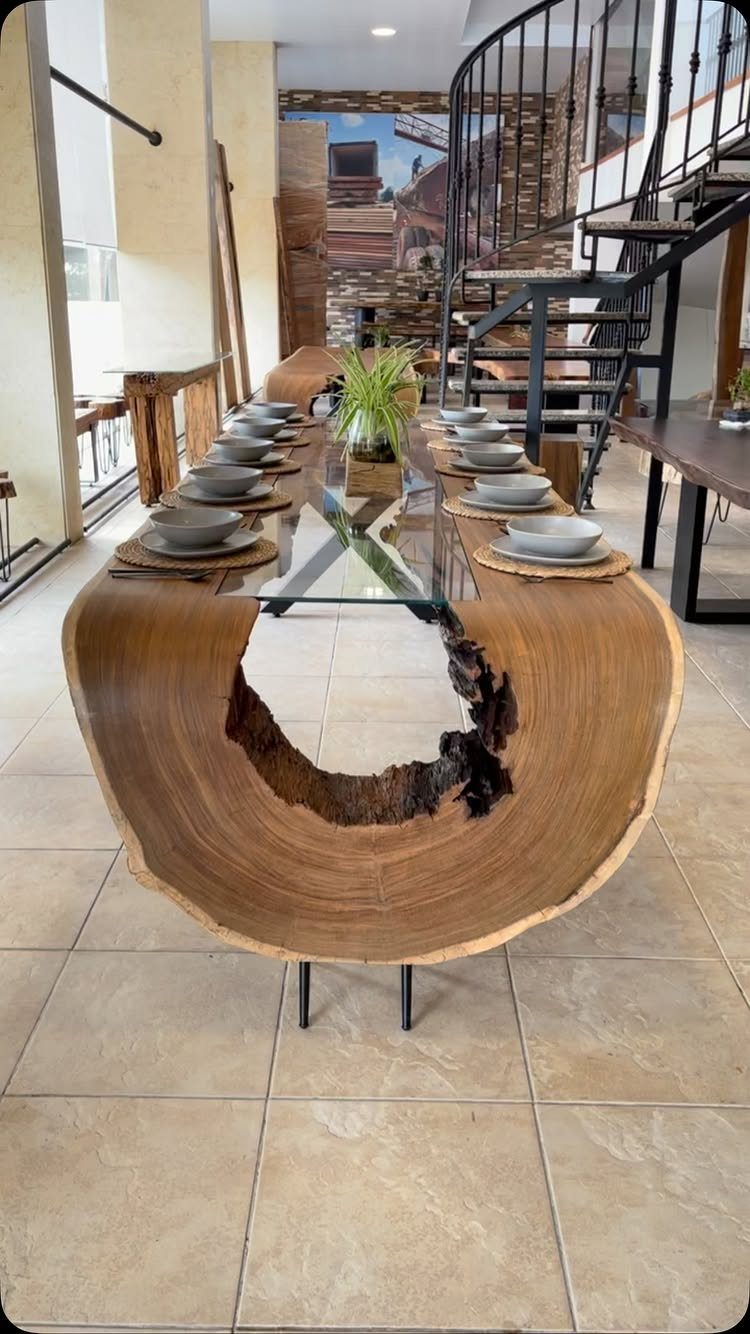
A glass strip down the middle of an oval slab lets you see the table’s depth while still keeping the wood’s grain at the edges.
The oval shape also means no corners to bump in a room with limited walking space.
Ask how the glass is set into the wood and how it’s supported, because that joint matters more than the glass itself. I’d choose clear glass over tinted so the wood stays the focus.
9. Dark Resin Inlay Dining Table
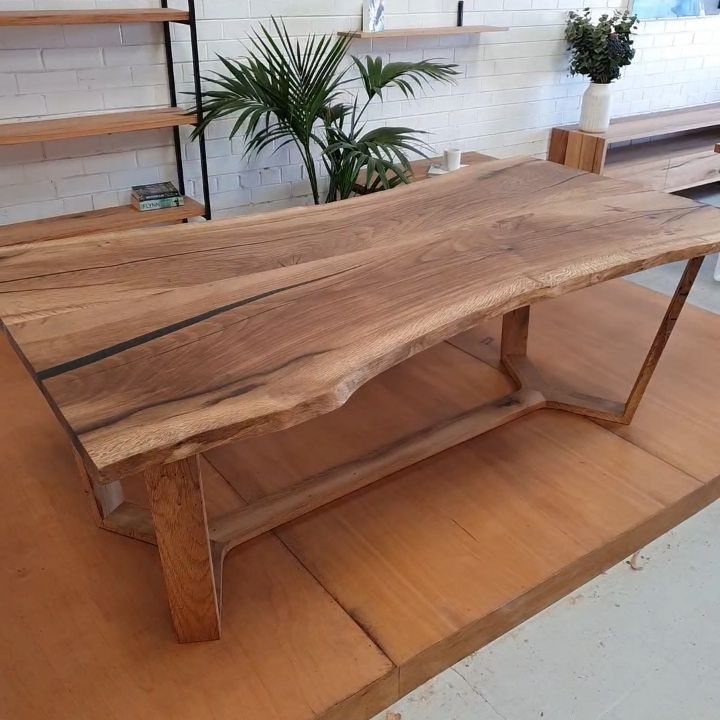
Dark resin poured into the natural cracks turns flaws into outlines, and polishing the top smooth makes the fills sit flush with the grain. Wooden legs keep the whole piece one material, so the resin is the only contrast.
I like this version for anyone nervous about cracks: the fill closes the gap but leaves the pattern. Ask to run a hand over the surface before paying, since you should feel no ridge at the fills.
10. Live-edge Slab with Wooden Base
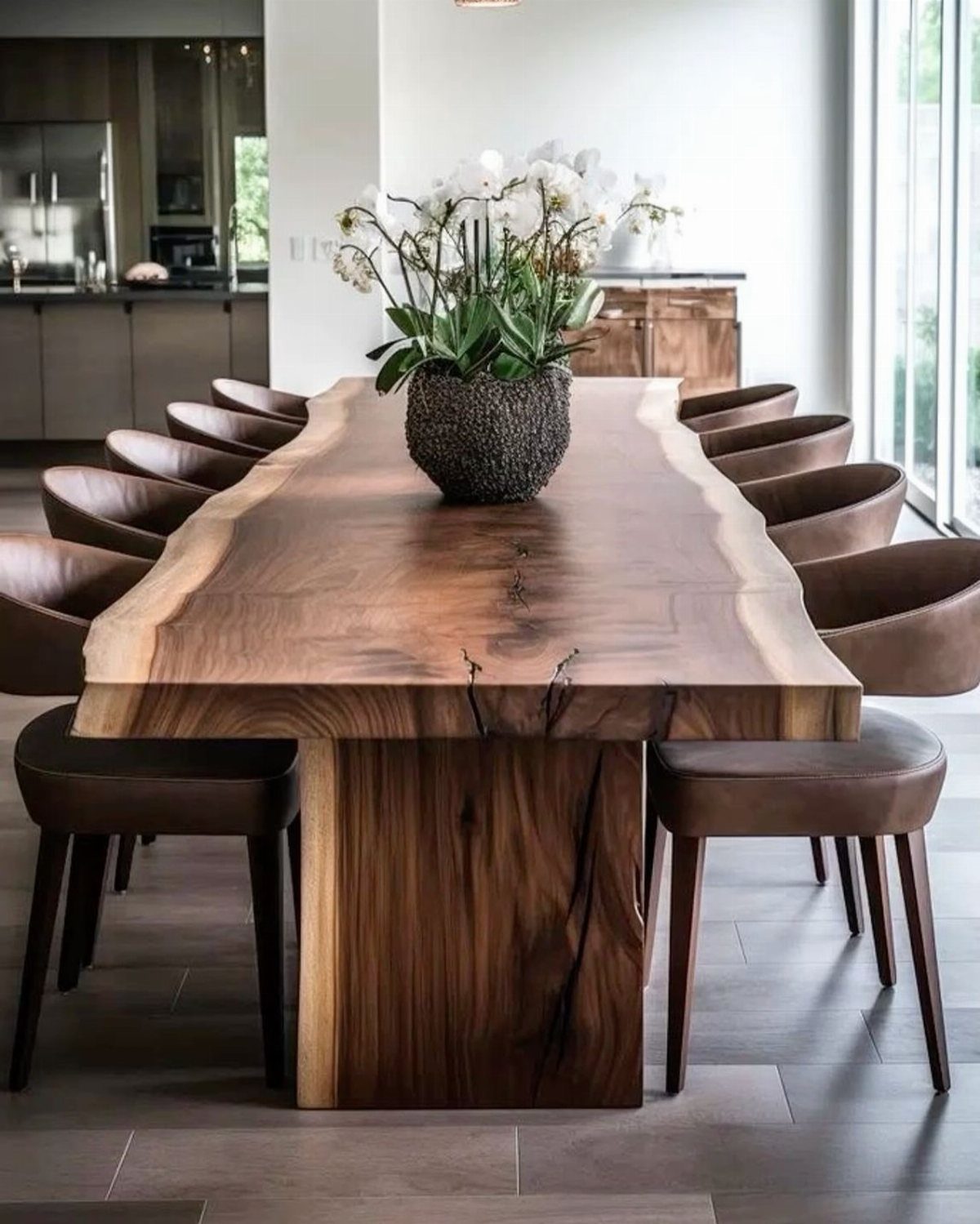
A thick wooden base under a long live-edge slab makes the table feel like one carved piece, with no metal or glass to break the line.
Brown leather chairs stay in the same warm family, and white orchids add a clean accent without covering the grain.
Because the base is heavy and wide, measure where your chair legs and knees will land before ordering. I’d keep the centerpiece low so people can talk across the slab.
11. Wood Slab with Matching Stools
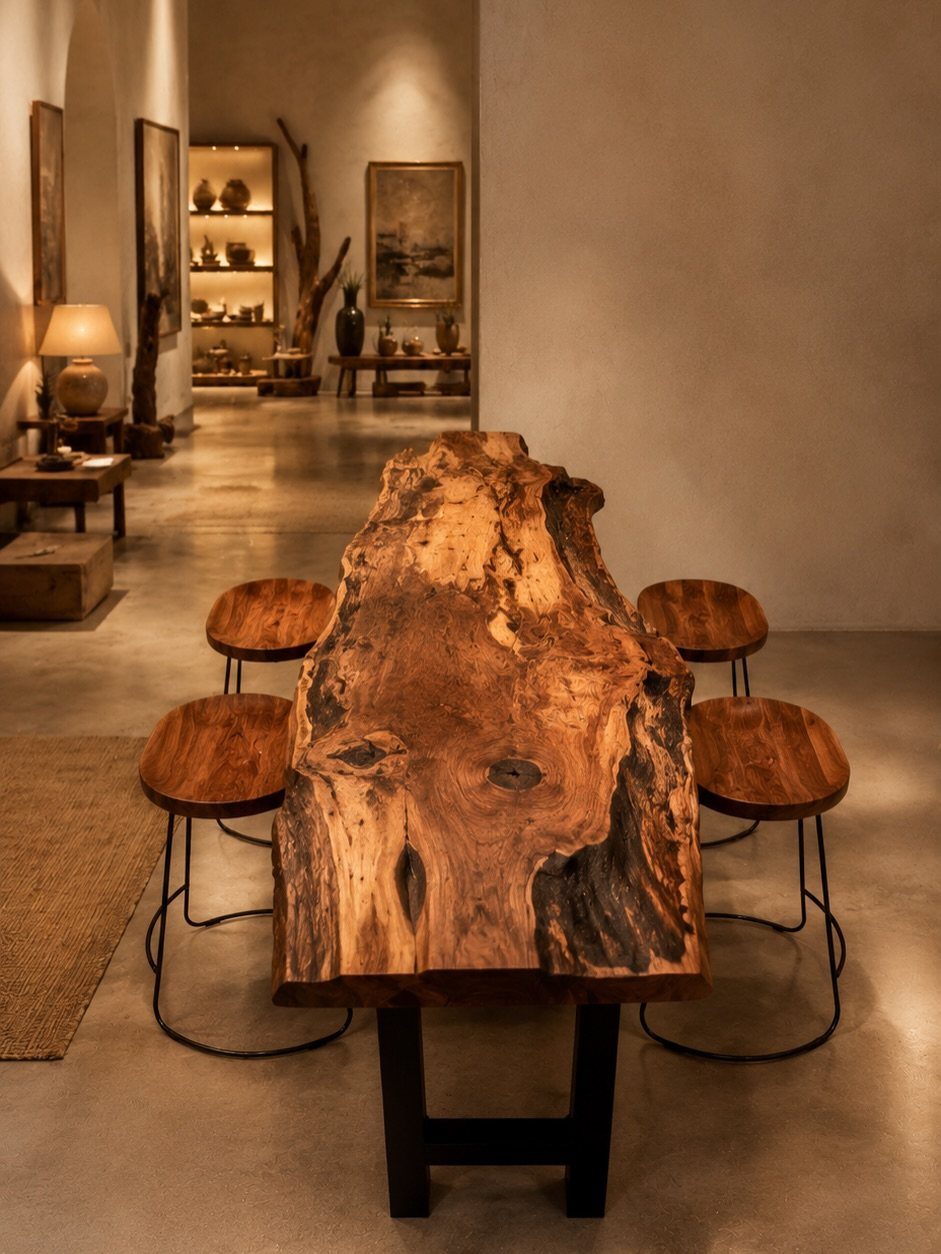
Backless stools on black metal frames slide fully under a slab, which frees floor space and keeps the view of the wood open from every side.
Matching wood seats tie them to the tabletop, while the dark frames echo the look of a modern room.
Stools give up comfort, since without a back they suit a quick weeknight meal better than a long dinner. I’d add a few chairs at the ends if guests tend to linger.
Choosing the Right Size
Plan for 36 to 48 inches of clear floor on every side of the table.
Measure the room before you fall in love with a slab. Mark the table’s footprint with painter’s tape, then add the 36 inches around it and check that doors, cabinet fronts and traffic paths stay open.
If the room can only give you 36 inches, choose a narrower top instead of a shorter one. If you have closer to 48 inches, you can go wider and seat more people comfortably.
Finishes for Protection
Pick a finish that is food-safe and water-resistant, since a dining table takes spills every week. Quality wood finishes repel wine, water and soda, and they resist scratches and stains.
Repairability should shape your choice.
A scratched lacquer or epoxy top means sanding the whole surface and starting over, while oil and wax let you fix just the damaged spot. On a table you plan to use daily, I lean toward the spot-repairable kind.
Natural oils keep the wood looking like wood, and a glossy sealed coating gives a harder shell.
Epoxy resin is the showpiece finish: pour it into cracks and knots, or tint it for a bold streak of color against the wood.
Find out exactly what finish is on the top, and how the seller says to repair a scratch, ahead of paying for the table.
Base Design Considerations
Match the base to the wood and to how you sit. Metal tends to read lighter and sharper; wood reads warmer and more unified.
Stability matters more than style here, so I’d pick a trestle base, in metal or wood. A trestle gives the top solid support and allows maximum legroom, which makes the table more comfortable to sit at.
Before you commit, sit at a similar table if you can and check where your knees land. A base that looks good but crowds your legs will get old fast.





