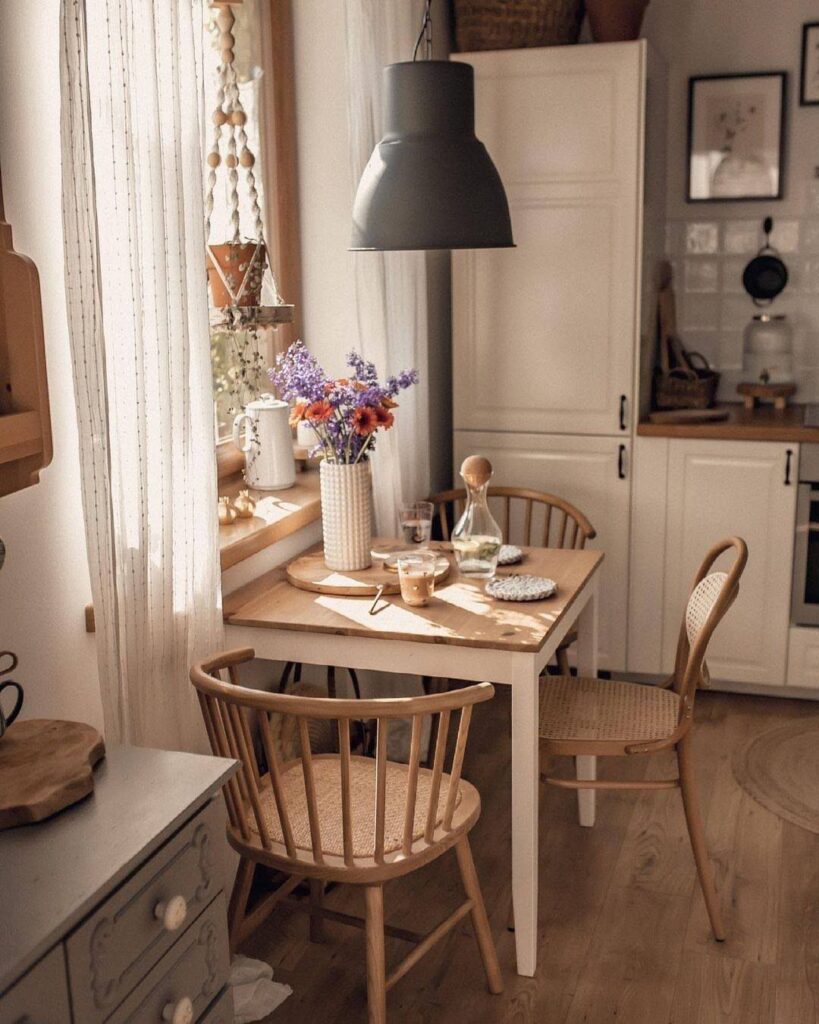
Shape and clearance decide which of these tiny dining room tables is yours, and the right choice depends on the room more than the style.
A round table or a drop-leaf with the leaves up suits a square or open-plan room because nothing sticks out to catch a hip, while a slim rectangle fits a narrow space better.
Every table here, from the cafe table to the wall-mounted one, needs about 36 inches of open floor around its edge so chairs can pull out and people can walk past.
1. Drop-leaf Table
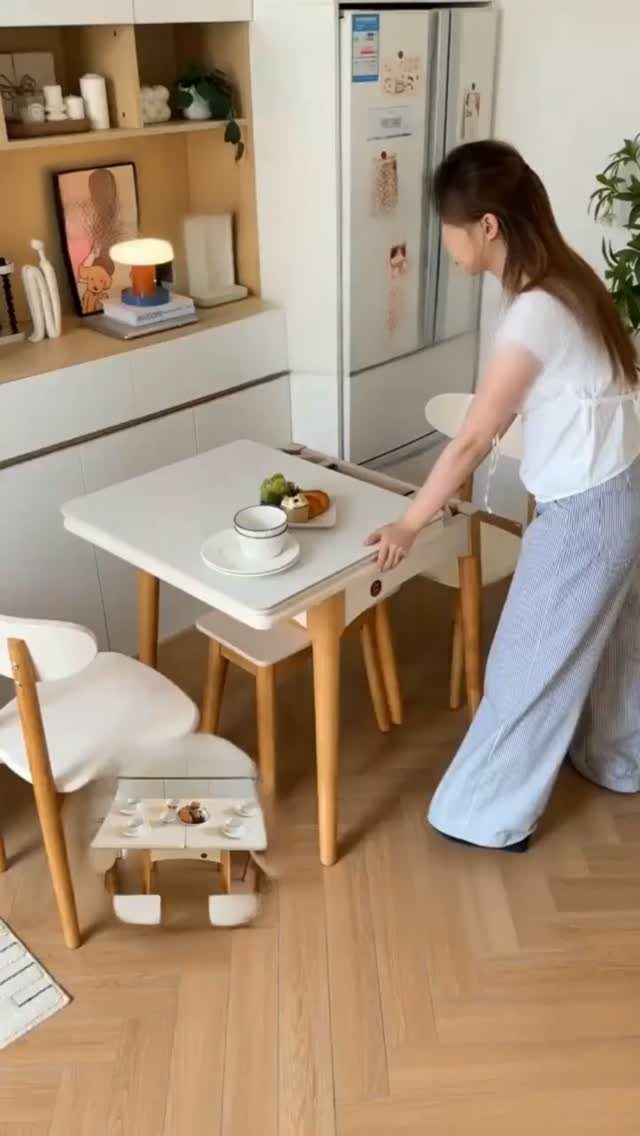
A drop-leaf table is the one I pick when the same corner has to serve a solo breakfast on Tuesday and a full table of guests on Saturday.
With the leaf down, the white square top shrinks to a footprint that barely interrupts a small kitchen.
Raise the leaf only when guests arrive, and keep the table where the leaf can swing freely. White paint on the top and wood legs keep it light, so it doesn’t crowd the room even when it is open.
2. Rectangular Table
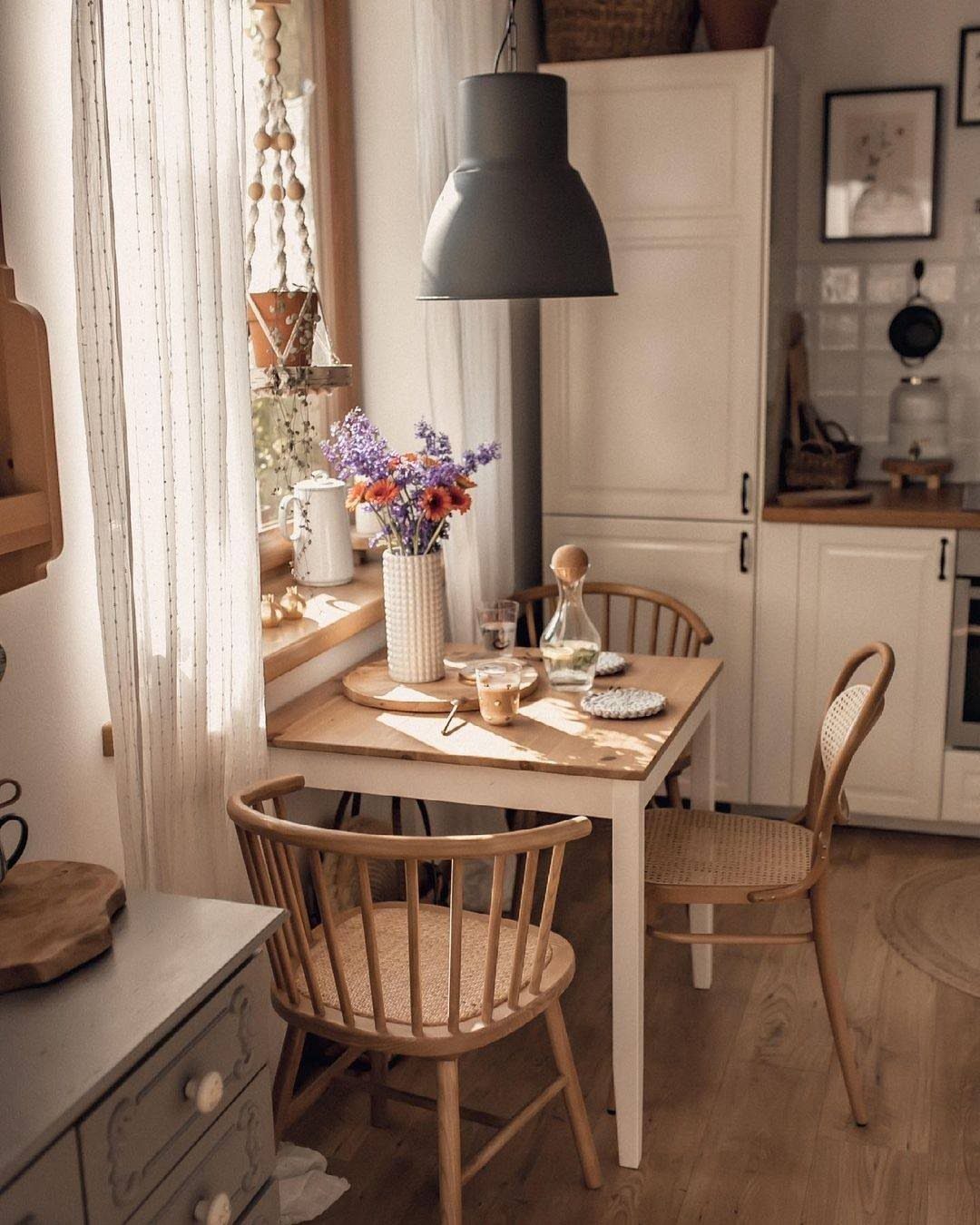
Narrow kitchens reward a rectangle. The long, slim shape lines up with the wall instead of fighting it, which leaves a walkway on the open side and room for more seats than a square of the same width.
2 chairs fit comfortably, and a pendant lamp centered above the table makes the spot feel like a real dining area. Add a small vase of flowers and the table is done.
3. Cafe Table
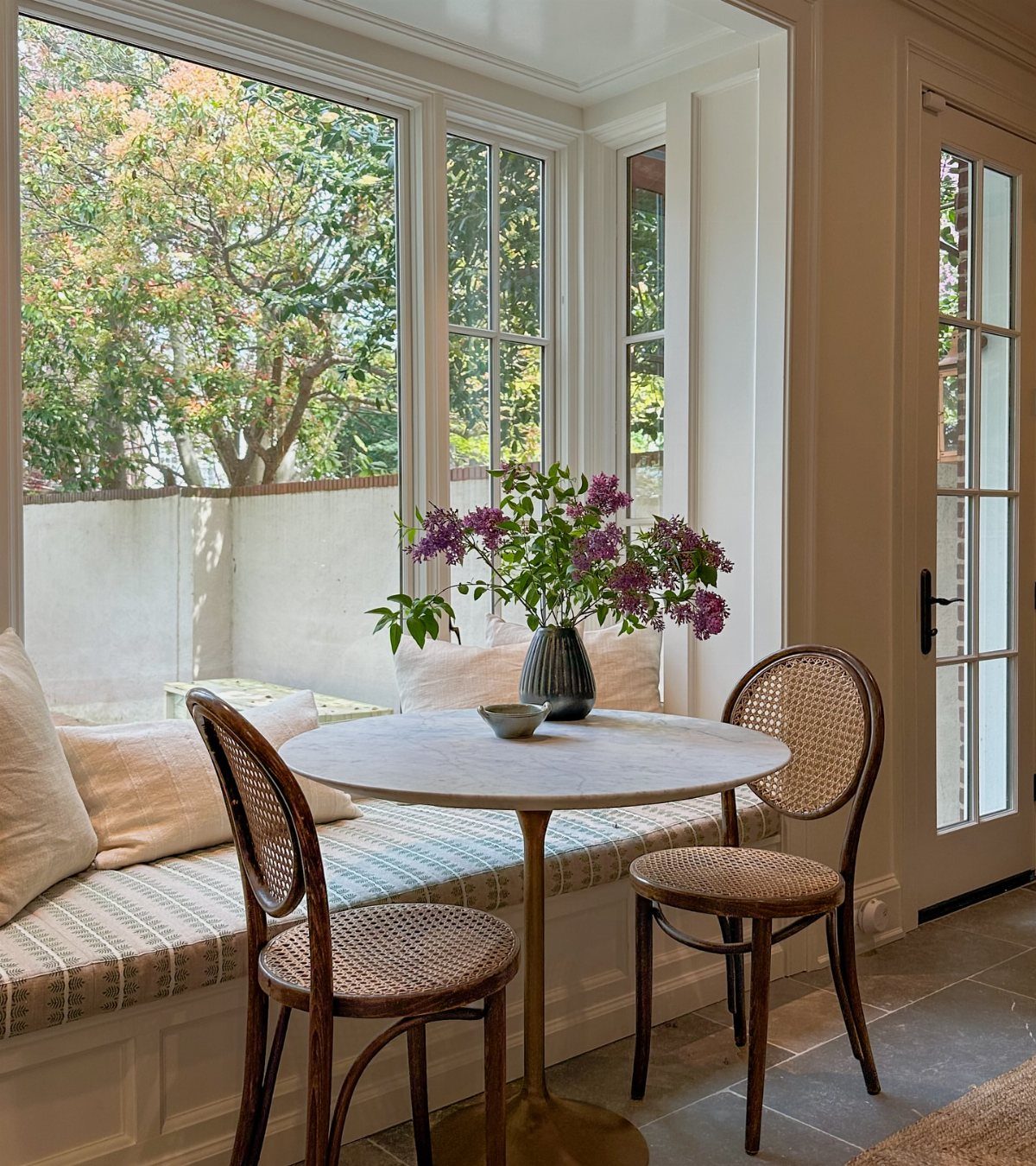
Pair a round cafe table with a window nook and a cushioned bench, and a corner nobody used becomes the best seat in the house.
A single pedestal-style base keeps legs out of the way of knees, so seated guests don’t bump each other.
A marble top with a gold base looks pricey, but the idea works in cheaper finishes too.
Pick the top for how easy it wipes clean. Keep the decor to one vase so the small surface stays usable for plates.
4. Round Dining Table
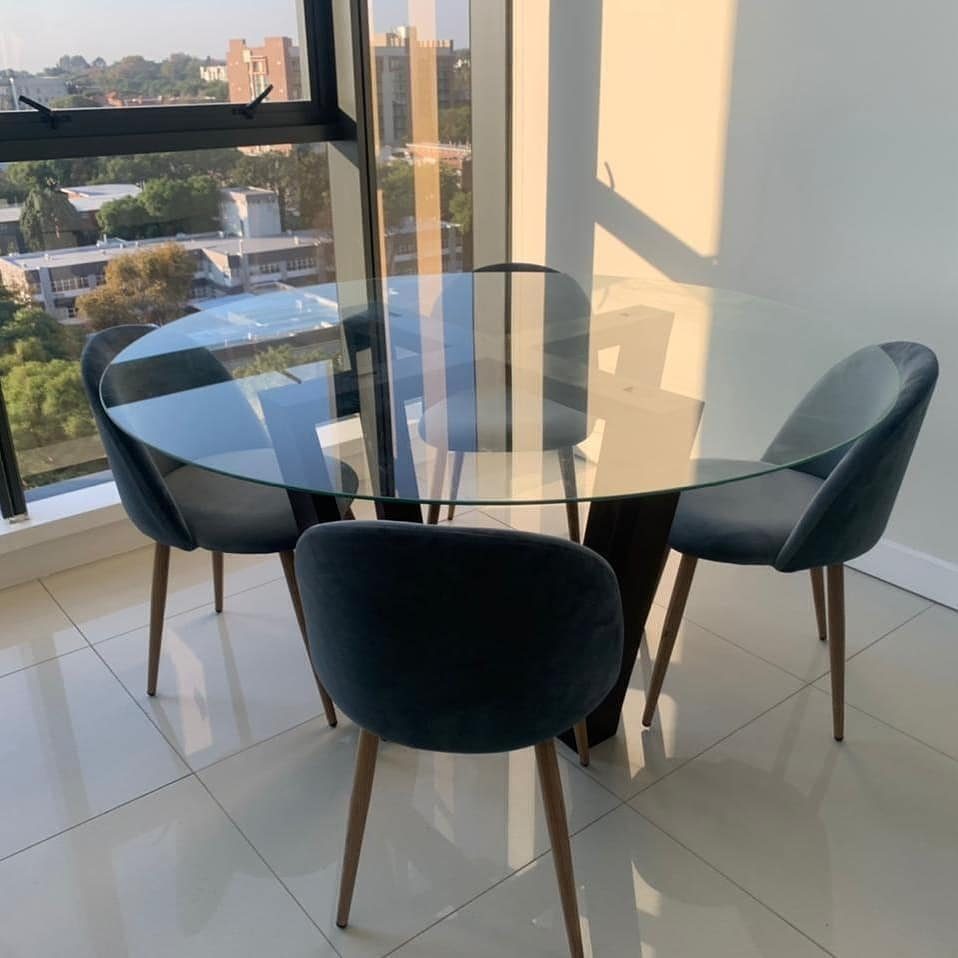
Corners are where small dining rooms get cramped, and a round table has none to bump into. People can slide past the edge without turning sideways, which is the circulation gain I value most.
A glass top lets the floor show through, so the table reads lighter than it is. Place it near a window and let the view do the decorating.
The adage, “Good things come in small packages” most certainly applies to the Form and Refine Element dining table, which measures a compact 27 inches squared for the most cramped spaces.
5. Compact Dining Sets with Matching Chairs
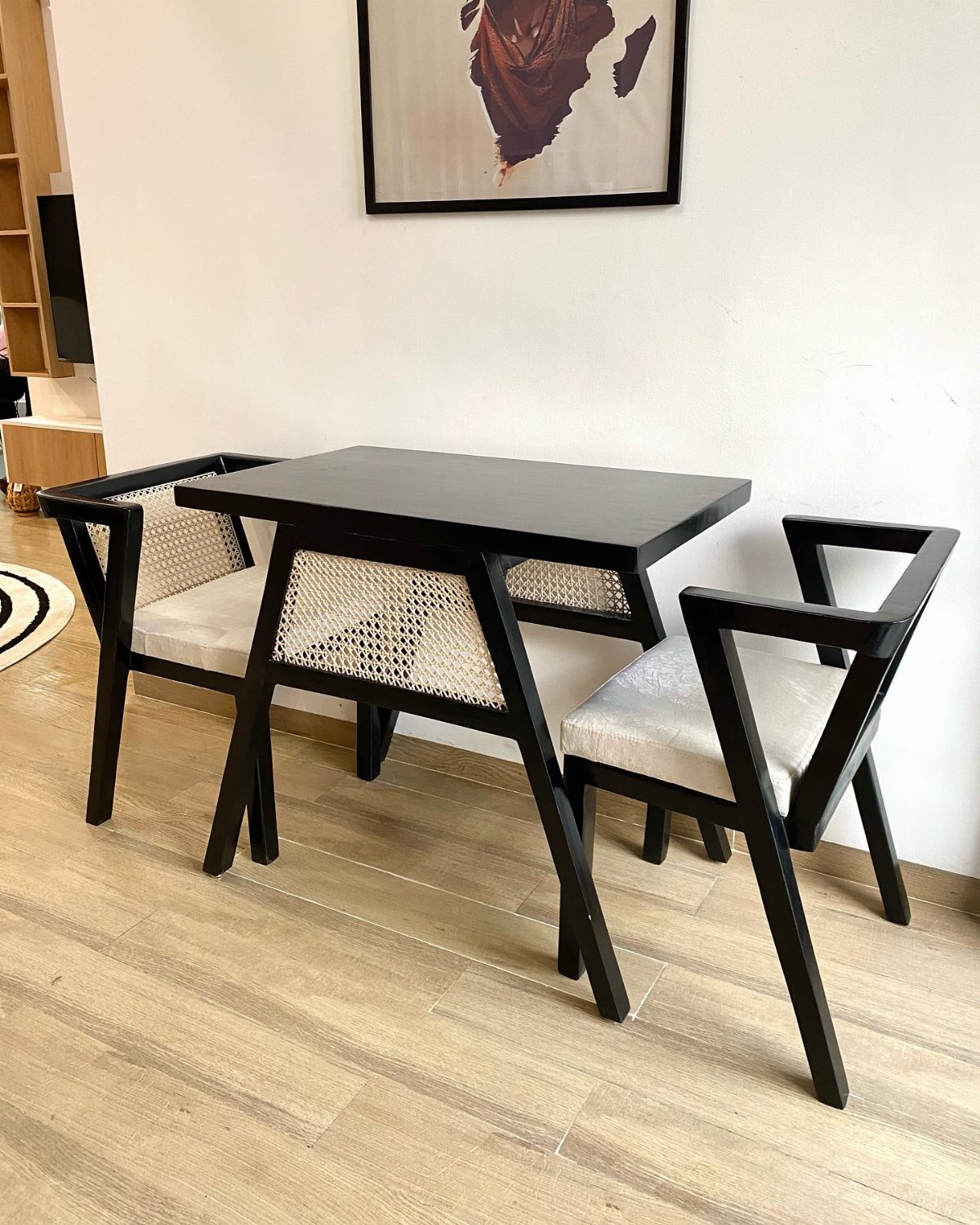
A table sold with its own chairs removes the guesswork of mixing heights and widths. The chairs are sized for the table, so they slide in fully and clear the walkway when no one is sitting.
I like a black rectangular table with woven cane backs because the open weave looks lighter than solid backs.
Light seats keep the dark set from feeling heavy against a white wall. Check the box for assembly steps before buying, since weekend timelines are short.
6. Glass-top Table
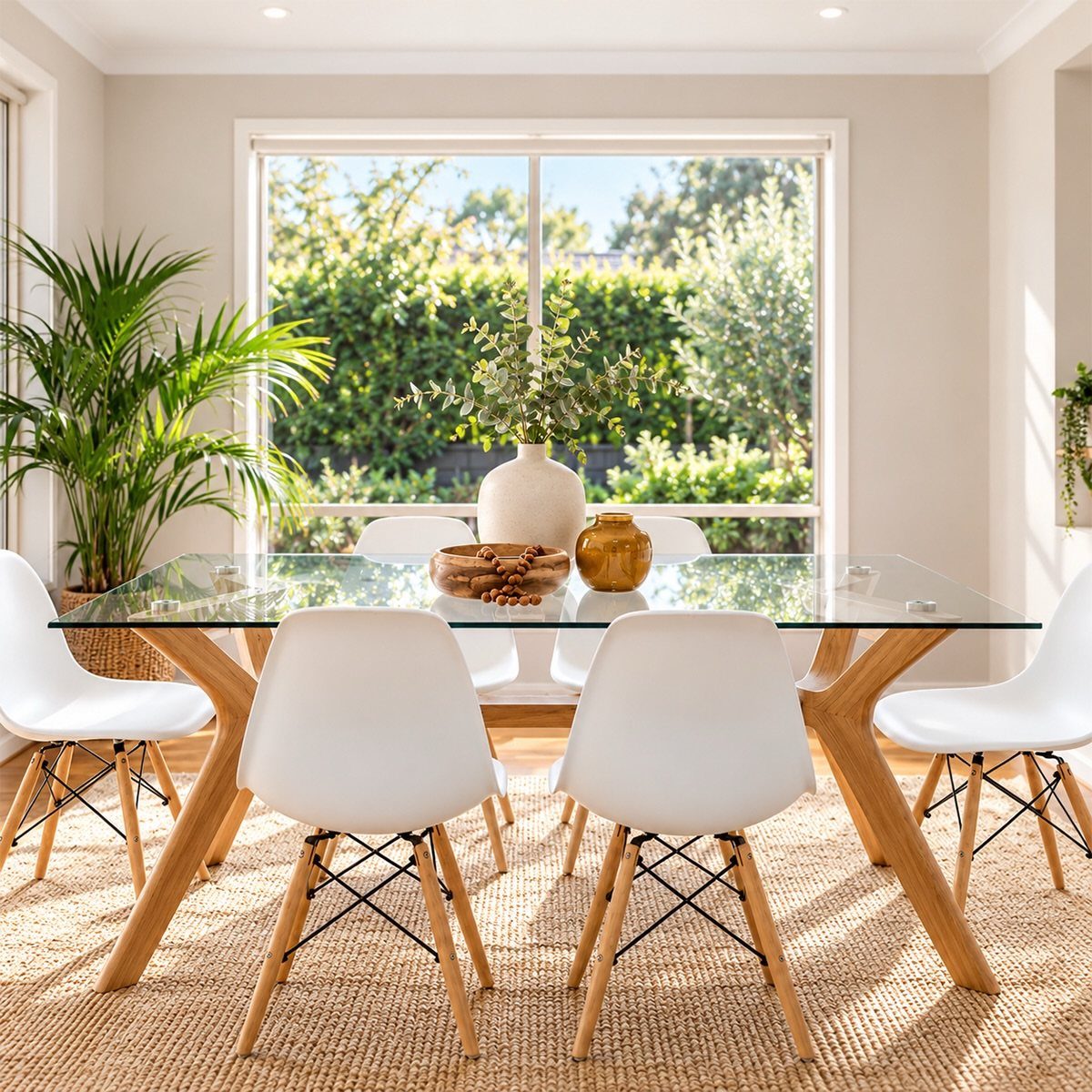
Glass makes a small room feel larger because you see through the table to the floor and wall behind it. That is the whole appeal, and it works best with a clear top and plain legs.
Put a jute rug underneath so the setup gets some texture, and choose white chairs to keep everything bright.
Fingerprints show up fast on glass, so plan on wiping the top often. A plant by the window adds color without taking table space.
7. Wall-mounted Table
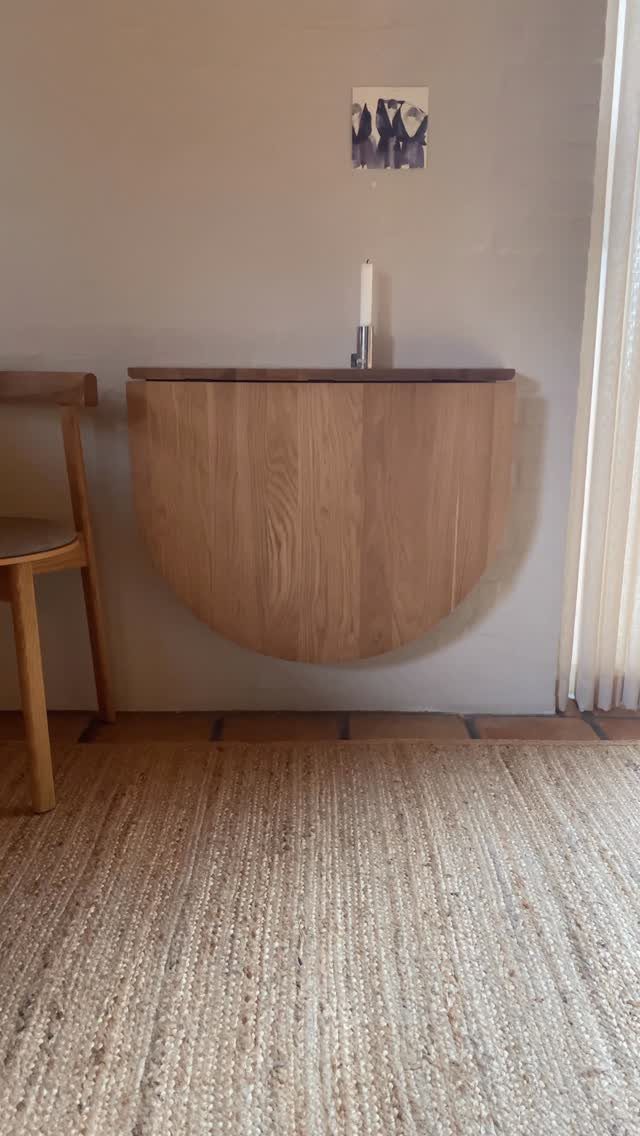
A semi-circular top fixed to the wall gives a dining spot with no legs and nothing in the way of the floor.
Only the chair takes up space, and it tucks fully under the flat edge when no one is sitting.
A wooden top and chair in the same tone look calm together, and a woven rug under the seat adds texture without crowding the room.
A lone candle is all a half-circle table can carry; anything more crowds out the plate and cup it is there to hold.
Screw the mounting into studs, not just drywall, because a table takes leaning and elbows. Renters should check the lease before drilling.
8. Marble Mini Dining Table
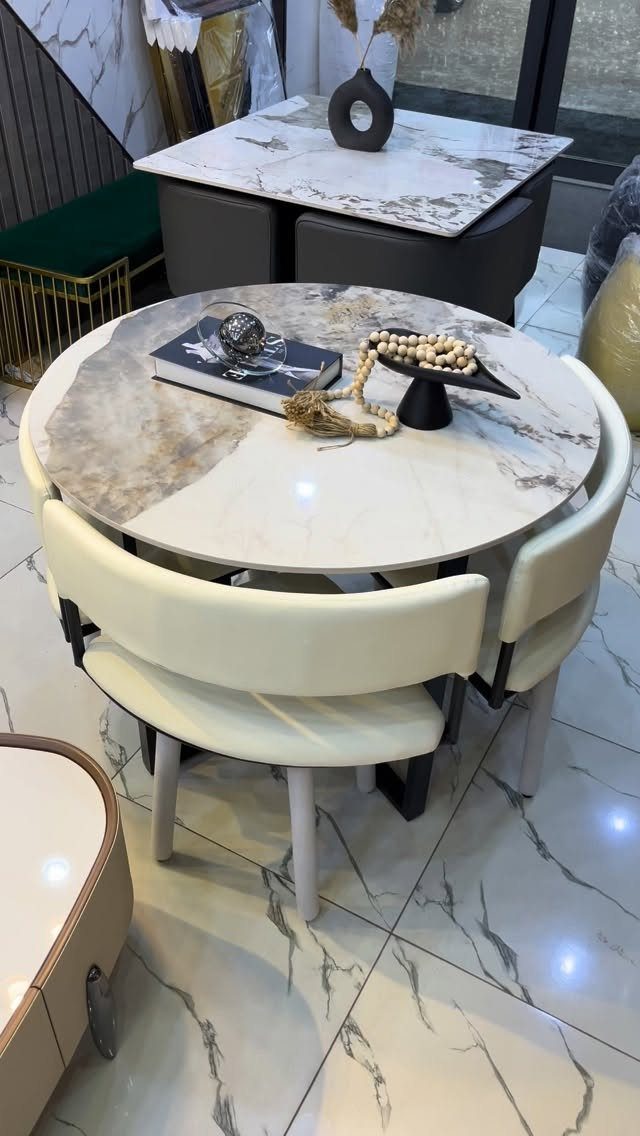
Marble earns its place on a small table because one round slab is the whole statement. With a white top and cream chairs, the set stays pale and quiet, and the round edge leaves no corners to catch a hip.
Stone is heavy, so measure the doorway and stairs before ordering, and set the table where you want it to stay. A book and a few ornaments are plenty for decor; any more crowds the plates.
Marble can stain and etch from spills, so wipe up wine and lemon juice quickly. If that sounds like too much worry, a marble-look top costs less and wipes easier.
Choosing the Right Shape
Before you pick a style, look at how people will move through the room.
Round or oval tables suit tight spaces because they remove the hard corners that catch feet and slow circulation, and that matters most in a square or open-plan area.
Rectangular tables fit better in narrow rooms. Set against a wall or run down a dining corridor, a slim one keeps a clear path through the middle that a round table would block.
If you want more seats, think about length. A rectangle gives you room along its sides, especially with benches or an extendable leaf, while a round or oval table can often take an extra chair without feeling crowded.
Space Clearance Recommendations
Plan on roughly 36 inches of open floor from the tabletop edge to the nearest wall, sideboard, or other big piece. A gap that size lets someone slide a chair back while another person squeezes past behind them.
In a tight layout, you can go down to 30–36 inches.
Before you buy, mark the table’s footprint on the floor with painter’s tape, then measure out from each edge.
Pull a chair back from the tape and walk around it. Mark the table’s footprint with painter’s tape on the floor and walk around it before you buy; that beats hauling back a table that doesn’t fit.
Material Considerations
Color matters as much as material in a small room. A light shade on the tabletop keeps the table from dominating, especially against off-white walls.
Weight also matters visually. A heavy base can drag a small table down, but white-washed wood eases that, so the piece looks lighter than it is.
Pick a pale wood or white-washed finish when you want warmth, and glass when you want the table to nearly disappear. Whichever you choose, keep the surface clear of clutter so the small top stays open and easy to use.
Frequently Asked Questions
How to choose the best shape for a small dining table?
Start with how people walk through the room. Corners are what snag shins in a small room, so a round or oval top is the safer pick for a square or open-plan space.
In a narrow room, a slim rectangle pushed along one wall leaves a walkway down the middle, which a round table would eat up.
What size small dining table do I need?
For two people, aim for a top about 24–28 inches wide and 28–32 inches long. For four, plan on roughly 32–36 inches wide and 48–54 inches long.
A round table 36–44 inches across fits a tight corner well. Leave room around any of them so chairs can pull out.
How much clearance to leave around a dining table?
Leave about 36 inches between the tabletop edge and the nearest wall or big piece of furniture.
With that much room, someone can pull a chair out while another person edges behind it. Tight layouts can get by on 30–36 inches, but under 30 the space starts to feel pinched.





