Floor space decides which of these ideas fits: a small room wants a foldable wall-mounted dining table or a sofa-and-chair layout kept tight to the walls, while a larger one can take long, shallow bookcases as a divider or a TV pole partition.
The ideas run from a few frames and a vase to a built divider, and the cheap ones can be swapped in a weekend.
1. Sofas and Chairs
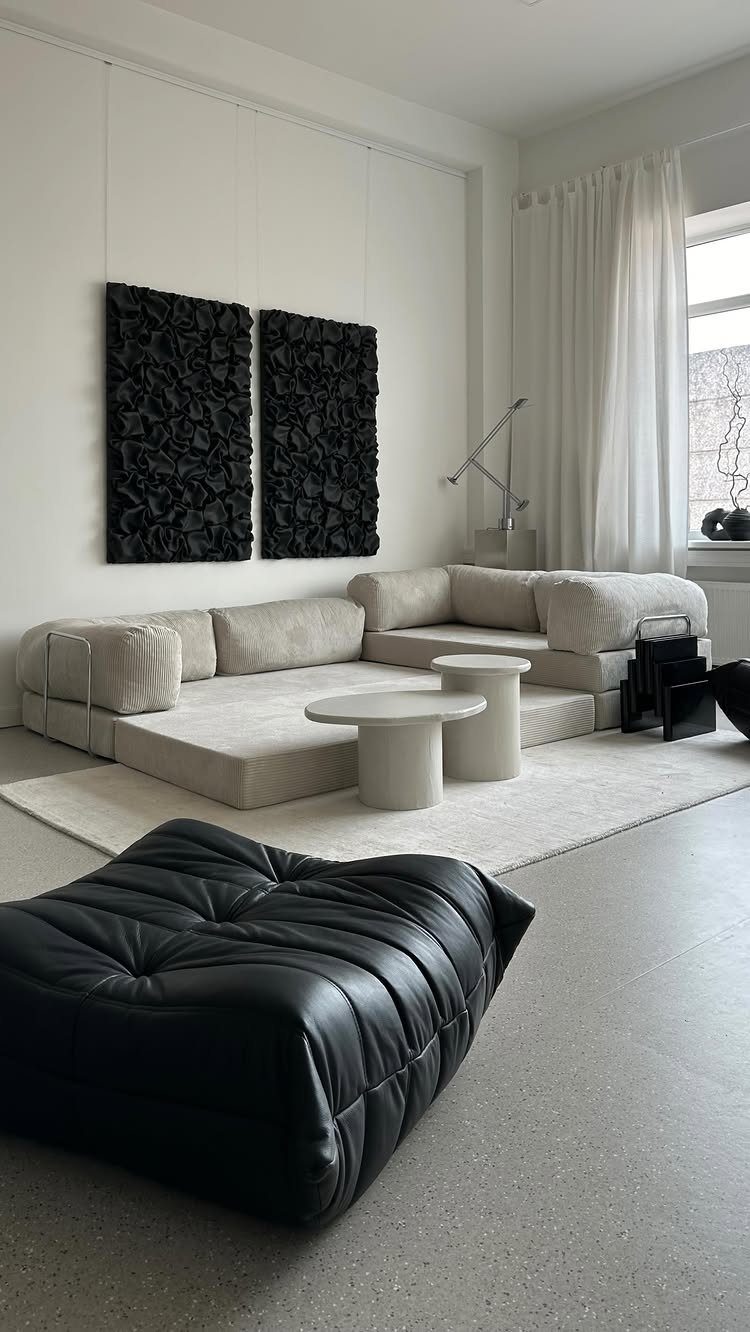
A big corduroy sectional gives a combined room one anchor, and I like that beige keeps it quiet beside the black leather lounge chair. The contrast does the styling for you.
Pick one large sofa and one single-statement chair rather than several mid-size pieces. Fewer shapes leave more floor, and that matters when a dining table sits within sight.
Keep the chair in a darker tone than the sofa so the pair reads as a deliberate mix, not a set.
2. Long, Shallow Bookcases
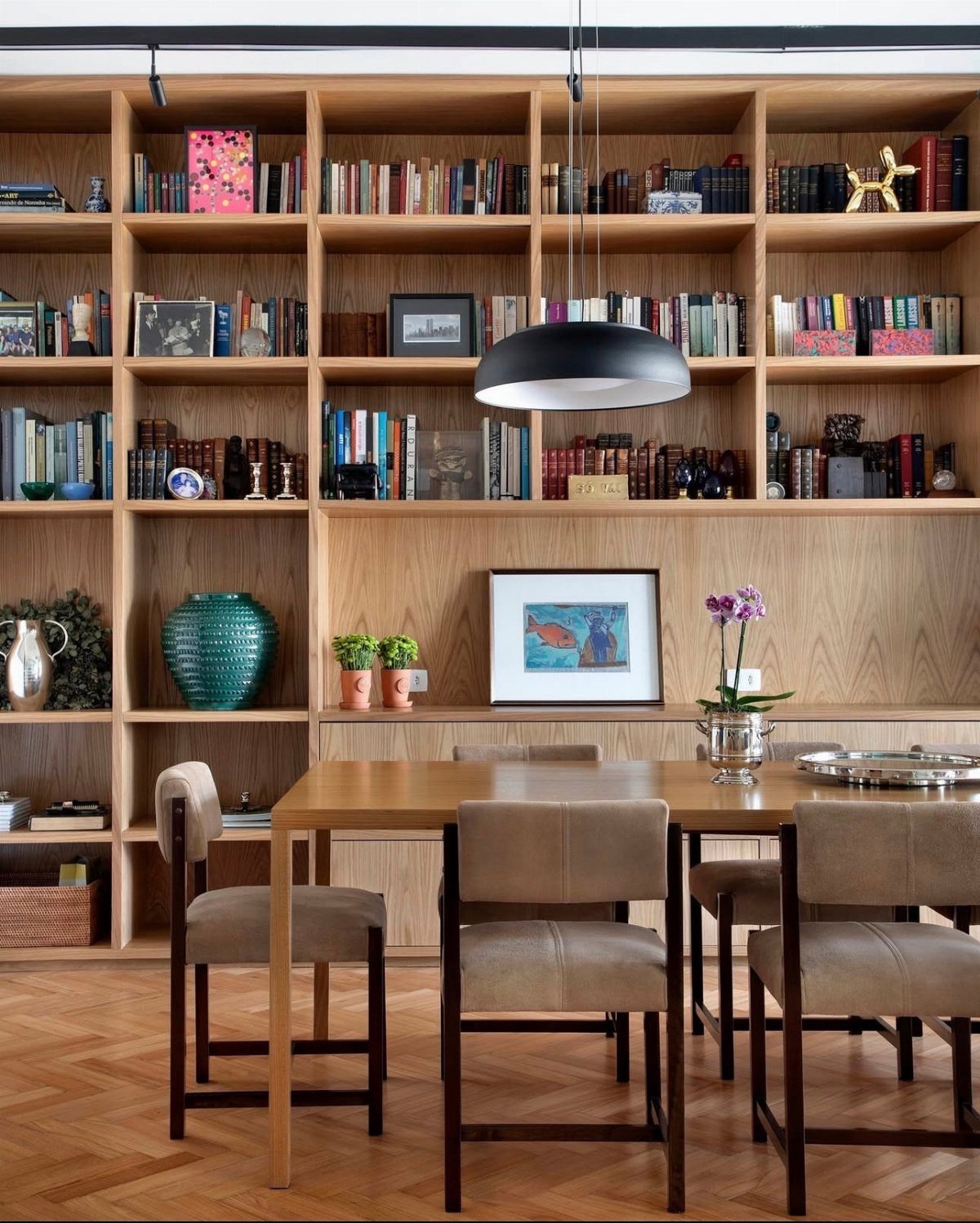
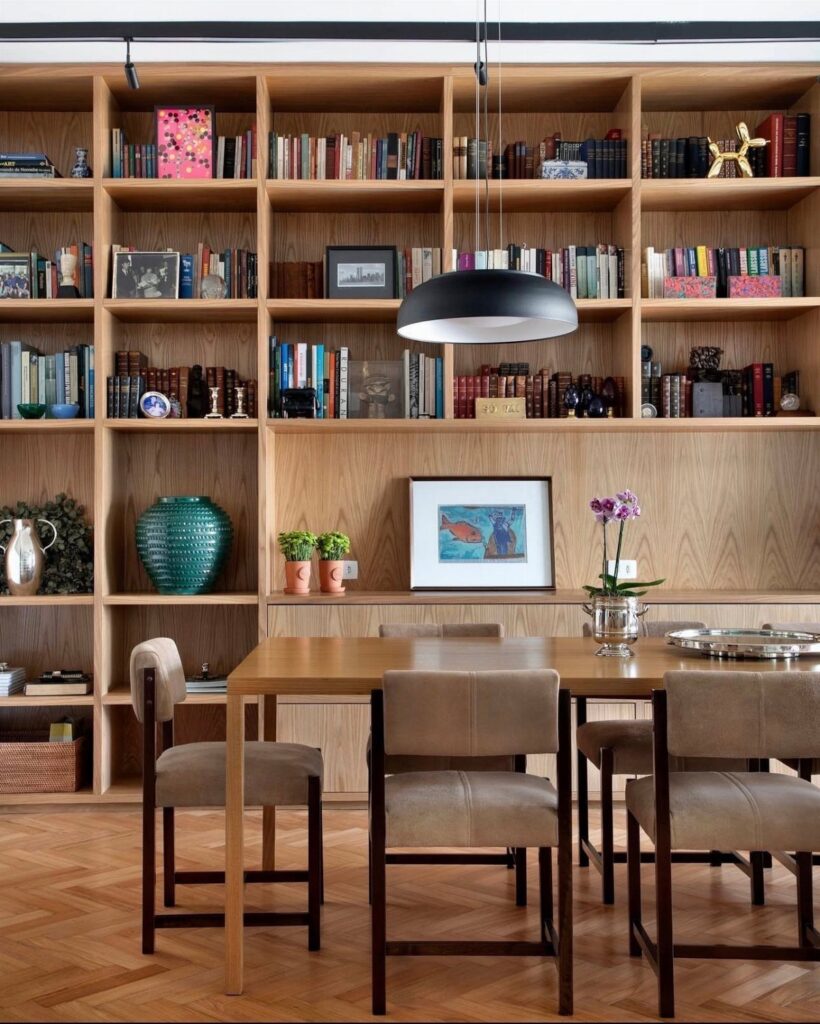
Behind a dining table, a wall of light wood shelving turns a plain eating area into a room with a back story. Books and decor fill it, so the wall reads as a feature, not storage.
Mixing the 2 helps. Stack books both ways, leave a few gaps, and let objects break up the rows.
Match the wood tone of the shelves to the table if you want calm; a black pendant, like the one here, adds contrast without competing.
3. Small Living Room with a Dining Area
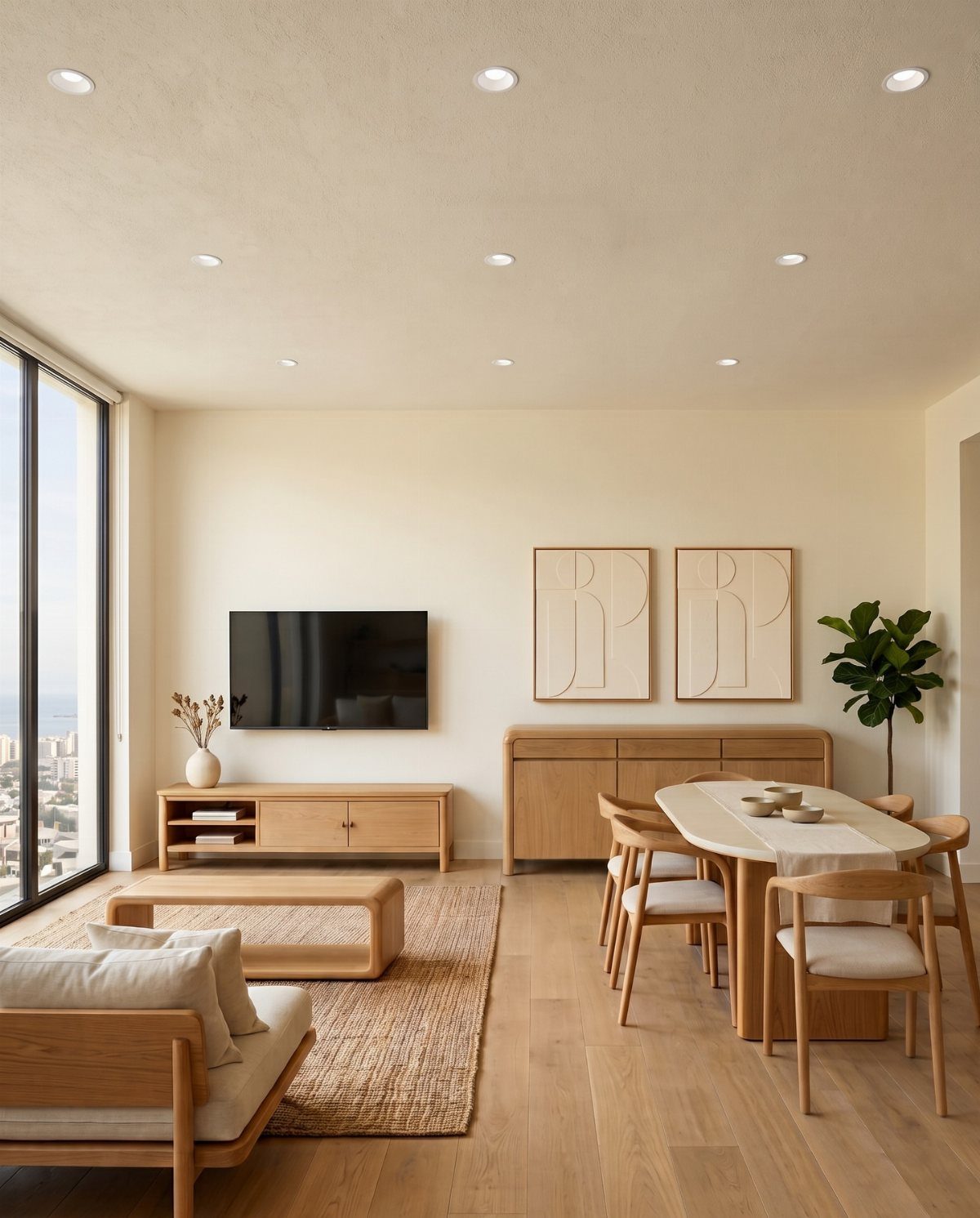
Small doesn’t have to mean cramped. When the living area and dining table share one room, keeping the furniture light in tone and low in bulk lets the windows do the work.
I would stay with one wood tone and neutral upholstery, so the eye reads one space instead of two crowded ones.
Put the dining table closest to the windows and the TV on the opposite side. Pull chairs in tight when nobody is sitting, and the walkway stays clear.
4. Cohesive Color Scheme
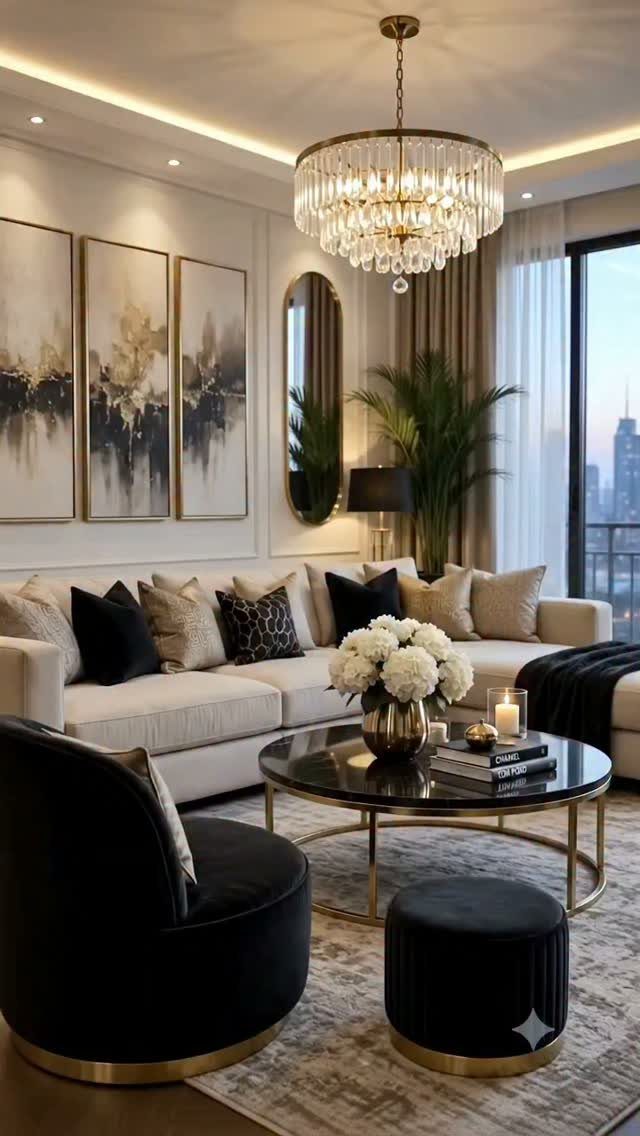
3 colors can hold a whole room together: cream for the big upholstery, black for the accents, and gold for the small shine. That ratio is the useful part, with most of the room in the lightest shade.
Repeat each color at least 2 or 3 times so none looks accidental.
If the table sits close by, carry the same palette over with chair fabric or a vase.
5. Round Dining Table
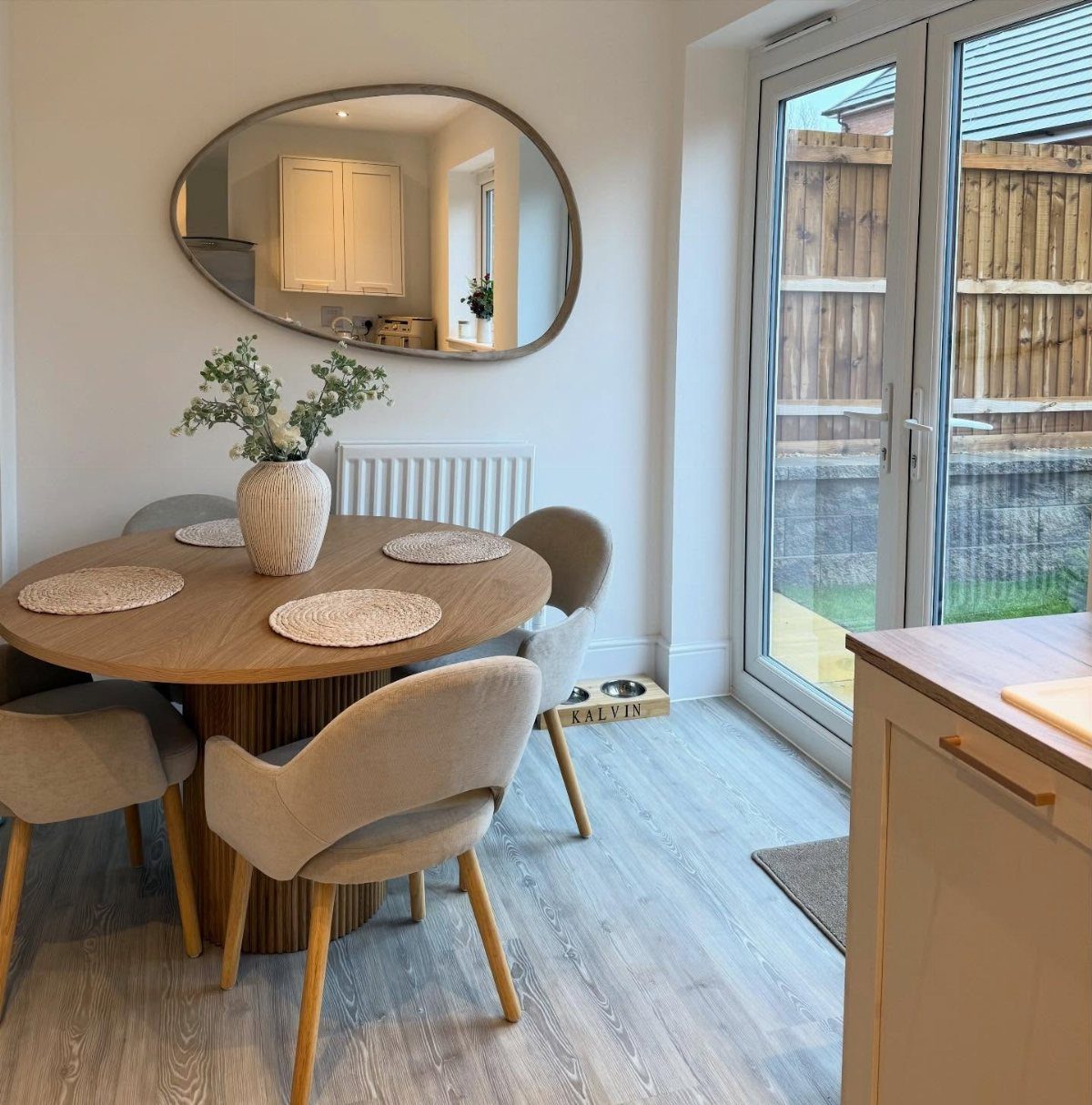
Round tables have no corners, so people walk around them easily, and that is why I favor one in a room that doubles as a living space. Everyone also sits facing each other, which makes talking easier.
Place it next to glass doors or a window and leave a clear path on every side.
A round mirror on the wall echoes the tabletop. Repeating a shape once like that makes the corner look planned, and it costs little.
6. Wall Art
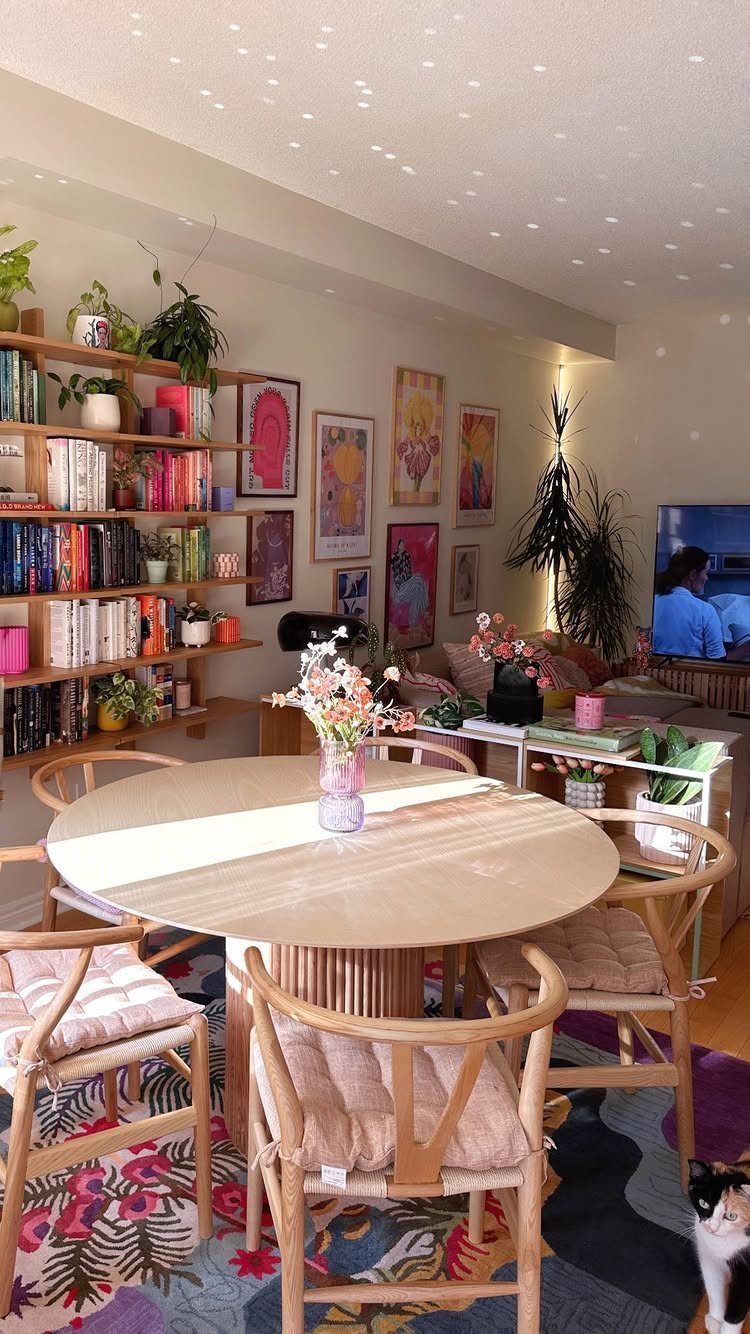
A gallery wall of colorful prints brings energy to a dining area without changing a single piece of furniture. Frames are the cheapest way to add personality, and you can swap them as tastes shift.
Lay the prints on the floor first and arrange them until the gaps look even, then hang them. Keep the spacing between frames consistent.
Hang the group at eye level for a seated person, since that is how dining rooms are actually used.
7. Open Kitchen Layout
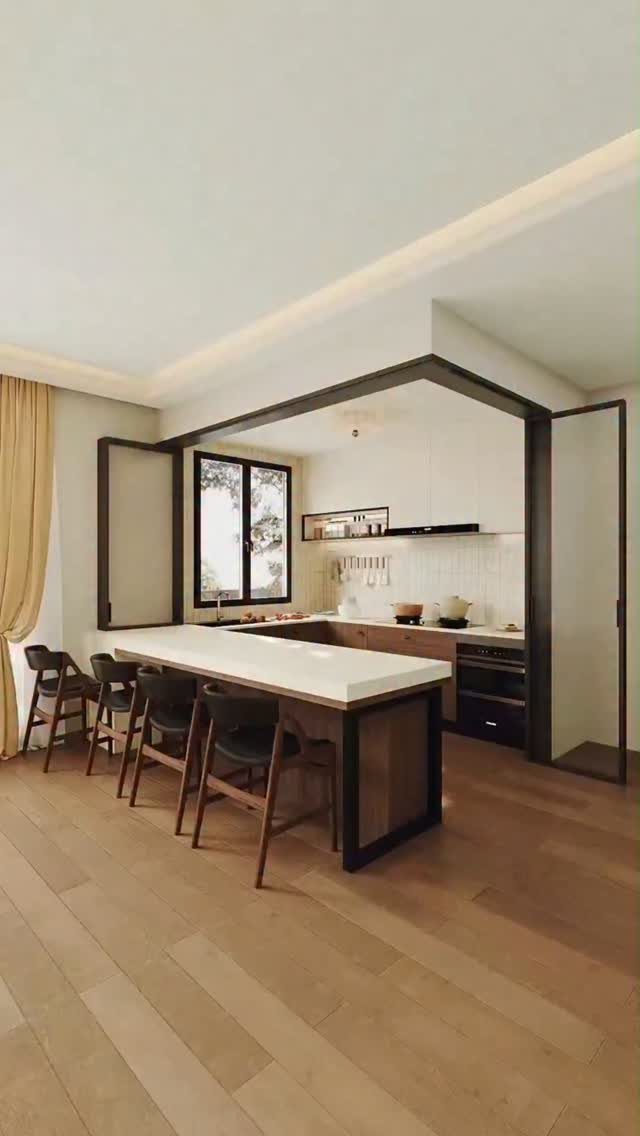
Folding glass doors let an open kitchen run into the next room, and a white island does the dividing without a wall.
Stools are the cheap part of the setup. Pick a tone darker than the floor so they read as a deliberate accent, and tuck them fully under the counter when nobody is perched there.
Open layouts show everything, so keep the island top mostly clear.
8. Incorporate a Buffet or Sideboard
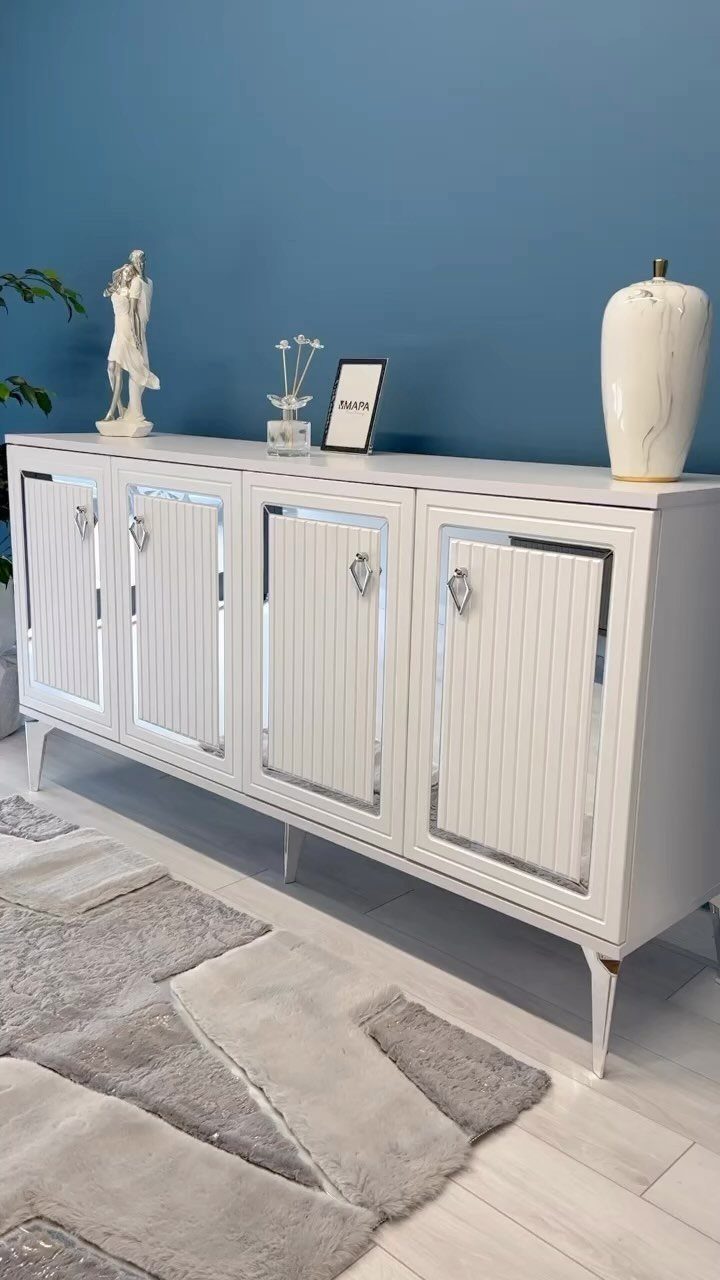
A mirrored-door sideboard bounces light around the room, which makes it a smart pick against a strong blue wall. White against blue stays crisp instead of heavy.
Keep the top to 3 things at different heights: a statue, a small frame, a vase. Odd numbers look arranged without effort.
A grey shag rug underneath softens the hard front. I would choose a rug that extends a little past the sideboard’s edges.
9. Zoning
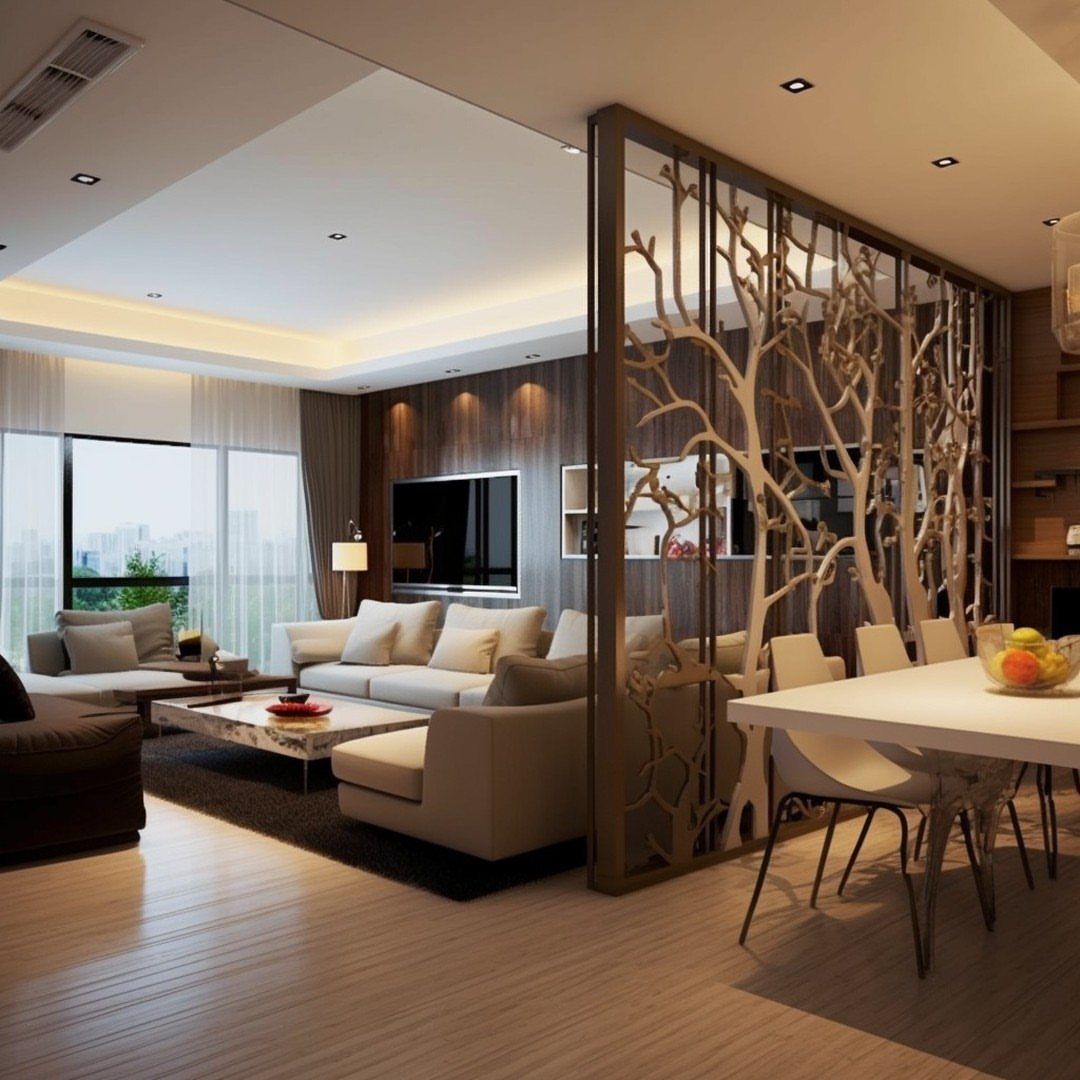
A wooden screen with a branch pattern marks where the sofa area ends and the dining table begins, and it never closes the room off. Light still passes through, so both sides stay bright.
Place the divider along the line between the two zones, not in the middle of either one. I prefer a pattern with gaps over a solid panel, since a solid one makes a small room feel cut in half.
Keep the sofa facing the screen’s back, not the table.
10. Lighting Choices
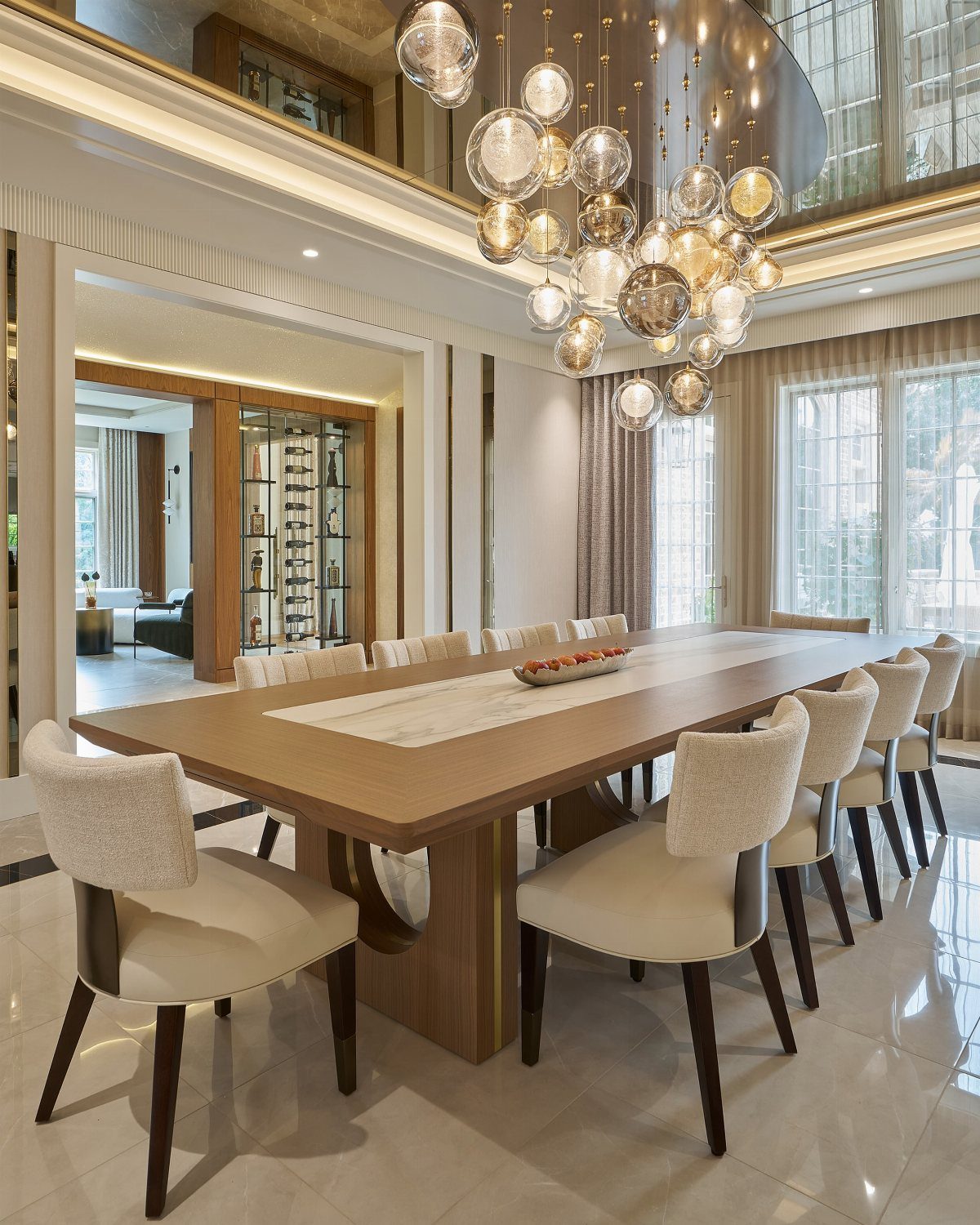
A single large globe chandelier over the table becomes the focal point of a dining room, and gold glows warmly against cream chairs. Recessed ceiling lights then handle the general brightness.
Give each job its own source: the chandelier for the meal, the recessed lights for the rest of the room. Putting them on separate switches lets you dim one without losing the other.
Center the fixture over the table so it reads as part of the layout.
11. Natural Elements
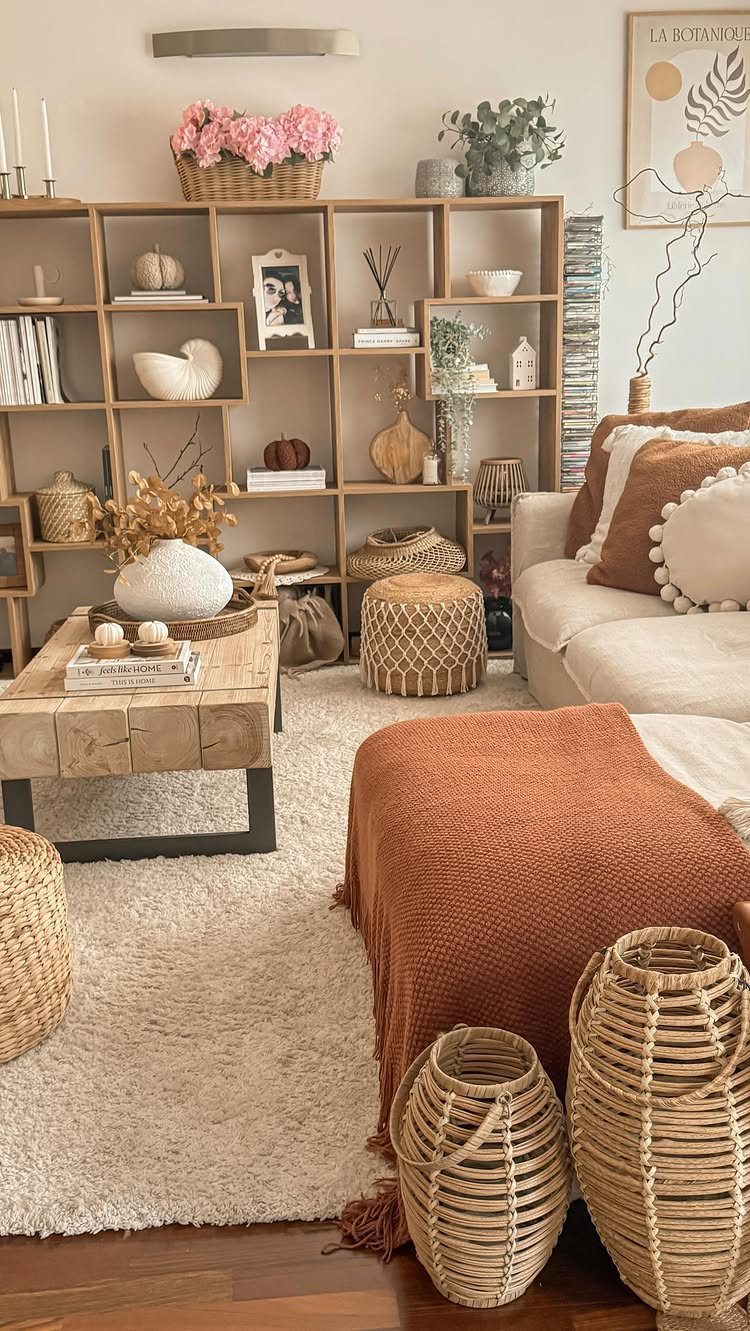
Plants, woven baskets and wooden shelving make a beige living room feel lived in with no bold color at all. Green is the only accent needed against the earth tones.
Mix plant sizes: one tall on the floor, a few small ones on shelves and the coffee table. Baskets hide clutter and add texture, so I would pick 2–3 in the same fiber rather than a mismatched set.
Repeat the wood tone from shelf to table for calm.
12. Foldable Wall-Mounted Dining Table
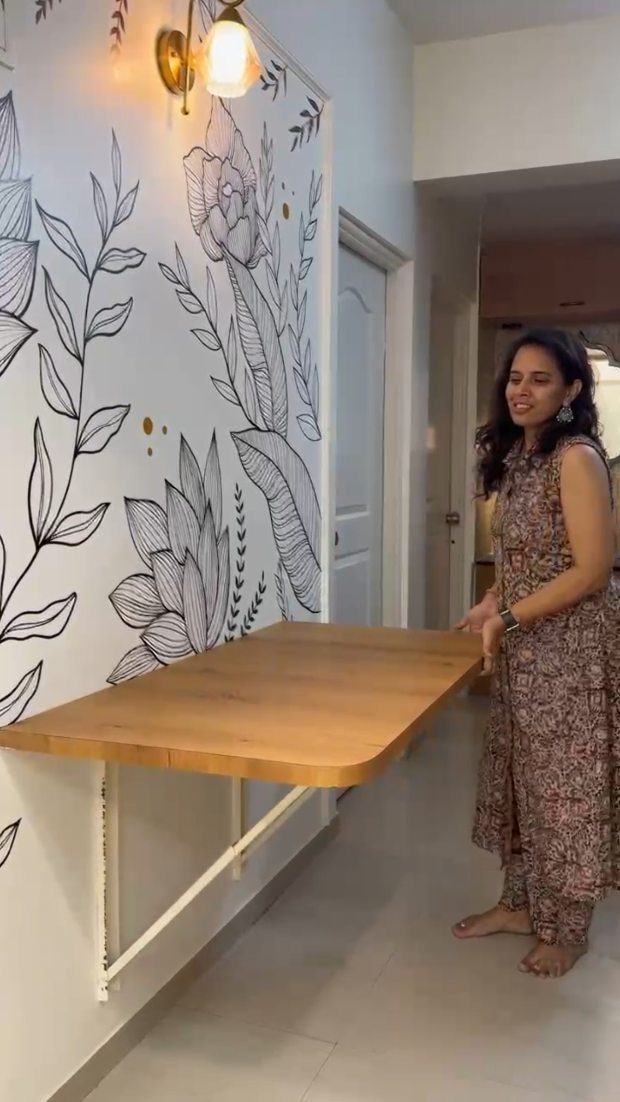
A wall-mounted drop-leaf table folds flat against the wall, so a tiny room gets a dining spot only when it needs one. For a renter or a small combined room, that frees the floor the rest of the day.
Mount it where a lamp and some art can sit above it, since the wall stays visible when the leaf is down. Wood keeps it looking like furniture, not a gadget.
Mount it into studs, and check that it folds fully before you rely on it.
13. Extendable Dining Table
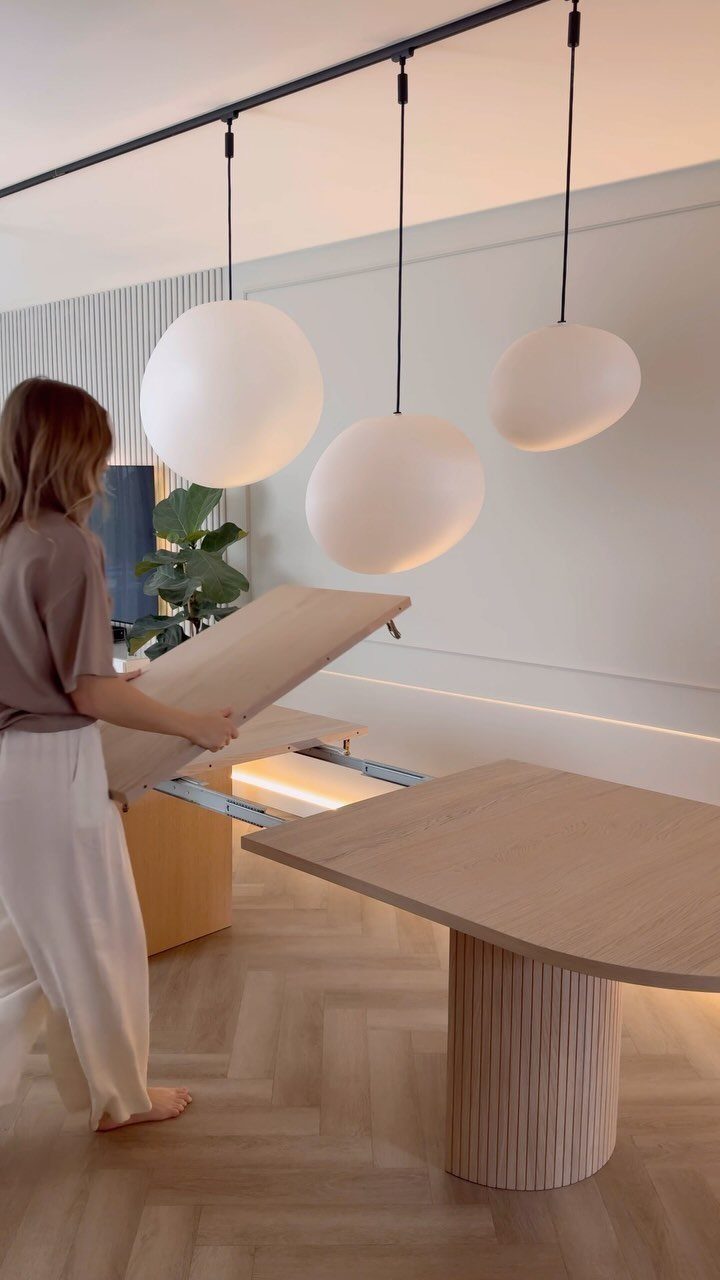
An extendable table solves the question of how to seat a small group on a Tuesday and a bigger crowd on Saturday without owning a table too big for the room.
Light wood like this one keeps the footprint feeling small even when it’s pulled open.
Measure the room with the table fully extended, not closed. Leave space to pull chairs out on every side, or the extra seats won’t be usable.
Keep the leaf or extension section somewhere easy to reach, so opening the table takes a minute and not a project.
14. TV Pole Partition
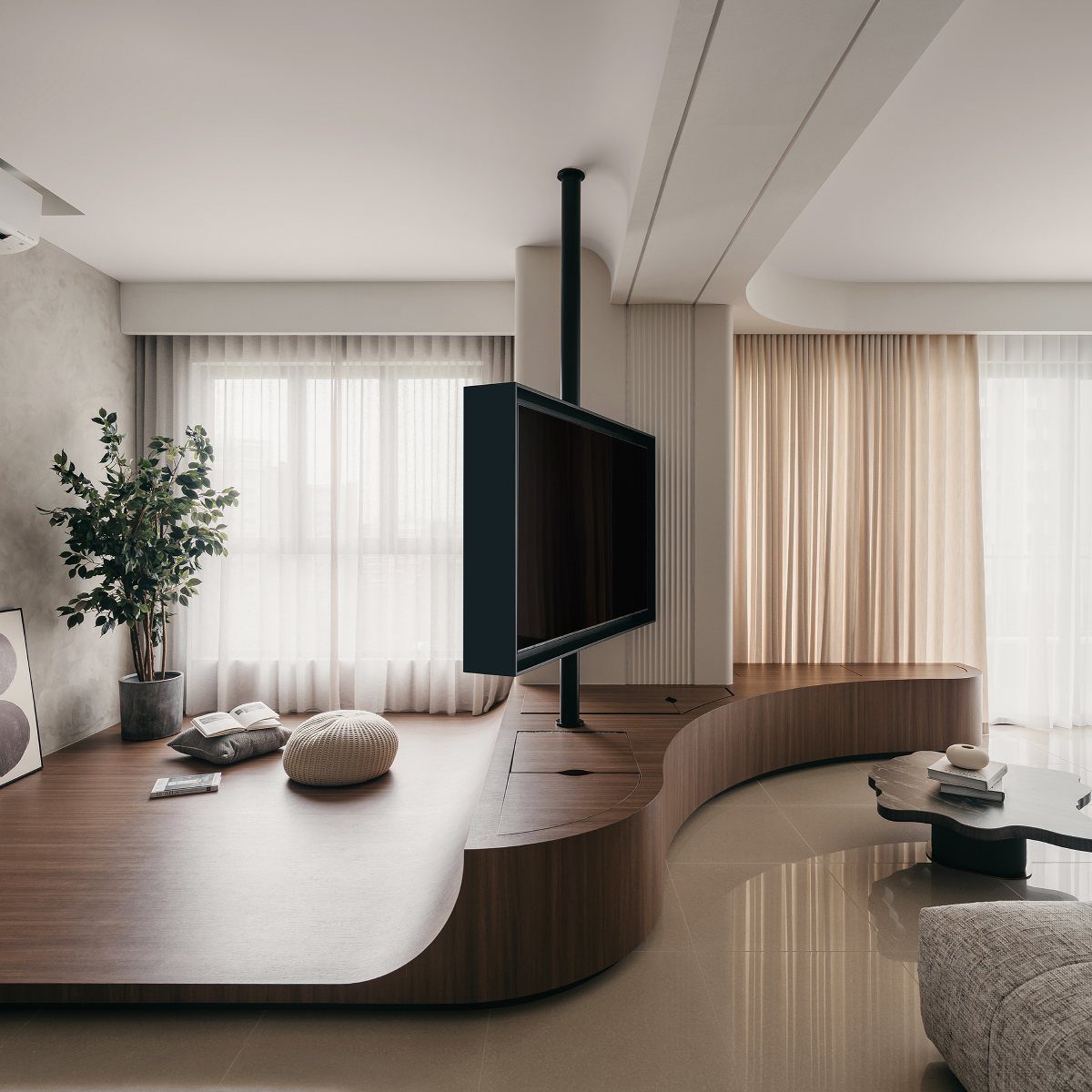
A TV on a black vertical pole, set into a curved wood partition, lets one piece divide the room and hold the screen at once. The curve is gentler than a straight wall, so the space still flows.
I like it for a combined room because it replaces a TV stand and a divider with one build. Wood and a slim black pole look deliberate together.
Plan the cable route before anything is fixed in place, and leave the platform top for a plant and some cushions, as here, so the screen isn’t the only thing you see.
Combining Spaces Effectively
Give each half of the room one job and one signal.
Anchor the sofa with a rug, then hang a pendant over the table, and each half of the room reads as its own zone. 2 anchors like that define both spots while the room still flows.
Then tie the halves together with continuity.
If the living area leans on earthy colors like brown, clay and sand, repeat those shades in the dining chairs or a rug. Matching accents carry the eye across the room.
When the kitchen opens onto the living room, carry one flooring or wall material through both so the eye doesn’t hit a break.
A marble-effect porcelain tile with subtle veining works as a common thread. Renters can’t retile, so the rug and chair fabric do this job on a smaller scale.
Variety may be the spice of life, but balance is the key to preventing chaos in your living room decor. When designing this space in an Upper West Side town house, Forino juxtaposed different forms, textures, and furnishings to add some dimension.
Choosing Color Palettes
Start with light shades on the walls and big surfaces: beige, cream or pastel grey. They make a combined room feel bigger, which matters when one space has to hold a sofa and a table.
Earthy tones like clay, rust or olive work best as small accents layered on top.
Rust, olive and mustard all work, and a pillow, a vase or a throw is enough to bring one in. Pick one or two, not all three.
Soft, muted wall colors paired with warm bulbs overhead give a room that cozy, settled feel.
Framed family photos or a piece of art you made yourself add personality, and some real plants or fresh flowers round it out. Each costs little and can be swapped in a weekend.
Maximizing Small Spaces
In a small combined room, furniture that does 2 jobs earns its place.
A storage bench is a good example: guests sit on it at the table, and linens or placemats stay tucked inside. I would pick it over extra chairs.
Layout matters as much as the pieces. Pale colors and shiny surfaces open a small room up and keep it from feeling crowded, so start with the largest pieces.
Tape the footprint of each piece on the floor first, and only then spend money. Walk the paths you use daily, and cut whatever blocks them.
Frequently Asked Questions
What are creative ideas for decorating a kitchen or dining table?
For a table, I stick to a trio of objects at staggered heights, say a tall vase, a mid-size frame and a low bowl; the uneven count looks collected rather than staged.
A vase or chair fabric that repeats the room’s palette ties the table to the rest of the space.
What are common dining room design mistakes to avoid?
Overcrowding is the big one: too much furniture blocks the paths people walk every day. Tape each piece’s footprint on the floor before buying, and leave room to pull chairs out on every side.
Give the table its own light source too, such as a chandelier centered over it on a separate switch so you can dim it on its own.
How do I arrange a living room and dining room combo?
In a combined room, I let the sofa and the table each claim one anchor: an area rug grounds the seating, and a single pendant hung over the table marks the dining side.
That marks 2 zones while the room still flows.
If you want a divider, a screen with gaps, like a wooden branch-pattern one, goes along the line between the zones and lets light through so a small room doesn’t feel cut in half.
What is the best color for a living room and dining room?
Pale tones such as beige, cream or soft gray on the walls and big surfaces open up a combined room and make it feel larger.
Then add one or two earthy accents such as rust, olive or mustard through a pillow, vase or throw. Repeating each color 2 or 3 times keeps it from looking accidental.





