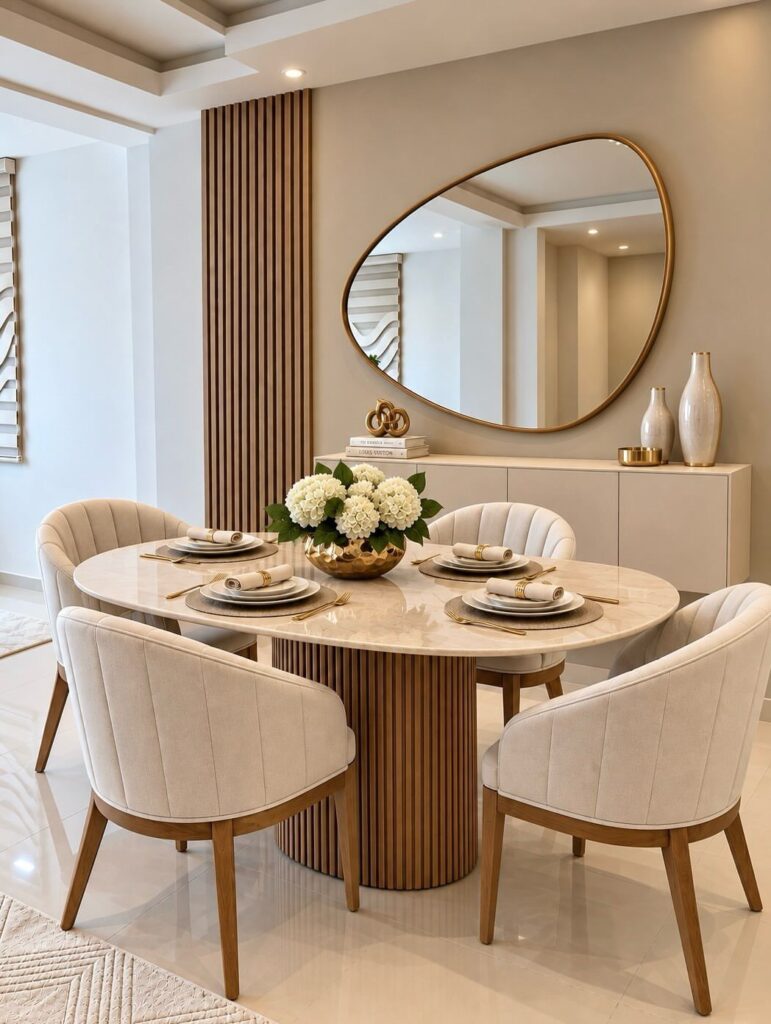
The ideas here run from a cheap fix, like swapping in colorful chairs or hanging one large painting over a weekend, to a full indoor-outdoor setup with glass doors that open the table onto a patio.
Which one is yours depends on the room you already have: a longer-than-wide room suits an oval table, a tight nook wants a natural wood finish, and a renter who can’t touch the walls or doors should start with chairs, a gallery wall or a lighting fixture.
A black marble top with white veining or a rose-gold sculptural base only works when everything around it stays quiet.
1. Round, Oval
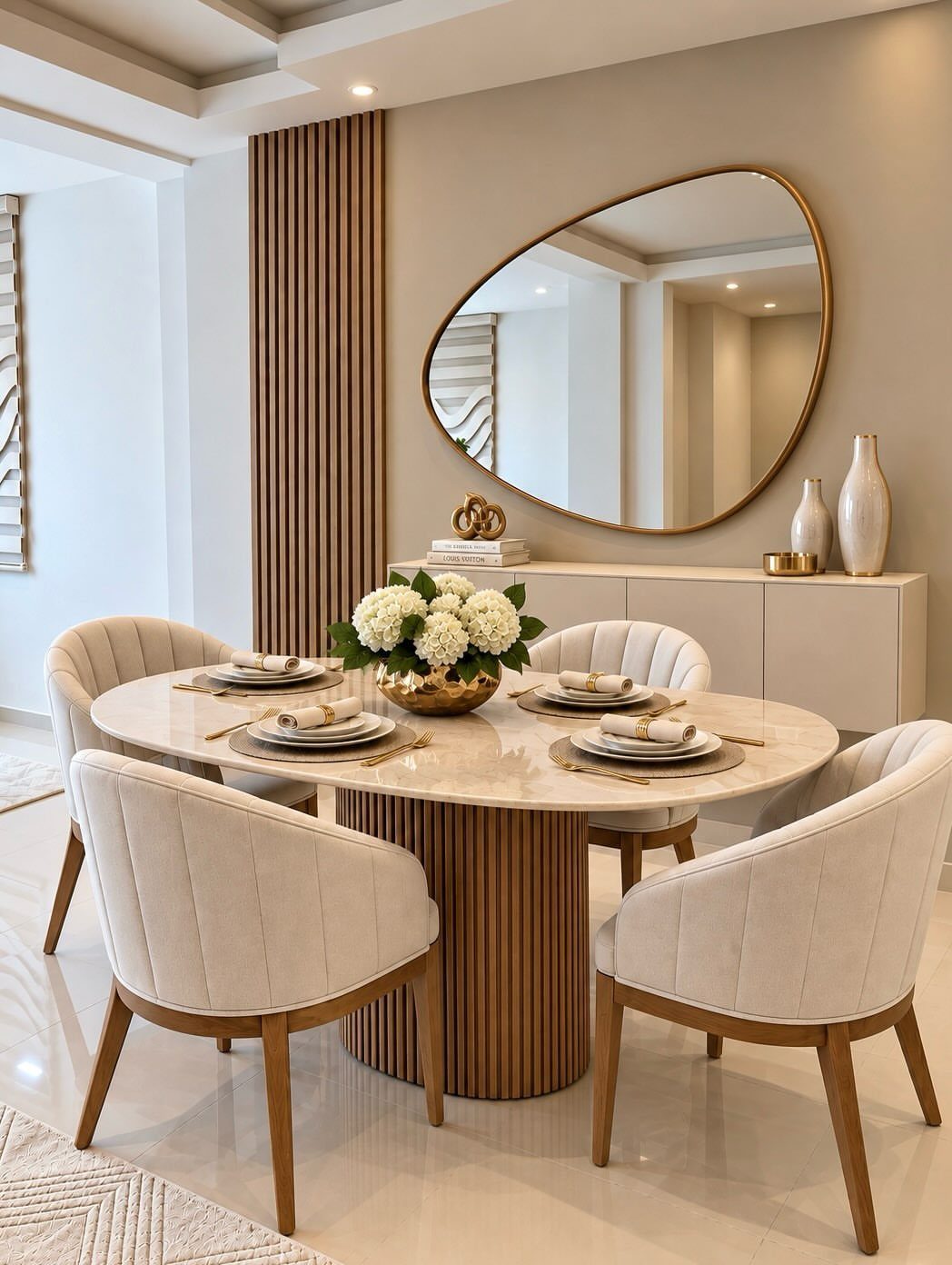
A round table asks for a central base instead of corner legs, and a fluted pedestal keeps knees and chair backs free to move.
I like it best in a room where the table has to sit close to a sideboard, since a circle gives up no corners to bump into.
Pair it with chairs in a soft, single tone so the stone and the curves do the talking. A large organic-shaped mirror on the wall repeats the roundness.
Oval gives the same softness when the room is longer than it is wide.
2. Choose Colorful Chairs
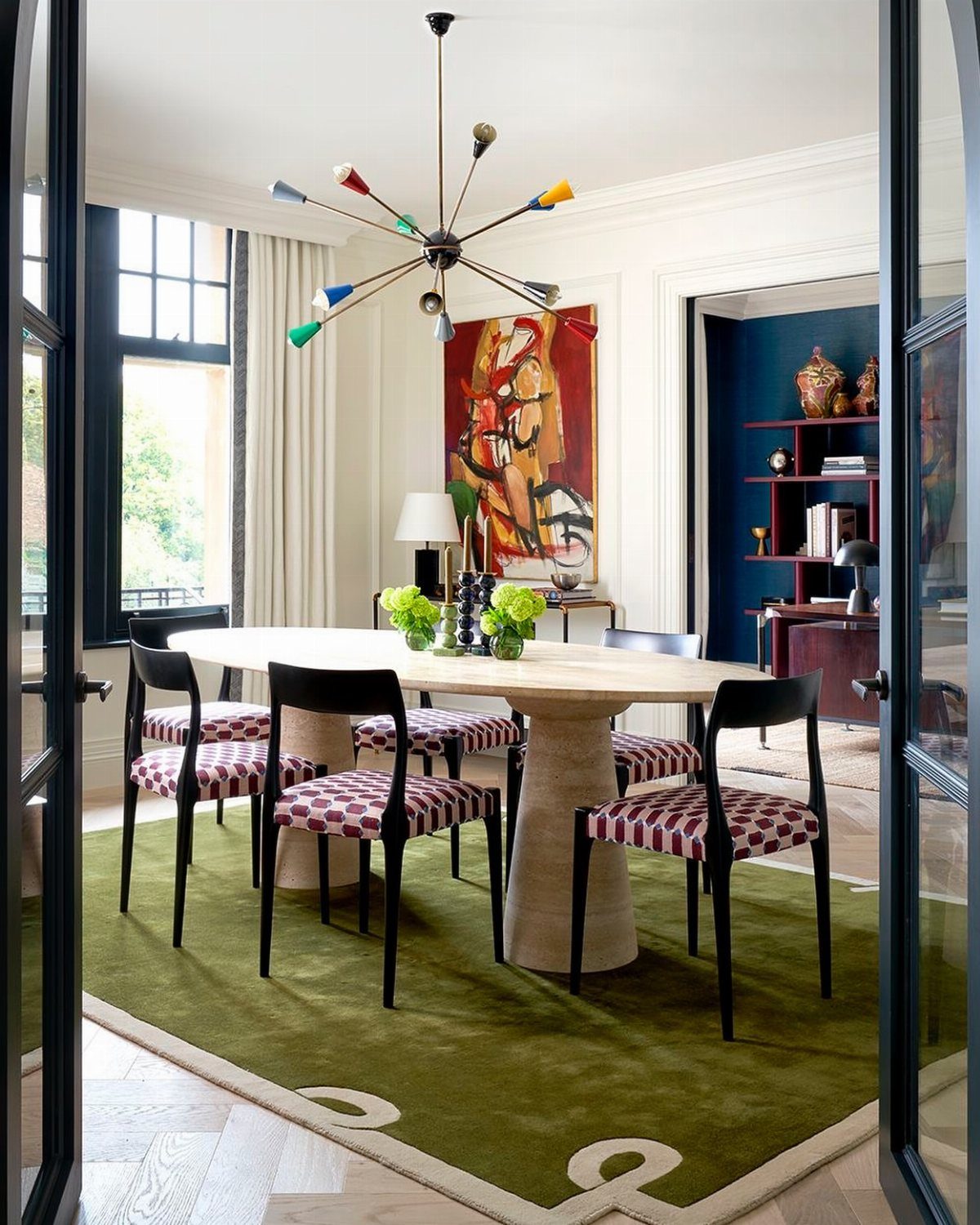
Chairs are the cheapest place to add color, because a set of bold seats changes how the room reads while the table stays neutral.
Red patterned seats work against a green rug because the 2 colors sit opposite each other on the color wheel, and a large red painting can tie the pair together.
Keep the pattern on the chairs and the rest quieter. If a full set feels like too much, mix 2 chairs in a bold shade at the ends with plain ones along the sides.
Reupholstering a seat cushion is a weekend job, and it costs far less than new chairs.
3. Large Paintings
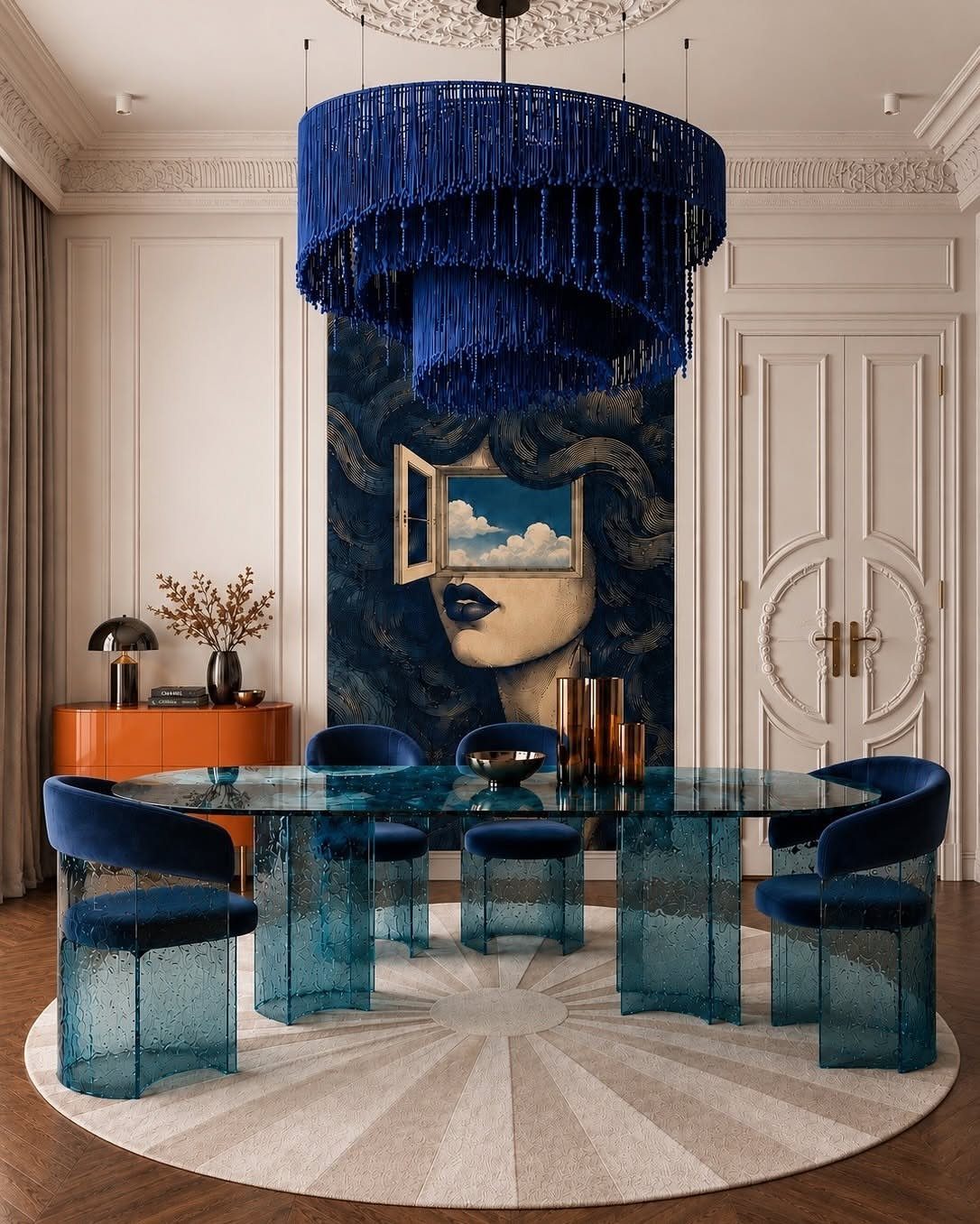
One oversized painting does the work of a dozen small decorations. Hung over a dining table, it gives the eye a single place to land, and a figure painting sets the mood for everything around it.
Pull a color from the canvas into the furniture, as the blue glass and chairs do here.
I would pick the art first, then match the chandelier and seating to it, since paint and chairs are easier to change than a canvas you love.
Leave the surrounding wall bare so the piece has room.
4. Indoor-outdoor Dining Setup with Glass Doors
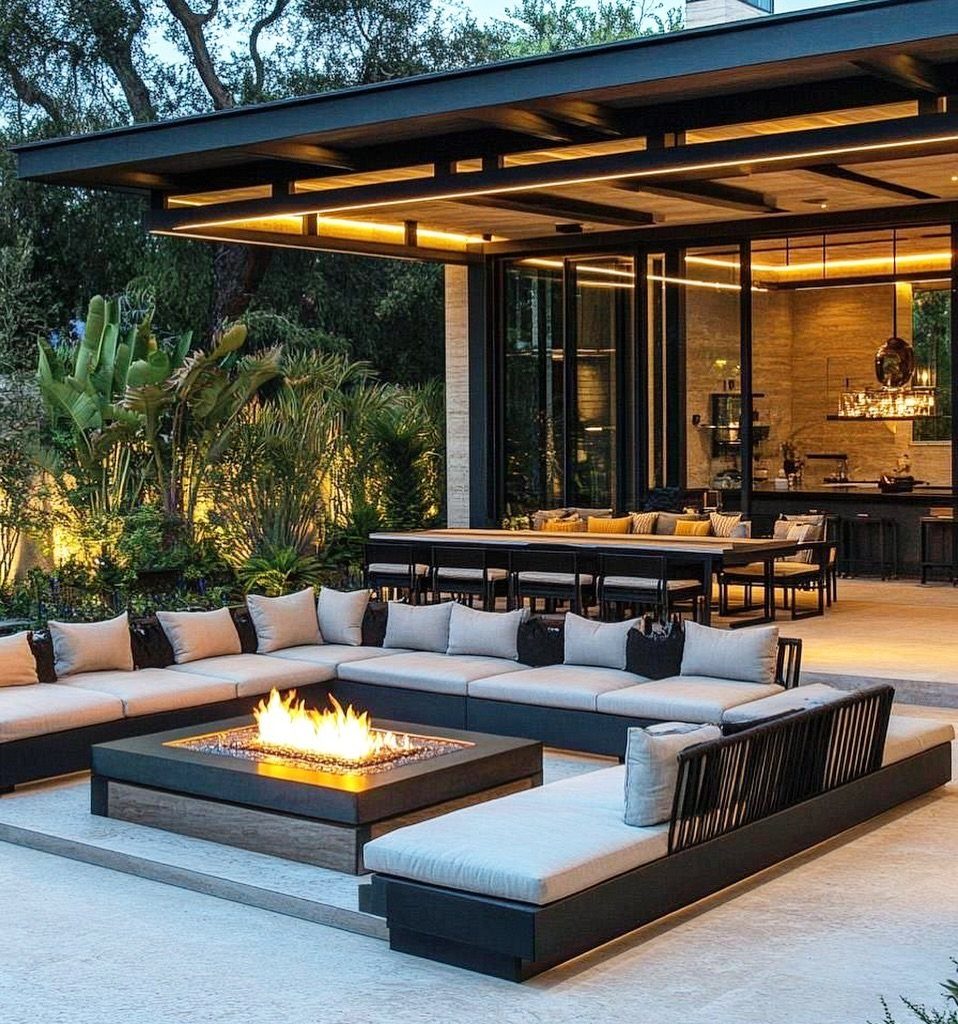
Large glass sliding doors let a dining table sit half inside the house and half on the patio, so the two spaces read as one room.
Keep the floor level, or close to it, across the threshold, and choose outdoor furniture in tones that echo the kitchen. That repeat is what makes the line between rooms disappear.
Doors this size are a real expense, so renters can get a similar feel by simply opening an existing door and lining up the table with it.
5. Natural Wood Finishes
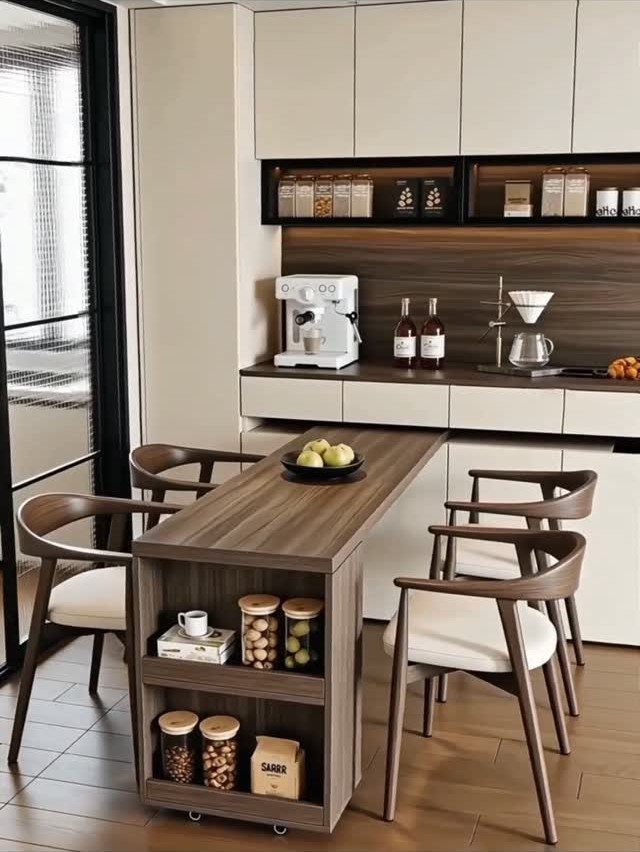
Wood brings warmth to a room that could otherwise feel cold, and a table with built-in shelves earns its footprint in a small kitchen. Here the shelves hold a coffee station, so the table works from morning until dinner.
Choose one wood tone for the table and chairs so they read as a set. Pale finishes keep a tight nook light, while darker ones suit a bigger room.
I would add a few plain objects on the shelves and stop there, because the grain is the decoration.
6. Curate a Gallery Wall
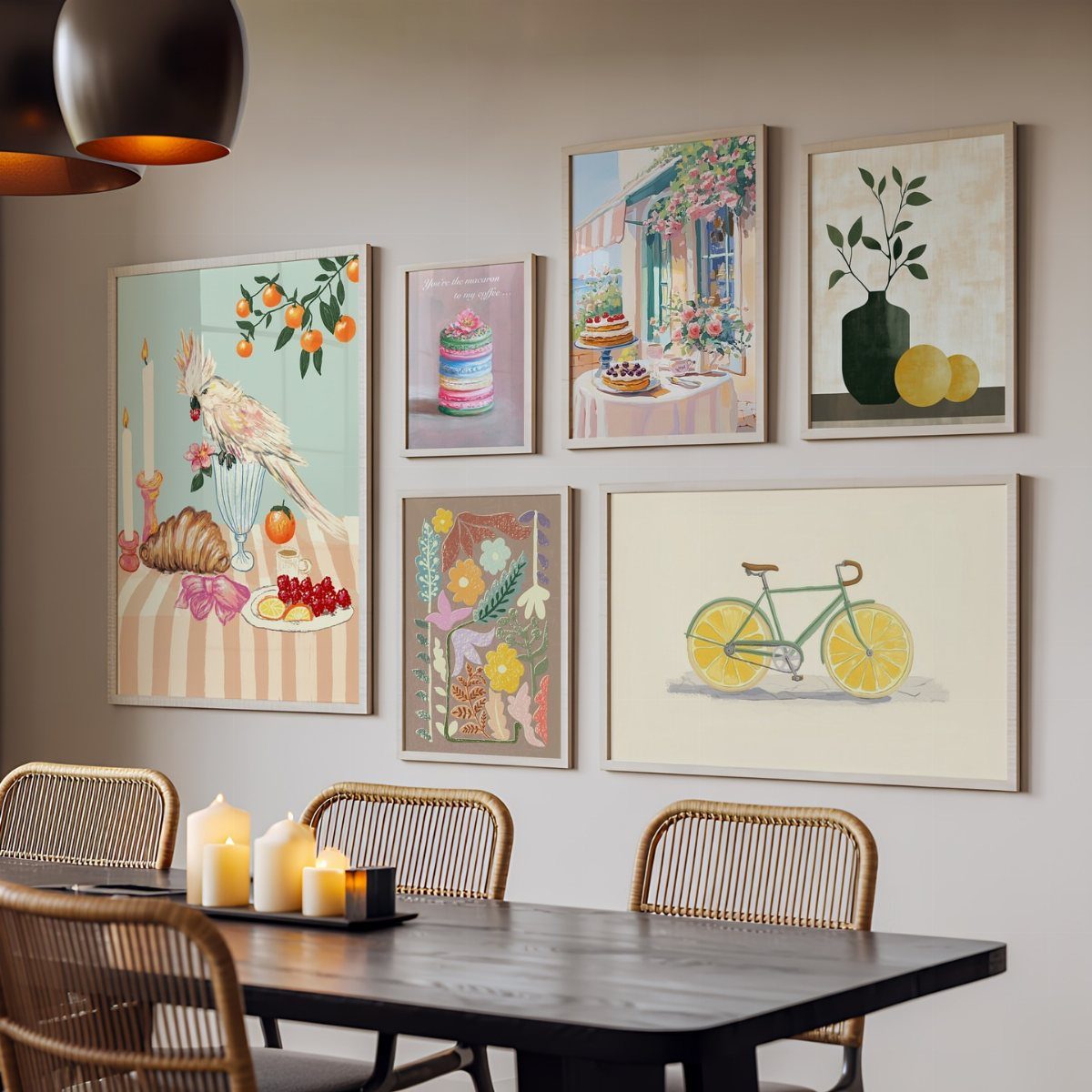
A gallery wall lets a dining room carry your own taste: food prints, nature scenes, even a bicycle, all hung together. Against a black table and rattan chairs, the colorful frames stand out and keep the room from feeling dark.
Lay the pieces out on the floor first, then trace each on paper and tape the shapes to the wall before drilling. Keep spacing tight and even.
Start with a small group of prints you love, and add more over time. Frames in one finish help mixed art look planned.
Now, clients are embracing the idea of the dining room as a destination again. They’re taking more risks with wallpaper, statement lighting, and bold fabrics, creating rooms that feel layered, intentional, and worthy of gathering.
7. Eye-catching Lighting Fixtures
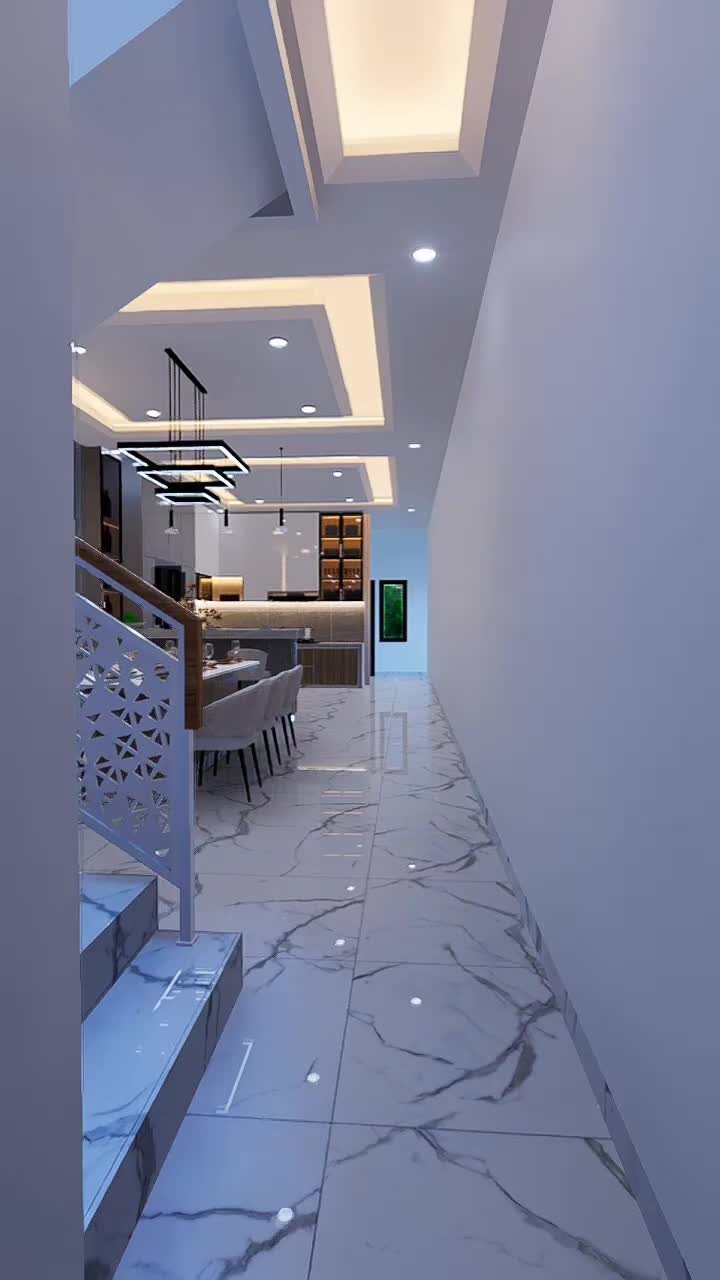
A black geometric chandelier turns the light itself into the decoration, and it does that job over any table.
Against white marble floors and a pale staircase railing, the dark frame reads as a drawing in the air, and the recessed ceiling lights handle the practical work so the fixture can stay sculptural.
Pick one fixture with a strong outline and keep everything near it plain. I would choose black for contrast in a light room.
Hang it low enough to feel connected to the table, not lost near the ceiling.
8. Sculptural Metallic Base Table
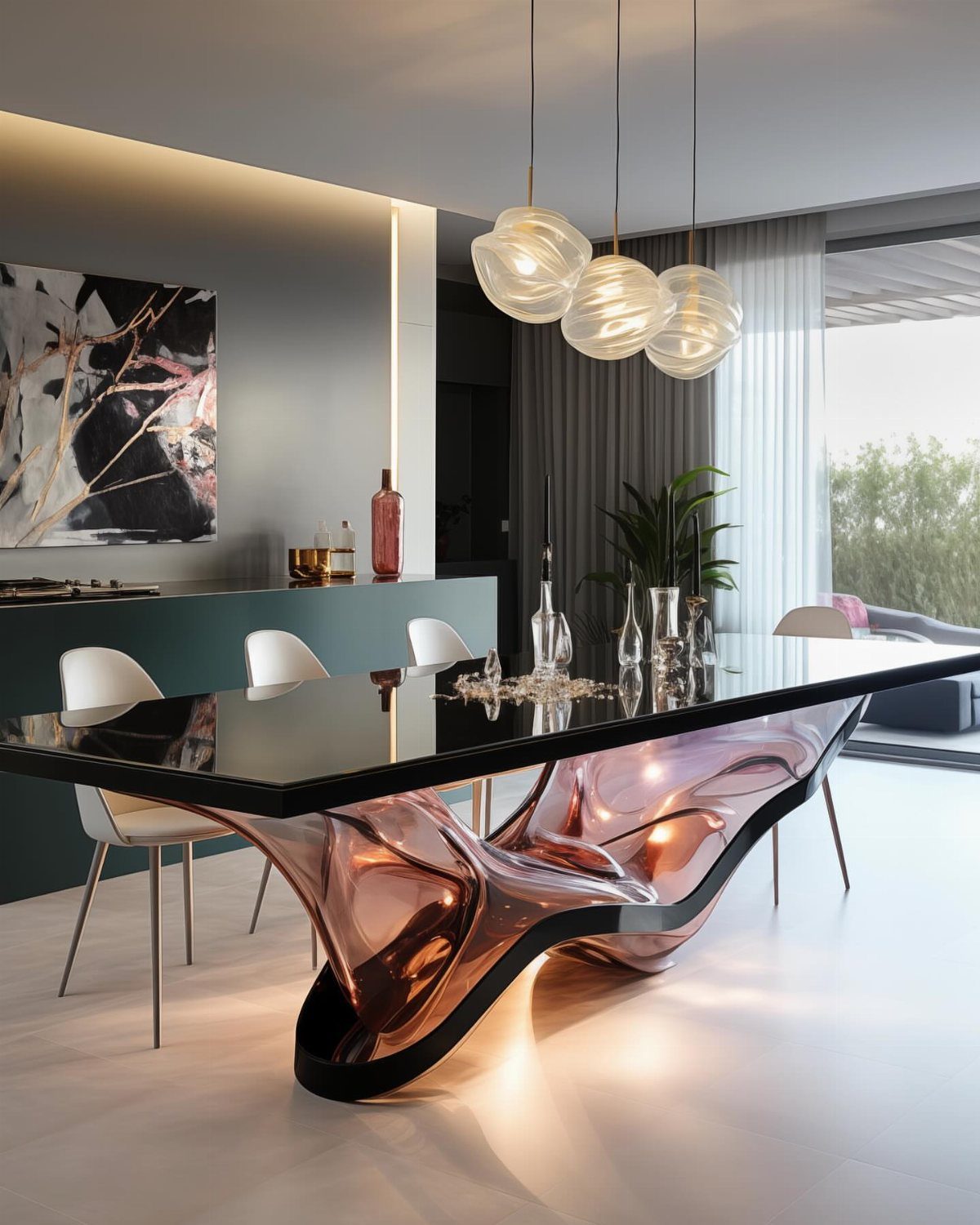
A glossy black tabletop on a rose-gold sculptural base gives a long table real presence without any added decor.
The metal base is the part people remember, so white minimalist chairs are the right partner: they stay quiet while the contrast of dark top and warm metal carries the room.
3 globe pendants repeat the round shapes and keep the lighting simple. A large abstract painting behind balances the table’s weight.
Glossy black shows fingerprints, so I would keep a microfiber cloth nearby.
9. Black Marble Dining Table
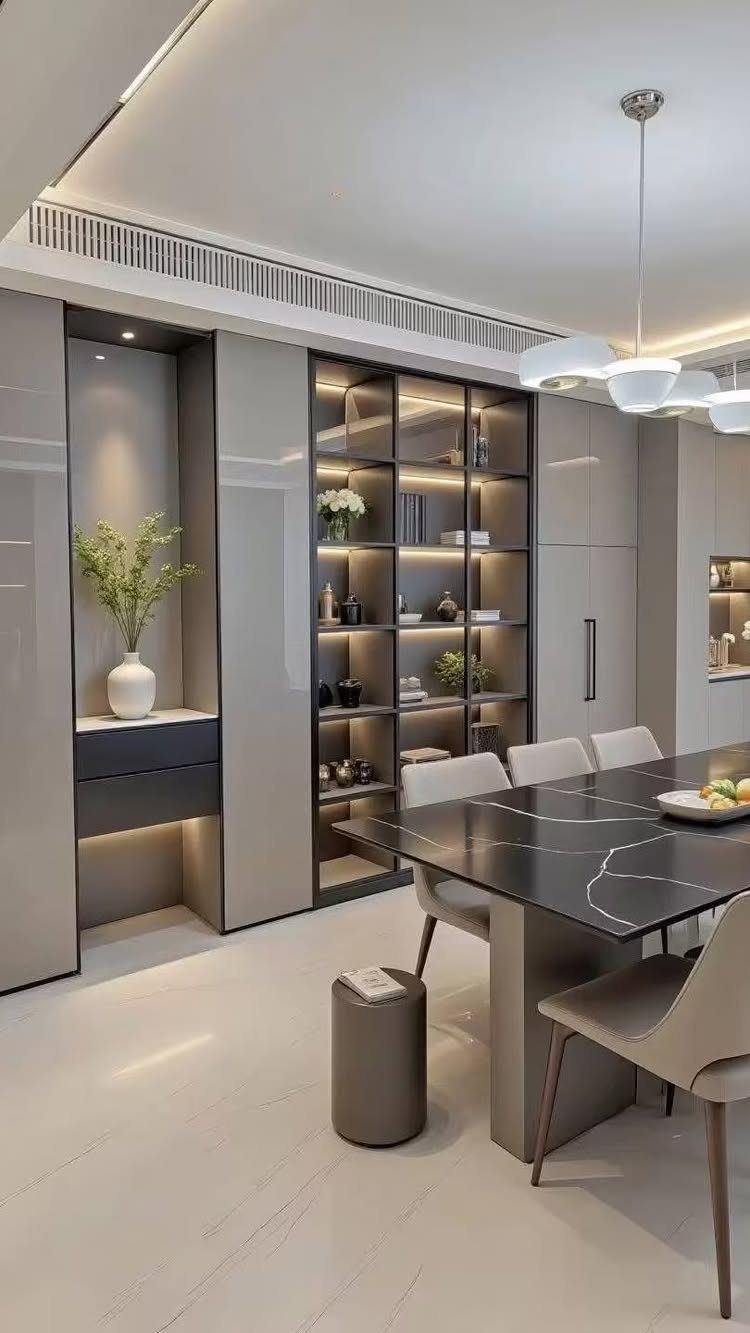
Black marble with white veining makes a dining table that looks like artwork, so the surroundings can stay calm. Gray chairs soften it, and I like that choice because a dark top already supplies the drama.
Built-in shelves with integrated lighting add a glow behind the table, which keeps a dark surface from feeling heavy at night. Strip lights tucked under shelf edges are the budget-friendly way to copy that effect.
Keep the shelf contents sparse so the veining stays the focus.
10. Sculptural Wooden Base Table
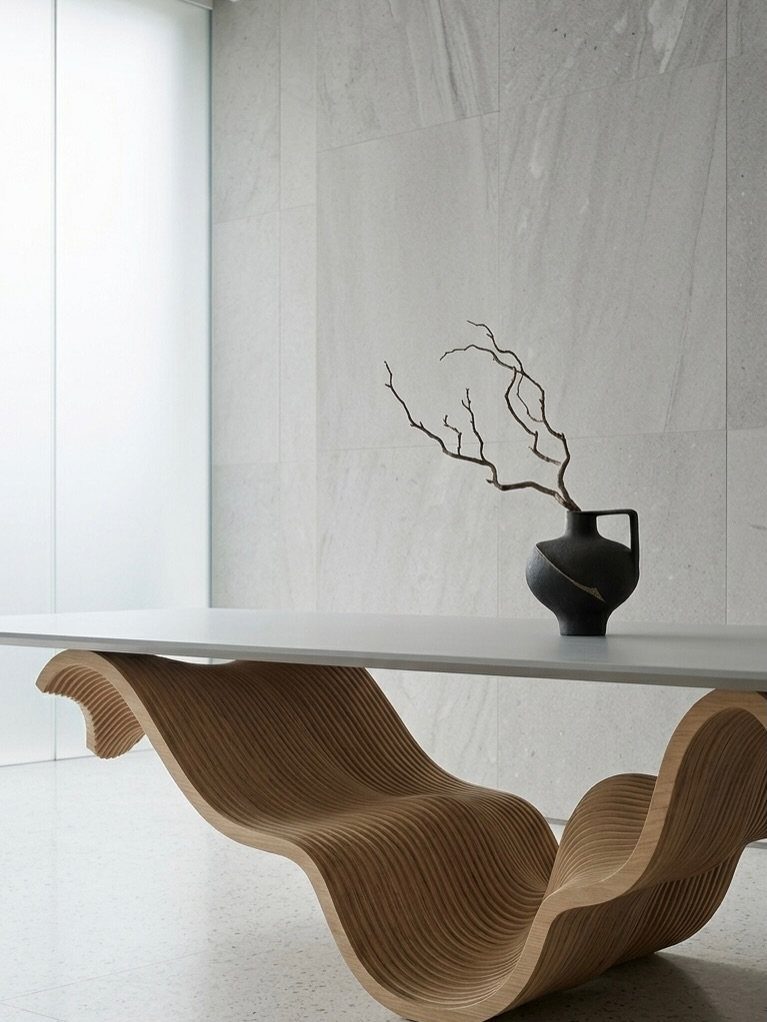
A wavy, ribbed light-wood base under a white top gives a plain table a handmade character. The pale wood warms the white, and the ribbing adds shadow and texture without any color.
The dark vase gives the pale table a sharp point of contrast.
I would let the base be the only curved element nearby, and choose straight-lined chairs so the shapes don’t compete.
11. White Marble Dining Table
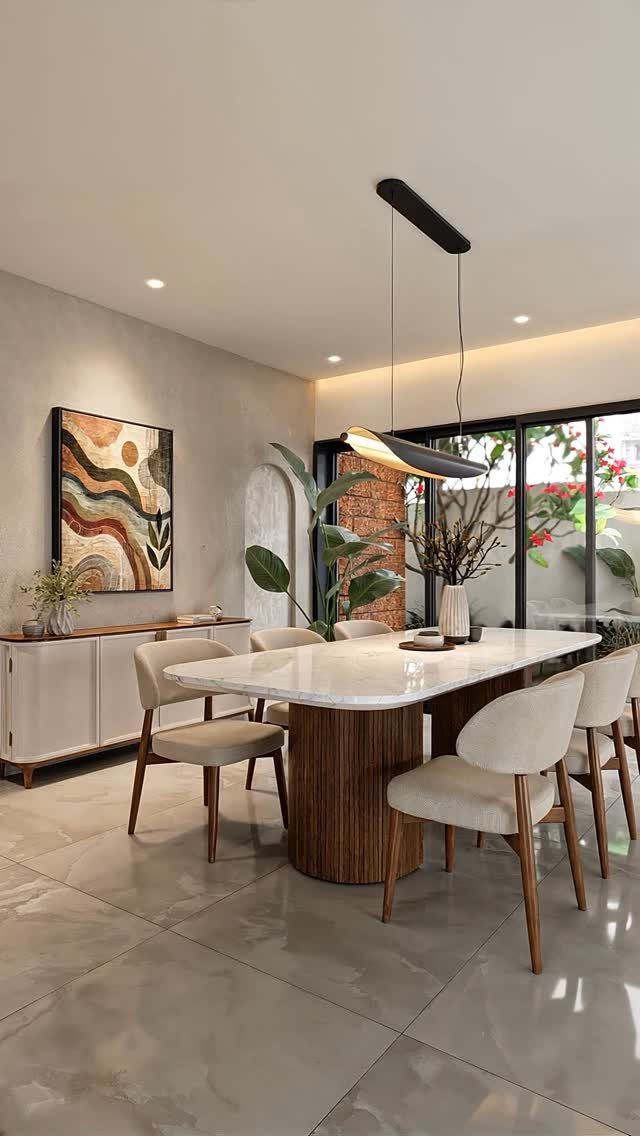
White marble on a wooden base is a softer take on stone: the pale top feels clean, and the wood underneath keeps it from turning cold.
Neutral upholstered chairs follow the same quiet palette, so the table’s veining stays the main pattern in the room.
A single black pendant overhead gives a white marble scheme its one dark accent, and abstract wall art adds interest without bringing in color. I would stop there.
Choose upholstery in a tone close to the wood, and the whole set will look planned.
Contemporary Design Features
Contemporary rooms balance 2 things: straight, geometric lines and soft curves. A sleek angular table looks better with one rounded element nearby than with a room of only sharp edges.
Warmth comes from materials. Wood, glass, and metal each add something different, so use at least two of them in the room.
Keep the backdrop in black, white, gray, or tan. A quiet base makes texture and contrast easy to layer in through textiles and upholstery, which is cheaper to change than furniture.
On a budget, sustainable materials fit this look well. Reclaimed wood tables, bamboo chairs, and natural fiber rugs all add an organic touch, and buying locally sourced pieces where you can gives the room a personal note.
Styling Tips
Start with the table, since it sets everything else. Choose seating that complements it rather than copies it, and add the rest in layers.
A low sideboard with smoked glass doors or thin metal trim hides the table linens and serving dishes, and the glass and metal keep the wall from looking flat.
Set a mirror behind a pair of table lamps and the top of a buffet suddenly has a job, plus it bounces light back into the room.
Over the table, I’d pick either a row of 2–3 pendants or one big chandelier, because mixing the two tends to crowd the ceiling.
Sconces or small can lights near each end of the table work well too, and I would put every light on a dimmer.
Finish with texture: a woven rug, leather upholstered chairs, or abstract wall art. Comfortable chairs matter more than any of it, because nobody lingers at a table that hurts to sit at.
Frequently Asked Questions
What are the dining room trends in 2026?
Dining rooms are getting bolder, with sustainability and mixed, unique designs leading the conversation. Designers say the room is becoming a place for more than meals, such as homework and other everyday tasks.
What kind of lighting suits a modern dining room?
Mixing pendants and a chandelier tends to crowd the ceiling, so pick one style over the table: 2–3 pendants in a row, or a single large fixture.
A fixture hung 30–36 inches above the tabletop reads as part of the table instead of floating loose in the room.





