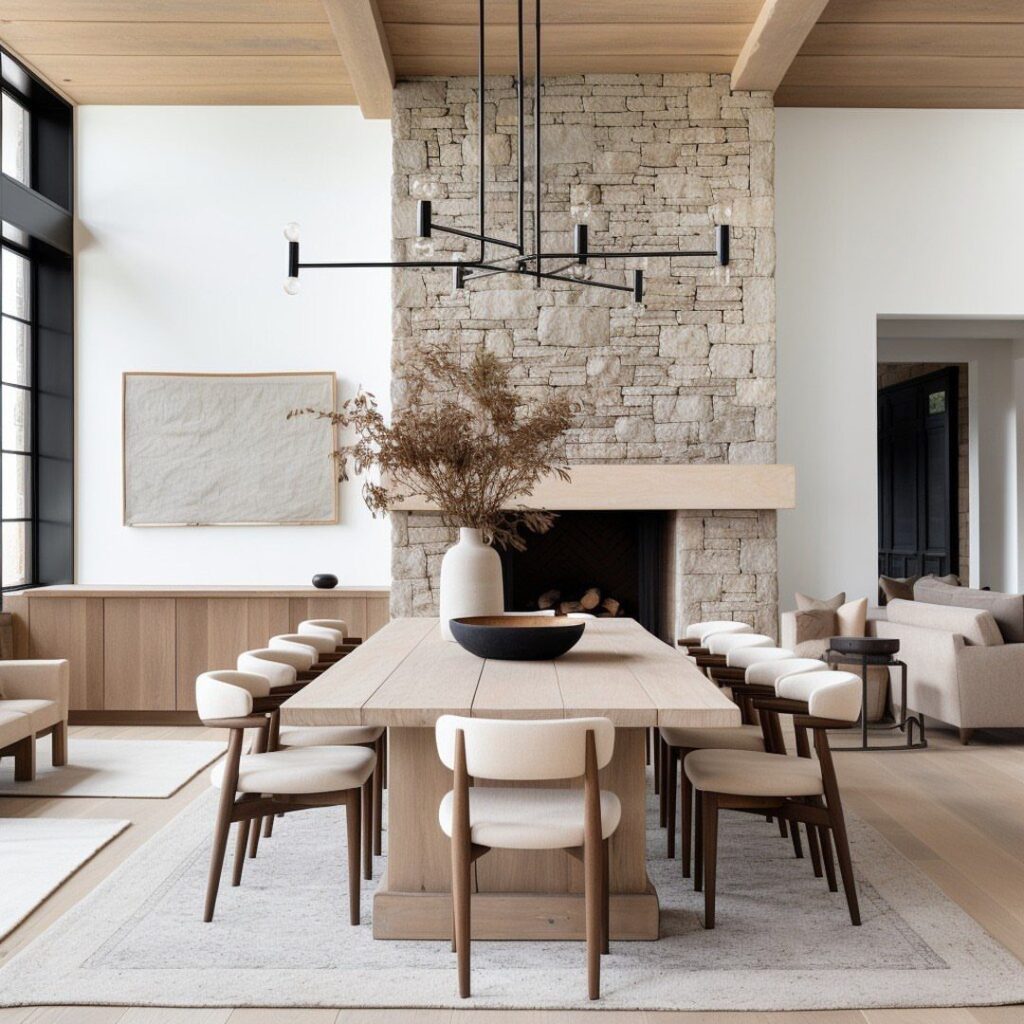
Renting or owning decides which of these dining rooms is yours: owners can paint walls white and hang shiplap boards, while renters can get close with multiple pendant lights on plug-in cords, a neutral color scheme, and simple, sturdy furniture they can take along when the lease ends.
The ideas run from a weekend of mixing contrasting wood tones to a full white shiplap wall, and from simple, sturdy furniture to a rustic room with a touch of French elegance.
Every one of them rests on a small set of materials, mainly wood, white and black metal, so a rental can borrow most of the look.
1. Contrasting Wood Tones
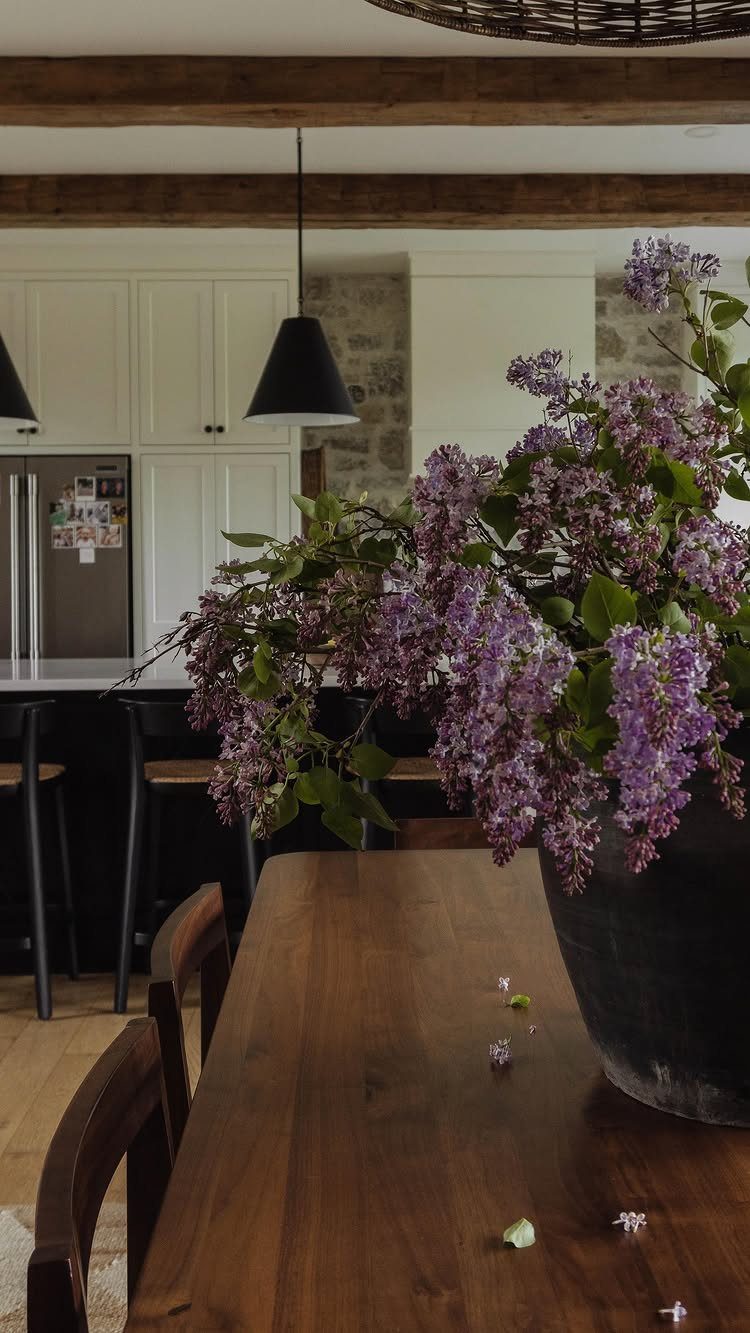
Dark chairs around a lighter table give a room depth that one matching wood never will. Here the chairs read nearly espresso against the wood tabletop, and the rough ceiling beams add a third tone without clutter.
Keep the shades clearly different. 2 woods that sit close together look like a mistake, while a real jump in darkness looks planned.
If you rent and can’t touch the ceiling, repeat the dark tone in chairs and one other small piece, so the contrast feels deliberate.
White cabinets and black pendants keep the mix from getting busy.
2. Simple Yet Sturdy Furniture
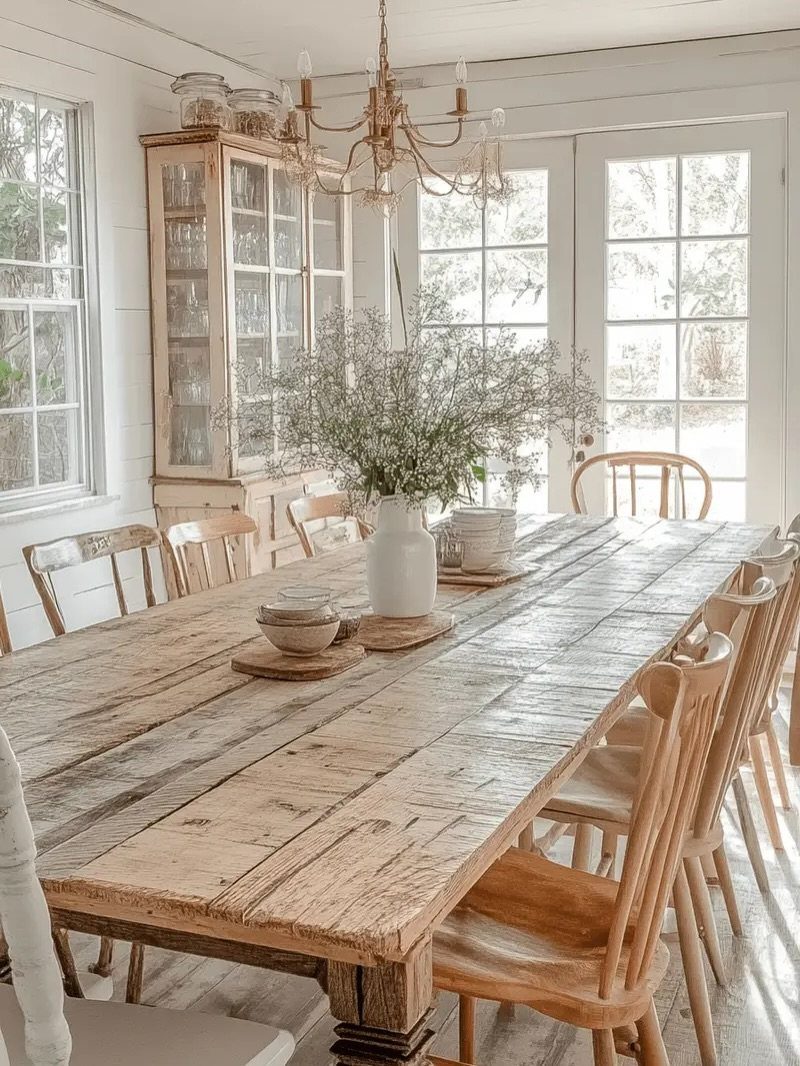
A table and chairs in the same plain, solid wood let the room stay calm.
Straight lines and no fussy carving suit a contemporary farmhouse look, and a hutch in the same family gives you display space without adding visual noise.
On a budget, I would spend on the table first and fill in with secondhand chairs.
Sand them lightly and give them one coat of matching stain so they read as a set. That is a weekend job.
3. Multiple Pendant Lights
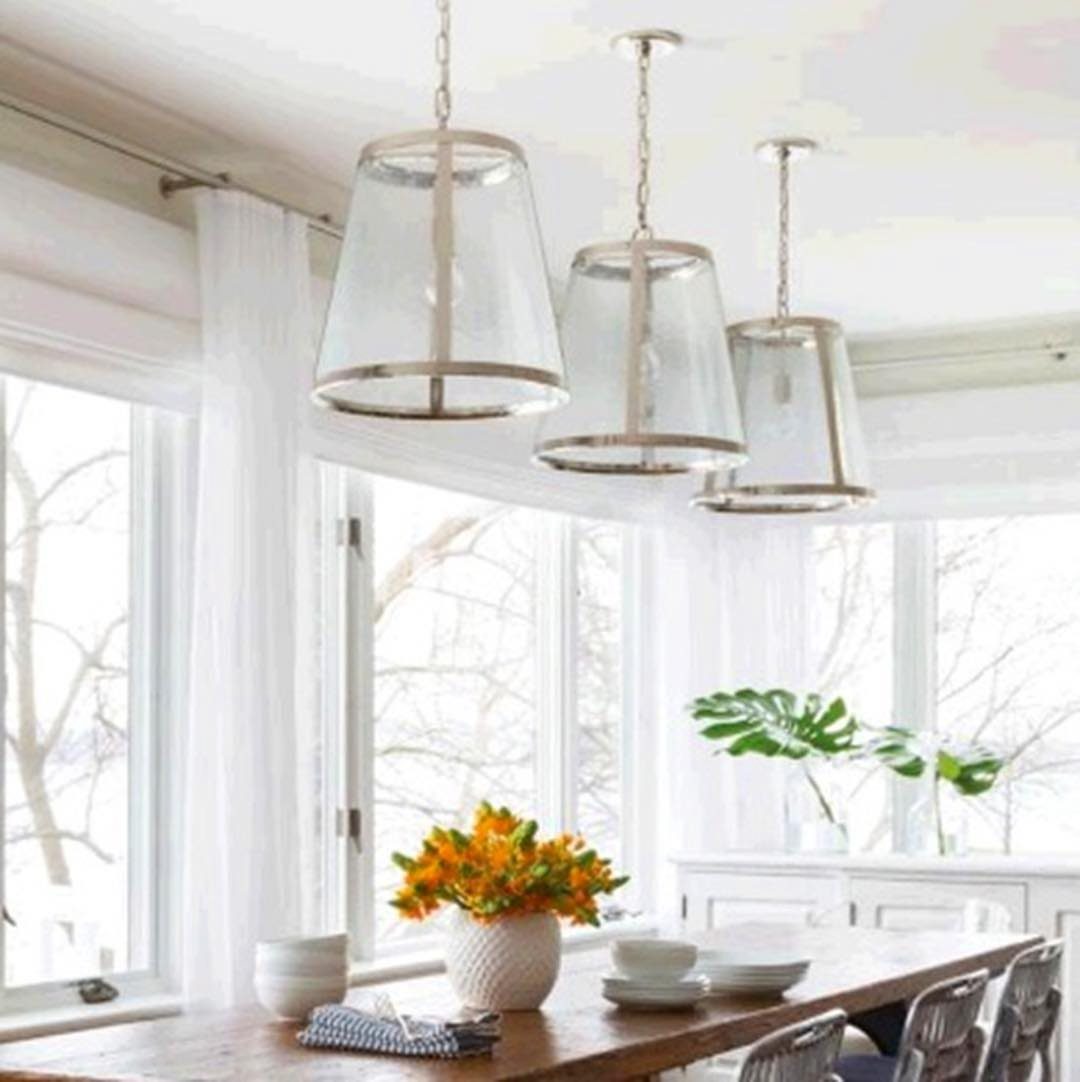
3 glass pendants in a row over a long table make the lighting the main event. Clear glass keeps the look airy, so a big window wall still feels open.
Space them evenly along the table’s length and center the group over it. Hang them low enough to define the dining zone but high enough that nobody has to lean around a bulb.
Hang pendants low enough to define the table without blocking the view across it, and check the height with someone seated before you commit to the final drop.
If hardwiring is off the table in a rental, a plug-in swag kit gets you close.
4. Rustic Charm with French Elegance
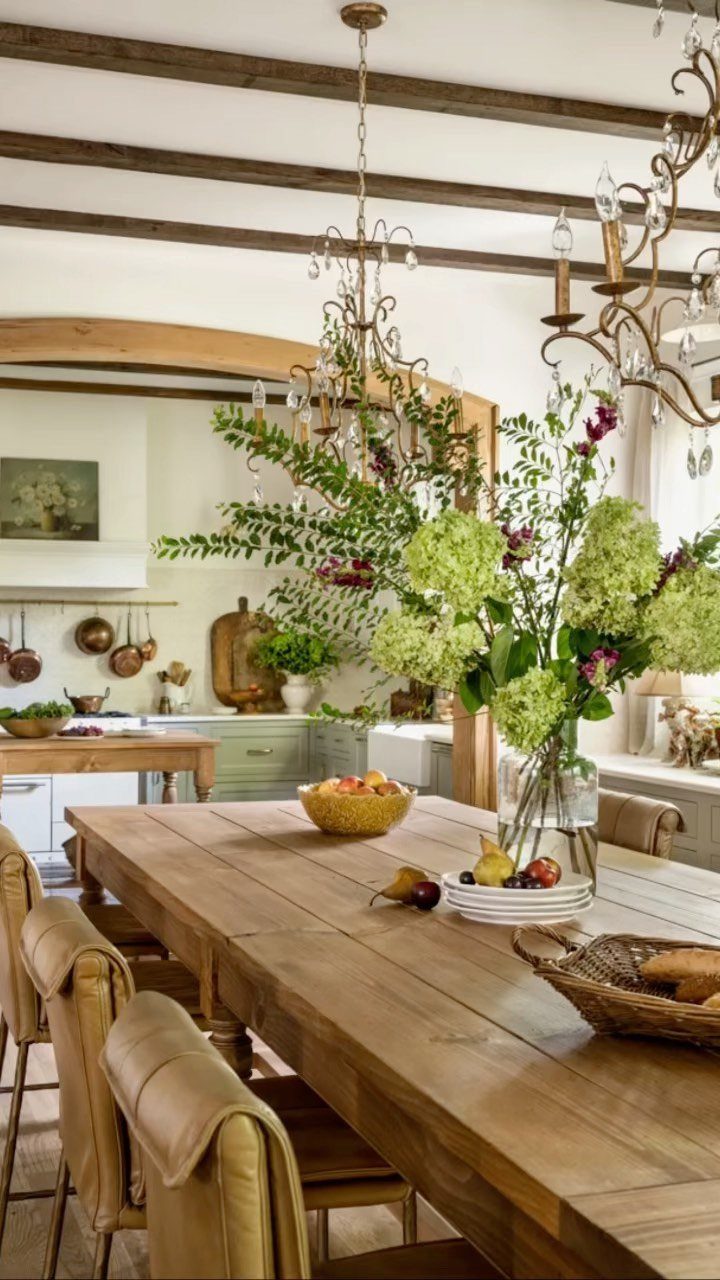
Leather chairs and an ornate crystal chandelier pull a rough-hewn room toward something more polished. The beams and wooden table stay rustic, so the chandelier does the dressing up.
For a smaller budget, I would pick one fancy piece and let everything else stay plain.
A secondhand chandelier is the easiest place to start. Leather chairs bring softness, and a large floral arrangement fills the table without needing extra decor.
Skip a second ornate item; 2 competing showpieces make the room feel fussy.
5. Neutral Color Scheme
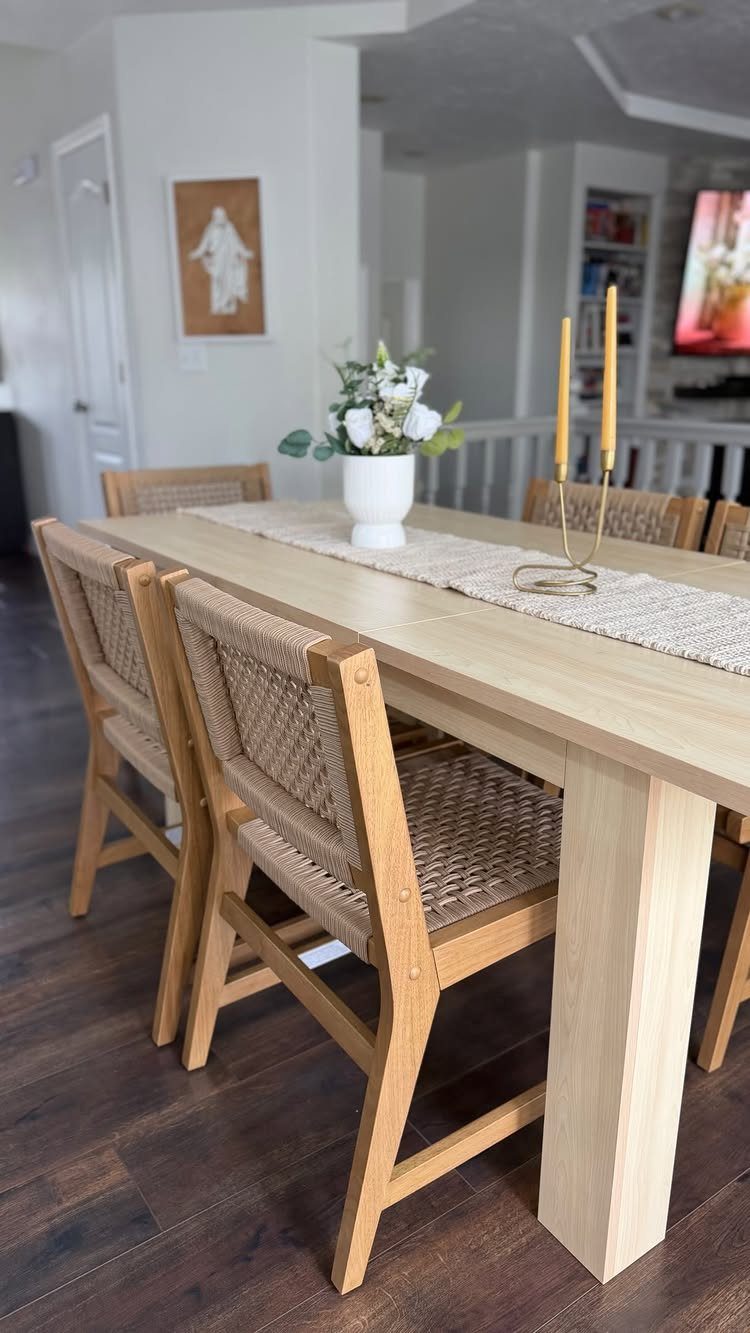
Light wood, white walls and woven chairs keep a room quiet, so texture has to do the work. The weave of the chairs and a few gold candlesticks add interest where color won’t.
Stick to two or three tones and vary the materials: wood, wicker, metal, a white vase. A framed picture on the wall finishes it without crowding.
I like gold in small doses here. Candlesticks cost little and swap out easily if you tire of them.
6. Cozy Breakfast Nook
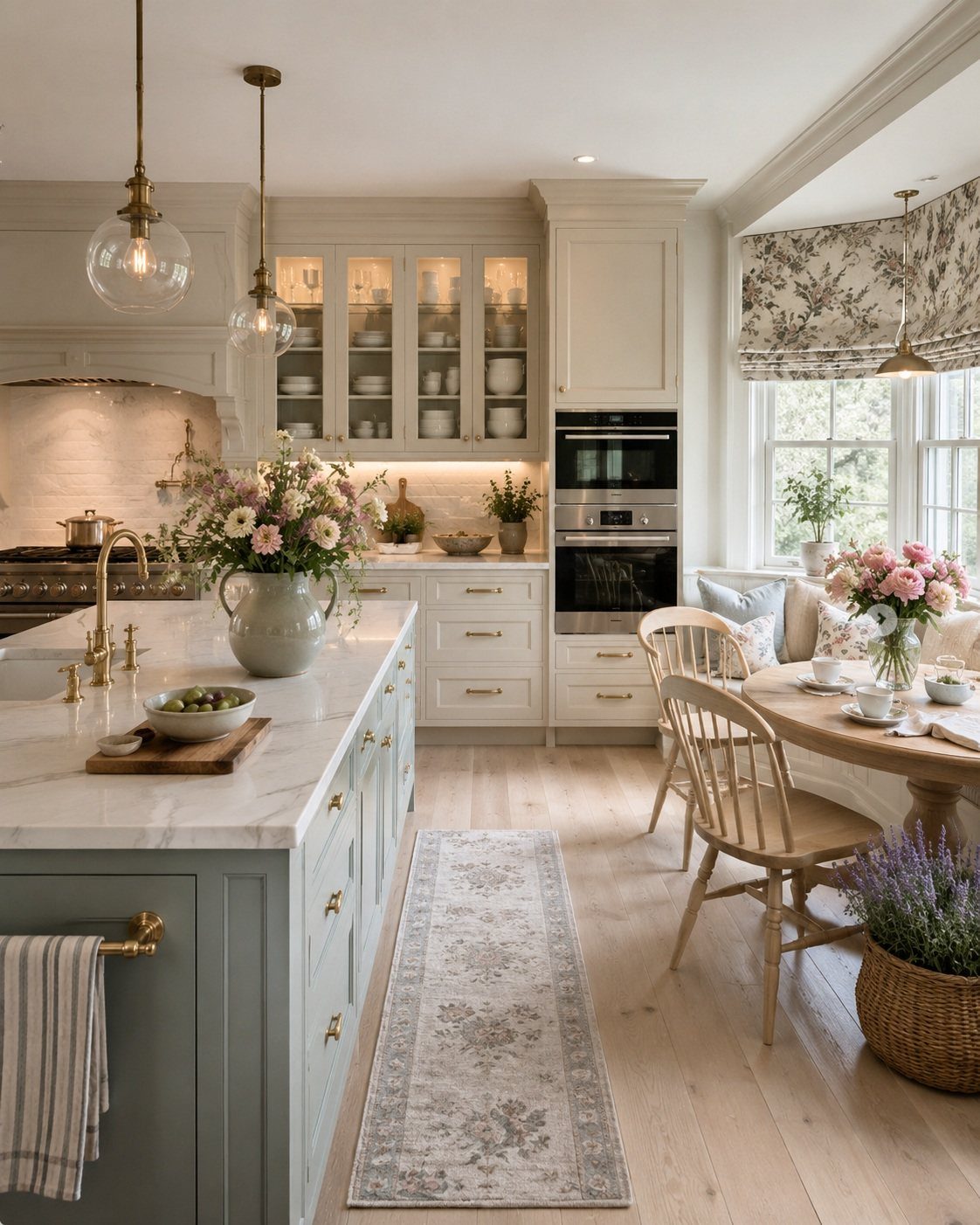
A small round table tucked beside a window seat turns a corner of the kitchen into its own spot to sit. Round suits tight space because there are no corners to bump, and chairs slide in easily.
Add a cushion to the window seat for extra seating, and use a floral runner to bring softness to light wood floors. Keep the table small enough that the walkway to the island stays clear.
A nook like this works best when it stays uncluttered.
7. Simple Furniture and Decor
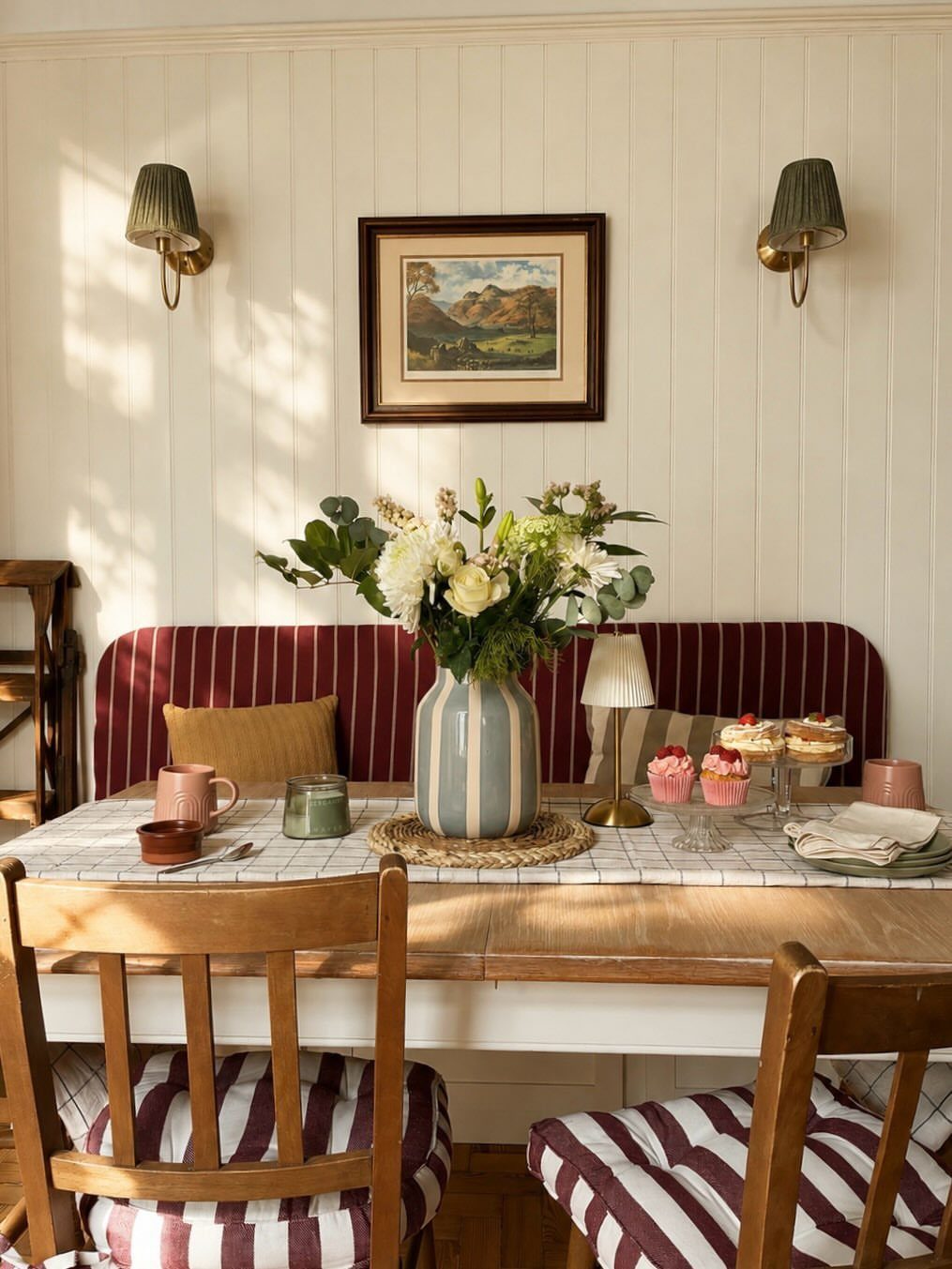
Striped banquette seating next to a plain wooden table is a quiet way to get farmhouse comfort without piling on decor. Against white paneled walls, the stripes supply the only pattern, so the room never feels busy.
Sconces also free up the tabletop and the ceiling.
Banquette seating tucks against a wall and fits more people than separate chairs. I would pick a stripe with a narrow, even repeat, since it reads as classic rather than loud.
8. White Shiplap Walls
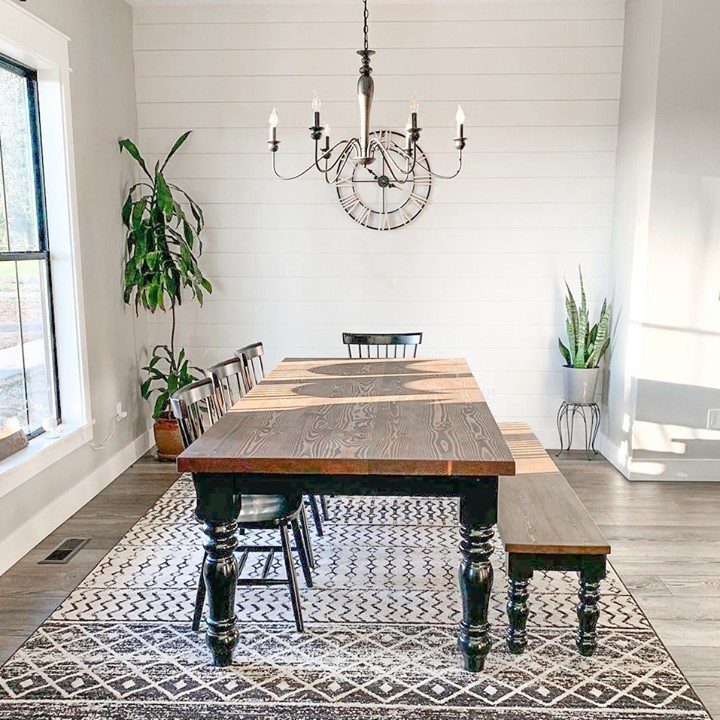
White shiplap is the classic farmhouse wall, and it earns that reputation by giving a dining room horizontal lines and a clean, bright backdrop. Wood, a black chandelier and plants all stand out against it without competing.
I would let the walls stay plain and put the personality in a few pieces: a bench on one side of the table, a wall clock, and a patterned rug underfoot.
The rug brings in the pattern the walls leave out.
Black fixtures look sharpest on white, so one dark chandelier does a lot of work here. Paint the boards a clean white and let the grooves of the shiplap supply the texture.
Choosing the Right Décor
A hutch or credenza against the back wall gives a clean-lined dining room a traditional anchor, and it doubles as storage and display.
Paint an old wooden cabinet white and it leans soft and shabby chic, though the real strength is that an antique piece sits comfortably in rooms from traditional to vintage-modern.
Keep the palette warm and earthy, with neutrals as the base. Slipcovered linen chairs pulled up to a big oval wood table feel easygoing, yet the tailored shape keeps the room looking put together.
Saffron curtains with a faded floral print bring in warmth on their own, so the room needs very few other pieces to feel finished.
A rustic vase of green branches can echo the green in the print, and wicker baskets tucked around the room hold linens or place mats while adding texture.
Creating Cohesion in Open Spaces
When the dining area opens onto a kitchen or living room, repeat one material and one shape so the zones read as a single space.
Woven abaca rope pendants hung over both the island and the table do this well: the same texture links the 2 areas, and the chains keep them light.
In an open plan, I’d pick a long table in pale wood with straight, simple lines, since it holds its own without cluttering the sightline. White pottery in mixed shapes makes an easy centerpiece that also ties into white chairs.
Matching sets are not required. Pairing a distinctive table with chairs that differ from it creates bold contrast, so keep the finish or color shared with the next room and let the shapes vary.
Balancing Modern and Rustic Elements
Decide which side leads, then vary the proportions. For a more classic farmhouse feel, choose a heavy wooden table with a weathered finish, a wooden hutch, plaid chairs and a chandelier.
To lean modern, swap some of the rustic pieces for sleek cabinets, a credenza, a new rug or simple drapes. Vintage wire shelving, antique-store vases, rural wall art and an earthen palette keep the farmhouse thread running through.
Change one category at a time and look at the room before changing the next. A weathered table with modern storage reads as intentional, while swapping everything at once tends to lose the farmhouse character.
For a modern farmhouse dining room, she says: ‘Think bare whitewashed walls, stone floors, jute and seagrass rugs, chalky white linens, lots of baskets for storage, and of course, a beautiful wooden dining table.’





