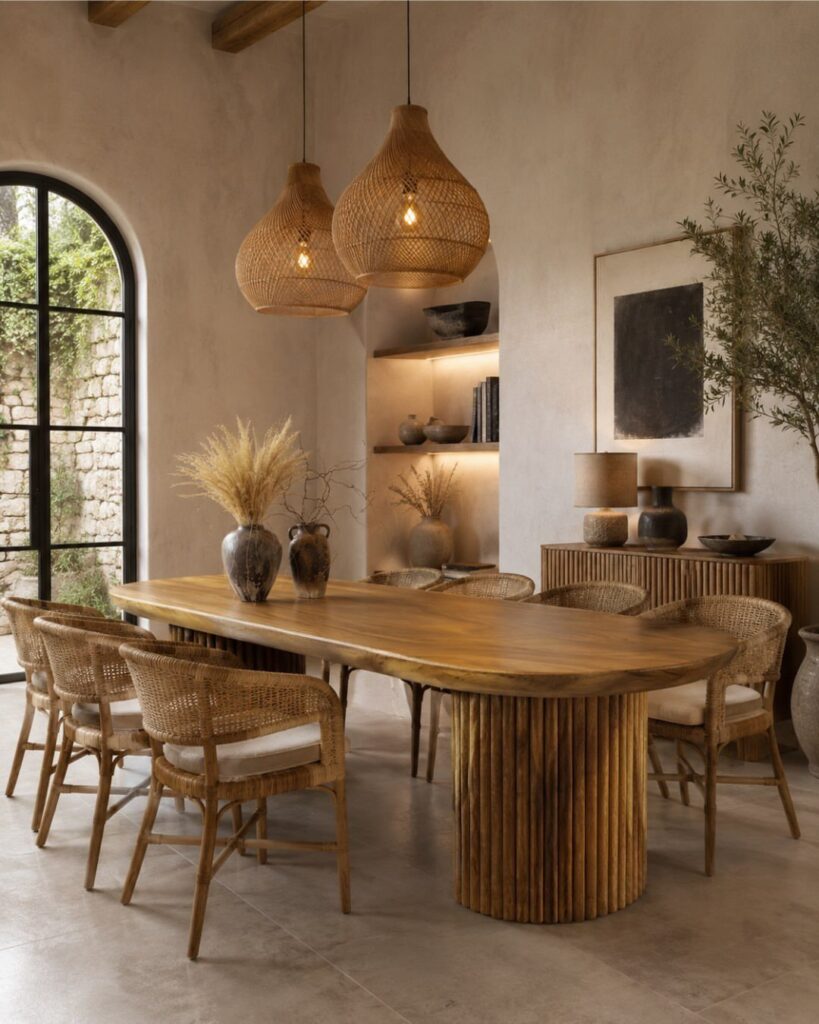
Which of these ideas fits depends on what you can change: owners can add exposed beams or a banquette, while renters do better with chic wallpaper in a removable version, mismatched chairs found secondhand, or a few potted plants and table lamps.
The list runs from a weekend of paint and thrifted mirrors to solid handmade tables, and the ideas that cost least lean on mismatched pieces kept inside one color family.
Exposed beams are the idea here that can stretch to a budget version, and lightweight hollow ones over a white ceiling get you most of the look for a fraction of the cost.
1. Antique Furniture and Vintage Accessories
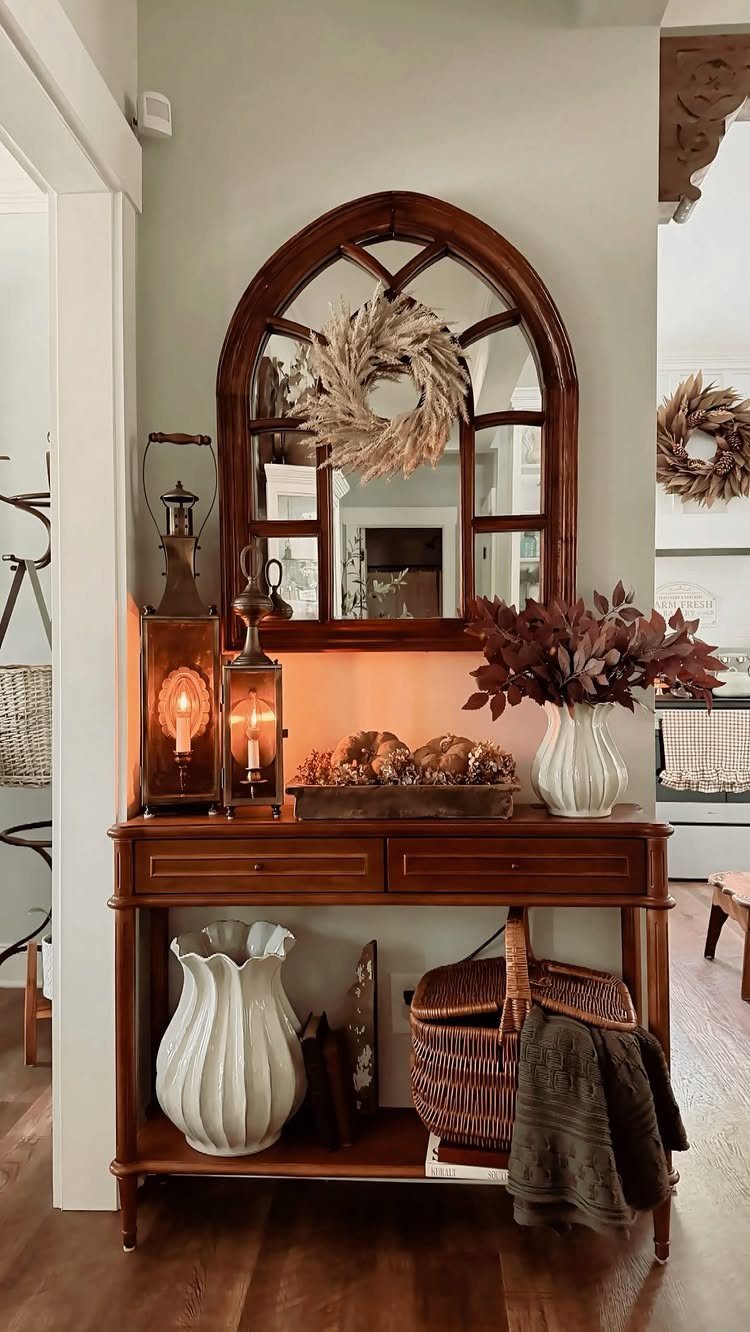
A console with an arched mirror above it is a small, cheap way to bring age into a dining room.
Hunt for the console, the mirror and the lanterns separately at thrift stores or flea markets, so the pieces look collected rather than bought as a set.
Leave gaps between them, because a crowded console reads as clutter instead of character.
Swap the greenery with the seasons and the same setup works all year.
2. Unique Table with Mismatched Chairs
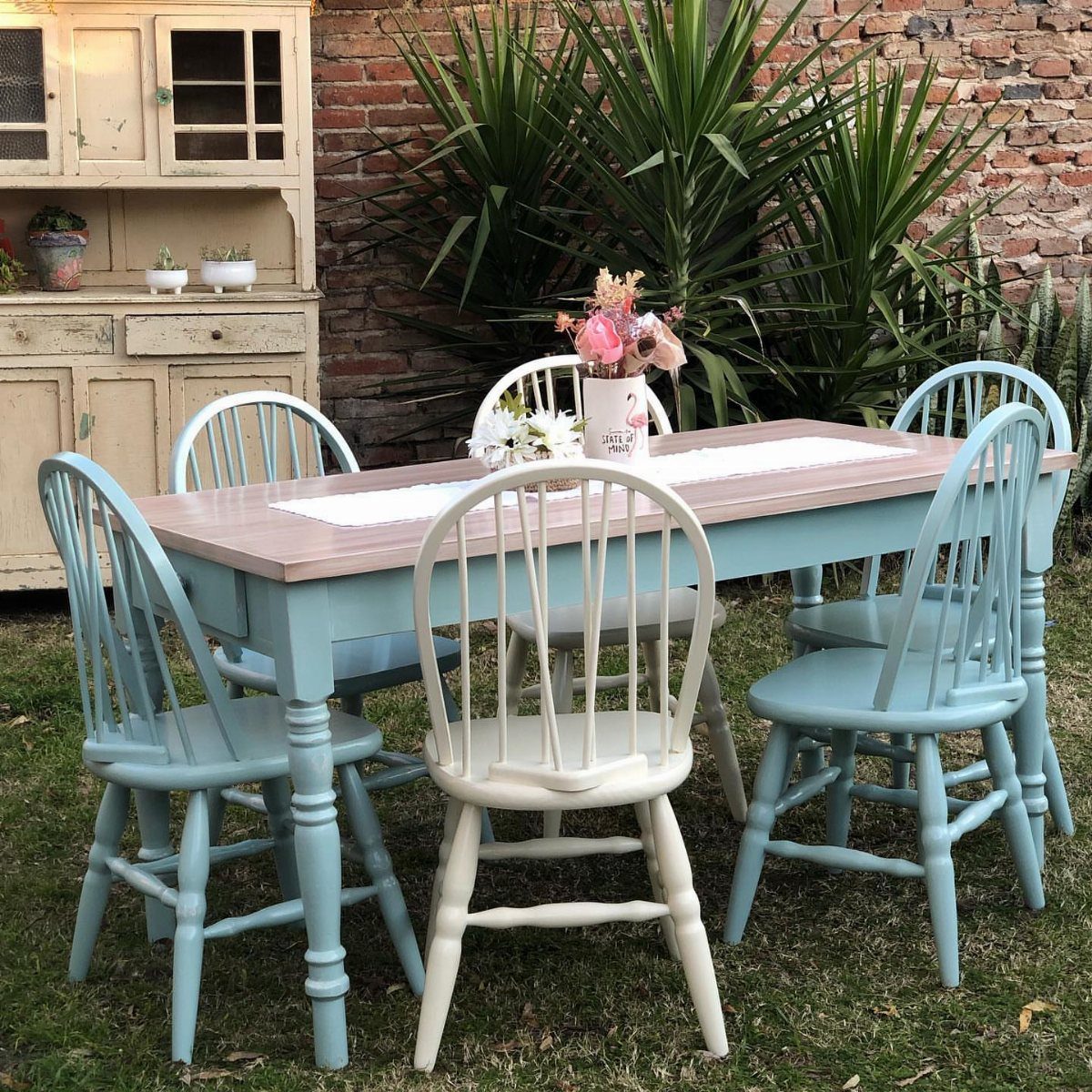
Mismatched chairs let one painted table carry the whole look. A light blue table with spindle-back chairs in blue and cream shows the rule I trust: stay inside one color family, and let the shapes and finishes vary.
For renters, this is the friendly route.
Secondhand chairs rarely come in matched sets anyway, so odd ones cost less. A can of paint or chalk-style finish ties strays together on a weekend.
A white runner and a few flowers keep the table itself quiet, which is what makes the chairs look intentional.
3. Overhead Fixtures, Sconces, and Table Lamps
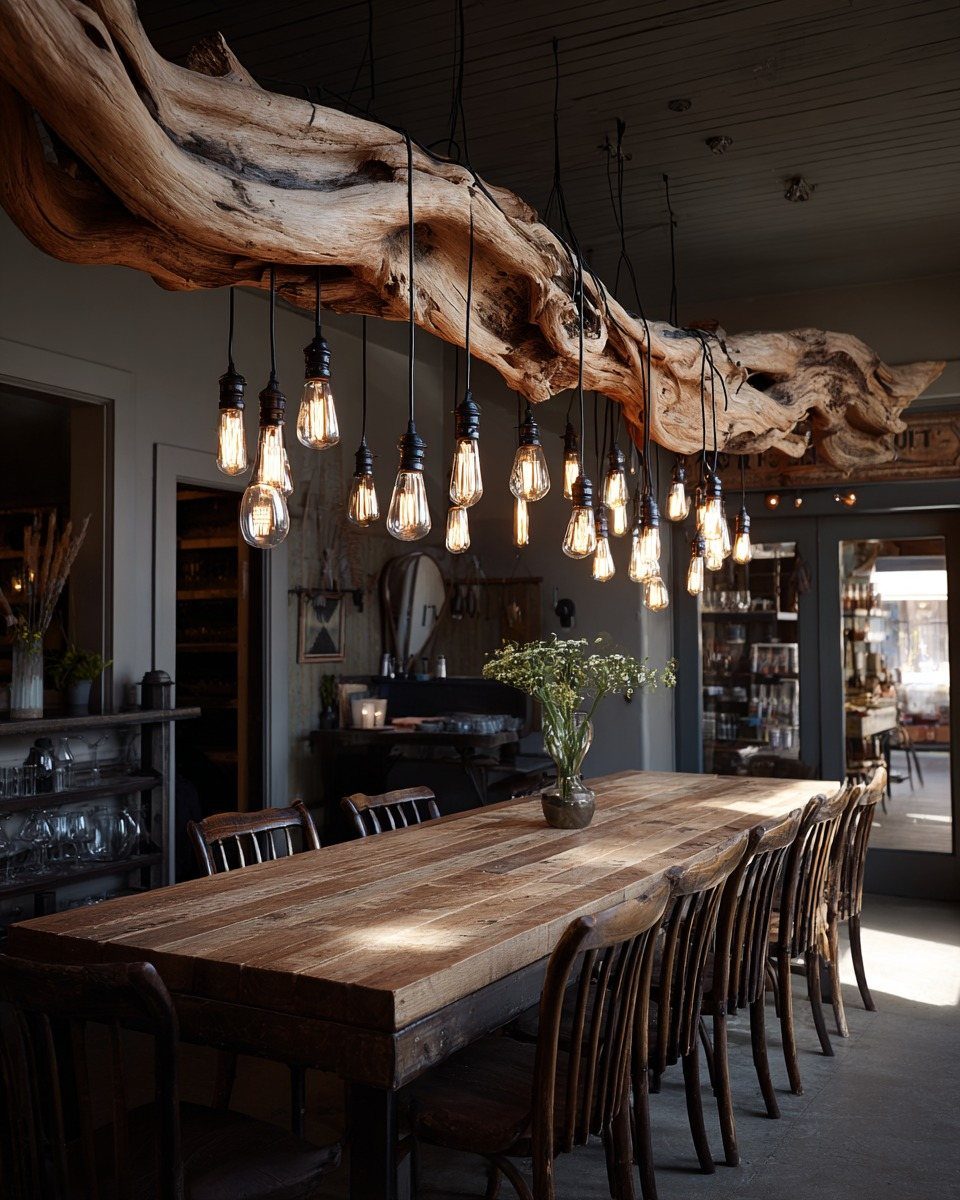
Lighting decides how a farmhouse table feels at night, and a wide fixture over a long table does the most.
A driftwood branch hung with Edison bulbs spreads light along the full length of the table instead of pooling in one spot.
Bulbs with warm, low-wattage filaments keep the mood soft. Add a dimmer if you can; it is the cheapest upgrade in the room.
Sconces or a table lamp on a nearby surface fill in the corners, so the ceiling piece does not have to do everything.
4. Simple Chairs and Tables
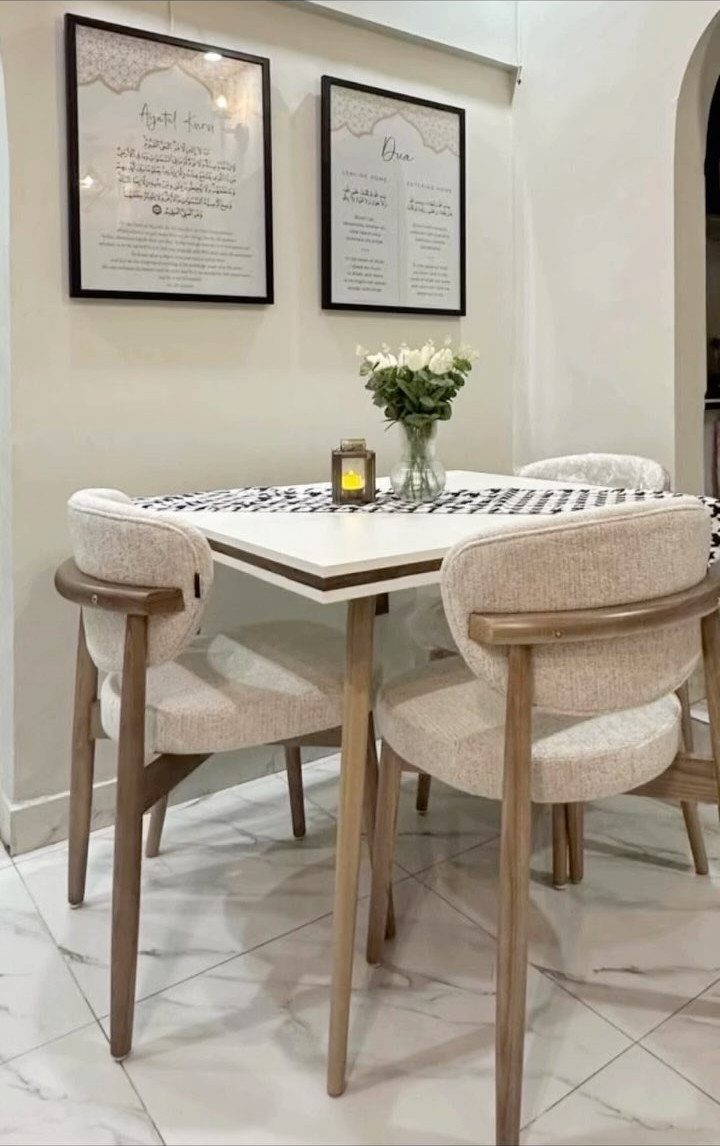
Plain shapes are what keep a modern farmhouse room from tipping into theme-park rustic. A square white table with upholstered chairs in a soft neutral asks for very little: no carving, no distressing, just clean lines.
Let one element carry the softness. White flowers in a single vase are enough, and they repeat the table’s color without adding clutter.
I would pick upholstered seats in a light neutral over wood for comfort at longer dinners. Spills are the downside, so choose a fabric that wipes clean.
For a modern farmhouse dining room, she says: ‘Think bare whitewashed walls, stone floors, jute and seagrass rugs, chalky white linens, lots of baskets for storage, and of course, a beautiful wooden dining table.’
5. Potted Plants
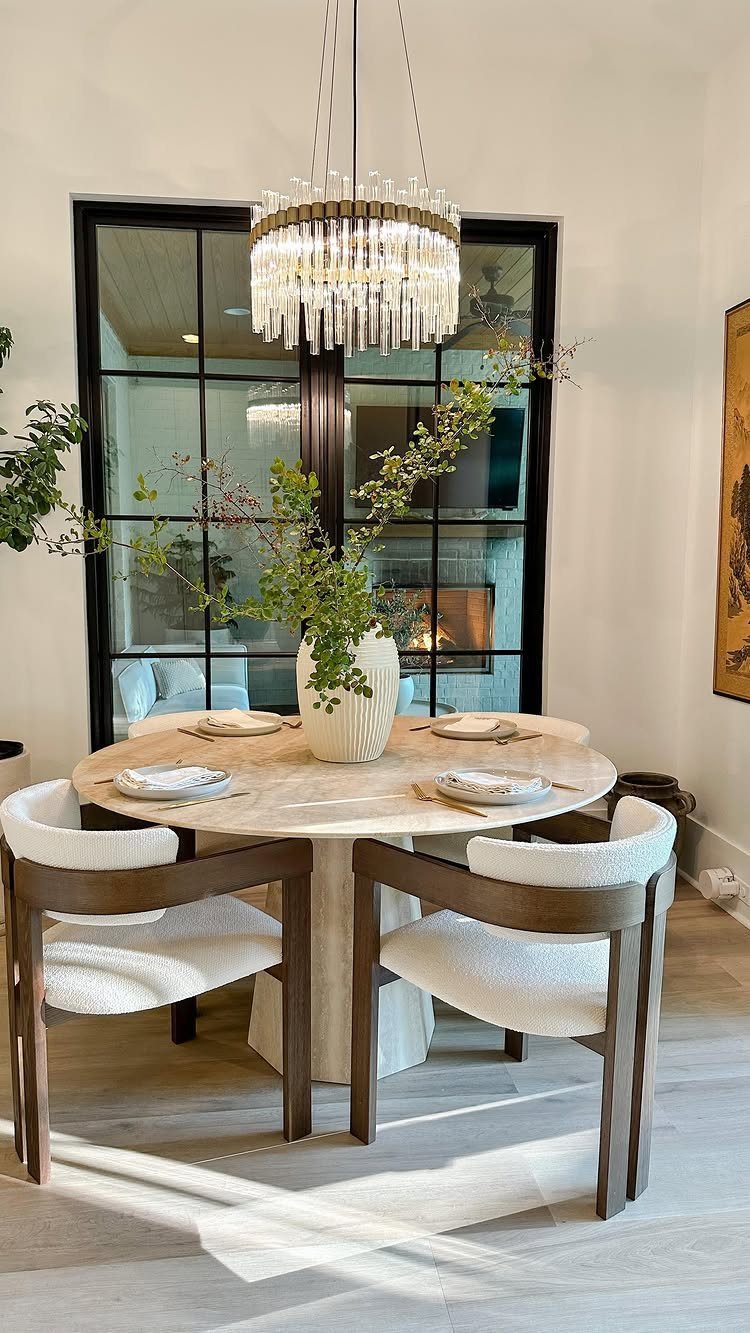
Greenery in a big vase or pot brings in a living, loose shape that a polished table never has by itself.
Keep the plant low enough, or the branches airy enough, that people can still see each other across dinner.
If you go with a potted plant, set it on the table only for display and move it to a side spot when you eat.
Real branches cost little, and swapping them out takes a minute.
6. Banquette Seating
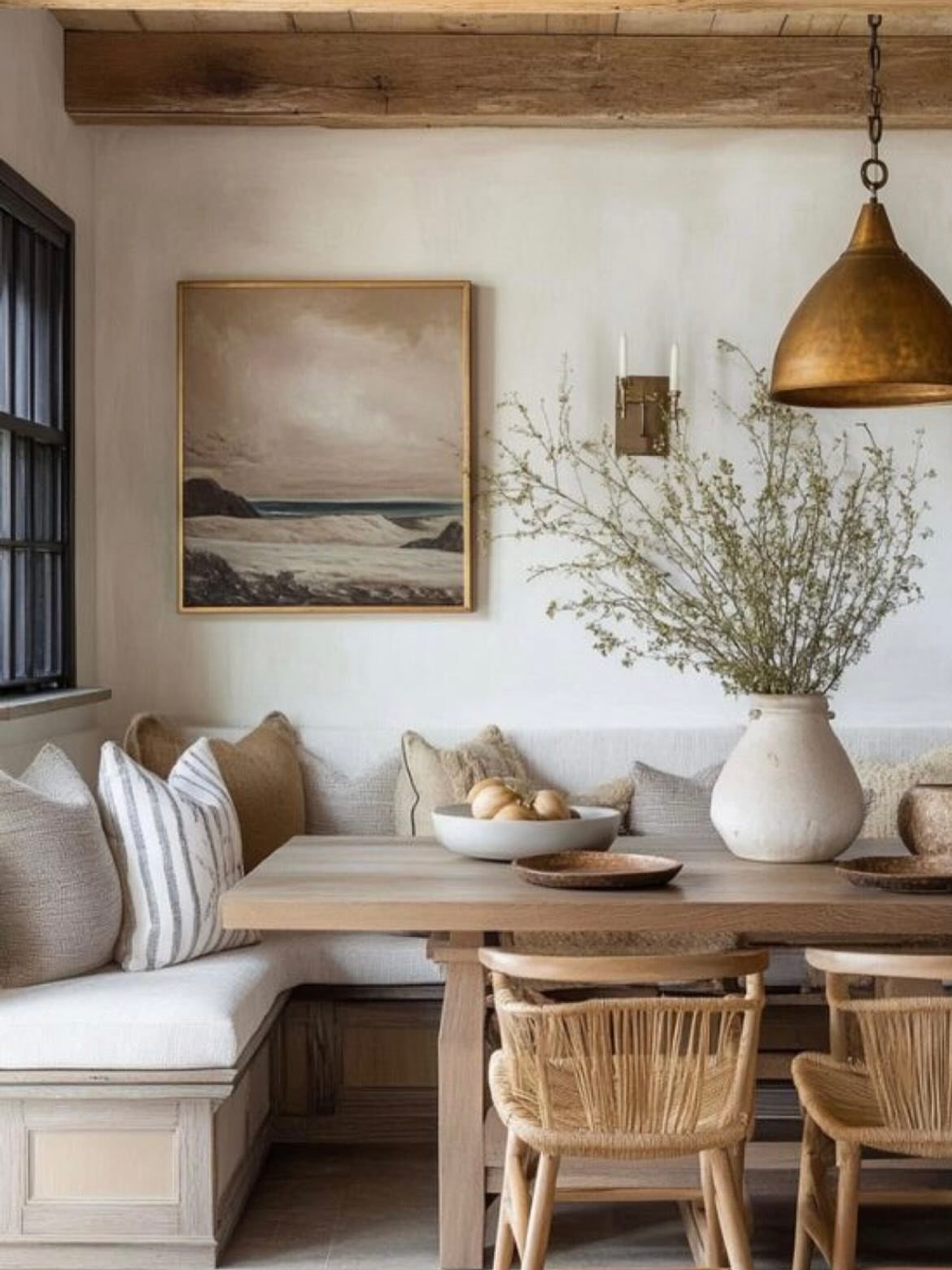
Banquette seating tucks one side of the table against the wall, which is why it suits a dining area short on floor space.
An L-shaped bench pairs well with a light wood table and a couple of loose chairs on the open side.
Built-ins are the dream, but a store-bought bench with a few cushions gets close for far less money. Pillows in neutral tones keep a banquette cozy without fighting the wood.
Leave enough room to slide in and out, because a banquette that traps people gets ignored.
7. Handcrafted, Durable Furniture
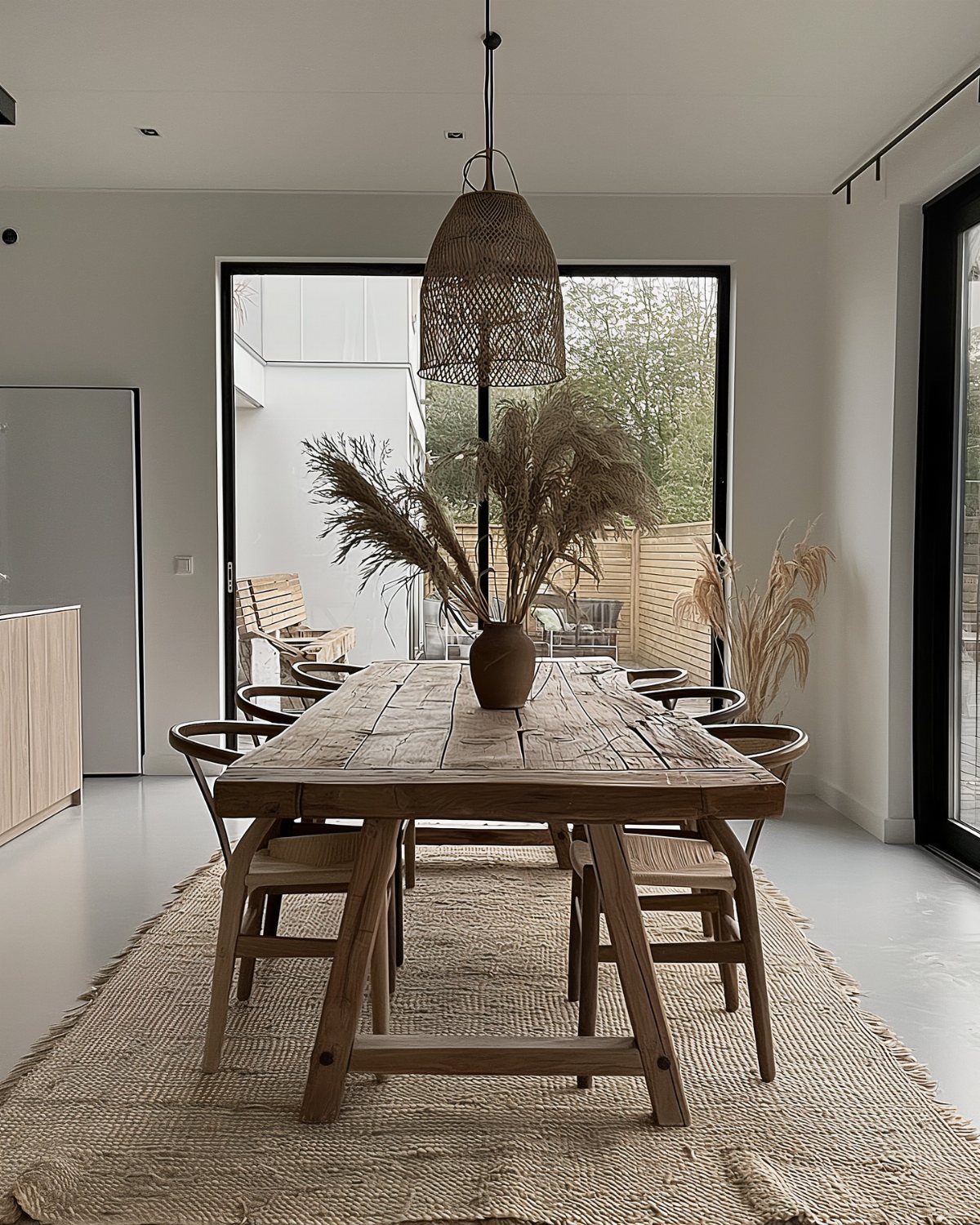
Solid, handmade pieces earn their price in a dining room because the table and chairs get used every single day.
A rustic wooden table with matching chairs sits easily on a jute rug, and the natural materials keep the room warm without extra decor.
Buy the table first and spend the most there. Chairs can come secondhand or be added later, as long as the wood tones stay close.
A woven pendant and pampas grass are cheap extras that repeat the textures, so the furniture does not have to work alone.
8. Chic Wallpaper
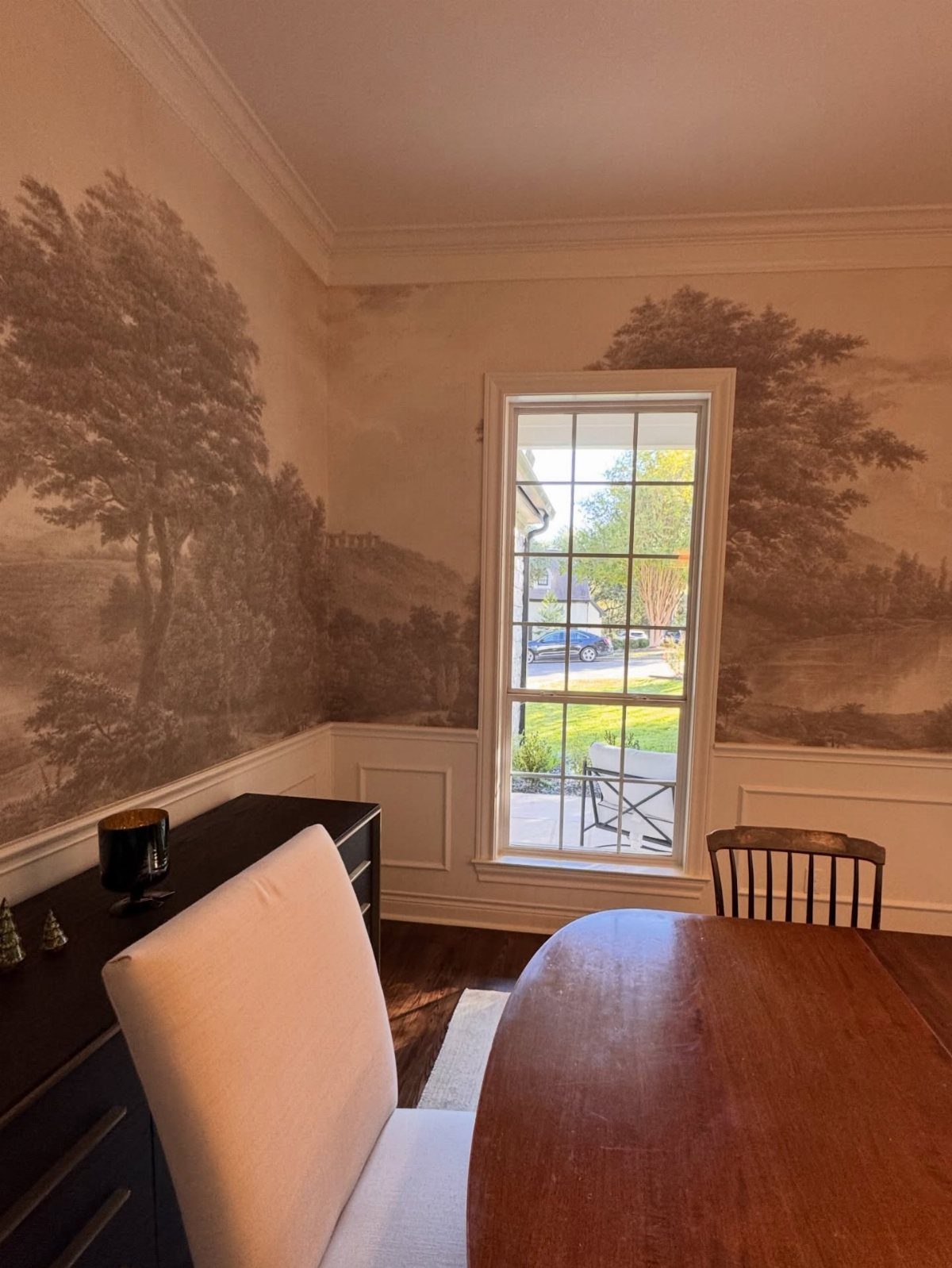
Wallpaper above white wainscoting gives a dining room texture and personality while keeping the lower wall practical. A sepia or muted landscape mural adds depth without competing with dark wood furniture.
For a renter, I would choose a peel-and-stick version and keep it to the upper wall, where the wainscoting already handles scuffs from chairs.
Stay with one soft, muted color family so the pattern reads as a backdrop. Let the furniture stay plain, and the mural does the talking.
9. Cozy Breakfast Nook
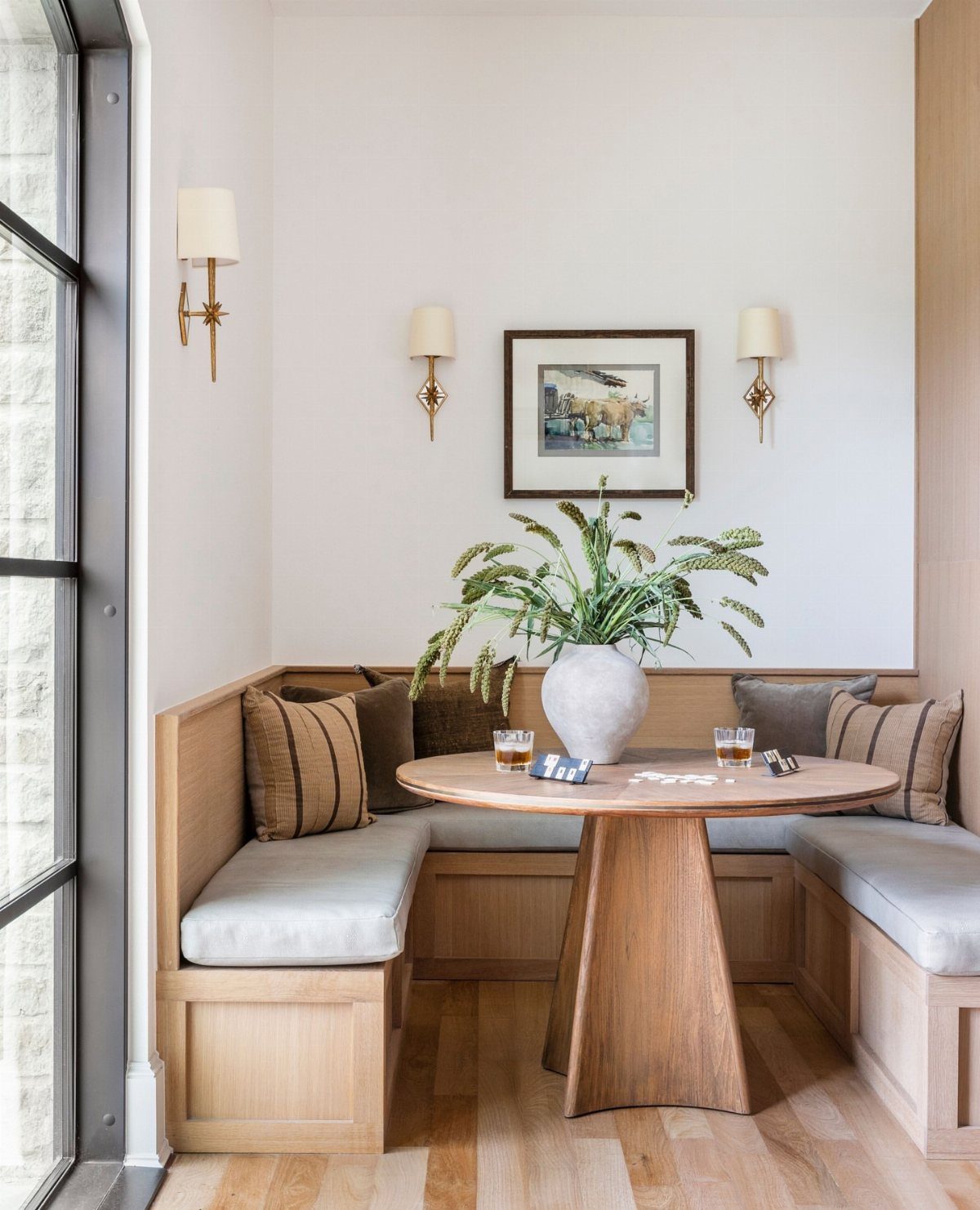
Round tops and a single center base let people slide in without knocking into table legs.
Wall sconces on either side give the nook its own glow, so it feels separate from the rest of the room.
Keep the decor small: one vase of greenery is enough. Cushions are the cheap part to change, so pick grey or a softer neutral and swap the covers when you want a fresh look.
10. Exposed Beams
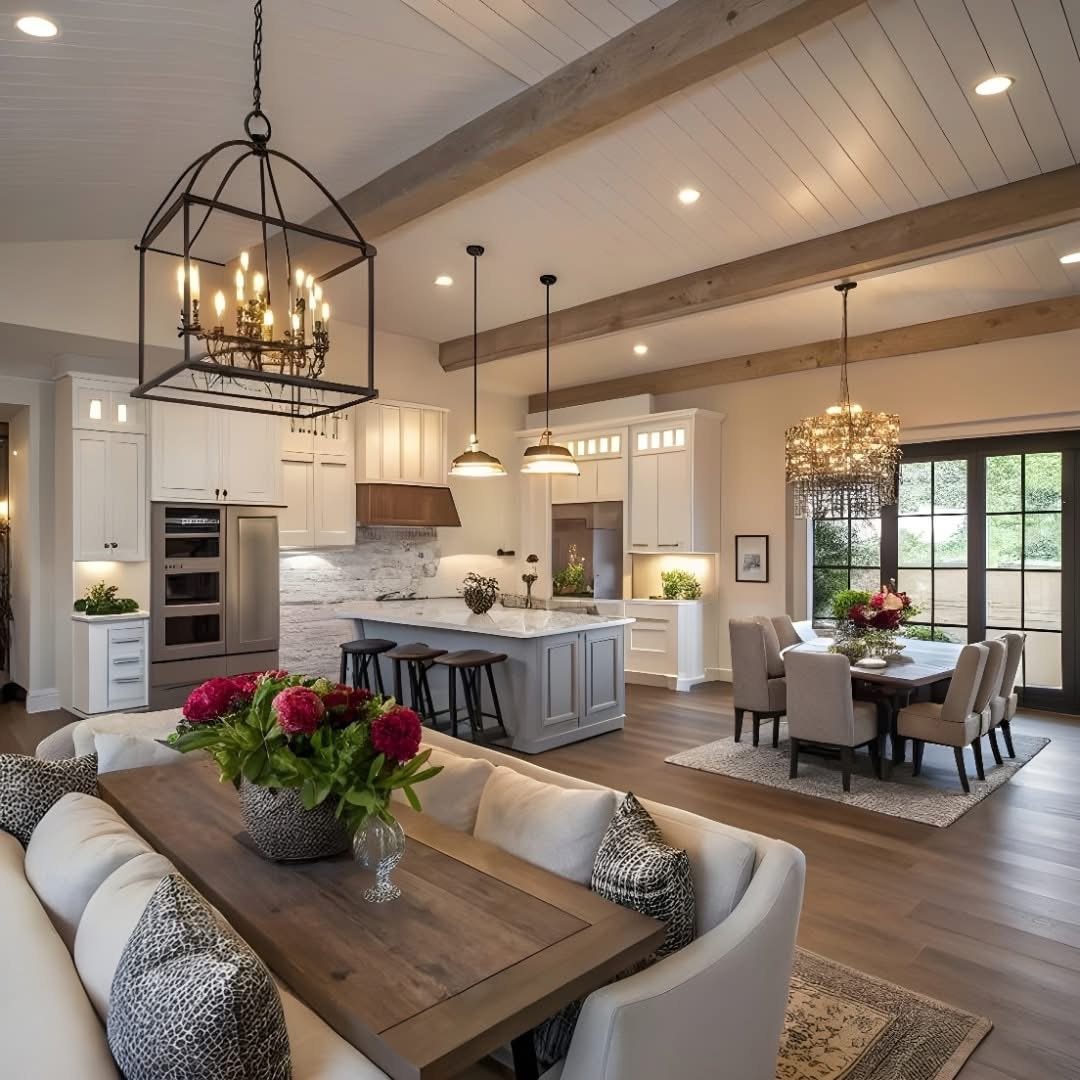
Wooden beams against a white ceiling bring rustic character without darkening the room. The contrast is what makes it modern farmhouse: warm wood overhead, clean white cabinets and chairs below.
If your ceiling has no real beams, hollow faux ones are the budget route and a reasonable weekend project. Match the wood tone to your table so the room feels planned.
A crystal chandelier, like the one over the separate dining area, adds a polished note that keeps the beams from feeling too country.
Creating a Cozy Atmosphere
Warmth in a dining room comes from mixing materials, not from piling on decor. Combine solid wood, metal, stone, brick and fabric, because contrasting textures keep a white room from looking flat.
Keep the pieces few.
Light works best in layers, so a room never relies on one switch.
A homey room can still look finished, and 3 or 4 well-chosen textures, like a linen runner, a wood bench and a woven pendant, do more for that than a shelf full of objects.
Choosing the Right Furniture
Choose furniture that invites you to sit down. Nothing in a farmhouse dining room should look too delicate to touch, so favor solid wood and seats you would happily stay in.
In an open kitchen and dining room, a long rectangular table can pull double duty: roll out dough or chop on it before dinner, then wipe it down and set it. That saves you from squeezing in an island.
Old chairs with wicker seats add warmth and texture, and they pair well with whatever floor you already have, even terracotta tile or brick. Work with what the house gives you before buying new.
A hutch is another traditional piece that fits the style and adds storage.
Color Palette Considerations
Build the backdrop from off-white, white, gray or greige. Those shades keep the room open and let wood tones and textures stand out.
Add color in small doses. Light blues, yellows and greens are the safest accents, and they look best in things you can swap easily, like a vase or a set of napkins.
Skip bold, heavily saturated colors, which close a farmhouse room in. Galvanized metal is a useful extra, since it adds a down-to-earth note without adding color.
When you hesitate, choose the simpler option, and use what you already own first.





