The ideas here run from pendant lights and a patterned tablecloth you can put on in minutes to a green corner, an oval table tucked in tight, a shelved wooden nook, or a banquette built into the corner itself.
Which one suits you depends on how much floor you can spare, so check the small-space tips and safety notes below, and leave 30–36 inches of clear walkway on the sides people pass.
Before buying anything, lay painter’s tape on the floor in the exact outline of the table and chairs; whatever doesn’t fit inside that rectangle is out.
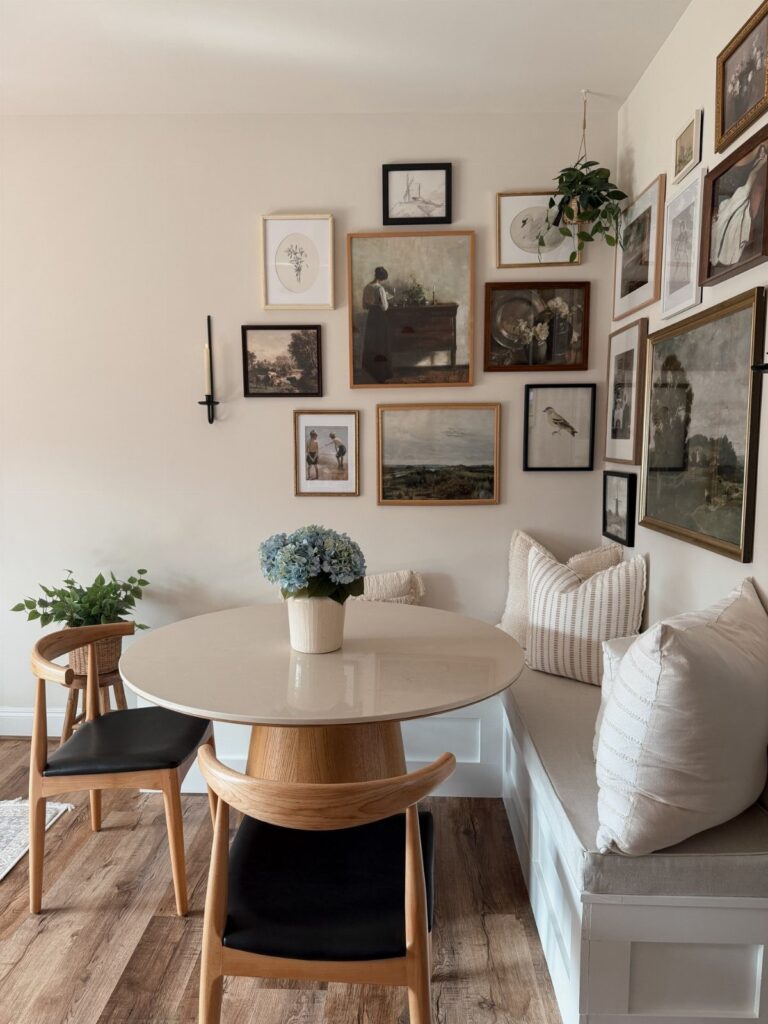
1. Cozy Banquette
A corner banquette beats separate chairs on 2 counts: it seats more people in less floor space, and the cushions make a long dinner comfortable. Tuck the table close so the bench does the work of two or three chairs.
For a renter, a loose bench with a back cushion and seat pads is the weekend version.
Pick a washable cover, since a grey fabric seat will meet spills. Leave 1–2 chairs on the open side so nobody has to slide along the bench to get out.
A round table keeps the corner from feeling boxed in.
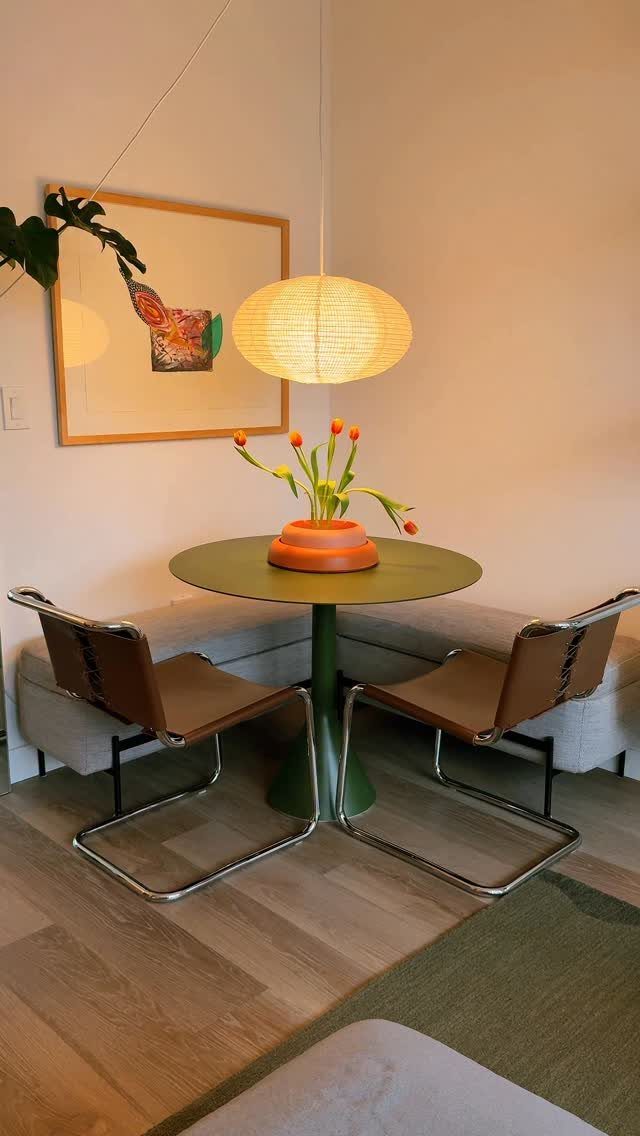
2. Pendant Lights
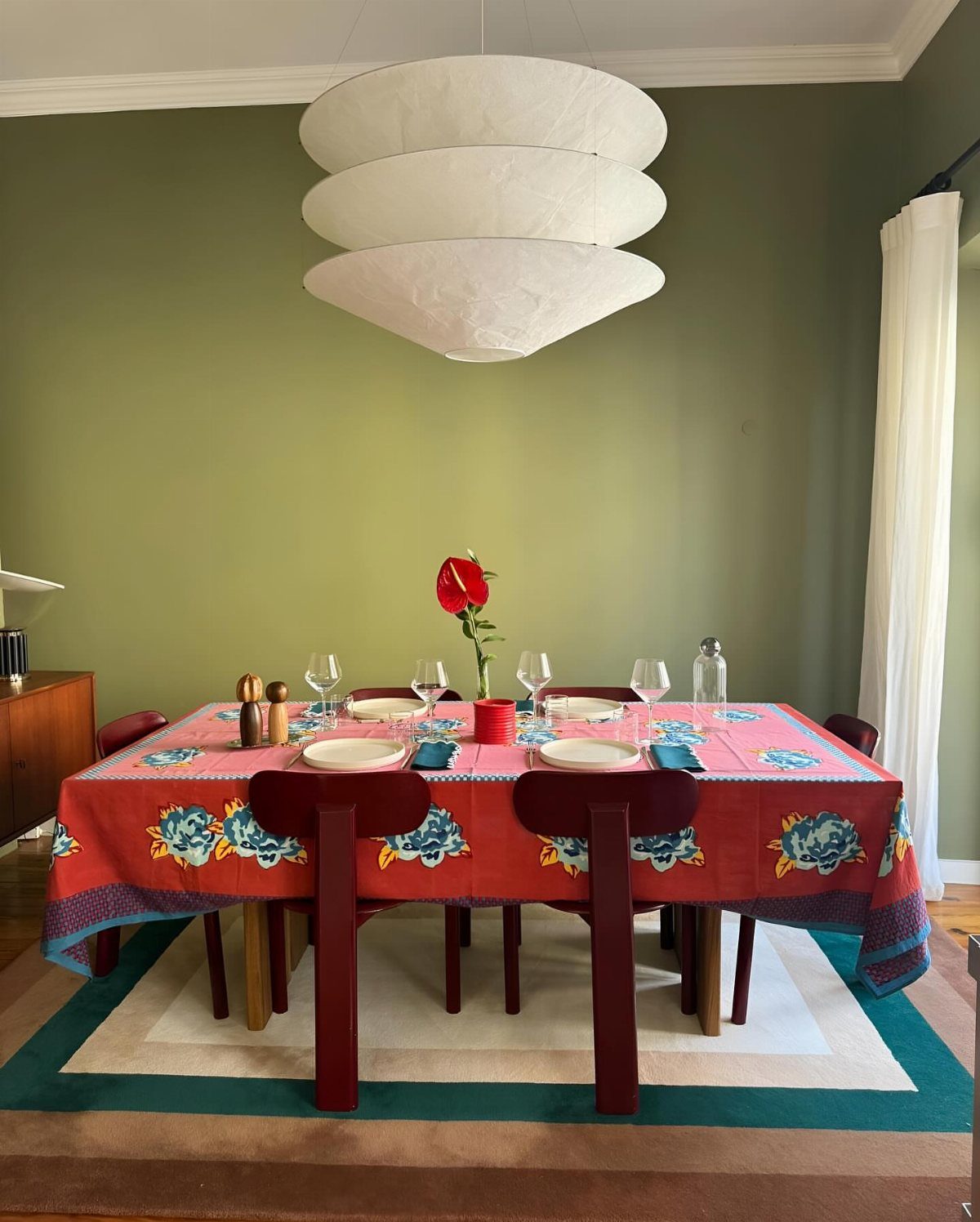
Hanging one large fixture low over the table gives a corner dining spot its own center, even when the walls are crowded or the room has no real dining zone.
A wide shade like a tiered one draws the eye up and makes the table feel like the destination.
Wall sconces are the alternative if the ceiling has no junction box. Plug-in versions with a cord cover suit renters and take an evening to hang.
Center the pendant over the table, not the room, and hang it so you can see across the table without ducking.
3. Multifunctional Corner
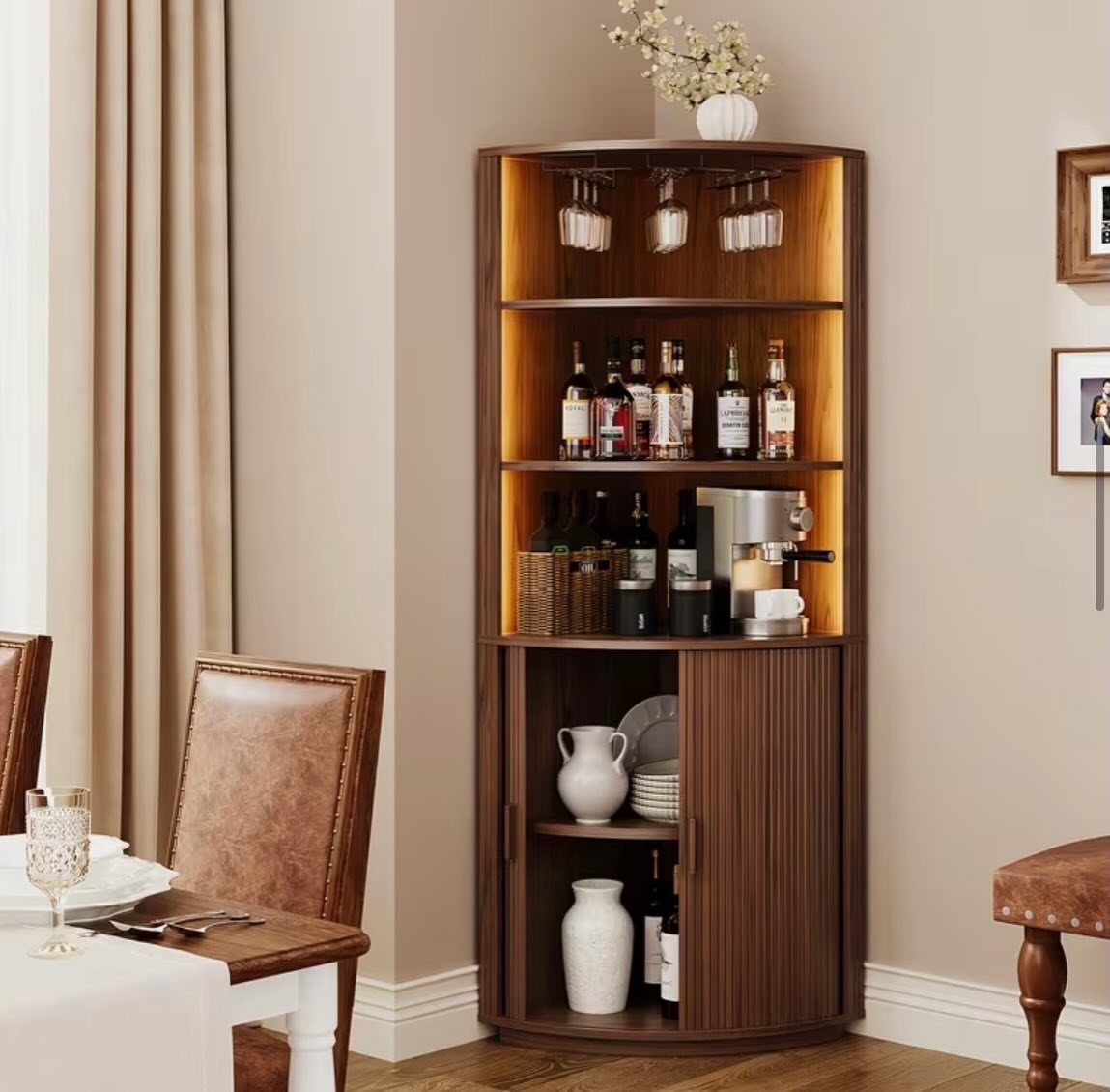
A curved corner cabinet turns dead space into a mini bar, and a coffee machine on top means it works at breakfast as well as at dinner. Rounded fronts also soften a tight corner where people pass.
Keep the top clear for what you use every day: a few glasses, a couple of bottles, the coffee machine, and nothing that needs moving before dinner.
Store the rest inside. A small light on the shelf makes the bar feel intentional.
If you would rather work there, a narrow desk with a lamp fits the same corner. Measure the walkway first; a cabinet that blocks a chair pull-out will annoy you quickly.
4. Lighting and Reflectivity
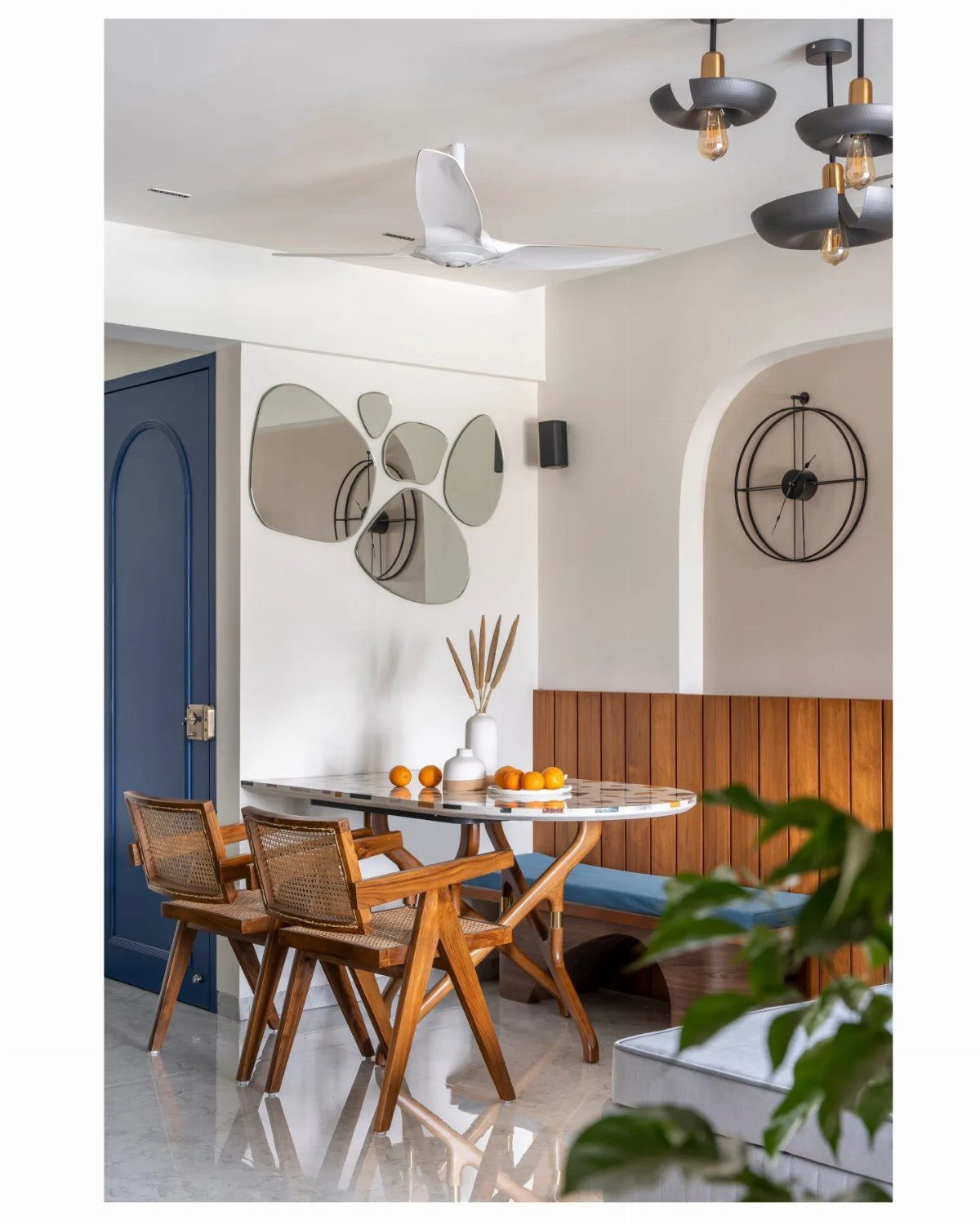
Organic-shaped mirrors on the wall beside a dining table bounce light around, so a small corner reads wider and brighter. Grouping several shapes feels more like art than one big rectangle.
Hang them on the wall that faces or sits beside a window, where they can catch daylight.
Use a mix of sizes with uneven gaps, and lay them out on the floor first. Lightweight acrylic mirrors cost less and hang more easily than glass, though glass gives a truer reflection.
A pale wall behind them helps the effect.
5. Green Corner
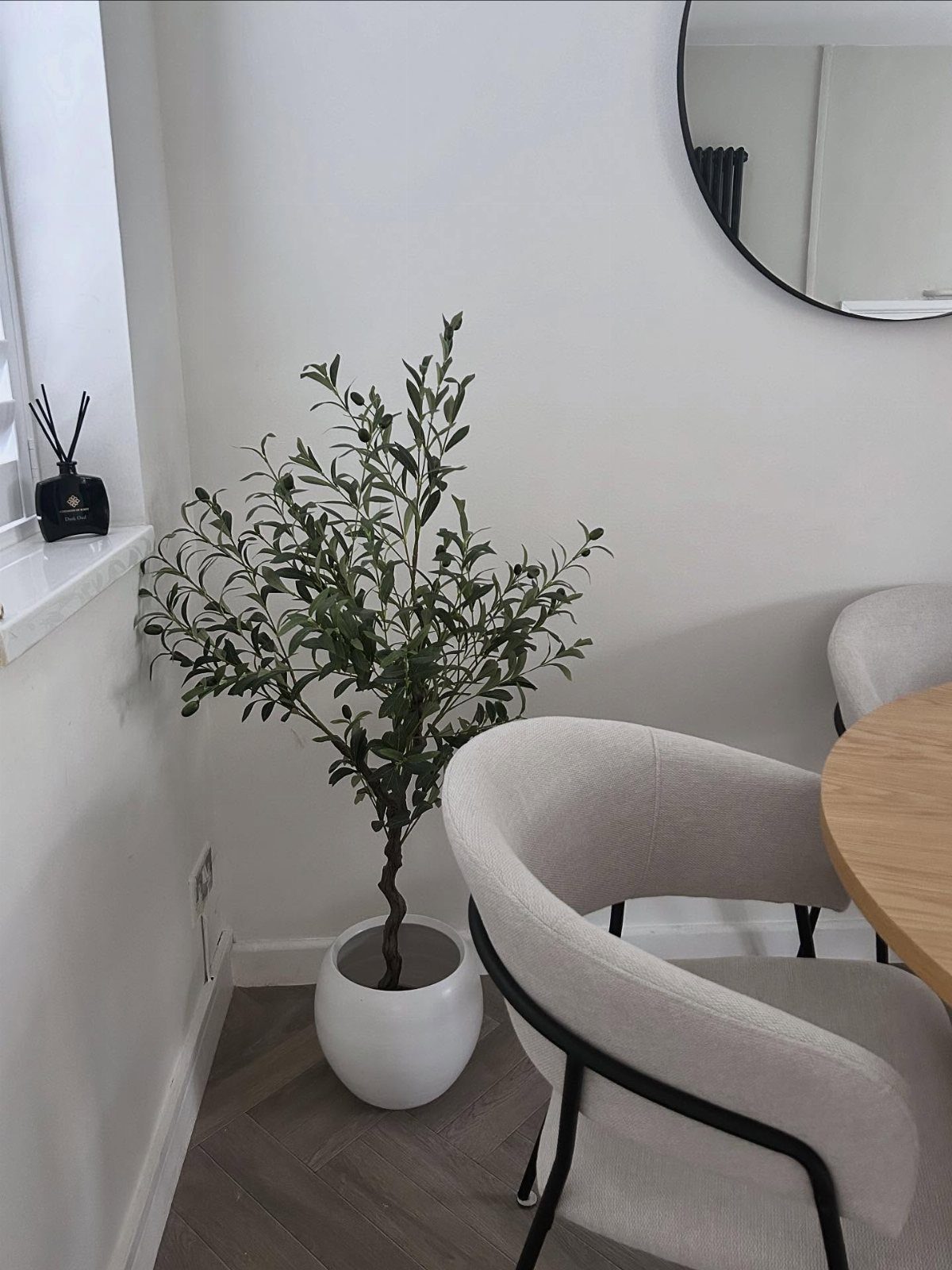
An olive tree in a slim white planter is the smallest footprint a dining corner can give a plant: tall, narrow, and out of the way of chairs. Going vertical keeps the table area clear.
An artificial tree needs no light, so it suits a dim corner, and it never drops leaves on the floor.
A real plant looks better if the spot gets bright light. Choose a planter only slightly wider than the trunk base so it stays slender.
Place it where it stands beside a chair, not behind one.
6. Shelved Wooden Dining Nook
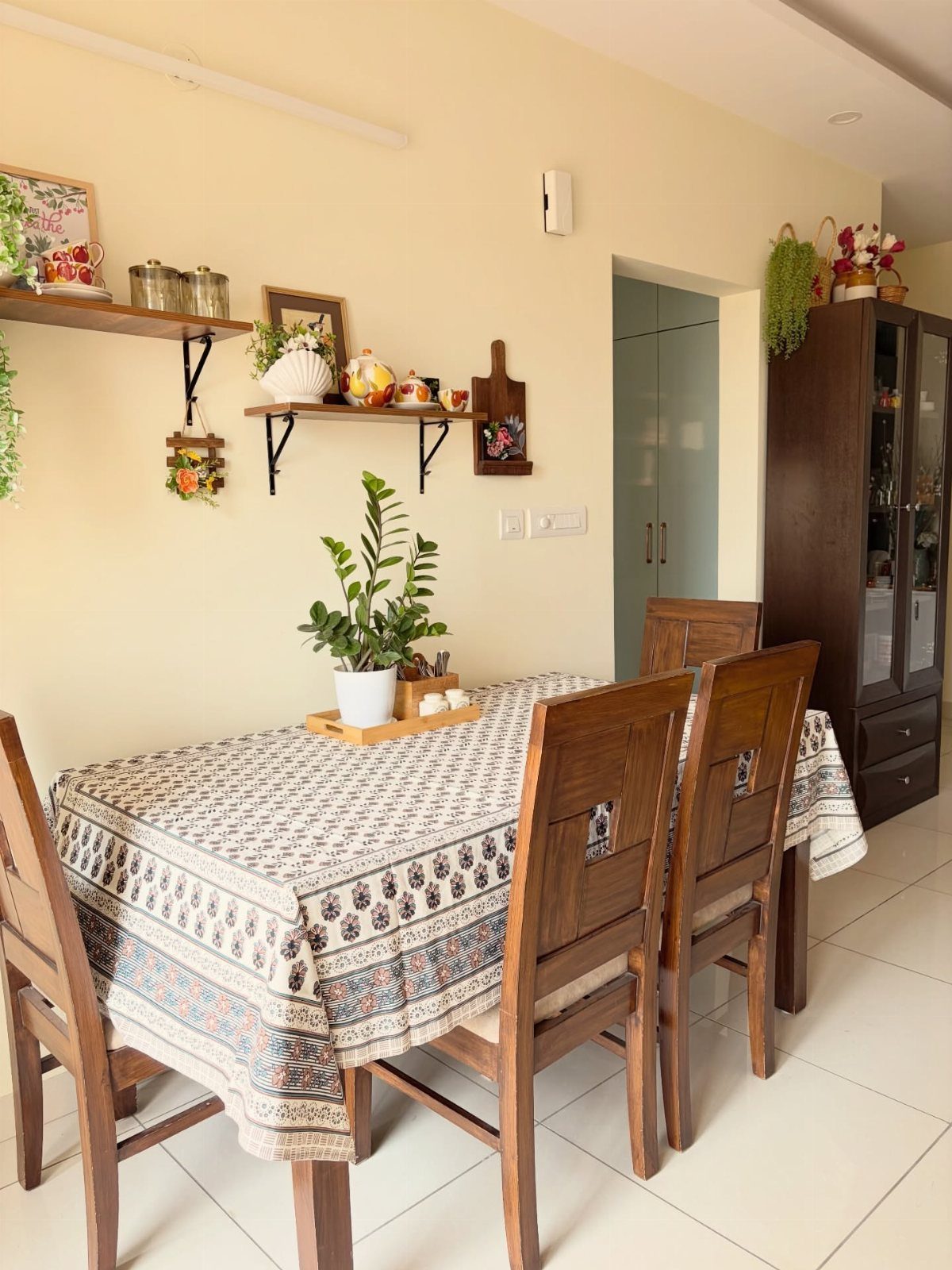
Two small open shelves above a wooden table give a corner display space without eating floor. Cream walls keep the wood warm and let the shelf contents stand out.
Mount them at a height where a standing person can reach and a seated one is not bumped.
Stick to a few pieces: a plant, a stack of plates, a candle. Crowded shelves turn busy fast.
Anchor shelves into studs or use wall anchors rated for the weight. Wood-toned shelves matching the table look settled.
7. Oval Table in Corner
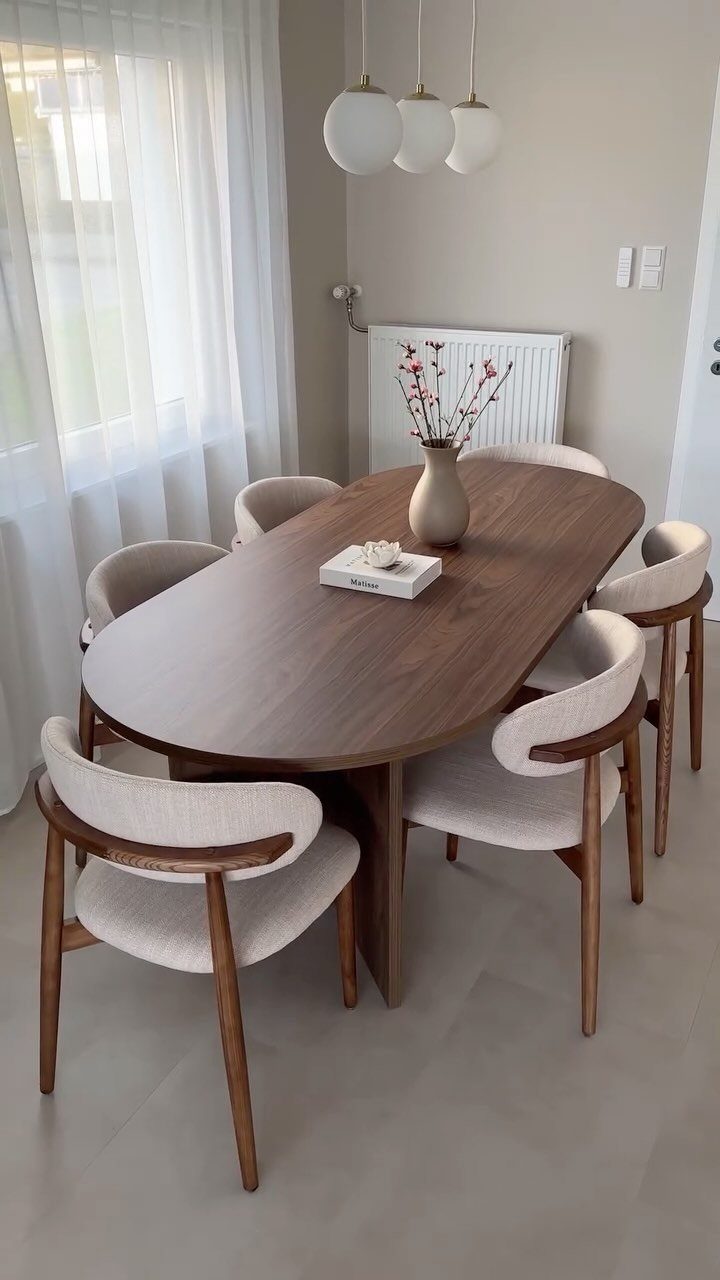
Oval tops have no corners to bump, so 6 chairs can circle a table in a room corner and people still squeeze past. Pushing one long side toward the window leaves the walkway on the other side open.
Upholstered chairs in a beige or cream tone keep the wood warm and the corner bright. Choose a washable fabric or add removable seat covers, since cushioned seats take the spills.
Keep the centerpiece low, like one vase and a book, so everyone can see across the table.
8. Patterned Tablecloth Corner Dining
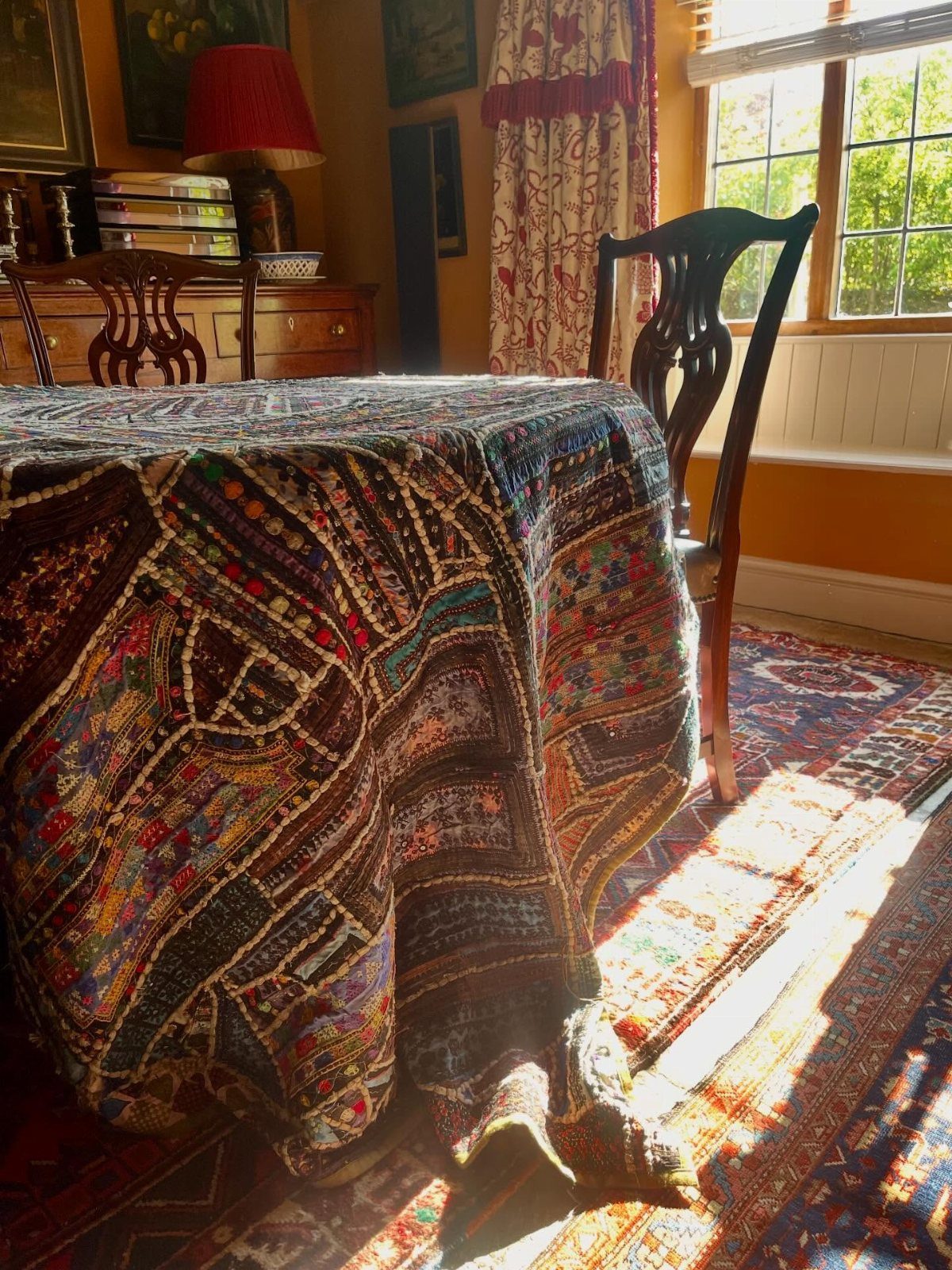
A patterned cloth does the decorating for a small table, so the walls and chairs can stay plain. Wooden chairs are a good match, because the wood calms a busy weave.
Choose a textured, multicolored cloth and let it drop far enough to look generous without catching on chair arms. Put a rug beneath so the corner reads as one zone.
Washable cotton is the practical pick, and for a renter it is the cheapest way to change a room in minutes. Keep dishes solid so the pattern stays the star.
Tips for Small Spaces
Before any furniture goes in the cart, tape the table’s footprint on the floor and check that 36 inches of clear walkway remains around the sides people will pass.
Keep 30–36 inches of clear floor wherever people pass the table, and treat that number as fixed while the furniture moves around it.
Scale accessories down to match the corner. On a small table, a bud vase or one slim taper holder keeps the surface open for plates, where a wide arrangement would crowd everyone’s elbows.
Hide the small stuff. Placemats, napkins, and phone chargers disappear into a basket or a drawer in a nearby piece of furniture, and a clear surface makes a tight corner feel larger.
Lighting Recommendations
Choose warm LED bulbs for a dining corner. They give the soft, amber glow that makes dinner feel relaxed, and they run cooler and cost less to use than older bulbs.
Let the fixture itself be the one large piece, a wide shade or a tiered pendant hung low over the table, rather than a cluster of small lights.
Scale matters here. If you swap a standard ceiling fixture for something bolder, check that it doesn’t overpower the table beneath it.
Safety Precautions
Find the studs before you hang anything.
Keep heavy items low. Cast iron, stacked ceramics, and glass jars belong on lower shelves, and only light pieces go up high.
In a home with children, this matters more. A shelf that can pull loose or tip a heavy object onto a table is a real hazard, so give each one a firm tug after mounting.
Frequently Asked Questions
What is the ideal lighting for a dining room corner?
A single oversized pendant, hung low, gives a crowded corner a center of its own. Hang it over the table rather than the room’s middle, at a height where you can see across without ducking.
How can I visually enlarge a small dining corner?
Hang a group of organic-shaped mirrors on the wall beside or facing a window, since they bounce daylight around and make the corner read wider and brighter.
Lay the mirrors out on the floor first, mix sizes, and leave uneven gaps. Painting the wall behind the mirrors a pale shade widens the space further, and so does a bare tabletop.
Are faux plants suitable for dining areas?
Yes, especially in a dim corner.
A faux olive tree skips the light requirement entirely and leaves no fallen leaves to sweep up. Pick a slim planter barely wider than the trunk base, and set the tree next to a chair instead of behind it.





