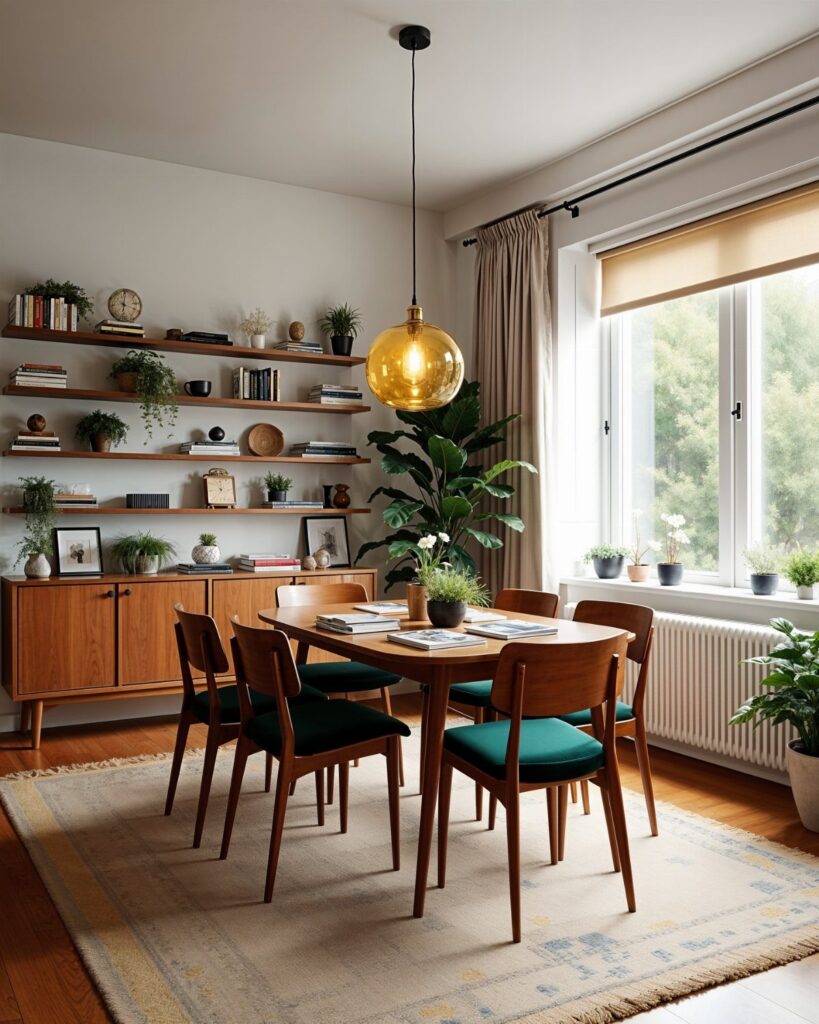
Which of these ideas fits your room comes down to whether you rent or own: a can of spray paint on secondhand chairs, a peel-and-stick mural or new drawer pulls on a sideboard are weekend jobs a lease allows, while full wood paneling and a built-in banquette are commitments for walls you control.
The list runs from budget-friendly chairs and a built-in banquette to sculptural lighting and a wood-paneled accent wall, and the wood tones stay calm in nearly all of them, so one bold color or one fixture can carry the room.
1. Dining Chairs
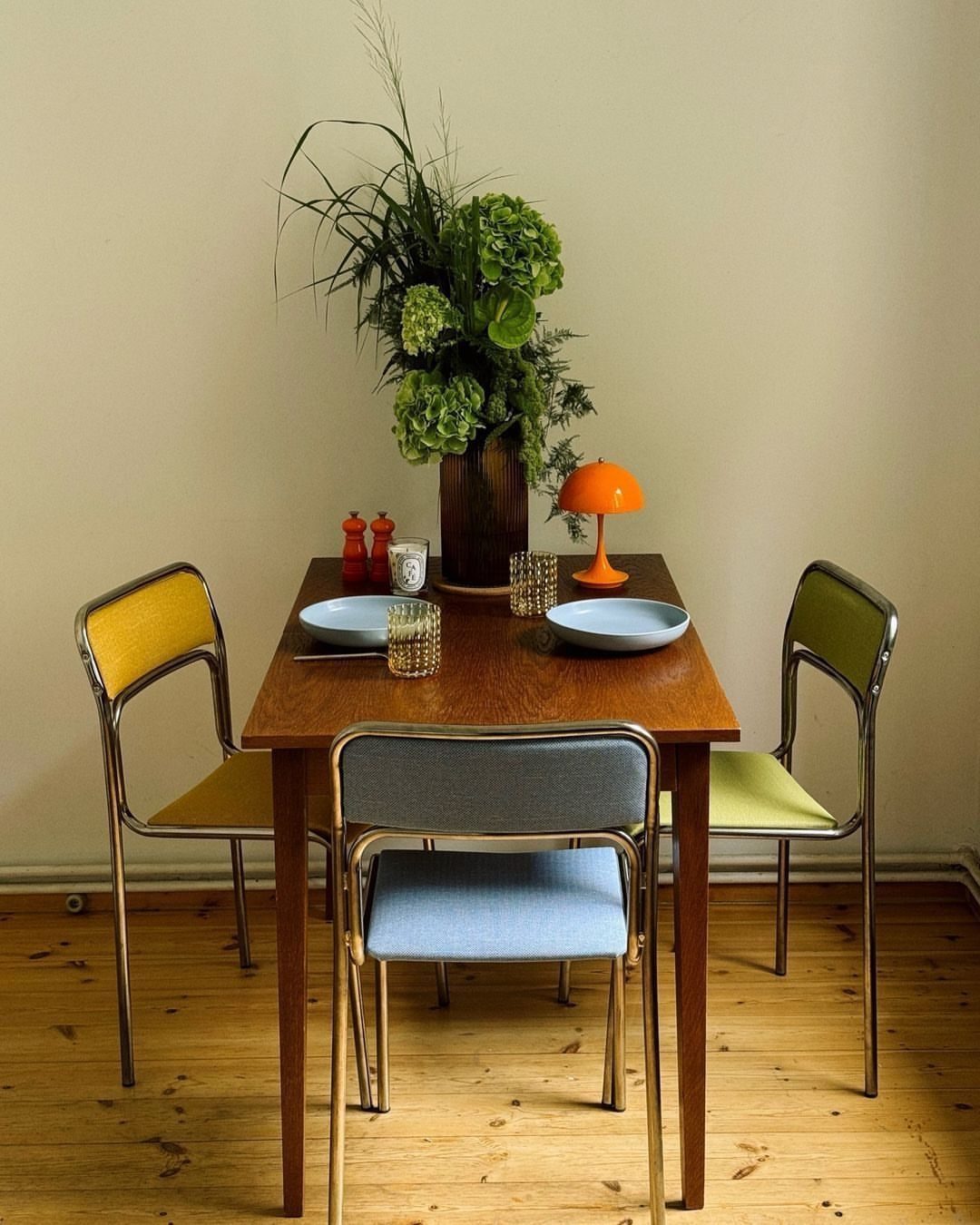
Three chairs, three colors, and one table that holds them together: mismatched seating is the easiest way I know to get an eclectic dining room without buying a new table.
Yellow, blue and green work here because the wood underneath stays calm.
Keep one thing consistent so the mix looks chosen. Similar seat height or a shared leg style does it, even when the shapes differ.
Secondhand chairs are the cheap route, and a single can of spray paint can pull odd finds into one palette.
2. Warm Wood Tones with Bold Pops of Color
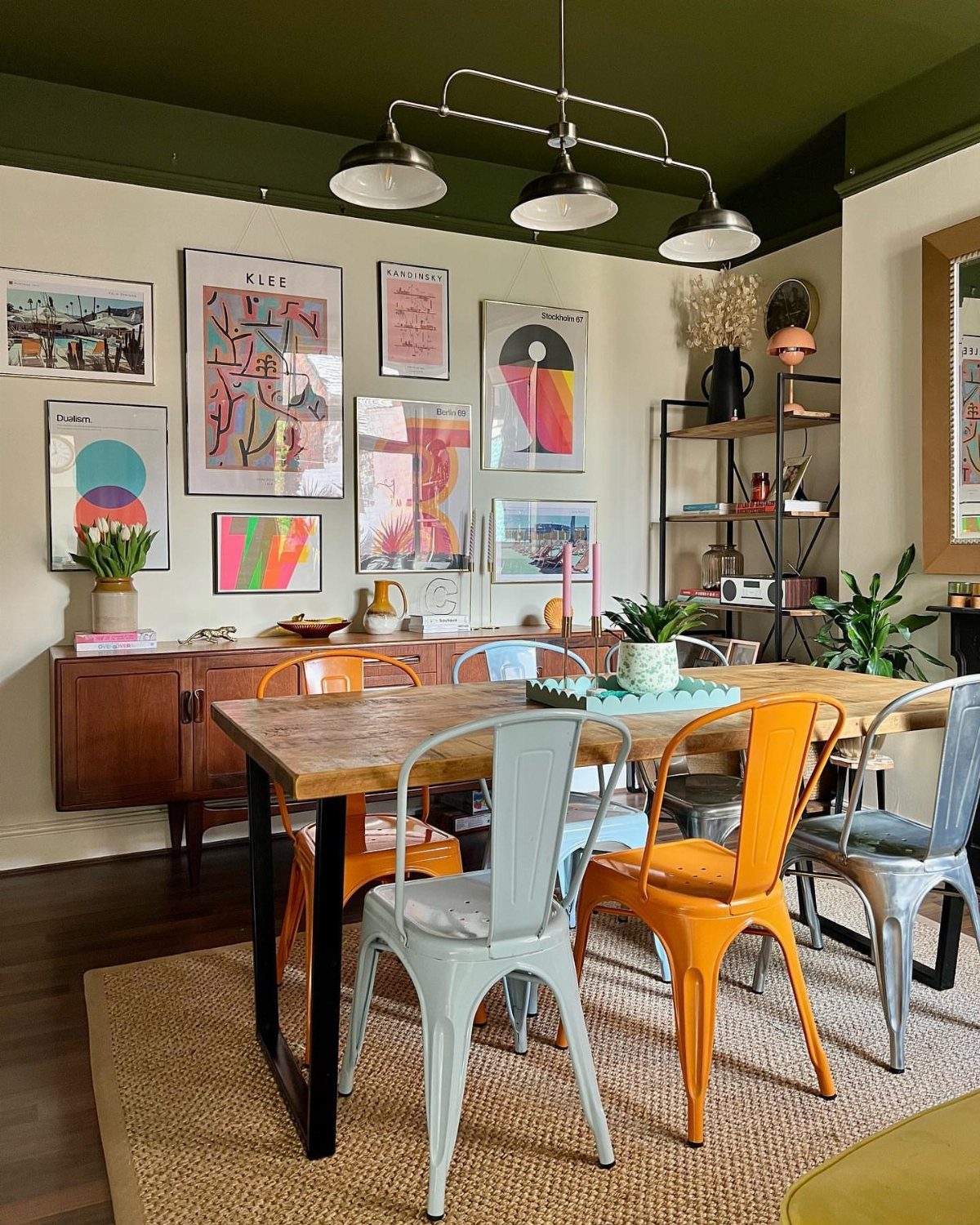
Earthy wood needs a loud neighbor, and metal chairs in saturated color are a good one. Let the table and sideboard carry the warmth, then spend your color on the seating and one other surface.
I like the green ceiling because it frames the wood without competing with it. If painting overhead sounds like too much for a weekend, an accent wall does a similar job.
Limit the bold colors to three or so, or the wood stops being the anchor.
3. Mid-Century and Contemporary Elements
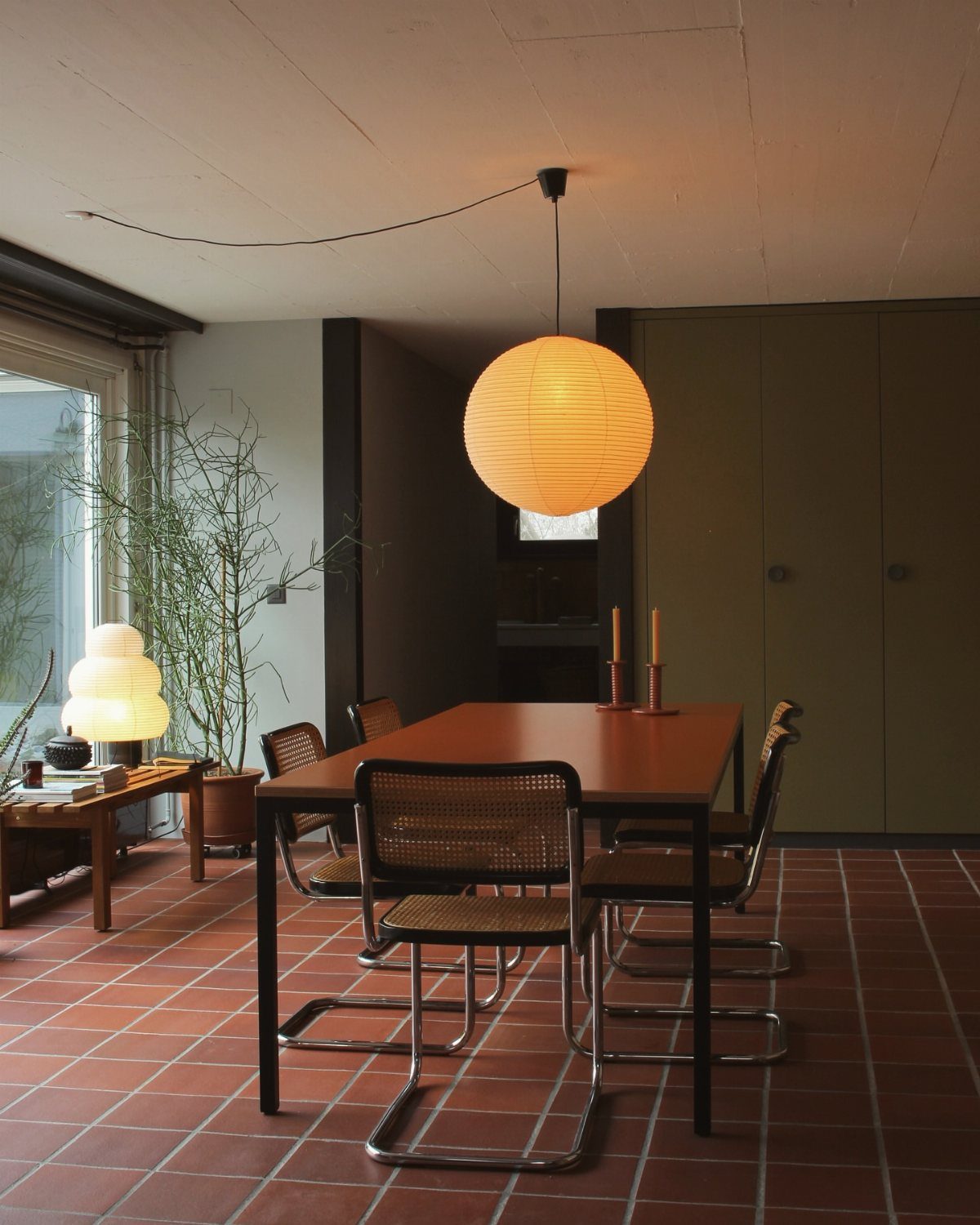
The round pendant softens the straight lines of the table, and the cane adds texture without adding weight.
Paper shades are the budget-friendly choice for this look, and they weigh little, so hanging one is a simple project.
Pick one statement piece and let the rest stay quiet.
4. Mid-Century Modern Dining Table
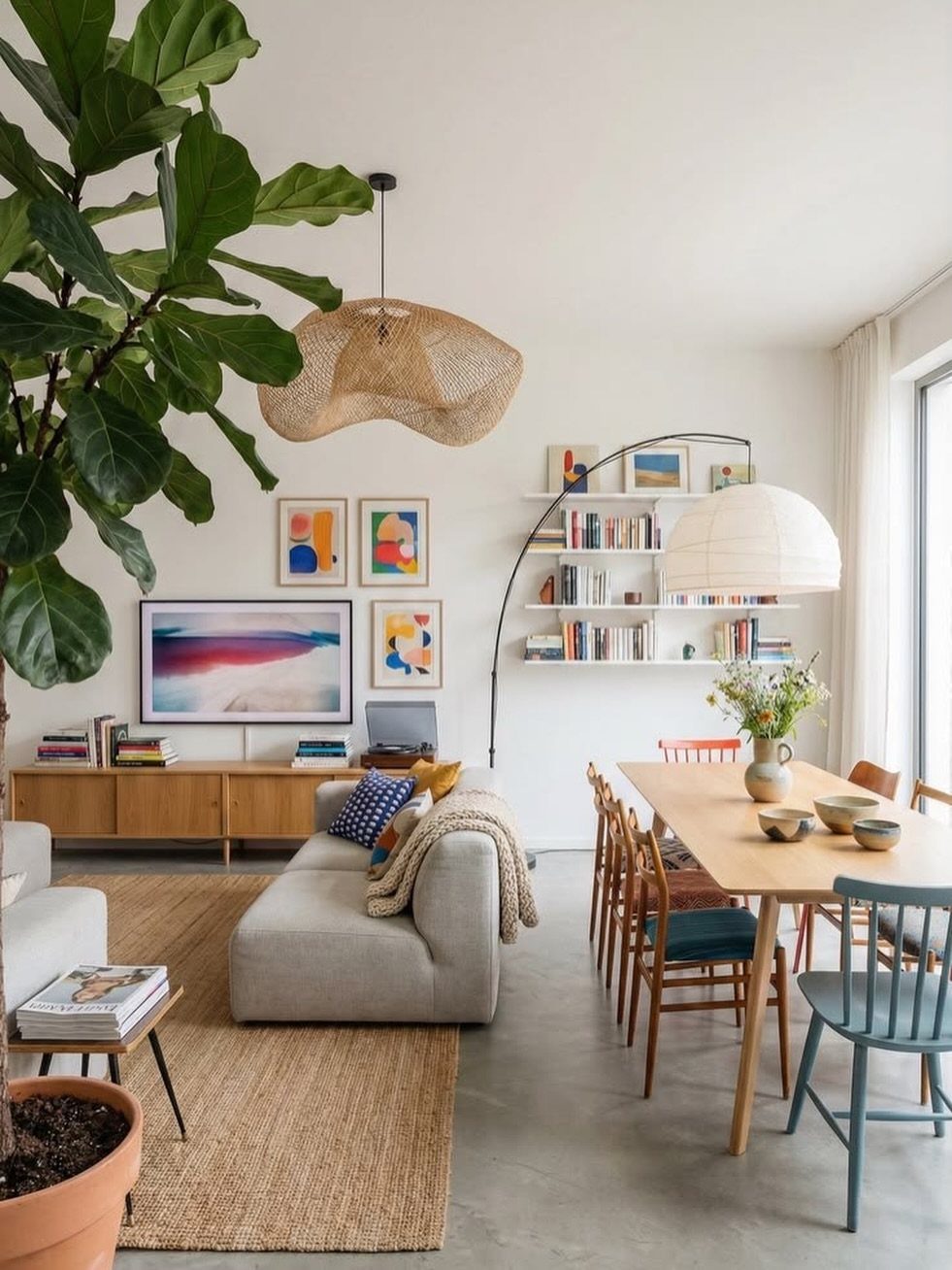
Start with the table, because everything else in an open room gets arranged around it. A light wood top reads warm and keeps a dining zone from feeling heavy next to a sofa.
Mixed chairs are a forgiving way to fill it in, and they cost less than a matched set.
I would size the table first and shop for chairs second.
Mark its outline on the floor with painter’s tape to see how the table sits against the living area, then leave it up for a day or two and walk around it.
5. Sideboards and Extendable Tables
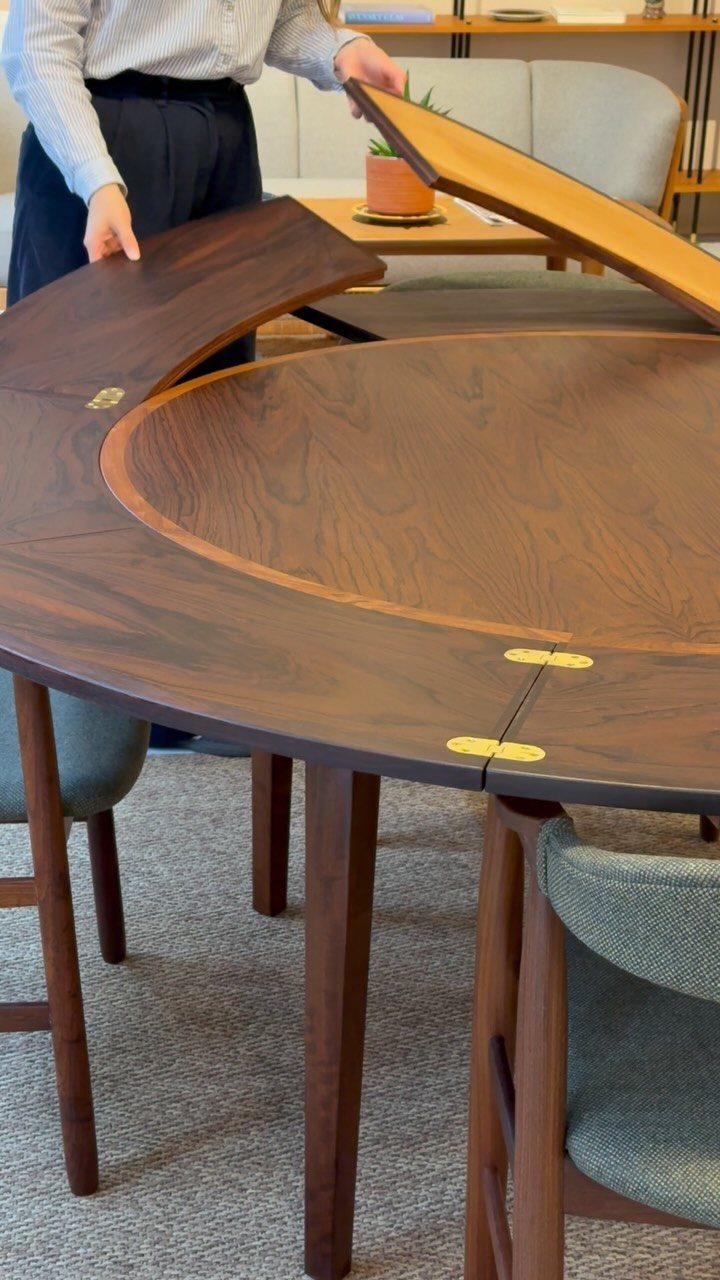
A round walnut table with folding leaves gives you a small everyday surface and a bigger one for guests. That is the real appeal for renters: one piece, two sizes.
Check the hinges and how the leaves lock before buying, since that mechanism is what you will handle most. Brass hardware looks good against dark walnut.
Pair it with a sideboard nearby to hold the extra serving pieces, so the table stays clear when it opens up.
6. Sculptural Lighting
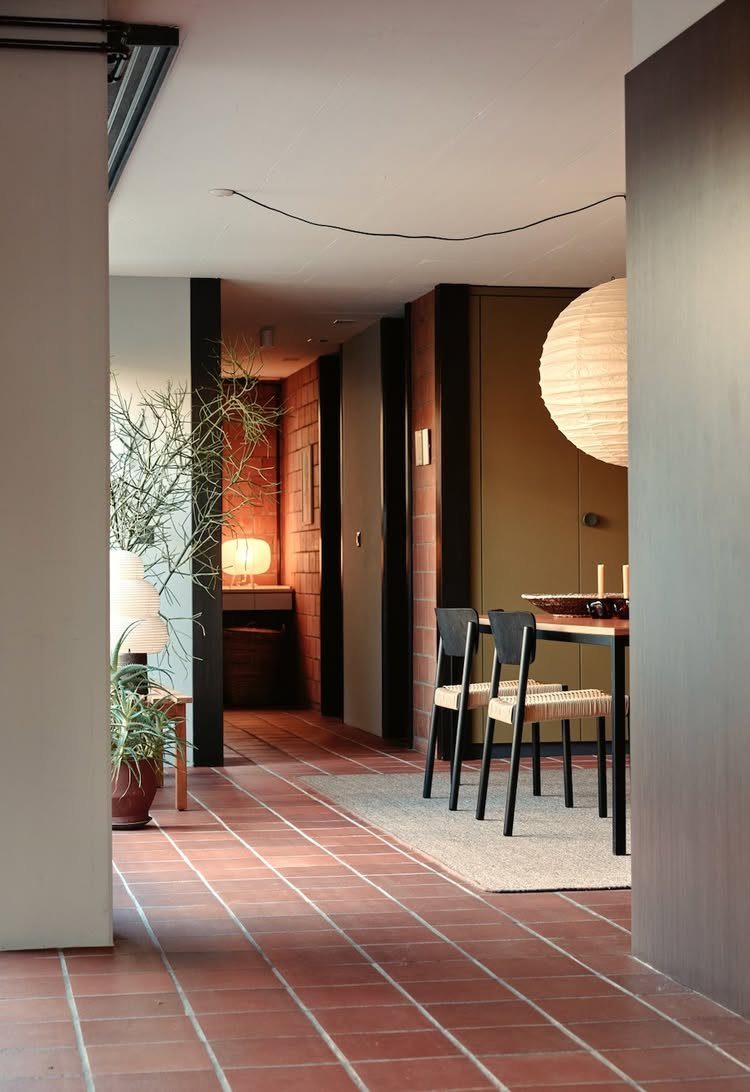
Hang a large white paper lantern low over a wooden table and the whole room gets a focal point for very little money. The soft glow also flatters wood, which I prefer to a bare spotlight.
Go big. A small shade over a full-size table looks lost, so choose one that fills a good share of the table’s width.
Black chairs and a warm tabletop let the white sphere stand out cleanly.
7. Rugs and Upholstered Chairs
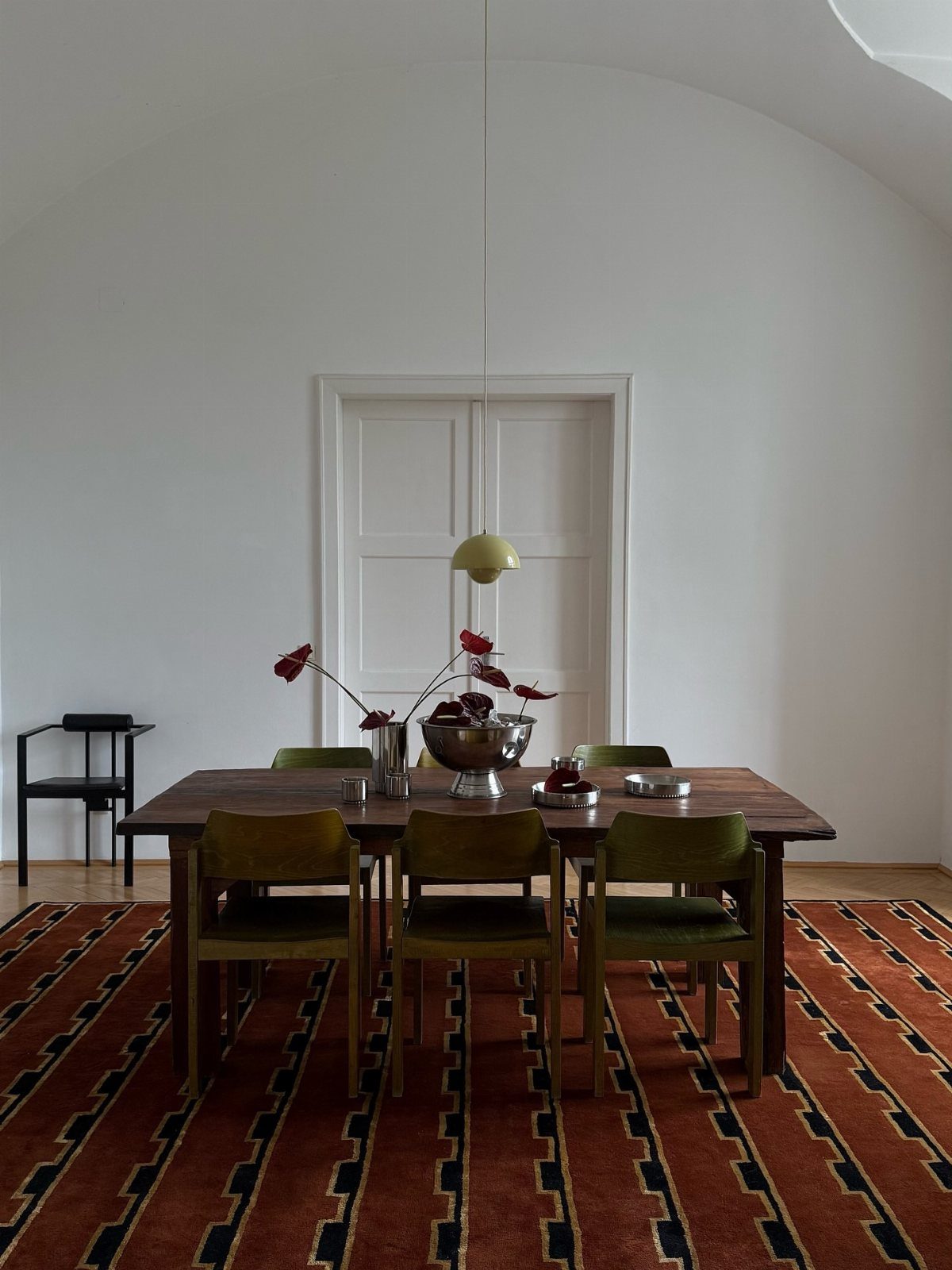
A patterned rug under olive upholstered chairs gives a white room its color without touching a wall.
Red against olive is a bold pairing, so give it quiet surroundings: a plain table and neutral walls let the 2 colors do the work.
Size the rug so the chairs stay on it when pulled out. Upholstered seats are comfortable, but a fabric you can wipe clean saves worry at the dinner table.
8. Plants as Centerpieces
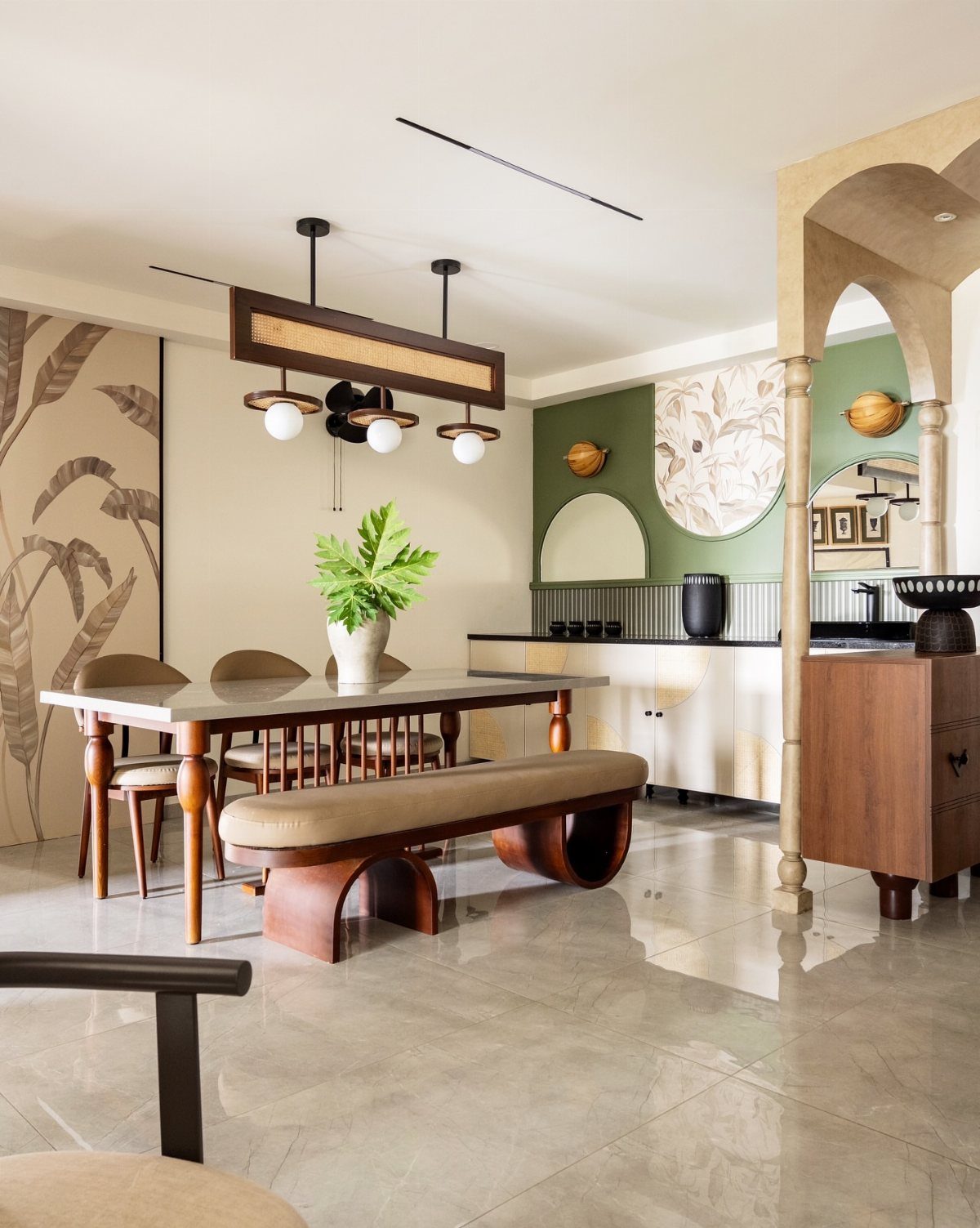
A single leafy plant in a white pot is a centerpiece that never needs replacing.
A white pot is a smart pick when the wall is green and the table is marble, since it gives the plant a clean edge instead of letting it fade into the background.
Choose a pot small enough to leave elbow room for plates. Low plants also keep sight lines open across the table.
I would pick a real plant over cut flowers for a weekly meal: it costs once and lasts.
9. Built-in Banquette
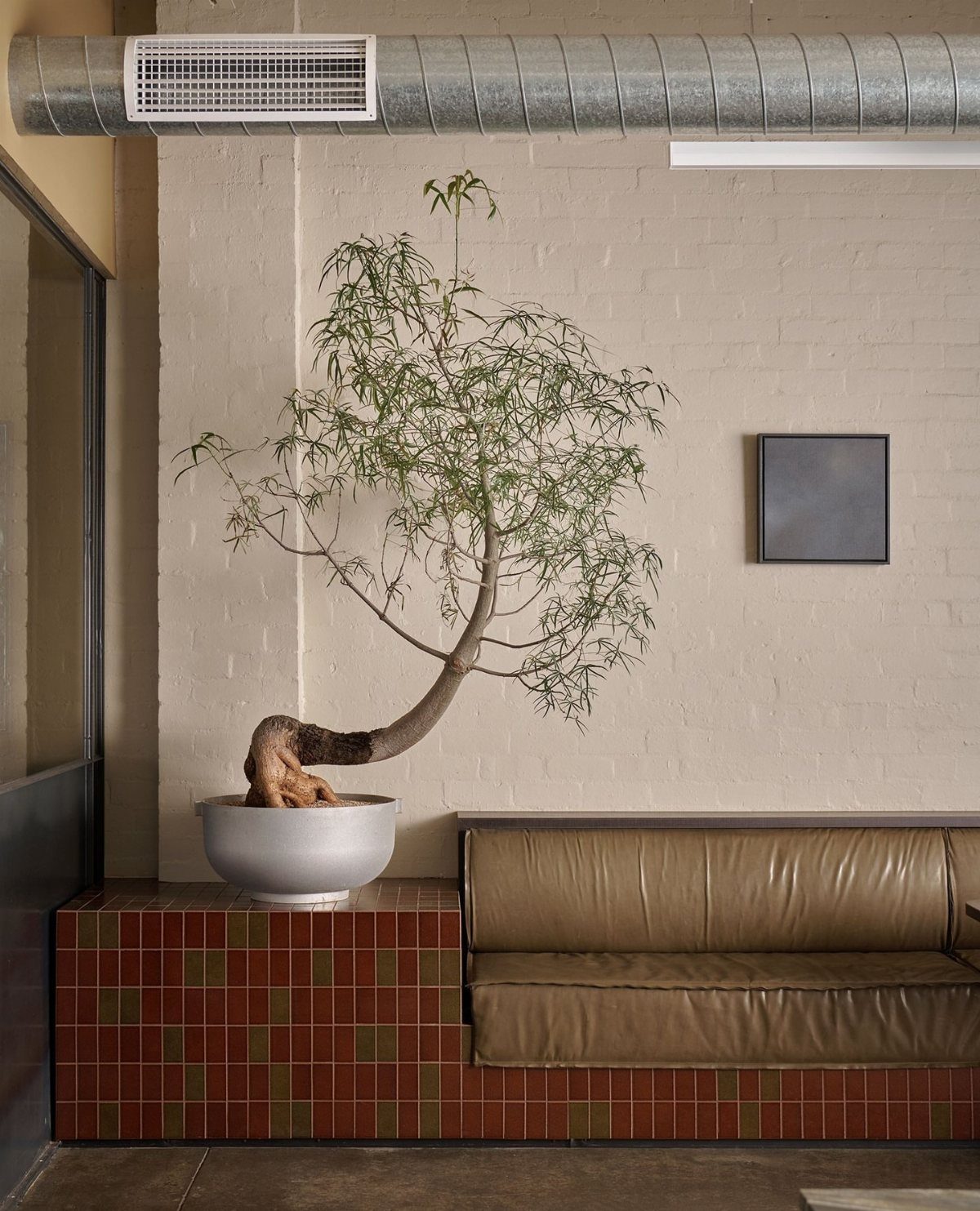
Built-in seating turns a leftover corner into the best seat in the house. Leather cushions on a tiled base are easy to wipe down, which matters in a spot where crumbs collect.
A banquette also lets you push the table toward the wall and free up floor space. A banquette is built in, so it stays put; renters should read the lease before building anything.
A small potted tree on the ledge adds life without taking up a seat.
10. Brass Fixtures and Decor
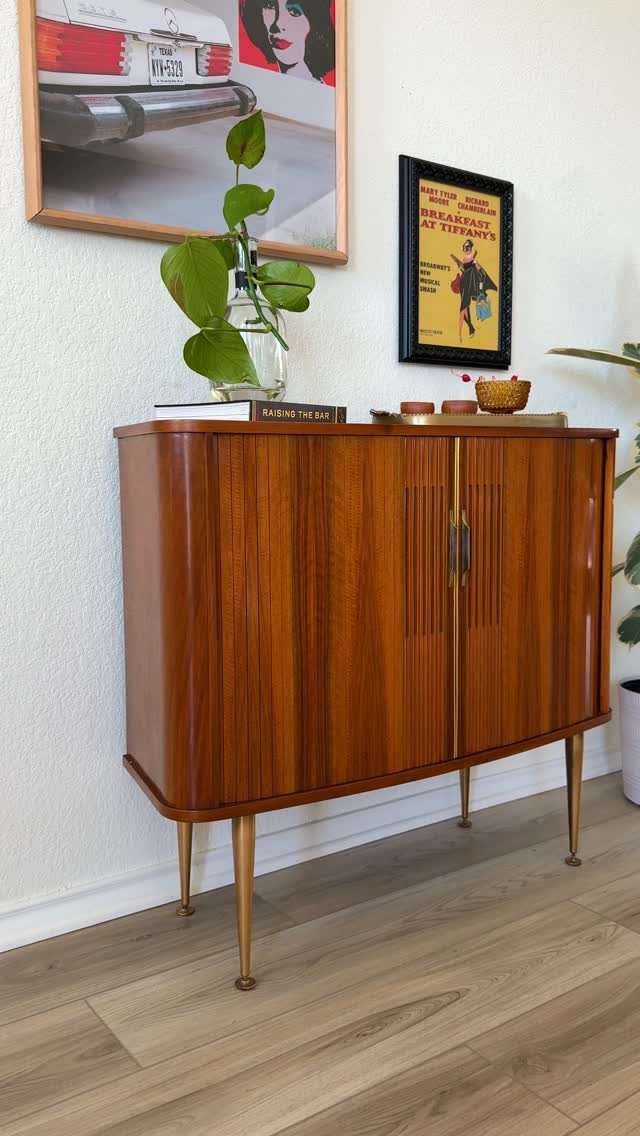
Brass legs and handles on a wood sideboard add warmth that reads as polished rather than flashy. Keeping the metal to those 2 places is what stops it from feeling heavy.
If a new piece is out of budget, swapping the handles on a sideboard in your home is a cheap weekend job. Measure the spacing between the screw holes first so the new pulls fit.
Add framed posters and a small plant above, and the surface looks finished.
11. Wood-Paneled Accent Wall
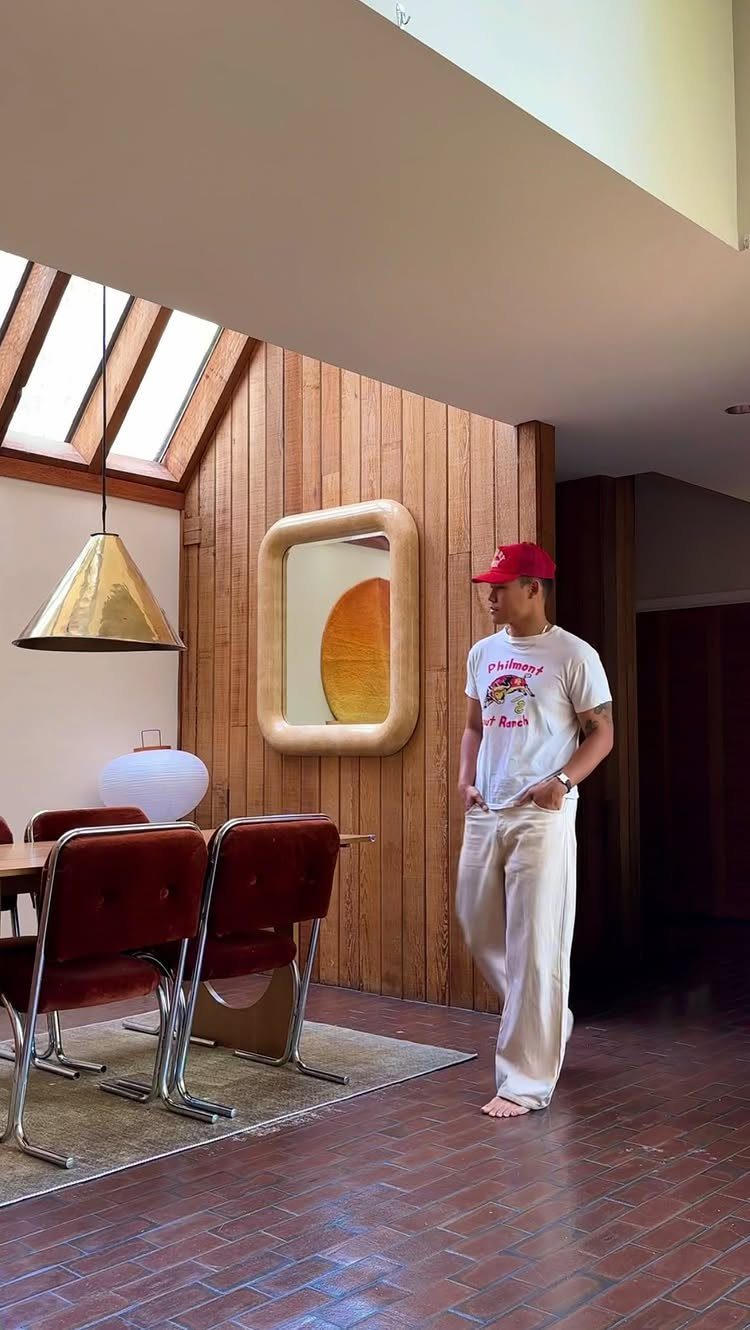
Full wood paneling wraps a dining room in warmth, and red leather chairs with chrome frames keep it from going dark. I like that contrast: the chrome adds a sharp edge to all that wood.
Paneling is a big commitment, so test the look with one wall first. Pair it with a lighter table or a gold pendant, as here, so the room has a bright spot.
Keep the rest of the decor simple and let the wood do the talking.
12. Cane Chairs and Exposed Beams
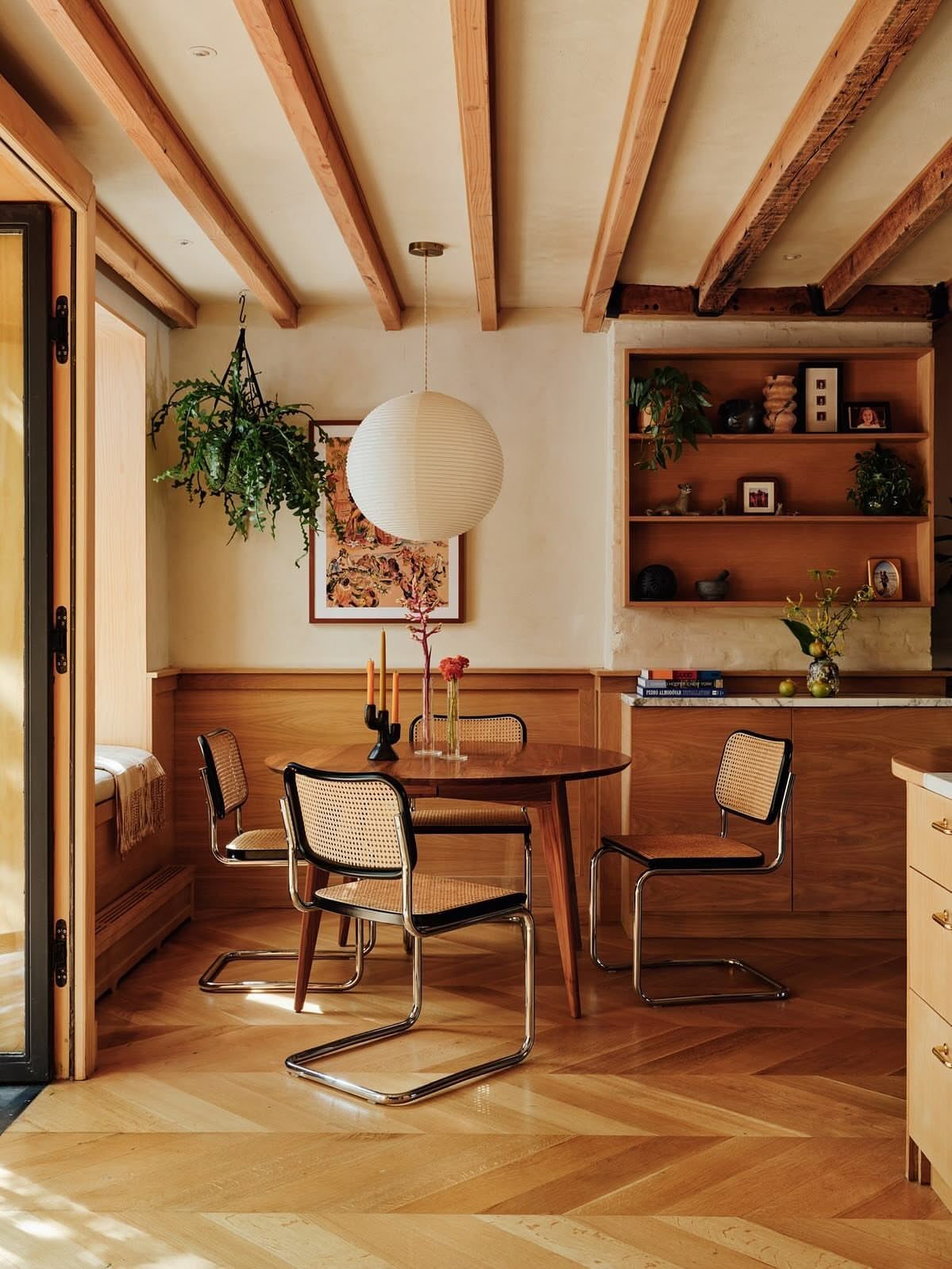
A round wooden table suits a room with a lot going on overhead, because its curves soften the straight lines of exposed beams. Cesca-style cane chairs add texture while keeping the room light.
Herringbone floors bring pattern, so I would skip a busy rug.
If your ceiling has no beams, the cane chairs and a round table still carry the look.
13. Modular Wall Shelving
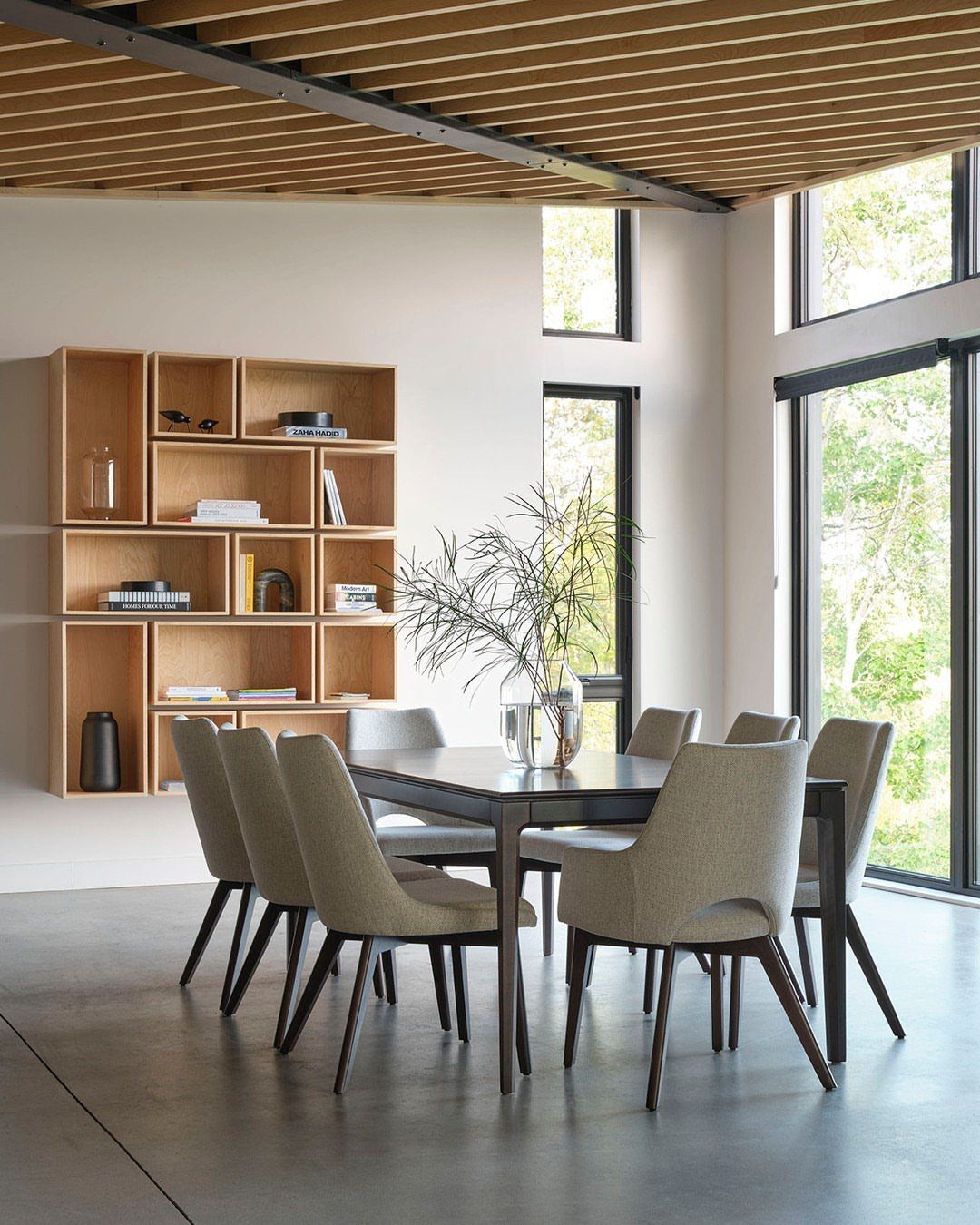
Light wood shelving behind a dark table gives the wall some depth and the room a clear contrast: pale units, deep tabletop. A modular system suits renters because you can start with a few units and add more later.
Leave a few open spaces rather than filling every cube. Books, a bowl and one plant read as styled, while a full wall of objects competes with the table.
Keep the units’ wood tone close to the room’s other pale surfaces so they blend in.
14. Landscape Wall Mural
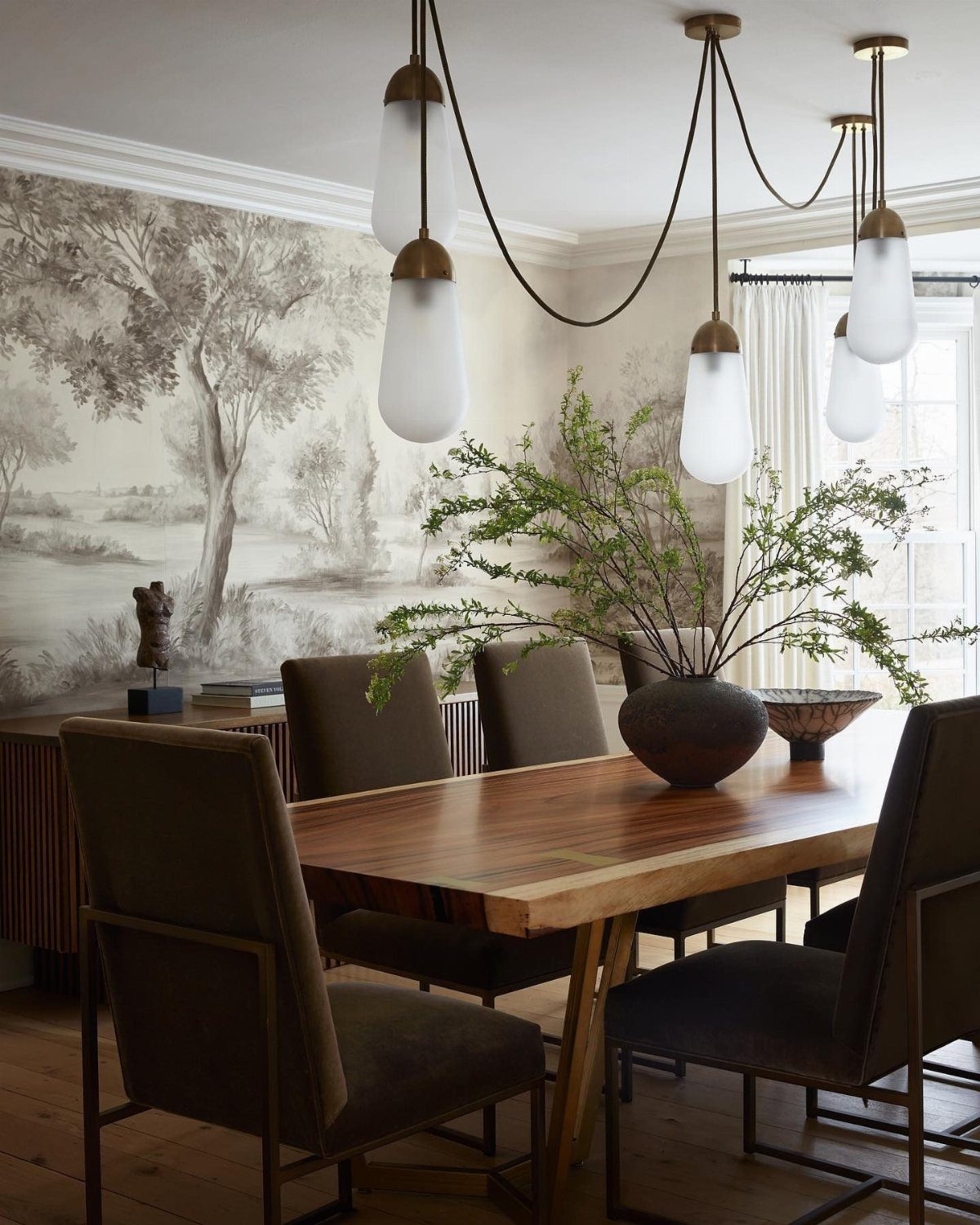
A monochrome landscape mural turns a dining wall into something like a window onto a distant view, with all that scale and no color to carry it.
That keeps it easy to live with next to a wood table and dark chairs.
Wallpaper-style murals are the weekend-friendly route for a renter on a budget, and a peel-and-stick version avoids a permanent commitment. Check your lease first.
Run the mural behind the table’s long side so the view stretches along it. Keep the pendant simple so the wall remains the focus.
Choosing the Right Table
Match the table’s shape to the room before you fall for a particular look. A rectangular table gives you the most surface for big family dinners or game night, and it feels structured and familiar.
A round table suits a smaller dining nook or an apartment, since it has no corners to catch a hip and traffic moves around it more easily.
Round also makes conversation easier, because everyone can see everyone else. For a mid-century feel, choose a pedestal base or simple tapered legs.
A pedestal removes the corner legs entirely, which was a real help in the small dining areas of 1950s homes. You get more legroom and can squeeze in an extra person without anyone straddling a leg.
Mixing Styles
Mid-century pieces mix well because the lines are clean and the materials are honest. That makes them a steady base for almost any other style.
For a transitional look, a clean-lined walnut table works well with chairs that are fully upholstered and softer to the eye.
S-shaped chairs also hold their own against a raw concrete table, which gives the pairing an industrial edge. Woven cane, velvet, slim metal frames and stone surfaces all sit well together, and the mix reads as retro meeting raw industrial.
I would change one element at a time. Swap the chairs or the table, not both, so the mid-century piece stays recognizable and the room still looks planned.
Importance of Lighting
Lighting does more for a mid-century dining room than almost any other single choice, so pick the fixture before you style around it.
2 classic options work well. A three-arm metal chandelier in the style of Serge Mouille has curved shades that aim the light downward, which suits takeout dinners and game nights.
A sputnik chandelier sends metal rods out from a central sphere, each ending in a small bulb or globe shade, a nod to the 1950s space race.
Above a plain table, the fixture ends up as the focal point of the room. If your furniture is minimal, spend a little more on the fixture and let the rest of the styling stay restrained.
Frequently Asked Questions
How to style a mid-century modern dining room?
Start with the table and light fixture, then keep everything else restrained. Warm wood should do most of the work here.
Save your color for the chairs and one more surface, and stop at about 3 bold shades. Mixed chairs work if they share a seat height or leg style, and changing one element at a time keeps the room looking planned.
What is a mid-century modern dining table?
Think clean lines and honest materials: walnut or another warm wood, resting on a pedestal base or plain tapered legs.
A pedestal base gets rid of the corner legs, so knees have more space and a sixth person can squeeze in. Round versions suit small dining areas, while rectangular ones give the most surface for big dinners.
What are key elements of MCM decor?
Clean lines, natural materials like wood, cane and leather, and sculptural lighting define the look.
Pick practical pieces too, like a low sideboard and a rug big enough that the chairs stay on it when you pull them out. Keep accessories few and purposeful so the shapes of the furniture stand out.
Is mid-century modern still in style in 2026?
Yes, it remains a popular and lasting choice. Its clean lines and simple materials mix easily with other styles, so it stays useful as other trends come and go.





