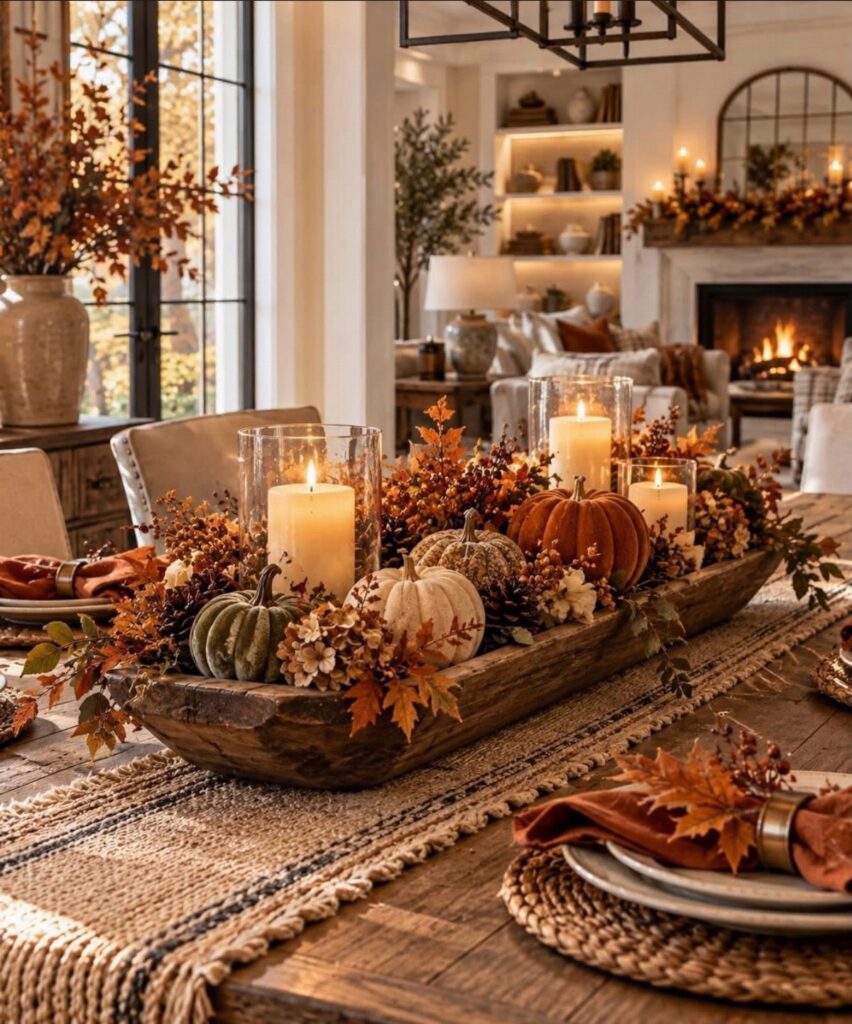
Which of these tables is yours depends on how much time you have before guests sit down: a low centerpiece, a pumpkin arrangement, or a bowl of grocery store apples takes minutes, while handwritten place cards, a mix of vintage dishes, or a moody, elegant tablescape ask for a few days of gathering and arranging.
The ideas run from branches in vases that you collect yourself to mixed vintage dishes and textured linens, and nearly all stay low so people can see across the table. Pick the one that fits the hours you actually have.
1. Low Centerpieces
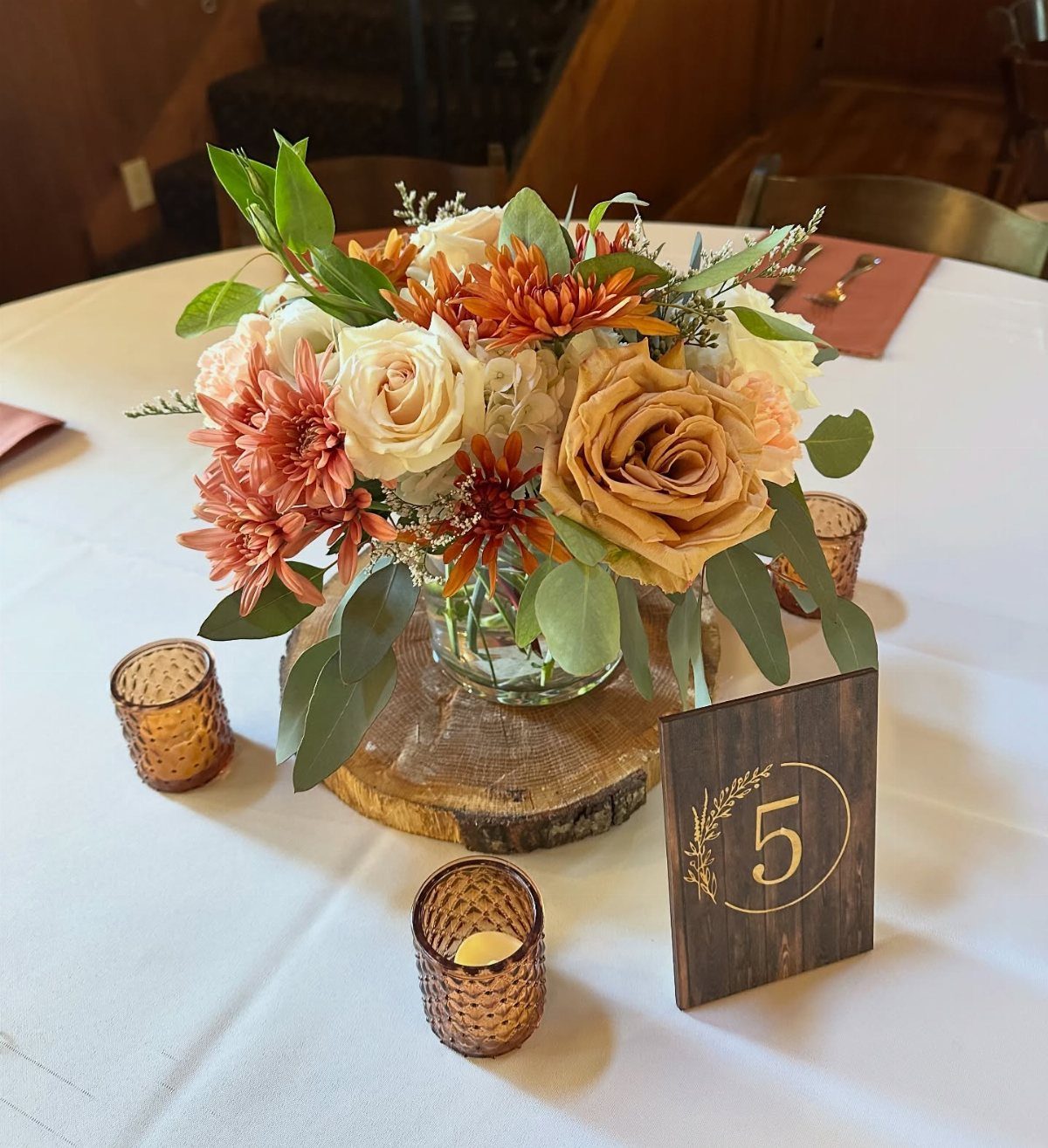
Guests who can’t see each other across the table stop talking, so a centerpiece that stays low earns its spot.
A cluster of roses on a wood slice with a few amber votives around it keeps sightlines open and still fills the middle.
Wood and amber suit fall without any extra props. I’d keep the arrangement compact enough that plates and serving dishes still fit beside it.
2. Handwritten Place Cards
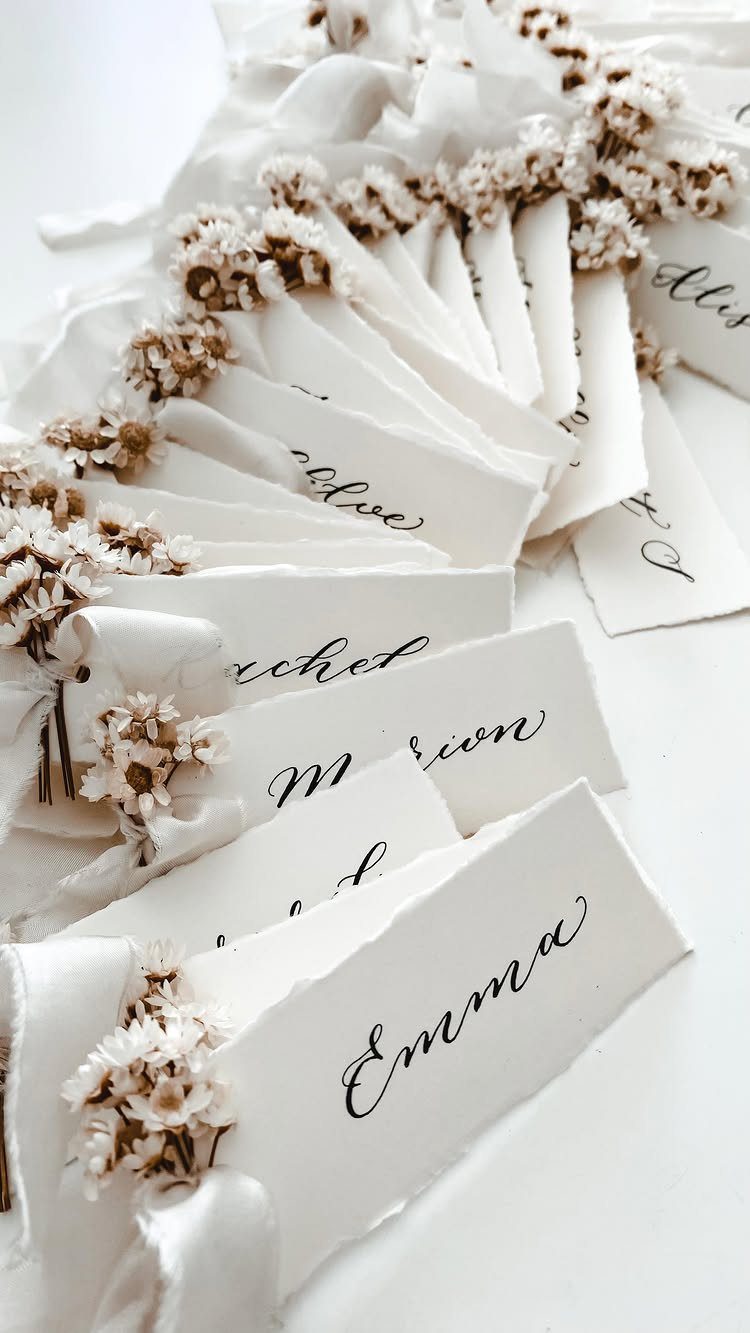
A name card tied with ribbon and a small dried flower takes about a minute per guest and costs very little. White cards with deckle edges look finished even when the handwriting is casual.
Write names in one pen, in one style, and do them all in a single sitting so they match.
I like dried flowers here because you can make the cards days ahead. Practice on scrap paper first, since a smudged card can’t be fixed.
3. Bright Fall Colors
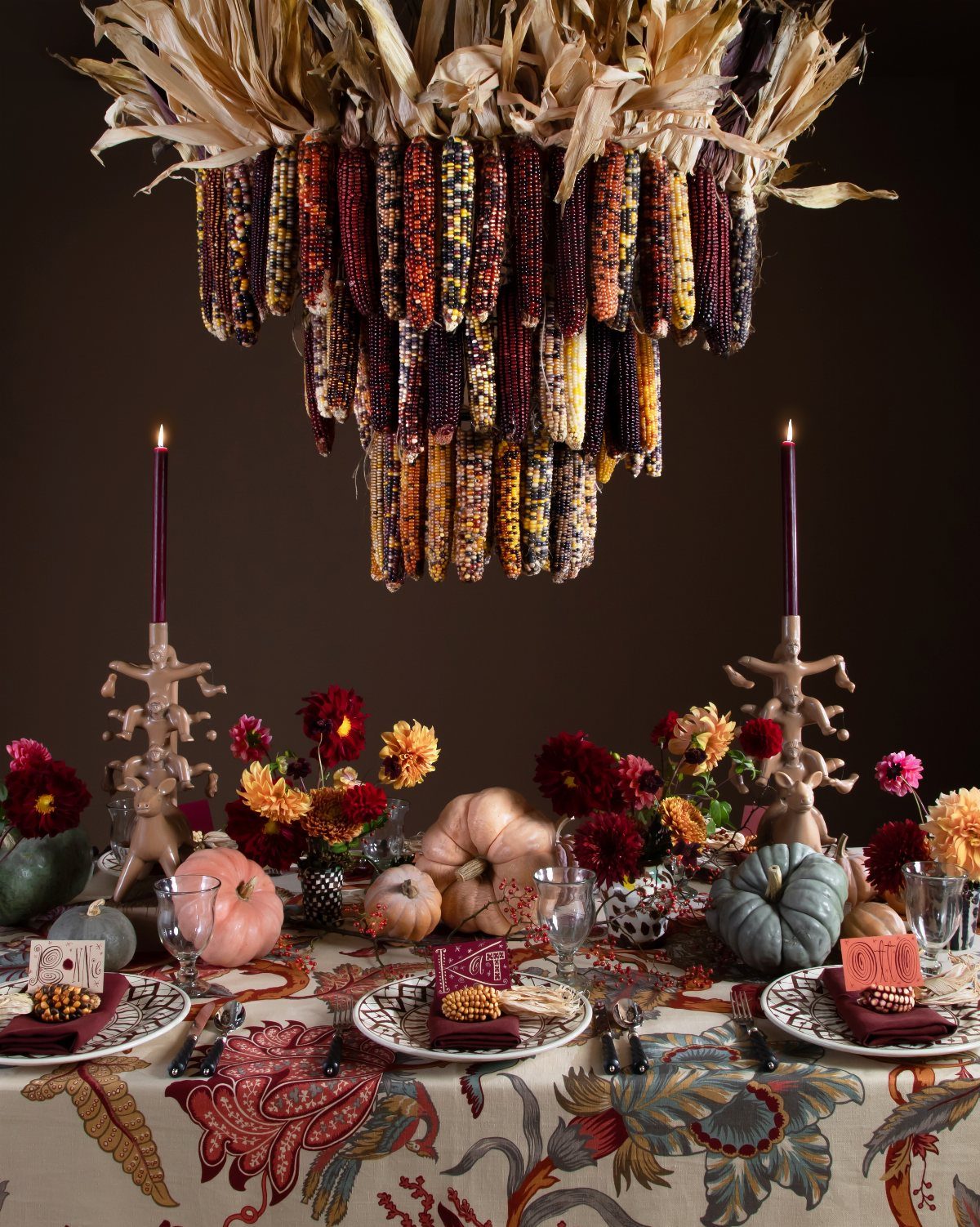
Loud autumn color works best when one piece does the shouting and the rest backs it up. A patterned cloth, bright pumpkins and red flowers already give you plenty, so the hanging dried corn overhead is the statement I’d copy.
Purple candles in animal-shaped holders add a playful note that orange alone can’t. Keep plates simple so the table reads busy but not chaotic.
4. Muted Fall Table Decor
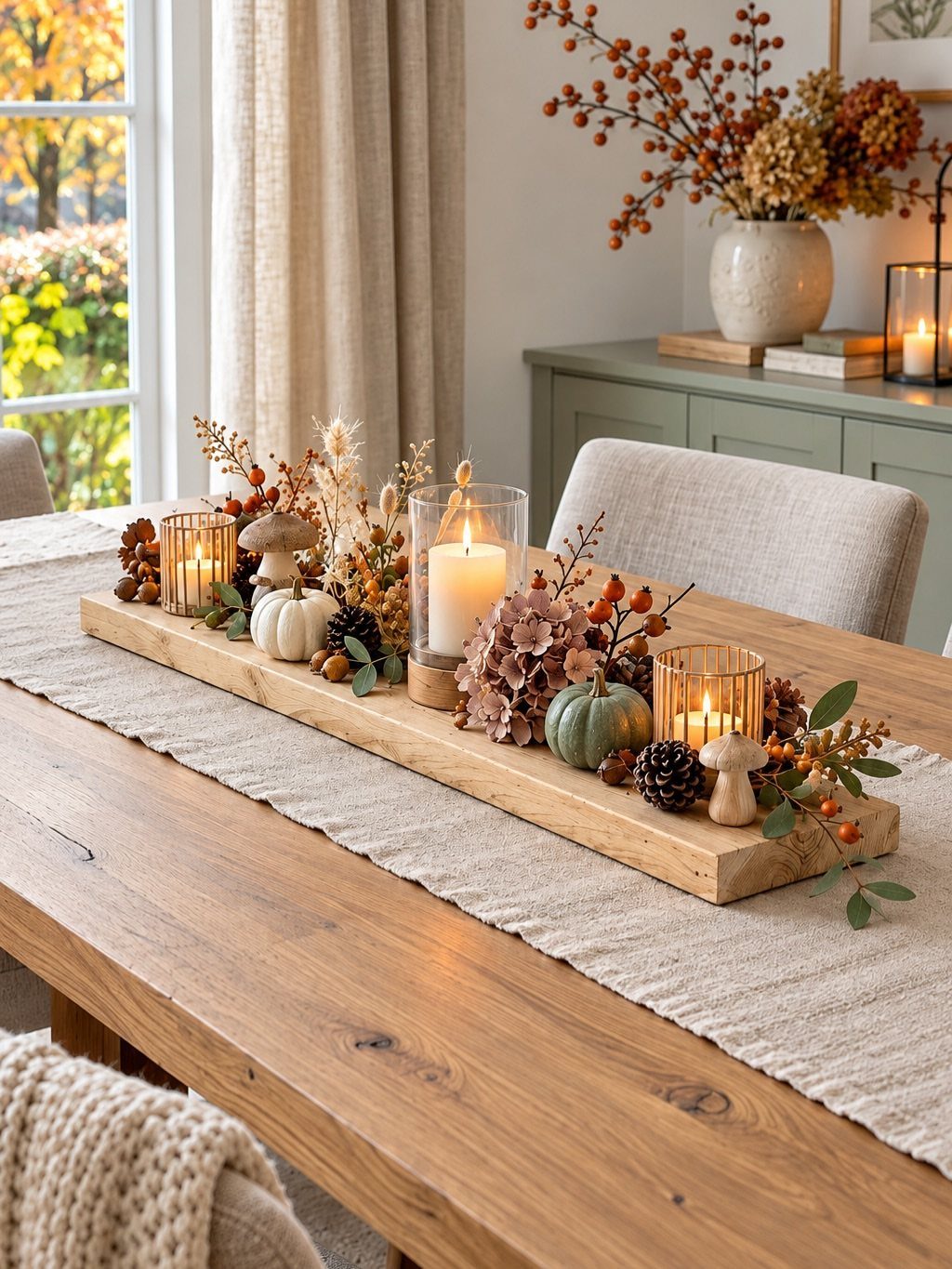
Short on time?
A long wooden tray down the middle of a beige linen runner does most of the work. Set a few pumpkins, candles and some foliage inside it, and the table looks planned.
Because the palette is quiet, texture carries the look: wood, linen and small mushrooms.
I prefer a tray over loose items since you can lift the whole centerpiece off when it’s time to eat. Cheap, fast, and easy to refresh.
5. Pumpkin Centerpieces
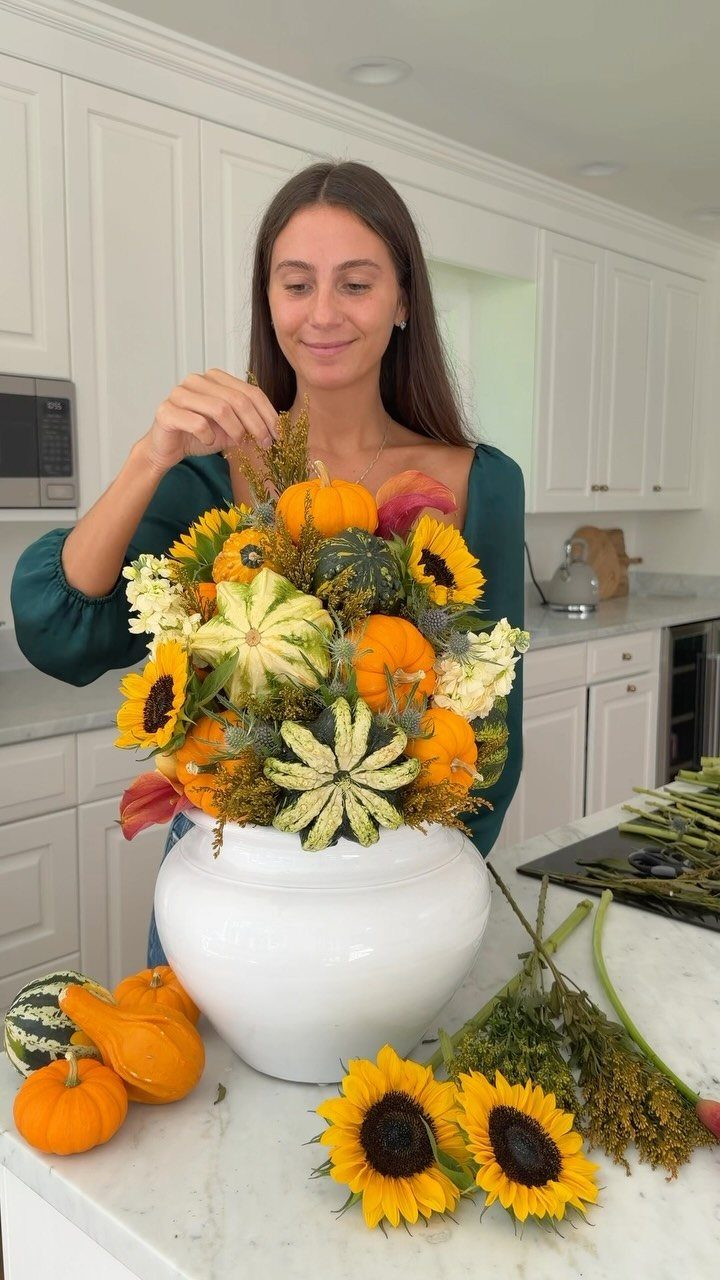
Pumpkins read as a real centerpiece when sizes vary: one large, a couple medium, and a small one tucked beside them.
Sunflowers in a white bowl or vase add height to a pumpkin centerpiece without making it look stiff, and the white keeps the orange and yellow from getting heavy.
Build the arrangement on the counter first, then carry it to the table, so you can fix the spacing and the height before it sits among the plates.
Pumpkins are cheap, so I’d buy extras in different sizes and edit until the group looks balanced.
6. Garland as Table Runner
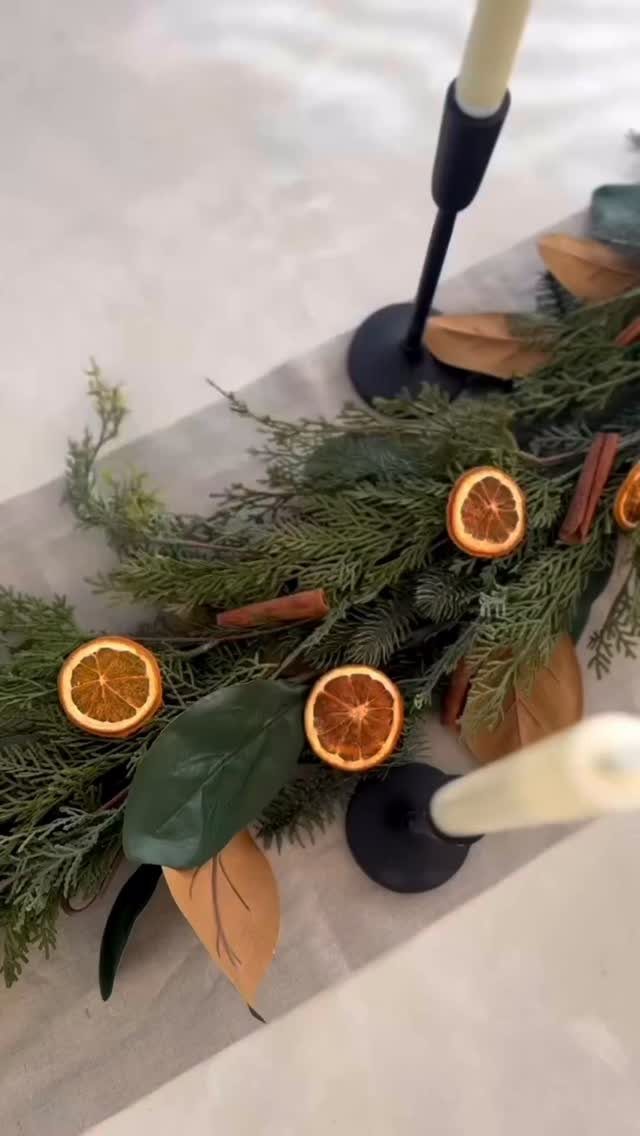
Evergreen garland laid down the center of a light runner gives a table a natural spine. Tuck in dried orange slices and cinnamon sticks, and it picks up fall color without a single fake leaf.
Taper candles in black holders, set right in the greenery, add height and contrast against the pale linen. I’d keep the candles centered and the garland slim so dishes still have room on either side.
7. Warm Lighting
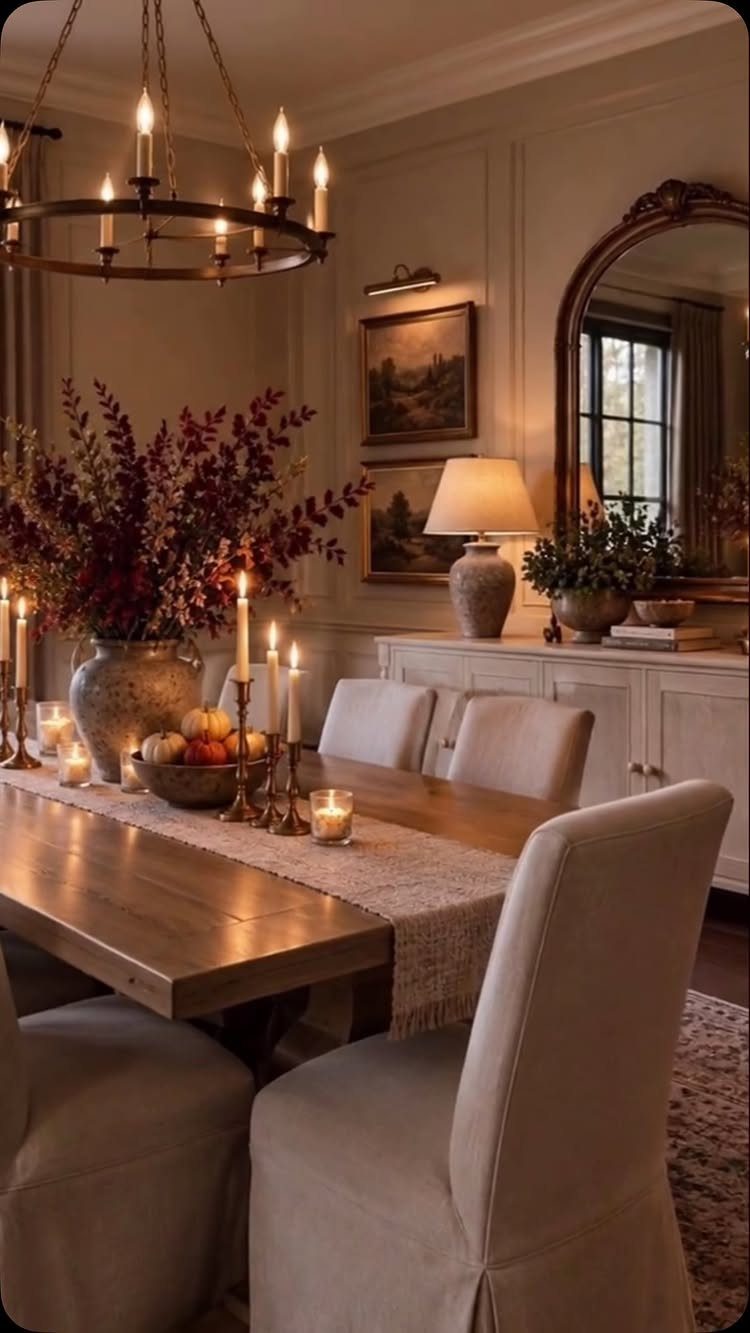
Dim the overhead light and let lower sources do the work. A chandelier on a dimmer, a lamp on the sideboard and candles on the table give a fall dinner a glow that harsh ceiling light flattens.
Warm bulbs matter more than any fixture, so check the label before you buy. Candles cost little, and I’d group a few at different heights so the flame light lands on the pumpkins and foliage.
8. Moody and Elegant Tablescape
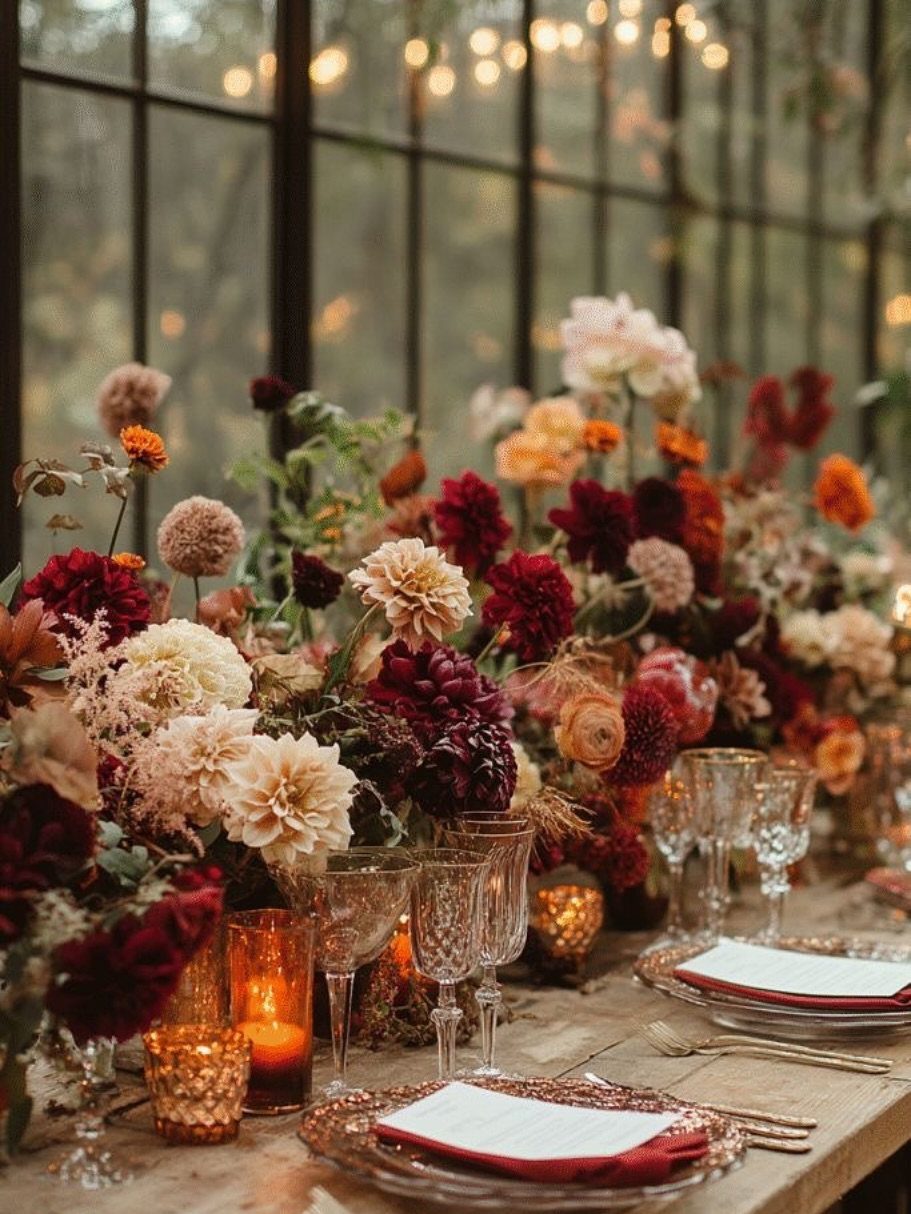
Deep burgundy flowers, crystal and candlelight make a fall table feel formal without much fuss. Dahlias in dark red and cream carry the color, so everything else can stay quiet.
I’d keep the palette to two or three tones and let glassware catch the candle flames.
Dark flowers can look heavy, so add a few cream blooms to lighten the mix. Thrifted crystal keeps the cost down.
9. Early Fall with Apples
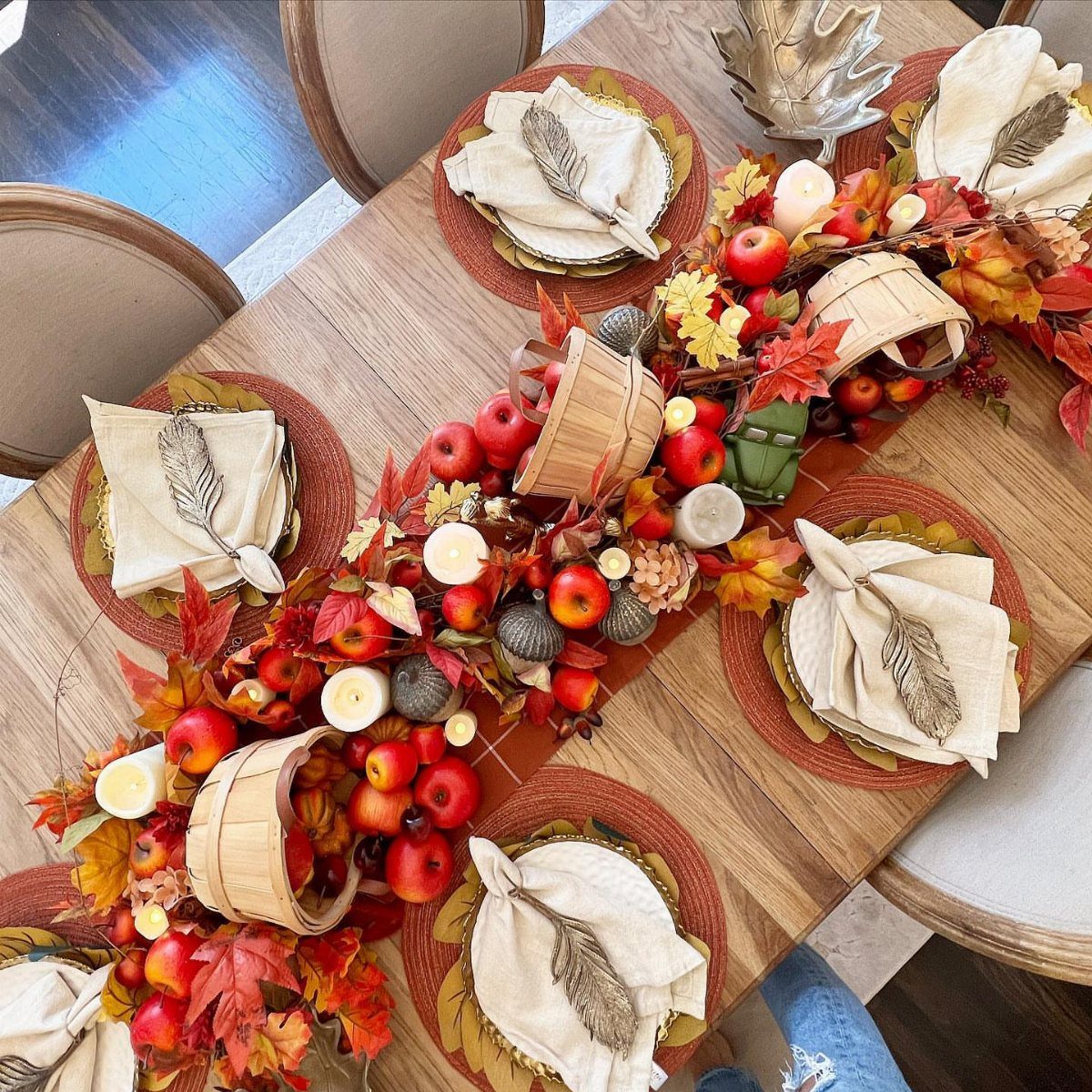
Red apples are a cheap way to bring in early fall, and a grocery store bag covers a whole runner. Set them among small baskets and a few leaves, with white candles to keep the red from getting busy.
Wipe each apple clean, and keep the arrangement low so everyone can see across the table. Apples can go back to the kitchen afterward.
10. Modern Monochromatic Tablescape
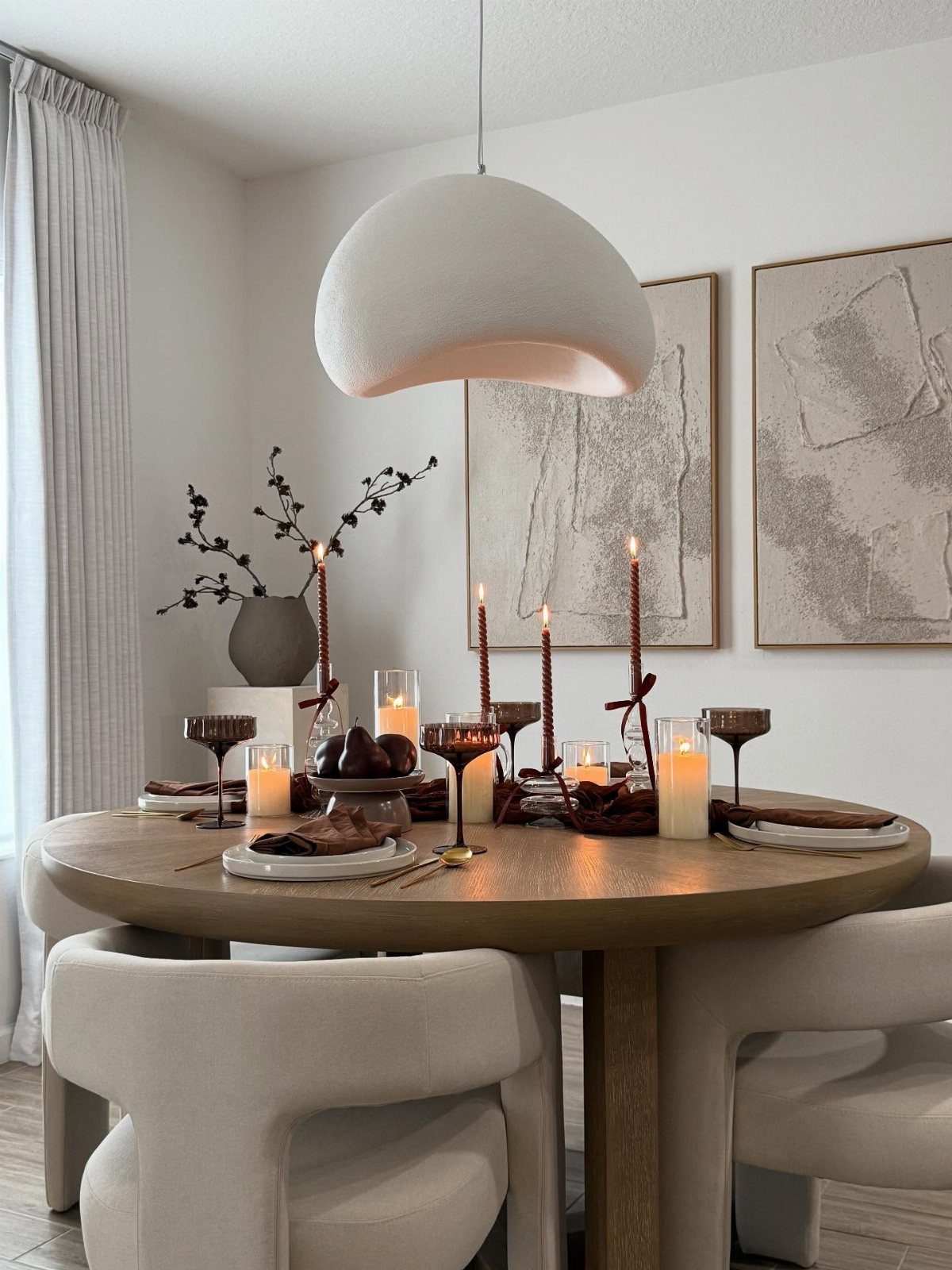
Stay inside one color family and the table looks designed. Brown works well here: napkins, dinnerware, candles and pears in different shades of the same hue.
Variety comes from finish rather than color, so mix matte plates, glossy fruit and a rougher wood table.
I’d keep one or two accents like pumpkins so it doesn’t go flat. Buying napkins and candles in matching tones is the cheapest way to start.
11. Place Settings for a Beautiful Fall Table
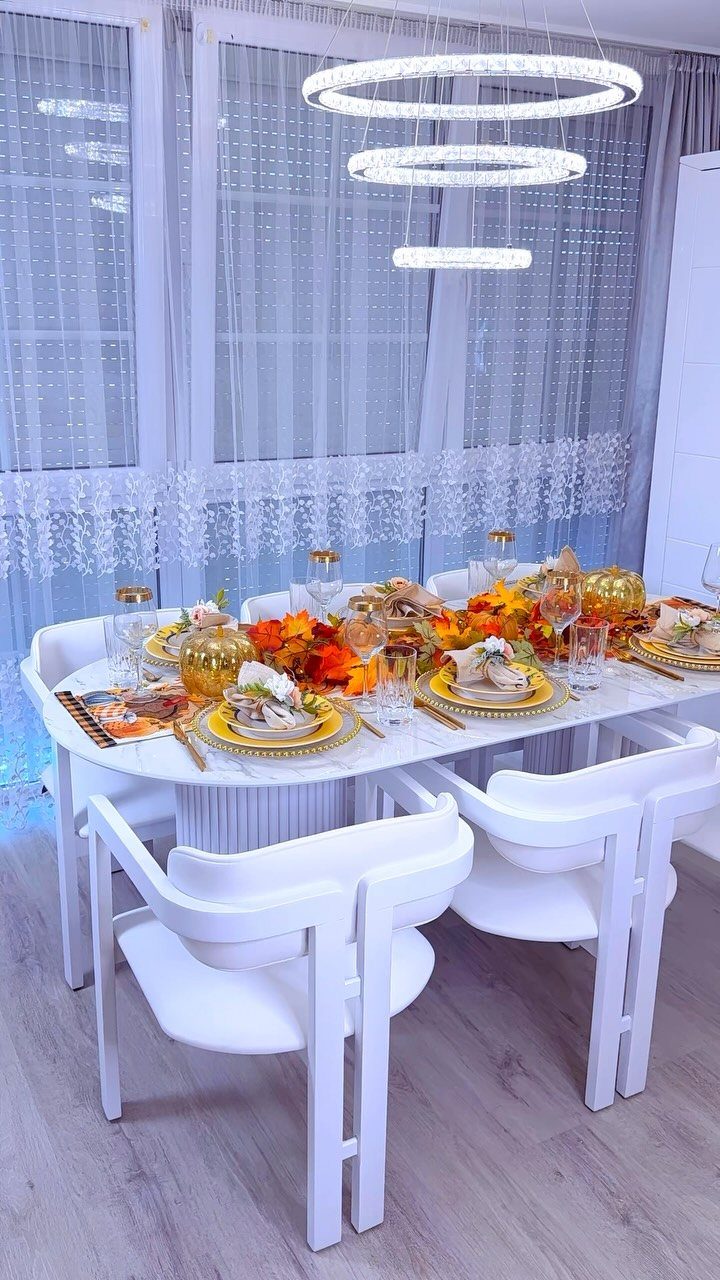
Start with the plate, because a charger or placemat under it changes the whole table. Gold chargers set directly on the table frame each seat and make everyday dishes look planned.
Lay the chargers and placemats first, then add napkins, then leaves for color.
I’d keep the leaf garland thin so plates still fit. Chargers are reusable, so one set works for every season.
12. Cluster Small Bud Vases
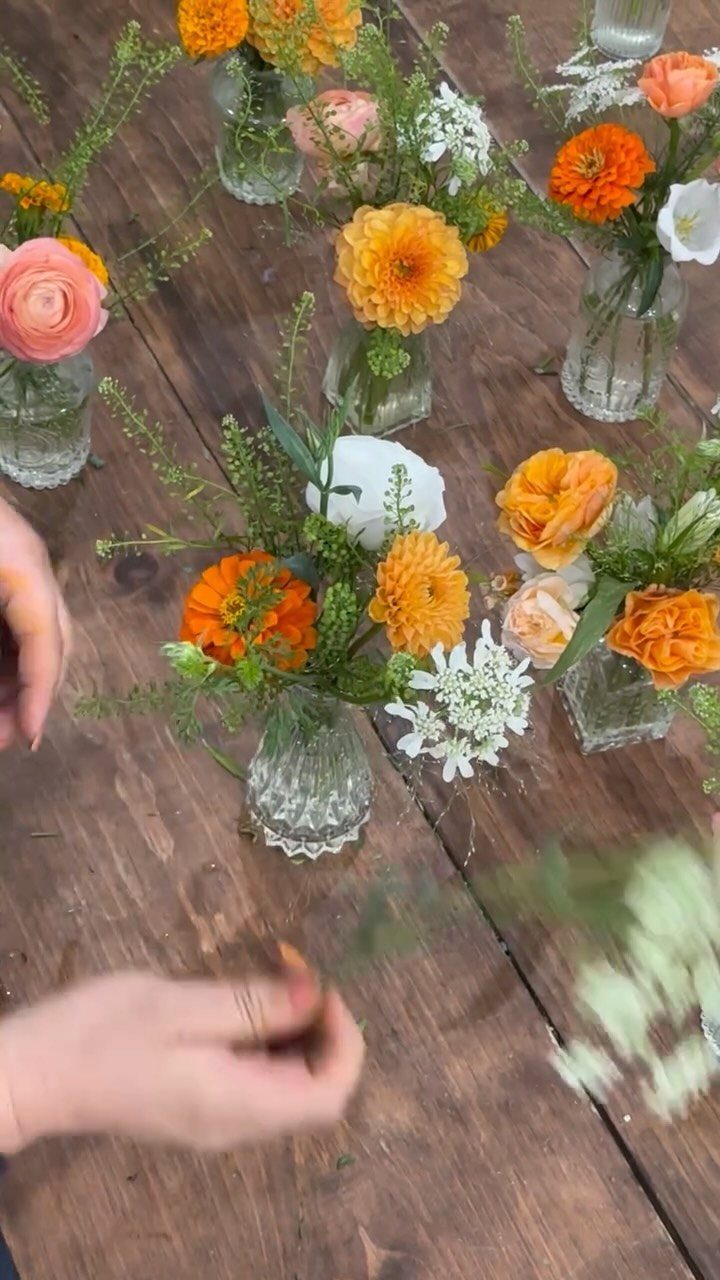
Small glass bud vases grouped together hold a few stems each, so a modest bunch of orange and white flowers goes a long way. Odd numbers look better, and varying the heights keeps the cluster from looking like a row.
Trim each stem to fit its vase and set them close in the middle of the table. Bud vases are inexpensive, and I’d pick clear glass so the flowers do the talking.
13. Branches in Vases
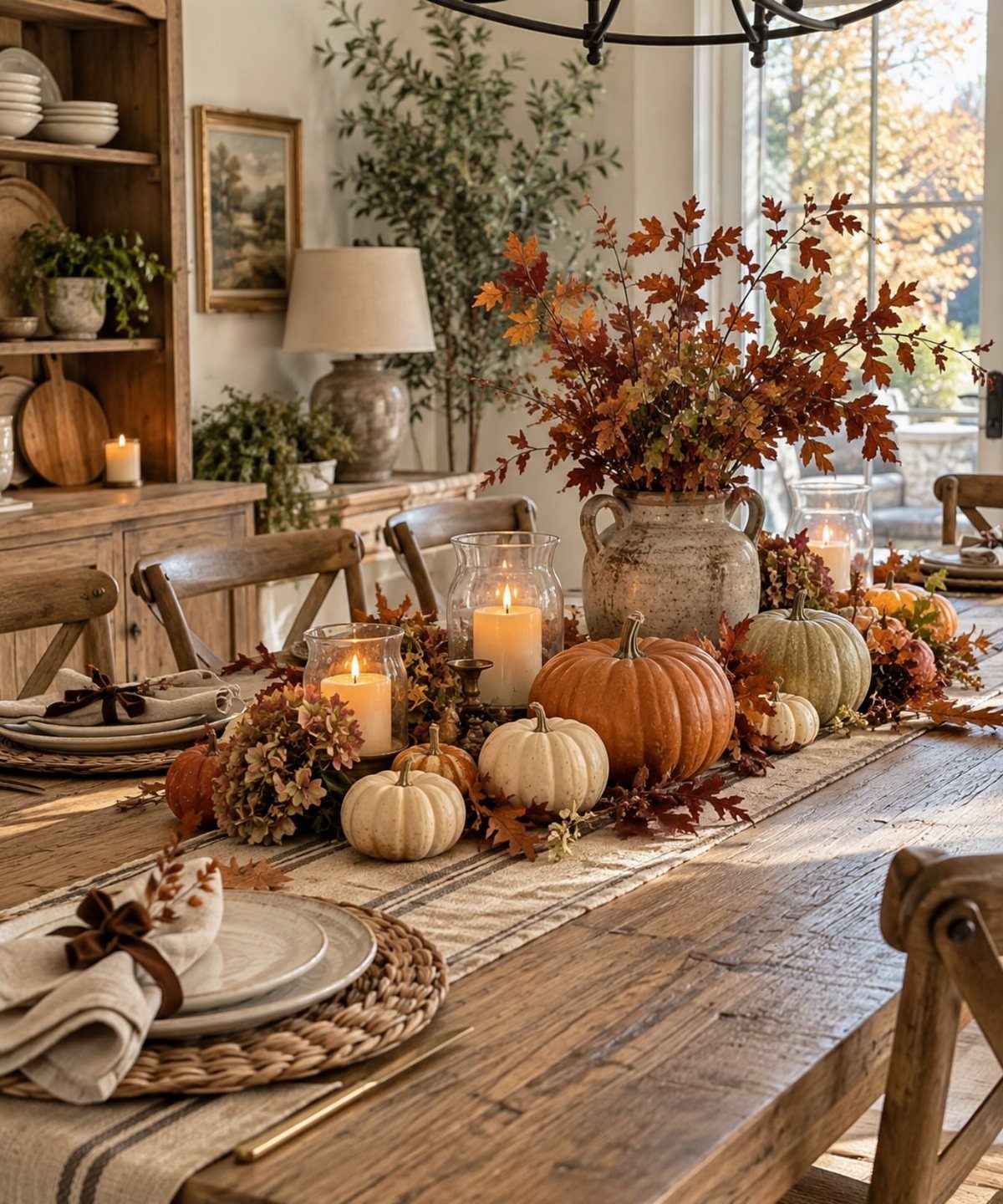
Branches in a tall stone vase bring height and a loose, natural line that pumpkins and candles can’t. Orange leaves on bare stems pick up the pumpkins below without matching them exactly.
Cut stems longer than you think you need, then trim down until the vase looks balanced. Keep the branches slim and off to one side if the table is small, so people can still talk across it.
Branches cost almost nothing if you gather them yourself, and I’d choose a heavy vase because tall stems tip light ones.
14. Textured Linens
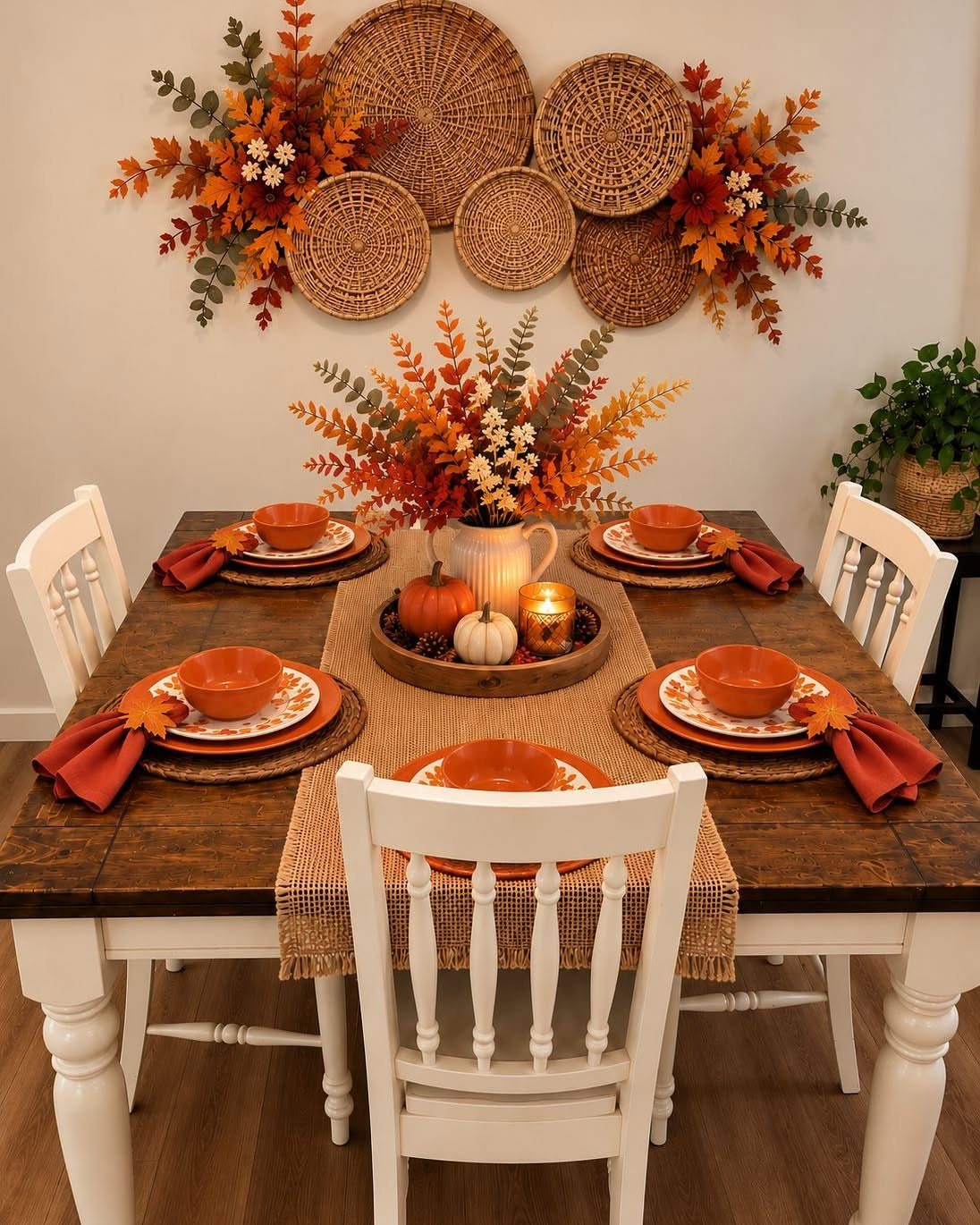
Texture does the decorating when you layer linen napkins over a burlap runner. The rough weave against soft linen makes plain orange bowls look chosen rather than grabbed.
Pick napkins in a color that sits close to the runner, so the contrast comes from the fabric and not the shade. I’d skip a full tablecloth if the wood is nice and let the runner frame the middle.
Linen wrinkles, and that’s fine here; a quick press is enough. Burlap sheds a little, so shake it out before guests arrive.
15. Mix Vintage Dishes
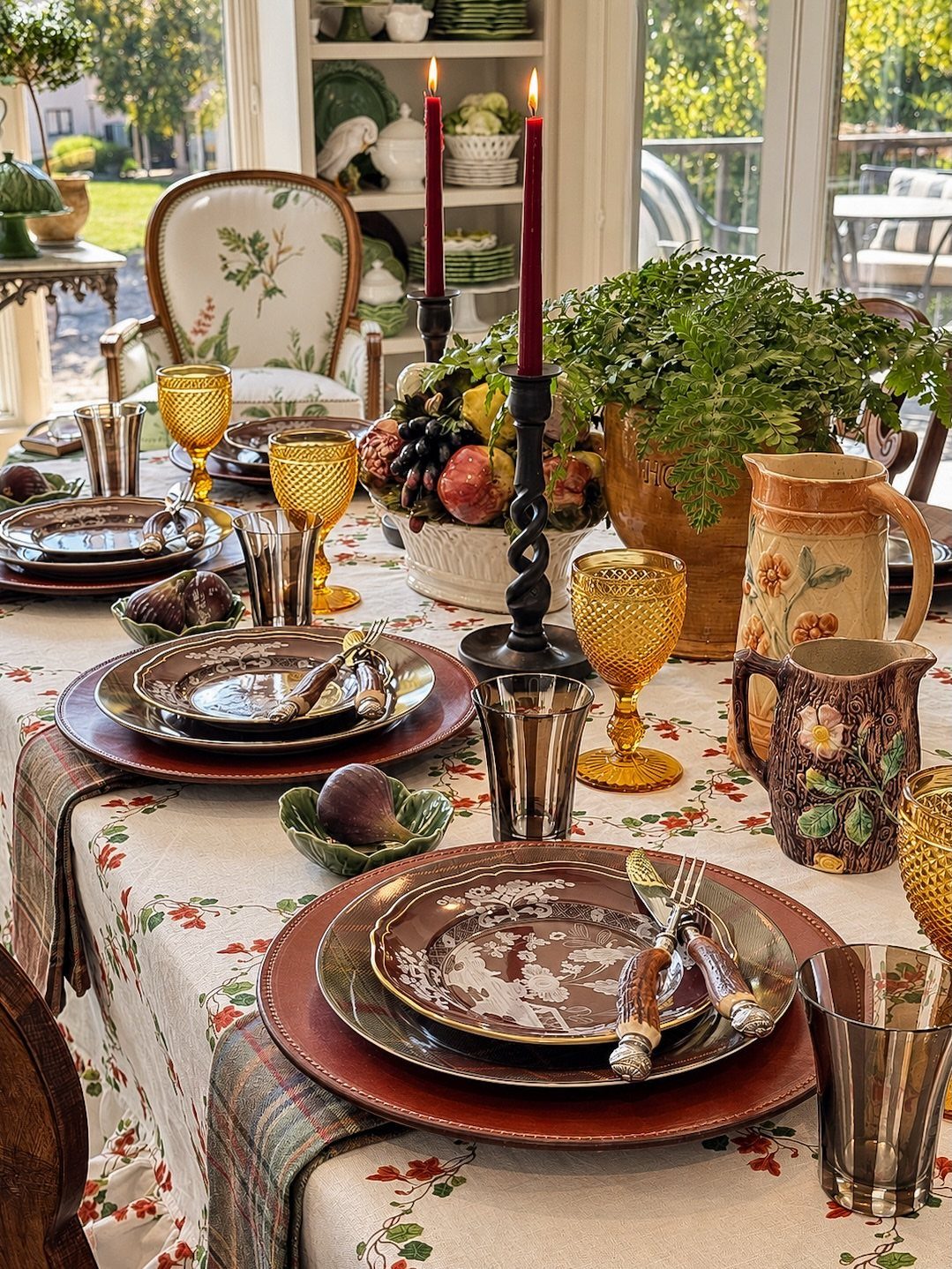
Plates that don’t match can still look like a set when they share a mood. Brown patterned dishes and amber glasses sit well together because the warm tones overlap, and a floral cloth ties the odd pieces into one table.
Thrift stores and your own cupboards are the cheapest sources, so gather a few more than you need and arrange them at the table before settling.
I’d repeat one color across every plate, here brown and gold, so variety reads as charm. Red candles and fruit then add color without more dishes.
Creating a Cozy Atmosphere
Cream tapers are the safe pick; rust, moss green or burgundy ones bring in a deeper autumn color.
Vary the heights a little and don’t line the holders up like fence posts. A loose arrangement looks more natural and leaves room for small vases and serving dishes.
With small kids at the table, flameless tapers give nearly the same glow and skip the open flame. I’d pick those over worrying about a toddler’s reach all through dinner.
Tips for Table Setting
Setting each place with the fork on the left, the knife and spoon on the right, and the glass above the knife lets guests grab what they need without thinking.
Size tells you the order for forks: the smallest is the salad fork, and the dinner fork is larger.
Spoons follow a similar pattern. Of the 3 spoons, the soup spoon is the biggest, the teaspoon is mid-size for coffee, tea or dessert, and the tablespoon is the smallest, saved for condiments or sauces.
Only set out the pieces the menu actually calls for. A simple dinner needs far less than a full multi-course meal.
Choosing a Focal Point
Keep the centerpiece low, say a cluster of neutral pumpkins, so people can still see each other across the table. Use soft white, pale green, taupe and muted orange, and mix several shapes and sizes.
Space them loosely down the middle instead of piling them in one spot. Weave in eucalyptus, preserved leaves or airy dried stems to tie the pumpkins together.
Faux pumpkins last for years, while real heirloom ones give you color and shape variation no fake can match.
Pampas grass in a vase is another quick option, and a eucalyptus garland with white pumpkins and pinecones can anchor a runner.
Layering a runner over a scrap of burlap adds texture for very little money.
Frequently Asked Questions
How to decorate for the fall?
Pick two or three main colors, then build the table in layers: a base of runner or linen, one focal point, and warm texture from candles, wood and linen.
Keep centerpieces under about 12 inches tall for easy conversation across the table, though tall branches in a narrow vase work at one end where they don’t block sightlines.
A quiet mix of cream, brown, rust, olive and burgundy is the classic fall range, and when the colors stay muted, linen, wood, wool and ceramic add the interest.
What do you put in the middle of a dining room table?
A low centerpiece works best: a cluster of pumpkins in varied sizes, a few candles, or a garland laid down the center of a runner.
Keeping it compact leaves space for plates and serving dishes. A wooden tray holding pumpkins, candles and foliage is an easy choice because you can lift the whole thing off when dinner starts.
What are some good decorative centerpieces for a dining table?
For pumpkins, vary the sizes: one big, two mid-size and a small one grouped together will look balanced without much fuss.
Sunflowers in a white vase add height without looking stiff. Evergreen or eucalyptus garland with candles and dried orange slices, or a cluster of small bud vases with orange and white flowers, also work well and cost little.
How to decorate a rectangular dinner table?
Run a runner down the center and put the decor on it in a slim line, such as garland, a long tray or a row of small pumpkins and candles.
Keep the arrangement low and narrow so dishes fit on both sides. A slim line also keeps sightlines open, so guests can talk across the table.





