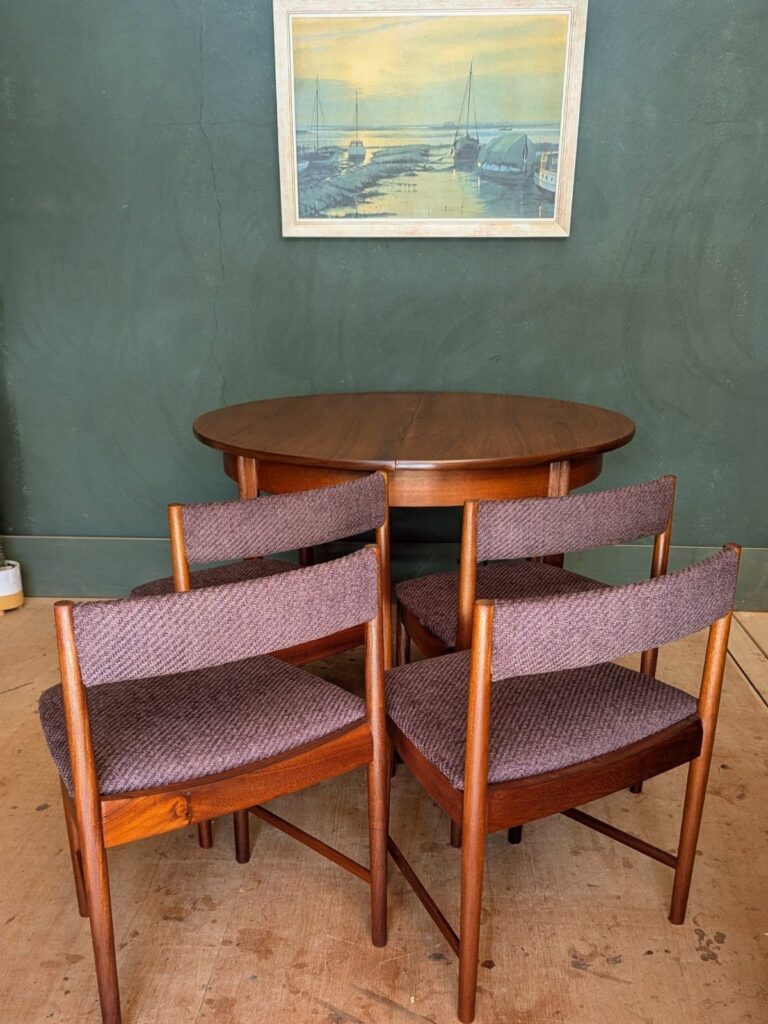
Mid-century dining rooms range from a weekend of cheap fixes like layered rugs and vintage decor to a walnut dining table or a Tulip table nook that takes the budget first.
What picks your starting point is the one thing you can’t change: the room itself.
A renter who can’t drill into walls should start with cushions, layered rugs or a bar cart, while an owner with a bare wall can go dark with charcoal paint.
Whatever the room allows, the pieces are tied together by simple forms, warm wood and one loud accent.
1. Sputnik Chandelier
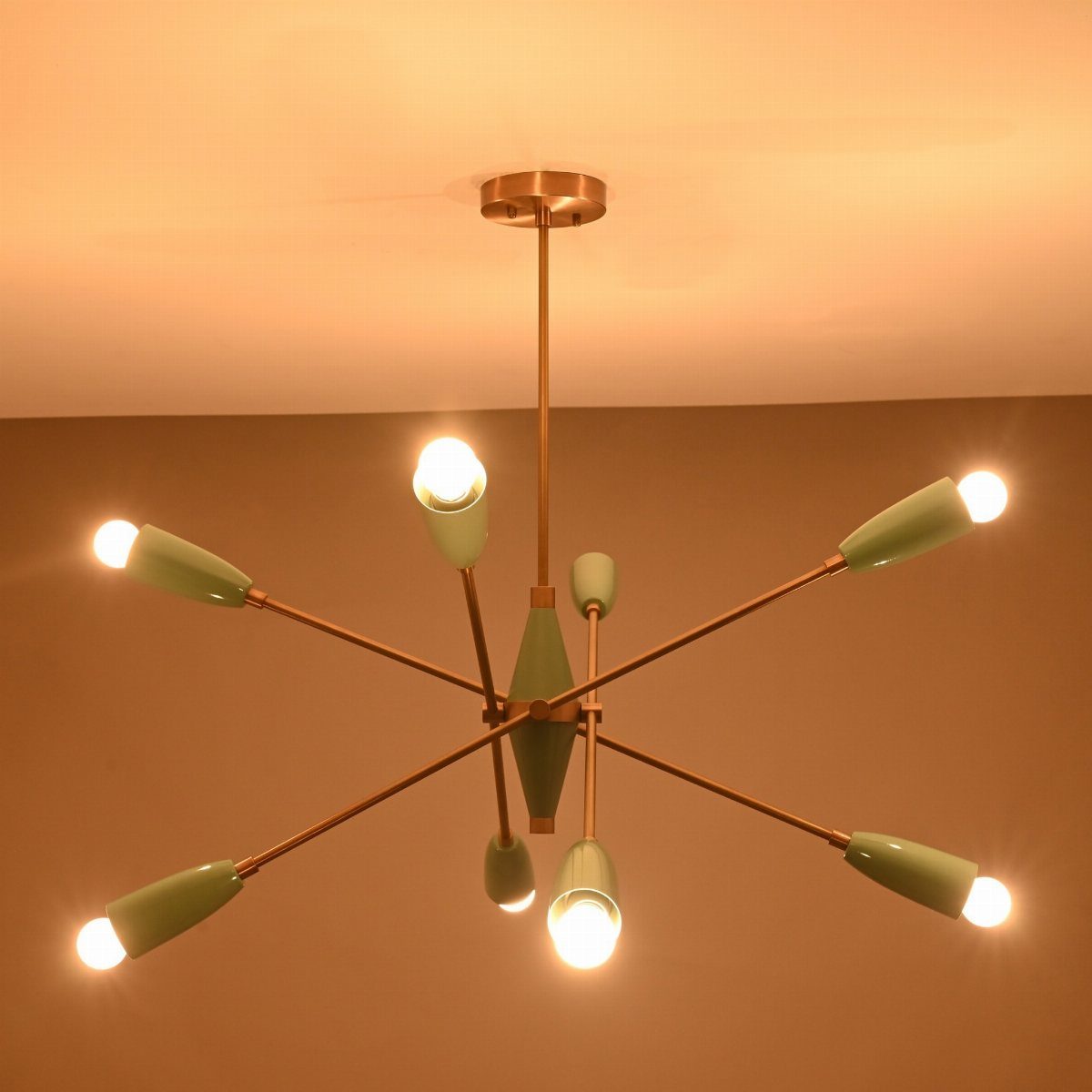
Light green conical shades on gold arms give this fixture a color story of its own, and I like that it works as the one loud thing in a quiet room.
With a plain ceiling and a neutral wall behind it, nothing competes.
Hang it over the table where it can be seen from every chair. Pick one metal finish and let the shades supply the color, so the table and chairs can stay calm.
2. Geometric Patterned Rugs
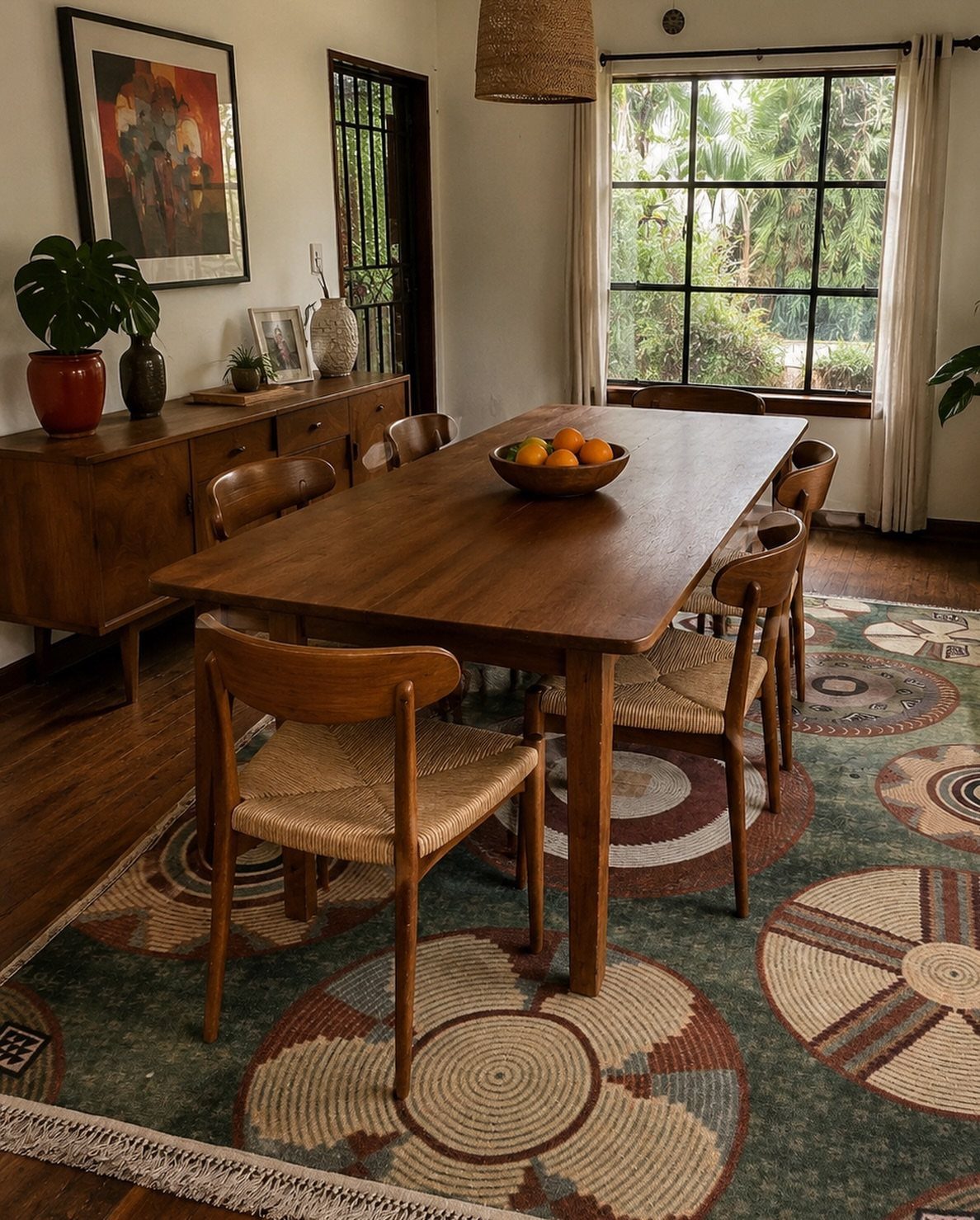
A rug with circular geometric patterns can carry a whole dining room, and a green one like this ties the wood furniture to the greenery outside the window.
Repeating shapes feel deliberate against the plain lines of a table and sideboard.
Size matters more than pattern.
Pull the rug wide enough that the chairs stay on it when pushed back from the table. Pick one dominant shape, here circles, and skip a second competing pattern nearby.
3. Vintage Decor
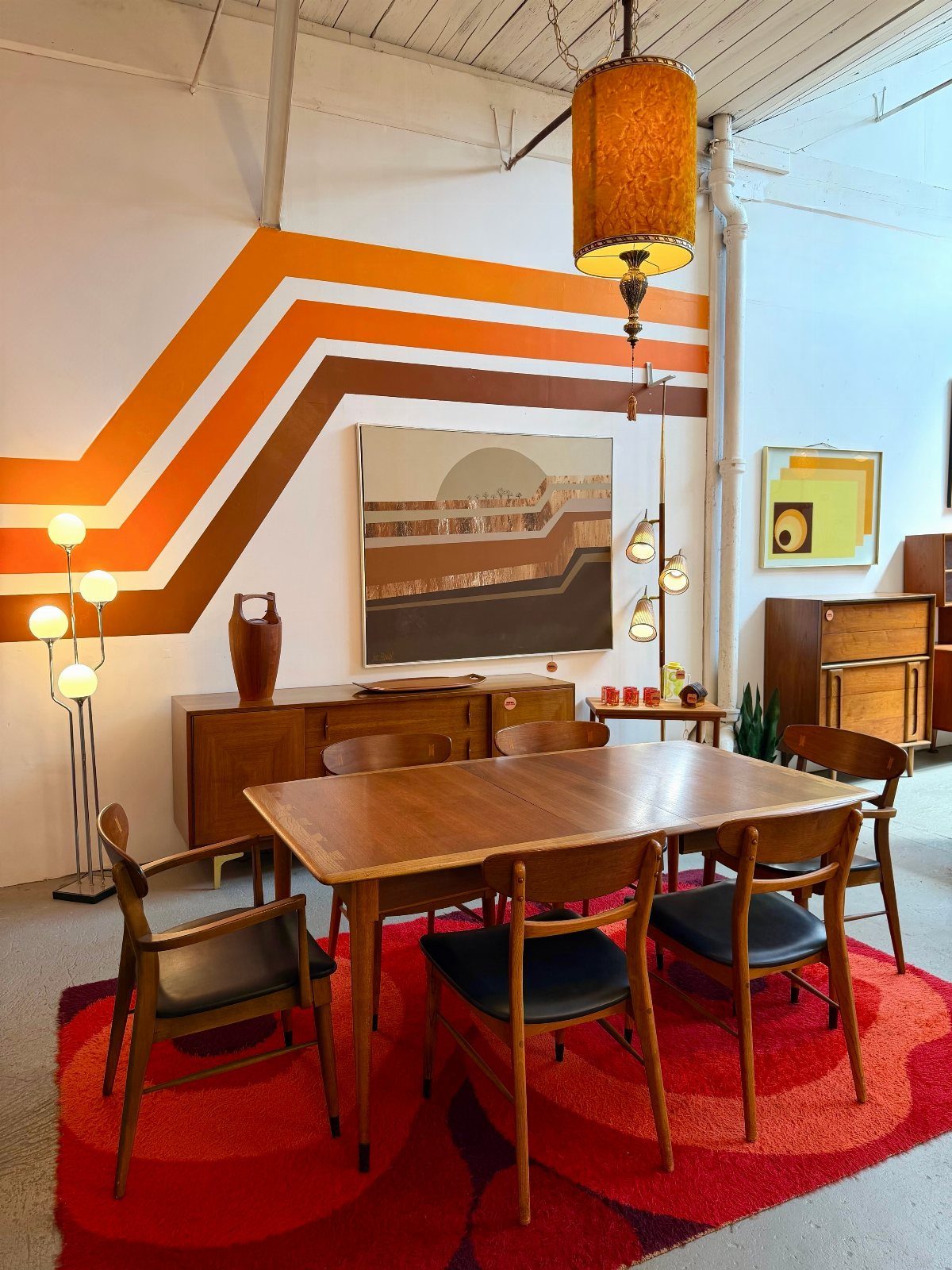
Authenticity comes from the odd, slightly worn pieces: a vintage pendant, a large painting, a wall stripe in orange and brown. Those details make a room feel collected rather than ordered from one catalog page.
I would hunt for one standout item at a time instead of filling a room in a weekend.
Secondhand shops and estate sales suit a small budget. Warm wood, a red rug and a bold painting sit well together, as long as the art stays the loudest voice.
4. Indoor Plants
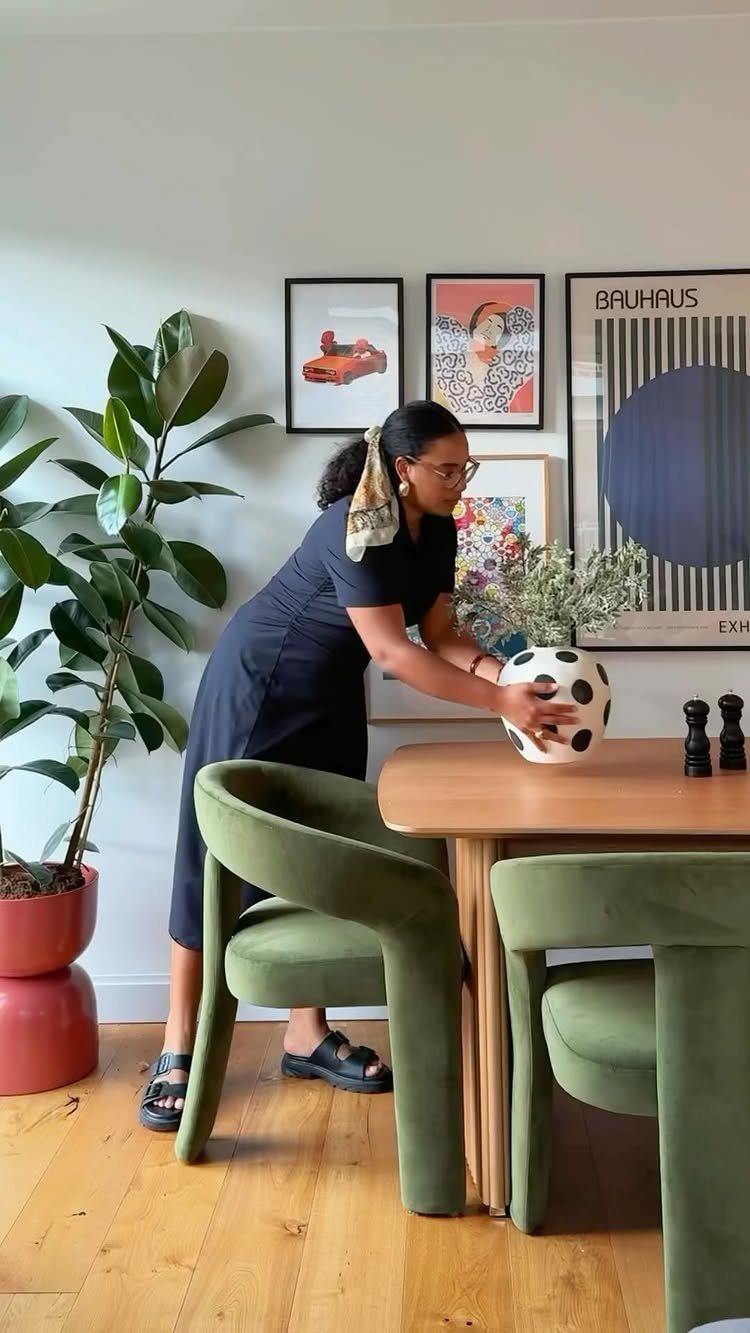
Pick a plant whose leaf color matches your upholstery, such as a rubber plant beside olive or emerald velvet chairs, and the greenery reads as part of the palette instead of a stray accent.
The leaf color repeats, so the room reads as planned.
For a table, a small planter or vase in the middle gives you greenery without crowding plates.
Add one larger plant on the floor in a corner, like the rubber plant here. A patterned pot, such as polka dots, brings in a graphic touch that suits the Bauhaus-style art on the wall.
5. Start with a Walnut Dining Table
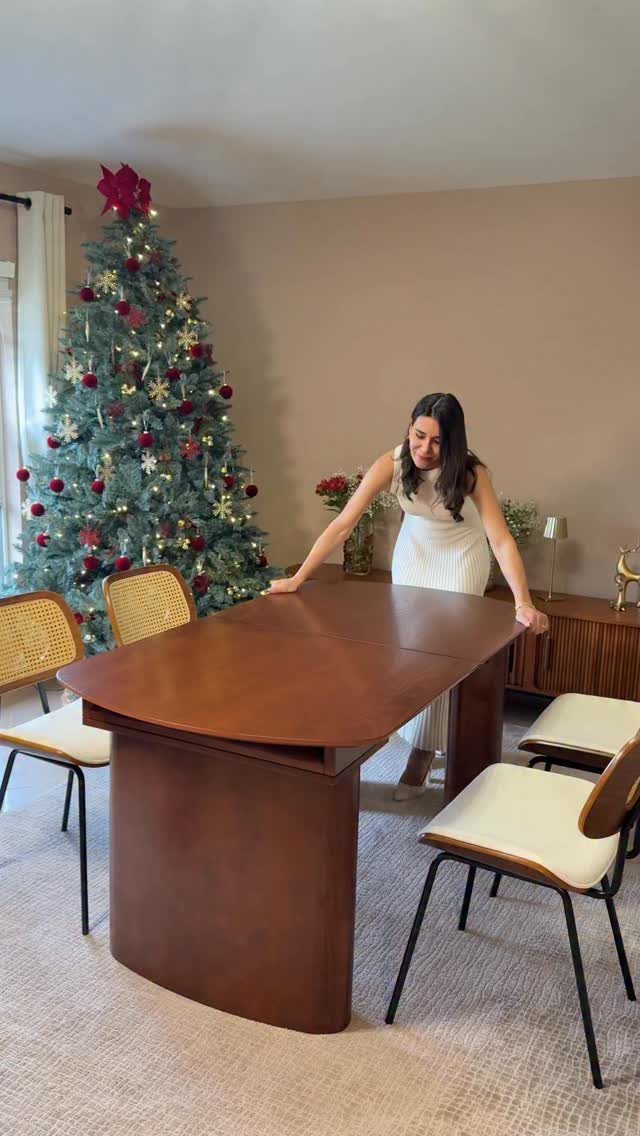
One rounded walnut pedestal table can do the work of a dozen accessories.
With no legs at the corners, chairs tuck in anywhere and the floor stays open, which keeps the room calm even when a Christmas tree and sideboard share the space.
I would spend the budget here first and fill in around it slowly. Cane chairs add texture without hiding the grain, so the wood stays the star.
6. Dining Room Benches and Stools
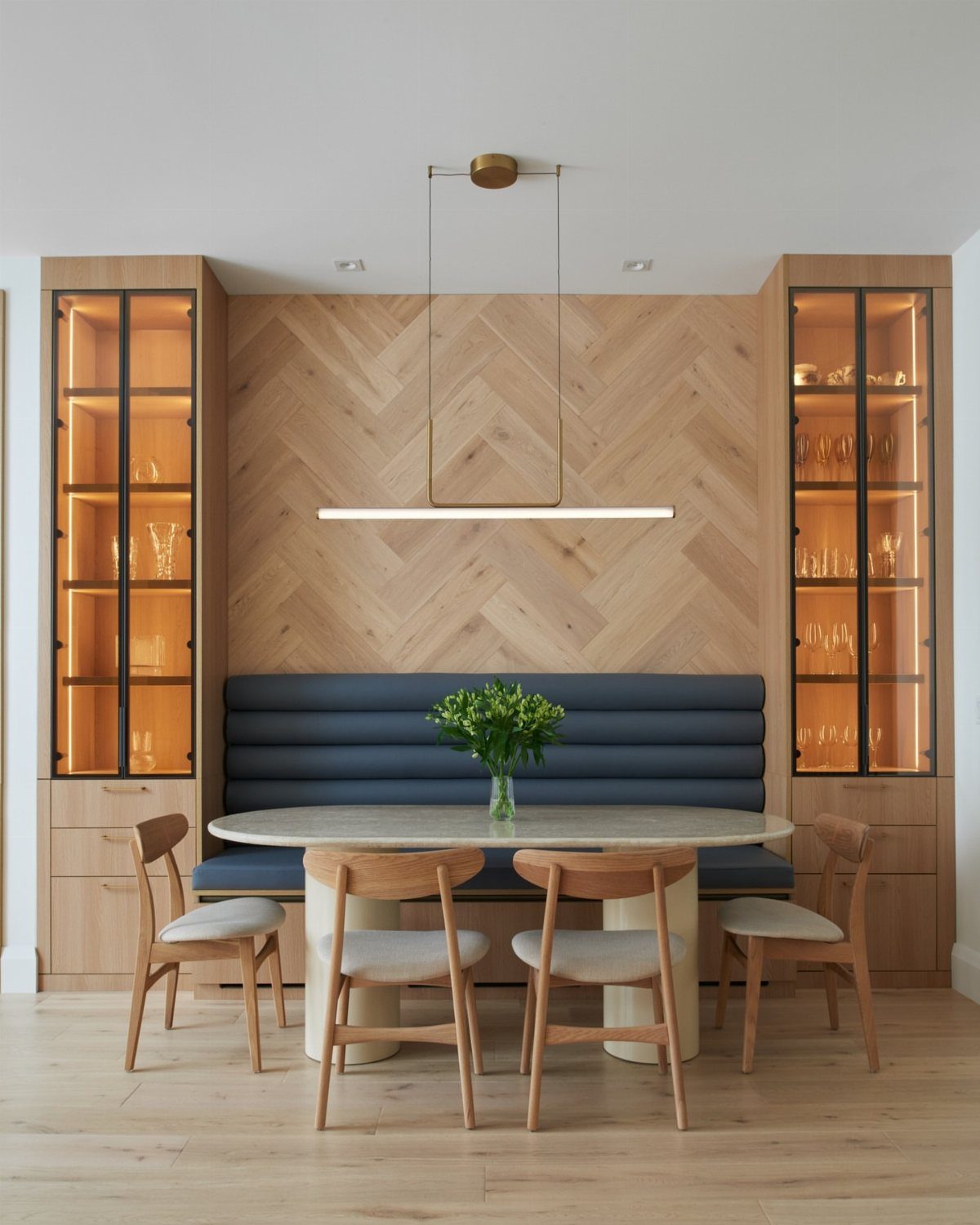
A built-in bench along one wall, upholstered in a deep color like navy, makes a dining nook feel tailored, and it frees up the floor space that a fourth chair would take.
Pairing it with wooden chairs on the open side keeps the table from looking like a booth.
Stools are the lighter option: they slide under the table and clear floor space in a tight room.
I prefer a bench on the longest wall and chairs elsewhere. Choose upholstery in a deep, solid color, since a bench takes up a lot of visual space.
7. Iconic Chairs
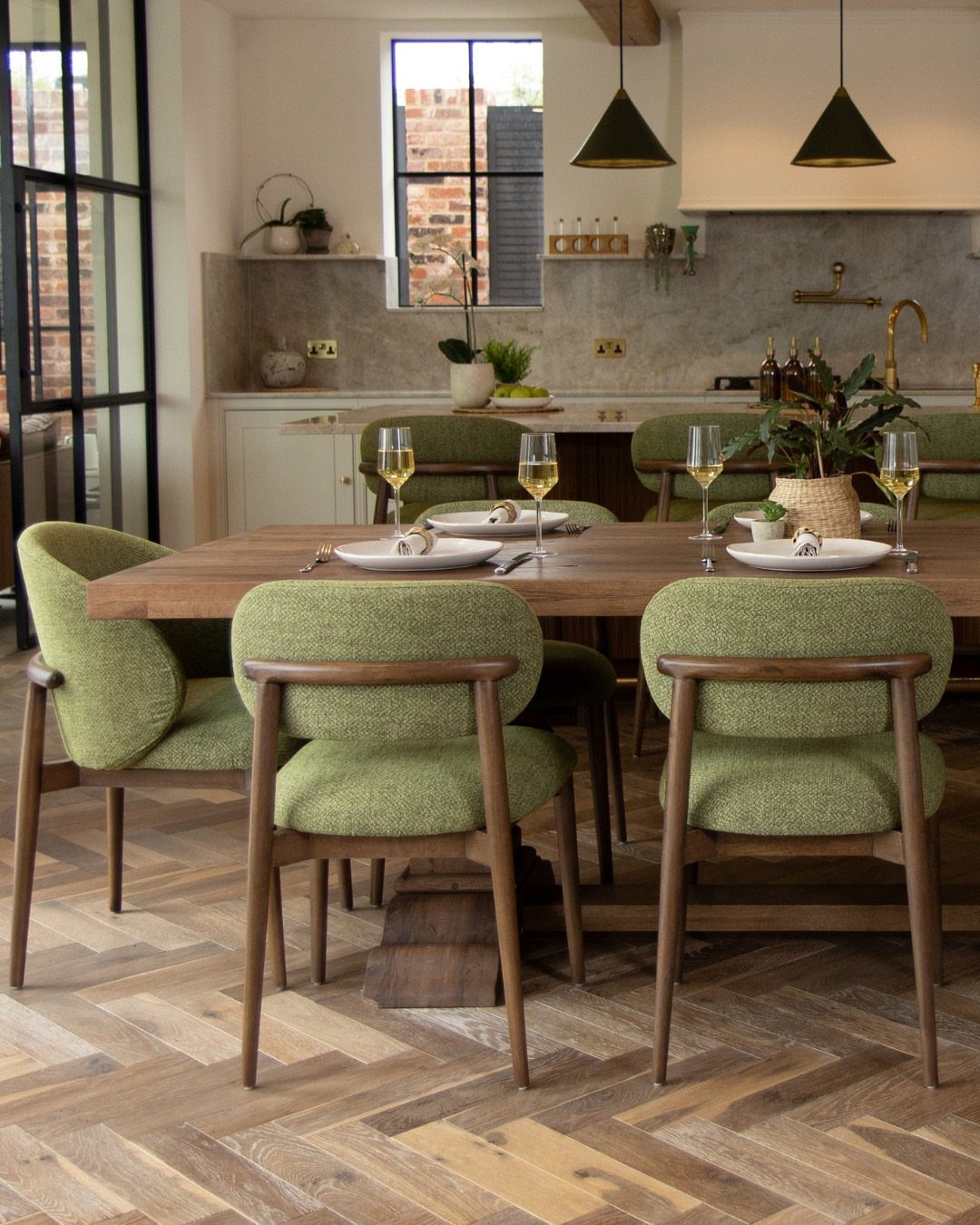
When the chairs are simple in shape, one strong color is enough to make them feel deliberate. Matching seats read as a set, and warm wood keeps green from turning cold.
Match the chair color to something already in the room, like the pendants or the cabinet tone, so it looks chosen. Herringbone floors already carry pattern, so I would stay with solid upholstery.
Buy chairs before you buy the table if you can. Curved backs and slim legs are easier to find secondhand than a matching set.
8. Large Abstract Artwork
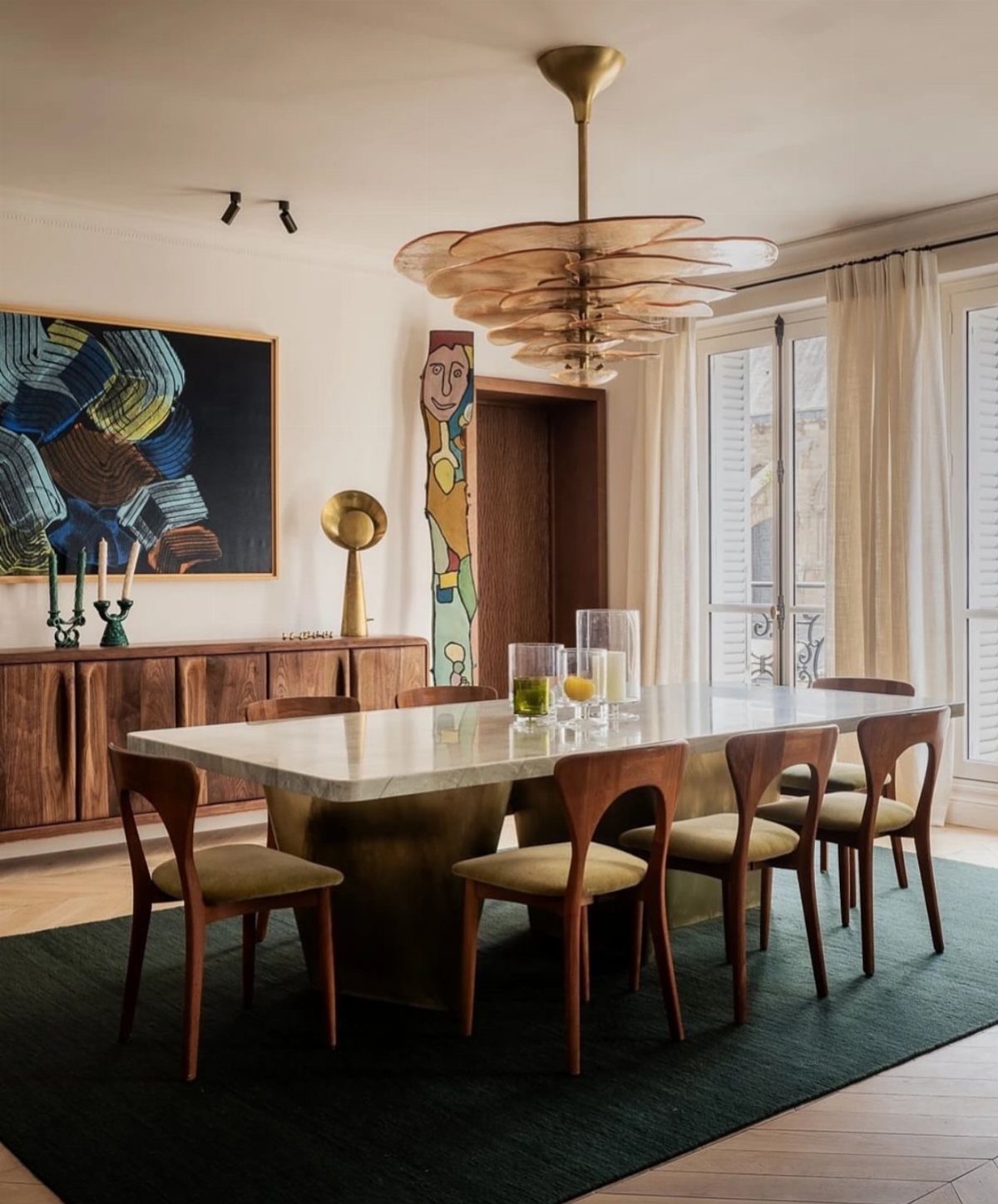
One oversized abstract canvas gives a dining room a focal point that a row of small frames can’t. A painting with visible brushwork adds warmth when most of the other surfaces in the room are hard.
Pull one or two colors from the canvas into the room, such as the wood of the chairs, and the piece feels planned.
Large art is pricey new. Thrift stores and local art sales are where I would look first.
9. Soft Fabric Cushions and Curtains
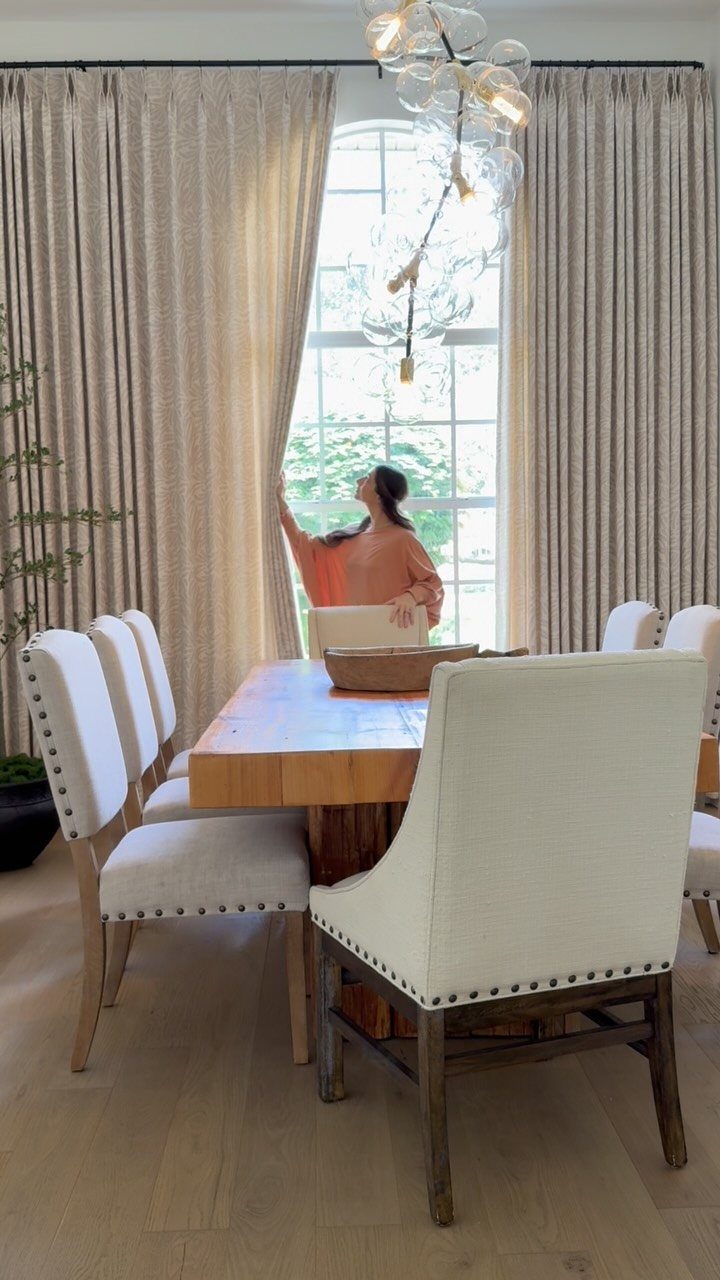
Beige curtains hung wide around a window soften a room full of wood and hard edges, and they sit well beside white upholstered chairs. Keeping the fabric a shade or two off the chair color gives layers without a clash.
Mount the rod higher and wider than the window frame so the glass stays clear and the window looks larger. Curtains are the easy swap here: a few panels and a rod fit a small budget and a single afternoon.
Seat cushions are the cheaper way to bring in softness if you rent and can’t drill into walls.
10. Layered Rugs
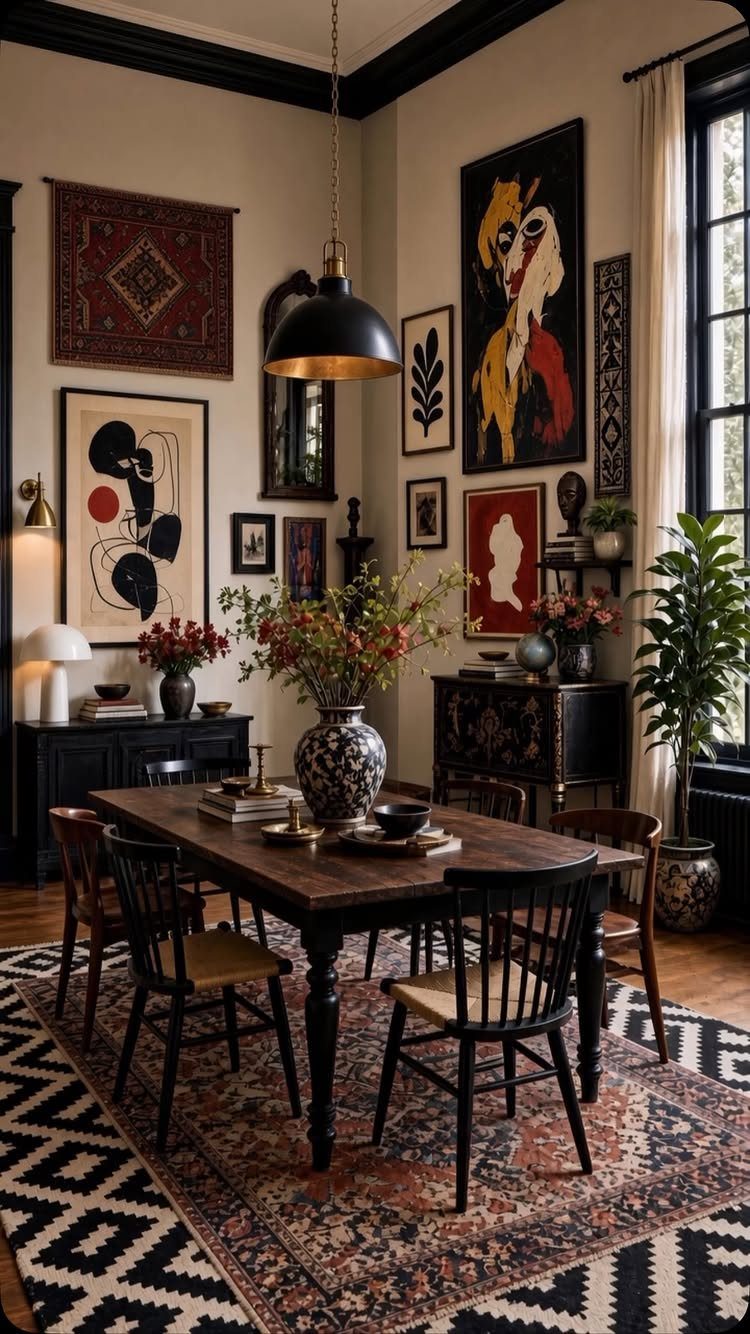
2 patterned rugs stacked under a dark wood table mark out the dining area, even in a room packed with art, a big plant and a black pendant.
The pattern underfoot ties the busy walls together instead of adding more noise.
Put the larger, flatter rug down first and the smaller one on top at an angle. Keep one color running through both, and leave the table and chairs plain, as this setup does.
Flat weaves layer best. A thick pile on top will make chairs wobble and drag when you pull them out.
11. Bar Cart
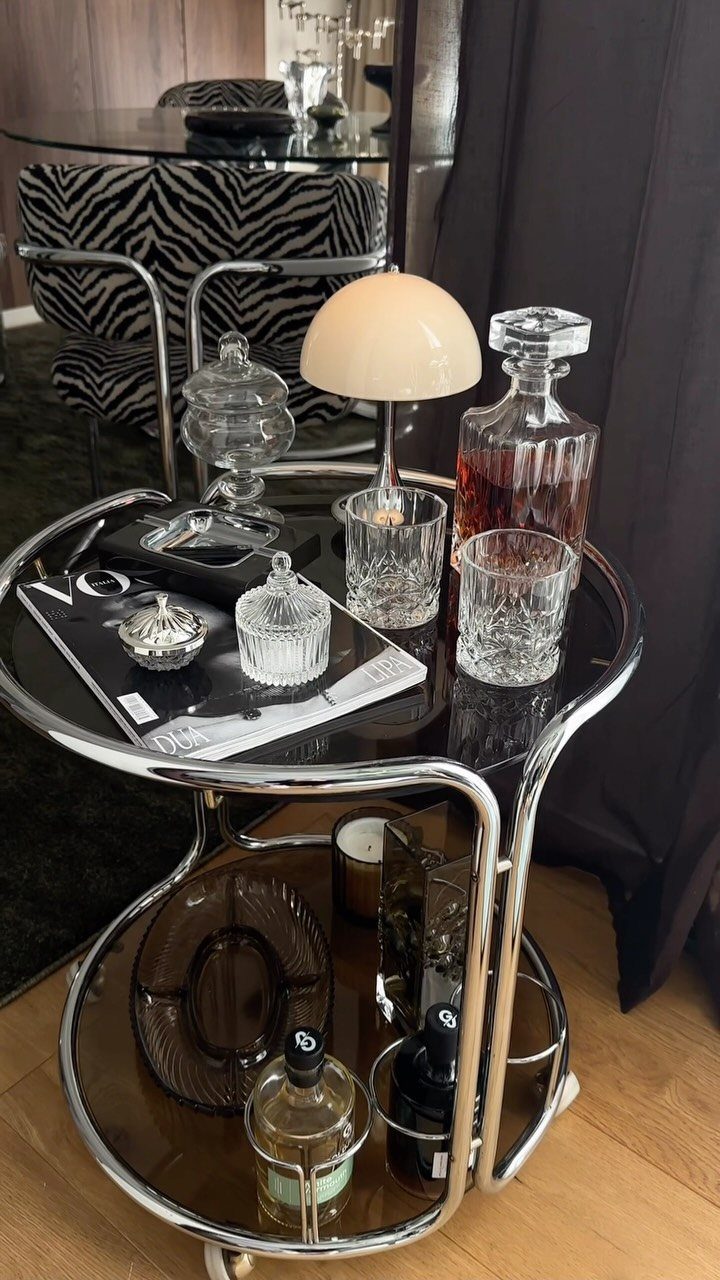
A chrome bar cart with black glass shelves gives the dining room a place for drinks that isn’t the table.
Keep the top shelf for what you reach for most and the lower one for heavier bottles. A lamp adds evening glow without needing another outlet near the table; a plug-in one just needs the cord routed neatly.
I would park it in a corner or beside a sideboard, so the walkway around the chairs stays clear.
12. Earthy Tones with Bold Accents
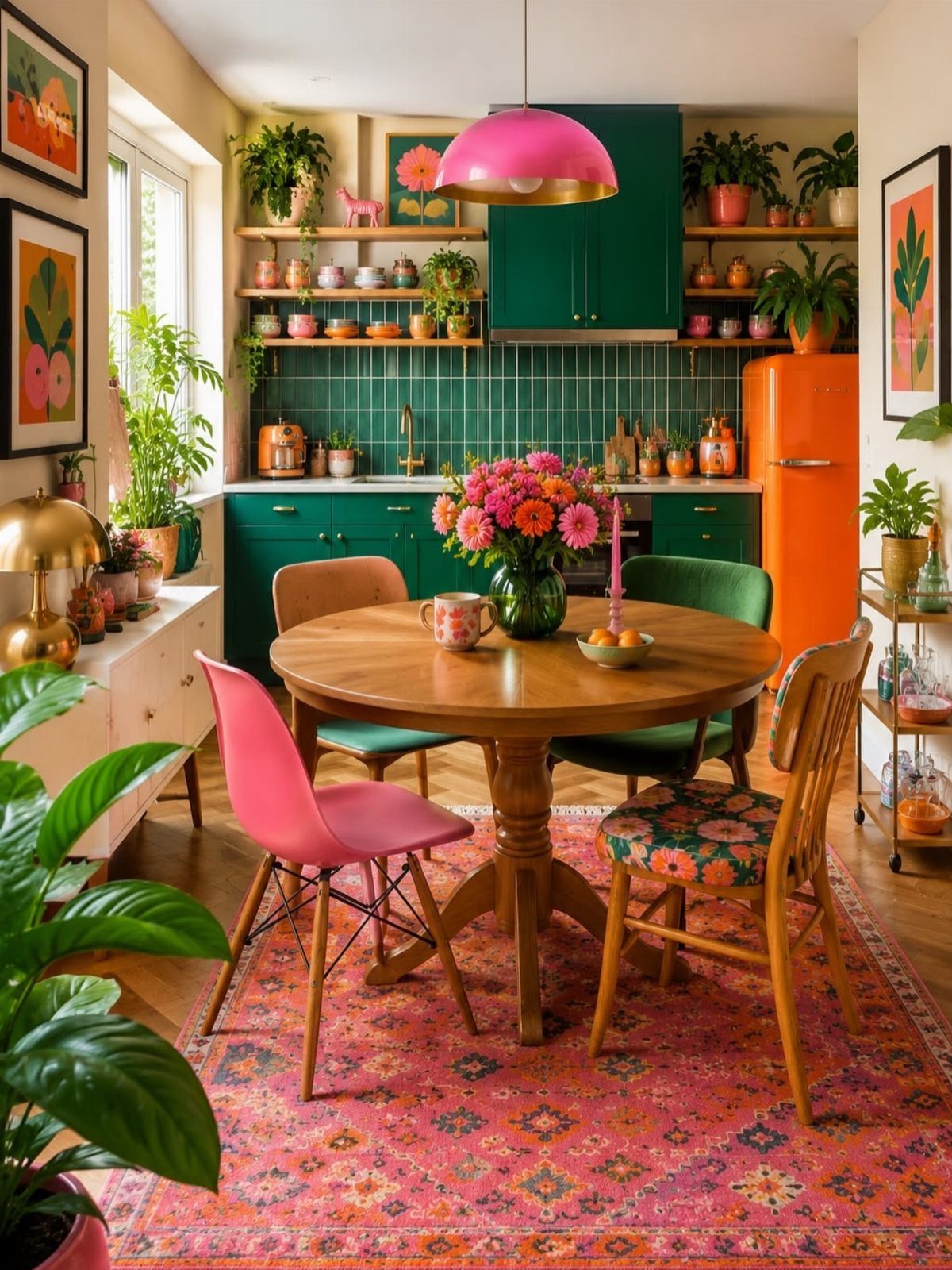
Warm wood and a pink patterned rug show that earthy doesn’t have to mean muted. A round wooden table sets the calm base, and colorful chairs supply the accent, while plants soften the green and orange of the kitchen behind.
Choose one earthy anchor, here the wood, then limit bold shades to two or three items. The chairs are the cheapest place to start: paint or reupholster secondhand ones rather than buying new.
Let the rug carry the boldest color if the walls are already busy.
13. Mix Contemporary and Mid-century
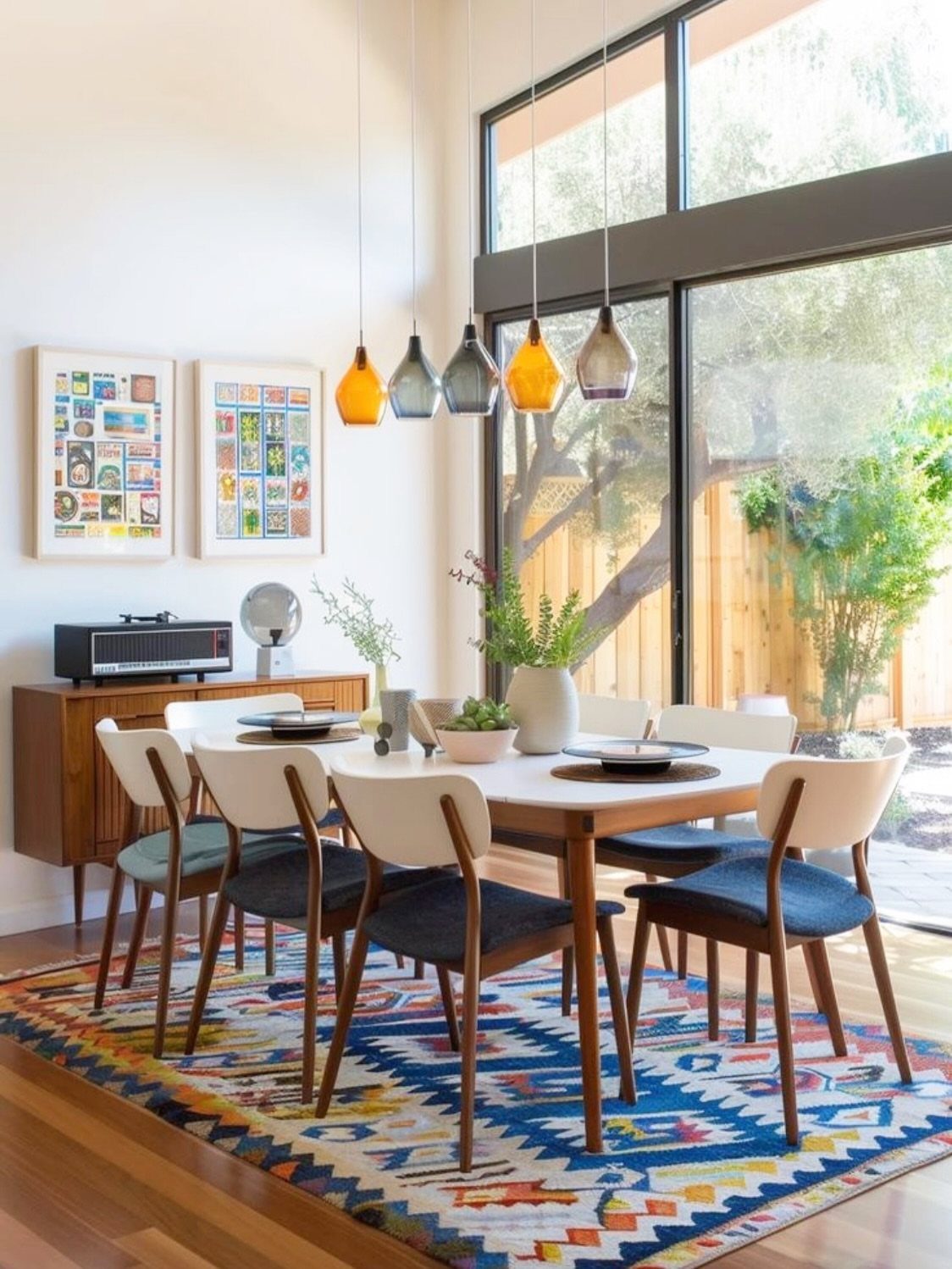
A bold geometric rug is the easiest bridge between old and new: it lets a mid-century table, chairs and sideboard sit comfortably beside modern pendants. Keep the furniture vintage in shape and let the lighting be the current piece.
I would pick the rug last, pulling its main color from something already in the room. Glass doors to the yard give plenty of daylight, so the pattern can be strong without feeling heavy.
Limit yourself to one modern element per category, such as lighting, so the room doesn’t split into two styles.
14. Use Mirrors
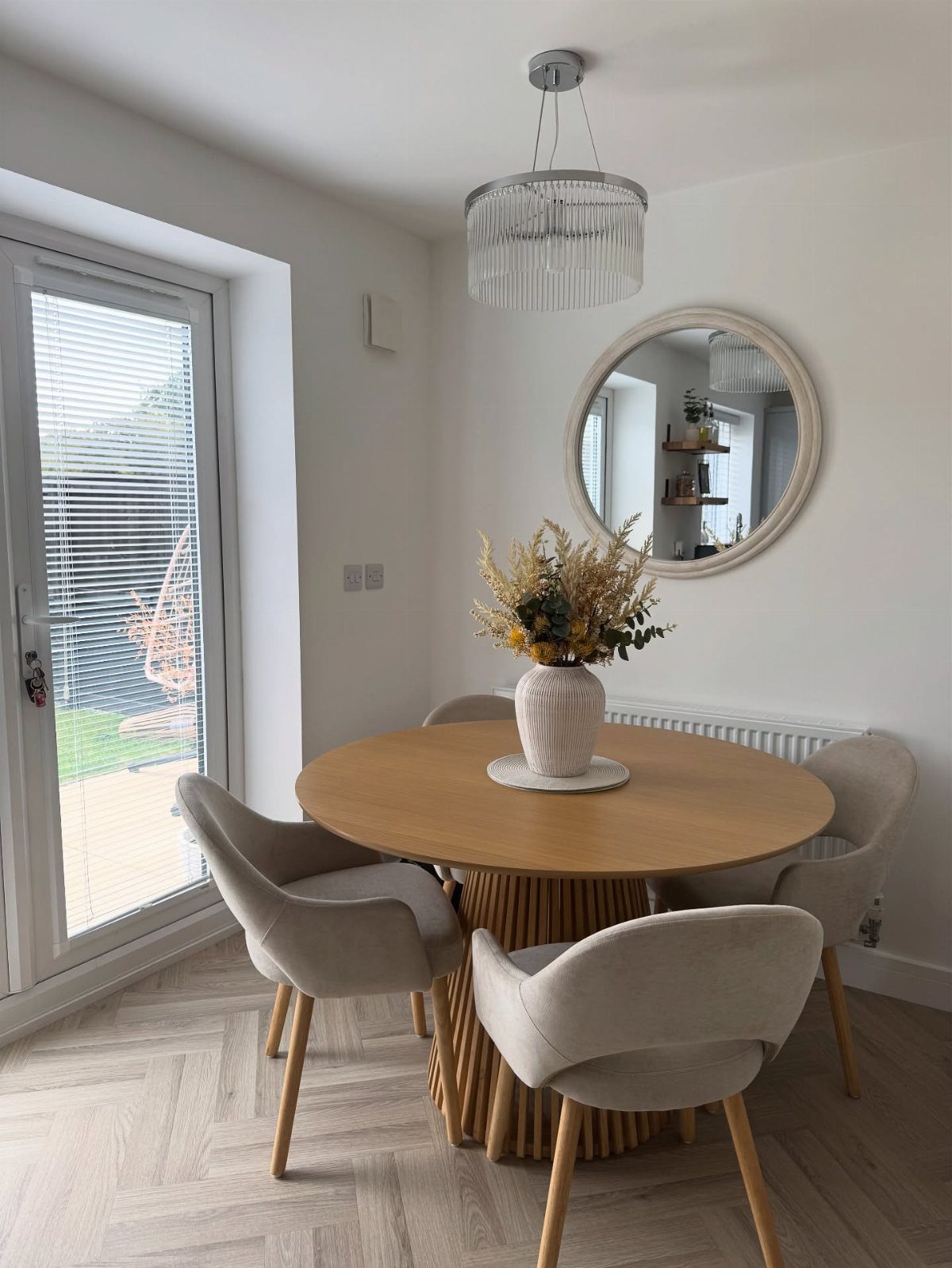
A round mirror hung above a round table repeats the curve of the tabletop and doubles the light from a chandelier. In a white room with herringbone floors, it adds depth without adding clutter.
Hang it so the center sits roughly at eye level for someone standing, and keep it narrower than the table. A mirror this plain lets cream chairs and a vase of flowers stay the softer details.
Place it across from a window if you can, so it carries daylight deeper into the room.
15. Furniture with Rounded Edges
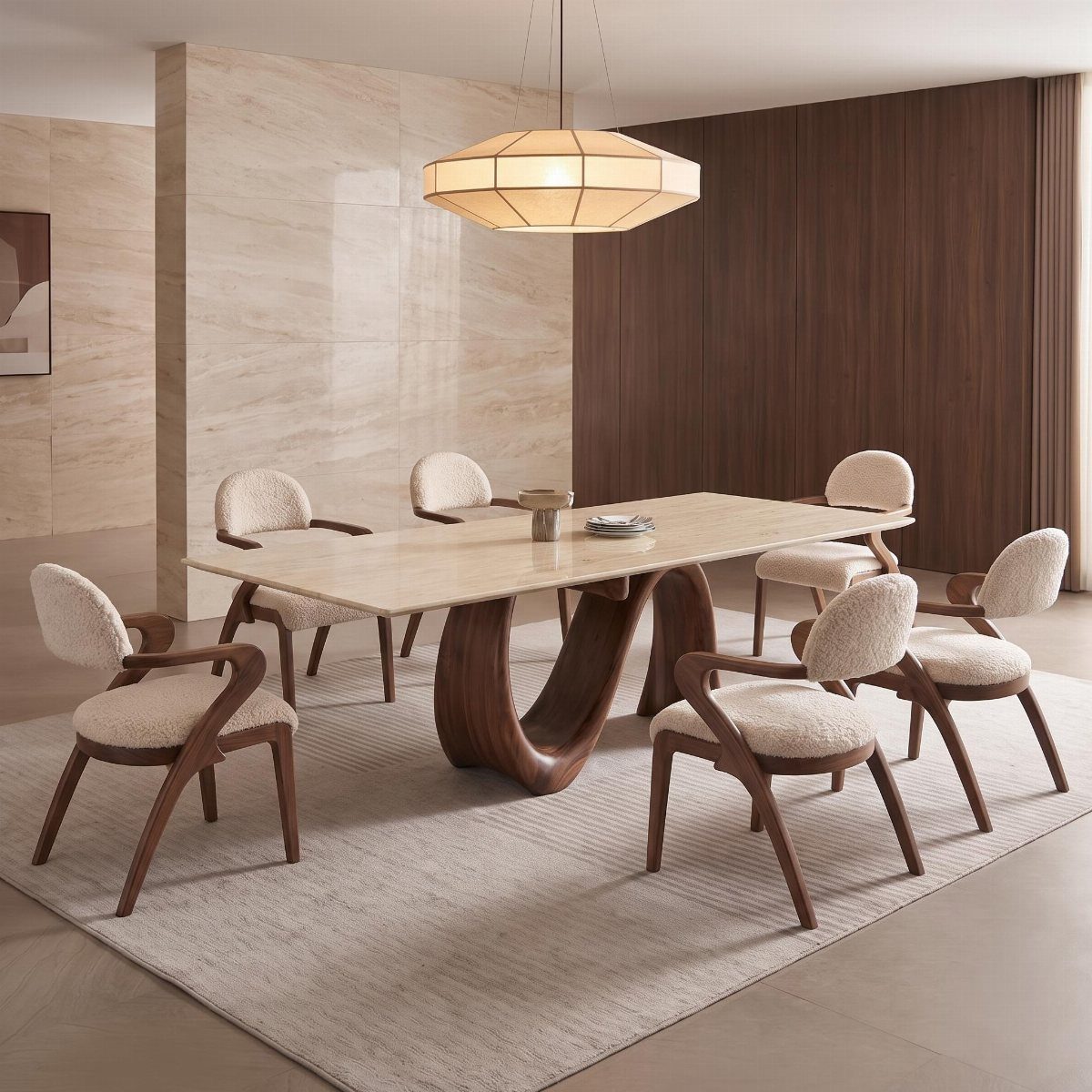
Curves are what make a mid-century room feel soft instead of stiff.
Rounded furniture softens a room full of straight lines: a table with a curved base and chairs with soft cream upholstery will take the hard edge off wood-paneled walls.
I would look for the curve in the base or the chair backs rather than buying every piece rounded. One large pendant overhead keeps the shapes from competing.
Cream upholstery against warm wood stays quiet, so the silhouettes do the talking. Secondhand sets with curved backs are worth checking first on a tight budget.
16. Go Dark
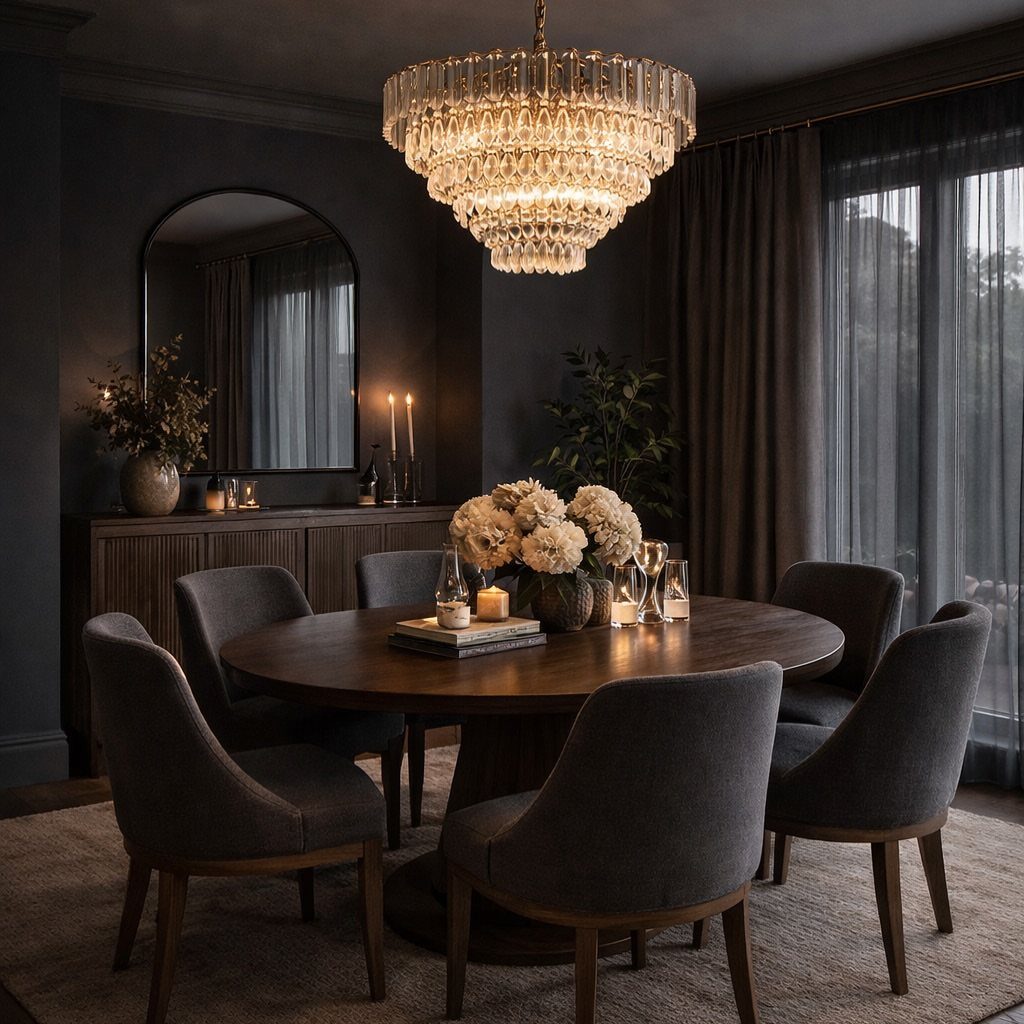
Charcoal walls give a mid-century dining room a heavy, grounded anchor, and a walnut table glows against them. Grey chairs keep the palette tight, so the wood and a crystal chandelier become the points of interest.
A mirror above the sideboard bounces light back into a dark room, which I think is essential here. White flowers on the table give a clean contrast.
Paint is the cheapest way in: one weekend and a few coats change the whole room. Keep furniture lighter or warmer than the walls so nothing disappears.
17. Mix Dark Wood with Cream Boucle Seating
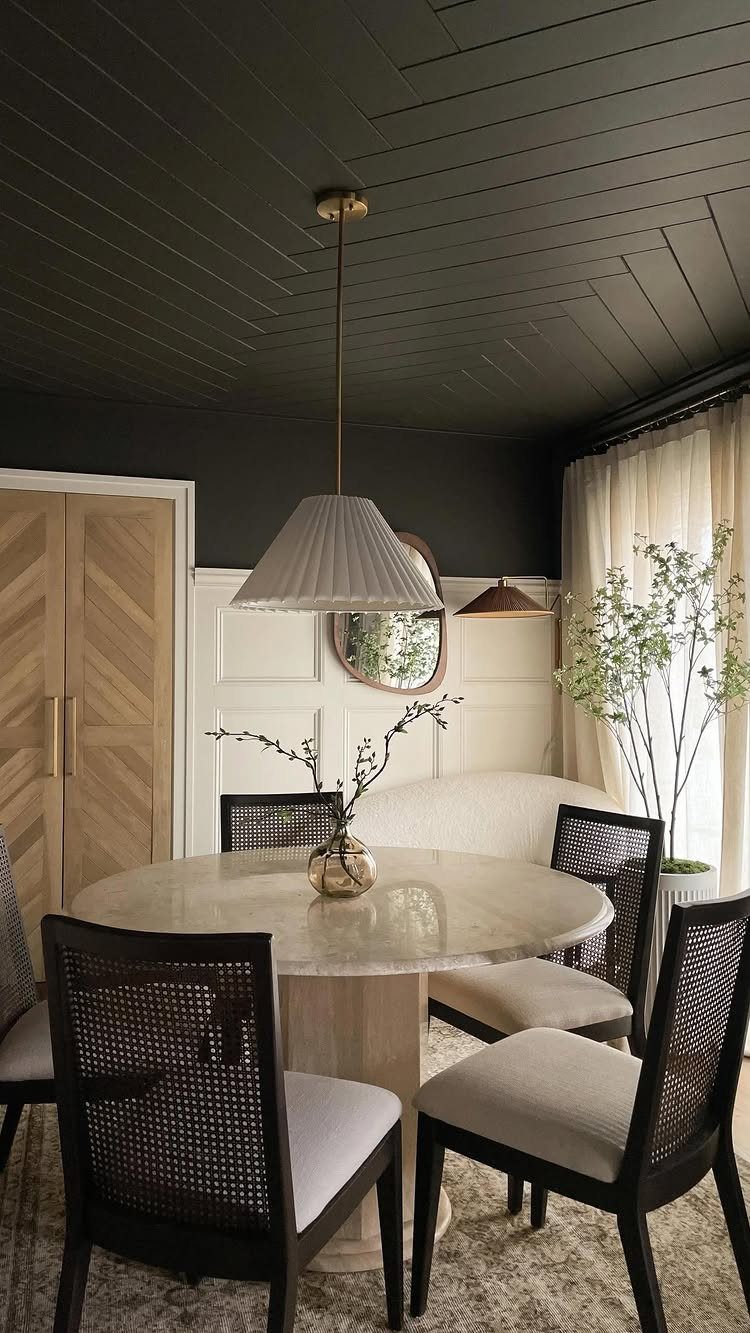
Dark cane-back chairs against a cream boucle banquette give a round marble table both vintage character and a current feel. The cane adds a woven texture, and the boucle adds a soft, nubby one.
A pleated pendant keeps the light soft rather than shiny.
Choose one dark wood tone for the chairs and stick with it. Boucle shows marks, so a washable cover is a sensible choice on a banquette.
18. Wood and White Dining Spaces
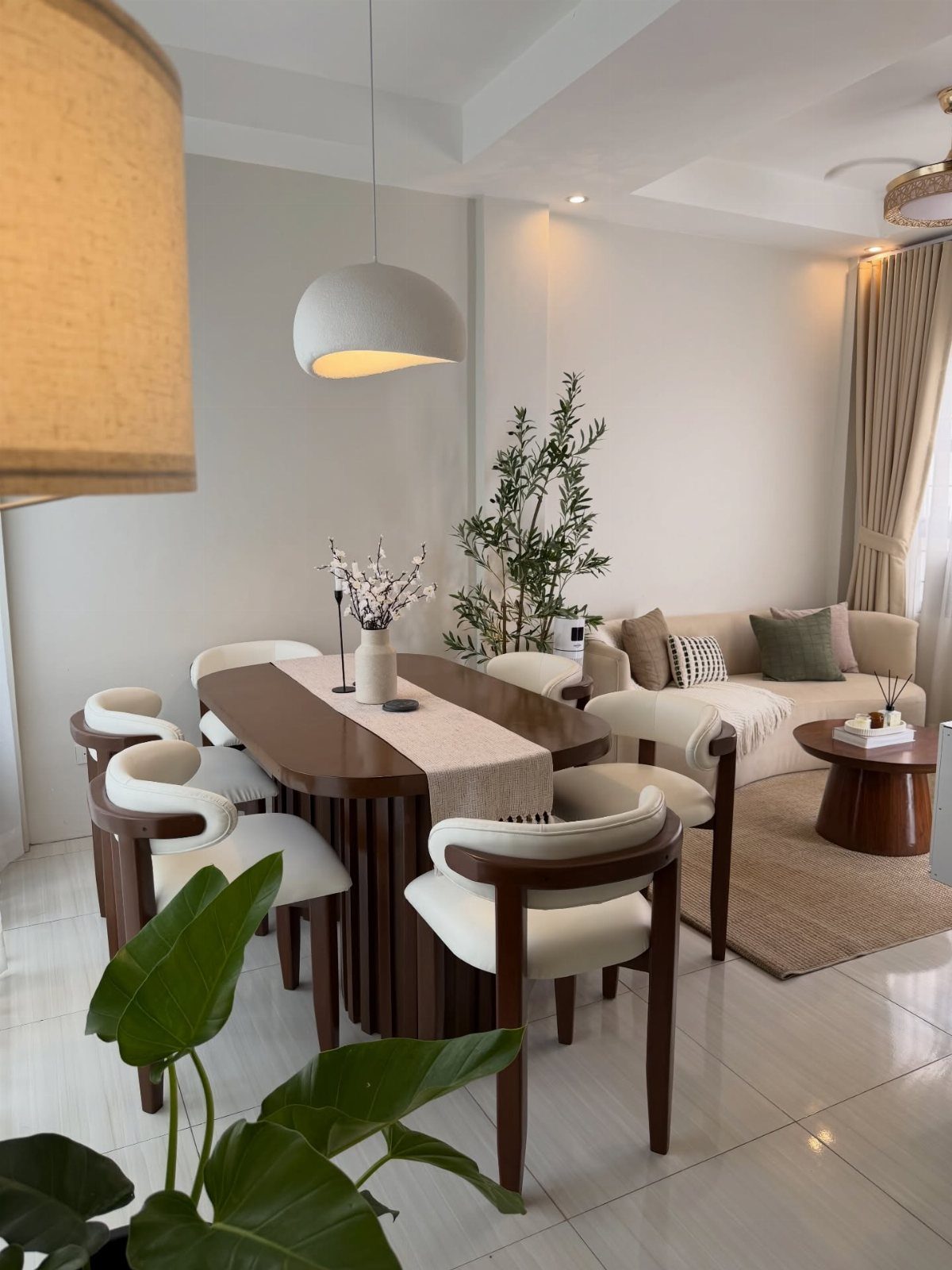
Tapered legs and clean lines do most of the work in a room built from a brown wooden table and white chairs.
The pale seating keeps the dark wood from feeling heavy, and a white pendant adds no extra visual weight.
I would keep to a wood-and-white palette and let one potted plant bring in green, as the living room beside it does. Open sightlines keep the two spaces feeling like one.
White upholstery is bright but unforgiving, so pick fabric you can wipe or wash.
19. Mid-century Tulip Table Brunch Nook
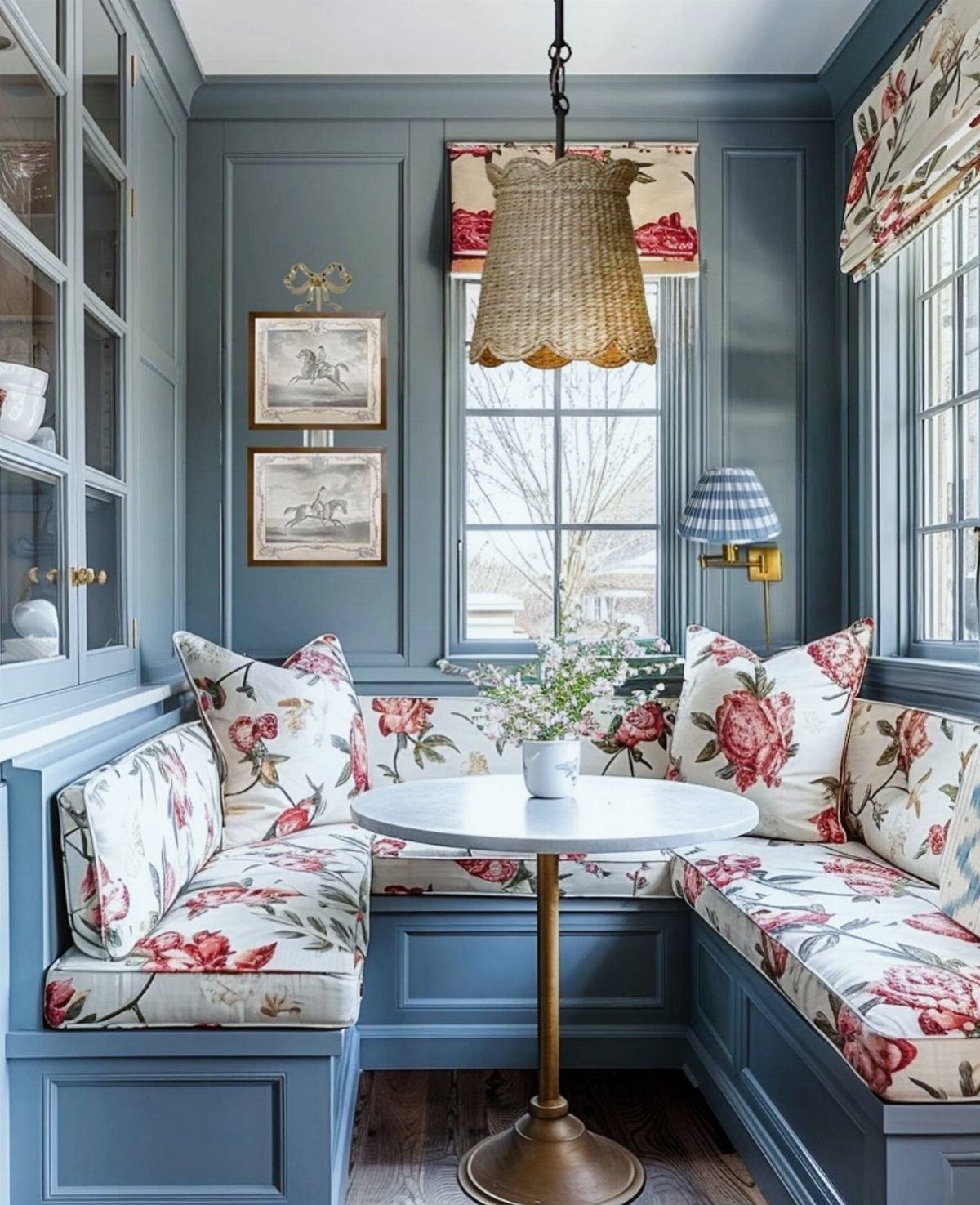
A tulip table’s single pedestal leaves the floor open, so knees and chair legs never fight a table leg, which is why it suits a small nook better than a four-leg table of the same size.
With no legs at the corners, seats on the built-in bench slide in without bumping knuckles.
Floral cushions are the easiest layer to change. I would pick one print that shares a shade with the wall, so the pattern settles in instead of fighting the blue.
Hang a woven pendant low over the table; the weave breaks the light into a soft, warm glow and adds a natural texture that balances the smooth top.
A small leafy plant on the tabletop is enough. Keep it low so you can still see across the table.
Mid-century Design Principles
Mid-century design runs on simplicity, function and organic forms, and the dining room shows it better than most rooms. Clean lines and open floor space matter more than how many pieces you own.
Start with a short list of essentials: a well-made table, a low sideboard, one striking pendant, a vase and a piece of art. That is enough for a full room, and each piece gets space to breathe.
Natural materials do the warming, so let wood and other honest surfaces carry the room instead of extra decor.
A bare corner is fine. It also makes the room easier to keep clean, since there is less to dust and move around.
Form follows function here, so if an object has no job and no real appeal, leave it off the shelf.
“Opting for natural materials like wood, leather, and stone will help to play into your mid-century modern vibe and is key to nailing this unique style,” explains Amanda Foster, interior designer and founder of Foster Decorating Consulting.
Color Palette
Build the palette on earthy neutrals: warm beiges, cool grays and crisp whites. They make a quiet backdrop, and the color goes on top in small, planned doses.
Bring them in through art, textiles and small accessories, which are cheap to swap if you tire of them.
Other shades that suit the style include walnut, ivory, deep teal, navy, cognac, brass, dusty blue and rust.
Pick from that list sparingly. A focused palette looks stylish, while too many hues make the room feel busy.
Contrast helps too. Pair light with dark, and smooth surfaces with rough ones, so the room has some energy without adding more objects.
Furniture Selection
Iconic pieces give a mid-century room its backbone. The Saarinen Tulip table and the Eames molded plastic chair are the two best known, and both are as sculptural as they are practical.
Whatever you buy, look for simple forms and good materials: solid wood, stainless steel or fiberglass. Quality shows in a plain shape far more than in decoration.
Look for chairs with slim, tapered legs and a seat you can actually sit in for an hour, ideally pairing a wood frame with metal details. Upholstered versions add comfort if your dinners run long.
Choose the table and chairs so one curved, sculptural piece is not fighting another. A cohesive set reads as intentional even when the budget is tight.





