Dining room ideas here run from a paint-and-chair-color weekend to a live-edge wood table, which is the one big spend on the list.
Renting or owning decides most of this: peel-and-stick wallpaper, new chair colors or a gallery wall come down or cost little, while a custom banquette and a solid wood table are permanent money.
Most of the cheaper routes here work on one wall, one set of chairs or one rug, so a single weekend covers them.
1. Bold Wallpaper
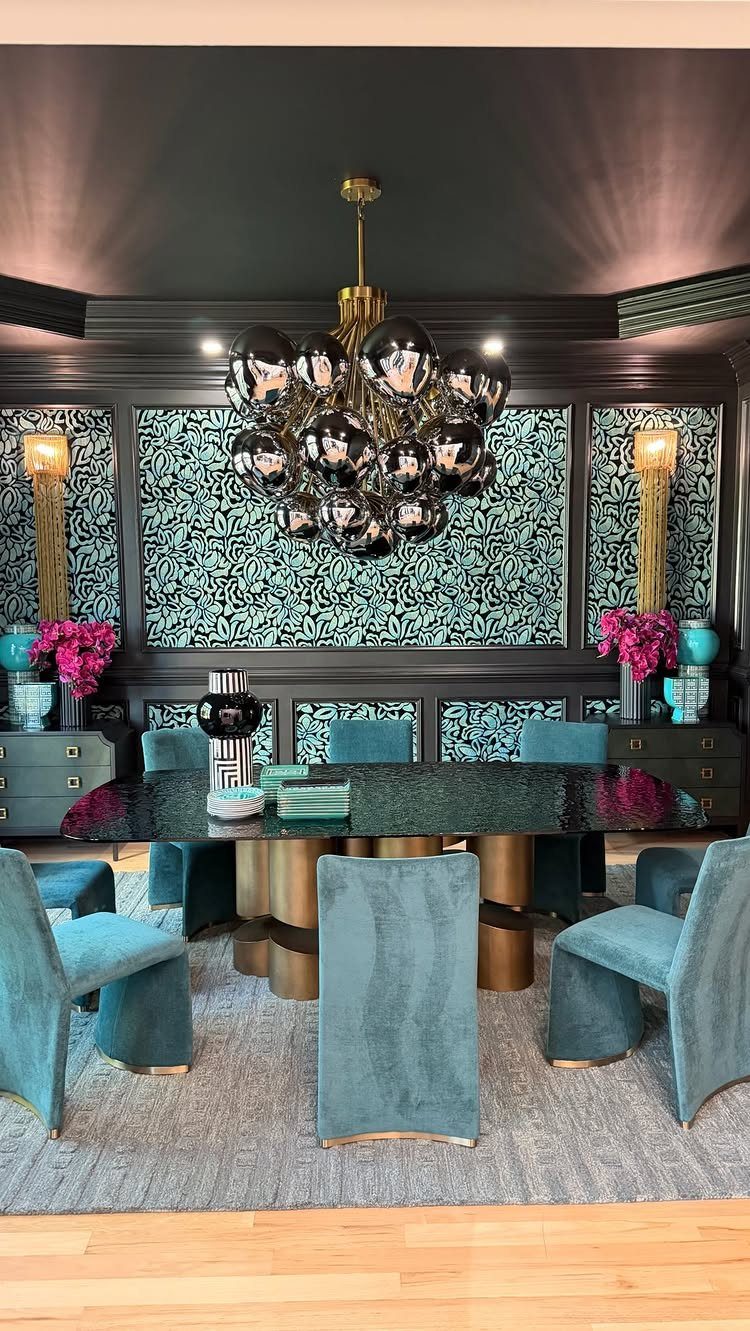
Teal leaves against a black table can feel like a lot, and that is why this one works: the wallpaper does the pattern work, so everything else can stay solid.
Velvet chairs and a metallic chandelier already match the paper’s depth.
On a tight budget, papering one wall is the move.
Peel-and-stick suits renters. Pick the wall behind the table, since that is the one you face while seated.
2. Pick a Unique Table Shape
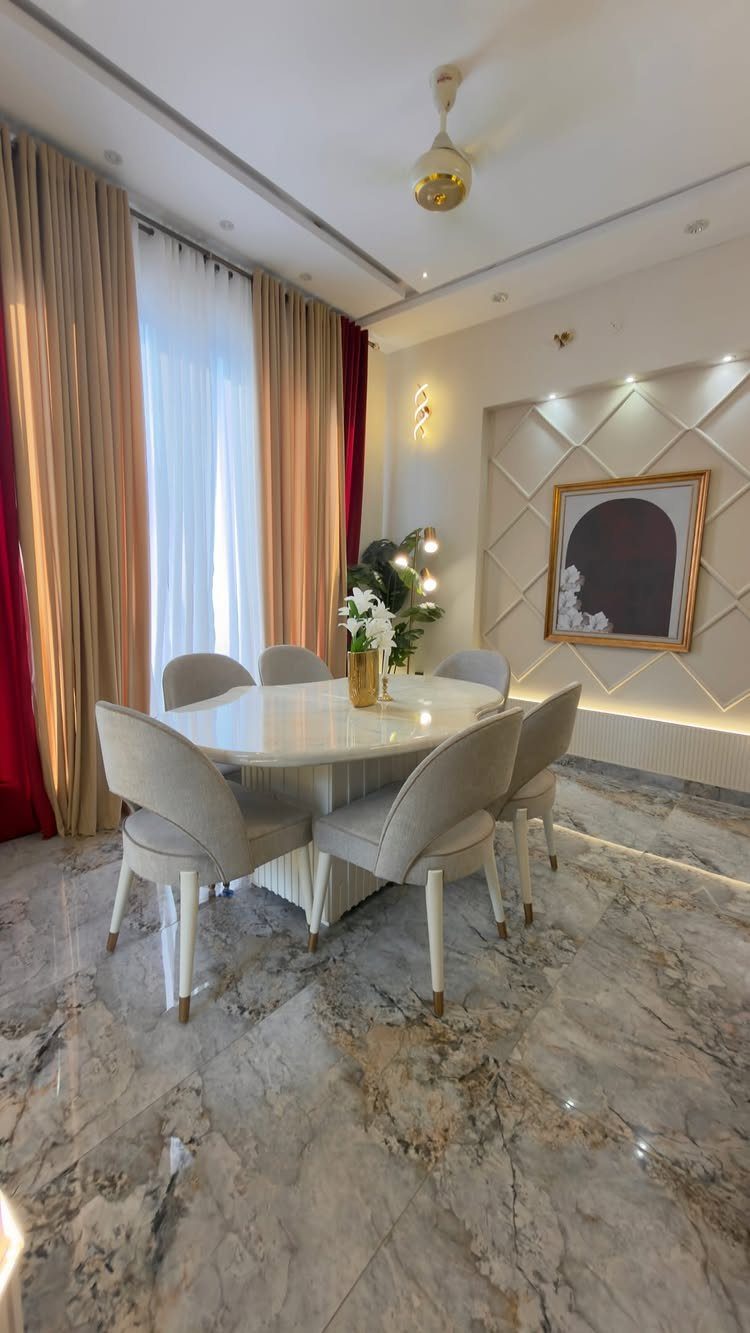
A white oval table softens a room full of straight lines, and the curved edge means no corner jabbing anyone’s knee. Ovals also seat extra chairs comfortably without the rigid spacing a rectangle demands.
Before buying, tape the outline on the floor and walk around it. That test costs nothing and shows whether the shape suits your room.
3. Colorful Banquette
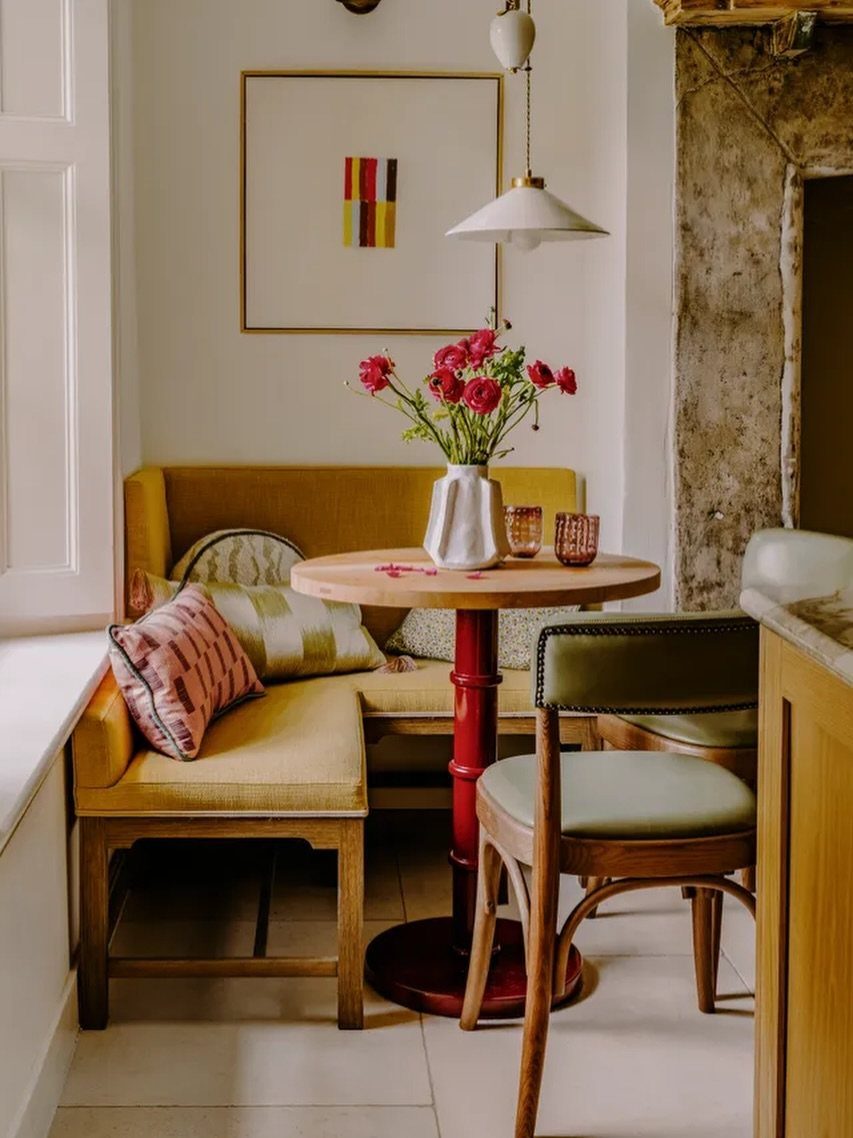
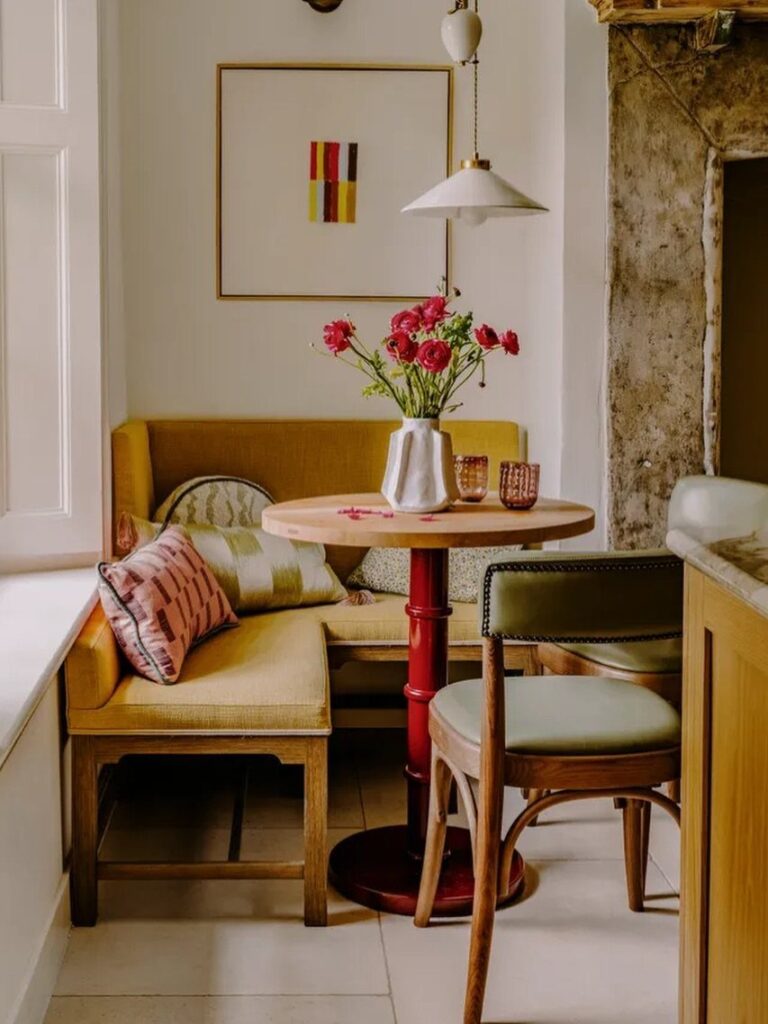
Yellow does the heavy lifting here. A banquette in one saturated color gives a nook its center, and a round wooden table keeps the whole corner easy to slide into.
For a weekend build, I would paint or reupholster a simple bench base and add pillows in a few colors pulled from the room.
Pull one shade from the art on the wall so the pillows look planned, and let a single green chair break the symmetry.
4. Pastel Lacquered Tables
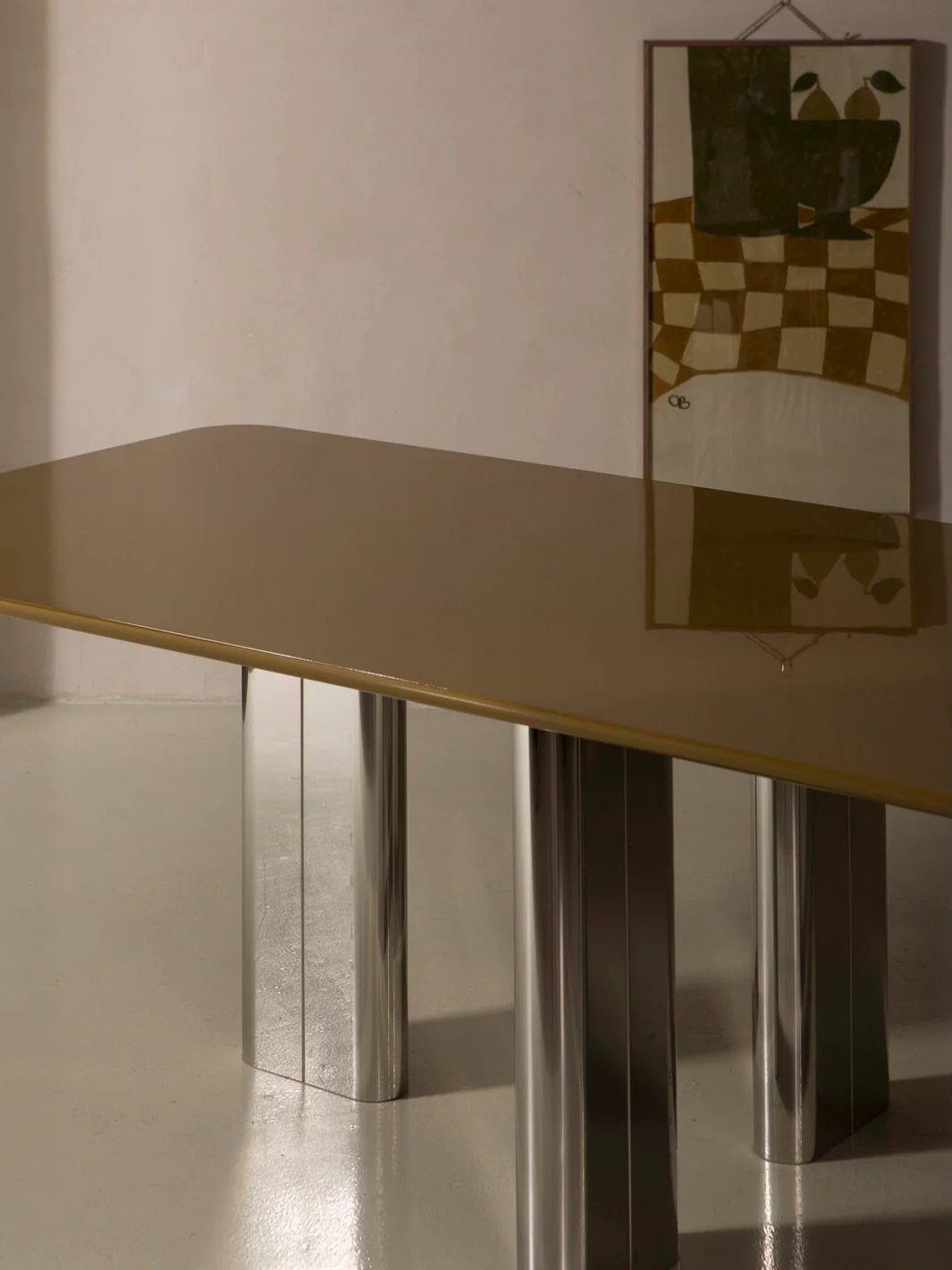
Gloss is the whole story with a lacquered table.
Fingerprints will show, so keep a microfiber cloth nearby.
Skip a tablecloth and use placemats instead, because the finish is the feature. If a new table is out of budget, a glossy paint finish on an existing top is a cheaper route.
5. Gallery Wall
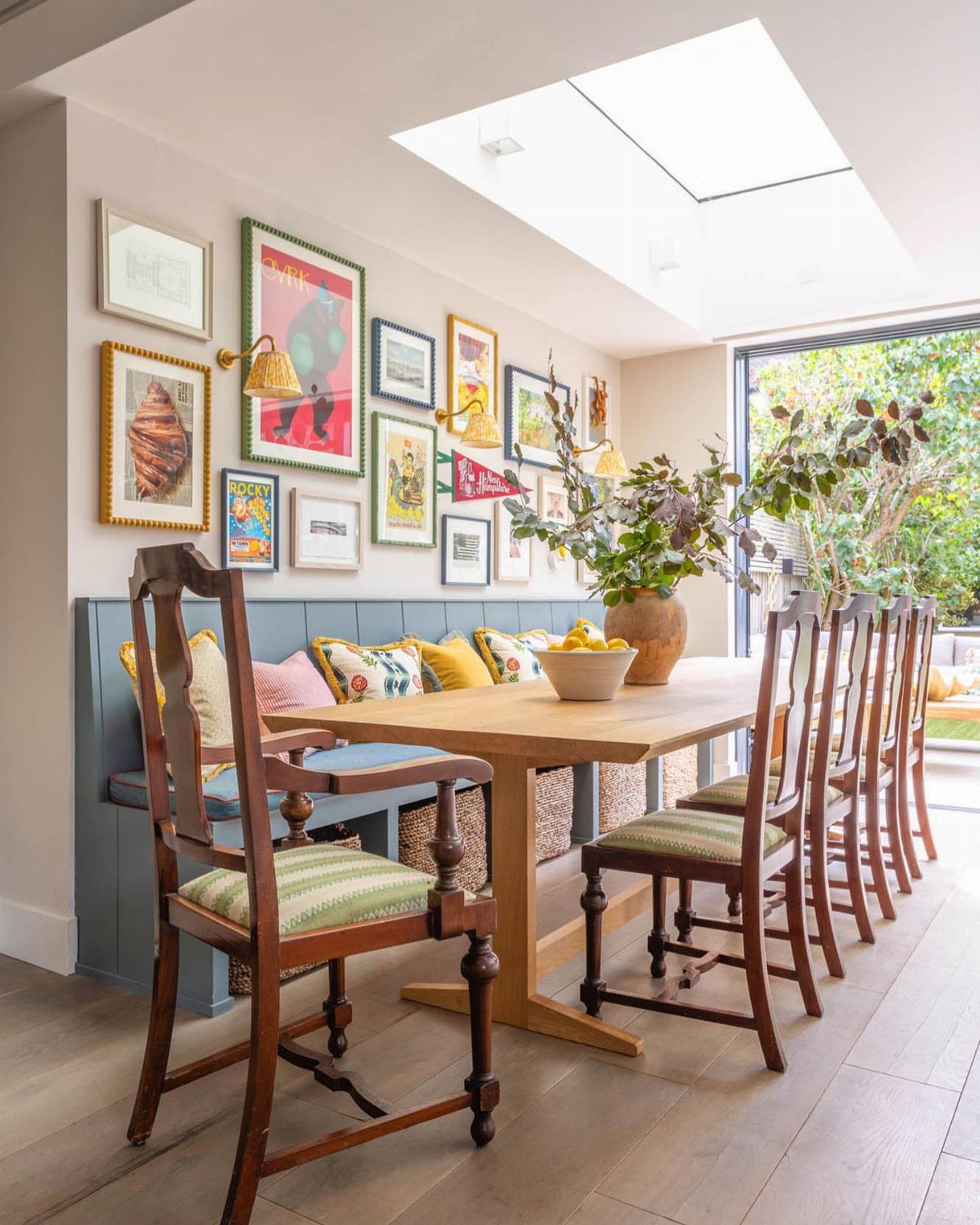
Hanging art over a banquette turns a plain seating wall into the most personal part of the room. Mixed frames and a couple of sconces make the arrangement feel collected rather than bought in one go.
Lay the frames on the floor first and shuffle until the gaps look even. Then trace each frame on paper, tape the paper to the wall, and drive nails through it.
A gallery wall can run up or down in cost depending on how many frames you buy, so I price the layout before I commit to it.
6. Oversized Light Fixtures
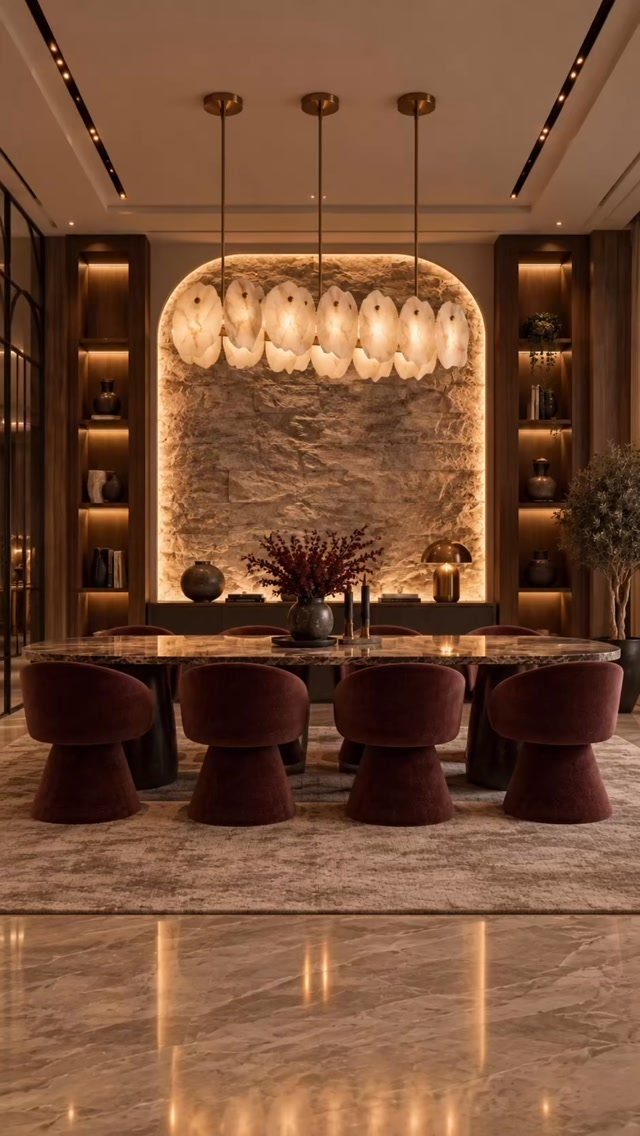
One sculptural white pendant can carry a dining room by itself. Over a marble table, a fixture this large makes the ceiling part of the design instead of an afterthought.
I prefer a single big piece over several small ones, because it reads as a deliberate choice. Hang it so it sits centered over the table, and let the rest of the room, like velvet chairs, stay quieter around it.
7. Contrasting Paint Colors
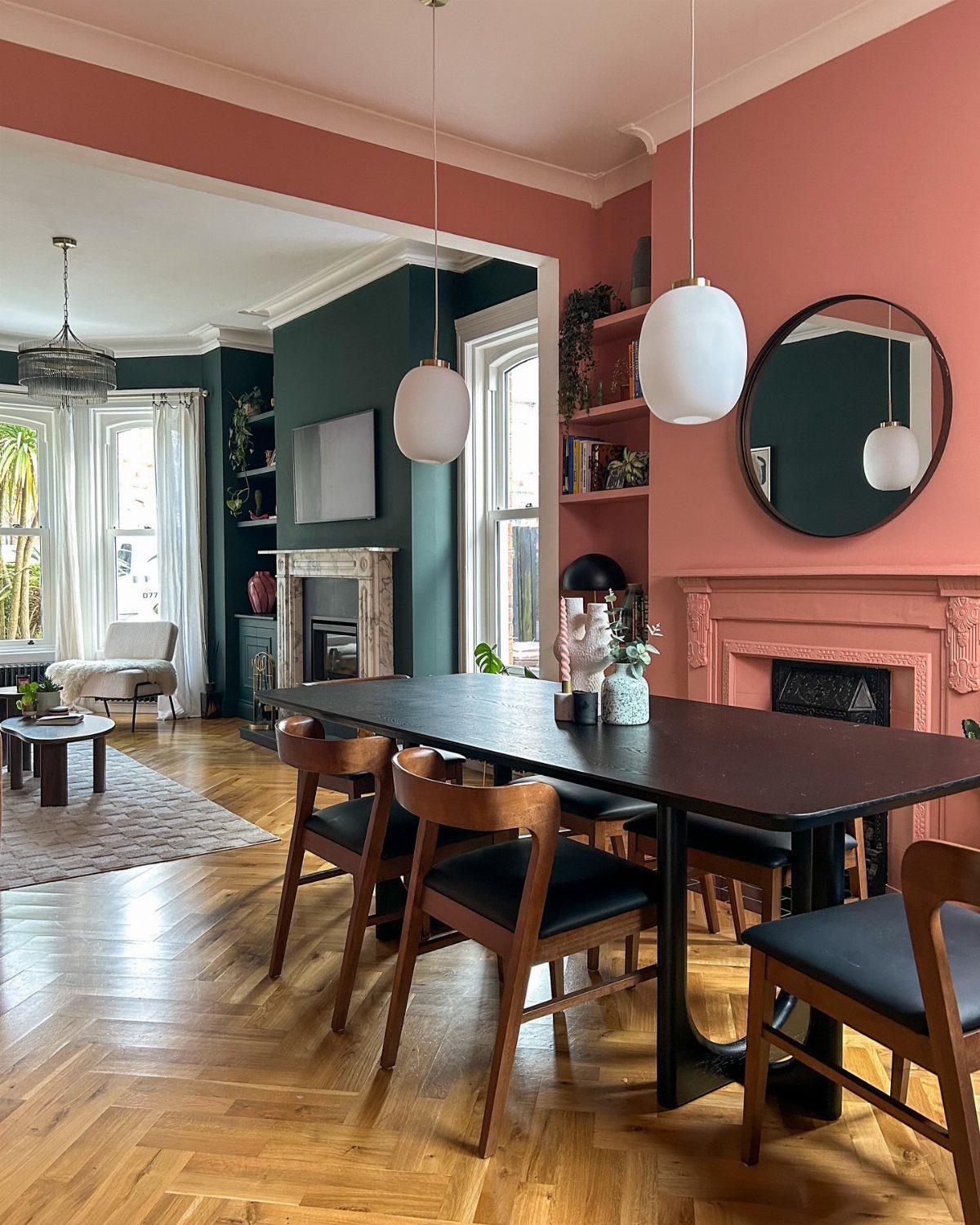
2 walls in clashing colors can do what a full renovation promises. Terracotta pink against dark green works because both sit deep in tone, so neither one shouts over the other.
Paint is the cheapest swap in a dining room, and a weekend covers 2 walls.
Pick one color for the wall with the fireplace and the other for the rest, then keep the table and chairs plain so wood and paint don’t compete. Test a sample patch first and look at it at night.
8. Mix Materials for a Modern Look
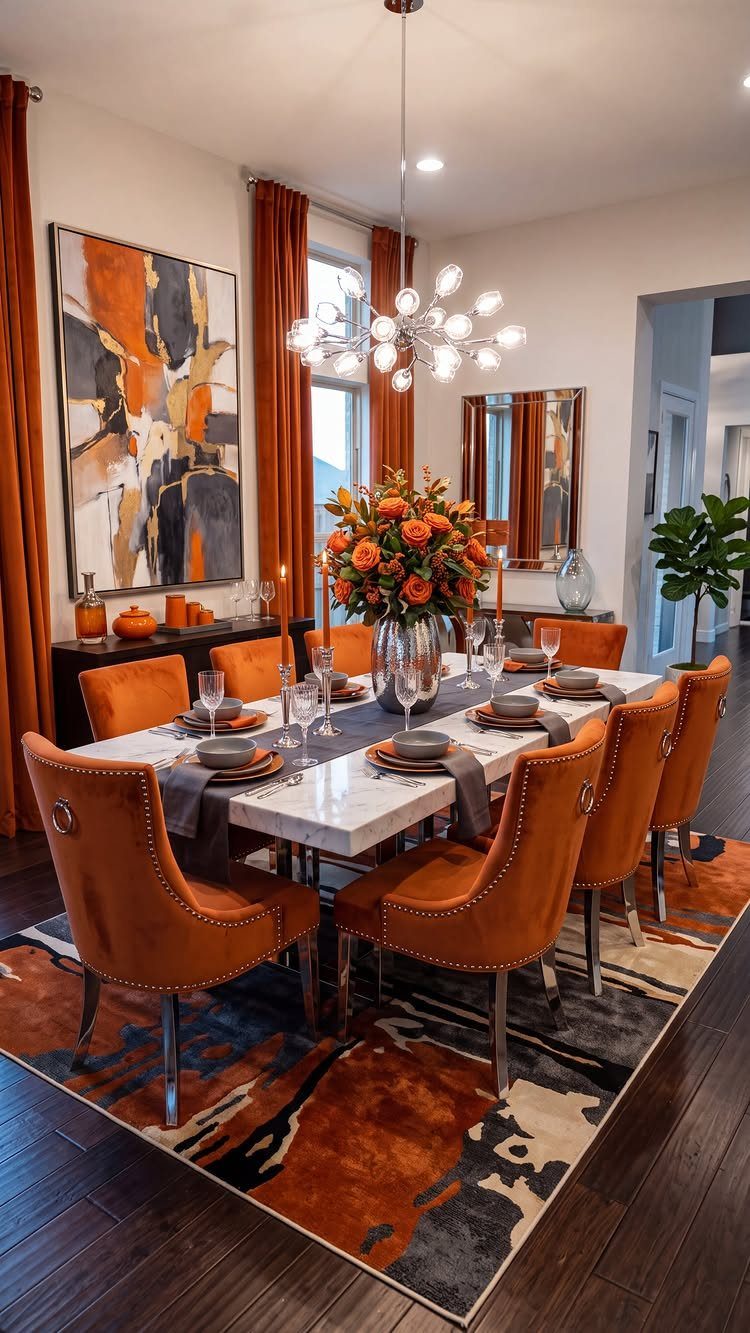
Marble, velvet, and a metal chandelier each catch light differently, and that difference is what makes a room read modern. Orange chairs against a grey palette give the mix a clear focus.
Stick to 3 materials and one accent color, or the room starts to look cluttered.
A marble-look tabletop is the budget route if solid stone is out of reach. A large abstract painting ties the colors together, and a single oversized canvas costs less than a set of small frames.
9. Vibrant Chair Colors
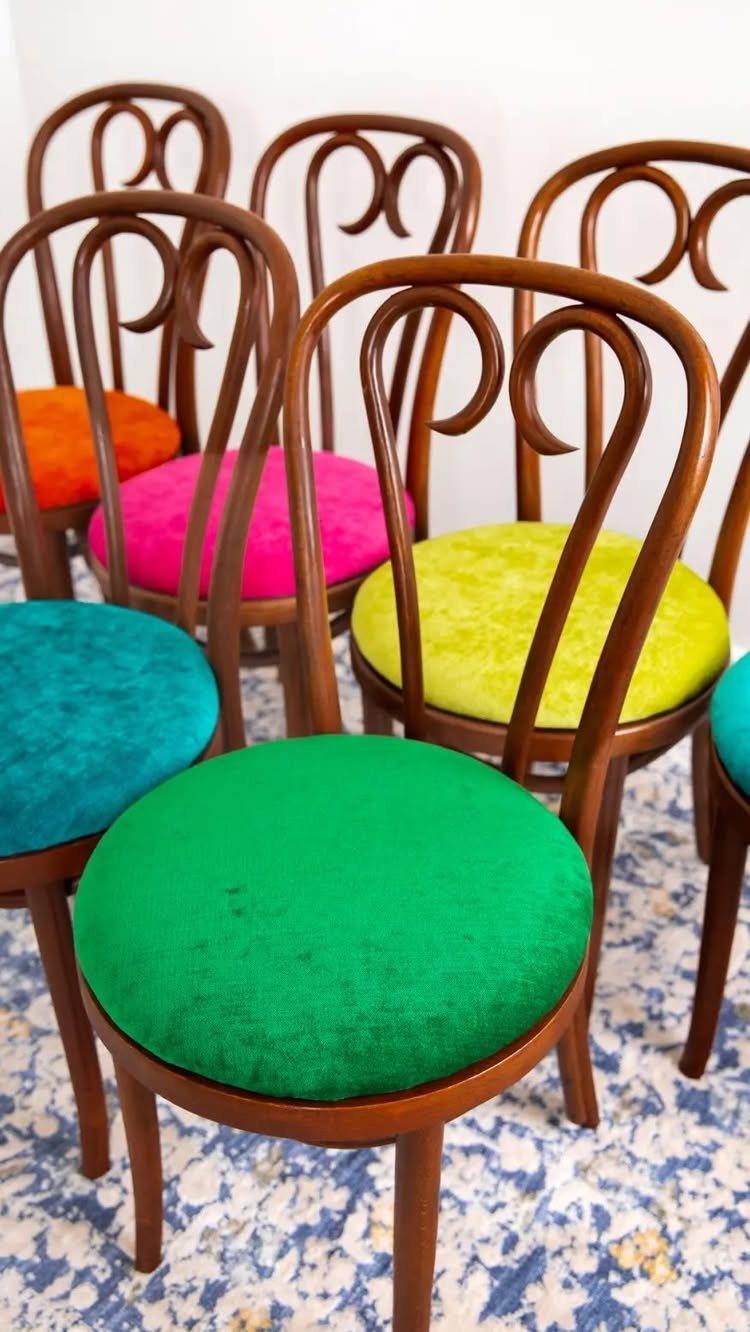
Mismatched seat cushions in green, teal, yellow, pink, and orange turn a set of plain wooden chairs into the loudest thing in the room.
The maker of this set says it took 2 years to get around to reupholstering, which is a fair reminder that this is a slow-burn project, not a rush job.
Keep the chair frames the same so the color has one job. A patterned rug underneath works because it already carries several colors.
I would reupholster only the seats, since that needs fabric and a staple gun, not a full sewing job.
10. Natural Wood Trestle Table
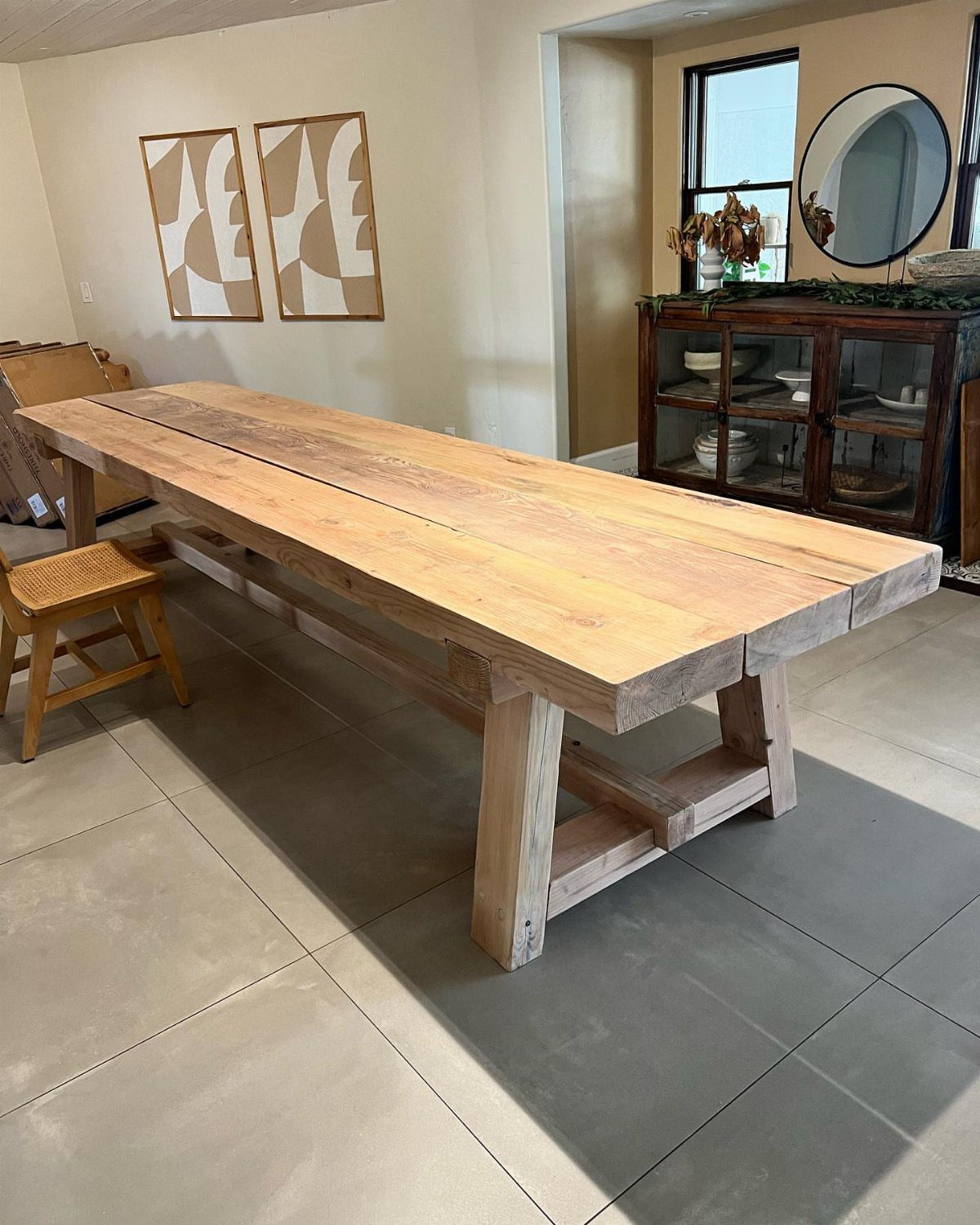
A long trestle table in pale natural wood brings warmth to a room full of grey tile, and the legs at each end leave knee room along both sides.
Keep the finish light and matte if you want the grain to show. Pair it with a dark wood cabinet, as here, so the room has one pale piece and one deep one.
Rather than buying new, I would look for a used trestle table and refinish the top, which keeps the cost well under what a new solid wood one runs.
11. Live-edge Wood Table
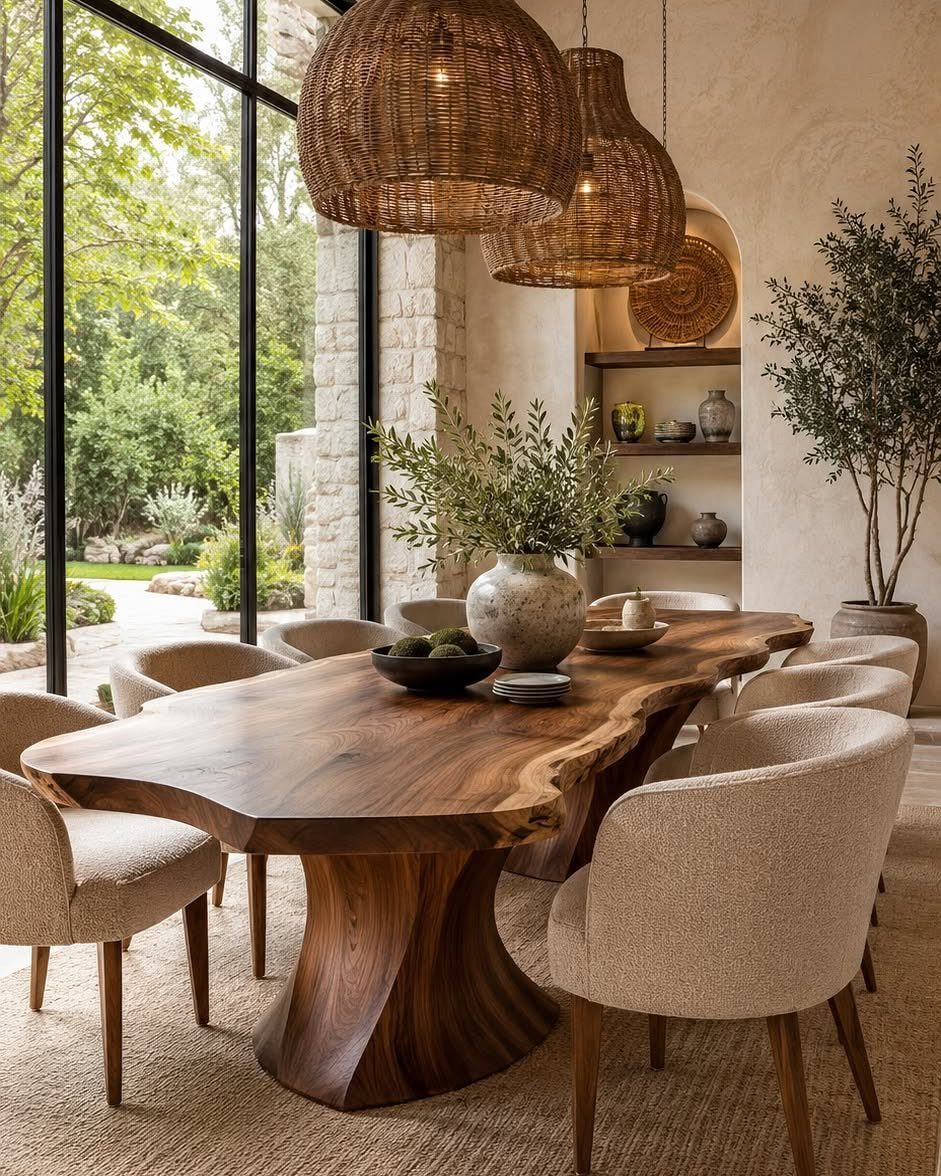
A live-edge slab keeps the natural curve of the tree along its sides, so no 2 tables match. On a pedestal base, the slab gets the whole stage and nothing blocks the chairs.
Real slabs are a big spend.
If the budget is tight, I would choose a live-edge look on a smaller table or build a top from a single board. Soft beige chairs and woven pendants, as here, keep the wood the main event.
12. Upholstered Dining Chairs
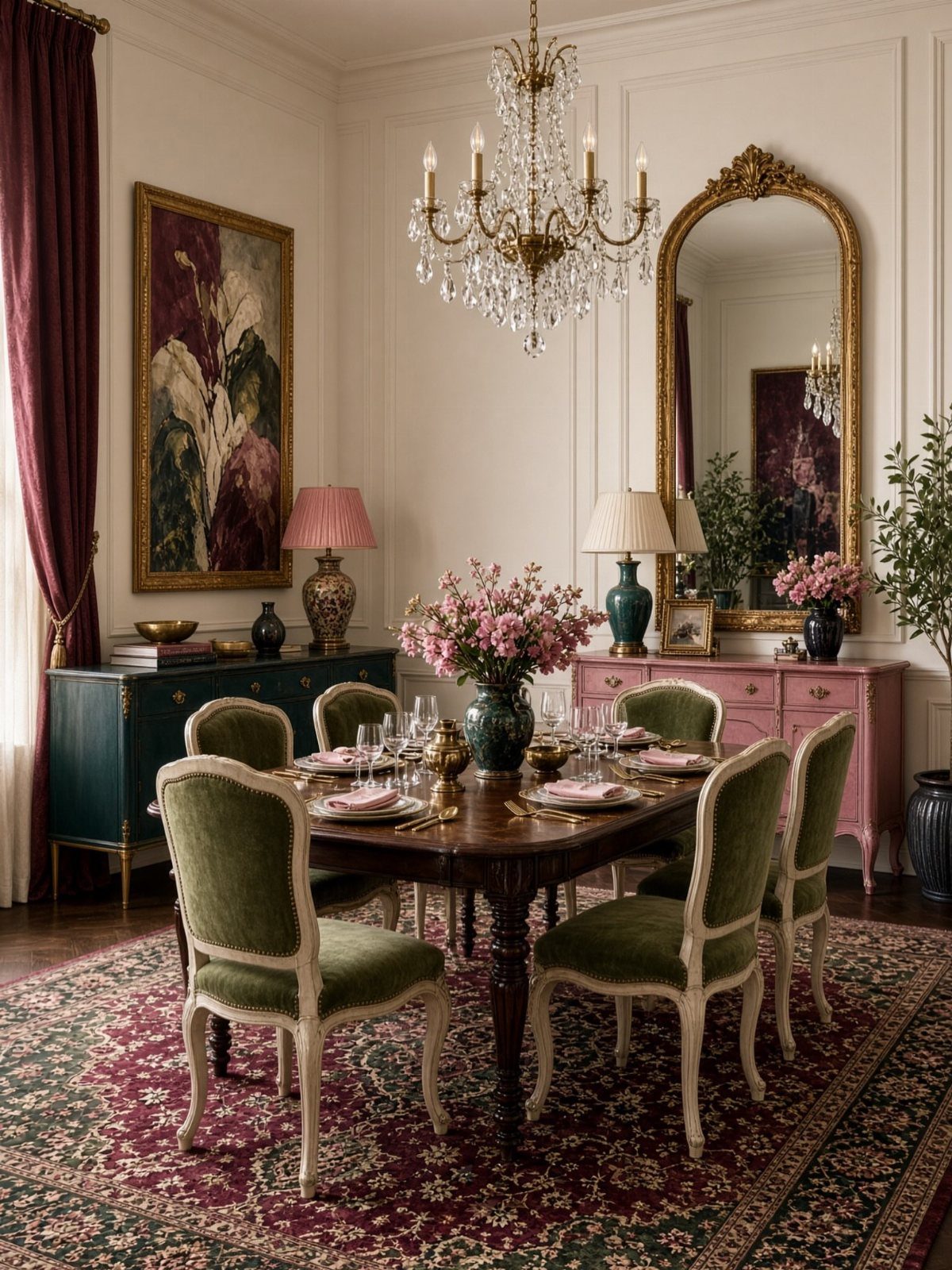
Upholstered chairs make long dinners easier, and fabric lets you bring in color that a wooden chair can’t. Green and pink on a dark table feels formal without turning stiff.
If a full set is too much, I would buy 2 upholstered chairs for the ends and keep the sides simple.
Choose a tightly woven or performance fabric if anyone eats here daily; spills are the real test. Slipcovers or a staple-gun reupholstery job on existing seats stretch a small budget.
13. Potted Plants
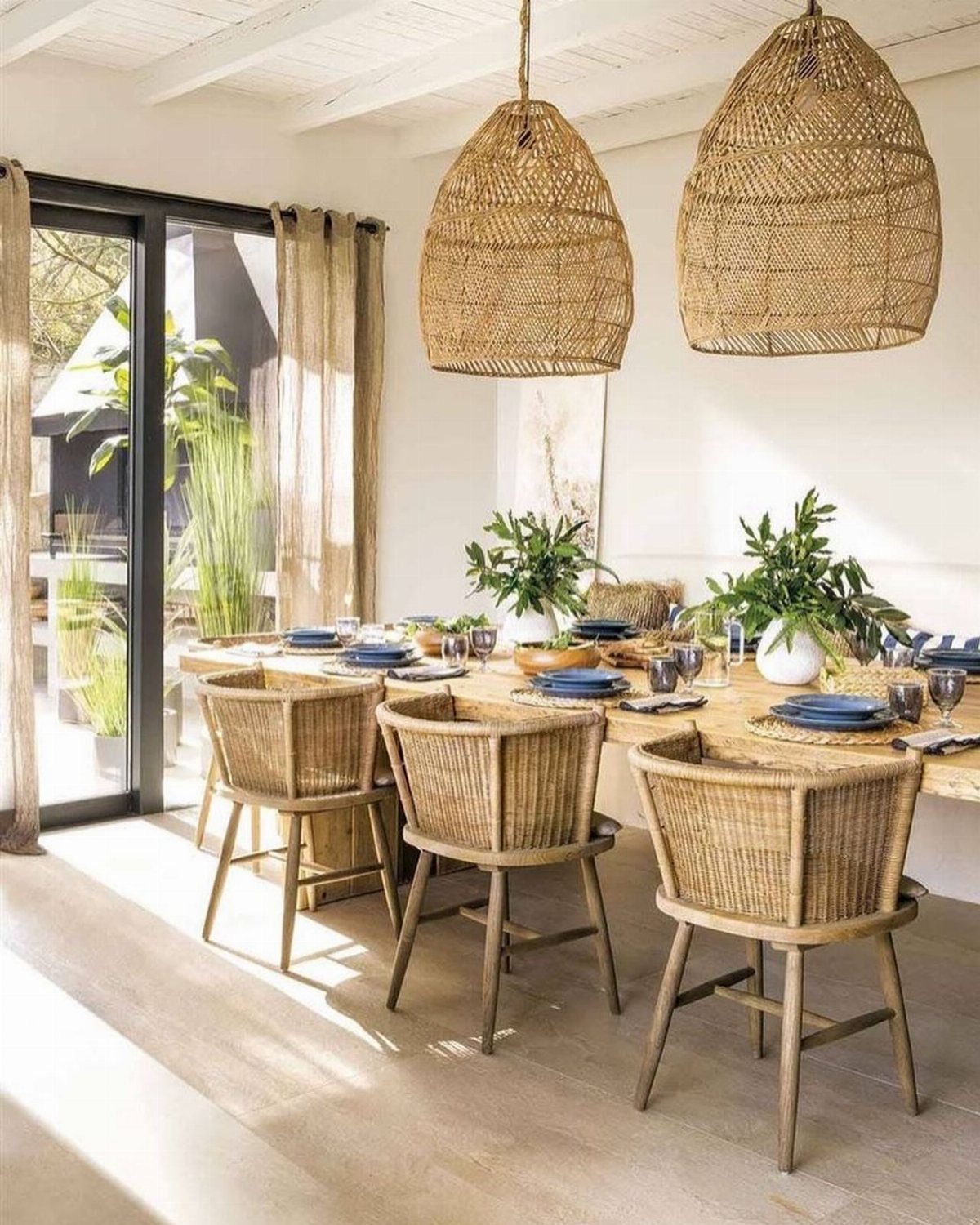
Greenery on the table itself softens a room full of wood and wicker, and the leaves pick up the natural tones of the pendants overhead.
Keep table plants low enough to see across, so conversation isn’t blocked by foliage.
I would put one larger pot near the glass door and 2 small ones on the table, rather than spreading plants everywhere. A plant costs far less than most decor, and swapping pots changes the look in minutes.
14. Textured Rugs
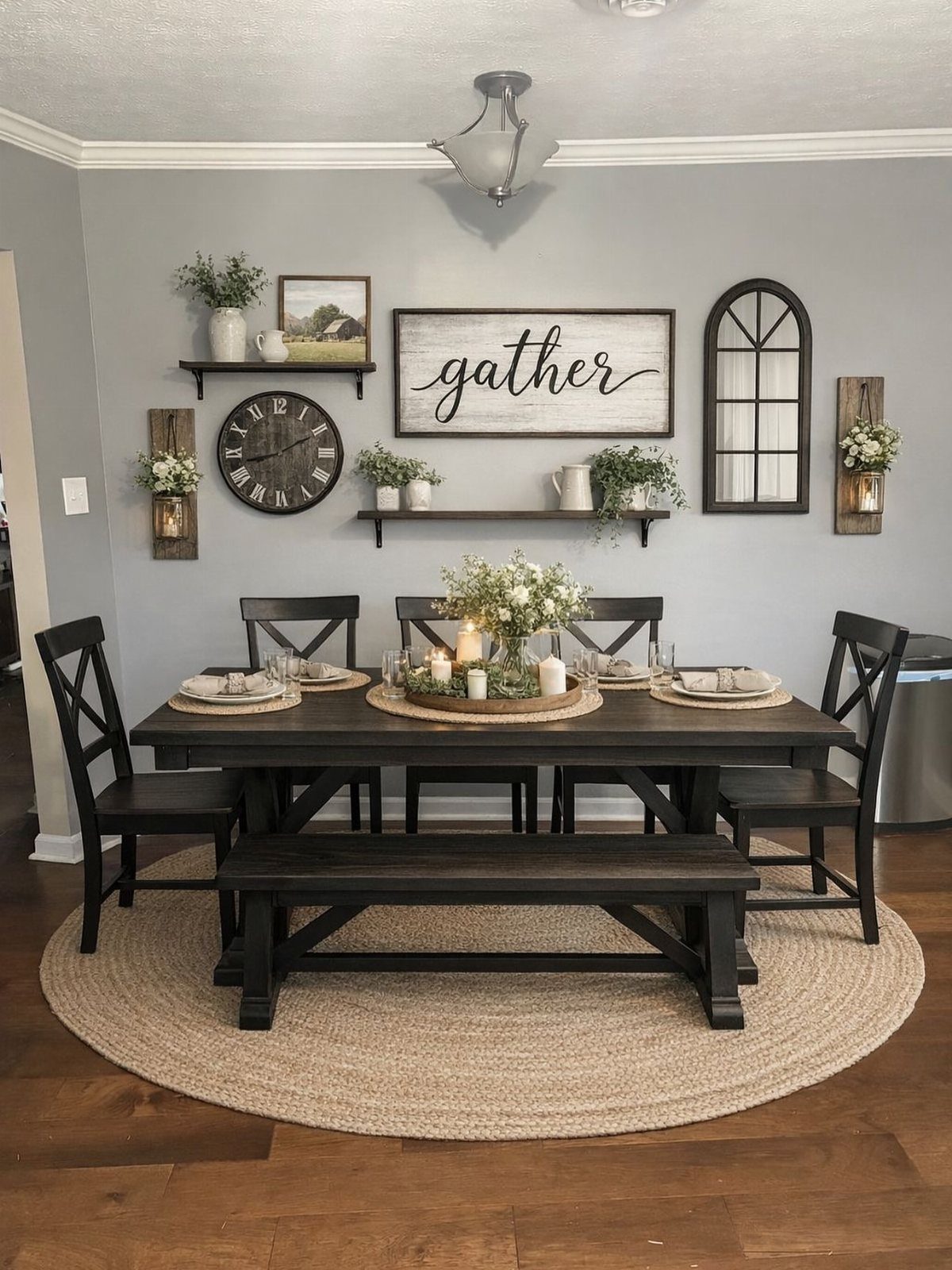
A round jute rug under a dark wood set adds warmth to a grey wall, and the woven texture keeps the heavy furniture from feeling stiff.
Before buying, check that the rug reaches past the chair legs when the chairs are pulled out, so nothing catches on the edge.
With a bench in the mix, a round shape works well because it frames the whole group. Jute is a budget-friendly choice, though I would expect it to be rougher underfoot than wool.
15. Elegant Tableware and Centerpieces
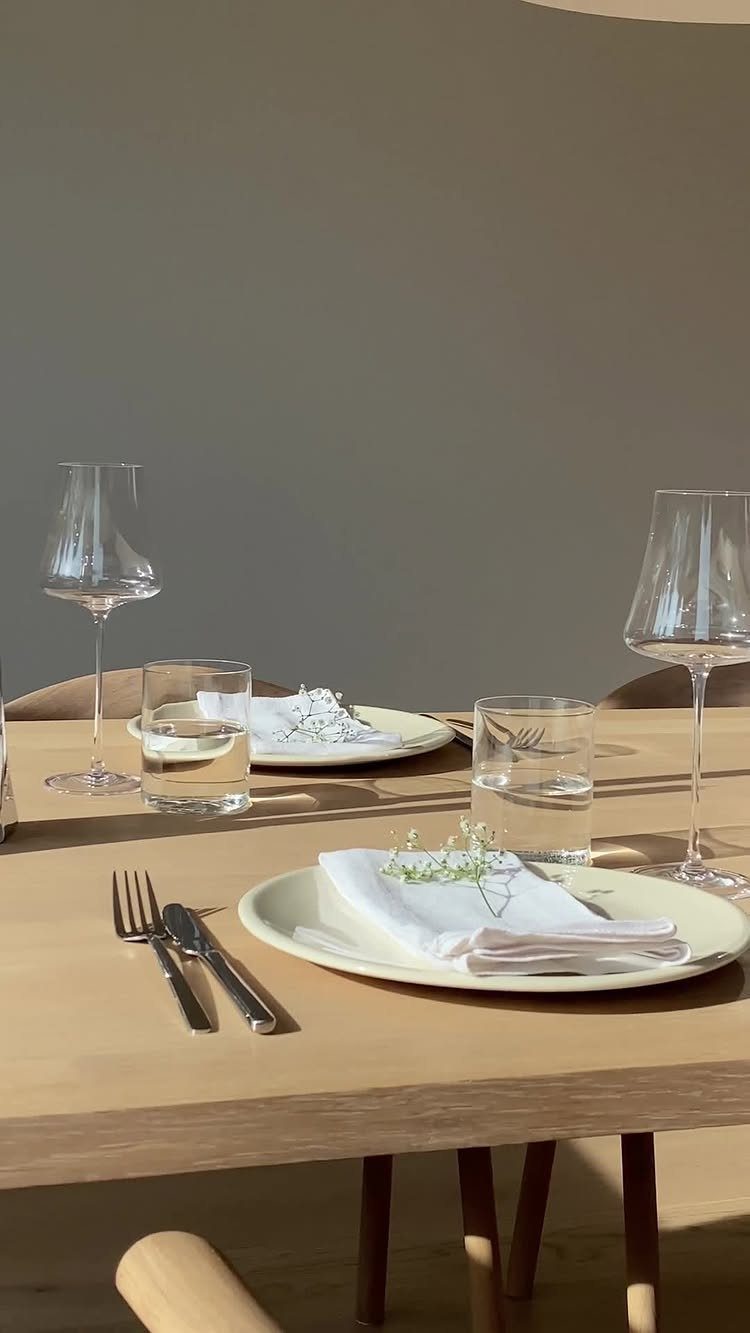
Short flowers in small vases leave sightlines open across the table. I would fold the napkins simply and skip extra decor, since a grey wall behind the table already gives you a quiet backdrop.
16. Wood, Fabric, and Metal
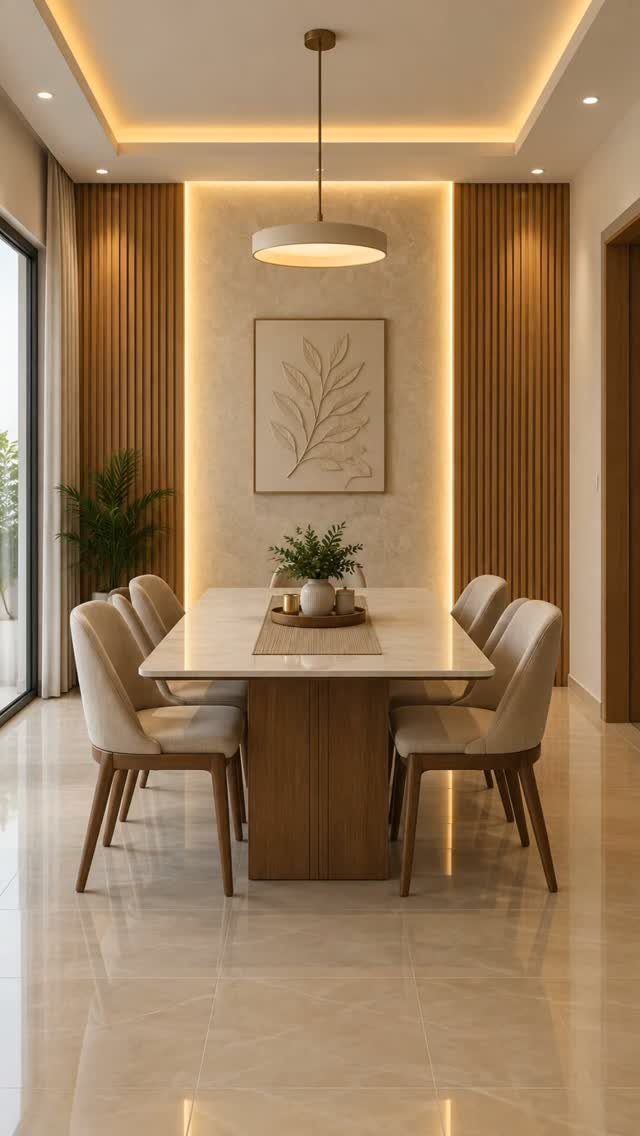
Warm wood, soft fabric, and a single metal fixture give a room 3 textures that never compete. Vertical wood slats on the wall add depth without any pattern at all.
Pick one material for each job: fabric on the chairs, metal overhead, wood on the walls.
For a rental, I would copy the effect with slim wood strips painted or stained and mounted on one wall. Keep the art simple so the textures stay the focus.
17. Use of Mirrors
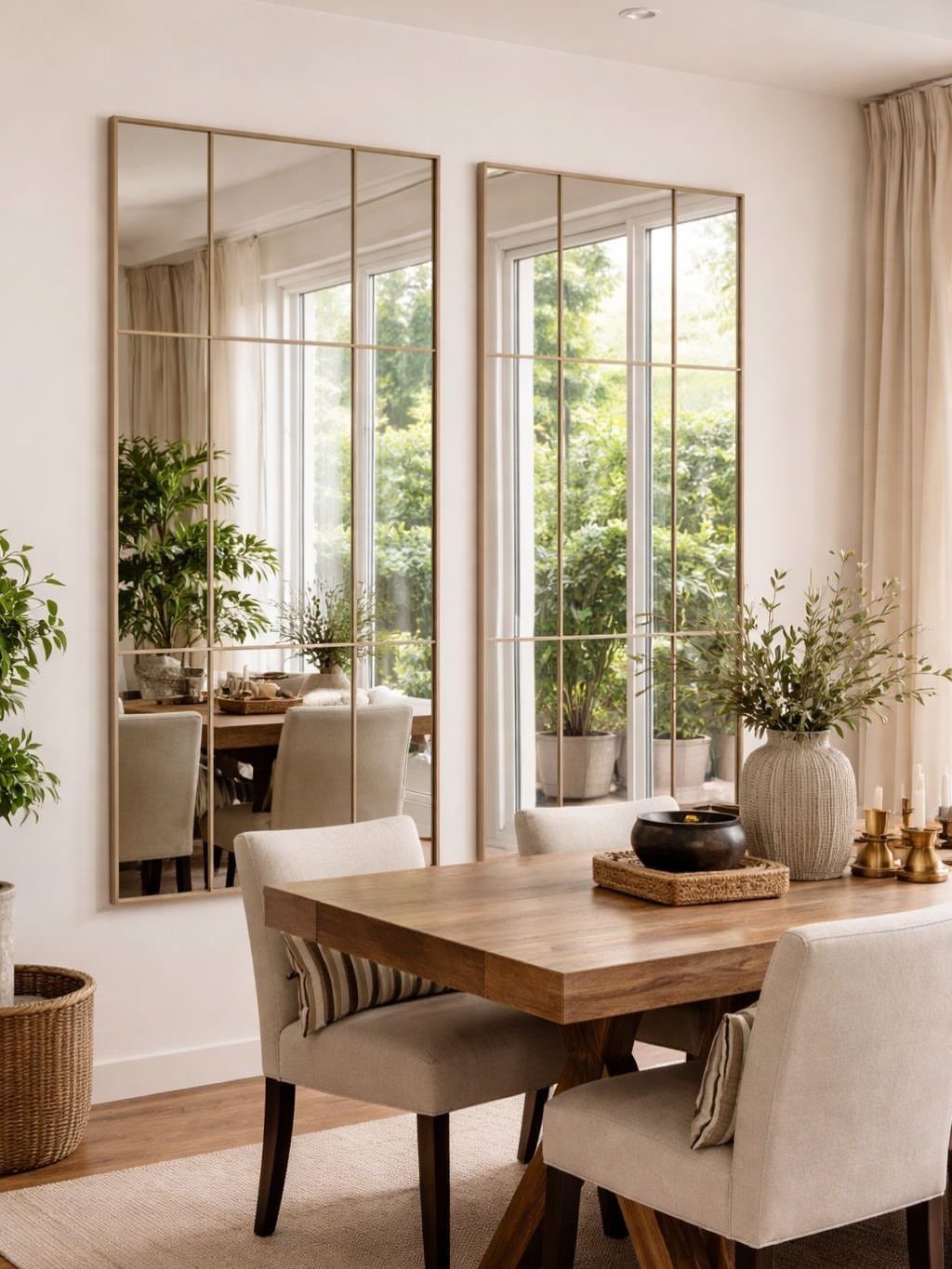
Window-pane mirrors in gold frames do double duty: they bounce daylight around the room and echo the outdoor greenery, so the space feels larger.
Hang them where they catch the brightest light, ideally opposite a window or glass door.
A pair side by side gives you a big, balanced surface for less than one oversized mirror usually costs. I would choose frames with a thin profile so the mirror, not the frame, does the work.
18. Accent Walls
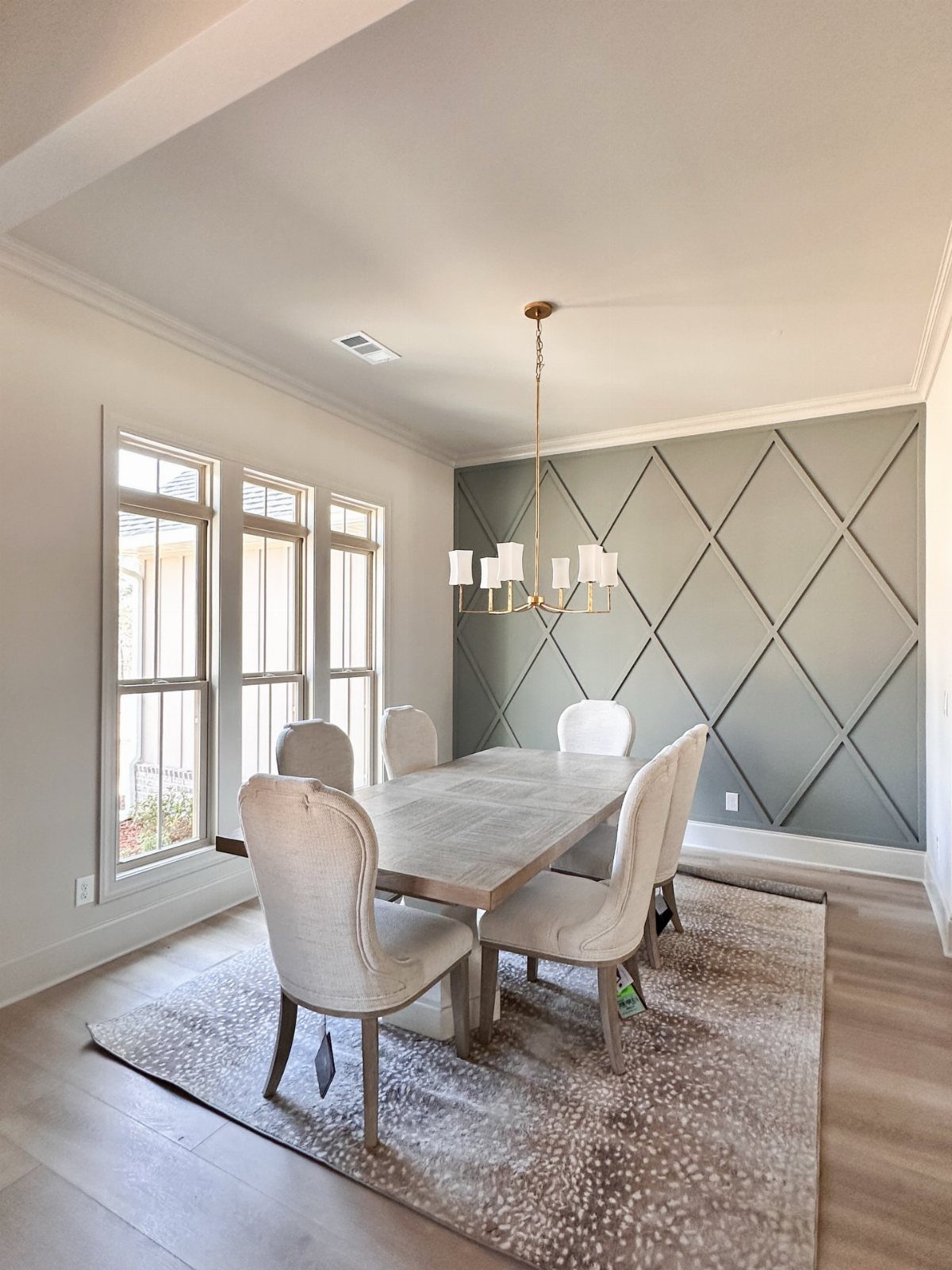
A grey-green wall with diamond-patterned trim gives a dining room a clear focal point, and wood trim is a way to add pattern without wallpaper.
Choose the wall behind the table or the one you see first on entering. Mark the diamonds with painter’s tape and a level before you fix any trim, since uneven lines show immediately.
Beige chairs and a gold chandelier keep a muted wall from going flat. Paint it one weekend, and add trim the next.
Now, clients are embracing the idea of the dining room as a destination again. They’re taking more risks with wallpaper, statement lighting, and bold fabrics, creating rooms that feel layered, intentional, and worthy of gathering.
19. Functional Storage Solutions
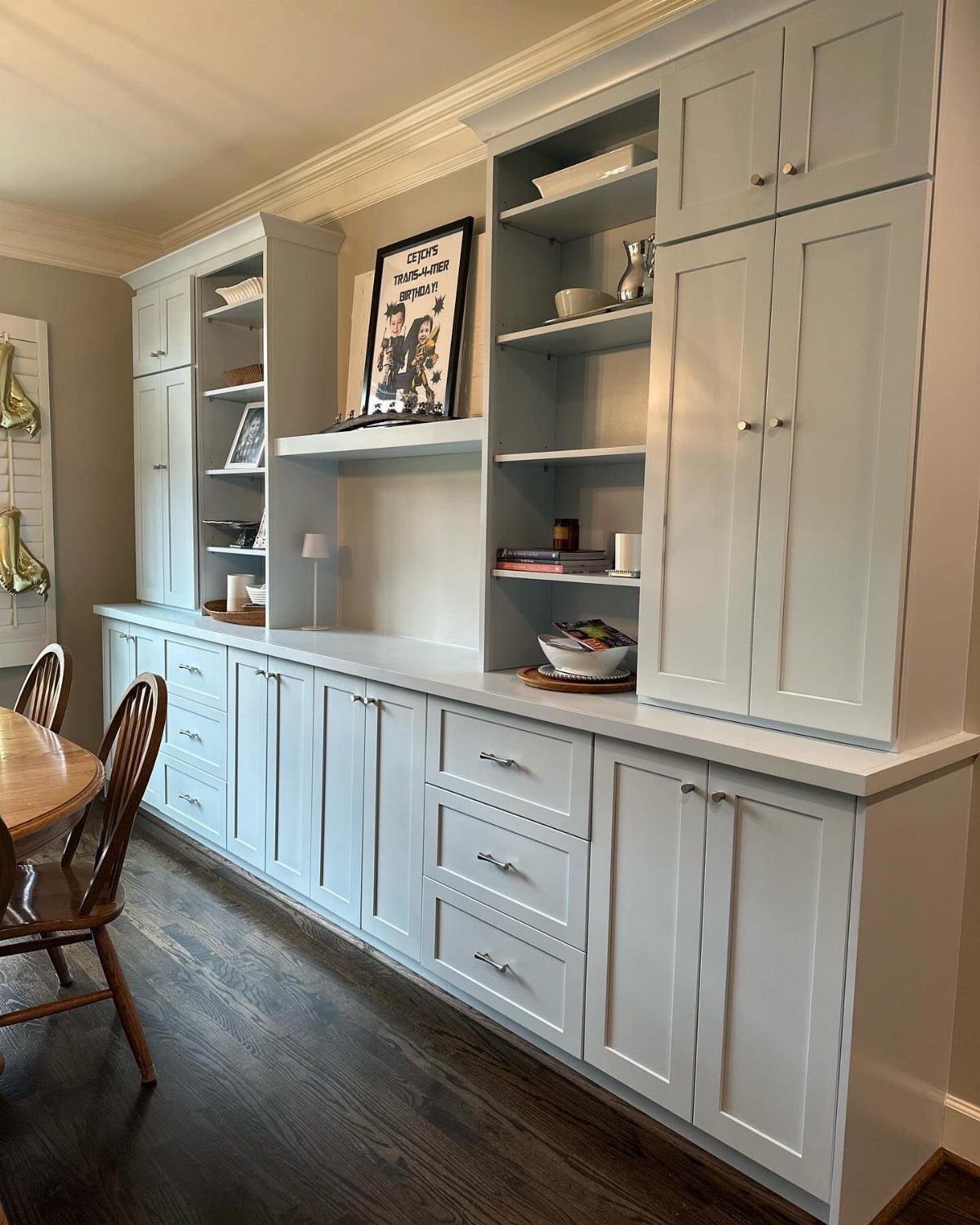
Built-in cabinetry in a light gray paint gives a dining room 3 kinds of storage at once: shallow drawers for linens and flatware, closed cupboards for serveware, and open shelves for the pieces you want seen.
Against dark wood floors, the pale finish keeps a wall of storage from feeling heavy.
I would mix closed and open storage: hide the everyday clutter behind doors, and keep the shelves for a framed picture and a few pieces you like. Leave some shelf space empty so the wall breathes.
A full built-in is a big spend. A freestanding cabinet painted one color is the cheaper route, and a weekend covers the paint.
Frequently Asked Questions
What are the dining room trends for 2026?
Bolder rooms are the clear direction: saturated paint, patterned wallpaper, colorful chairs and sculptural lighting. Tables are also treated as a feature to be seen, so a live-edge slab or a lacquered top often goes without a tablecloth.
Dining rooms are also doing more than meals, with homework and remote work happening at the same table.
What kind of pictures should you hang in a dining room?
Choose art you love that suits the room’s style, and a gallery wall of mixed frames over a banquette works well. Pull one color from the art into your pillows or chairs so the room looks planned.
To hang a gallery wall without extra nail holes, cut paper templates for each frame, tape them up, and adjust the layout until it looks right.
Then drive the nails straight through the paper. One oversized abstract canvas usually costs less than a grouped set of small frames, and it fills the wall with a single purchase.
What are some creative ideas for dining rooms?
Papering the wall behind the table, using peel-and-stick if you rent, gives the most change for the least money. An oval table, a banquette in one saturated color, or mismatched chair cushions add personality too.
A single oversized pendant or a pair of window-pane mirrors makes the room feel considered. Most of these fit a weekend and a small budget.





