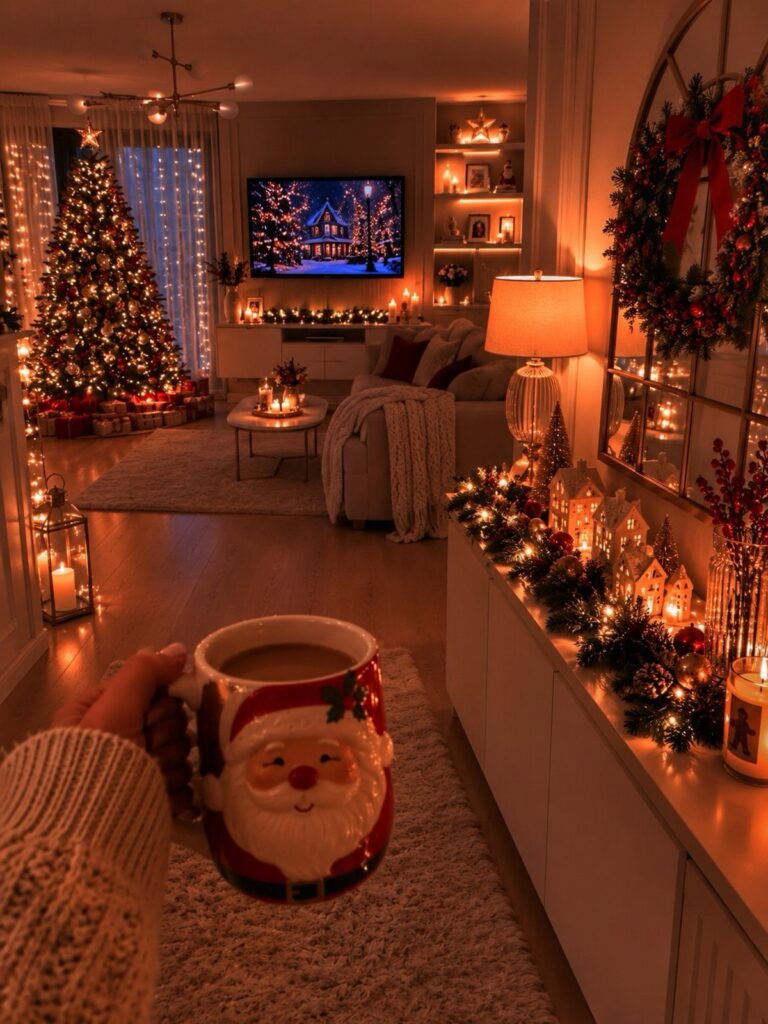
Ideas in this list run from a bowl of pinecones and cinnamon sticks, which is about the lowest-effort decor I know, to a full tree of vintage ornaments hunted down at thrift stores and flea markets.
Which idea fits depends on what the room already holds: a white sofa can carry red plaid accents and a throw blanket, while a neutral room needs texture in wood, fabric, and metal to keep it from looking flat.
1. Decorative Pillows
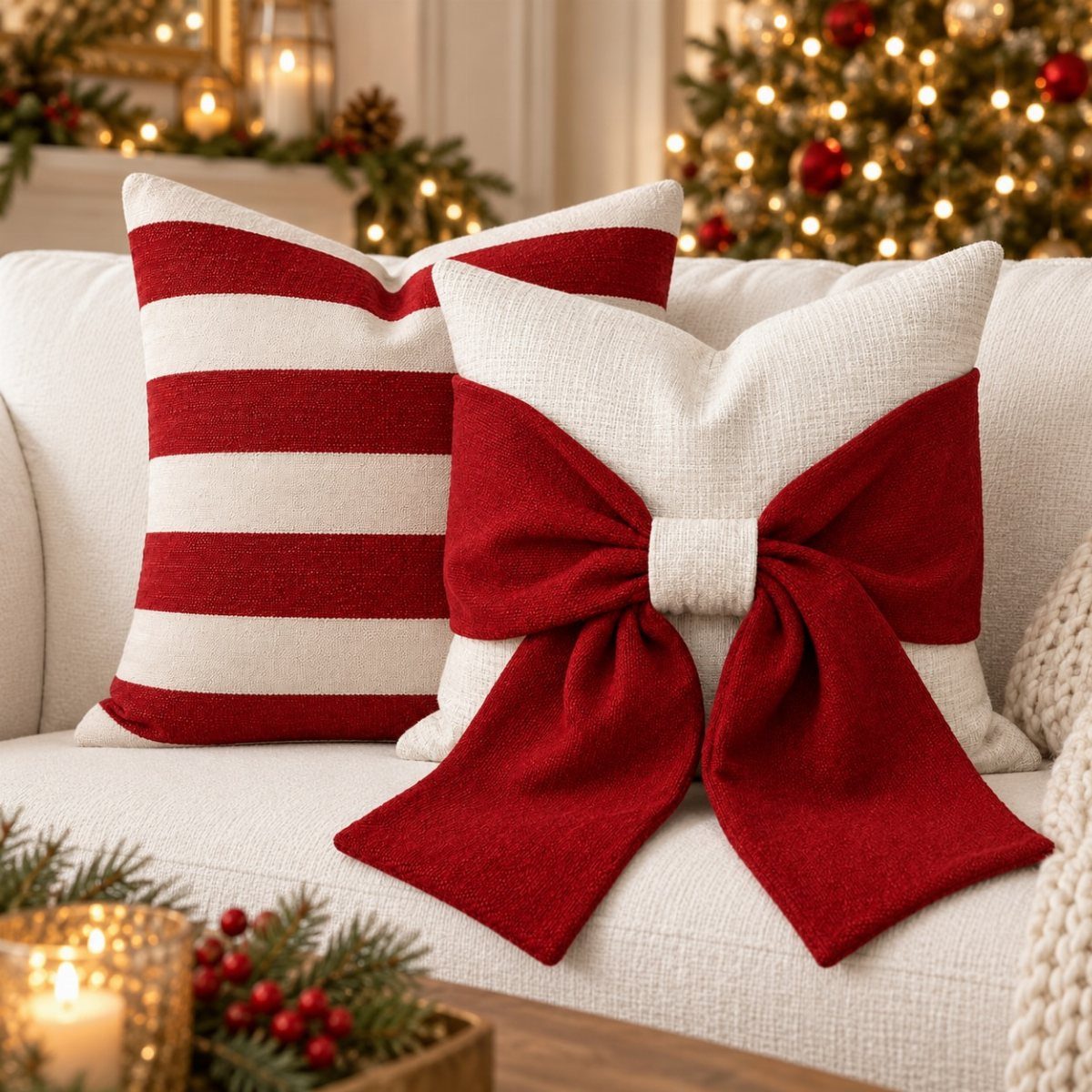
Red and white stripes next to a bow pattern work because the two share a palette but not a scale. Pairing them is the move I’d copy on a white sofa.
Extra pillows cost less than most seasonal decor and make a sofa look settled for the season right away.
Start with 2 matching ones, then add a third in a different pattern so the pile looks collected instead of bought as a set. Pillow covers cost far less than new inserts, and they store flat after the holidays.
2. Fresh Greenery and Pinecones
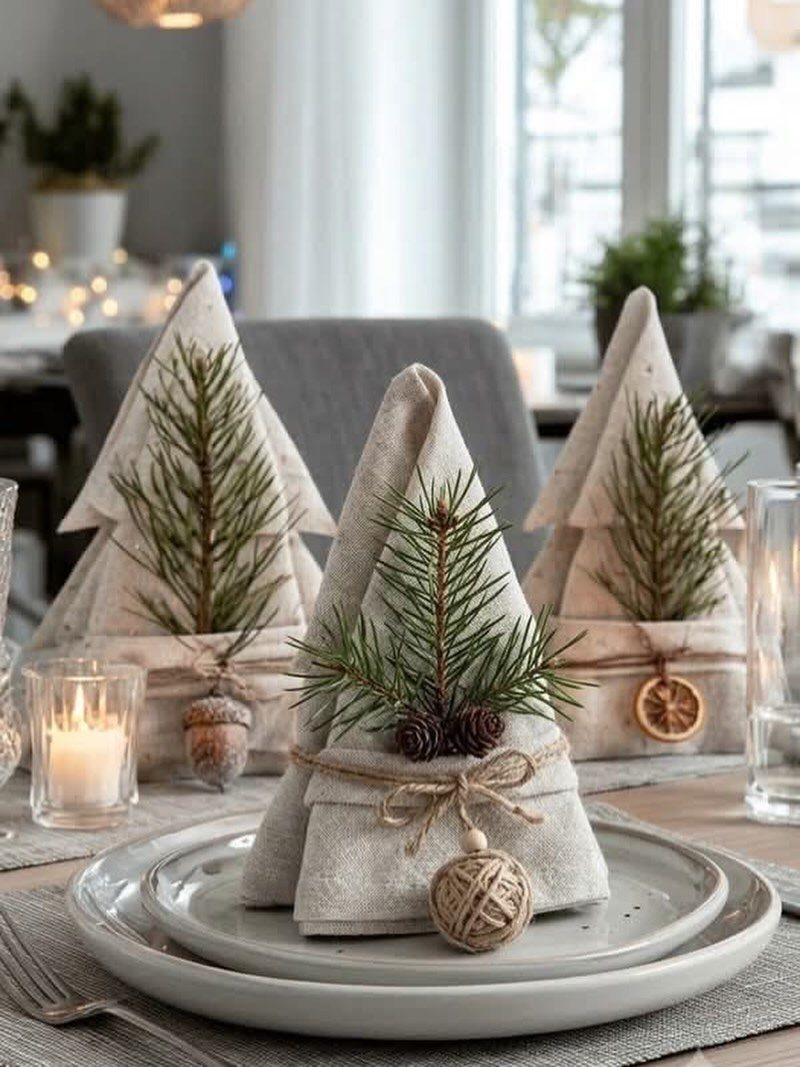
Napkins folded into little trees, each with a pine sprig and pinecones on a plate, turn a plain table into a Christmas one for almost nothing. Linen holds a fold better than thin paper, so I’d pick it.
Fresh pine dries out, so cut new sprigs close to the day you host. White plates keep the green the focus.
3. Plaid Accents
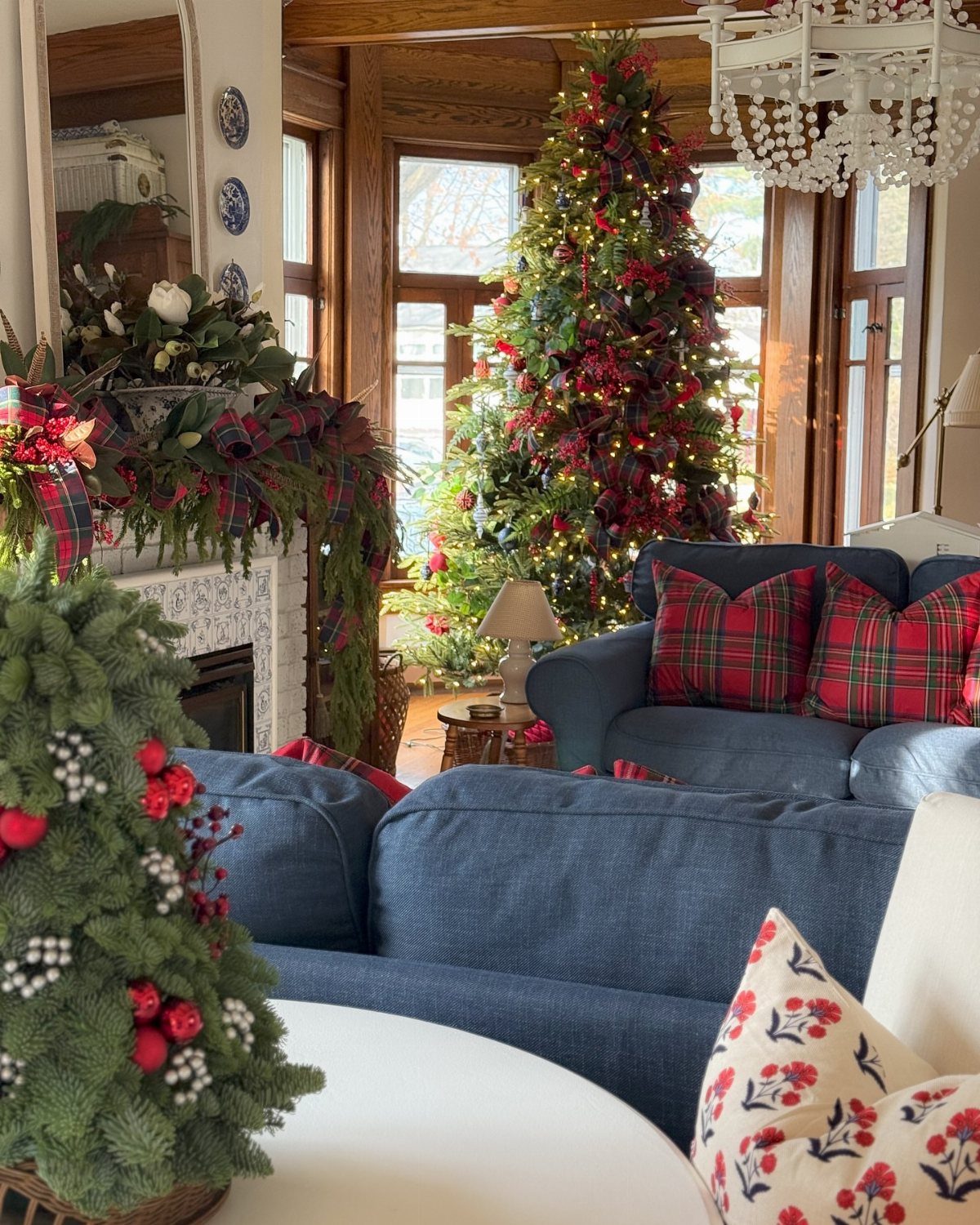
Red plaid against a blue sofa is a bolder choice than the usual red on neutral, and I like it for that reason. The blue calms the red down and lets the plaid read as classic instead of loud.
Keep plaid to a few pieces, such as 2 pillows, so the greenery and tree still get attention. If your sofa is a neutral, plaid will stand out even more, so go with a smaller pattern.
4. Pinecones and Cinnamon Sticks in Bowls

A bowl of pinecones and cinnamon sticks is about the lowest-effort Christmas decor I know. Use a plain white bowl so the browns do the work, and set it on wood where the colors look warm.
Mix the two instead of layering them, with the cinnamon sticks poking up between the cones.
Put it on a coffee table or an entry shelf. A cloth in a rust or orange tone underneath adds one more layer without more clutter.
5. Vintage Ornaments
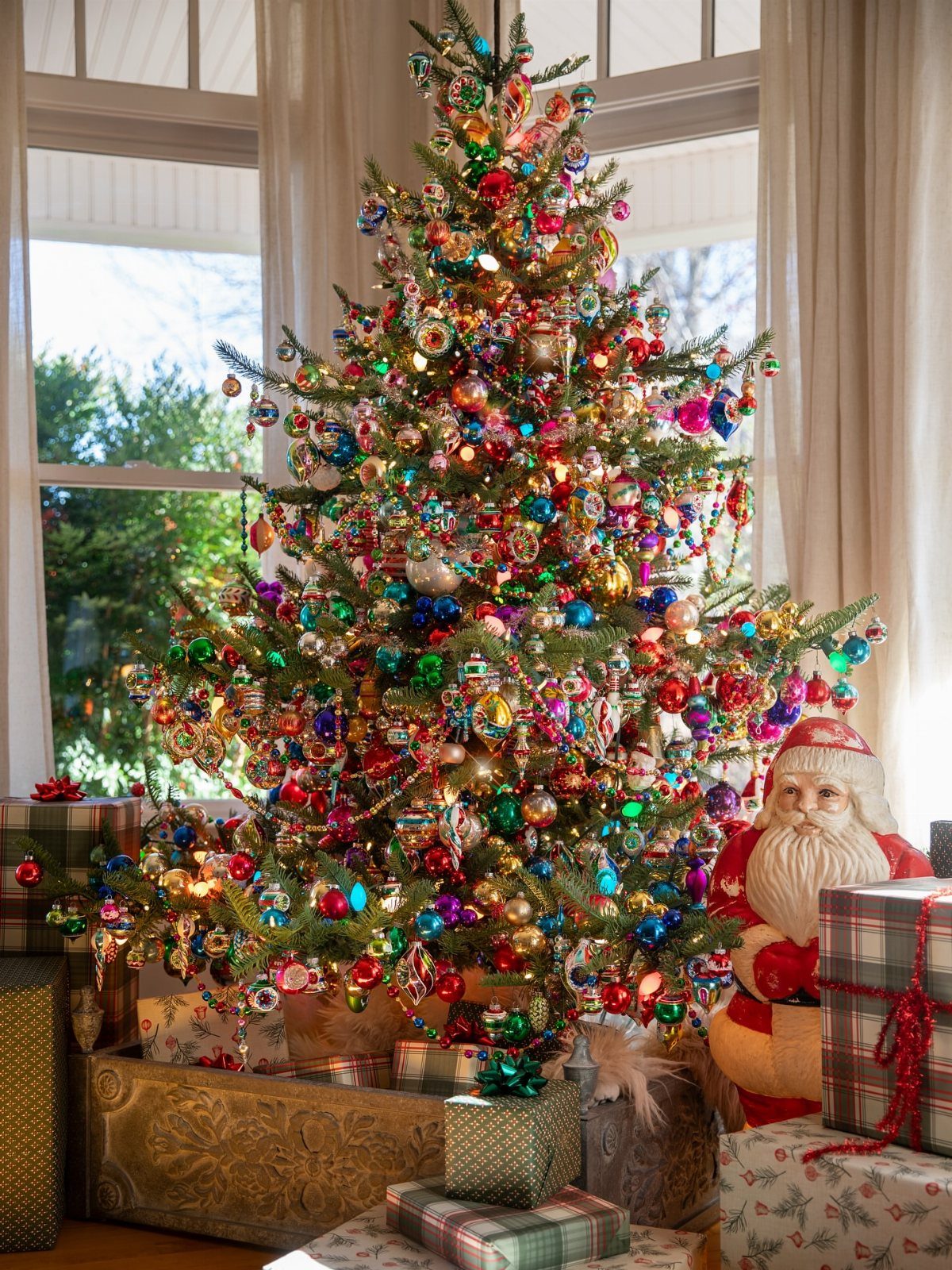
Old ornaments give a tree a look new sets rarely match: mixed colors, uneven finishes, and a feeling that every piece has a history. Tinsel and a small Santa figure at the base push it further toward nostalgia.
Check thrift stores, family boxes and flea markets before buying new.
Hang the most colorful pieces at eye level, and fill gaps with simple solid-color balls so the tree doesn’t feel chaotic. Many vintage ornaments are fragile, so hang them on sturdy branches.
6. Throw Blankets

A throw with "Merry Christmas" printed on it says the season outright, so I’d drape it where people actually sit: over the arm or back of the sofa, not folded in a basket.
Comfort comes from variety, so add a second blanket in a softer texture, like a chunky knit or a solid cream.
Keep a third within reach for guests. Red on a white sofa is high contrast, and a neutral layer calms it down.
7. Coffee Table Decor
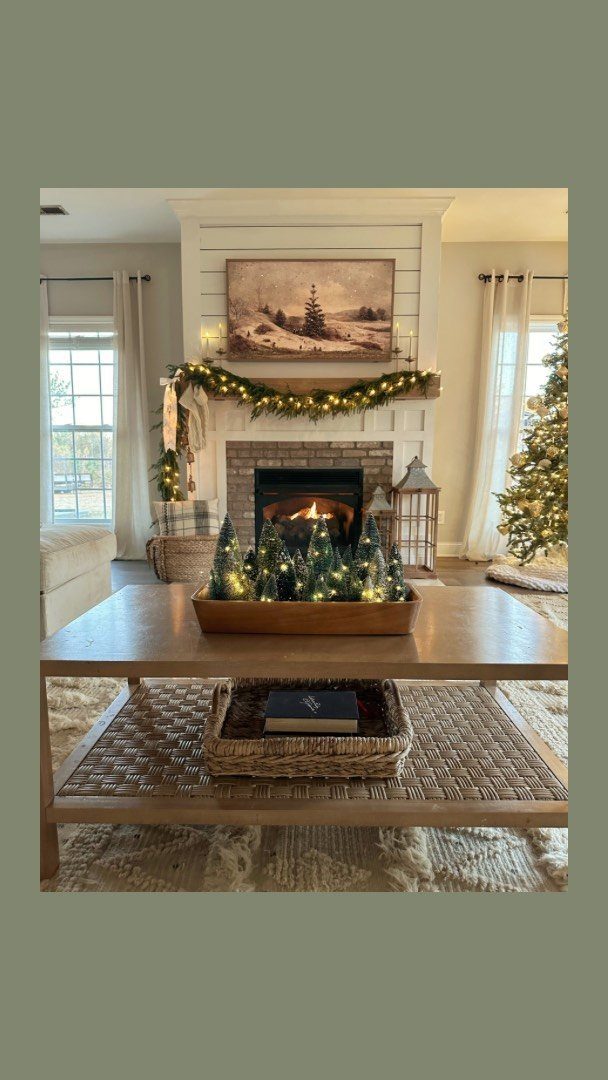
A tray keeps a handful of small pieces from reading as clutter, and a wooden table gives the mini lit trees a warm base.
I’d group the trees on the tray and set a basket beside it, so the tabletop has height without crowding.
Leave part of the wood bare. People still need room for mugs and a book, and a tray is easy to lift off when you want the table clear.
8. Garland Decorations
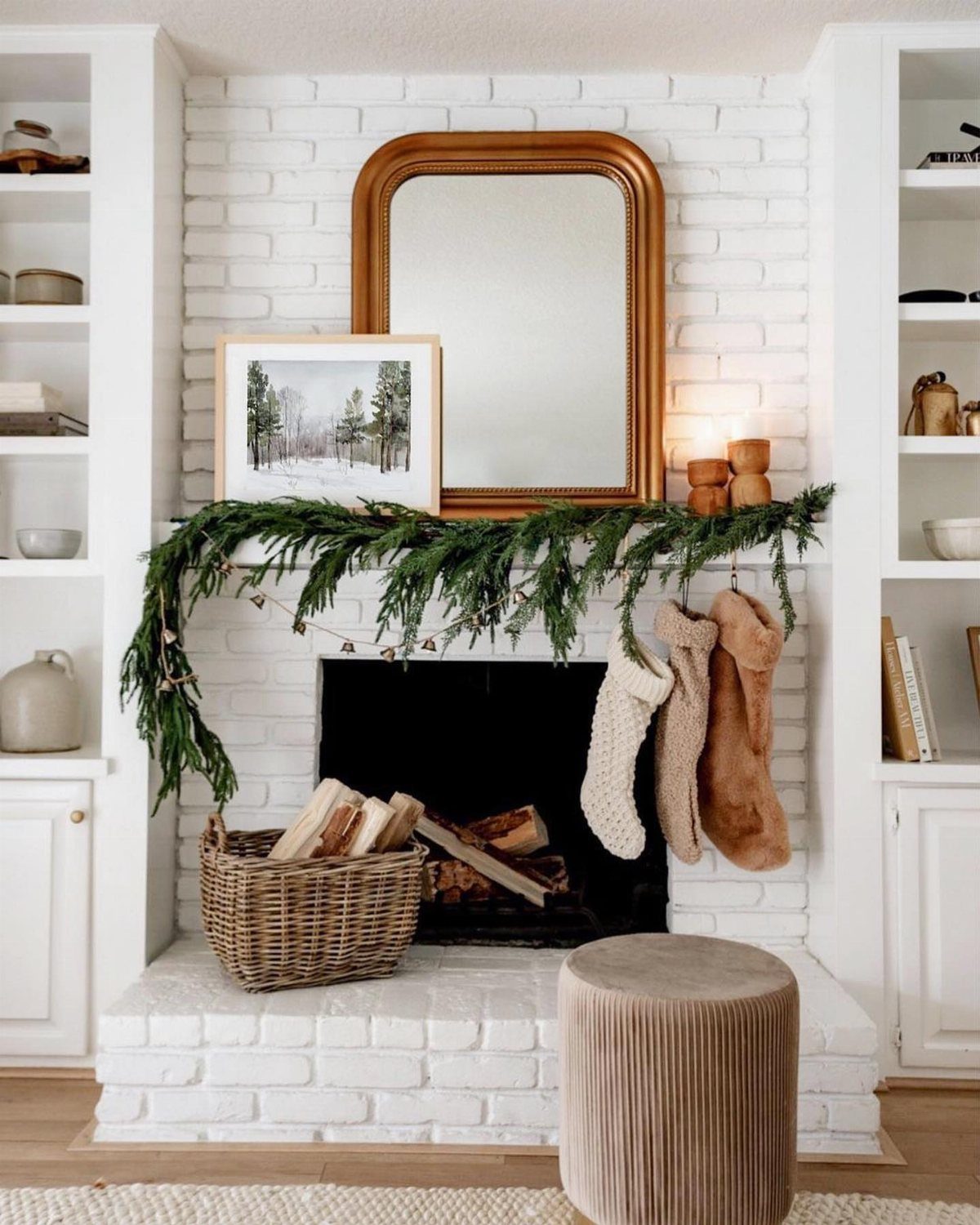
Garland on a white brick mantel does the most when everything around it stays quiet. Green against white brick is enough contrast, so I’d skip extra ribbon and leave the stockings and the mirror to carry the rest.
Run it along the full length of the mantel instead of bunching it in the middle. Shelves on either side give you a spot to repeat a short piece, which ties the whole wall together on a small budget.
9. Candle Arrangements

Setting it in clear glass with red gel adds color even before it’s lit, and a marble surface makes the glow look softer.
Place it in front of the tree so the lights blur behind it. Candles cost little, so a few in different heights will fill a shelf or side table without much planning.
10. Mismatched Stockings
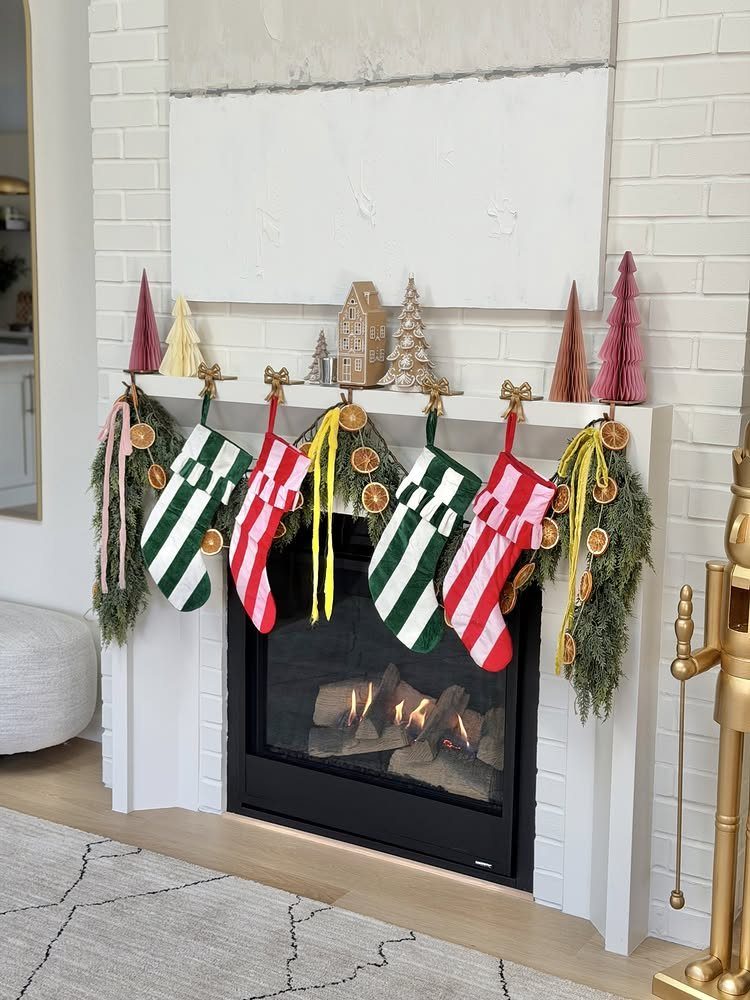
Stockings that don’t match look more lived-in than a matching set, and stripes are the easiest way to pull it off.
Keep to red and green so the variety reads as a choice. Hang them at uneven heights if the mantel allows.
Dried oranges are cheap, and they add a warm color the stockings don’t have.
11. String Lights
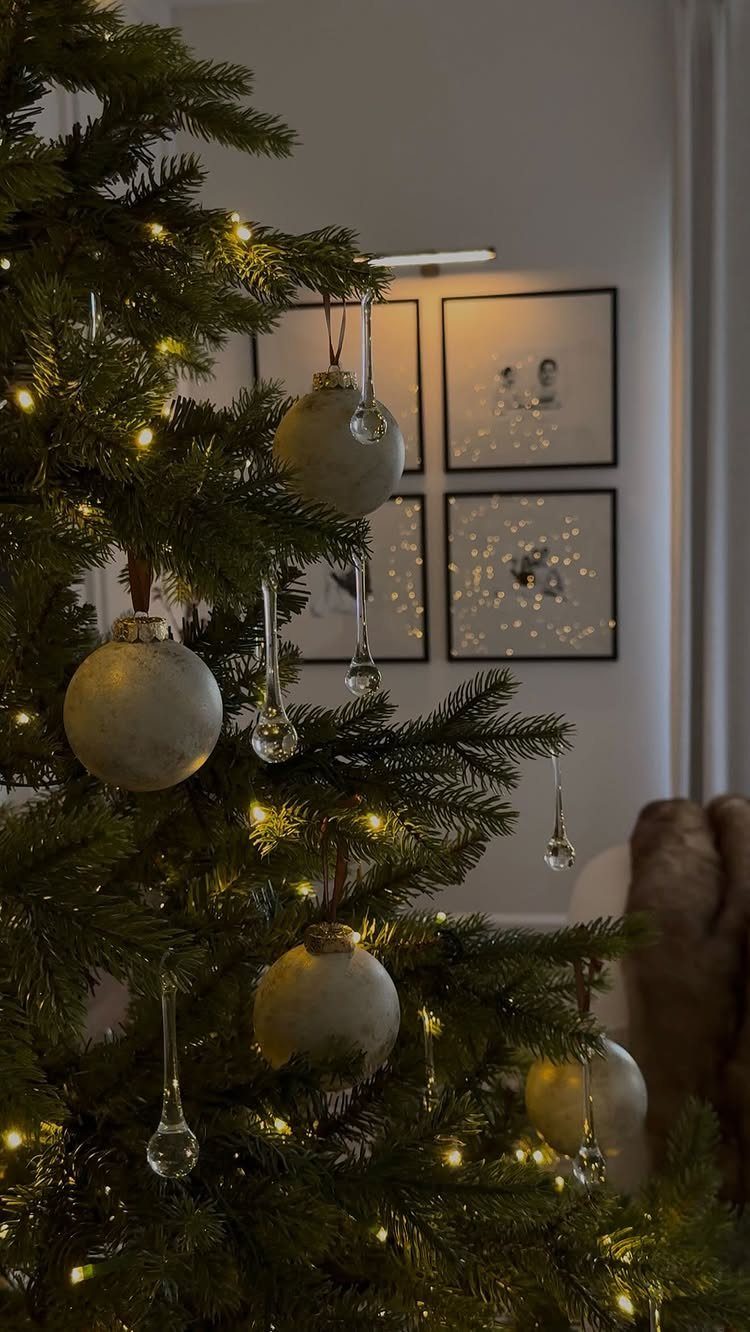
Warm white string lights are the cheapest way to make a room feel softer, and they work best when they aren’t the only glow.
I’d light the tree, then add a lamp or candle across the room so the light has more than one source.
Pale ornaments let the bulbs stand out, since nothing competes with them. Pick warm over cool white; it suits a living room better.
12. Wood, Fabric, and Metal
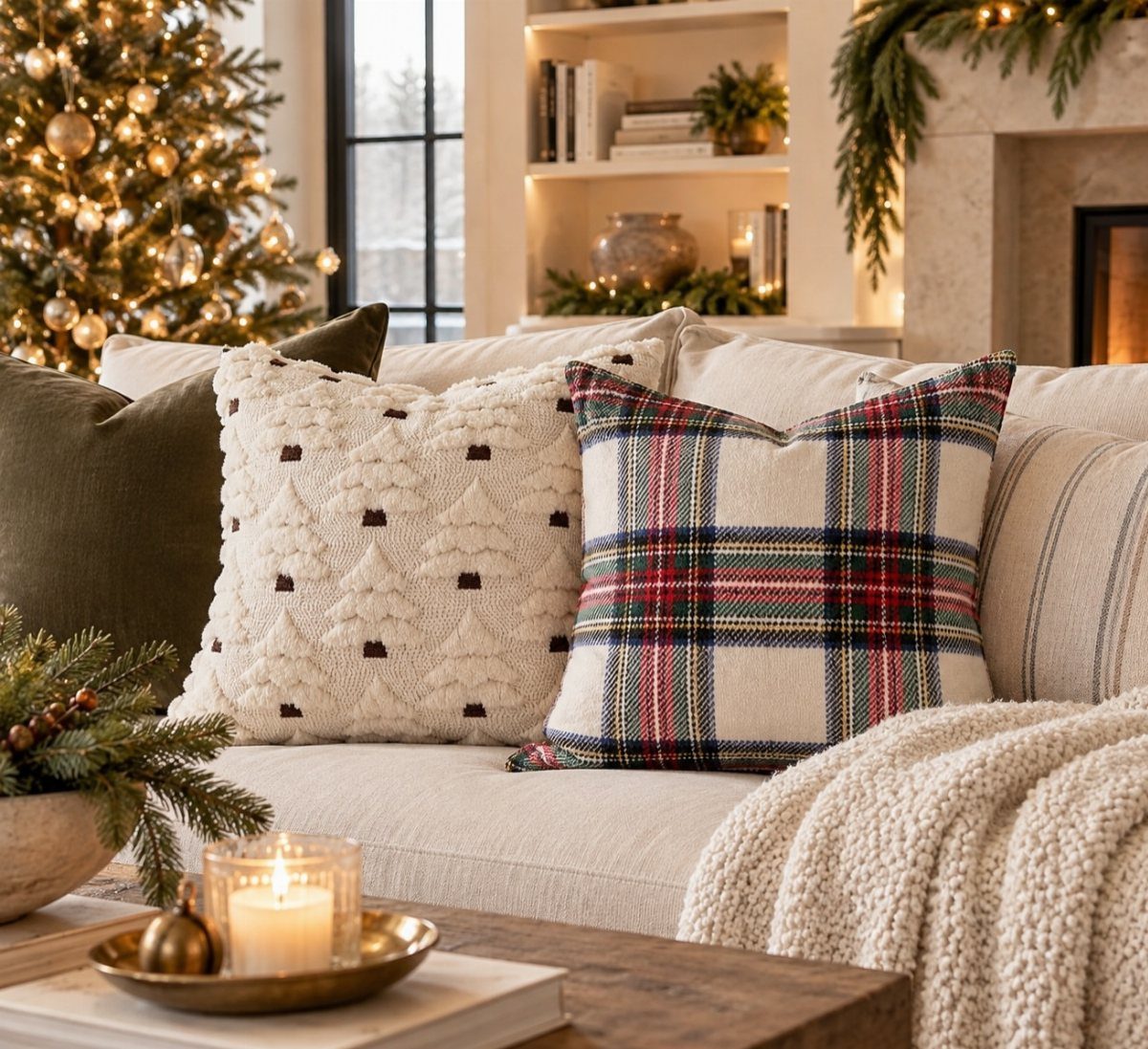
Each one feels different to the touch, and that’s what keeps a mostly neutral room from looking flat.
Add textured pillows to repeat the fabric, and keep the metal to one or two pieces so it reads as an accent.
13. Asymmetrical Mantel Decor
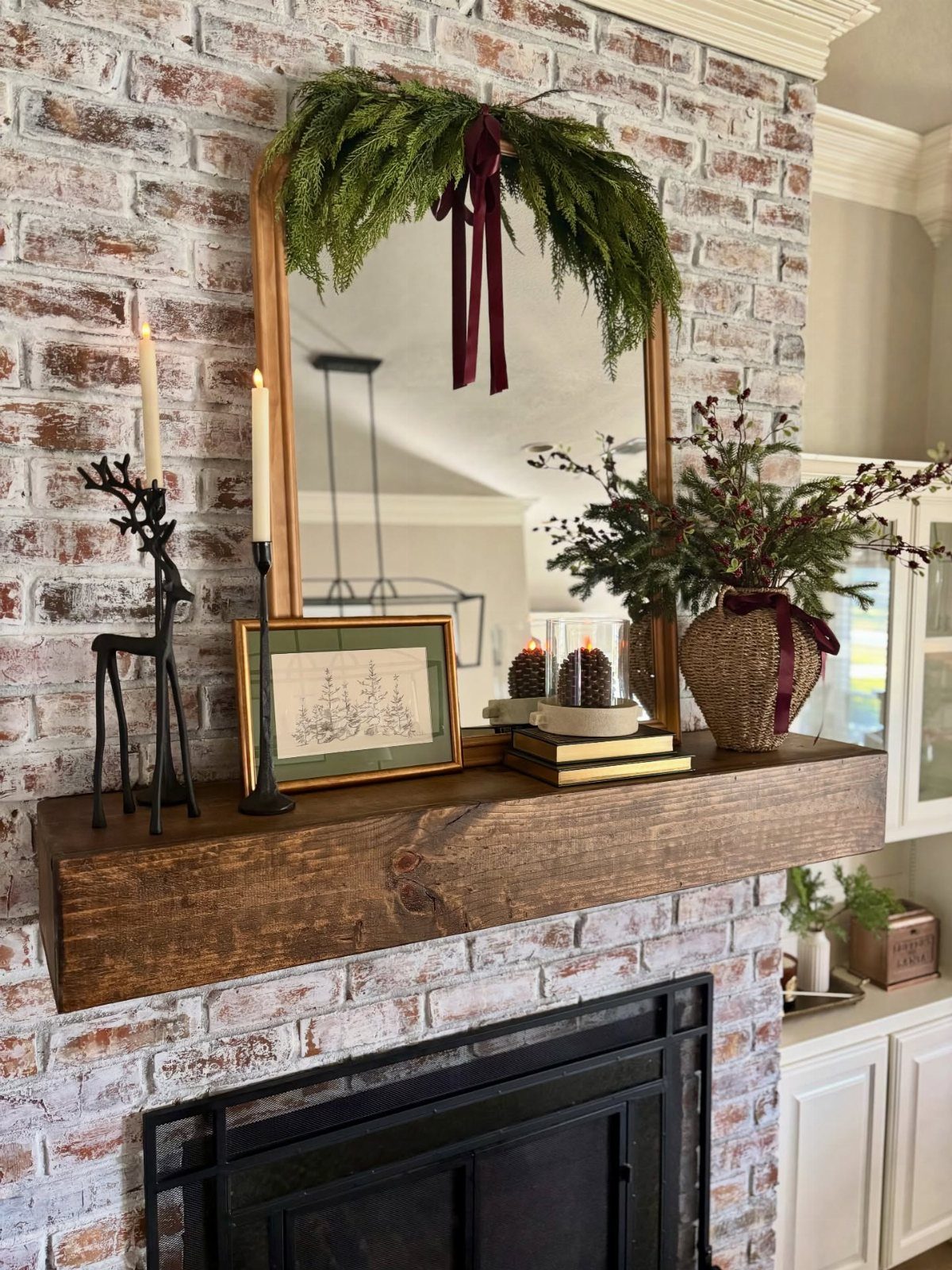
A mantel that leans to one side holds attention longer than a centered, mirrored setup.
Here the mirror and framed print sit off to one side, and the greenery and candles fill the other, so the eye travels across instead of stopping in the middle.
Balance by weight, not by matching.
Put the tallest piece, like the mirror, on one end, and offset it with a cluster of 2 or 3 smaller ones. Odd numbers look more natural than pairs.
Keep some wood showing between groups so the mantel can breathe.
Creating a Cozy Atmosphere
A room feels cozy when several layers stack up: soft light, varied textures, and little touches that look like someone actually lives there. A tree does a lot of that work on its own, so start there and build outward.
Pull in things from nature to add texture.
If a lot of decor feels overwhelming, group like colors together. It cuts visual clutter fast, and it works even when you own plenty of pieces.
Pick one color family for blankets and pillows, then tie the gift wrap into that palette so the tree area matches the sofa. A tree in one simple palette, red for instance, makes the whole room feel calmer.
Budget-friendly Decorating
Budget Christmas decor doesn’t have to look cheap.
A thrifted brass pedestal bowl is a good example. Vintage-style brass bowls often sell for under $20, and one holding an amaryllis bulb with some greenery tucked around it reads like a styled vignette.
Plain candleholders, stacked books, handmade garlands, and natural materials like branches and cones stretch a small budget a long way. Books you already have work as risers, so they cost nothing.
For a handmade touch, make paper flowers and keep them to red and white, then put them in vases.
Run string along the mantel and clip your favorite holiday cards to it. Both projects fit in an afternoon and use supplies most people have at home.
Maintaining a Cohesive Look
A tight palette holds a room together better than any single piece. Red and green is the classic, but a neutral palette works just as well and is simple to pull off.
Small, subtle touches of winter and the holidays can still make a big difference in how cozy the room feels.
Natural objects tie the palette together, because wood, pinecones, and grapevine fit almost any scheme. Pick one and repeat it in 2–3 spots around the room so the eye picks up a pattern.
Mixing old and new works best when the colors agree. A thrifted piece sits comfortably beside new decor if both share the same color family.





