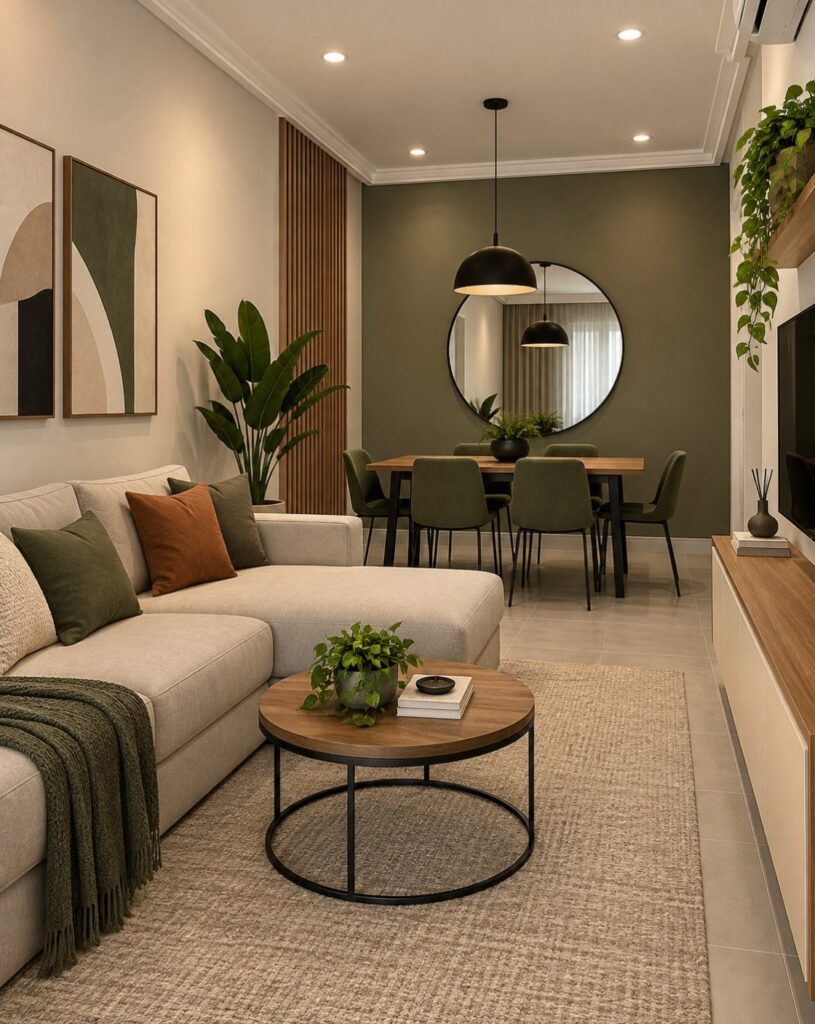
The room you have decides which of these ideas is yours: a small or narrow space calls for a round table or a bench that tucks under, while an open plan needs something like a dark olive accent wall to mark where the eating zone starts.
Whatever you pick, seat height of about 18 inches off the floor is the one measurement worth checking before you buy anything.
1. Statement Dining Table
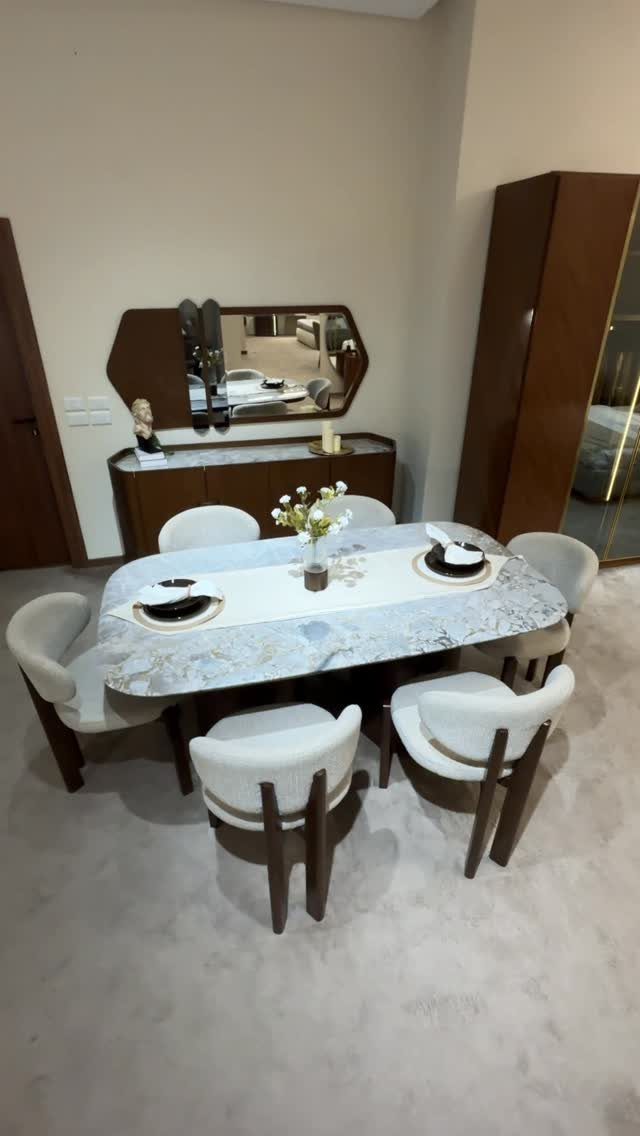
A table this size does the decorating for you, so keep everything around it quiet.
An oval shape suits a room where people walk around the table, since there are no corners to catch a hip.
I’d hang one geometric mirror and stop there. Marble is a splurge, so if the budget says no, a marble-look top on a simple base gets you most of the effect.
Whether you’re enjoying your favorite takeout order or serving a three-course meal for your loved ones, a smartly designed small dining room will always make mealtime better.
2. Bench Seating
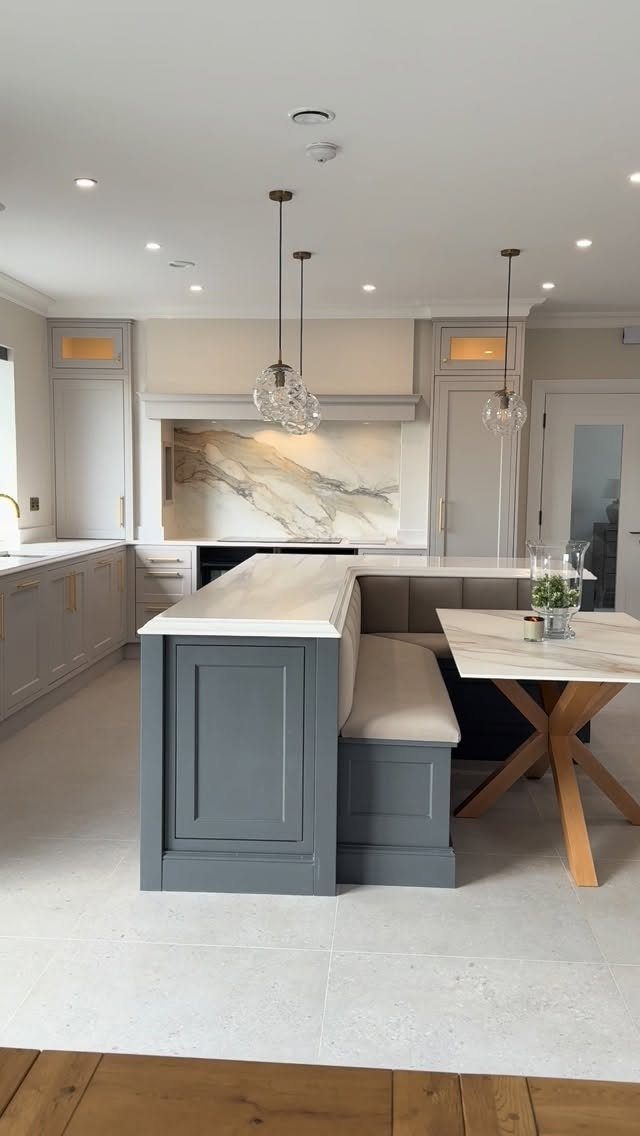
A bench along one side of the table seats more people than chairs would, and a built-in banquette adds storage under the seat. That helps a small room, where every spare few inches counts.
Built-in banquettes like this grey one can attach to a kitchen island. The maker notes 50mm thick quartz on that island, a slab heavy enough to stay put when people slide in and out.
I’d choose a beige cushion in a wipeable fabric, since a bench takes more crumbs than a chair. The trade-off: sitting in the middle means asking others to move.
3. Warm Tones
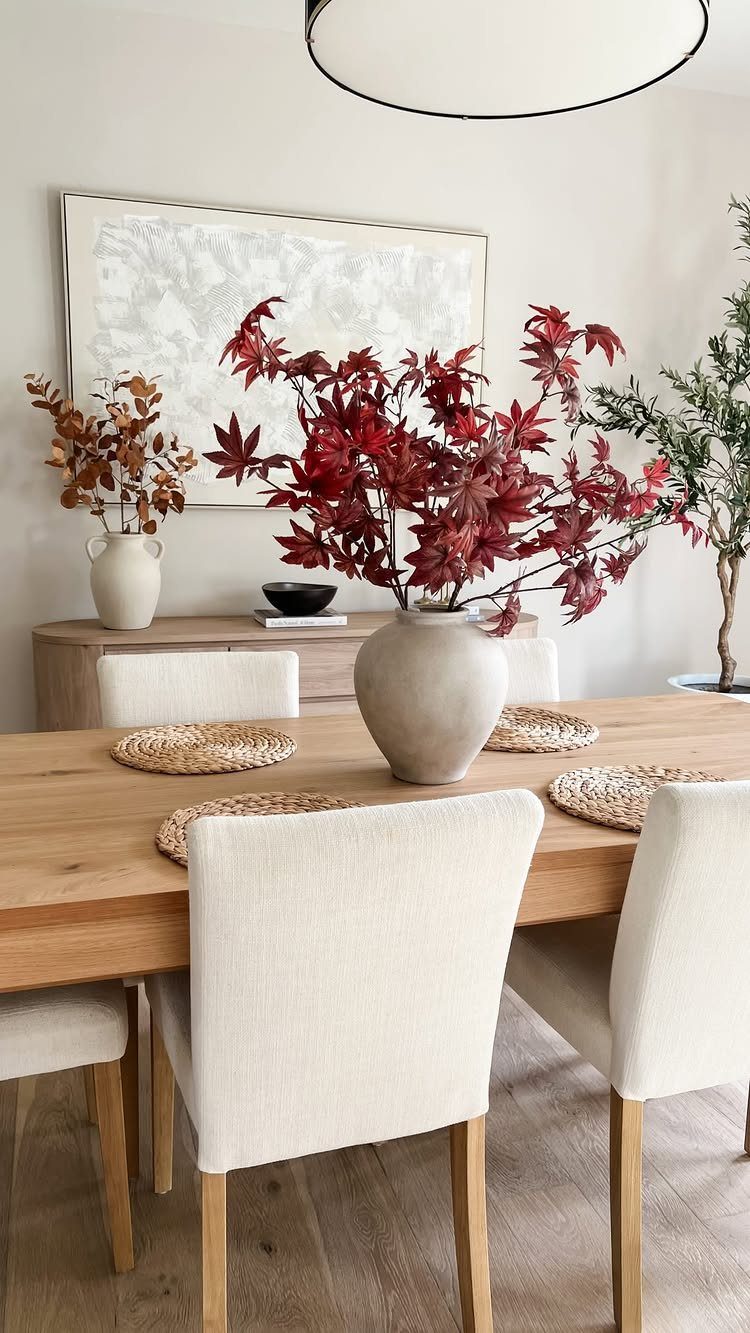
Wood, cream and rust do most of the work in a warm dining room, and none of them needs paint.
I like warmth added through things you can swap, because a seasonal branch or runner costs little and changes by month.
White chairs keep the palette from tipping into brown. If the walls stay neutral, a large abstract painting in similar shades ties the table to the room.
4. Accent Walls
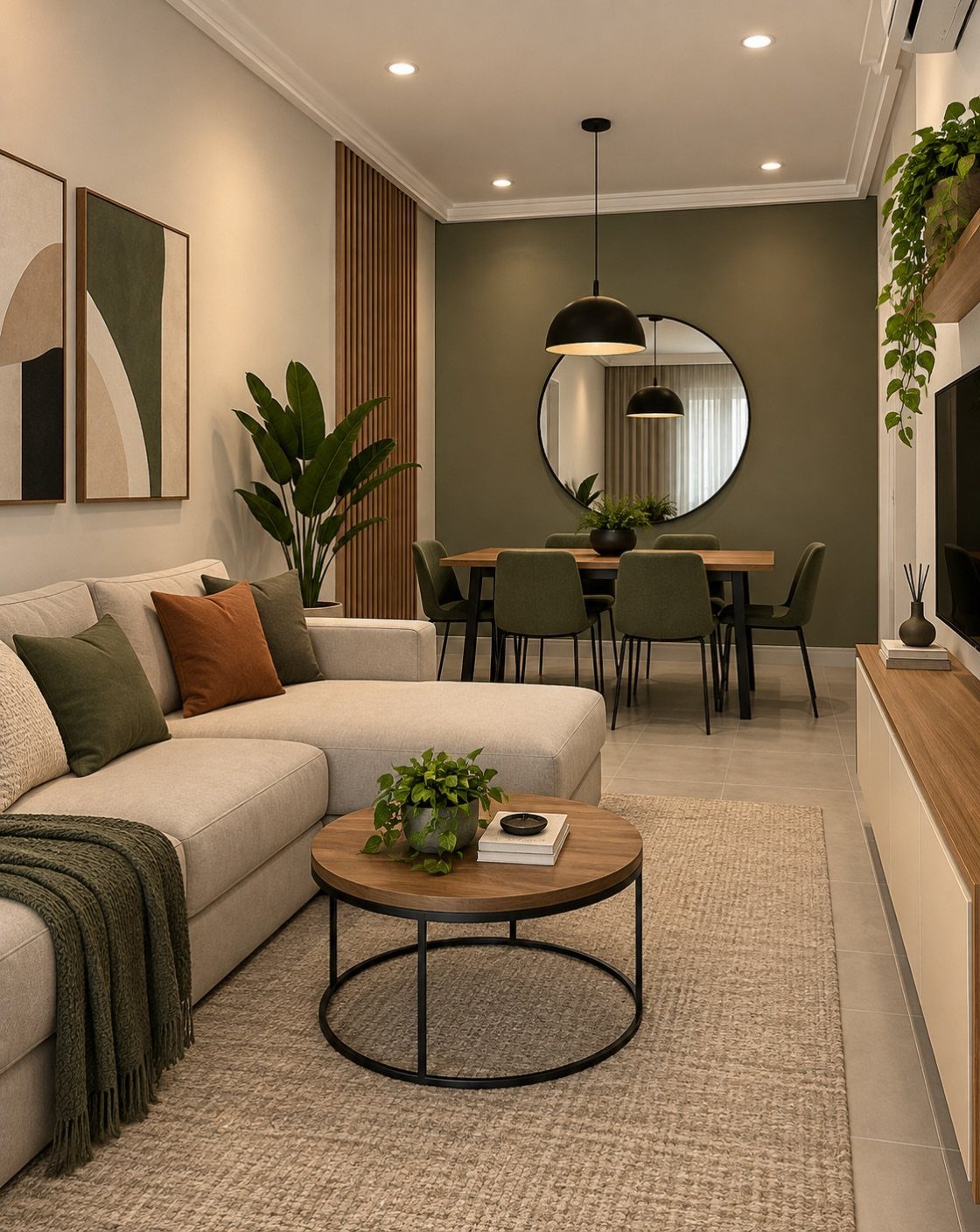
Paint one wall dark olive green and the eating zone separates itself from the living room without a single partition. That matters in an open plan, where the table otherwise floats.
Pick the wall behind the chairs, not the one beside the sofa. Green chairs against green can blur, so I’d go a shade lighter or darker on the seating than on the wall.
A round mirror breaks up the flat color and bounces light back into a deep shade. One gallon of paint and a weekend is the whole project.
5. Round Table
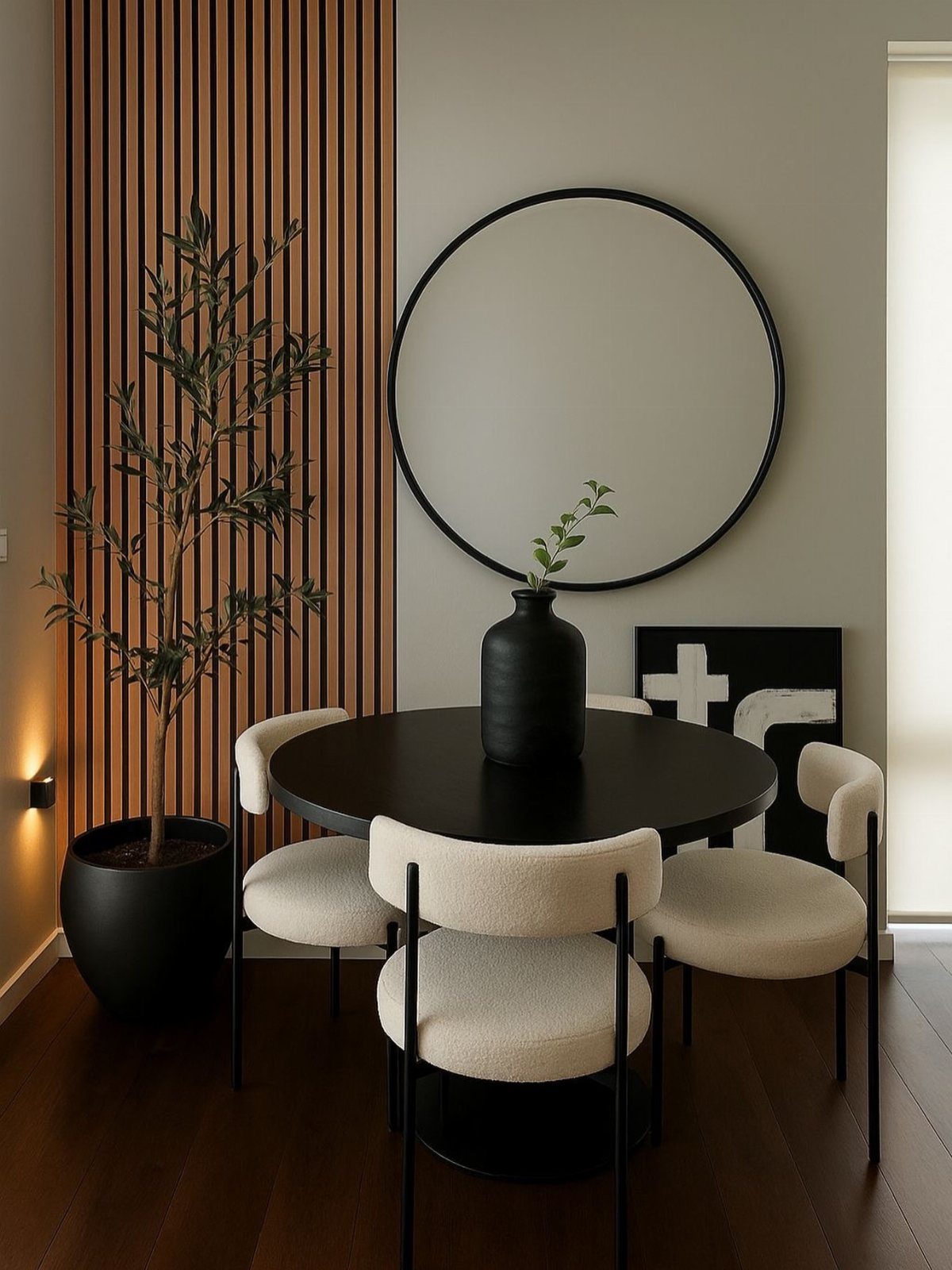
Black round tables are bold, but the circle softens them. A round table seats a small group comfortably, and everyone faces everyone, which makes conversation easier than at a long rectangle.
I’d leave the surface bare except for one black vase, because a black top shows clutter and dust fast.
A large circular mirror repeats the shape on the wall. Round suits a smaller room best; once you add too many seats, the middle gets too far to reach.
6. Comfortable Dining Chairs
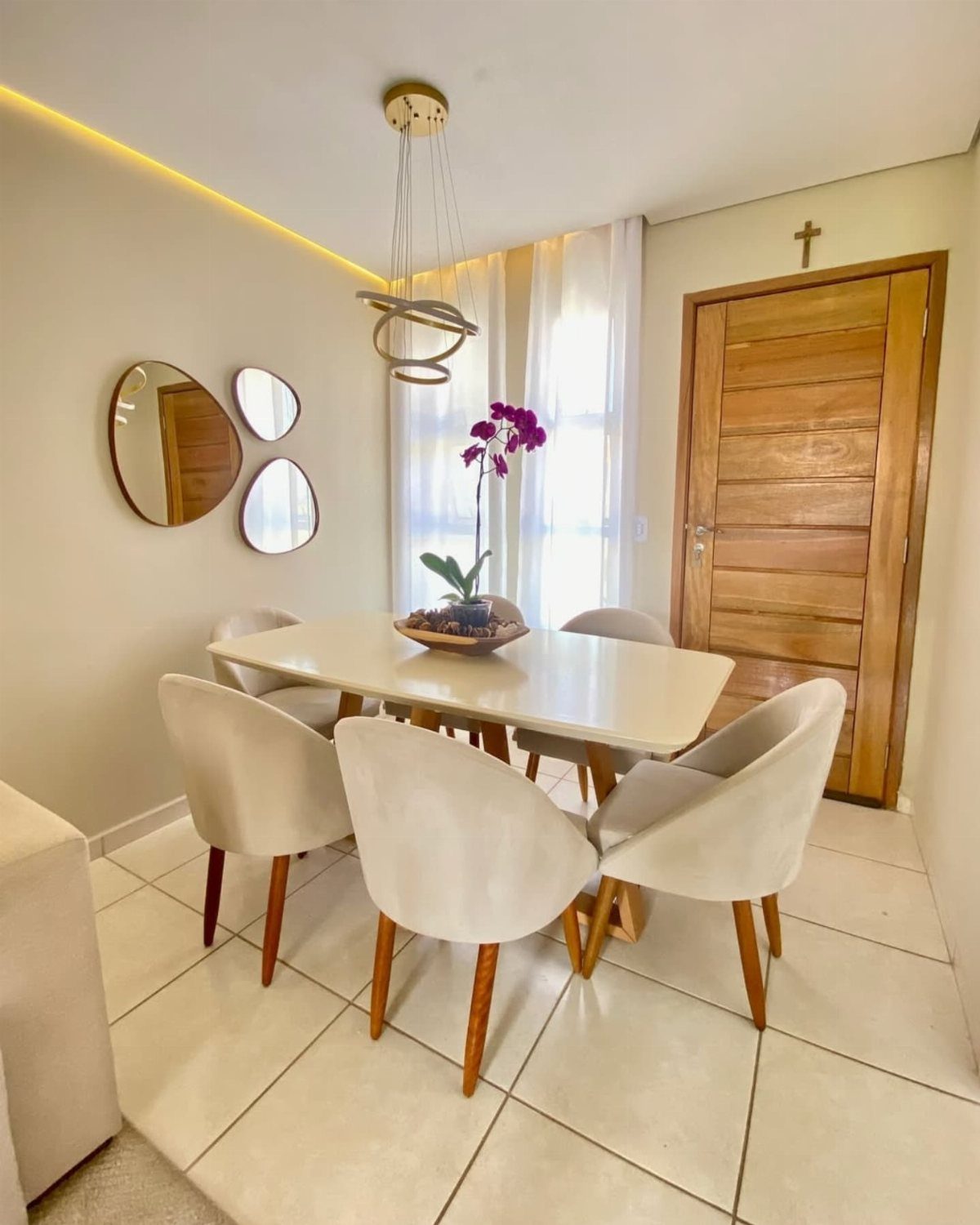
Sit in a chair for a good while at the store, long enough to notice your back and hips; that’s the real test. Dinner runs long, and a hard seat ends it early.
Upholstered seats in a cream fabric keep the room bright and soft. Look for padding in the seat and a back that supports you, then check the fabric will clean easily.
I’d pick a performance fabric over linen if kids use the table. Cream shows spills, so a stain-resistant finish is worth a few extra dollars per chair.
7. Natural Elements
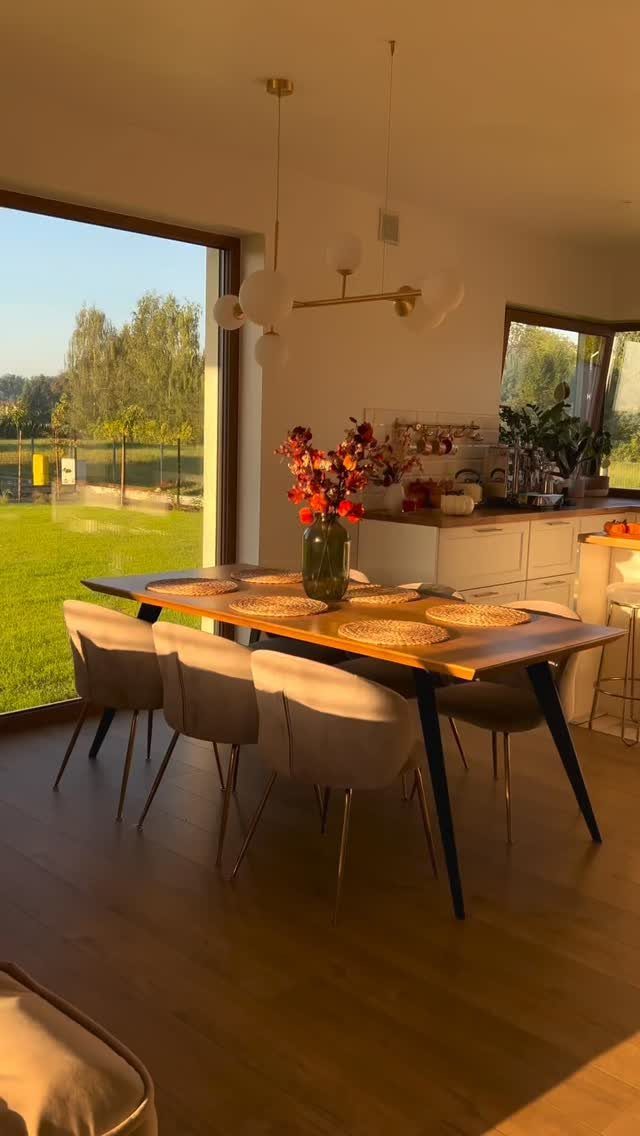
Wood, woven fiber and fresh flowers bring warmth to a dining room without a single new piece of furniture. Placemats are the cheapest place to start, and a woven set costs a fraction of what a new table does.
I’d keep the rest simple: a wood tabletop, soft beige seats and one low floral arrangement that won’t block anyone’s view of the person opposite. Low matters, because tall stems get in the way of conversation.
If the view is green, as it is here, leave the glass door bare so the outdoors acts as the decor.
8. Framed Mirrors
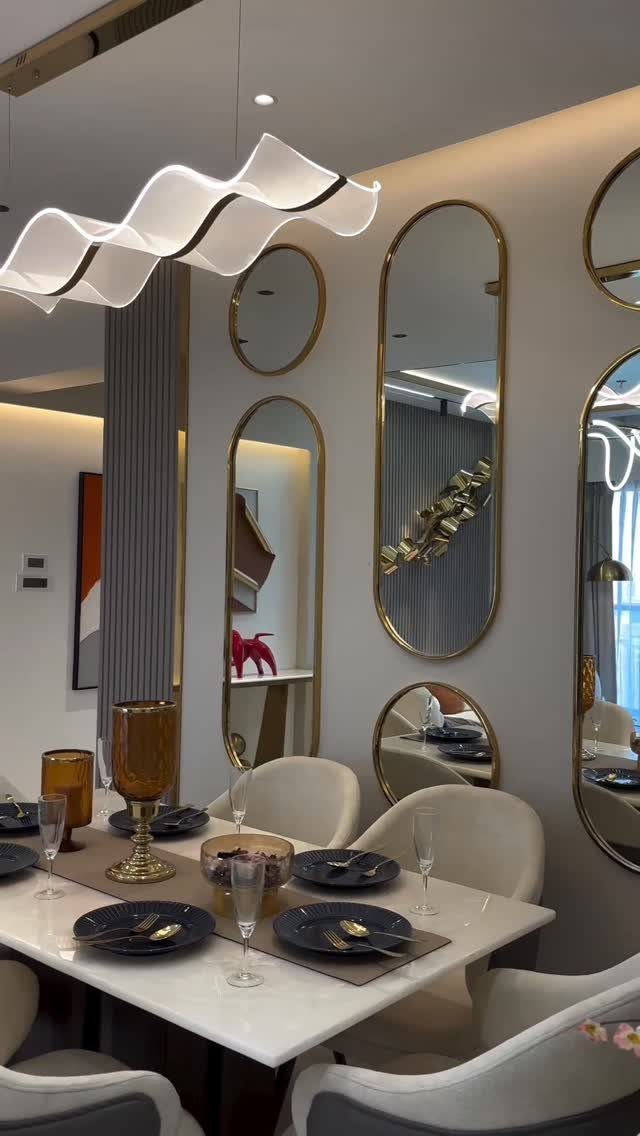
A cluster of oval mirrors on one wall bounces light around a compact dining room and makes it feel wider than it is.
Hang them on the wall that faces a window or lamp, so the glass has something to reflect.
Gold frames against a white wall read warm, and mixing sizes looks collected rather than matched. Lay the shapes on the floor first, or cut paper templates and tape them up, then trim the arrangement before you drill.
I’d hang them above the table’s center, not off to one side, so the group feels anchored. Wipe the glass often, since a dining room collects splashes and fingerprints.
9. Bold Dining Room Design
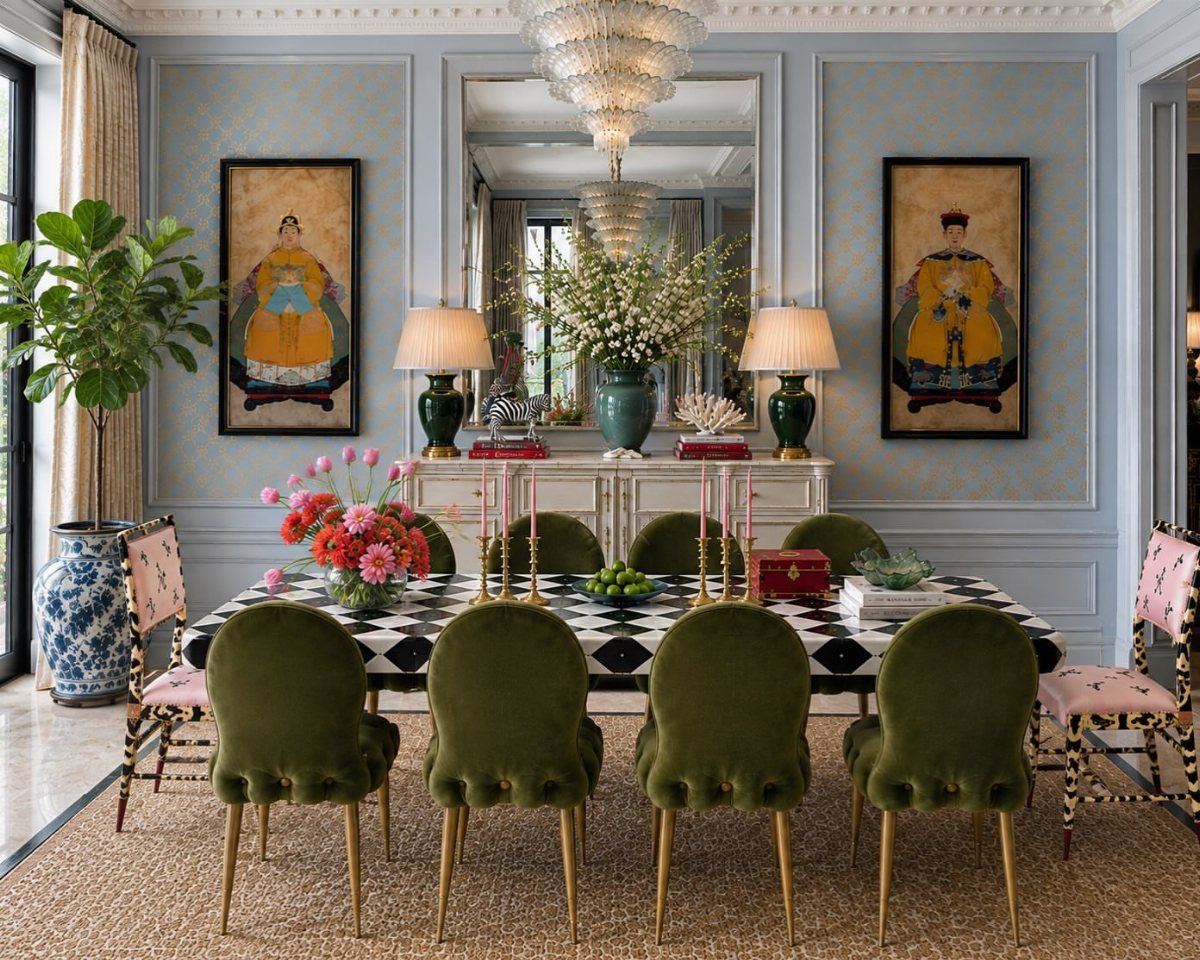
Pattern on pattern works when each one gets its own job. Here a checkered table, blue patterned walls and green velvet chairs all compete, yet the room holds together because the colors stay rich and the sideboard stays white.
For a rental, skip the wallpaper and try a checkered tablecloth, which is an inexpensive way to test a bold look. Velvet chair seats can be recovered over a weekend with a staple gun.
I’d pick one loud element to lead, then have the other two play supporting roles. Add a chandelier and large art if you want the full drama, though that raises the cost.
10. Built-In China Cabinet
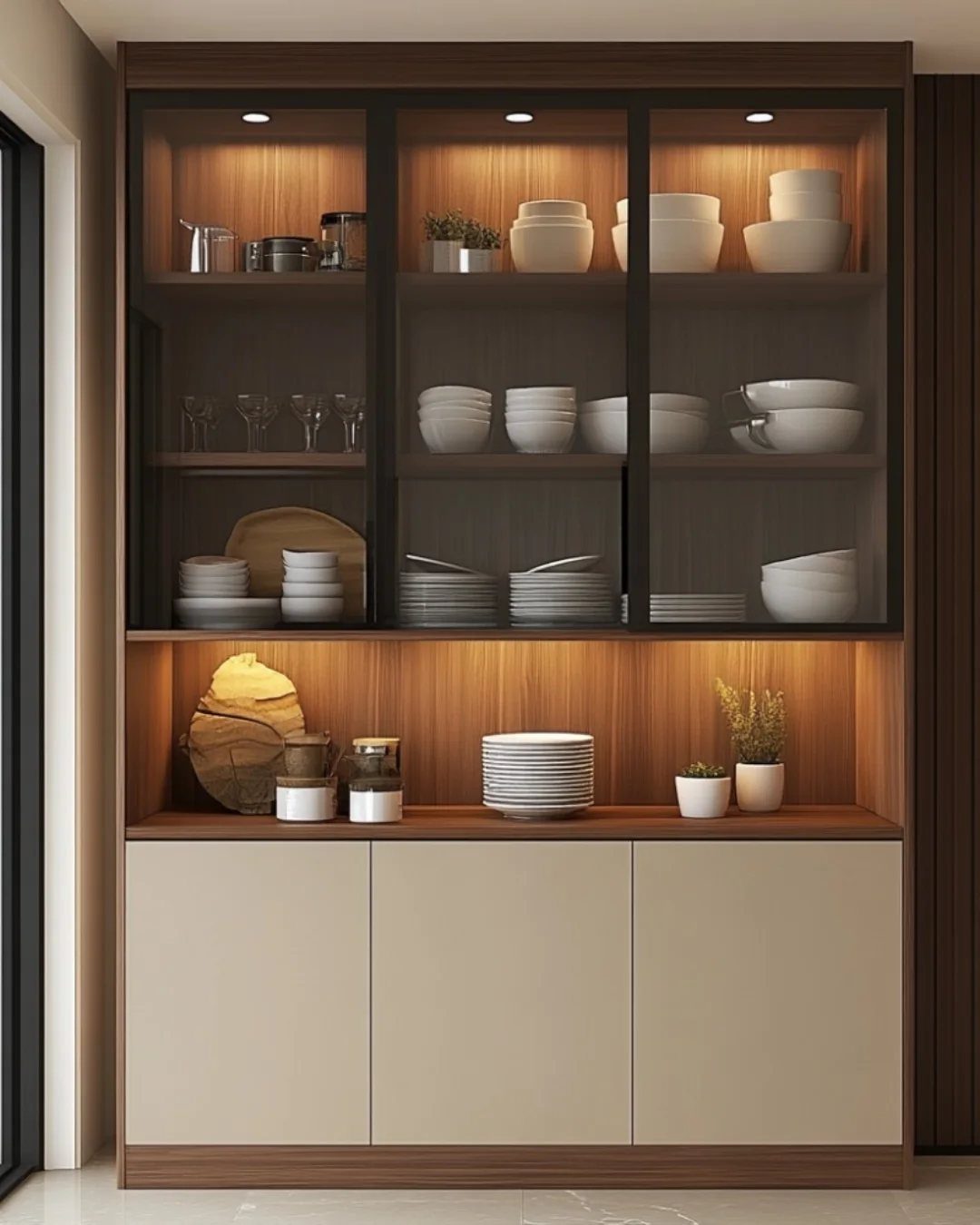
Glass doors and interior lighting turn plain white dinnerware into a display, and a built-in wooden cabinet gives it a permanent home. White ceramics suit this best, since a single color looks tidy behind glass.
A full built-in is a big project, so a budget version is a freestanding cabinet with glass doors and a battery-powered stick-on light strip inside. Either way, stack plates in even rows and keep glassware at the front.
I’d only put out what you use. A cabinet packed to the edges reads as clutter, however good the lighting.
11. Branch Chandelier Lighting
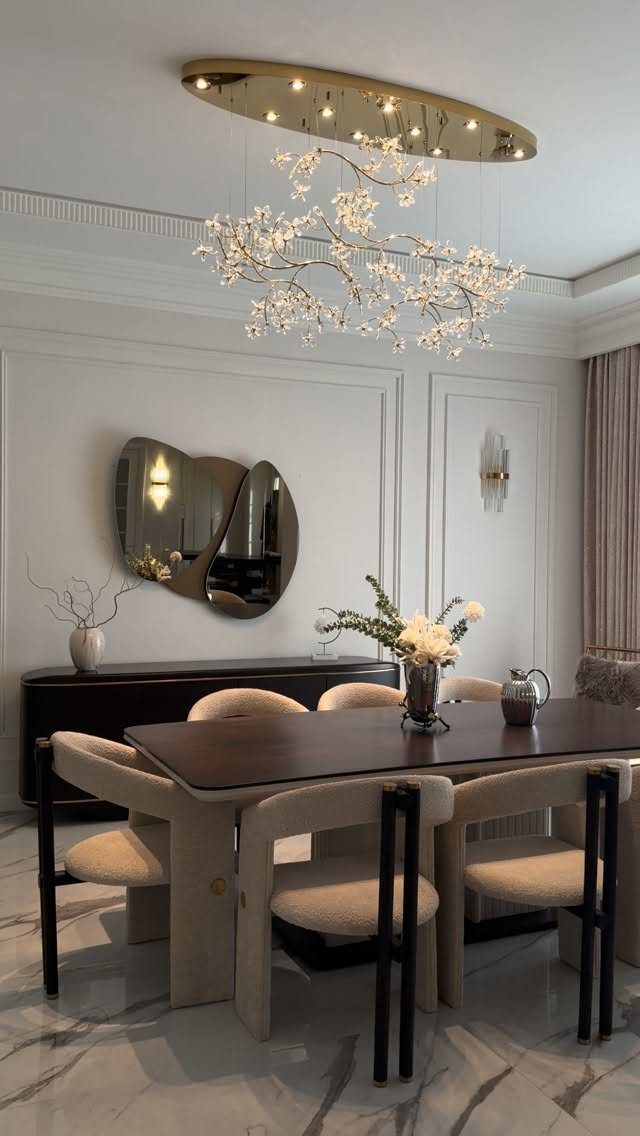
A branch chandelier works like sculpture over the table, so the rest of the room can stay calm. Dark wood, cream chairs and a dark sideboard give the crystal something to stand out against.
Hang it so the lowest point sits well above eye level for seated guests, so nobody has to lean around it to talk. Branch shapes spread wide, so choose one narrower than the table.
I’d repeat the organic curves once, with a mirror like this one, and stop there. Crystal needs dusting, and a branch design has many places for dust to collect.
12. Industrial Concrete Ceiling
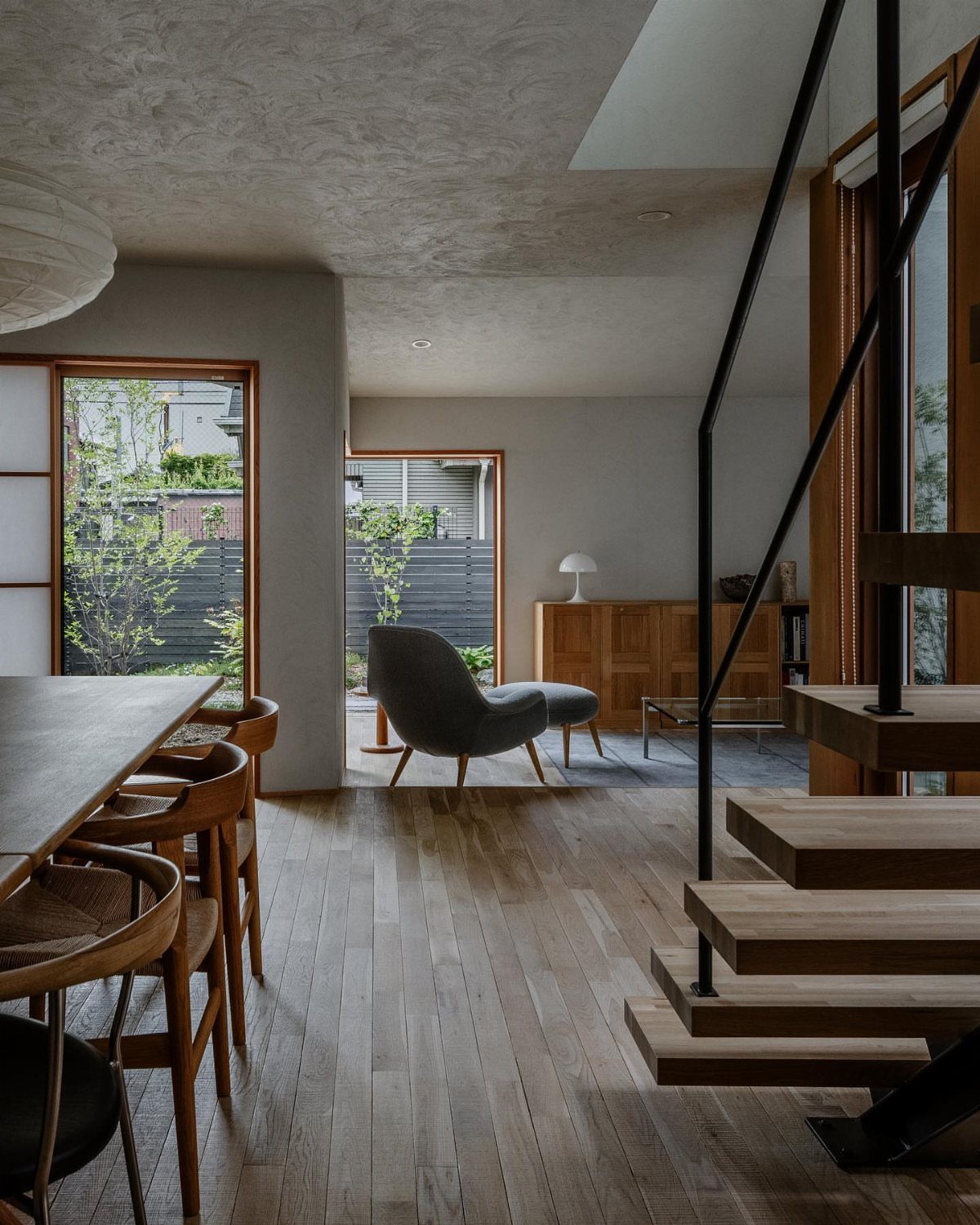
A bare concrete ceiling gives a dining room an industrial edge, and a long wood table keeps it from feeling cold. The wood carries the warmth; the concrete supplies the texture.
If your ceiling is plain drywall, you can’t fake this cheaply, so borrow the idea: pair a long wood table with simple chairs and keep the walls minimal.
A grey lounge chair nearby, as here, adds a soft spot to sit.
I’d keep decor sparse. Texture overhead is already doing the talking, and extra objects only compete with it.
13. Matching Wood Dining Set
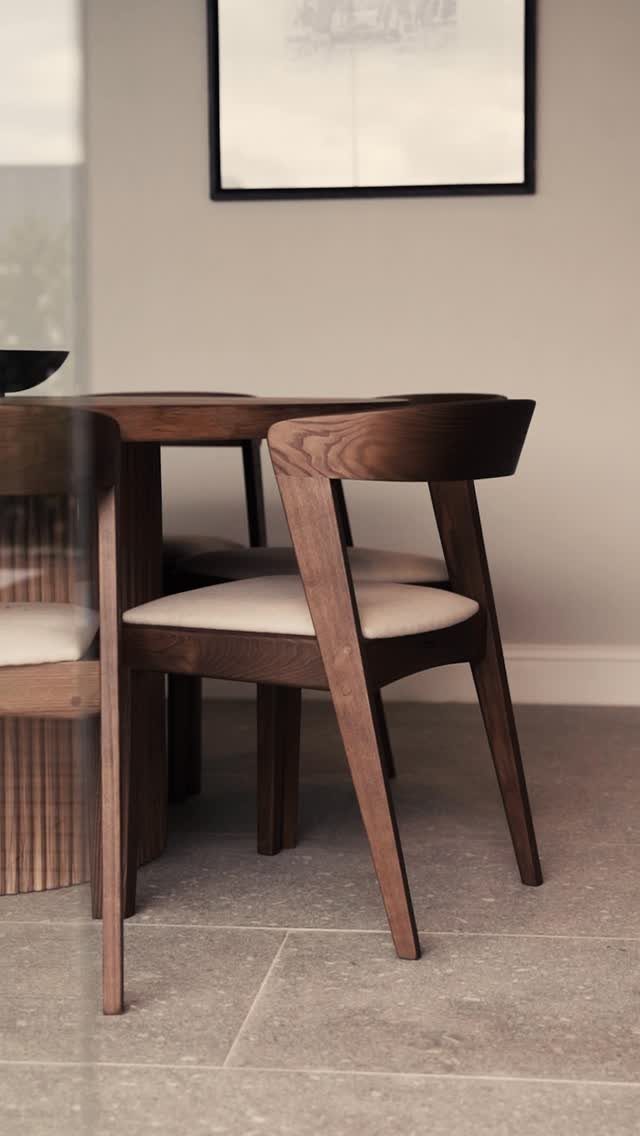
Matching wood pieces take the guesswork out of a dining room, since the table and chairs already agree on tone. With dark wood, the cream cushions do the lightening.
I’d pick cushions with ties or removable covers, so a spill means a wash instead of a new chair pad. Grey tile reads cool, so the warm wood keeps the floor from dominating.
A set can look heavy in a small room. Leave a plain wall with one framed picture, and let the furniture be the main event.
14. Floating Shelves
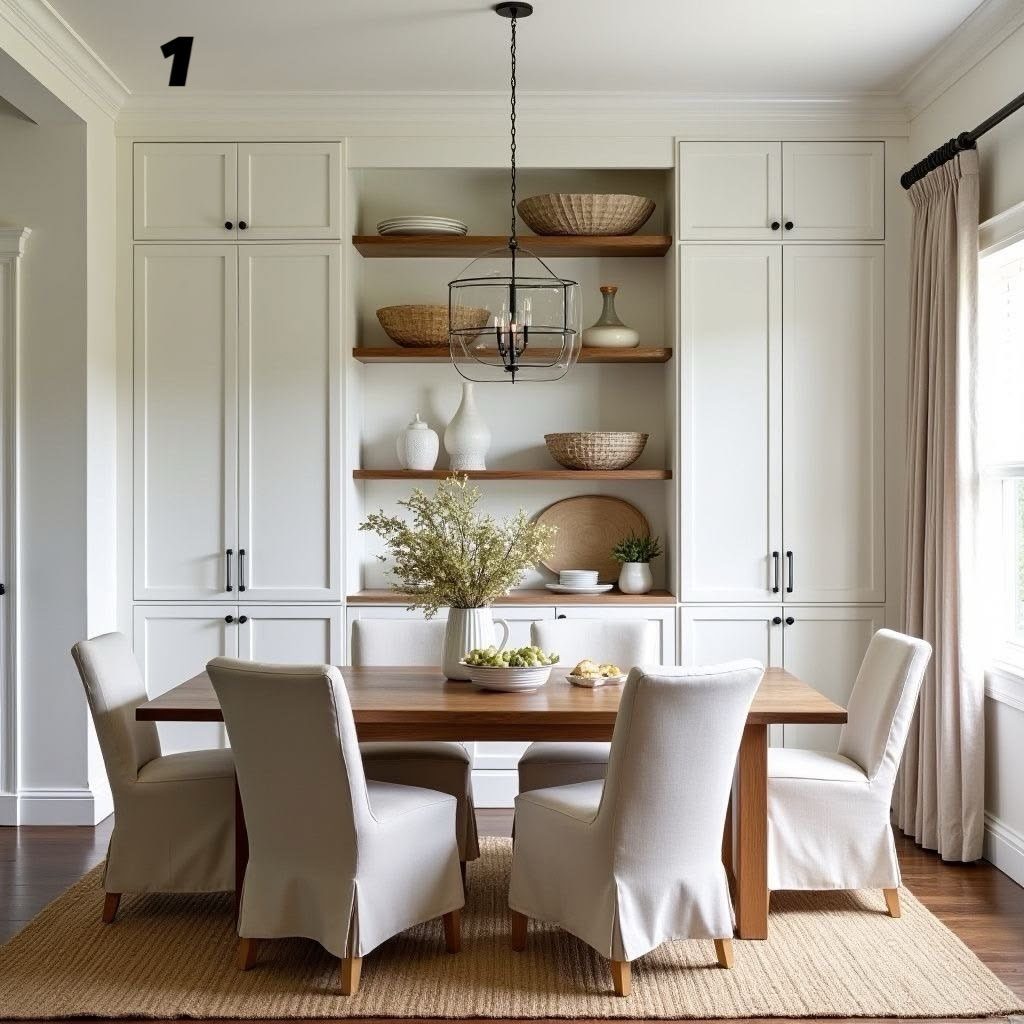
Three wooden floating shelves above built-in white cabinets give a dining room display space without taking up any floor. Wood keeps them warm against all that white.
Fill them with baskets and vases in a mix of heights, and leave gaps so each piece reads on its own. I’d keep the shelf nearest eye level the lightest, since heavy items there feel crowded.
Anchor the brackets into studs or use proper wall anchors, because bowls add weight. A jute rug under the table echoes the shelves’ natural texture.
Importance of Ergonomics
Seat height and table height have to work as a pair. A chair that leaves your knees jammed under the apron or your elbows hanging below the tabletop will make people squirm before the main course is done.
Cushioning and back support do the rest. A chair with a supportive back and a seat height about 18 inches off the floor keeps people comfortable through a long dinner, and that’s what a room built for sitting down needs.
Before you buy, sit at the table with the chair pulled in.
If you can’t rest your forearms comfortably and your feet flat, the pairing is wrong. A seat cushion or a different chair is cheaper to fix than a new table.
Creating a Cozy Atmosphere
My preference is 3 layers: the ceiling fixture, a pair of wall sconces or a corner floor lamp, and an LED strip hidden under a shelf for a soft glow low in the room.
Put the overhead fixture on a dimmer switch.
Turned down, it suits an intimate dinner; turned up, it handles a family meal or homework at the same table. A plug-in dimmer works in a rental where you can’t touch the wiring.
Soft textiles do the same job for the eye. A runner, cushions and a thick curtain at the window all take the edge off a hard room, and each one is easy to swap or remove when you move.
Choosing the Right Table Shape
Round tables win in tight rooms. With no corners, people move around them easily, and conversation flows across the whole group.
Rectangular tables win on seating, and they suit a long room where a circle would leave dead space at each end.
2 details help a round table in a small room. With a pedestal base, nothing sits at the table’s edge, so knees and chair legs have room and nobody gets stuck behind a corner post.
Glass lets you see the floor and rug through the tabletop, so a small dining area looks bigger than it would with a solid wood slab.
Frequently Asked Questions
What is the best table shape for a small dining room?
A round table is the best pick for a small room. A pedestal base gives knees and chair legs more room, and a glass top lets you see the floor through it so the space looks bigger.
Past 4 or 5 chairs, though, a round table loses its edge: the center ends up too far away to pass a dish across.
How do I make my dining room feel cozy?
Warm light at several heights and a few soft fabrics do most of the work. Table runners, seat cushions and heavy curtains soften bare walls and hard floors, and they all come down in minutes when the lease ends.
Renters can skip the electrician: a plug-in dimmer on a lamp cord does the job with no wiring changes.
Can I mix different dining chair styles?
Yes, as long as one thing stays constant, such as color or tone. Mixing gives a room character, but the look holds together when the pieces share something.
Pairing chairs in a color that suits the table, like cream seats with dark wood, keeps the mix calm. If you add pattern, give each piece its own job and let one element lead while the others support it.





