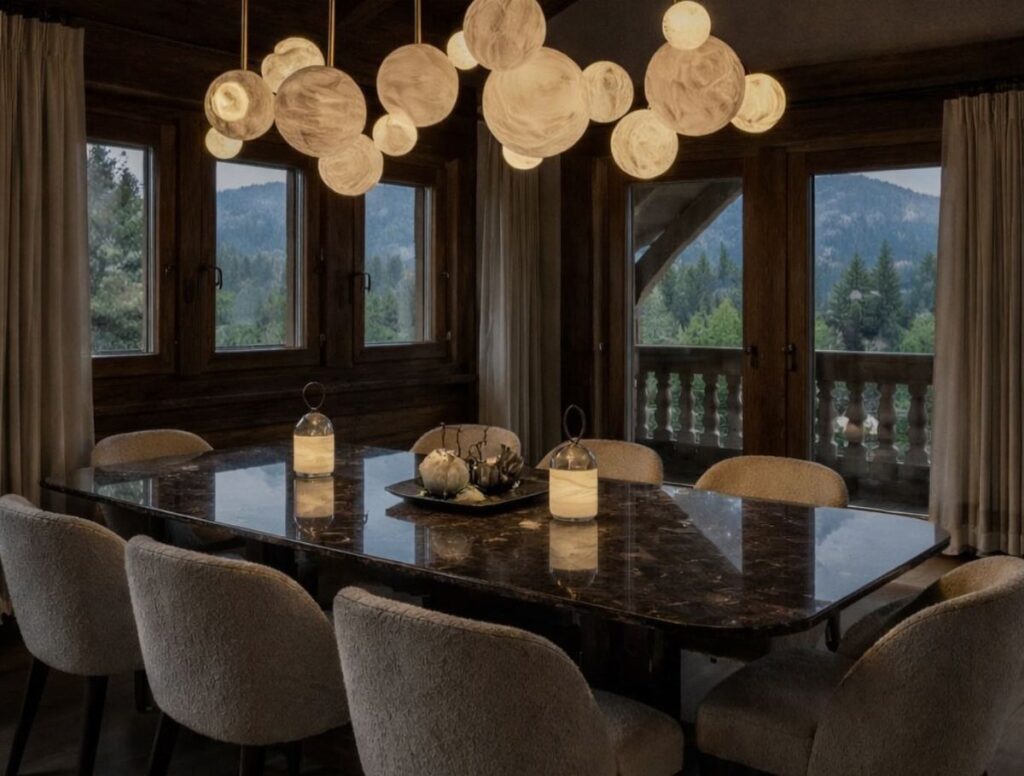
Table shape decides most of this list: a rectangular table takes a runner down its long center line, while round and square tables do better with placemats, and a rug or fixture should be sized to the table beneath it.
The ideas range from a free swap, like mixing in odd thrift-store plates with a set you own, to a plug-in pendant on a ceiling hook for renters.
1. Lighting Fixtures for Dining Room Table
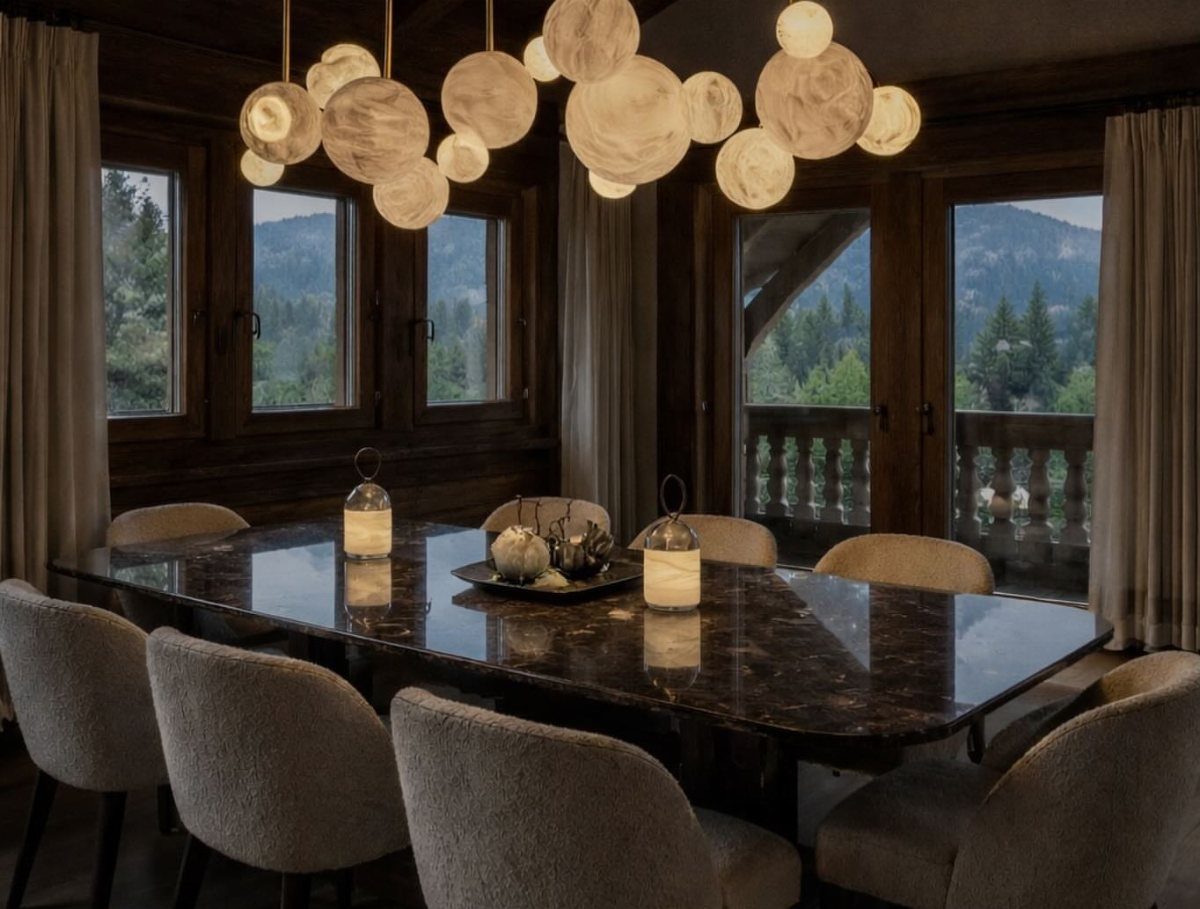
A glass globe chandelier over a dark table gives you light that sits low and soft, which suits meals that run long. Choose a dimmer switch if you can, because dinner and homework need very different brightness.
Hang the fixture so it reads as the center of the table, not as a ceiling decoration. In a rental, a plug-in pendant with a ceiling hook is the easy swap, and the wiring stays untouched.
2. Low Centerpiece
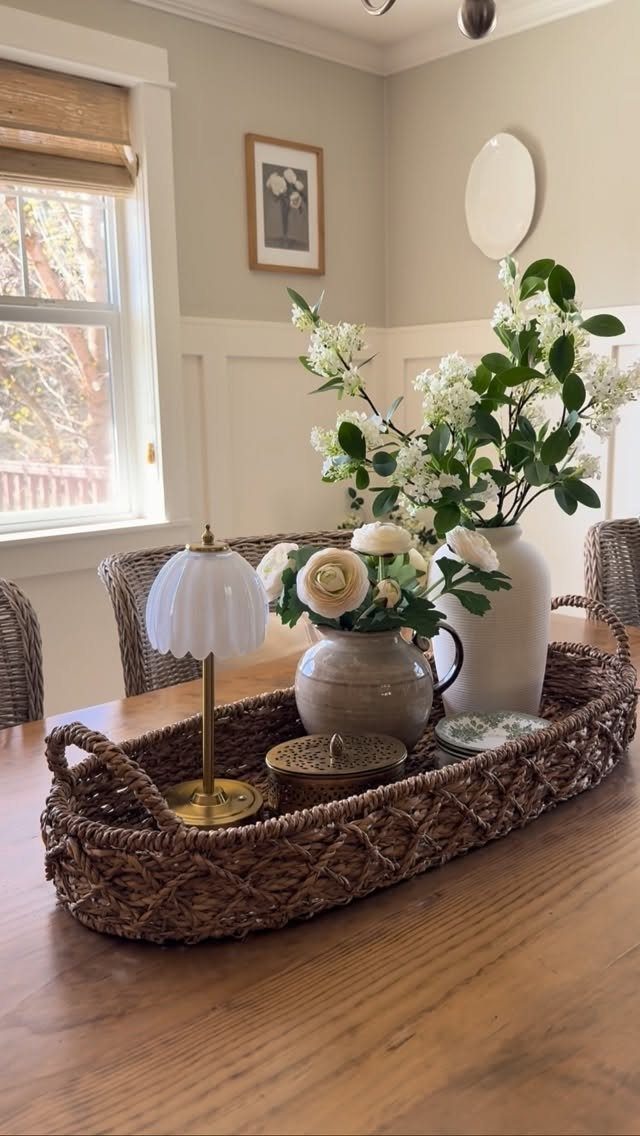
Keeping a centerpiece low means guests can talk across the table without leaning around a vase.
A woven tray is my favorite way to do it, because it pulls a lamp, a jar, and a couple of small vases into one group that lifts away in a single move.
Pick a tray that leaves room for plates and serving dishes. A cordless lamp avoids cords across the table, and white flowers keep the grouping calm against wood.
3. Table Runners Vs. Tablecloths on Dining Room Table
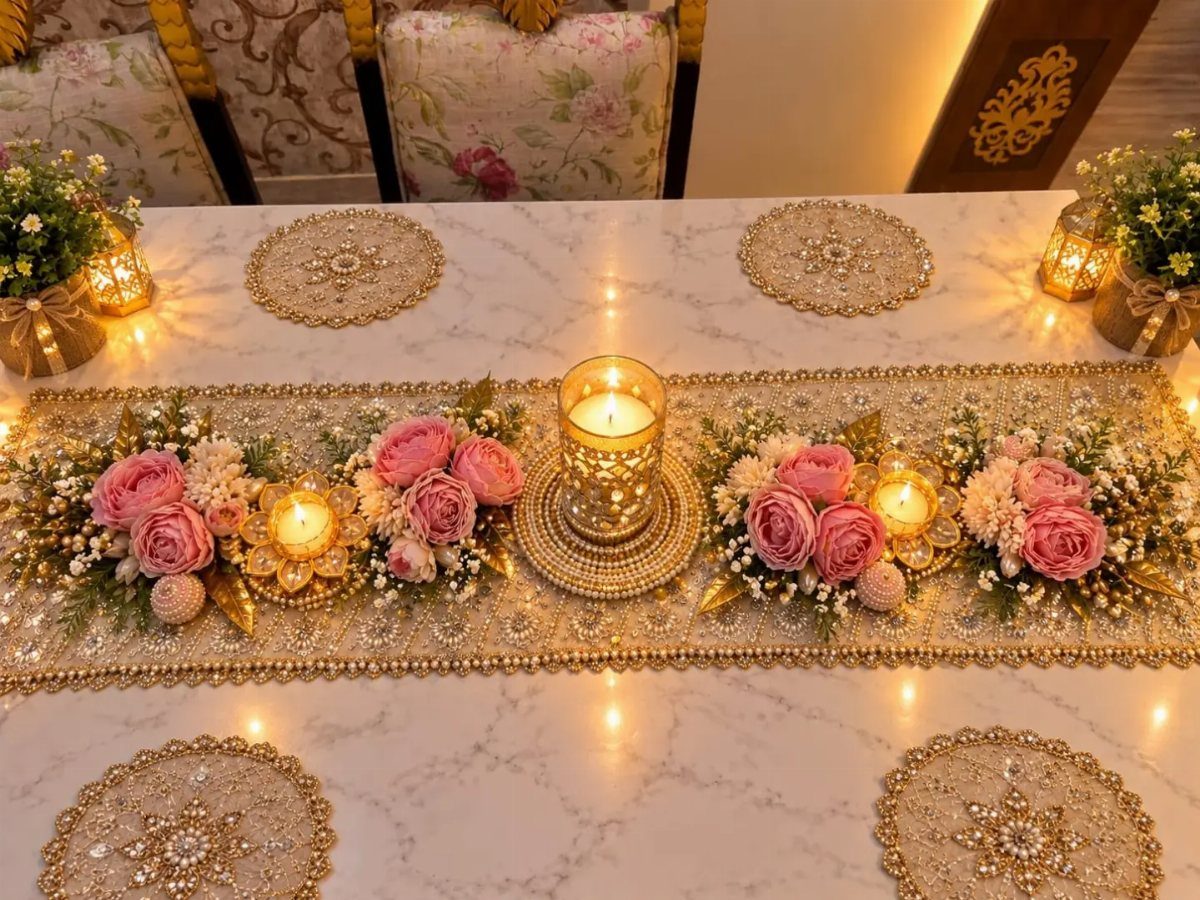
A runner shows off the table; a cloth hides it. On marble or any surface you love, I lean toward a runner, since it adds a decorative strip and leaves the stone visible at each seat.
Beaded or metallic runners suit dressier dinners, and matching placemats tie the look together. Choose a cloth when the tabletop is scratched or you want a softer, more formal sweep.
4. Mixing Tableware Styles
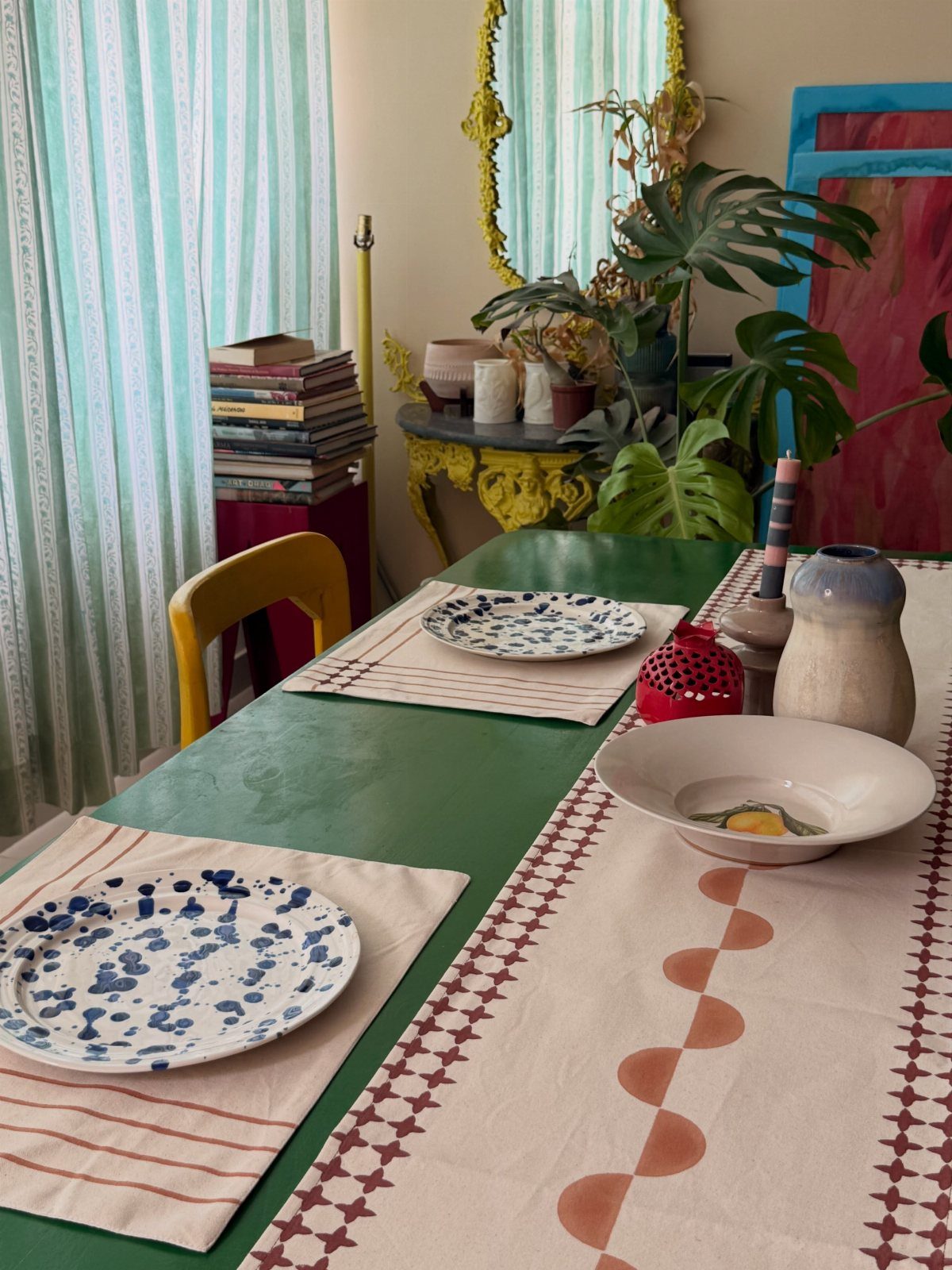
Mixing tableware works when one thing repeats. Speckled blue plates beside a patterned runner feel intentional because the colors share a family, so pick a single shade to carry through the plates, runner, and vase.
Start with a set you already own and add a few odd plates from a thrift store. Keep the pattern busy in only one spot, such as the runner, and let the rest stay plain.
5. Layered Place Setting
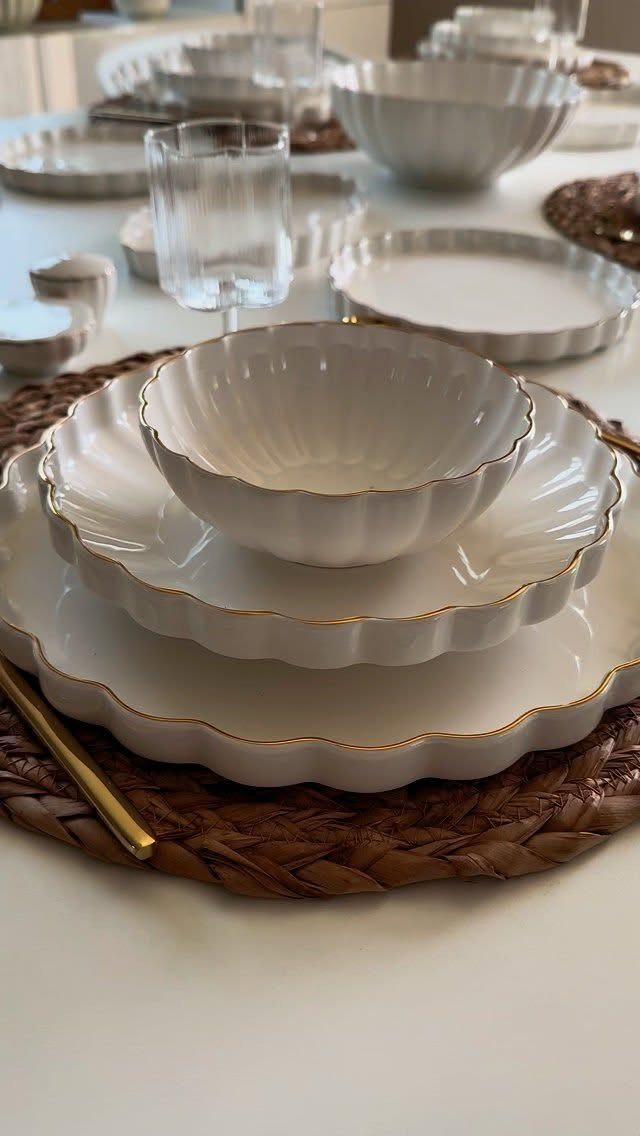
Stacking a charger, plate, and bowl gives each seat height and a finished look before anyone has sat down.
Scalloped white china on a woven charger is a good model: the white stays quiet and the texture underneath does the work.
Build the stack from the bottom up, with the largest piece first. A charger is there for looks, not for food, so nothing but a plate ever sits on it and it never touches what you eat.
6. Heirloom Items
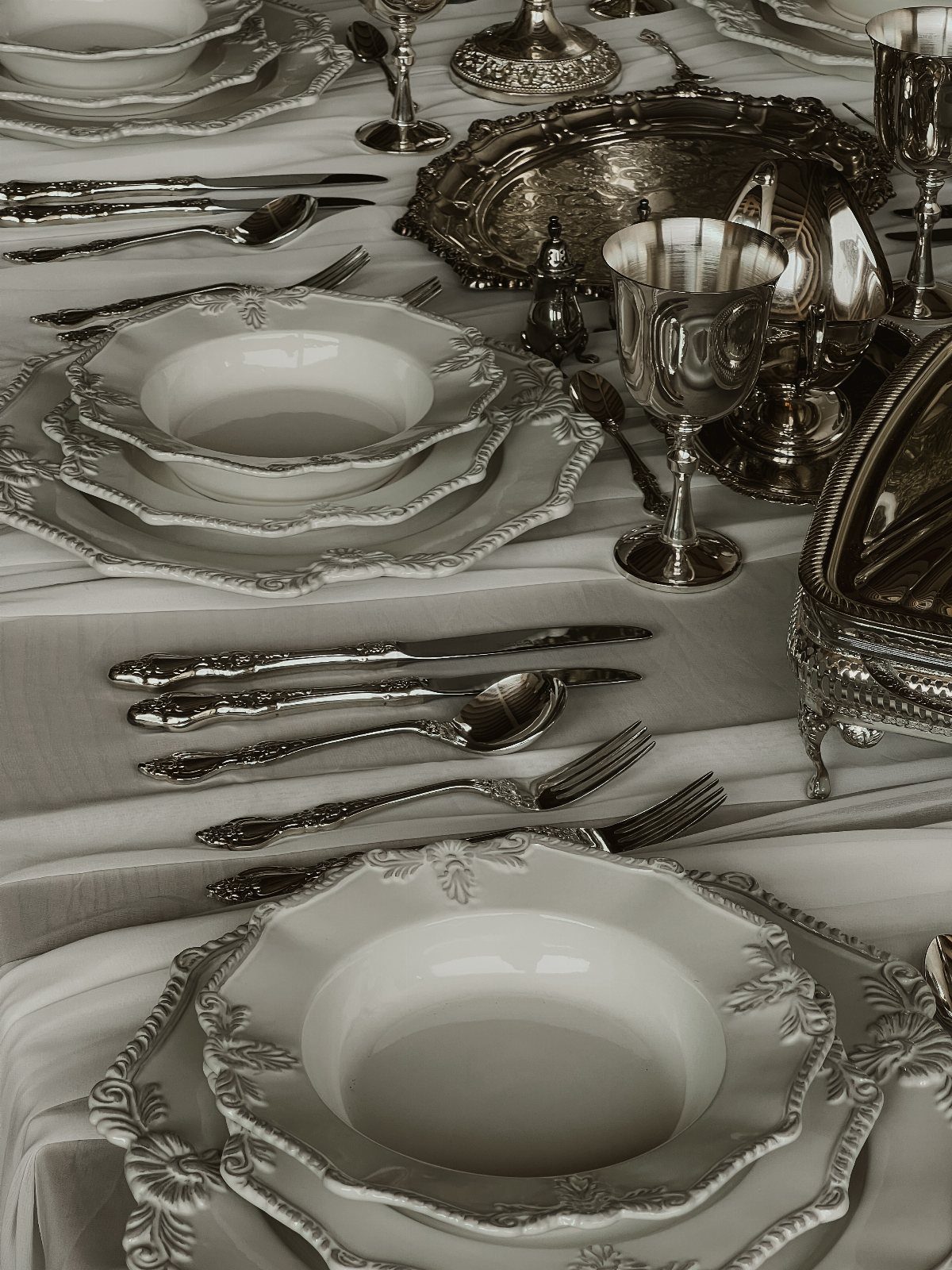
Heirloom pieces earn their spot on the table when you use them, not just store them.
Hand-wash anything with a metallic rim or silver plating, and skip the dishwasher. If a set is incomplete, mix a few pieces with everyday plates so a missing piece never keeps it in the cabinet.
7. Centerpiece Sizing
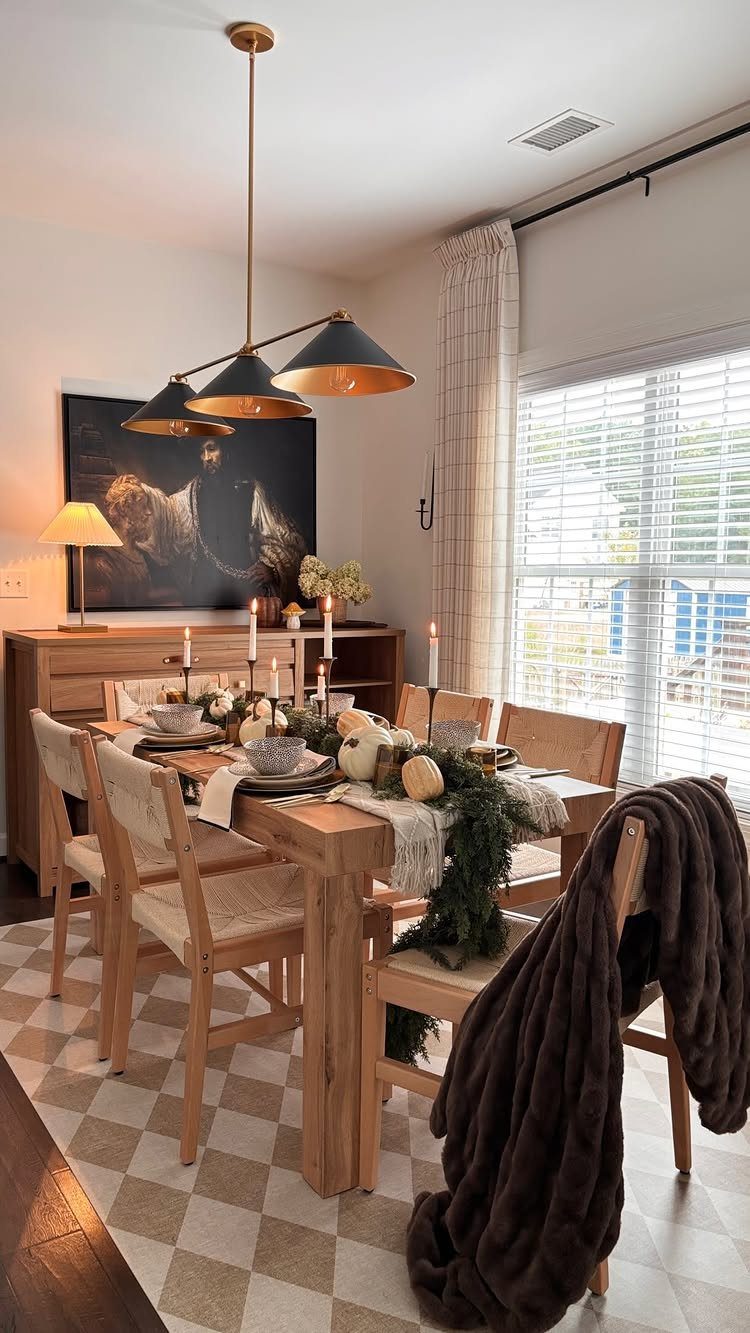
A centerpiece should read as one long, low gesture, not a pile of small things. The greenery runs down the middle of this table, and that length works because it leaves room on both sides for the place settings.
8. Mix of Textures
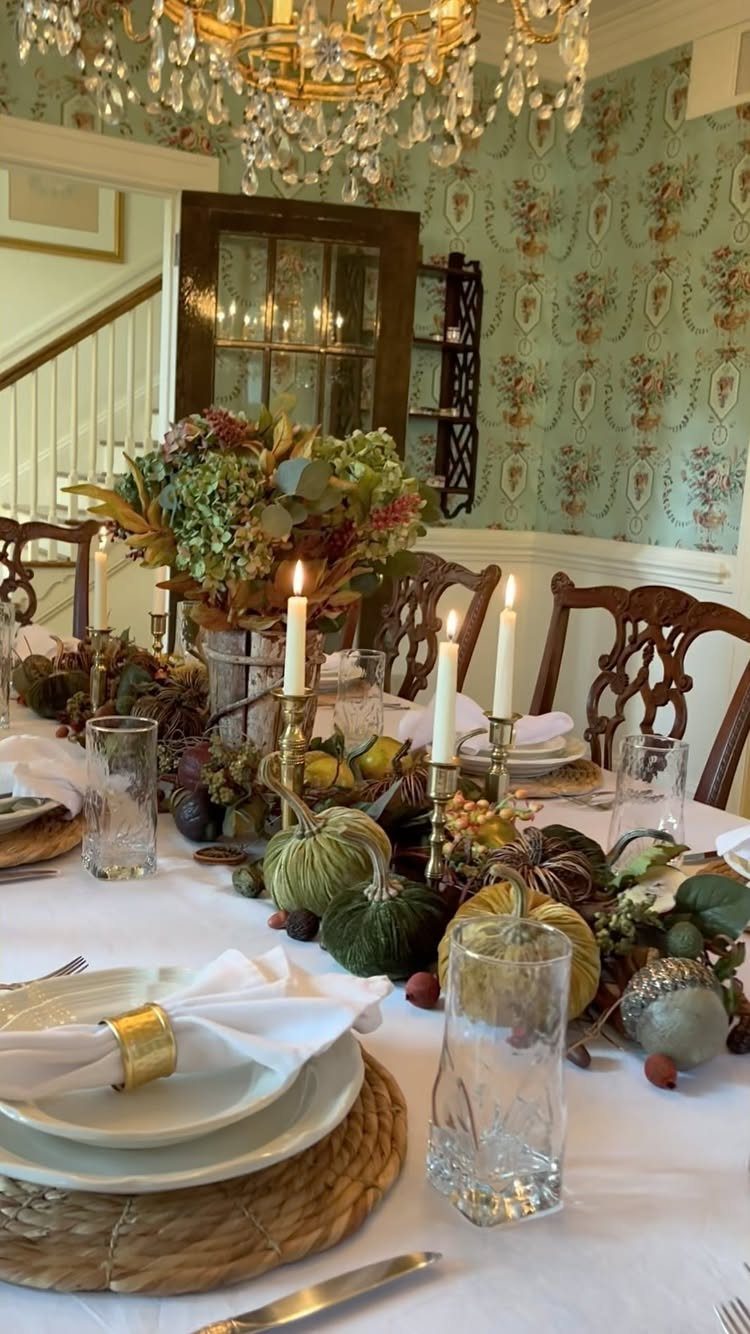
Smooth glass, soft linen, and rough woven straw do more for a table than extra color. A white cloth gives the quiet base, and woven placemats add the grain that keeps all that white from feeling flat.
Mix a few textures, like linen, wood, ceramic and glass, and let one dominate so the table reads as layered instead of cluttered.
I would keep the cloth plain, since pumpkins, foliage, and candles already bring plenty of surface variety to the table.
9. Flowers, Napkins, and Small Accessories
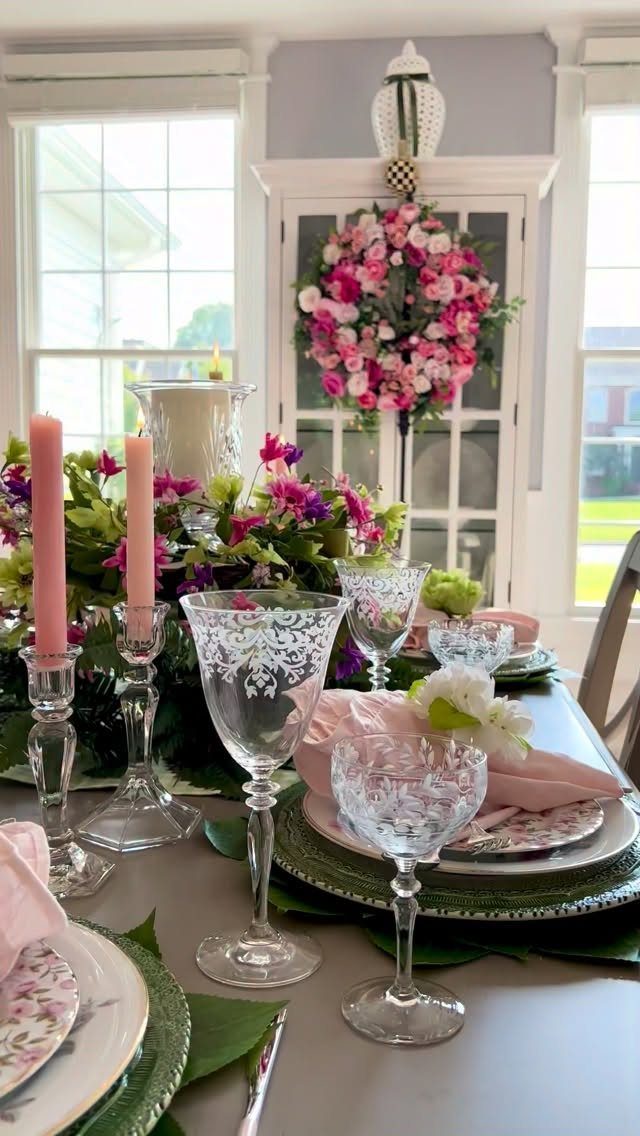
Napkins, flowers, and candles are the cheapest layer on a table, and a single color tying them together makes them look planned. Pink napkins echo the pink candles and blooms here, so the small pieces read as one set.
Buy napkins in a color you can repeat in the flowers, and use etched or ornate glasses as the one fancy element. Keep the flowers low enough to see over.
10. Potted Plants on Dining Room Table
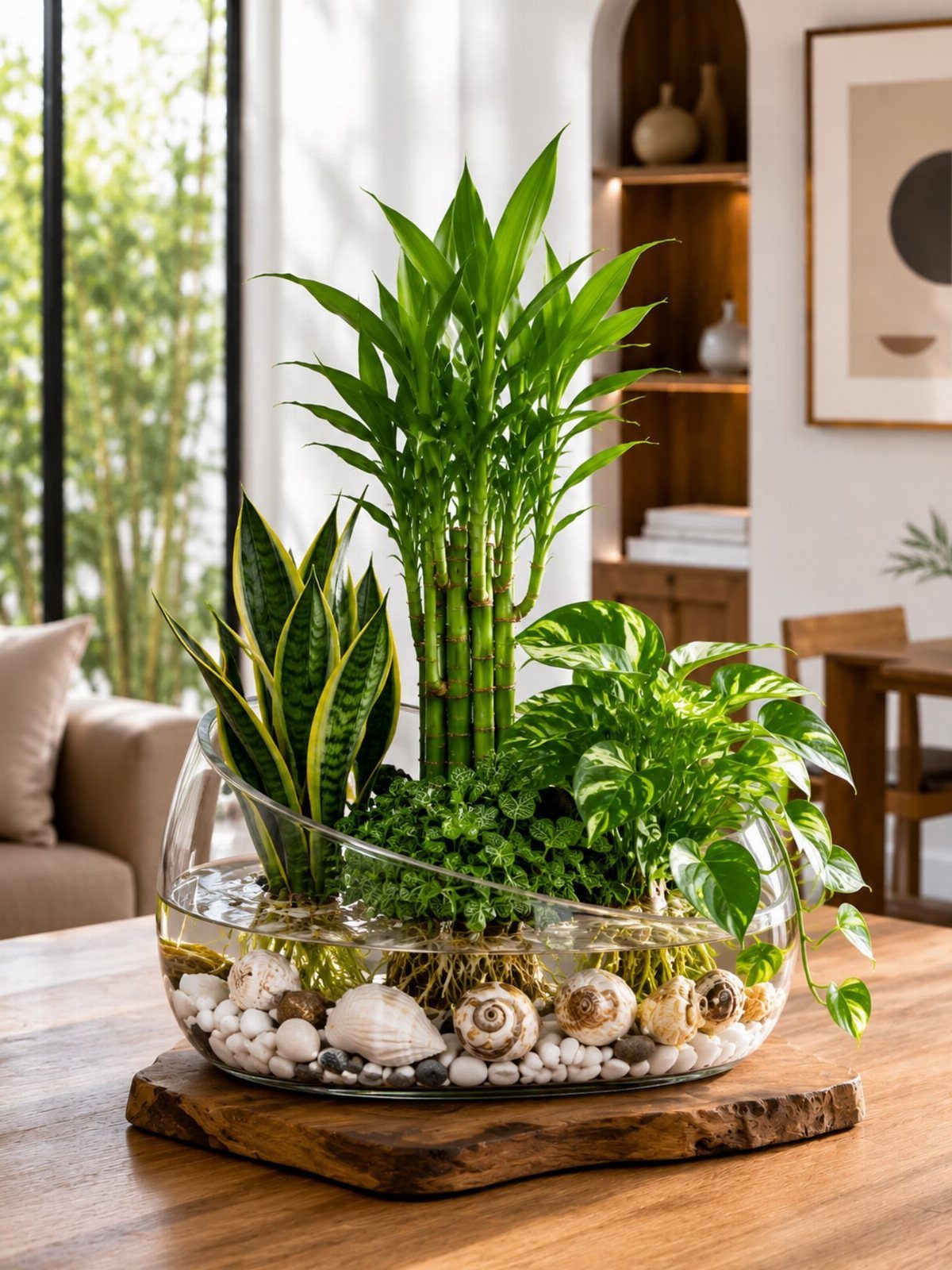
A glass bowl of small green plants set on a wood slab makes a centerpiece that lasts longer than cut flowers. White pebbles and shells fill the gaps between the plants and keep the look tidy.
The slab matters more than it seems: it protects the tabletop from moisture and lets you lift the whole arrangement away when guests arrive. Water sparingly, since a closed bowl with no drainage holds moisture.
11. Rug Placement
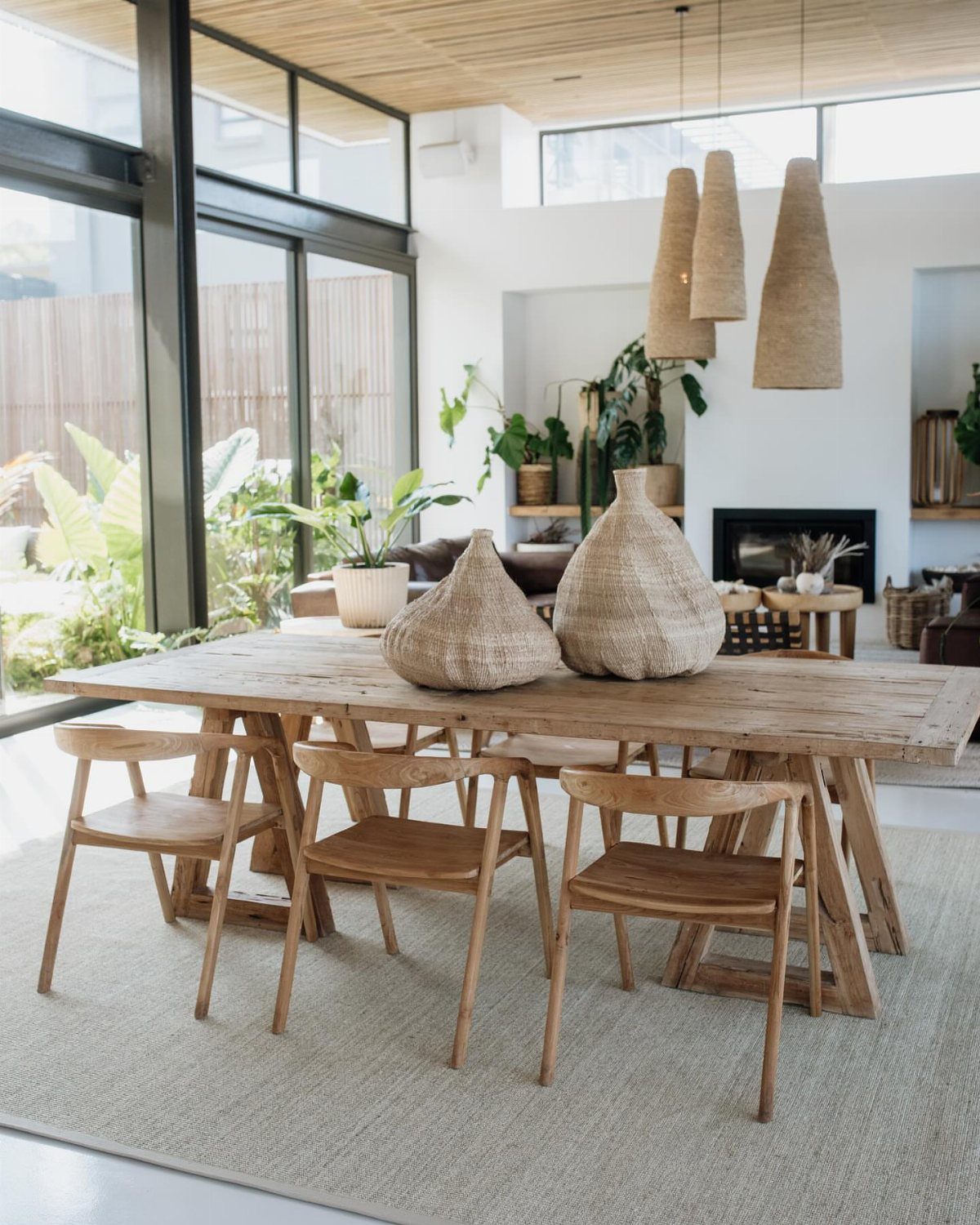
A rug marks the dining area, which matters most in an open room where the table has no walls around it.
Here a large neutral woven rug sits under the table and chairs, and the room reads as a defined zone.
Pick a rug big enough that the chairs stay on it even when pulled out, so the legs never catch on an edge. A flat woven weave is my pick because chairs slide easily across it.
Practical Centerpiece Considerations
A tall arrangement works only if diners can still see each other. Either let the eye pass through it, with open branches, thin stems, or a clear vessel, or lift it well above seated eye level.
Keep anything solid and opaque below eye level, or your guests will be talking around it all dinner. That’s where a centerpiece starts blocking conversation.
For a simpler route, a handcrafted bowl of fruit or greenery, dried florals, or a sculptural ceramic piece keeps the height in check.
Sit in a chair before guests arrive and check that you can see the person across from you.
Importance of Lighting
Size the fixture to the table. For sizing a fixture, I go with one-half to two-thirds of the table’s width, which puts a 48-inch round table under something 24–32 inches across.
On a round table, a pendant or chandelier hanging directly overhead is the safest choice. It centers the light and gives the room a finished look.
An overhead pendant also makes a smaller dining room feel more intimate. Add candlelight on the table for a warm glow, and use a dimmer so the same room can shift from bright to soft.
Foundation Layers
Match the base layer to the table shape. On a rectangular table, a runner pulls the eye down the long center line and still leaves both sides open for platters and bowls.
Round and square tables don’t give a runner much to do, so I’d reach for placemats there instead. They give each seat its own space and add warmth.
A full tablecloth gives a uniform, dressed-up look, which fits holidays and formal dinners.
A top made of handsome wood, steel, or stone doesn’t need this layer, so leave it bare and let the material do the work. Neutral textiles keep wood grain in front, while bold patterns suit seasonal tables.
Frequently Asked Questions
How to make a wooden dining table look good?
A handsome wood top needs very little; bare grain is the best decoration it has.
Keep the centerpiece low, say a tray with a small lamp, a jar, and a few bud vases, and choose neutral linens so the wood stays the star.
Bold patterns suit seasonal tables, but plain linen or woven placemats keep the surface looking calm.
What do you put in the middle of a dining room table?
Pick a single focal piece or a group of 3 or 5 items running down the middle: a strand of greenery, two candlesticks, and a shallow bowl work well together.
Stay below 12 inches in height, and let the whole arrangement take up no more than a third of the table’s width. Plates and serving dishes still fit, and everyone can see over it to the person across from them.
How do you style a table?
Start with the table’s shape, then build in layers. Use a runner on a rectangular table, placemats on a round or square one, and a full cloth for formal dinners.
Next add a low centerpiece, then tableware, napkins, and candles in one repeated color, and finish with a pendant sized to the table.
How big should a light fixture be over a dining table?
Size it at one-half to two-thirds of the table’s width.
On a 48-inch round table, a fixture between 24 and 32 inches wide looks right. Center it over the table, and wire in a dimmer so you can go from bright dinner light to a soft glow.





