These ideas run from a single sign hung on one small nail or an adhesive strip to a built-in bench with a high white backrest, which is a permanent build.
Renting or owning decides which of these ideas are realistic: drilling, heavy glass and a built-in bench Seating with Raised Backs setup are owner moves, while a peel-and-stick Wall Mural, plate hangers for a Plate Display and a leaning Large Mirror leave the walls close to untouched.
Warm bulbs between 2700 and 3000 Kelvin pull the whole wall together, and I’d stay in that range so the light flatters wood, food and skin alike.
1. Gallery Wall
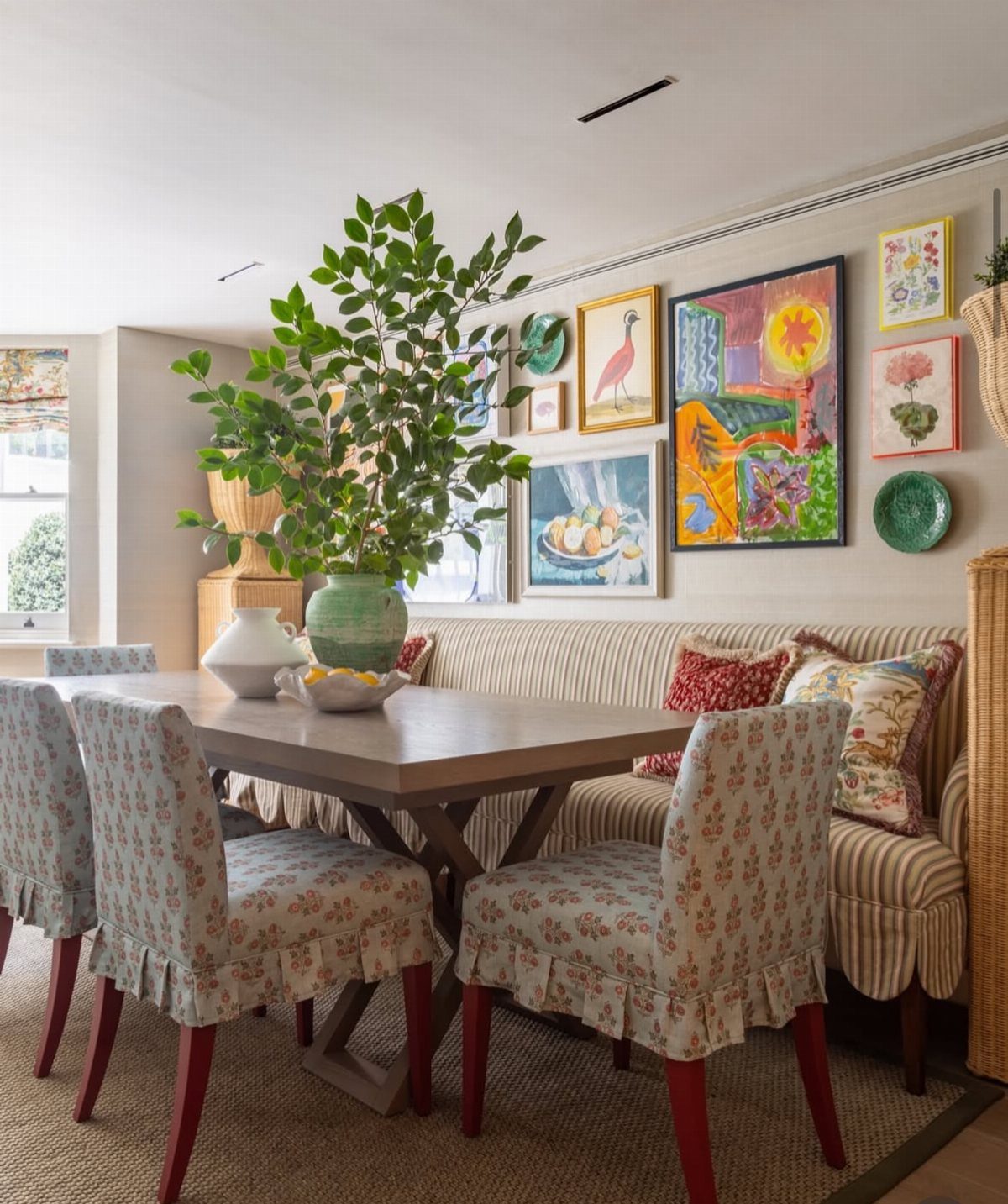
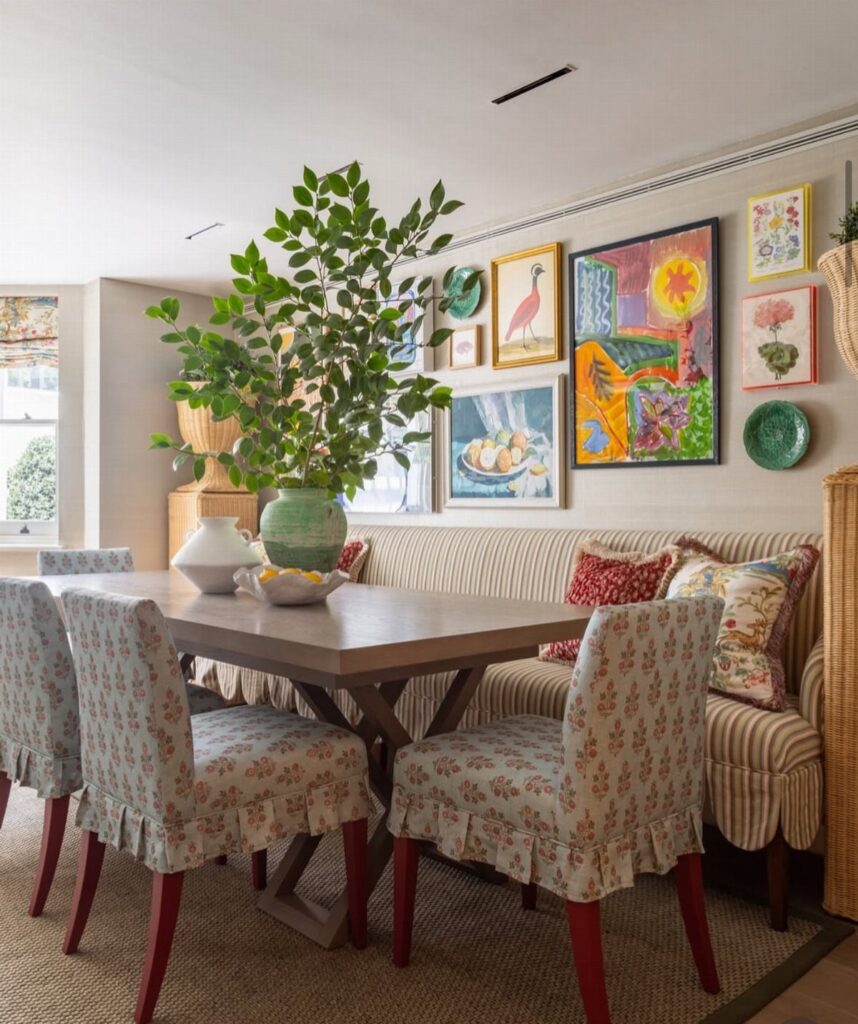
Framed art and a few plates hung together give a dining area one clear focal point, and a banquette like this one is a natural anchor to build above.
For a renter, I would lay everything out on the floor first and trace each frame onto paper.
Tape the paper to the wall, adjust until the spacing looks even, then hang. Keep the whole group roughly centered over the seating, not floating off to one side.
Mixing frame finishes feels more collected than matching sets, though a shared color in the artwork holds it together.
2. Large Mirror
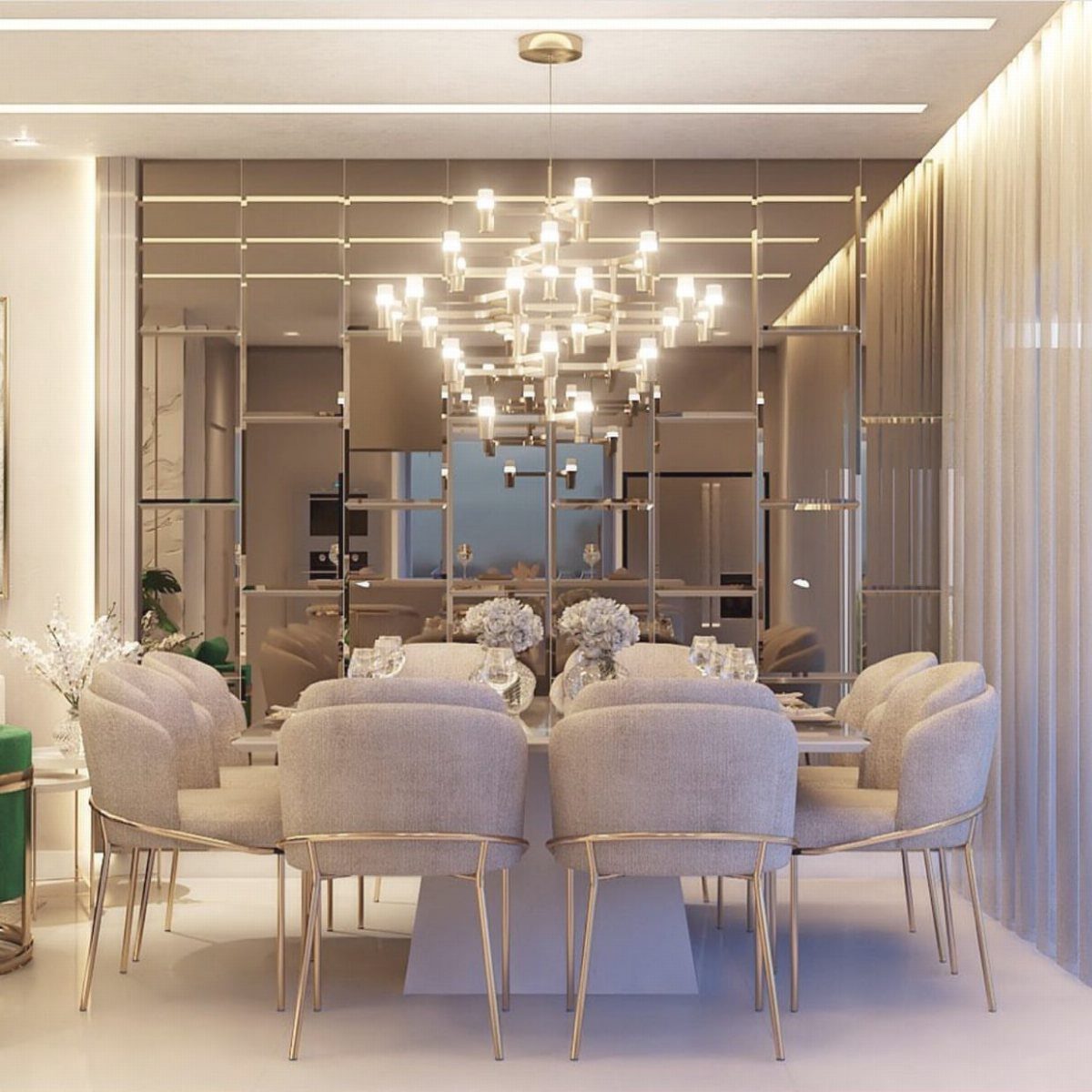
Mirror does 2 jobs on a dining wall: it bounces light from the chandelier and windows, and it makes the room read as larger than it is.
A grid pattern, made of smaller panels, appeals to me more than one plain sheet. The lines add structure and give you a modern look without needing any other art on the wall.
Hang or lean a mirror opposite a light source, not across from a bare corner. Large glass is heavy and costly, so a renter should consider a single leaning floor mirror instead.
3. Wall Mural
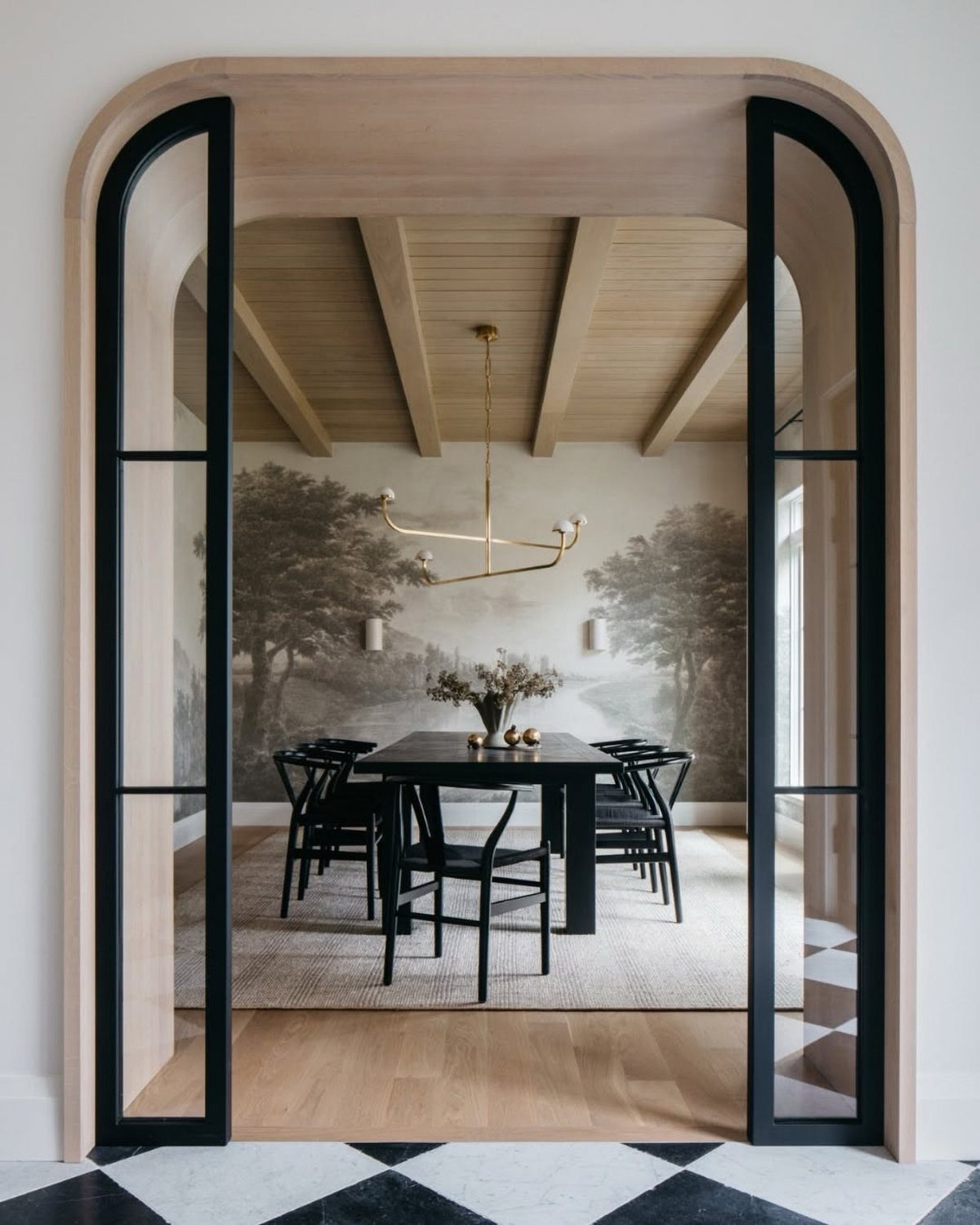
Covering one whole wall with a landscape turns the dining room into a place with a view, and trees and water suit a table you sit at for a long time.
Pick the wall your eye lands on first when you walk in, and leave the other walls plain. A mural that large does the work of all the art you would otherwise buy.
Renters can look at peel-and-stick versions, which come off more easily than painted ones. Dark furniture and a gold light fixture both hold their own against it.
4. Hanging Plants
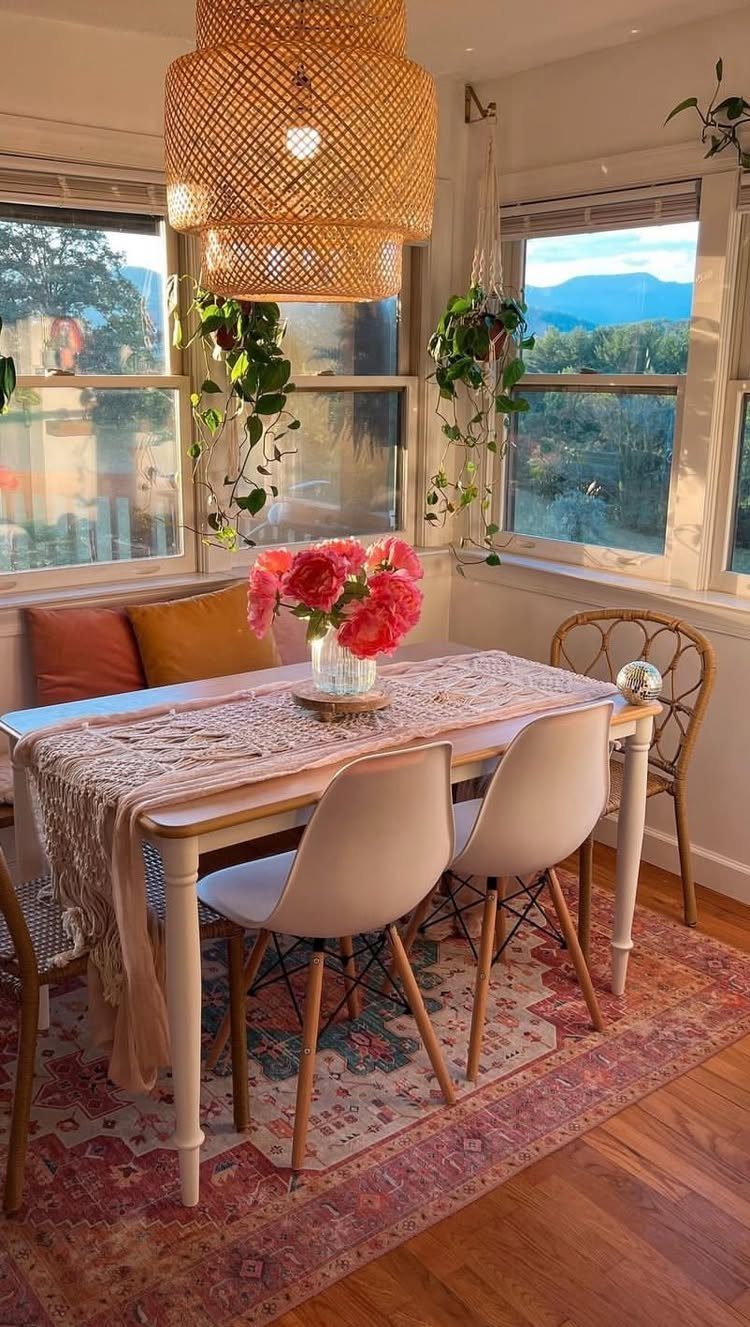
Plants hung by the windows add green at eye level without taking up a single inch of tabletop, which matters in a small dining area.
I like hanging them at different heights so the line looks loose, not like a row of identical pots. Trailing types soften a hard window frame nicely.
Use ceiling hooks or a curtain rod you already own if drilling is off the table. Keep the pots light, and put a saucer under each one so watering never drips onto the table below.
5. Plate Display
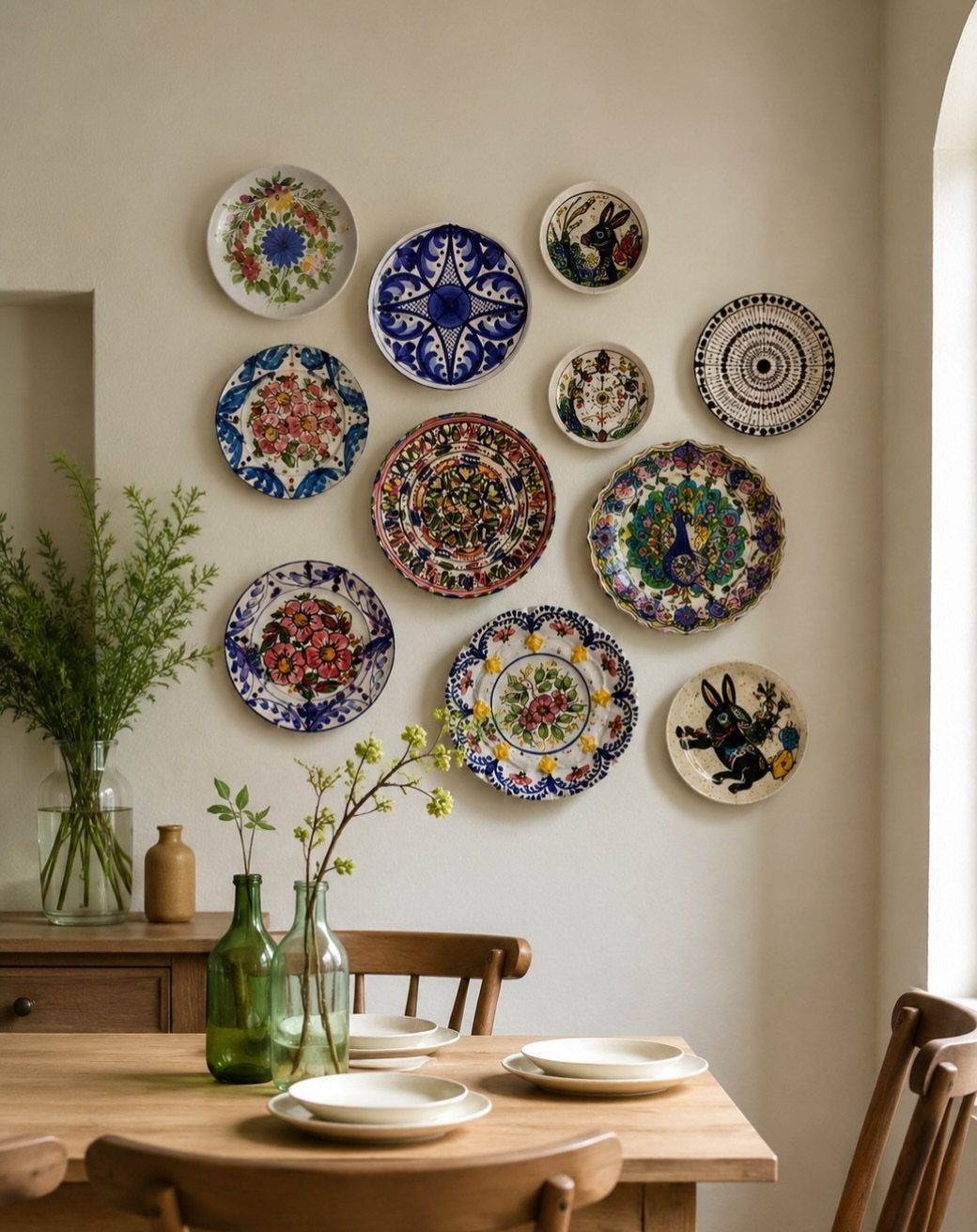
Patterned ceramic plates grouped on a wall bring color and charm for very little money, since thrift stores and your own cabinets are good sources.
Mix sizes but keep a loose palette, so the pattern reads as a collection and not clutter. Arrange them on the floor first, then copy the layout onto the wall, starting from the center plate.
Use plate hangers or adhesive discs rated for the weight. A tight cluster looks better than a wide scatter, and I would center it over the table.
6. Wall Art Signs
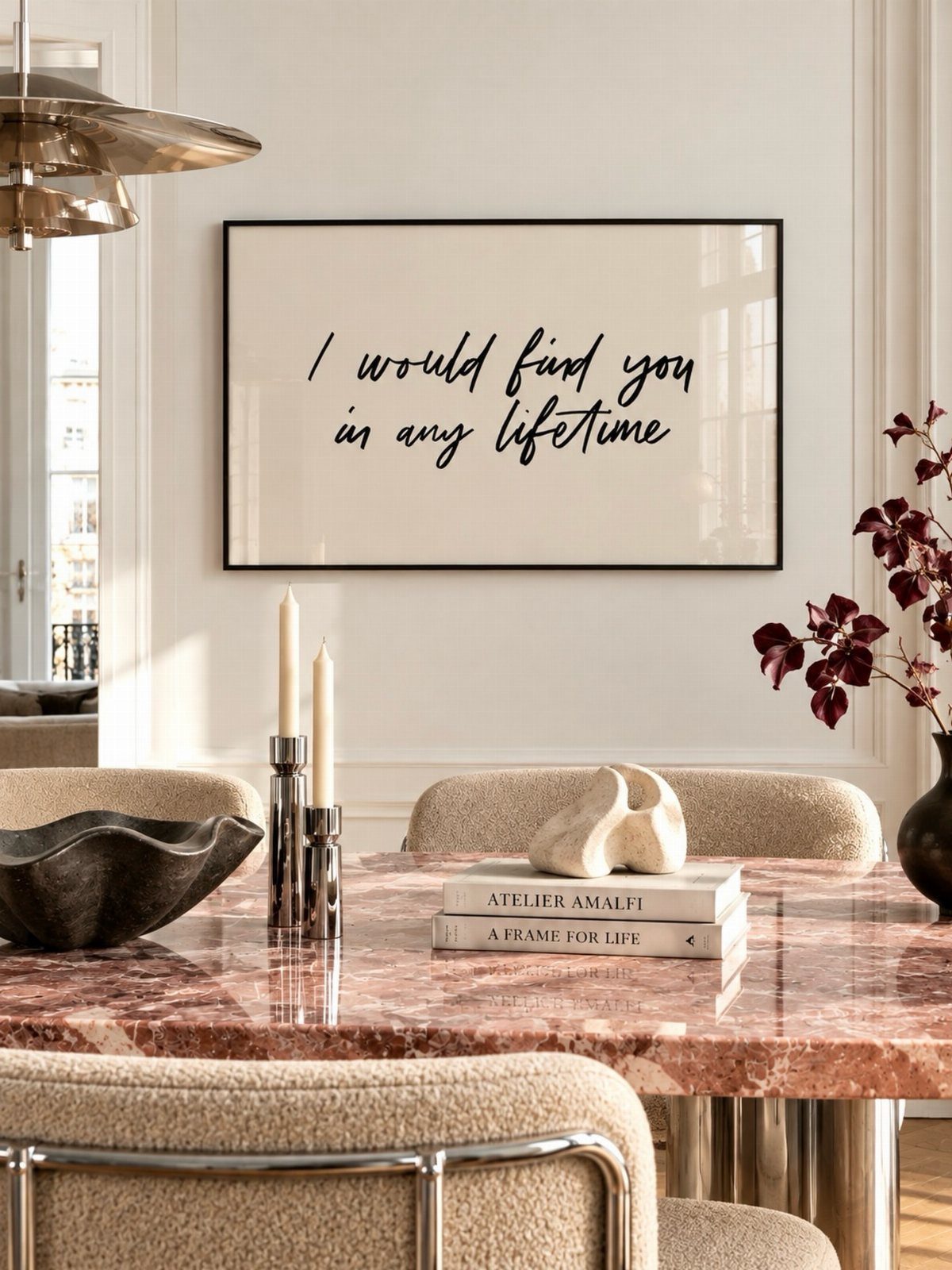
A single framed sign with a line of script gives a dining wall some personality, and one statement piece is easier on a budget than a full gallery.
Choose words you would be happy to read for years; a short sentiment ages better than a trendy joke.
For renters, a sign in a lightweight frame needs only a small nail or adhesive strip.
7. Open Shelving
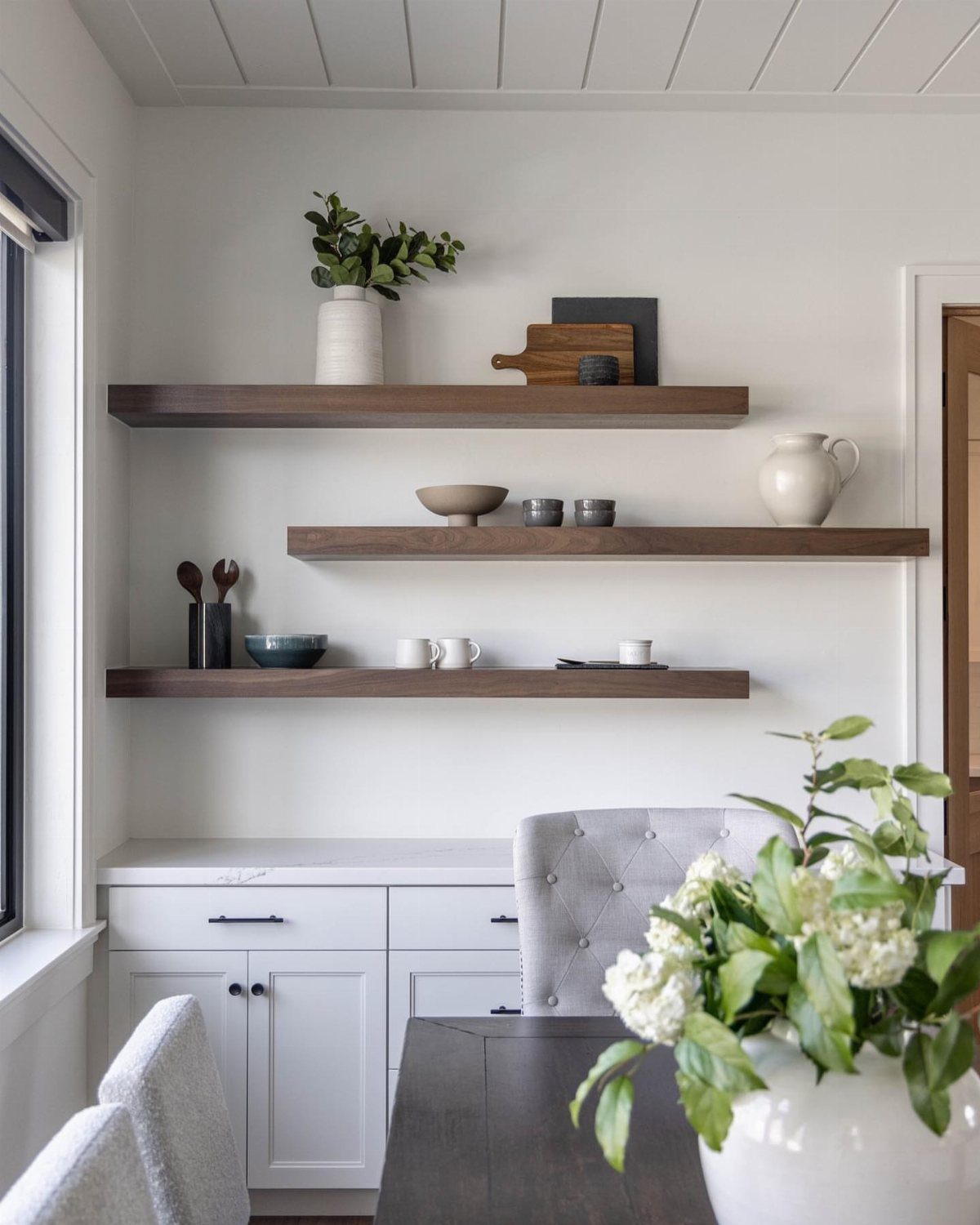
Three dark wood floating shelves against a white wall give a dining area a place for vases, bowls and greenery, and the contrast makes each piece easy to read from the table.
Stagger the objects instead of lining them up: a tall vase on one end, a low bowl in the middle, a trailing plant to soften the edge.
Leave some bare wood on every shelf, since a crowded shelf reads as clutter.
Use pieces you already own before buying anything. Floating shelves need drilling, so a renter should check the lease first.
8. Seating with Raised Backs
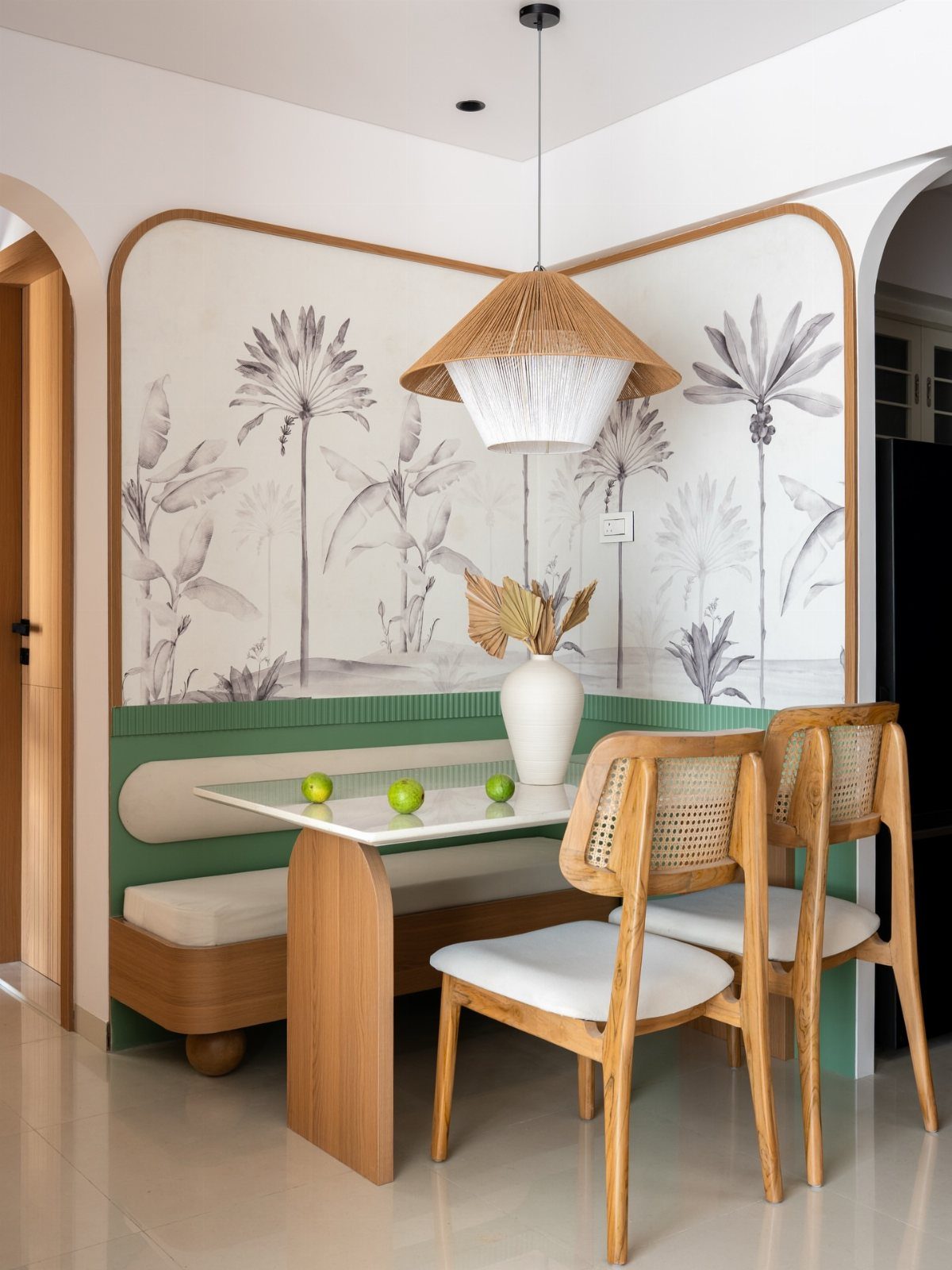
A built-in bench with a high white backrest makes the seating itself part of the wall, and it frames whatever hangs behind it.
I prefer a tall back like this one because it turns the bench into a headboard for the table. Painting the backrest white against wood keeps it light, and a botanical mural above gives the eye somewhere to go.
Pair the bench with a couple of open-back chairs on the other side so the nook stays airy.
Building one is a bigger project than hanging art, and it is permanent, so it suits owners better than renters.
"Taking the seating backs high up the wall adds decorative flair, creating a sense of grandeur and visual interest, transforming an otherwise plain wall into a focal point."
Creating a Cohesive Look
Start with the biggest fixed color in the room, which is usually the rug or the dining chairs. Pull two anchor colors from it, then add one accent for the small stuff.
Repeat your metal finish across frames, sconces, and hardware. Brass in one spot and black in another can work, but a finish that shows up three times looks planned.
Contrast keeps things crisp.
Lighting Coordination
Layer your light.
Overhead fixtures alone flatten a room, so add sconces and candles at different heights to build depth. Food and faces both look better for it.
Choose warm bulbs between 2700 and 3000 Kelvin. Anything cooler can make a dinner table feel like an office.
When a mirror is the star, I make it the biggest piece in the group and size every nearby frame a notch down, so the eye lands on the mirror first.
Hang it across from a window or just beside the chandelier so it picks up that light, and at dinner turn the overhead lights down low to let the glass glow.
Frequently Asked Questions
How to decorate a dining area wall?
Pick one focal piece and build from there: a gallery of mixed frames and plates, a large mirror, or a single mural wall all work.
Hang the group so its center lines up with the table or the chairs, then pick one metal, brass for example, and let it show up in the frames, the sconces and the drawer pulls.
A finish that appears 3 times looks planned instead of random.
What kind of art looks best in a dining room?
Landscapes, botanicals, abstracts and personal photography all suit a dining room. Pull colors from the room into the art, and if the frames don’t match, a shade shared by the pieces inside them can still hold the wall together.





