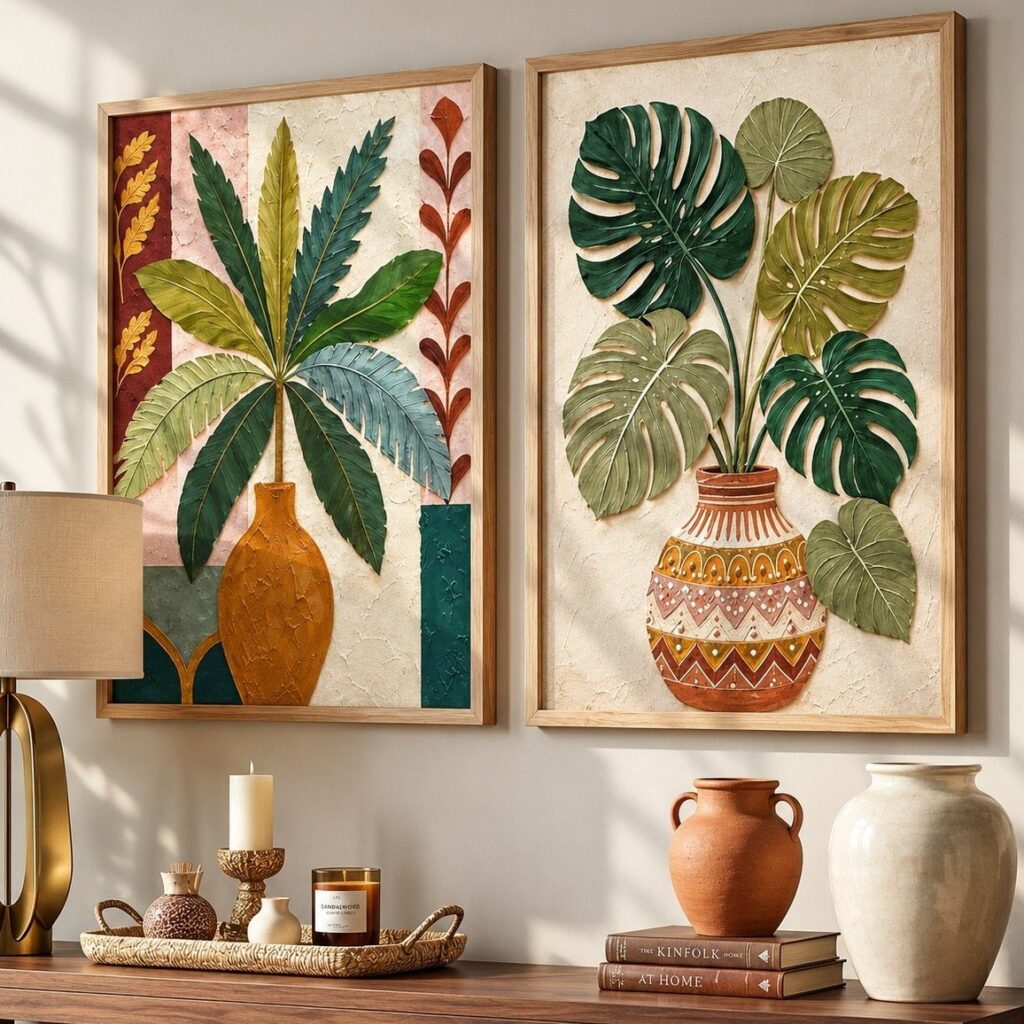
Wall art for a traditional dining room can be a gallery wall of framed pieces, one pair of chinoiserie panels, or a single large canvas, and the wall you have decides which one fits.
Over a sideboard or console, size the art to about two-thirds of the furniture’s width: a gallery group or triptych suits a long wall, and a single large canvas or a matched pair suits a short one.
1. Gallery Wall
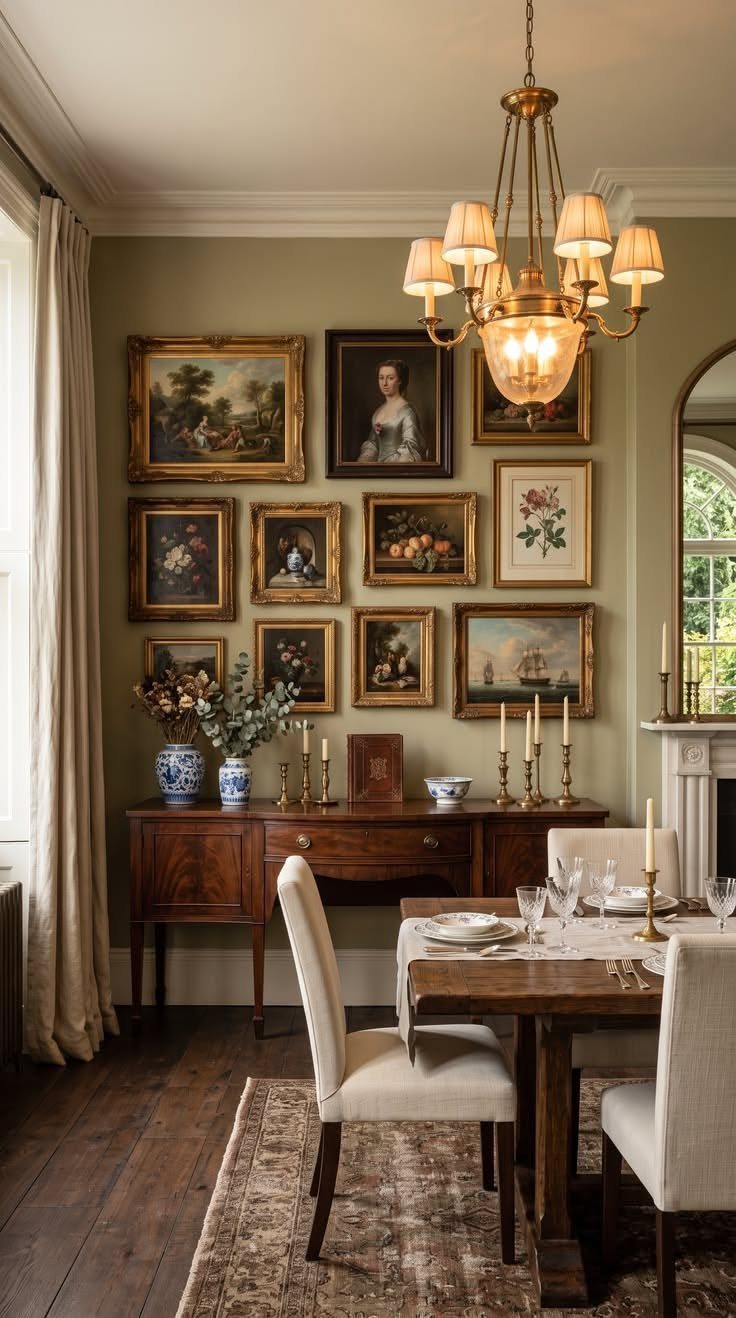
Frames that differ in size but share a finish are what make a gallery wall look collected instead of random.
Gilt or dark wood both work against an olive green wall, and a sideboard below gives the group a natural base.
I’d lay the arrangement out on the floor first, then trace each frame on kraft paper and tape the shapes to the wall.
Keep the spacing between frames even, and let the whole group sit centered over the sideboard rather than the room.
If the wall feels too busy, cut the count before you shrink the frames.
2. Botanical Prints
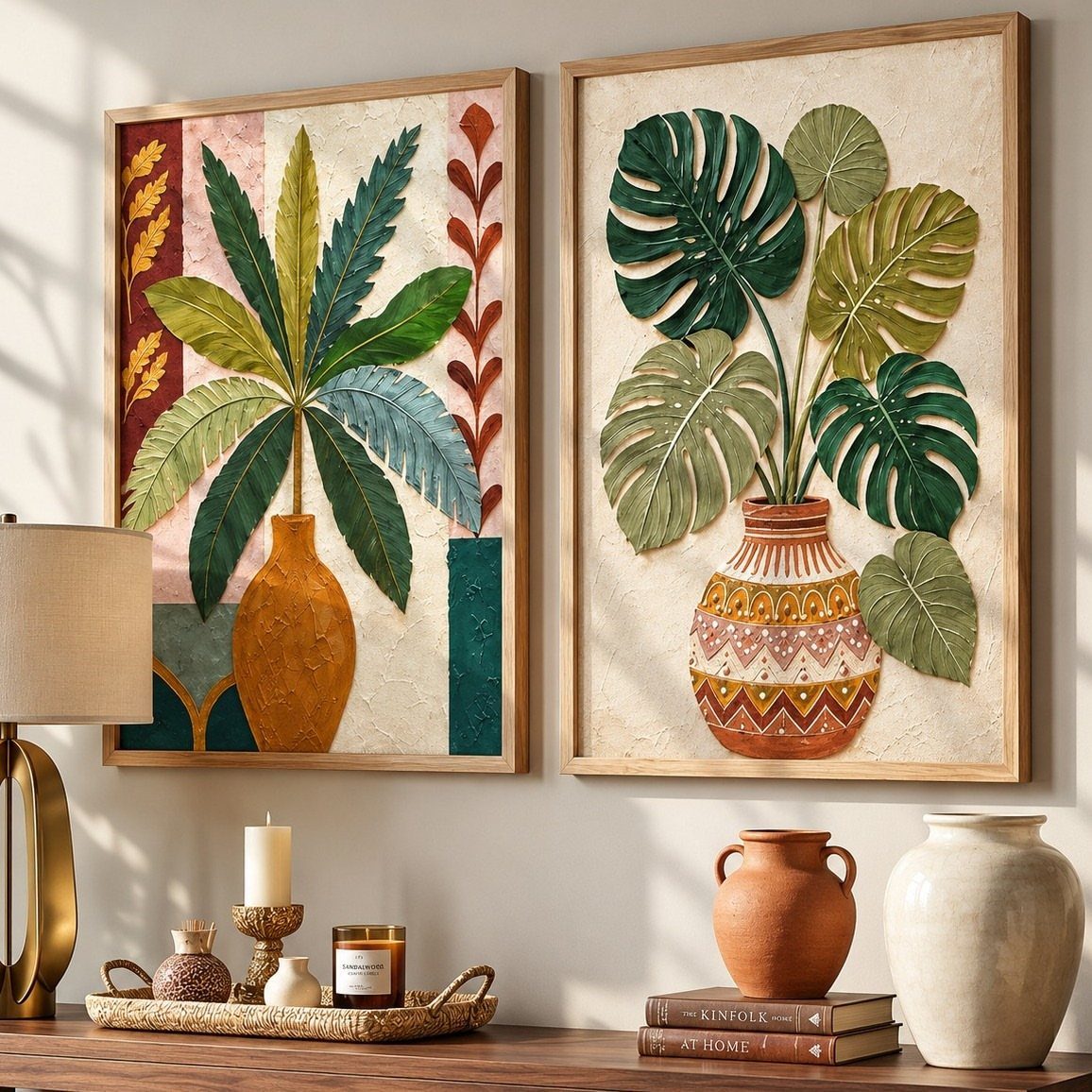
Two matching botanical pieces over a console make a quiet pair, and plants in vases keep the subject close to the table below. I prefer a matched set to a single piece here, because the symmetry suits a traditional room.
Hang them at the same height with a few inches between them, and let the console hold candles, pottery and books at different heights so the wall and the surface read as one arrangement.
Textured relief pieces add depth that flat prints lack, though a framed print costs less and is easier to swap.
3. Landscape Paintings
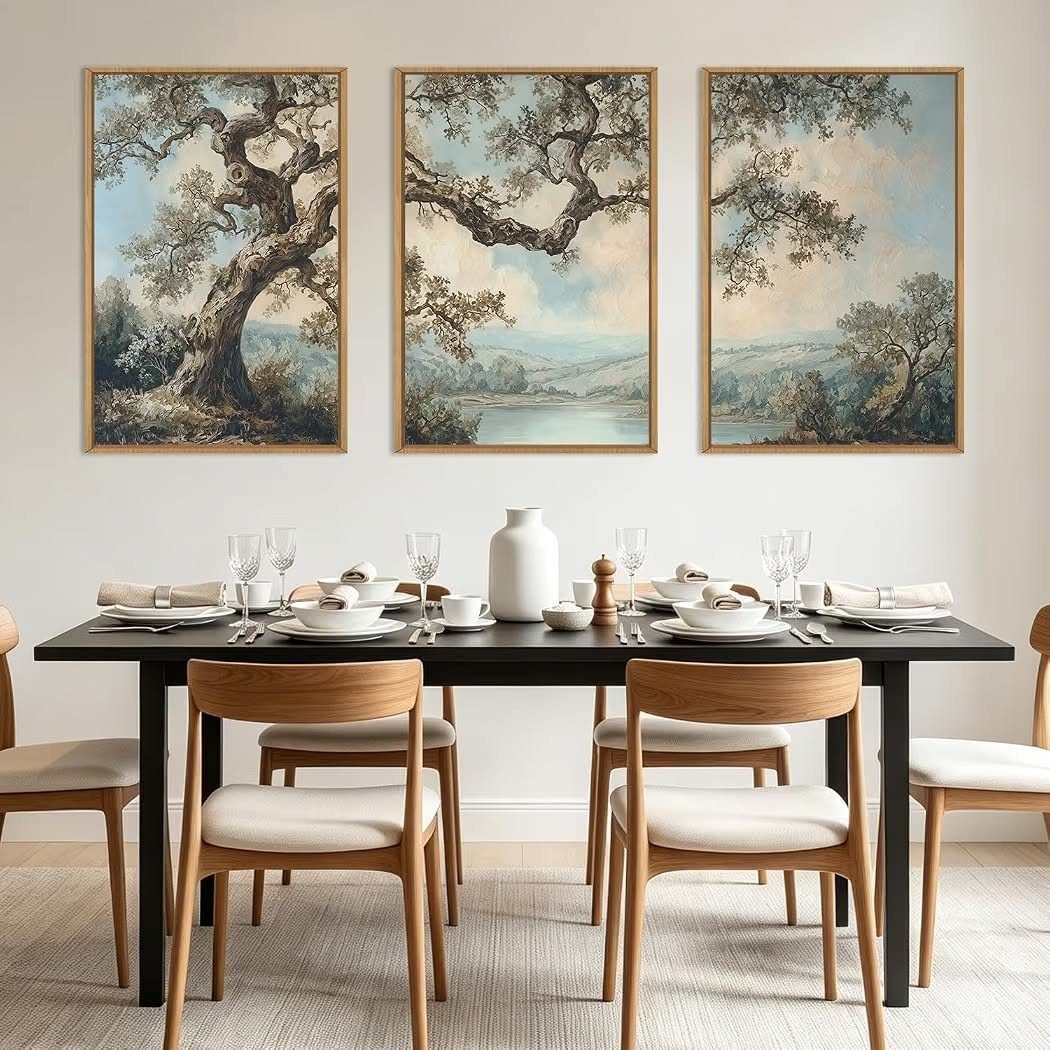
A triptych turns one landscape into a wide, calm band across the wall. Trees and a river give the eye somewhere to rest while people sit and eat.
Hang the three panels with equal gaps, and make the whole group roughly two-thirds the width of the table below it. Choose frames that echo the chair wood so the scene feels tied to the room.
For a more traditional look than the modern table in this room, pick warmer, darker paintings.
4. Framed Traditional Art
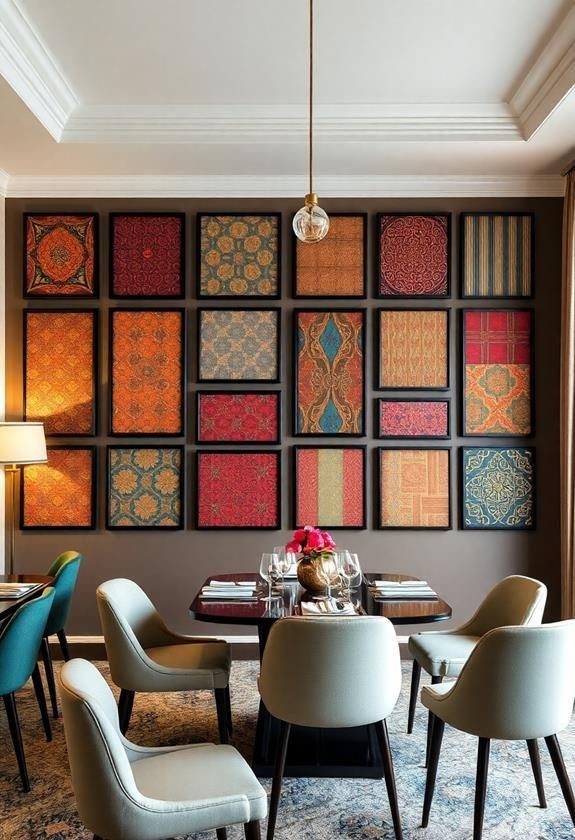
Patterned fabric in frames is a smart alternative to paintings, because textiles bring pattern and color without the price of original art. A dark wall makes the cloth pieces stand out.
Keep the frames identical and lay them in a tight grid, with the same gap between each. Matching mats do the unifying work when the fabrics themselves differ.
A single pendant over the table keeps the grid as the focus. Lining up the grid edges with the table width looks tidy.
5. Large Size Canvas Wall Art
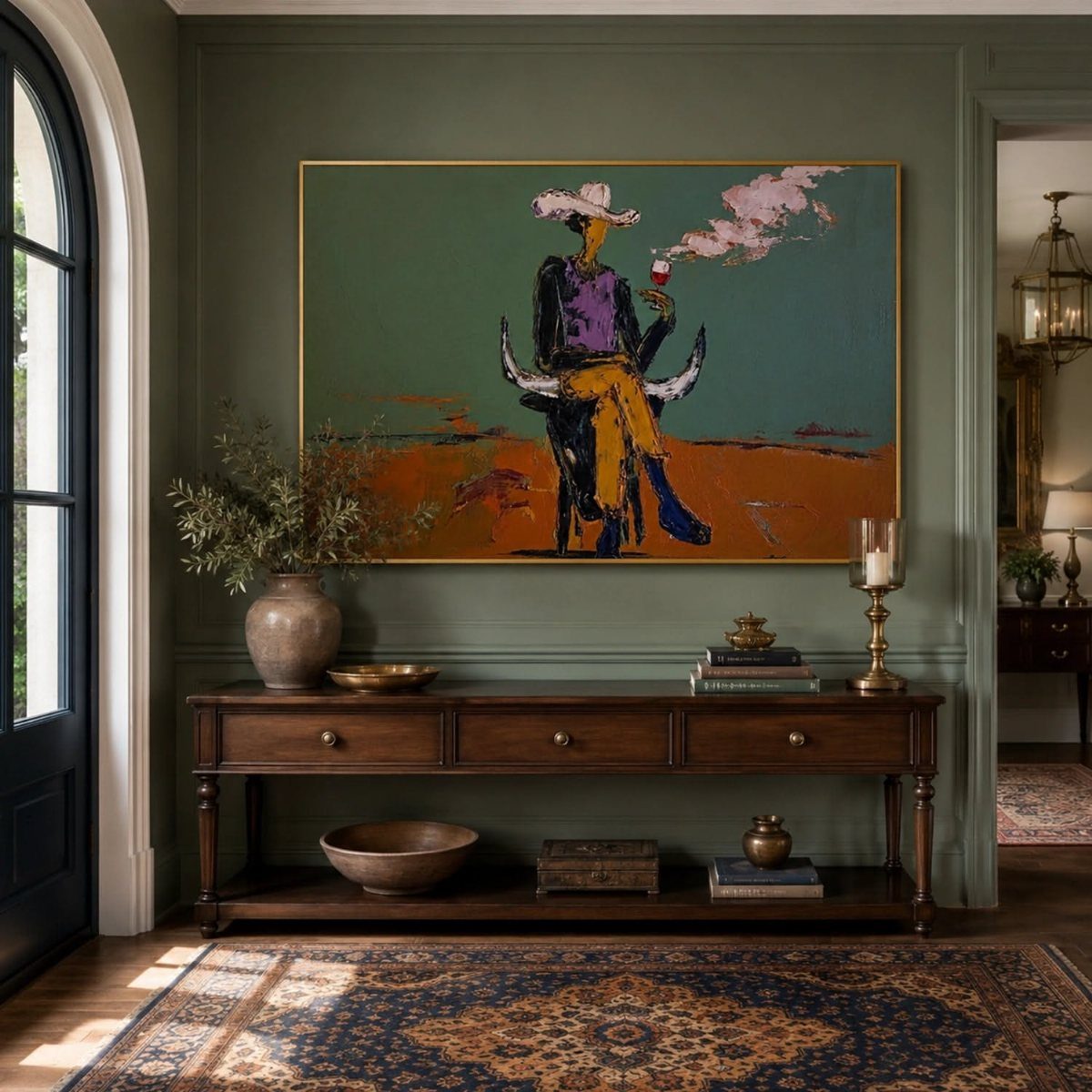
One oversized canvas fills a big wall faster than a dozen small frames, and it needs only one nail point and one decision. Green walls and a traditional rug suit a figure painting with warm tones.
Hang it over a console so the furniture anchors it, with the bottom edge a hand’s width above the surface. The canvas should cover at least half the console’s width, or it will look lost.
Large canvases are bulky, so measure the wall first and check the number against the frame size listed in the product details.
6. Chinoiserie Panels
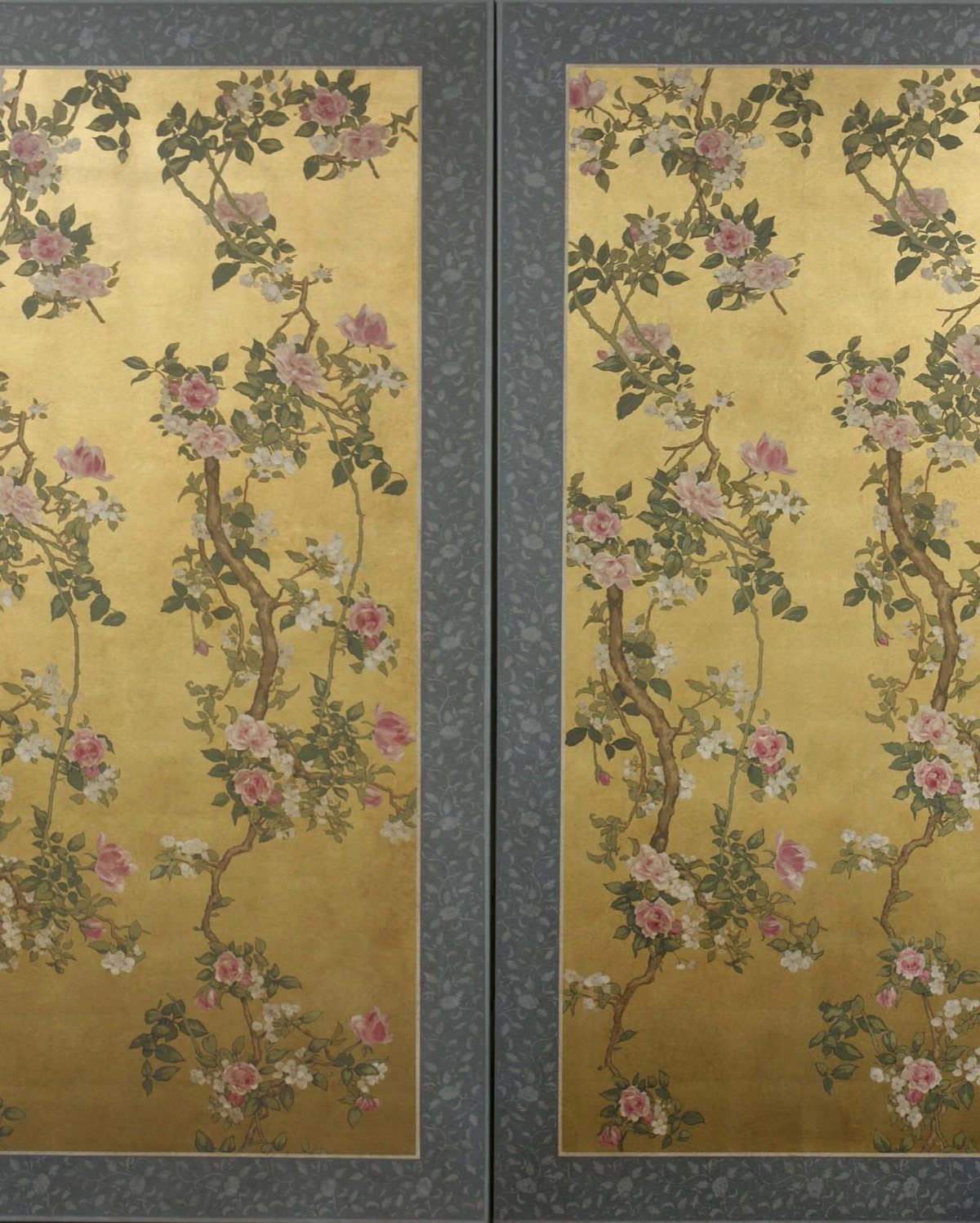
Pink blossoms on a gold ground give chinoiserie panels a formal, country-estate feel that suits a dining room used for dinners. I’d hang them as a pair, flanking a mirror or centered over a buffet.
Grey borders keep the gold from looking flashy. Keep other wall colors soft so the panels carry the pattern.
Panels cost more than prints, so if the budget is tight, buy one pair and leave the rest of the wall plain.
7. Vintage Cowboy Art
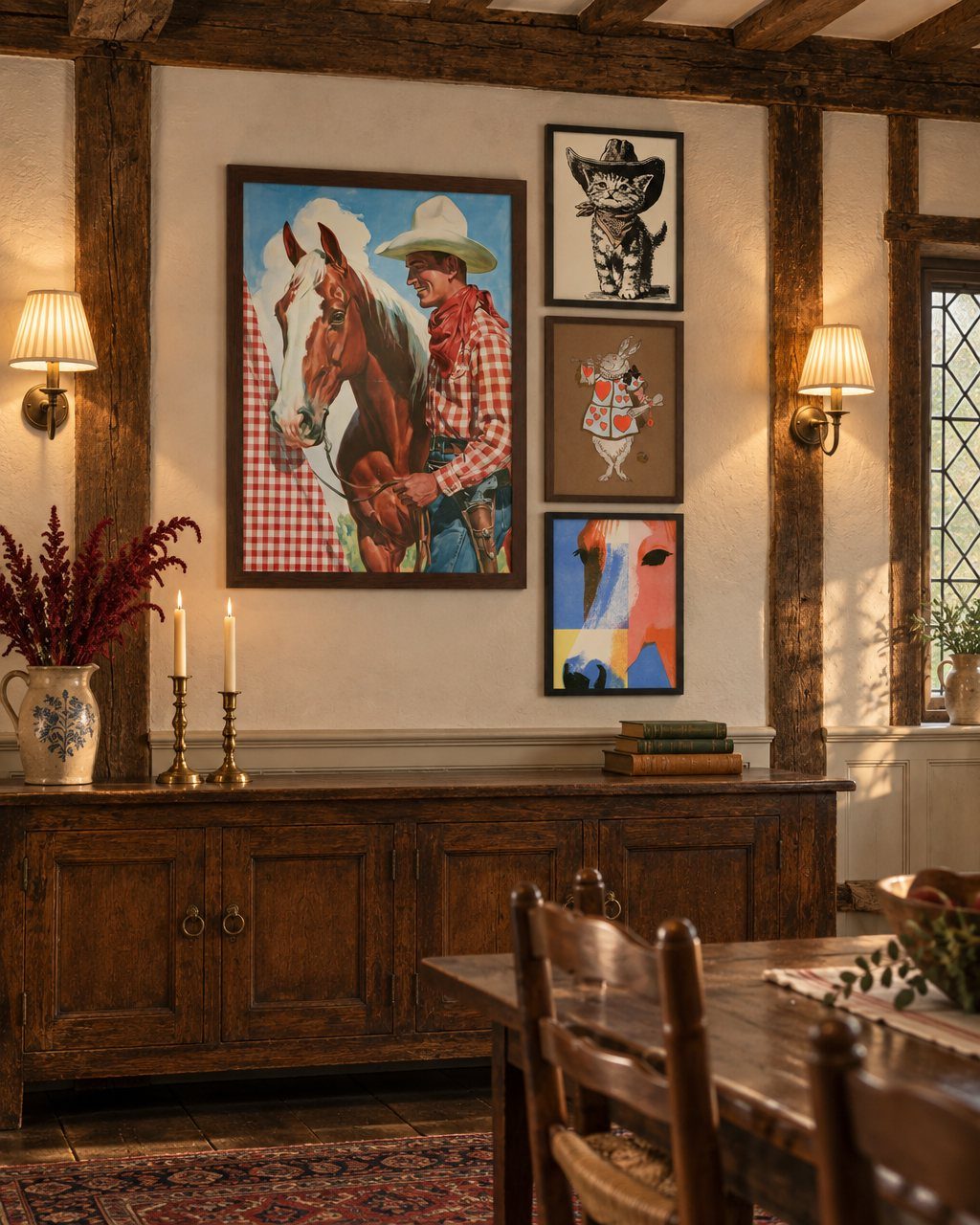
3 western pieces hung as a row turn a plain wall into the focal point of a beamed dining room. Horses and riders in dark frames fit the wood tones of the table and ceiling.
I’d keep the 3 frames the same height along the top edge and space them evenly, centered over the sideboard. Wall lamps and candles on either side add warm light, so skip a bright overhead bulb.
With heavy wood already in the room, a plain wall around the paintings stops them from competing.
8. Cultural Indian Art
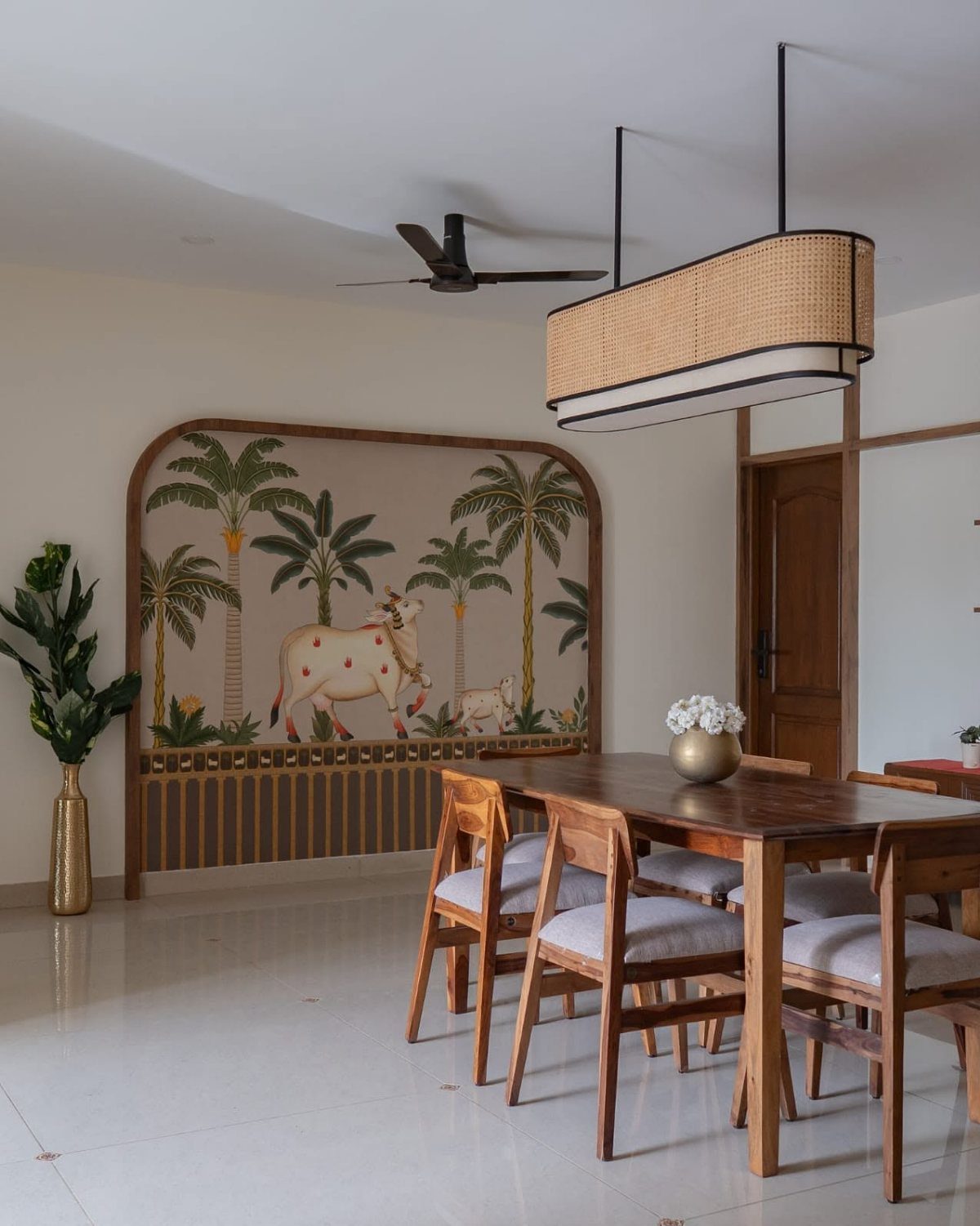
A large mural of cows and palms brings color and pattern to a wall that would otherwise sit empty behind the table. Rich, saturated tones carry the room, so the furniture can stay simple.
Wood chairs and a woven pendant light work because their natural texture calms the busy detail. I’d let the mural be the only loud thing in the room: plain table, plain chairs, no second pattern.
Painting a mural is a big job, so a printed panel or wallpaper version is the easier route for a renter.
Choosing the Right Size
Scale decides whether art looks chosen or accidental.
Before buying anything, measure the open stretch of wall and cut a piece of paper or cardboard to the size of the art you’re considering, then tape it up and live with it for a day.
Too small is the most common miss. A lone small frame on a wide wall looks lost, and a tight cluster or one oversized piece fixes that faster than a bigger frame does.
A cluster of mixed sizes, such as gold frames of different dimensions, reads as one balanced shape when the gaps stay tight and the outer edge stays roughly even.
Treat the cluster as a single piece when you size it against the wall.
Color Coordination
Pull your colors from what is already in the room, not from the art itself. Look at the rug, the chair upholstery and the wall paint, and choose art that repeats one or two of those tones.
If the room is full of color, neutral pieces are the safer pick.
A big abstract canvas in soft neutrals, or a black-and-white landscape photo in a simple frame, adds visual heft to the wall while keeping the room’s palette to the colors it already has.
If the room is already quiet, a nature-themed mural can bring in the color. I’d hold up a paint chip or fabric swatch beside the art before buying, in the room’s actual light.
Mixing Styles
A traditional piece looks fresher next to something modern, and the reverse is true too. Start with one anchor style and let the second show up in small doses.
A classic framed landscape works well over a clean-lined table, for example, and a sleek metal lamp or a simple abstract print beside it keeps the room from feeling like a museum.
Repeat one element across both styles, such as a frame finish or a shared color, so the mix looks deliberate. With no shared element tying them together, two styles hung side by side read as an argument between two rooms.
Frequently Asked Questions
How to decorate a dining area wall?
Start with one anchor piece or group sized to the wall: a gallery wall of frames that share a finish, a pair of matching prints over a console, or one oversized canvas.
Mirrors and personal items can join the mix, but keep one element, like a frame finish or a color, repeating so it reads as planned.
Tape paper cutouts to the wall first and live with them for a day before you hang anything.
What are some neutral colors that would look good in a dining room?
Soft whites, beiges, and muted greens give a dining room a calm feel. Olive green also works as a wall color, since gilt or dark wood frames look good against it.
How to display wall art for living room?
Pick a layout that fits the wall: a cluster of mixed-size frames, a matched pair over a console, or one large piece over furniture.
Keep the gaps even and tight, treat a cluster as a single shape when you judge its size, and let the furniture below anchor it.
On a wide wall, one small frame floats and looks accidental; either choose a single piece about 2/3 the width of the furniture below it, or hang a cluster of 3–5 frames.





