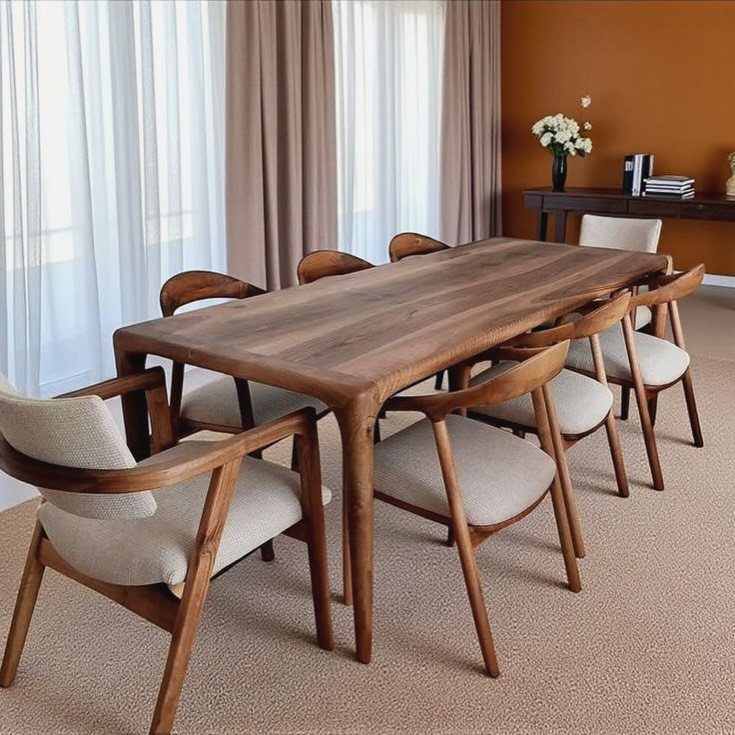
A wood table already supplies the color and the grain, so the idea that suits you depends on how much of that wood you want showing, from a bare top with a vase and candles to one covered by a tablecloth and placemats.
A runner or a set of placemats leaves the edges bare for a few dollars, a full tablecloth covers the table completely, and a live-edge slab should stay nearly empty because the curve of the tree is the feature.
The ideas here run from a single vase with candles to a paper lantern, and most cost far less than a new table.
1. Wood Table with Vase and Candles
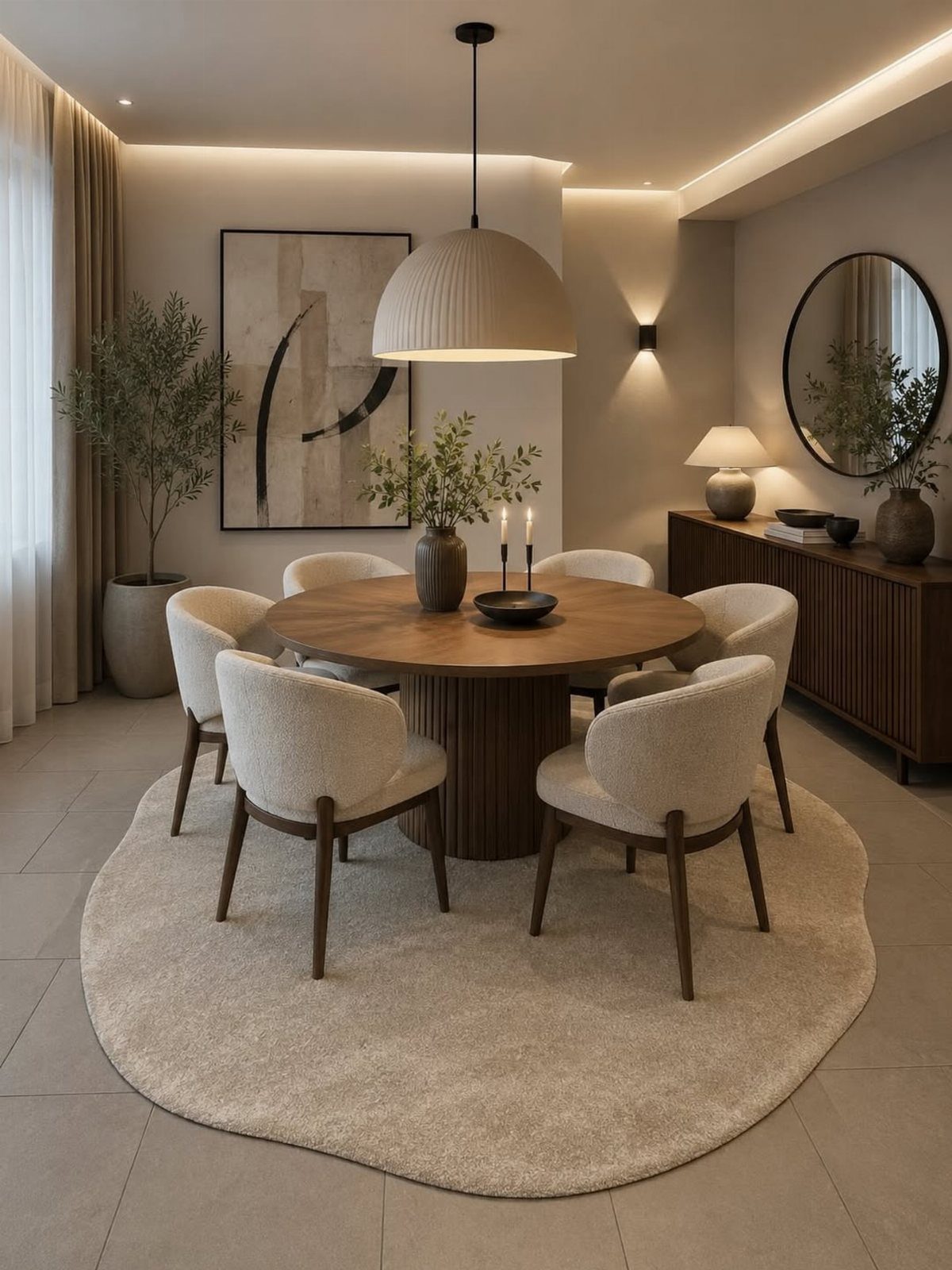
A round wood table asks for very little on top, and one vase with a few candles is enough. Keep everything low and in the center so people across the table can still see each other.
Pick a vase in a color already in the room, like the cream of the chairs, so it reads as part of the table rather than an add-on.
Unscented candles are my choice at a dinner table, since scent competes with food.
2. Wood Table with Tablecloths and Placemats
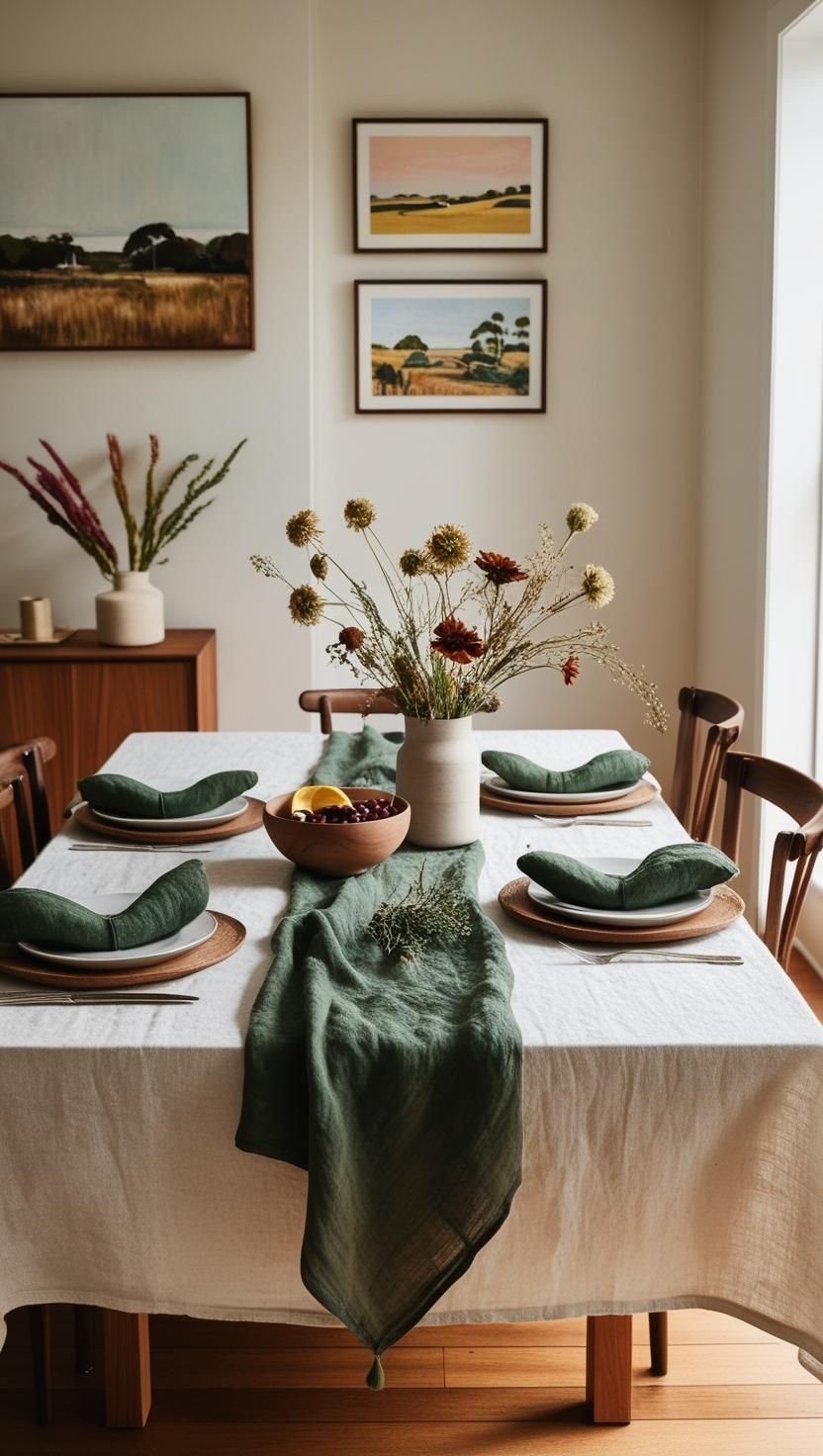
Linens are the cheapest way to change a wood table without hiding it. A runner down the center lets the grain show at the edges, while a full tablecloth covers it completely.
I prefer a neutral cloth with one colored runner, because swapping only the runner refreshes the whole look for a few dollars. Placemats do the same job when you want more wood showing.
3. Wood Table with Seasonal Centerpiece
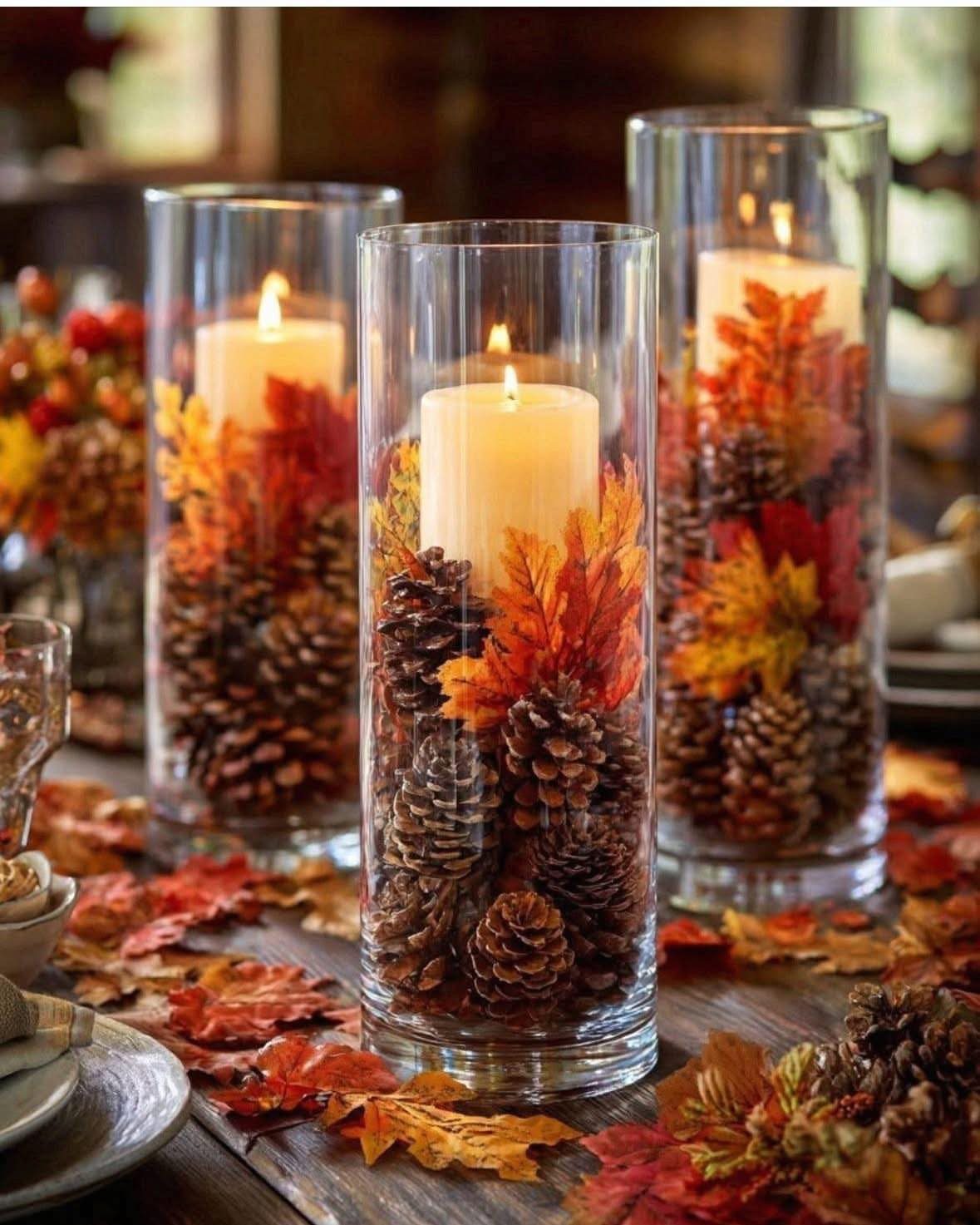
Autumn decor on a wood table works because the colors already match the wood: orange leaves, pinecones, warm candlelight.
Swap the contents each season and the vases stay put.
Spring could bring fresh branches, winter evergreen sprigs. Real leaves dry out and curl, so I gather them close to the day I use them.
4. Wood Table with Colorful Dishware
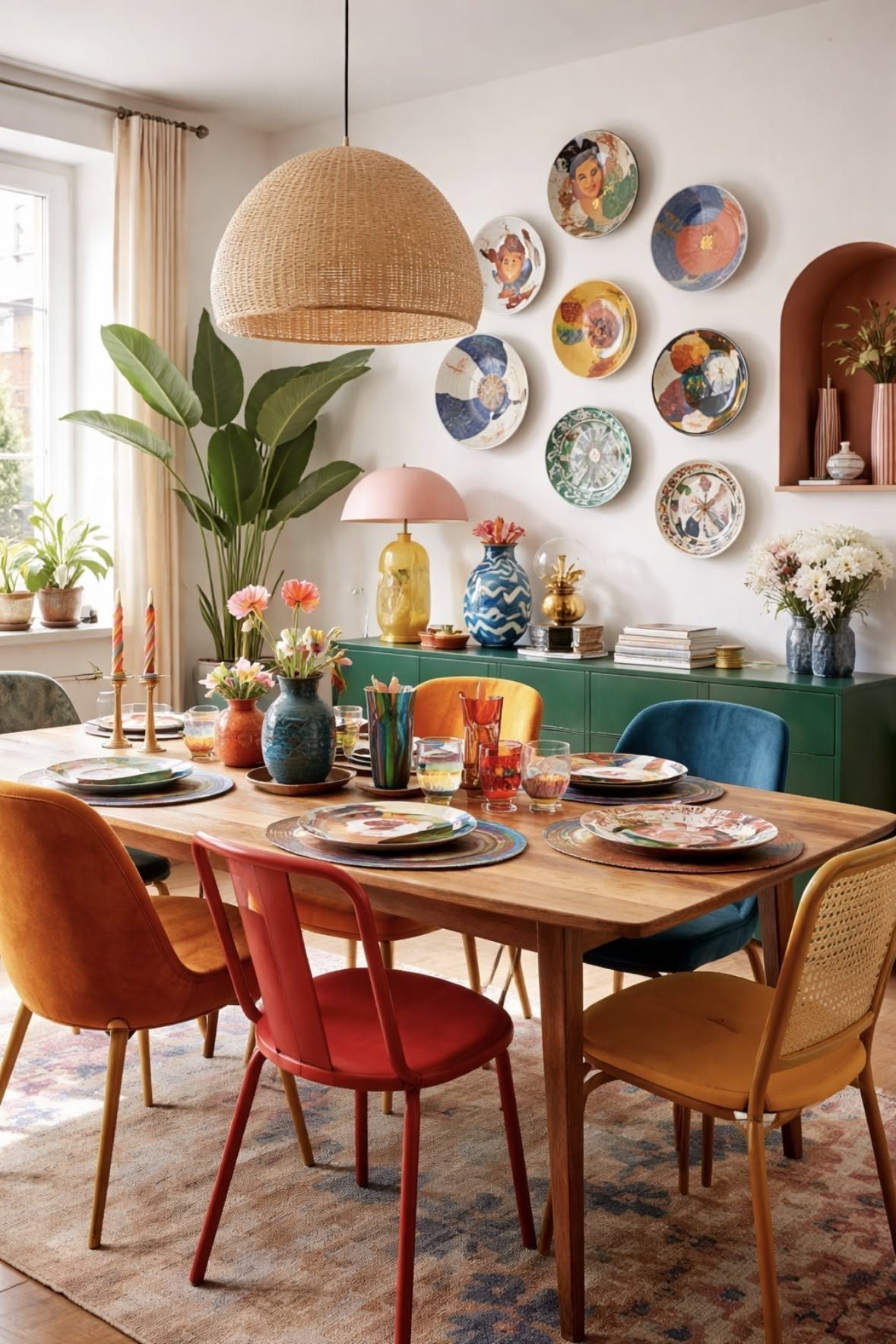
Bright plates and glasses do more for a plain wood table than any centerpiece, because the wood works as a calm backdrop. Mismatched chairs, as in this room, push the same idea further.
Pick plates in a few mixed colors and let the glasses stay simple, since the plates carry the color on a wood table.
Buying plates in a few mixed colors costs less than a full matched set and looks deliberate. A sideboard with wall plates above ties it together if you want to go further.
5. Wood Table with Handcrafted Ceramics
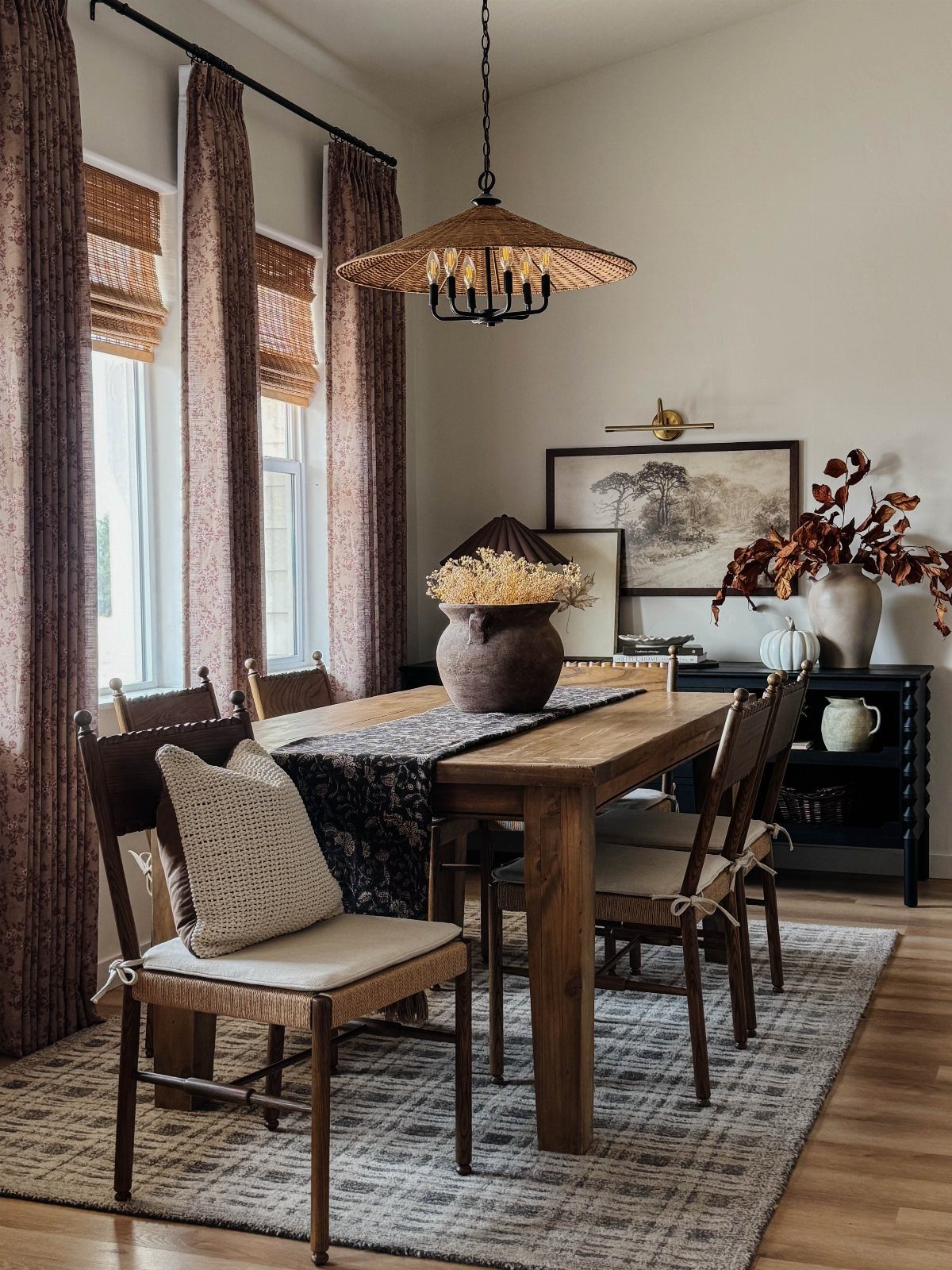
Handcrafted ceramics bring texture that factory pieces lack: uneven glazes, thicker walls, small irregularities.
I would group pots in odd numbers and vary their heights, with the tallest near the middle.
Repeating a piece or two on a sideboard connects the table to the rest of the room. Dried stems need no water and last, which suits a table used every day.
6. Wood Table with Small Potted Plants
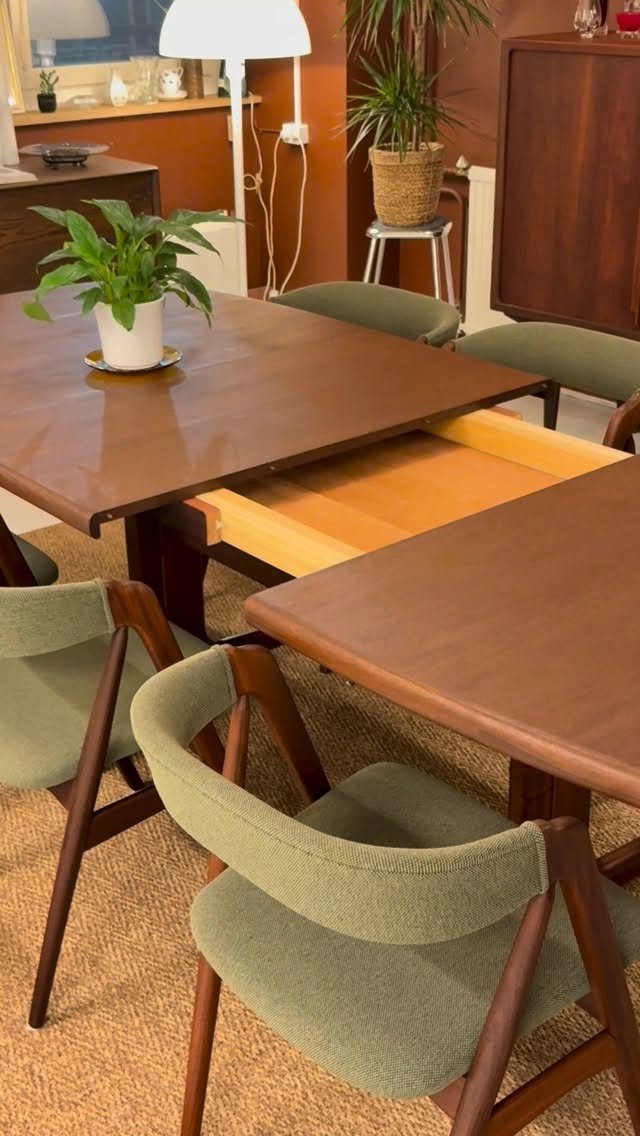
One small potted plant on a wood table brings green without crowding the place settings. Against brown wood, it also picks up the green of upholstered chairs, which makes the room feel planned.
Choose a pot narrow enough to move aside at mealtime.
A plant in its own pot is easier than cut flowers, since there is no water to change. A larger plant on the floor nearby balances the small one.
7. Wood Table with Decorative Glassware
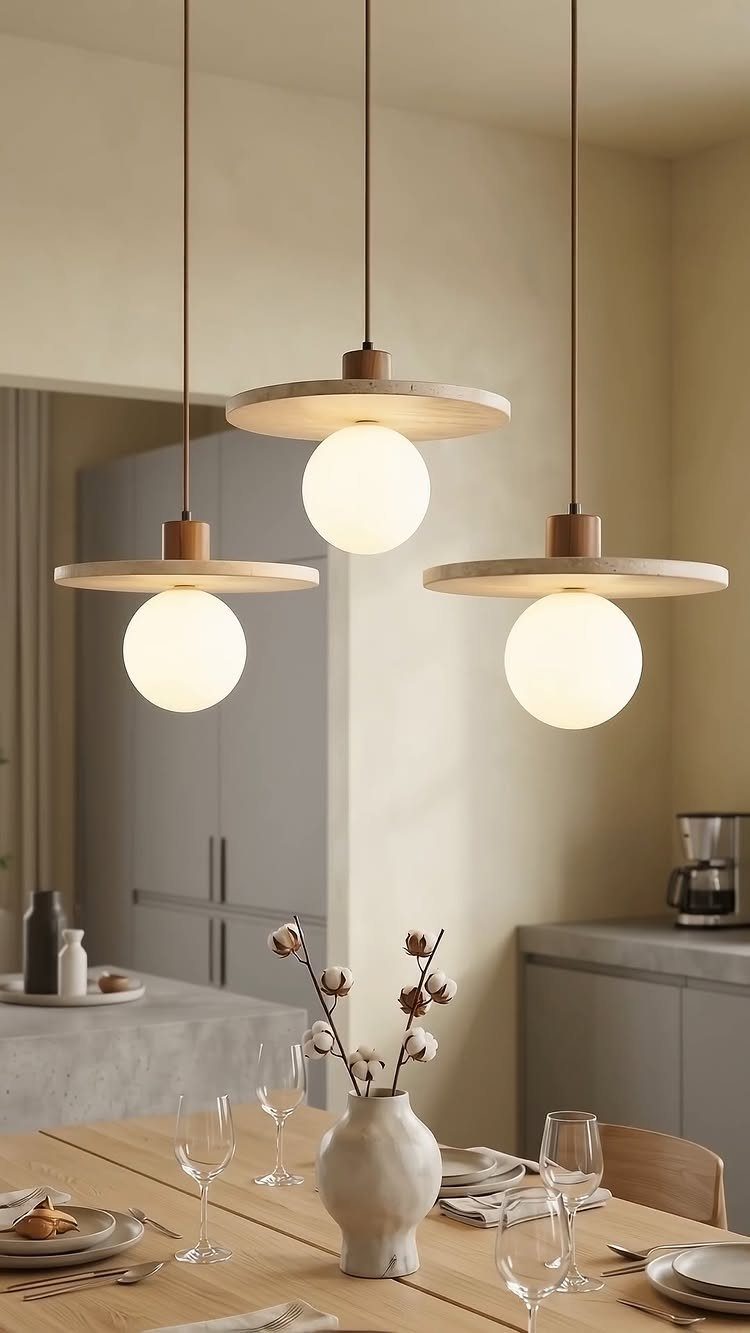
Clear glassware suits a light wood table because it adds sparkle without adding color. Stemmed wine glasses over plain white plates keep the grain and the table’s lines in view.
Pull glasses from your own cabinets and set one at every place, even for plain water. Wipe the glasses with a dry cloth before guests sit down, since fingerprints show against the light.
8. Wood Table with Paper Lantern
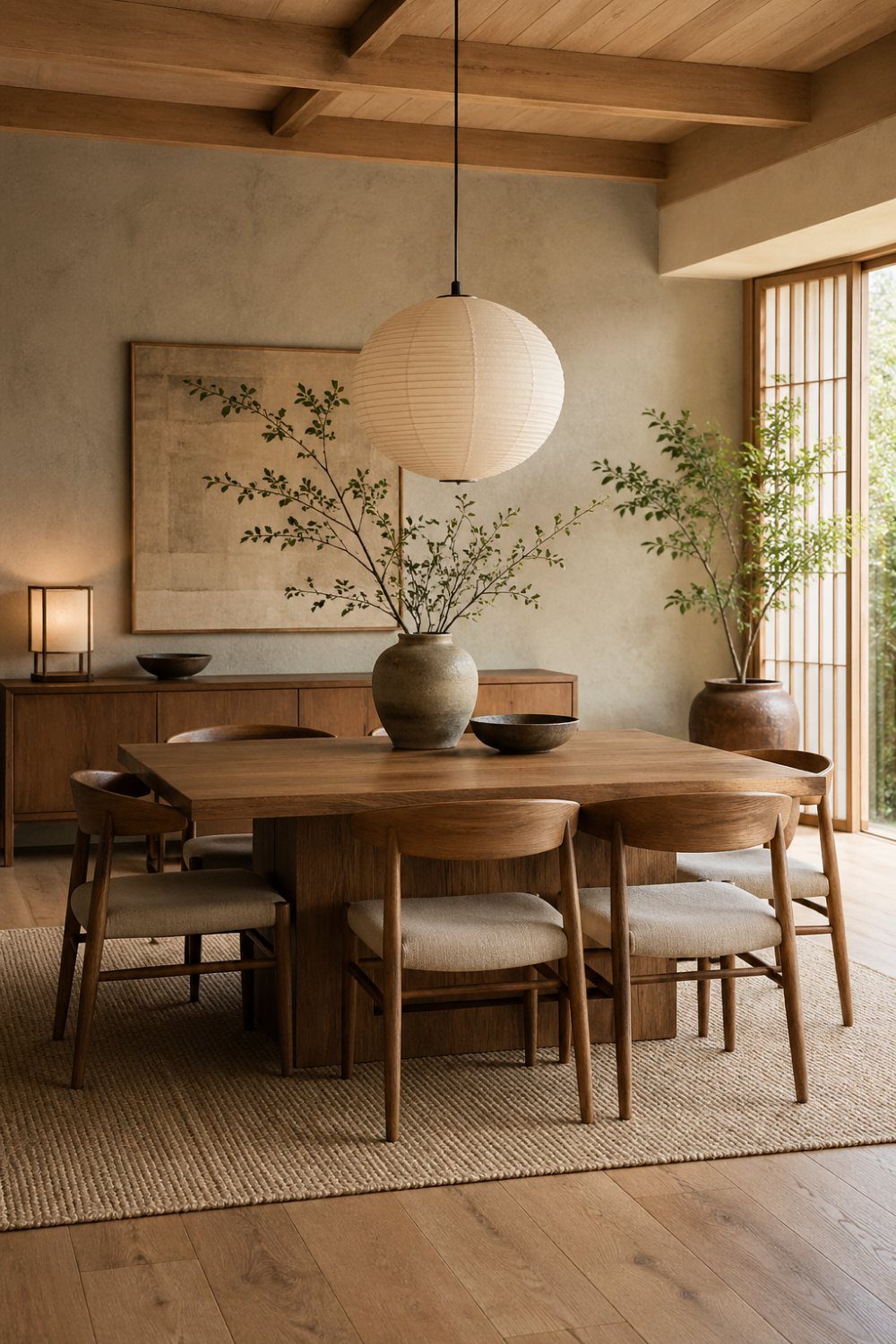
A single oversized paper lantern does the work of a whole centerpiece, so the table itself can stay bare. Hung low over a light wood table, it gives off a soft, even glow that suits a minimalist room.
Pick one lantern wide enough to look intentional over the table, not a small one that gets lost.
Paper lanterns cost far less than most pendant fixtures, which helps on a rental budget. I would keep the tabletop empty and let a potted plant on the sideboard carry the green.
9. Live-edge Wood Dining Table
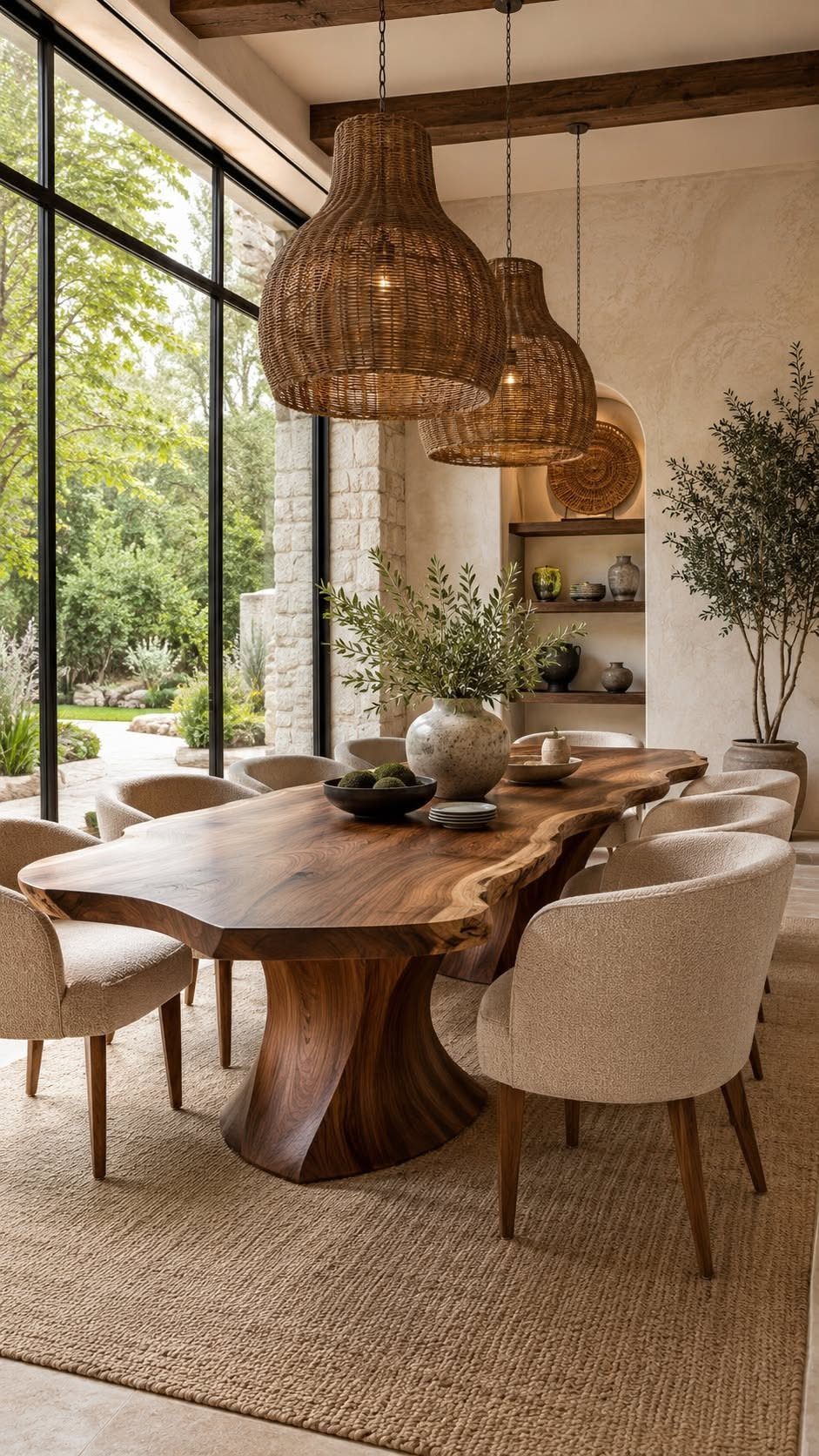
Live-edge tables keep the natural curve of the tree along the sides, so the table is the decoration. Leave it nearly bare: a runner or a crowded centerpiece hides the one feature you paid for.
Beige upholstered chairs stay quiet beside the uneven edge, and woven pendants repeat the natural texture overhead. A solid slab costs real money, so I would shop used or buy a smaller one before settling for a veneer imitation.
Frequently Asked Questions
How to make a wooden dining table look good?
Keep the top simple and let the wood be the backdrop.
One vase with a few unscented candles, kept low and in the center, is enough on a round table, and a neutral tablecloth or placemats with one colored runner add texture for a few dollars.
Swapping only the runner or the centerpiece contents each season refreshes the look without a big spend.
What are the different types of dining tables?
Round and live-edge wood tables both work well in a home.
A solid slab is the expensive way to get that look. If the budget is a few hundred dollars, I would hunt used listings or settle for a shorter slab before buying a veneer copy.
How do I set up the table in the dining area?
Start with the table itself, then pick the decor around it to match the room. Pull colors from what’s already there, like cream chairs or green upholstery, so a vase or plant looks planned.
Keep the tabletop low enough that people can see across it, and use a sideboard or an overhead lantern to carry extra decor.





