Ribbon on a tree can be as simple as one spool of cream and gold tied into small bows or as bold as oversize ribbon with long tails, and the cost and effort rise with how much length you commit to.
Your ornaments pick the ribbon: choose one that repeats the colors you already own, and keep patterned ribbon, like red, green and blue plaid, with solid ornaments.
1. Layered Ribbons
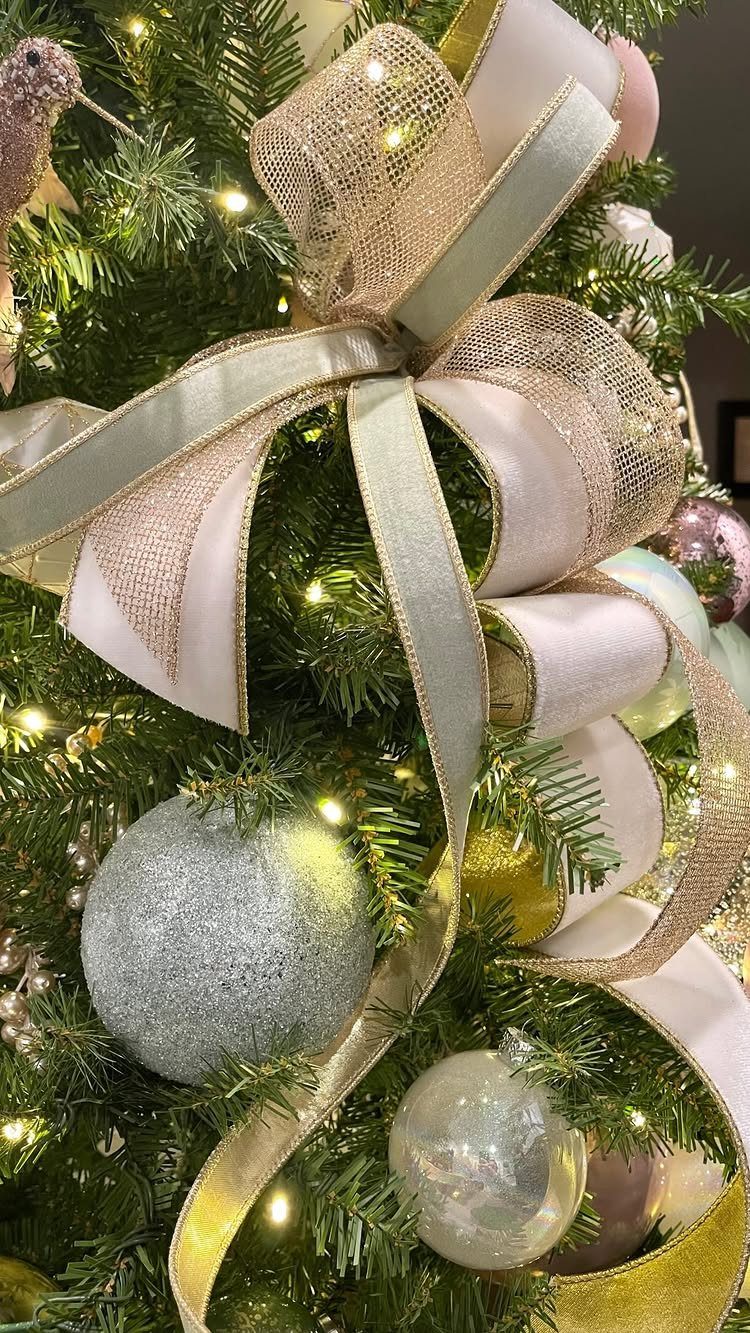
Two ribbons stacked on top of each other give a bow more depth than one wide ribbon ever will.
A 1" ribbon on the top layer adds texture and dimension, so stack it over a wider base ribbon, around 2.5" works well, in a contrasting color or finish.
Pick one wider ribbon as the base and a narrower one for the top, and keep the two in different tones, like the cream and gold here.
Tie them as a single bow so they move together, then tuck the tails into the branches.
Layering costs only a second spool, which makes it an easy upgrade on a tree you already own.
2. Wired Ribbon
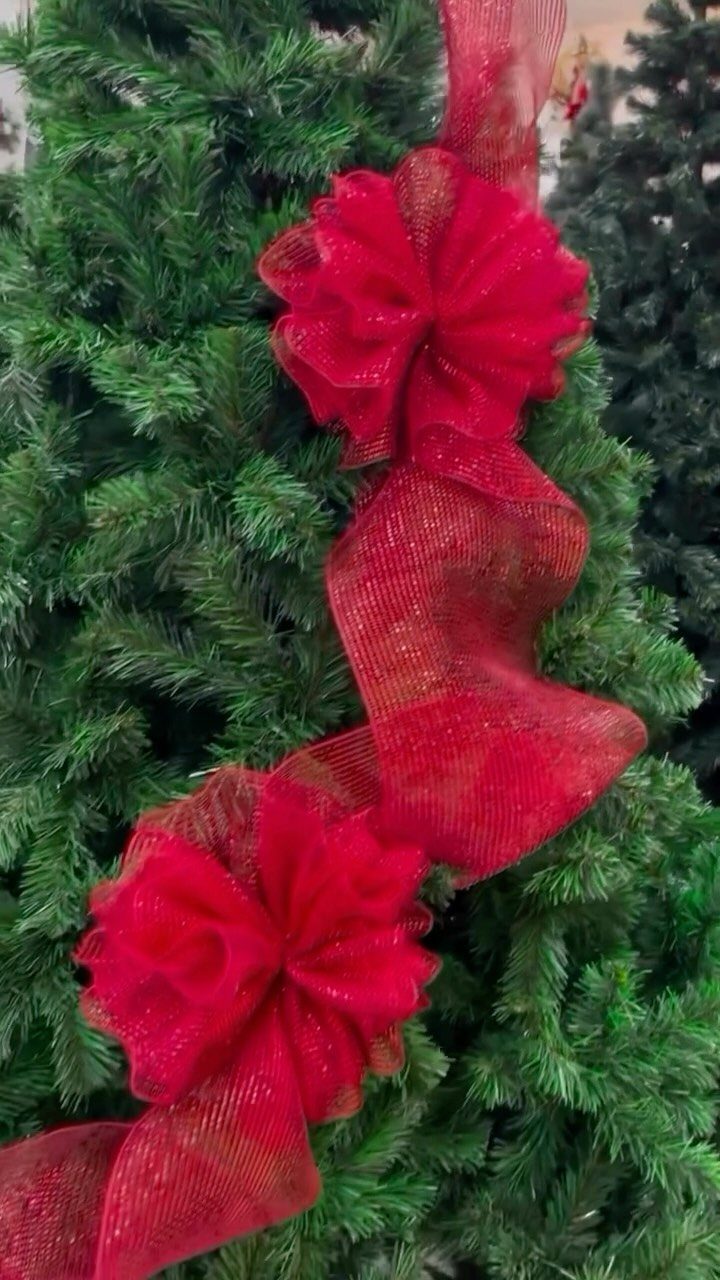
Wired ribbon holds the loops and curls you give it, so a bow stays full instead of drooping off the branch.
Wire matters most on a bright, shimmering red, where the shape is the whole effect, because the wire keeps each loop and tail crisp instead of letting it sag.
I prefer it for bows and swirls over any ribbon that has to hang straight.
Shape each loop by hand, then press the bow into the branches so the wire grips the needles. If a curl sags, bend it back.
3. Ribbon Strips
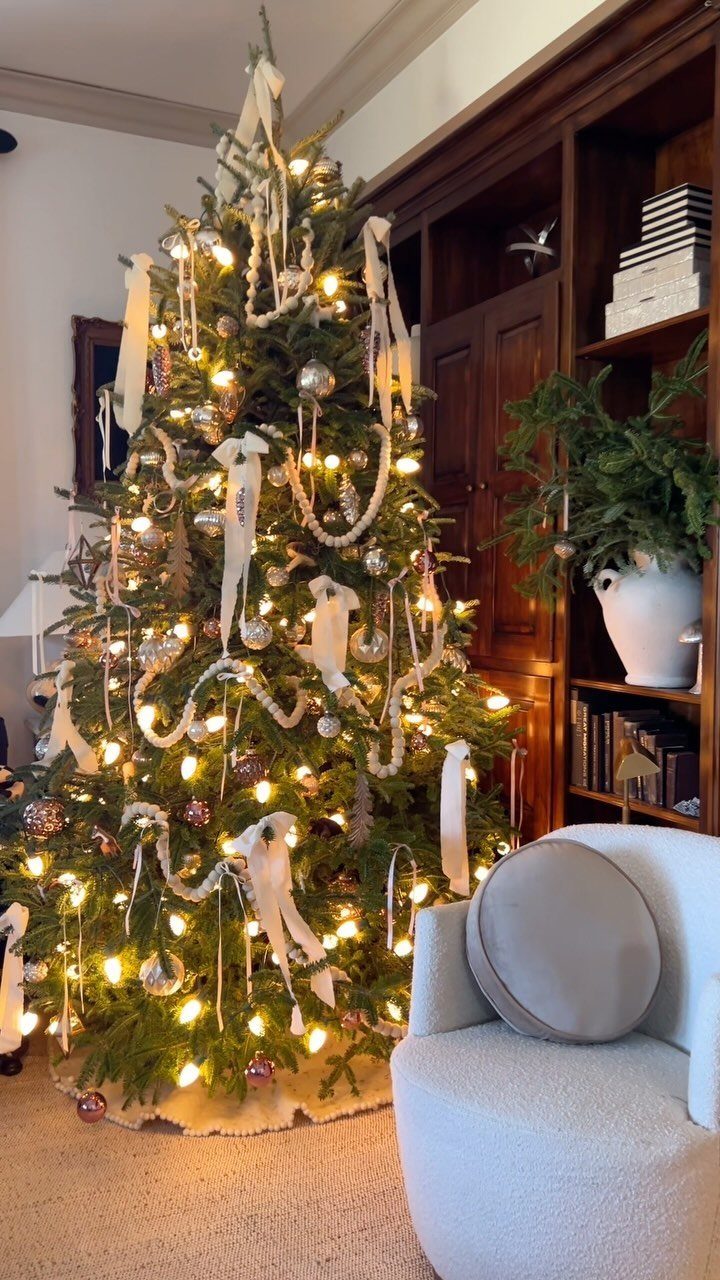
Short strips are the forgiving way to use ribbon. Cut lengths you can tuck or tie in one move, and there is no long spool to wrestle around a tree.
White strips read softly against warm lights and ornaments.
Make them all about the same length so the pattern looks planned, then place them one at a time, filling gaps as you go. A mistake costs you one strip, never the whole tree.
4. Oversize Christmas Tree Ribbon
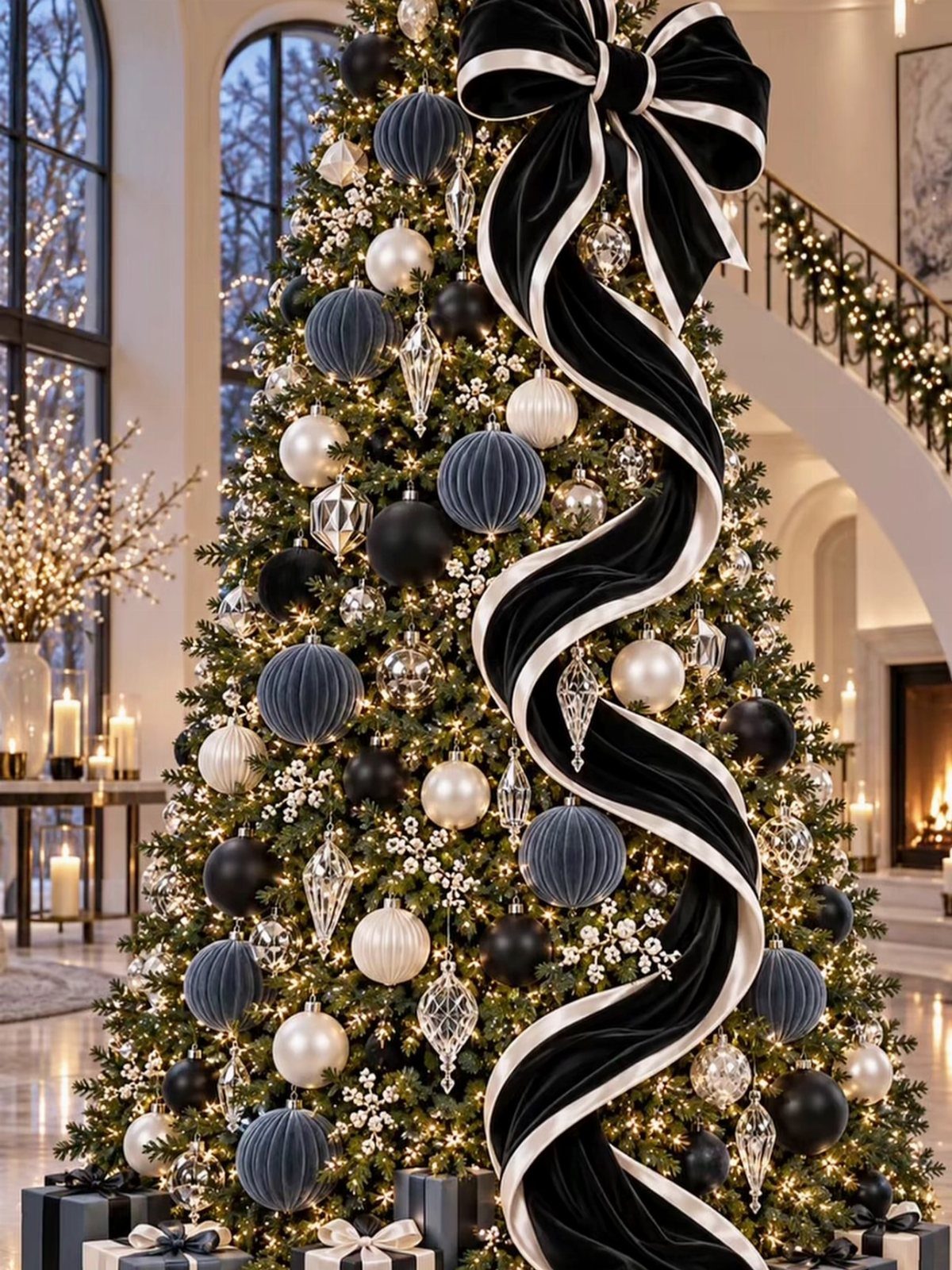
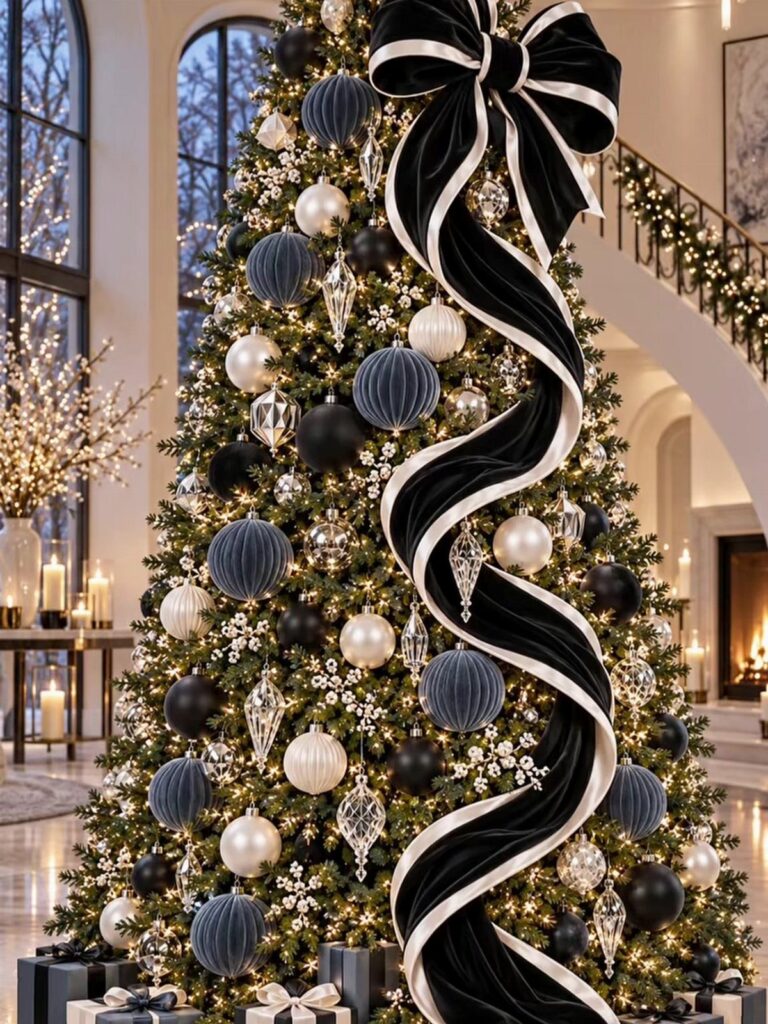
One oversize ribbon at the top can do more than a dozen small ones. A big bow or topper with long tails running down the branches gives the tree a single clear focal point.
Black velvet looks heavy and rich, so I would pair it with a simple, restrained ornament scheme in a few metallics or solid colors and skip busy patterns.
Anchor the topper firmly to the tip, then let the tails fall and secure them with a few hidden ties.
Buy more ribbon than you think you need; a large bow eats length fast.
“Ribbon is the unassuming detail that can really upscale your tree,” says professional tree decorator and florist Julia Testa. “An oversize ribbon as a tree topper is not only a creative alternative to a traditional star or angel, but it gives wonderful height and drama.”
5. Satin, Velvet, and Burlap Ribbons
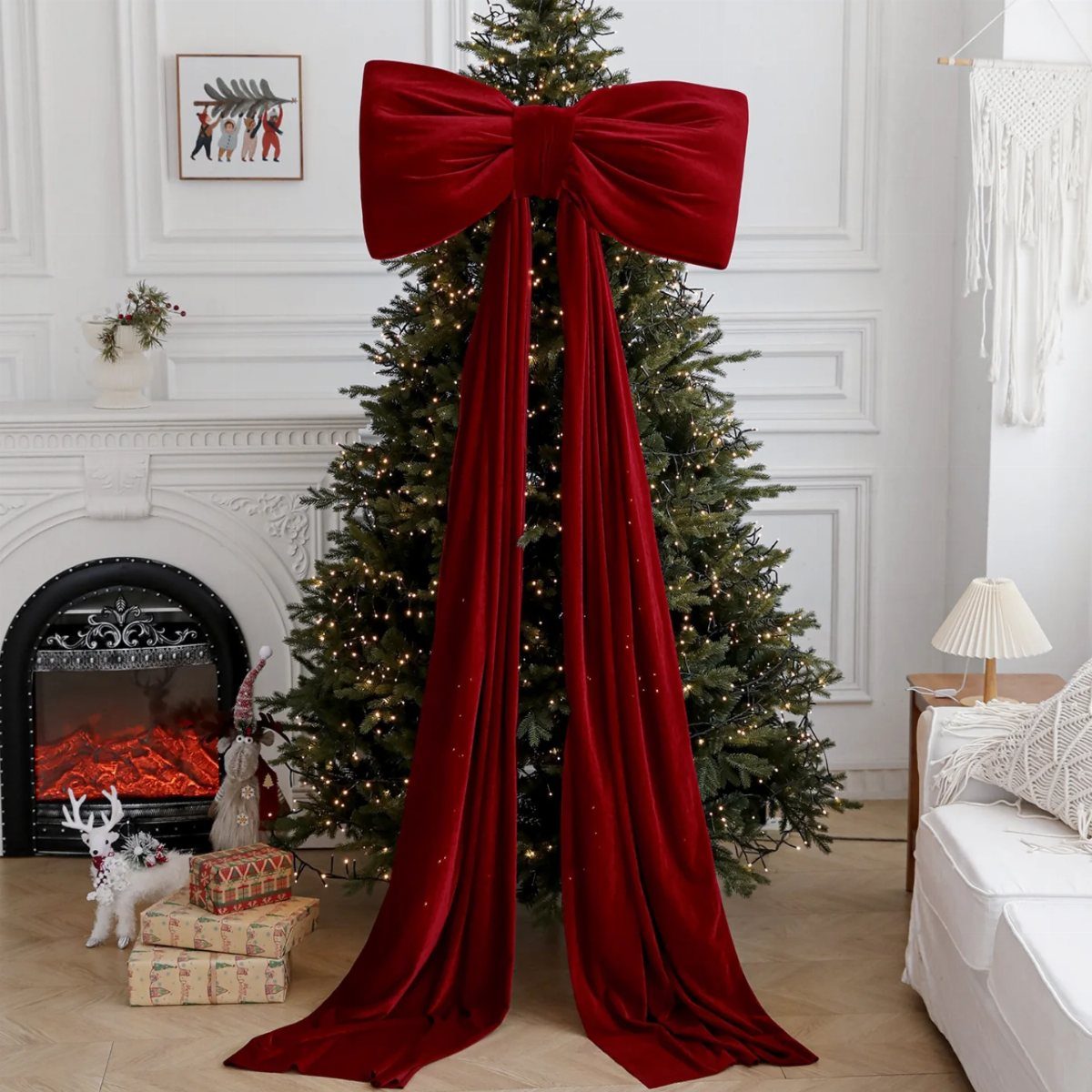
Fabric changes the mood of a tree more than color does. Velvet, as in the big red bow here, looks formal and soft.
Satin is glossy and catches the lights. Burlap is rough and rustic.
I would pick one fabric and commit, since mixing all three on a small tree gets busy. Velvet is my pick for a classic look, with long tails left to run down the tree.
If you want contrast, add a single second texture in small amounts.
6. Vertical Ribbon Drapes
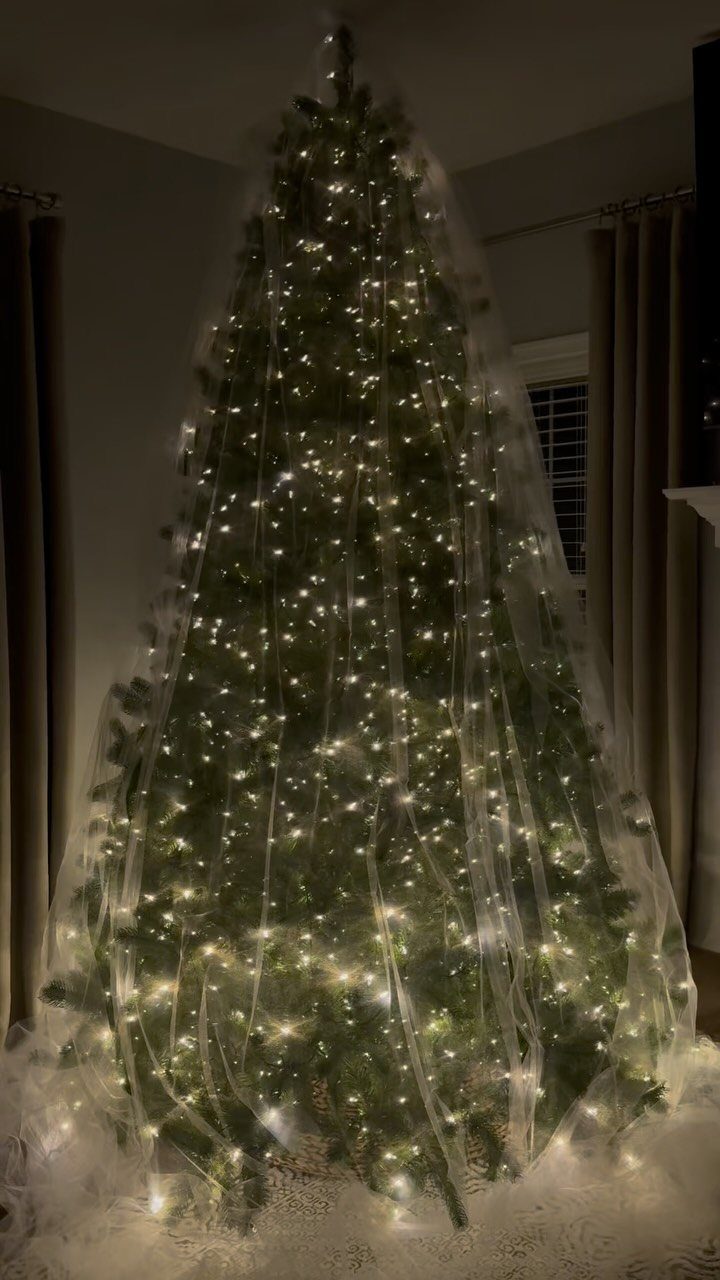
Run wide, sheer ribbon from the top of the tree straight down to the bottom, and the whole tree takes on a long, airy line. White lengths over white lights glow rather than cover.
Cut each length a bit longer than the tree is tall.
Fix the top ends under the topper or at the upper branches, then tuck the bottoms in near the base. Space the drapes evenly around the tree so no side looks bare.
Sheer ribbon is lightweight, so it needs only a few ties to stay put.
7. Tied Bow Ornaments
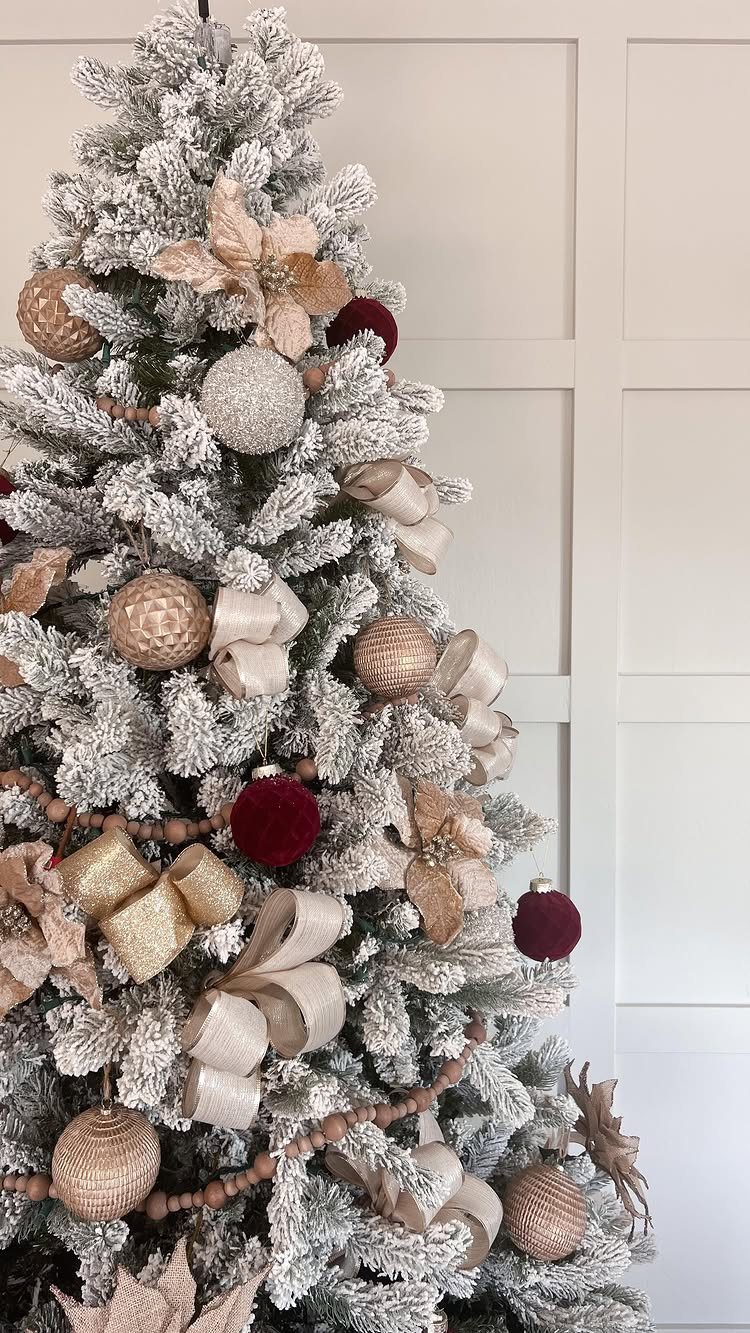
Small ribbon bows tied one at a time and set among the branches read as quiet detail rather than decoration. Gold and cream, as here, sit well against flocked white branches and warm ornaments.
Tie each bow with short tails, then clip or wire it to a branch. Scatter them at different depths, some tucked near the trunk and some at the tips, so they look placed by chance.
Making a batch in front of a movie costs almost nothing beyond one spool.
8. Plaid Ribbon Accent
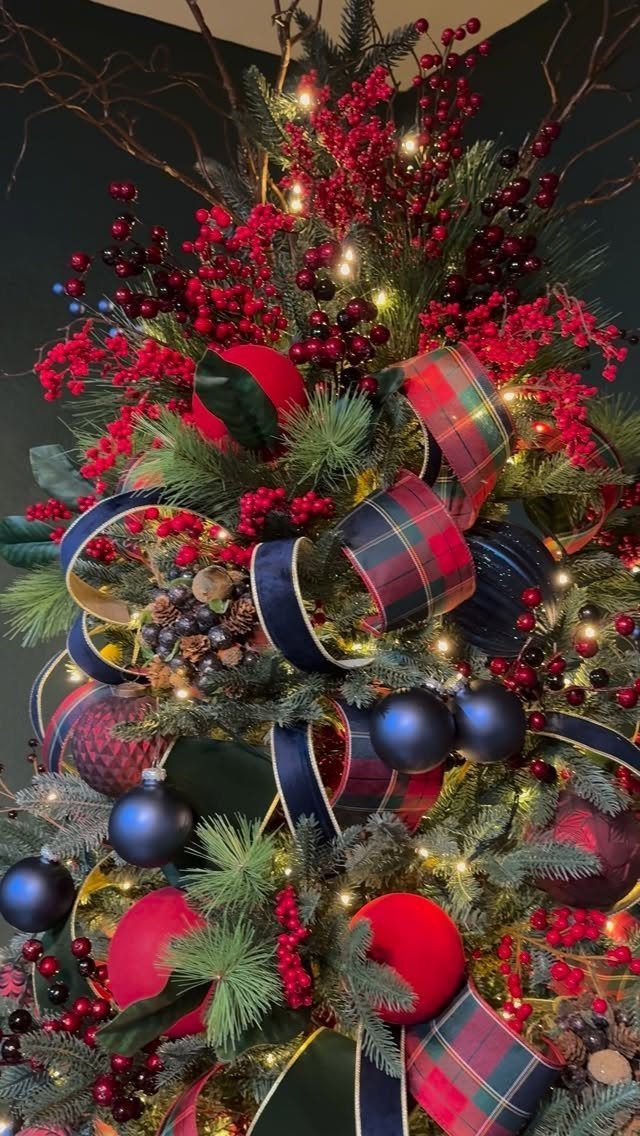
Wide plaid ribbon brings pattern and color to a tree in one move. Red, green and blue plaid ties together ornaments in the same colors, so pick a ribbon that repeats what you already own.
I would weave it loosely in and out of the branches, letting it dip and rise, then tuck both ends deep. Plaid is busy by itself, so keep the ornaments in solid colors.
One roll goes a long way on a wide ribbon.
9. Candy Cane Striped Ribbon
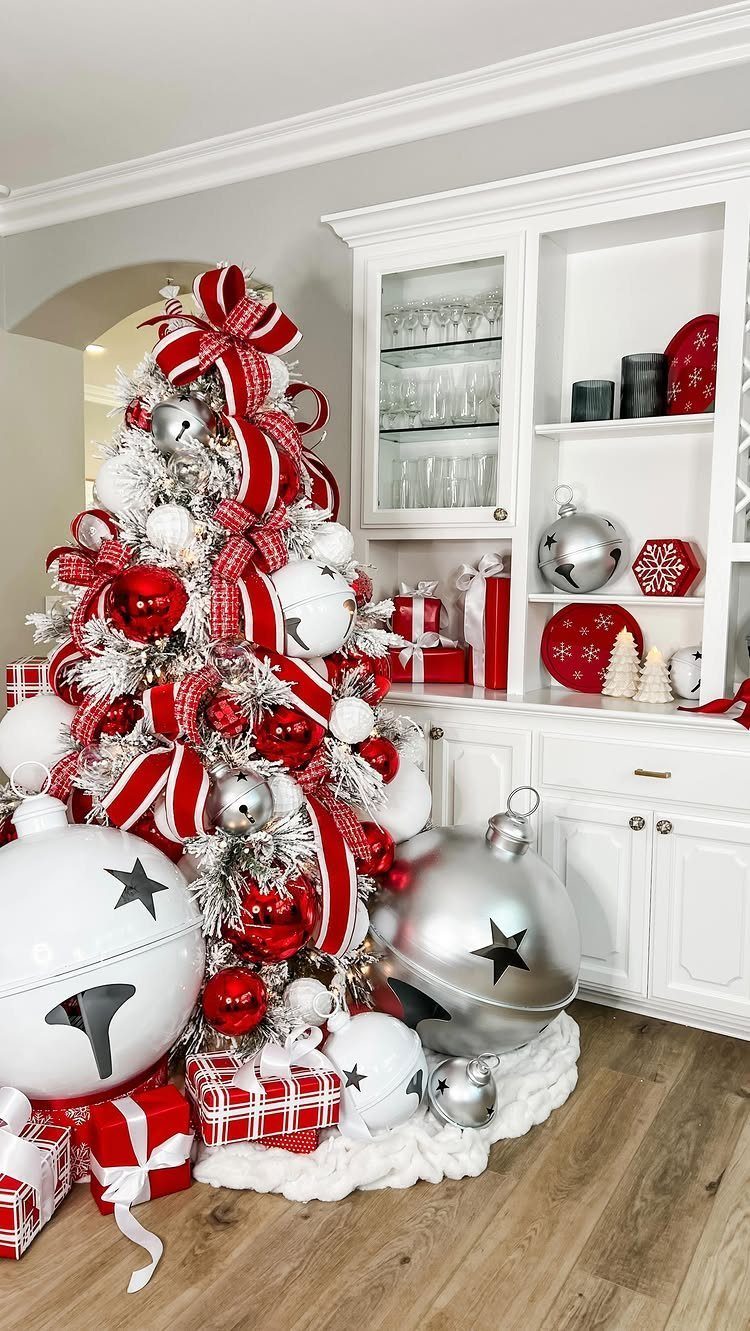
Red and white stripes give a flocked tree a bold, candy-shop look, and the white of the flocking keeps it from feeling loud. Pair the ribbon with large ornaments in solid red or white so the stripes stay the star.
Loop it in swags from branch to branch or tie it into big bows, securing each point with a hidden twist tie. Stripes show every uneven gap, so I would space the swags by eye before fastening any.
10. Balance and Randomness
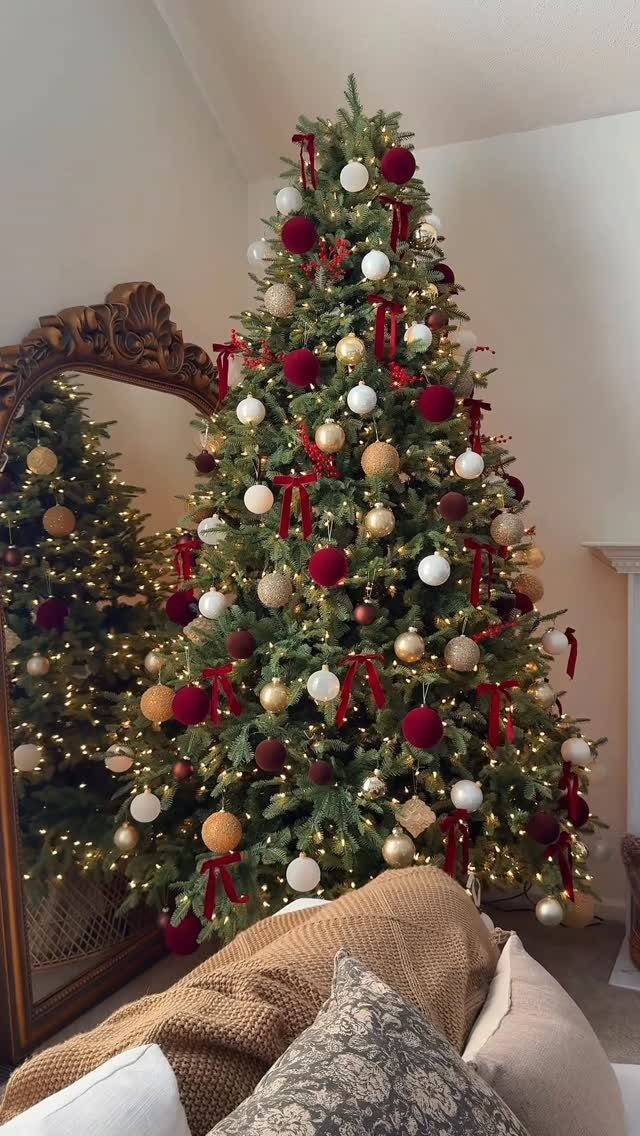
A tree that looks balanced rarely has anything lined up. Red ribbon next to gold and white ornaments works best when the ribbon shows up in uneven spots, with more on one side and less on the other.
Step back and squint after each few additions.
If one area pulls your eye, move a ribbon to the opposite side, not to the same height. Odd groupings, like 3 bows in one cluster and 1 across from it, feel natural.
Checking the tree in a mirror will show the lopsided spots fast.
Placement Techniques
Start with a bare tree. Ornaments go on last, and they are what hide the point where the ribbon begins and ends.
Wired ribbon doesn’t need a knot as long as you wrap it securely.
Keep each pass close enough to the surface that it stays visible; a ribbon buried deep in the tree vanishes.
Let the tree’s size set the spacing between passes. Smaller trees take fewer wraps, so work out how many feet of ribbon you need before you head to the store.
If you’d rather use non-wired ribbon, skip the long wrap.
Choosing the Right Ribbon
Unroll a long strip and drape it down the tree, then back away a few steps to judge it from across the room before choosing a spool.
Dark, sheer, or very narrow ribbon tends to disappear into the branches, and a tree covered in ribbon nobody notices is wasted money.
Width and color have to stand out from the tree itself, so test the exact roll you plan to buy.
Your look also sets the ribbon. A natural, minimal look calls for narrower ribbon, with smaller bows and fewer add-ons.
Color Coordination
Ribbon is the fastest way to set a color scheme, and it’s cheap to change. Swap the ribbon and the same tree looks new next year.
Tartan and grosgrain are the traditional picks. The plaid pattern with grosgrain’s dense texture gives a classic, old-fashioned look.
Mixing ribbon patterns is where I’d stop, though: one patterned ribbon, like plaid, looks best against solid ribbon and solid ornaments.
Pair a few styles for a layered look, and choose ones that echo your ornaments and lights so the mix reads as planned.
Ribbon also makes a tree look fuller and more lush for far less than a box of extra ornaments.
Frequently Asked Questions
What type of ribbon is best for decorating a Christmas tree?
Wired ribbon is the best all-around pick, because it keeps loops, curls and tails full instead of letting them sag.
For fabric, I’d choose velvet for a classic, formal look, or satin if you want a glossy finish that catches the lights.
For a classic look, I reach for plaid or ribbed grosgrain; the tight ribbing in grosgrain holds a crisp bow and reads as vintage.
On a small tree, I stick to a single ribbon type, because three or four textures crowd the branches fast.
Do you put ribbon on a Christmas tree before or after the ornaments?
Put the ribbon on first, before any ornaments.
A bare tree is easier to wrap, and the ornaments added afterward cover the spot where the ribbon starts and ends. That gives a neater, finished look with no visible knots or cut ends.





