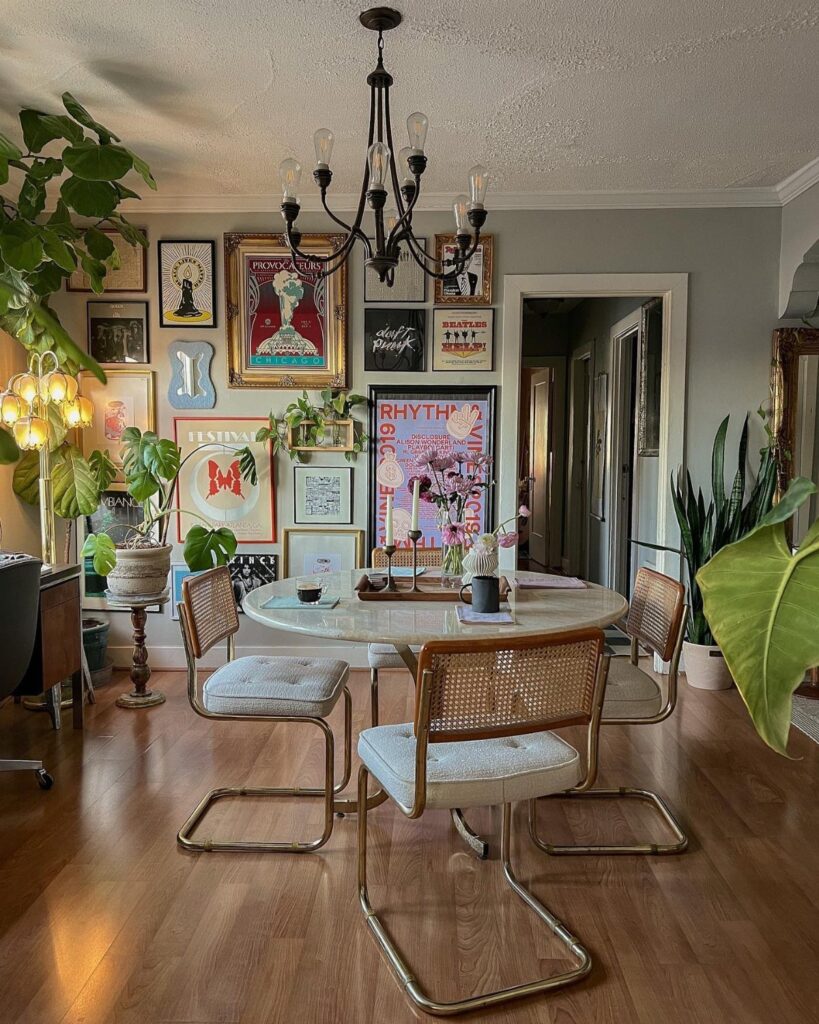
How far a 70s look can go depends on what you can change: owners can panel a nook wall or repaint, while renters can get the same feel from a shag rug, colored glassware, a bar cart, or a disco ball that hangs from a single hook.
The cheapest picks, like a single thrifted glass or a shag rug, fit inside a weekend, while a full chrome dining set or a tulip table takes more planning and money.
1. Colored Glassware
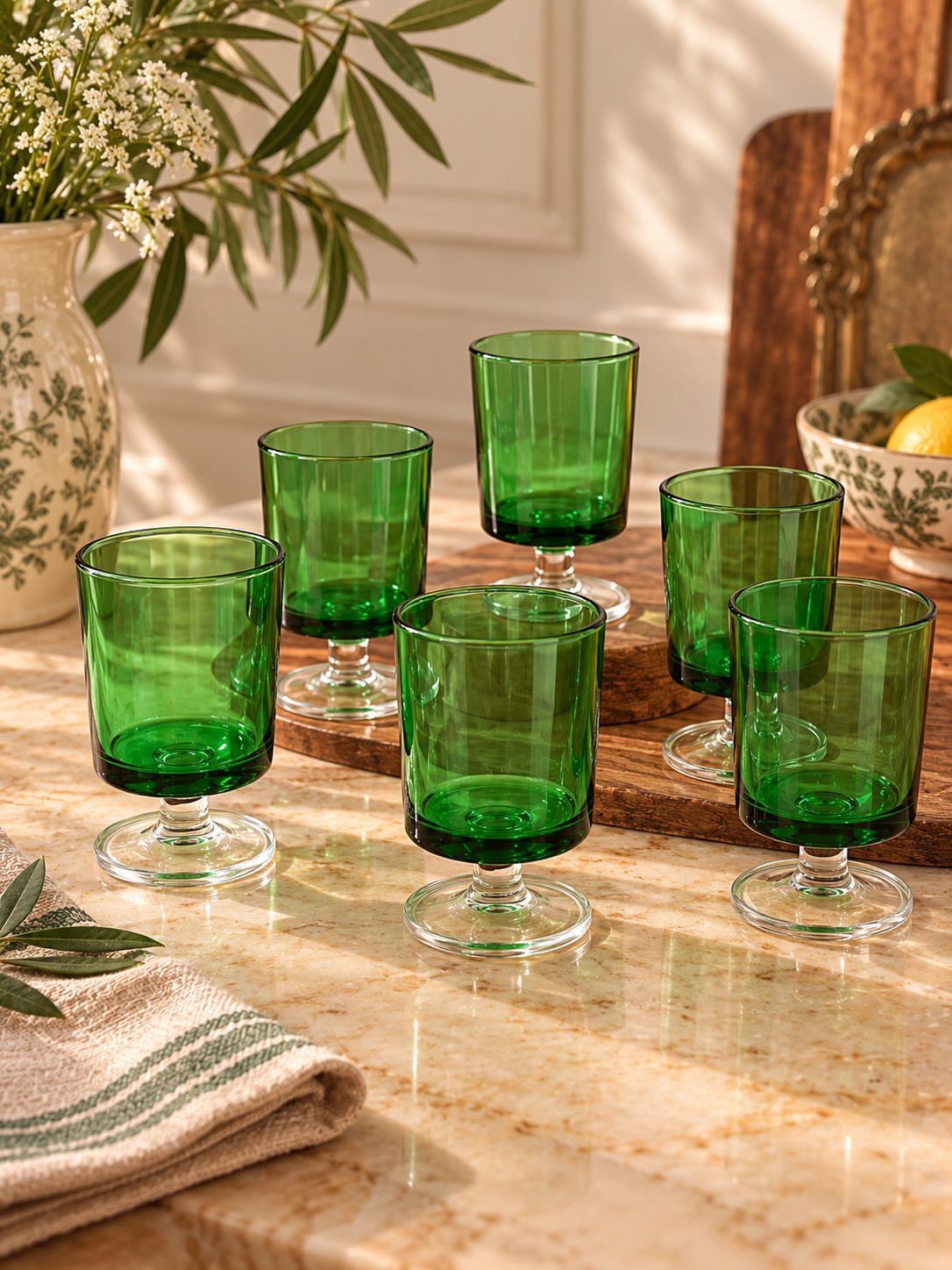
Green footed goblets are the easiest way into 70s tableware, and a single color keeps them looking collected rather than costume. A set of six on a dining table or buffet reads as a deliberate choice.
Hunt for them at thrift stores and estate sales, where single glasses cost little, and stick with one tint so mismatched shapes still look like a set. Skip the dishwasher for old pieces and wash them by hand.
2. Bold Colors
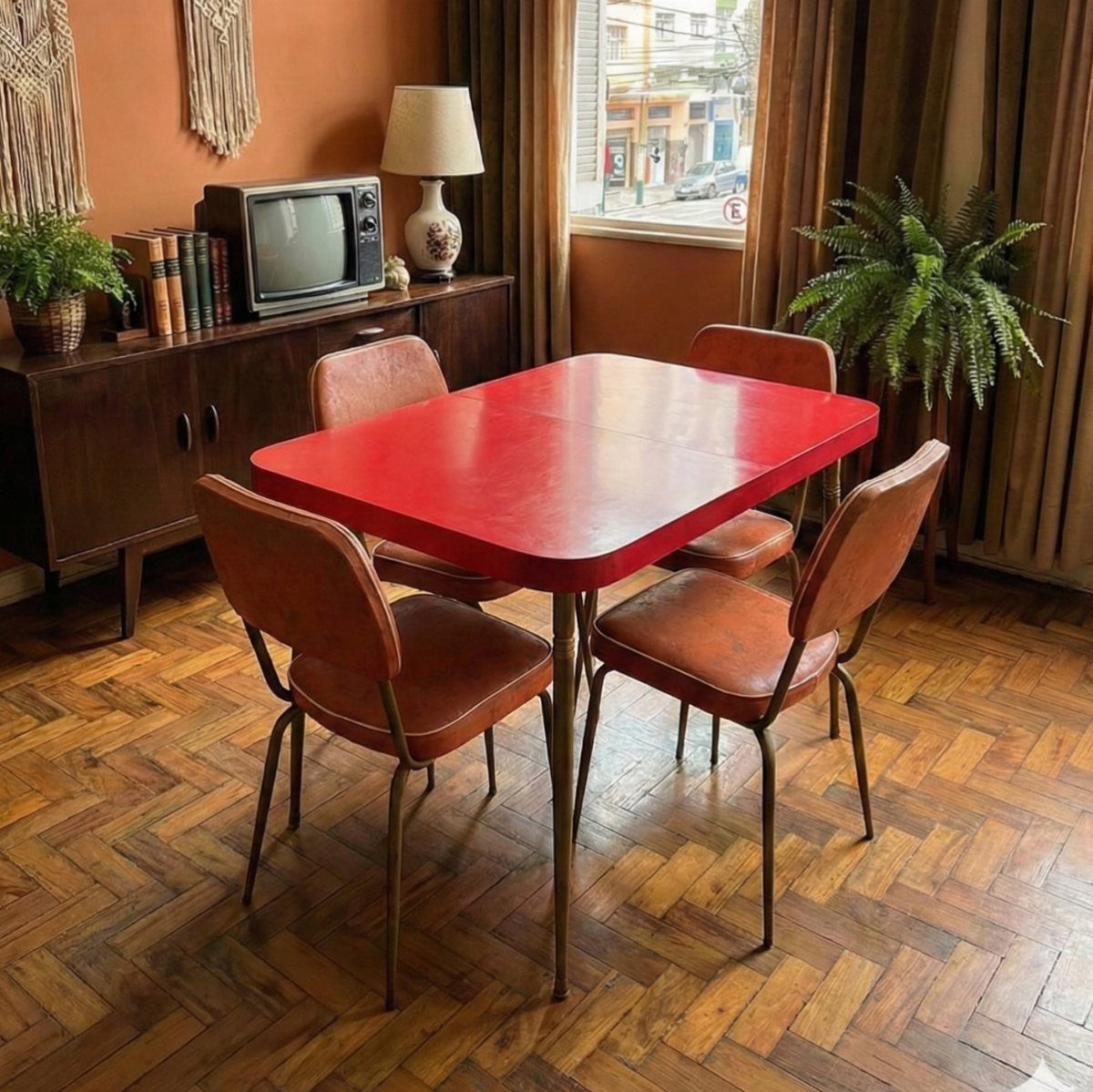
Paint a table red and the whole room has to answer to it. Brown leather chairs do that job well: the dark, warm tone steadies a loud top without fighting it.
If a new table isn’t in the budget, a can of paint on a solid-wood one is a weekend project.
Keep the floor and sideboard in natural wood so the red stays the only loud note in the room. I’d choose a deep, slightly orange red over a bright cherry; it sits better with brown.
3. Mix Patterns
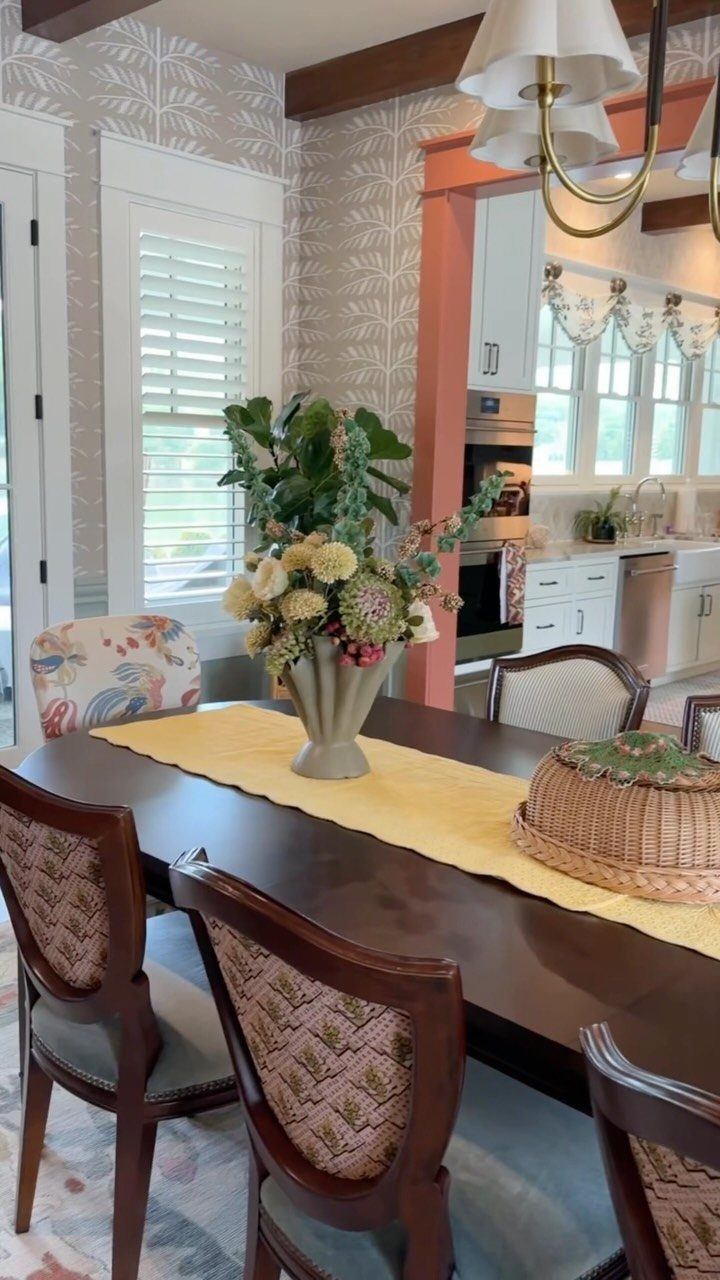
Pattern works best in layers of different scale: floral wallpaper on the walls, a solid-color runner down the table, and chairs in a smaller print.
A yellow runner down the table gives the eye a place to rest when the patterns around it start to compete.
Keep the table itself plain, like dark wood, and let the fabrics carry the noise.
Pick one color that repeats across two patterns so they feel related. Chair seat covers are the cheapest swap, and a staple gun does the work in an afternoon.
4. Chrome Dining Sets
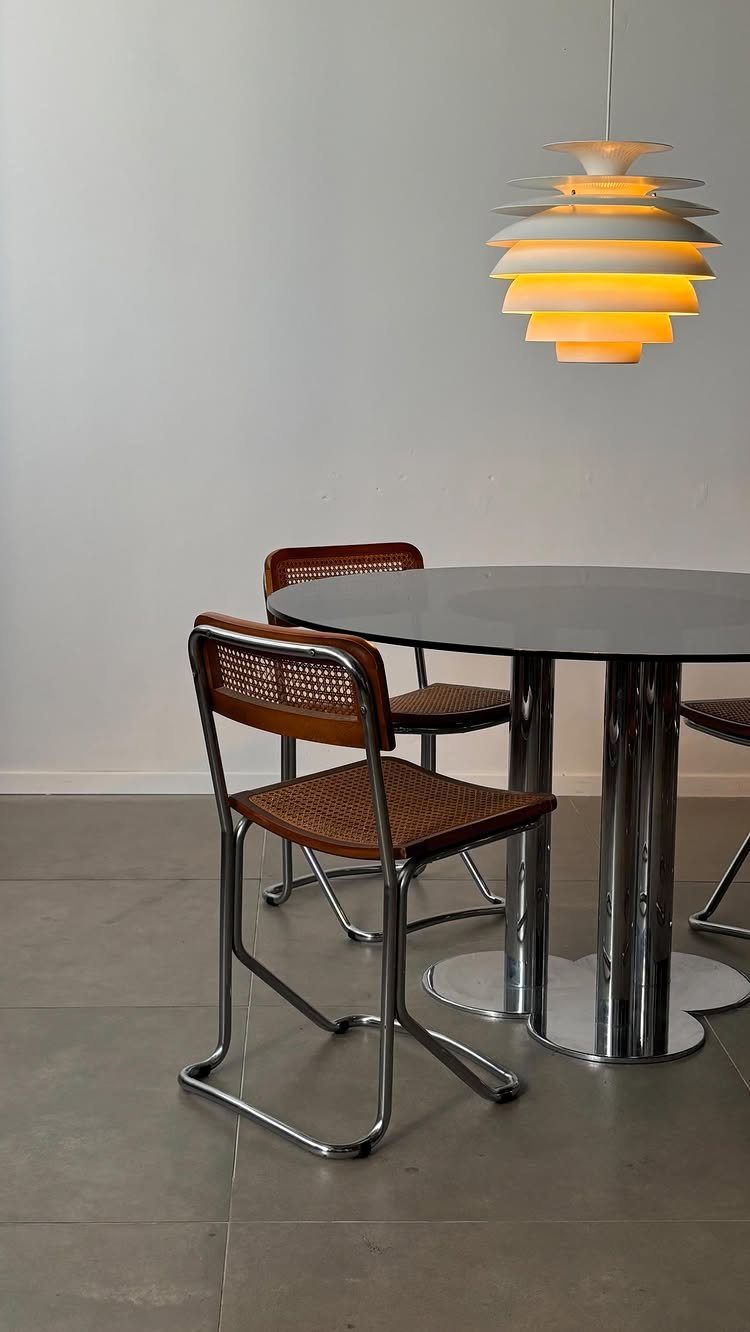
A glass top on chrome legs makes a compact eating nook feel lighter, because you can see the floor right through it. Cane seats on chrome-framed chairs soften all that shine with a bit of texture.
Round suits tight corners, since there are no sharp edges to bump.
Glass shows every fingerprint, so keep a cloth nearby. Vintage sets turn up secondhand, but check the chrome for pitting before you buy.
Vintage dinettes — matching table and chair sets — were popular home decor in the ’60s and ’70s because they were affordable, fashionable, and came in a wide variety of styles.
5. Shag Rug
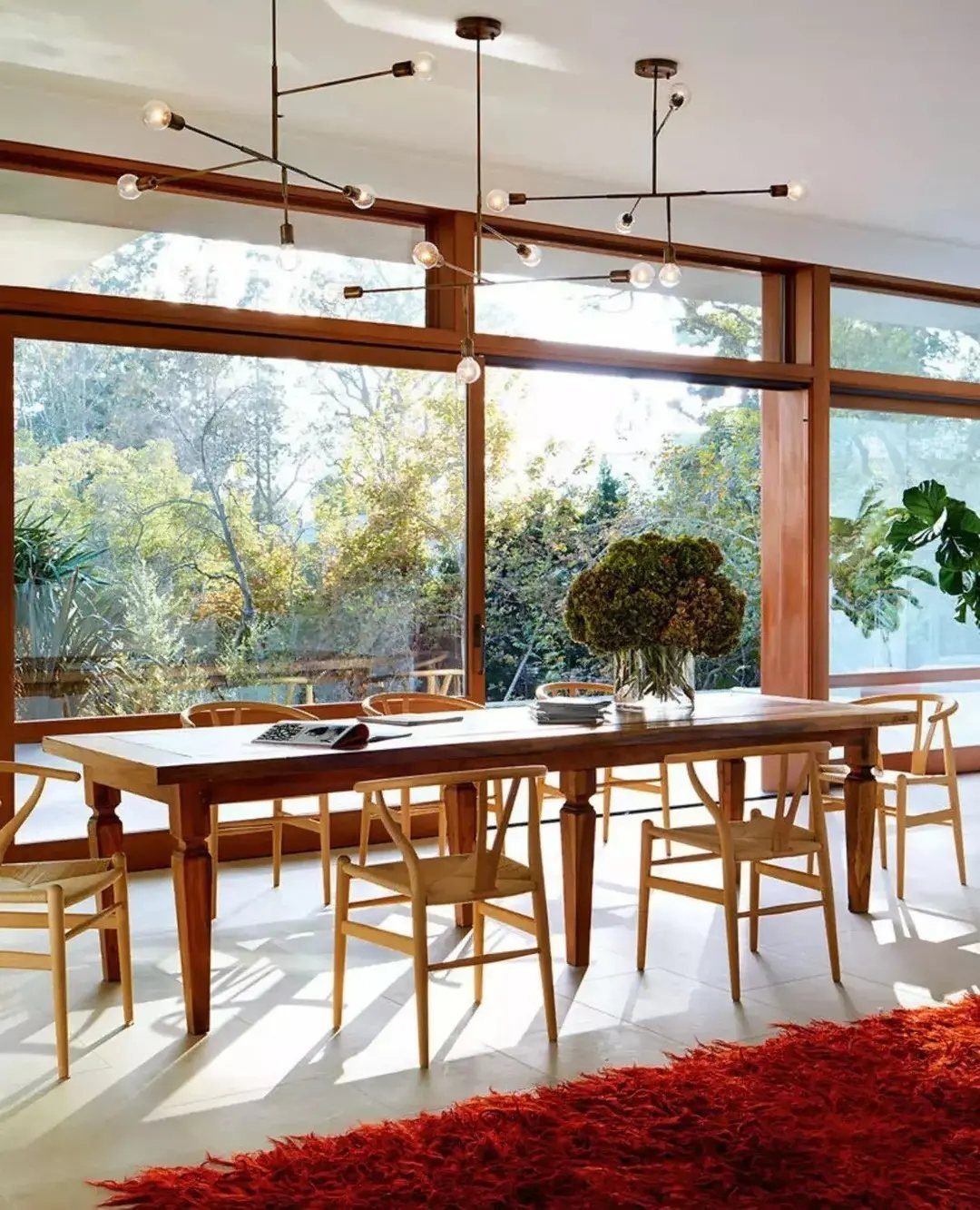
A red shag rug under a wooden table is the fastest way to get the 70s feel without touching a wall. Wood grain and deep pile pair well, and a sunlit room keeps the red from feeling heavy.
Size matters: the rug should extend past the table edges so chairs stay on it when pulled out.
Deep pile traps crumbs, though, and chairs can wobble on it. For a dining room I’d accept that and vacuum often, or pick a shorter pile.
6. Wood Paneling
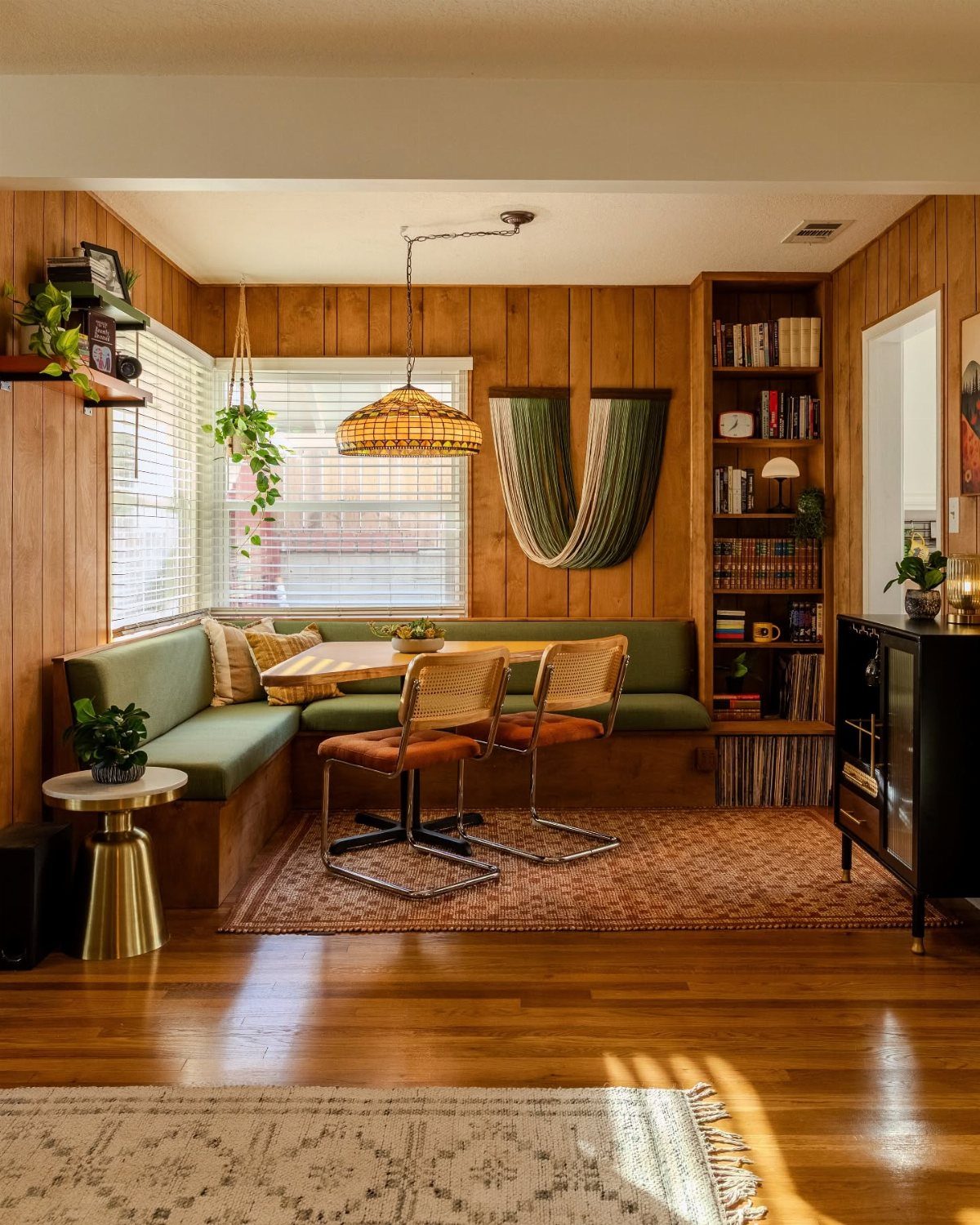
Wood paneling wraps a dining nook the way nothing else can, and brown walls make a green banquette look richer.
If real paneling isn’t an option in a rental, peel-and-stick wood-look panels cover a single nook wall for much less than a full room.
Keep the table light enough in tone that it doesn’t vanish into the walls. Cane chairs add lightness against all that wood.
7. Bold Abstract Paintings
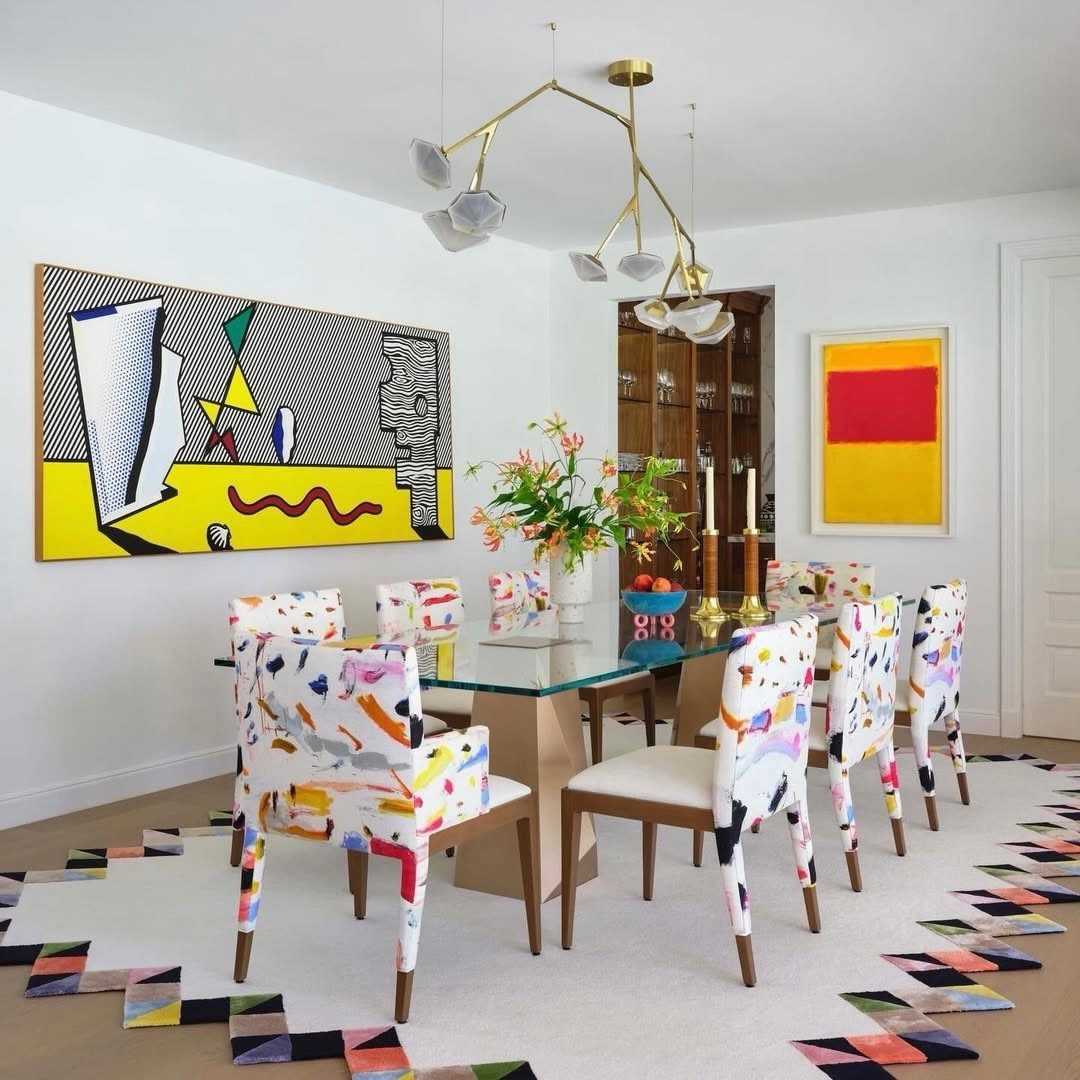
Two large abstract canvases with geometric shapes can carry a white dining room on their own.
Bold color in the art lets the walls stay plain, and the patterned chairs and glass table already give the room plenty to look at.
Hang them at eye level for a seated diner, close enough together to read as a pair.
Pull one or two colors from the paintings into the chairs so everything feels related. Large prints in a frame cost far less than originals.
8. Disco Ball
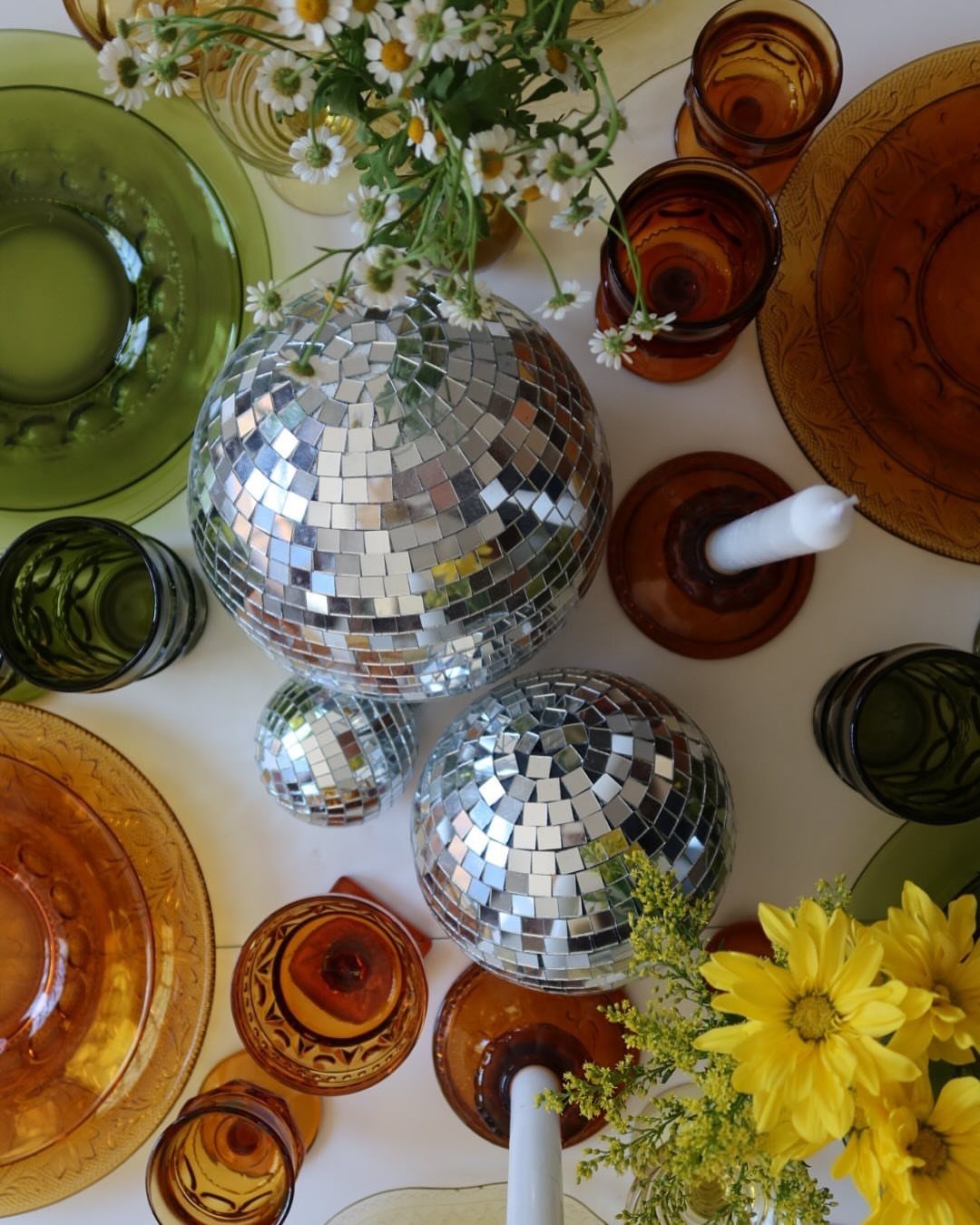
A pair of mirrored disco balls in 2 sizes turns a set table into a party without a single wall change.
Set mirrored balls among candles and flowers on the table, and the glassware catches the light and throws it back around the room.
Use amber and green glasses so the reflections stay warm. Candles are what make the balls sparkle, so light them at dinner.
Small balls are cheap, and they sit on a table as easily as they hang. I’d keep the flowers to one or two colors so the mirrors stay the star.
9. Bar Cart
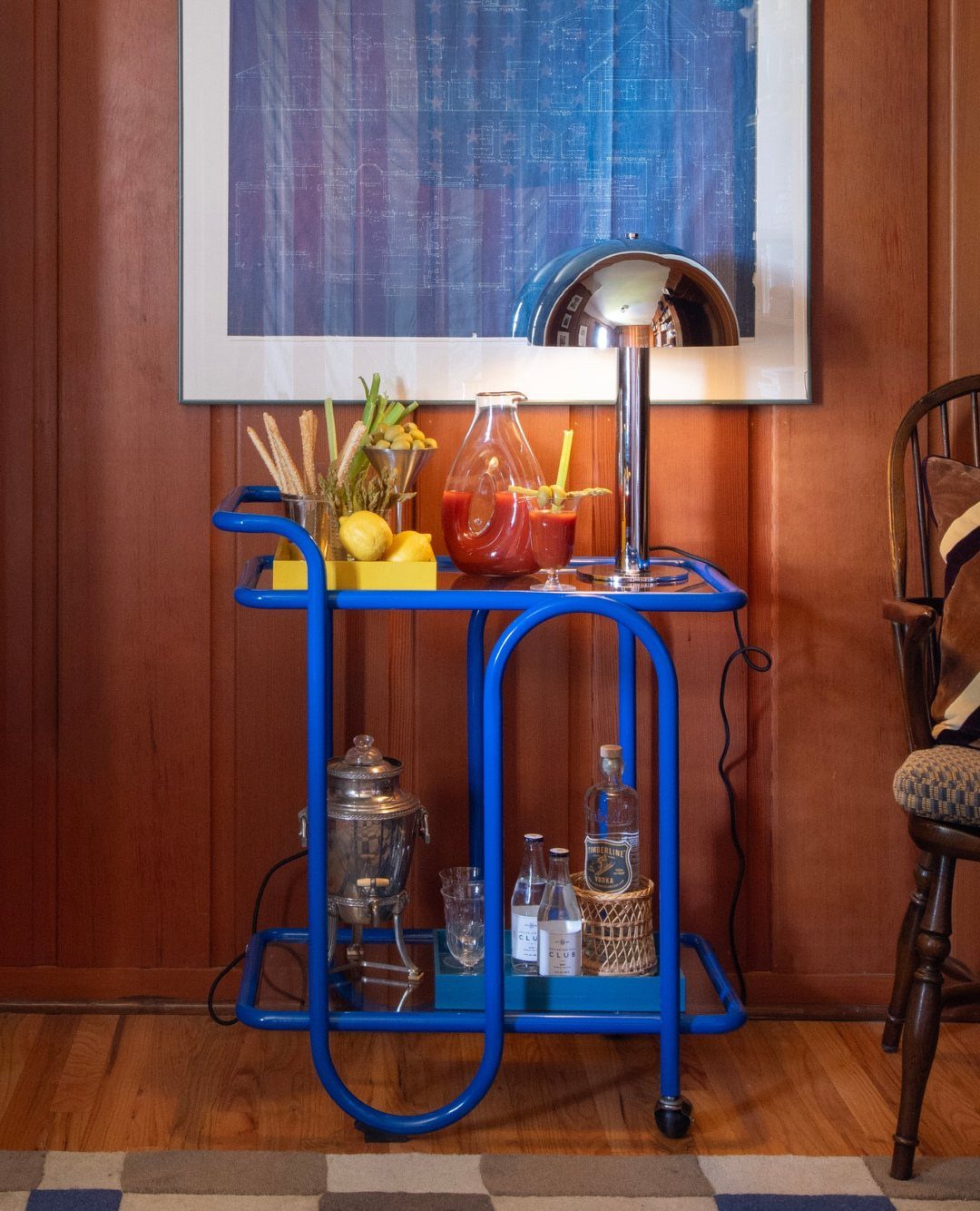
A tubular metal bar cart gives a dining room a spot for drinks that isn’t the table, and it can sit against any wall. The chrome lamp on top adds a soft glow for evening.
Vintage carts turn up secondhand, and a metal frame can handle a quick repaint if the finish is tired. Park it where guests can reach it without crossing the table.
10. Tulip Tables
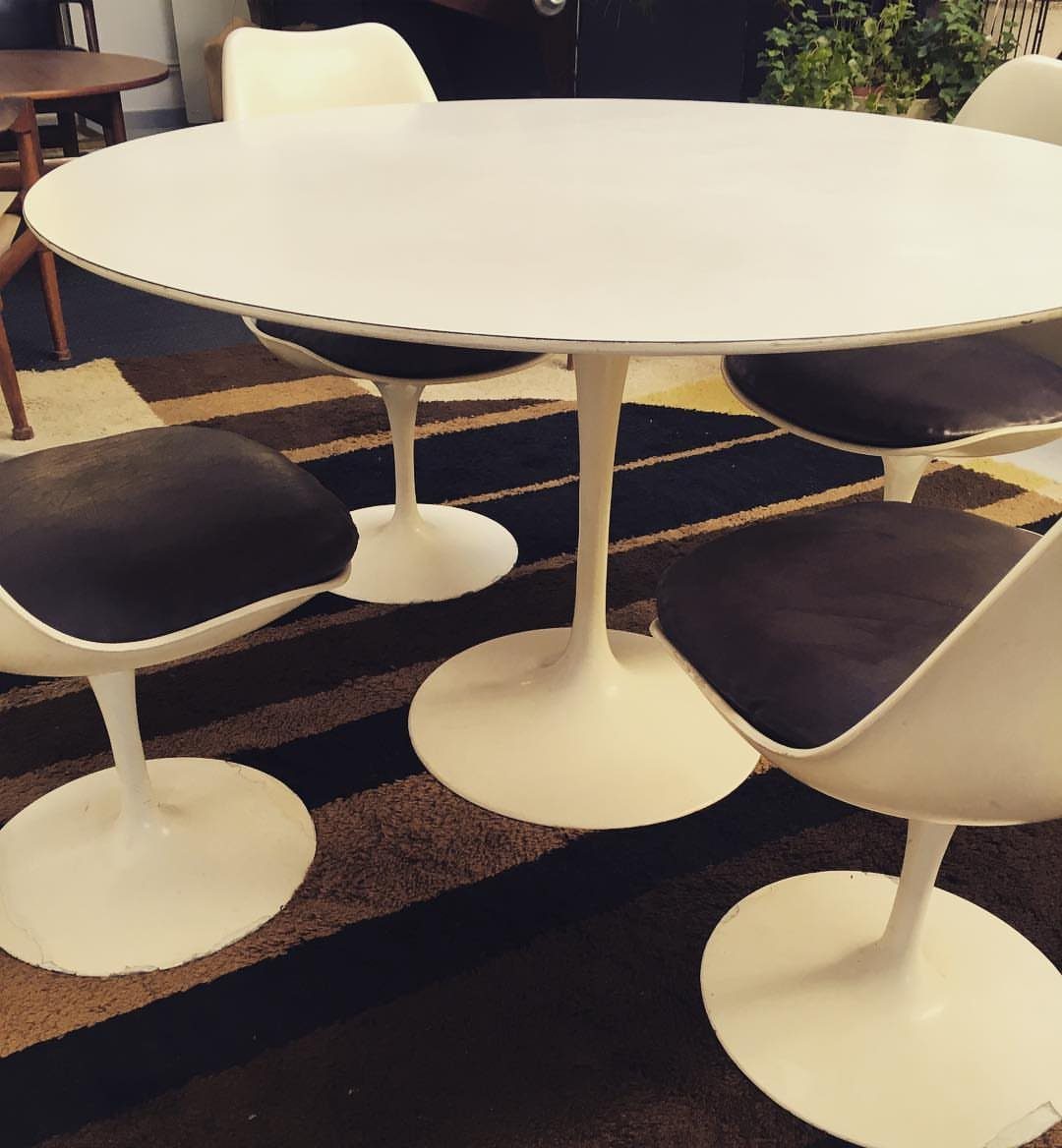
A white tulip table and its matching pedestal chairs make a dining set out of one smooth shape.
With no legs at the corners, a round top tucks into a tight corner or narrow dining nook and leaves floor space open.
I’d pick a rug large enough that chair legs stay on it, or in this case the pedestal bases. Matching chairs matter more here than anywhere else.
11. Fondue Parties
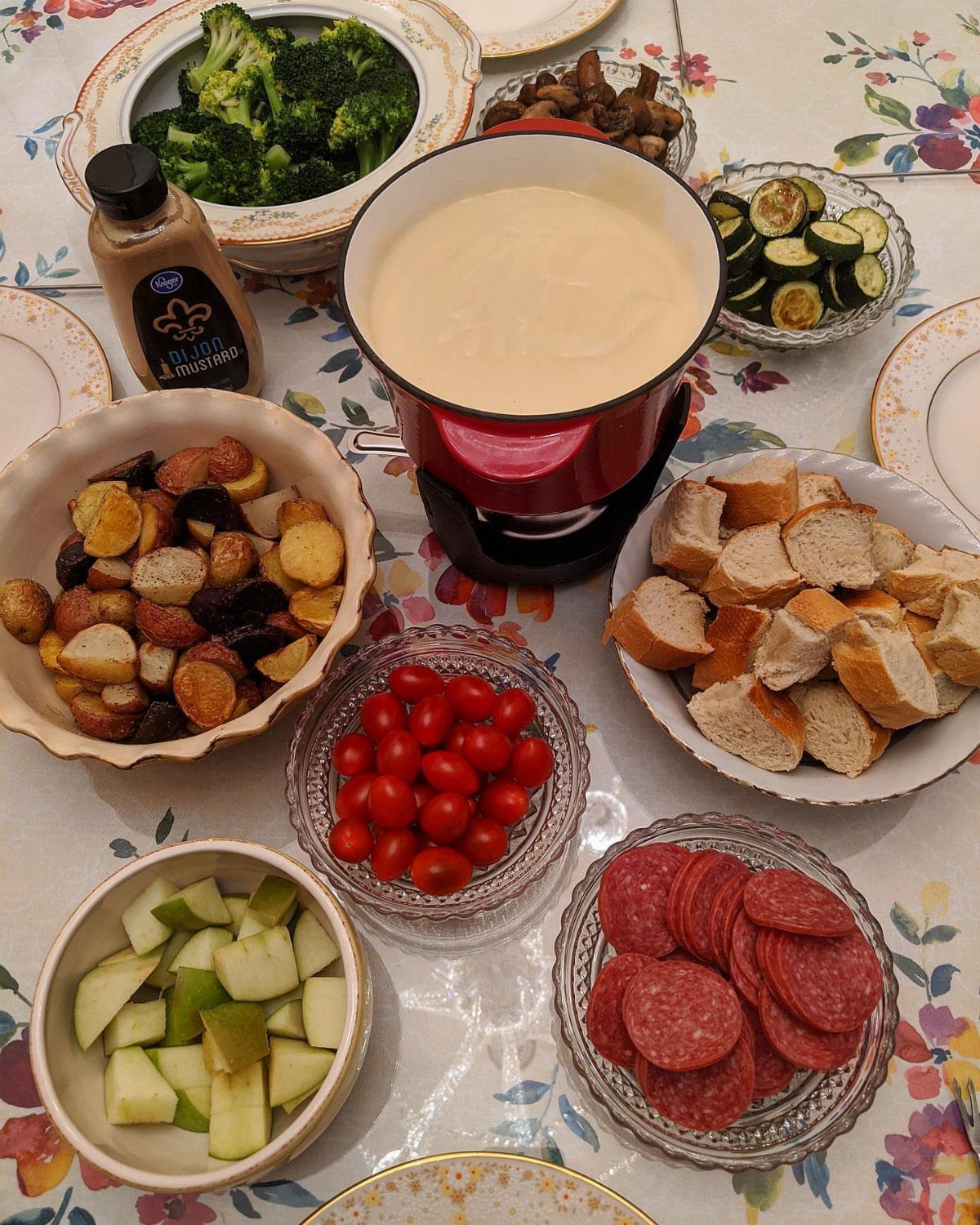
A red fondue pot of melted cheese works as the centerpiece and the dinner at once.
Offer a bottle of Dijon mustard on the side for dipping.
Cut everything into bite-size pieces ahead of time so guests can eat without fuss. A floral tablecloth suits the mood and catches the drips, so choose one that washes easily.
12. Wood Table with Cane-back Chairs
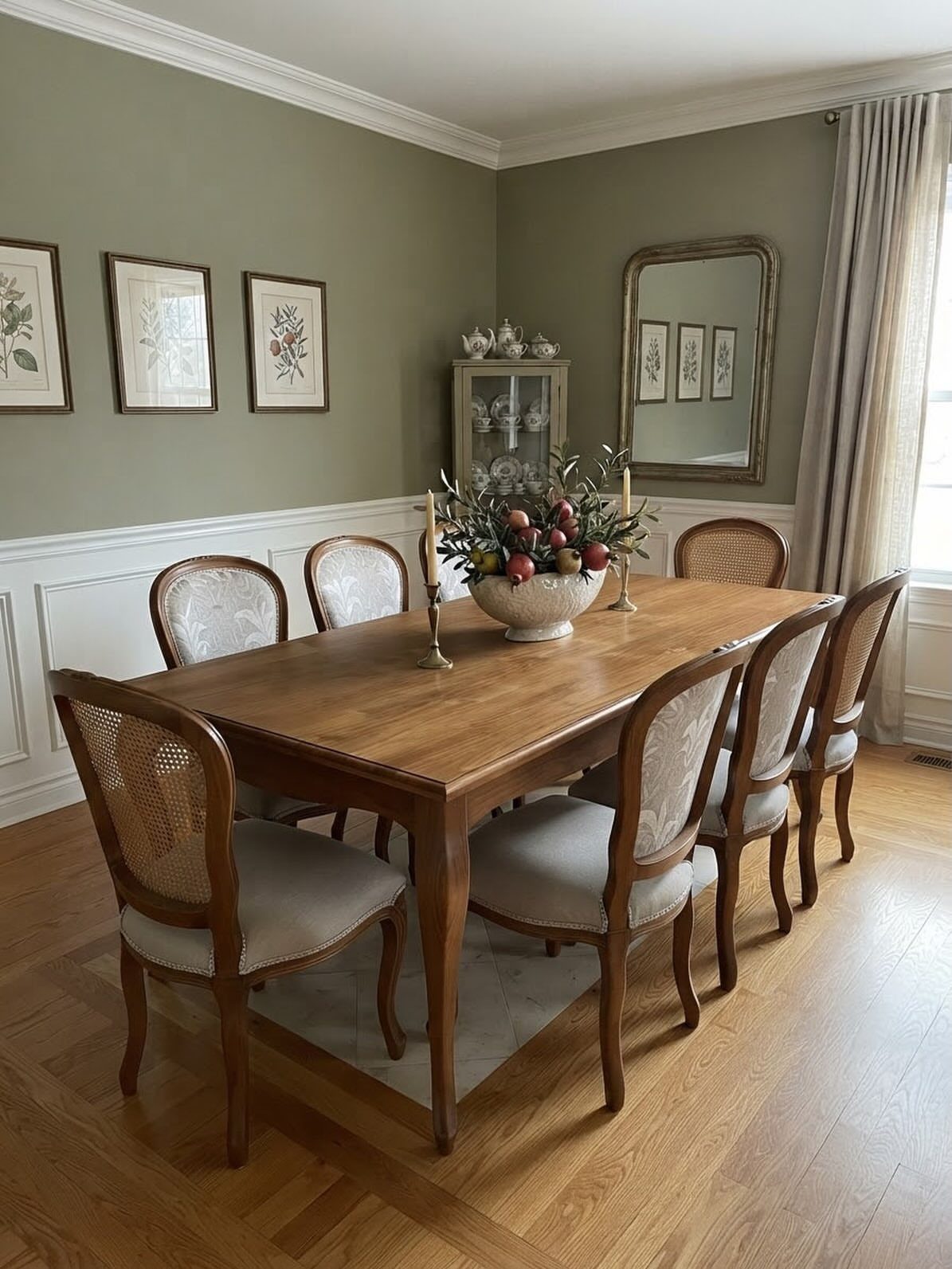
A solid wooden table with 6 cane-back chairs is the classic combination, and light upholstered seats keep the woven backs from looking heavy.
Pick one wood tone for the table and a matching or close one for the chair frames.
Cane lets light through, so the chairs take up less visual room than solid backs. Check old cane for sagging or splits before you buy, since repairs take patience.
Lighting Options
3 lamp types defined the 70s dining room: Sputnik chandeliers, lava lamps, and Tiffany-style lamps. Each did a different job, so choose by where the light needs to land.
A Sputnik chandelier belongs over the table. Its arms spread light in every direction, and it reads as space-age without needing any other props.
Hang the fixture about 30–34 inches above the tabletop so it stays a light source and not a wall between the people sitting down to eat.
A Tiffany-style lamp suits a buffet or side table, where its colored glass gives off a warm pool of light.
Lava lamps are pure decor; I’d keep one on a sideboard rather than the dining table, where it competes with the food.
In a rental, a plug-in swag kit lets you hang a chandelier without touching the wiring.
Furniture Styles
2 pieces are worth knowing beyond the tulip table: molded plastic chairs and rattan or wicker furniture. They pull in opposite directions, and that contrast is what gives the look its funky, eclectic feel.
Molded plastic chairs are smooth, glossy, and easy to wipe clean, which suits a table that sees real meals. They also take up little visual space, so they work in a small room.
Woven rattan and wicker bring a handmade, sun-warmed feel that a plain wood or glass surface can’t. A single piece, such as one wicker chair at the head of the table, is often enough.
I’d mix no more than two of these materials around one table. 3 starts to look like a yard sale rather than a plan.
Color Palettes
Orange, green, and yellow were the popular trio for 70s dining rooms, and they were often used together. That combination is energetic, so give it a ratio to keep it livable.
I’d pick one color as the lead, such as orange, and let green and yellow show up in smaller amounts.
Earth tones like brown and warm wood calm the brights down, which is why the palette feels warm instead of loud.
Test before you commit.
Buy a sample pot, paint a large piece of poster board, and tape it to the wall for a few days. Look at it in morning and evening light, since orange shifts a lot between the two.
Frequently Asked Questions
What were old diner tables made of?
Old diner tables were typically made of laminate tops with chrome or aluminum edges and sturdy steel bases.
That mix was built to take daily use. Glass over chrome legs is the closest match to a diner table’s shine, and cane-seat chairs around it add a woven texture that keeps all that metal from feeling cold.
What were some popular interior design styles in the 1970s?
Eclectic rooms with bold colors and layered patterns defined the decade. Furniture ranged from molded plastic chairs and tulip tables to rattan and wicker, and that contrast gave the look its funky feel.
How do you style a vintage table?
Start with the chairs and the lighting, then add retro tableware.
Footed goblets in one shade of green finish the table, and the rug should reach 24 inches past each edge so the chair legs stay on it when someone slides back.
What is a Parsons dining table?
A Parsons table is a rectangular table with simple, clean lines and square legs set flush at the corners.
That minimal shape leaves generous seating room and suits almost any style. It is plainer than most 70s pieces, so it works as a quiet base if you let fabrics, glassware, and color carry the look.





