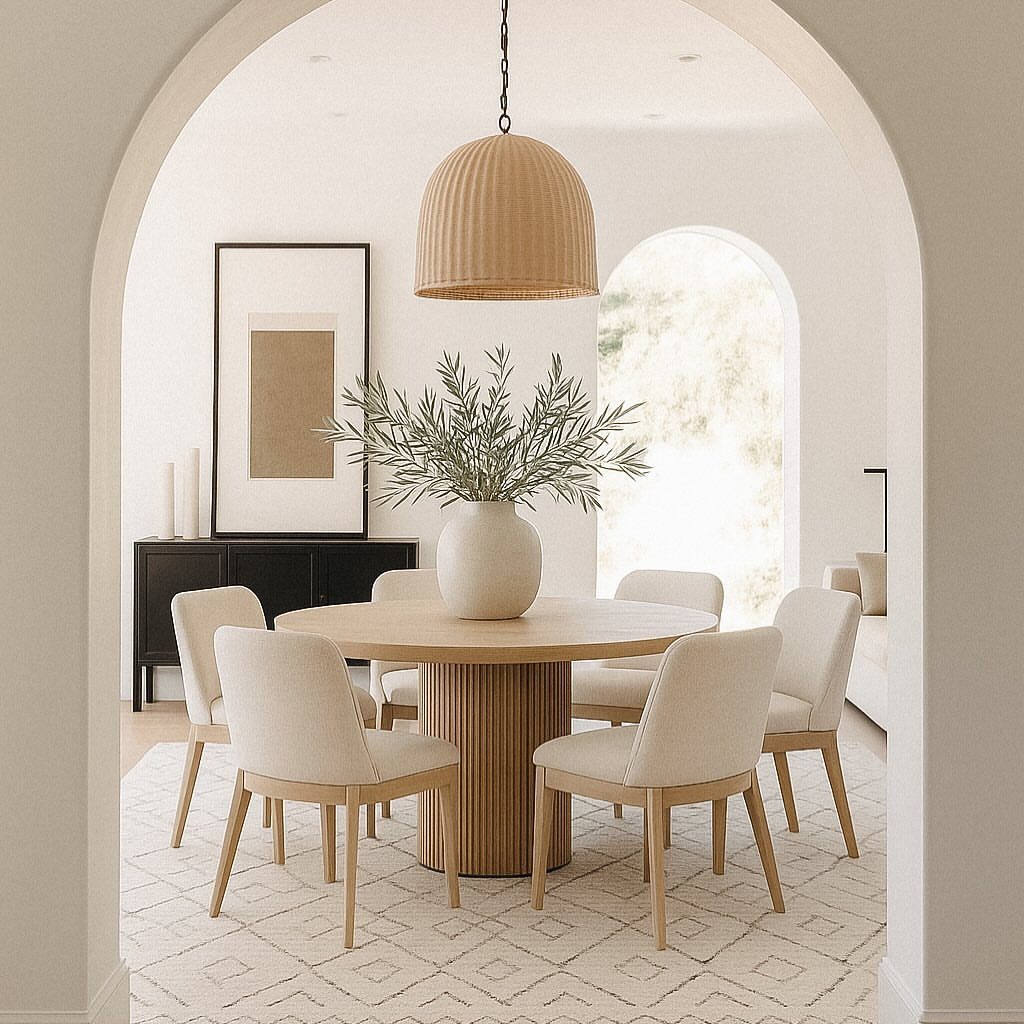
Room shape and head count decide which of these tables is yours: a pedestal round fits a compact dining area with no corners to bump, while the oval seats more people along its sides.
Across all of them, wood, stone and textiles stay in a palette of browns, creams, greens and blacks.
1. Round Dining Table
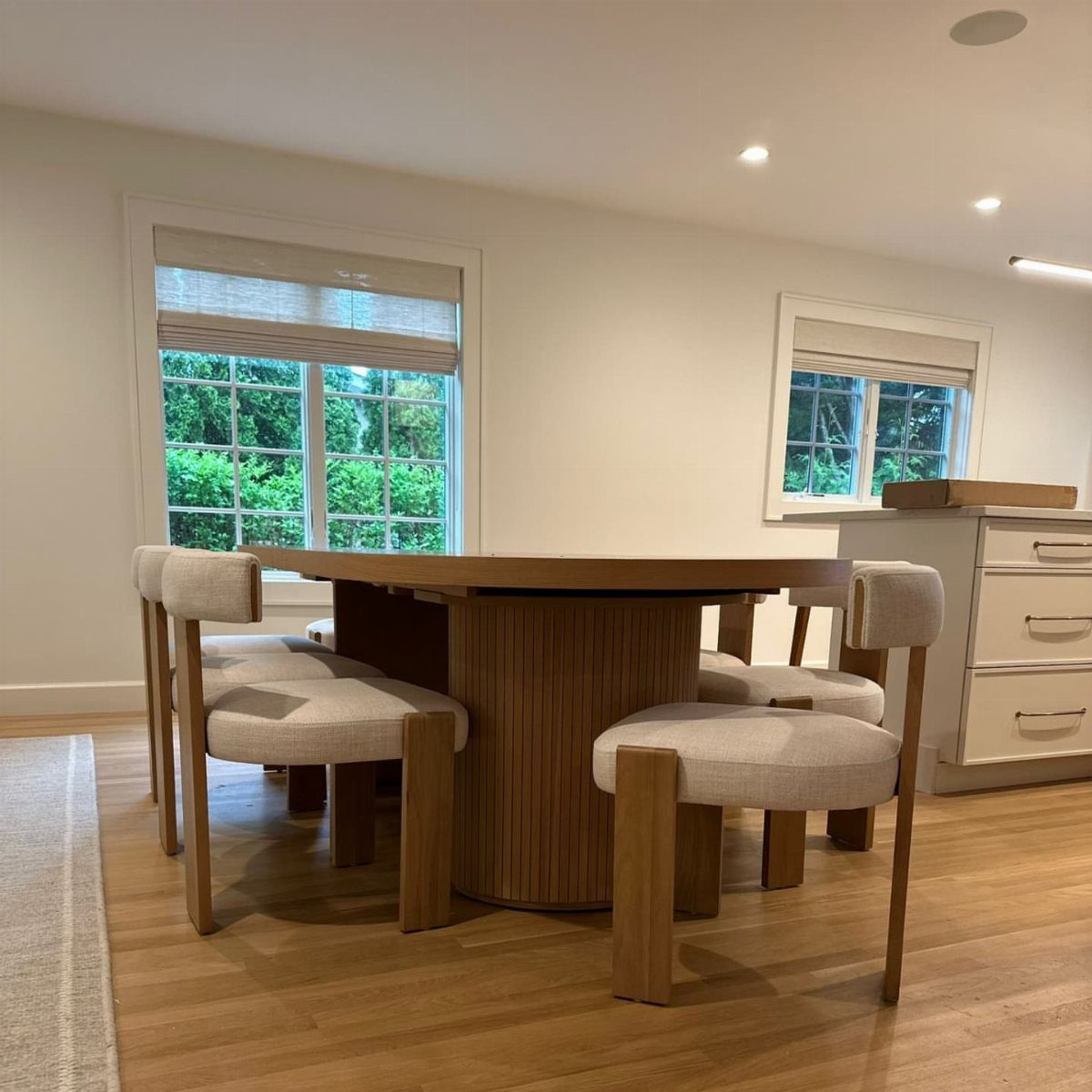
A round table with a fluted base keeps the eye moving in a loop, which softens a space that would otherwise read as all straight edges.
Rounds also suit smaller dining areas, since there are no corners to bump and chairs slide in from any side.
For a budget version, look for a solid or veneer top with a simple pedestal, then add the texture yourself with upholstered chairs in a matching tone.
Matching the chair fabric to the wood’s warmth matters more than matching the exact shade.
2. Wood Modern Organic Dining Table
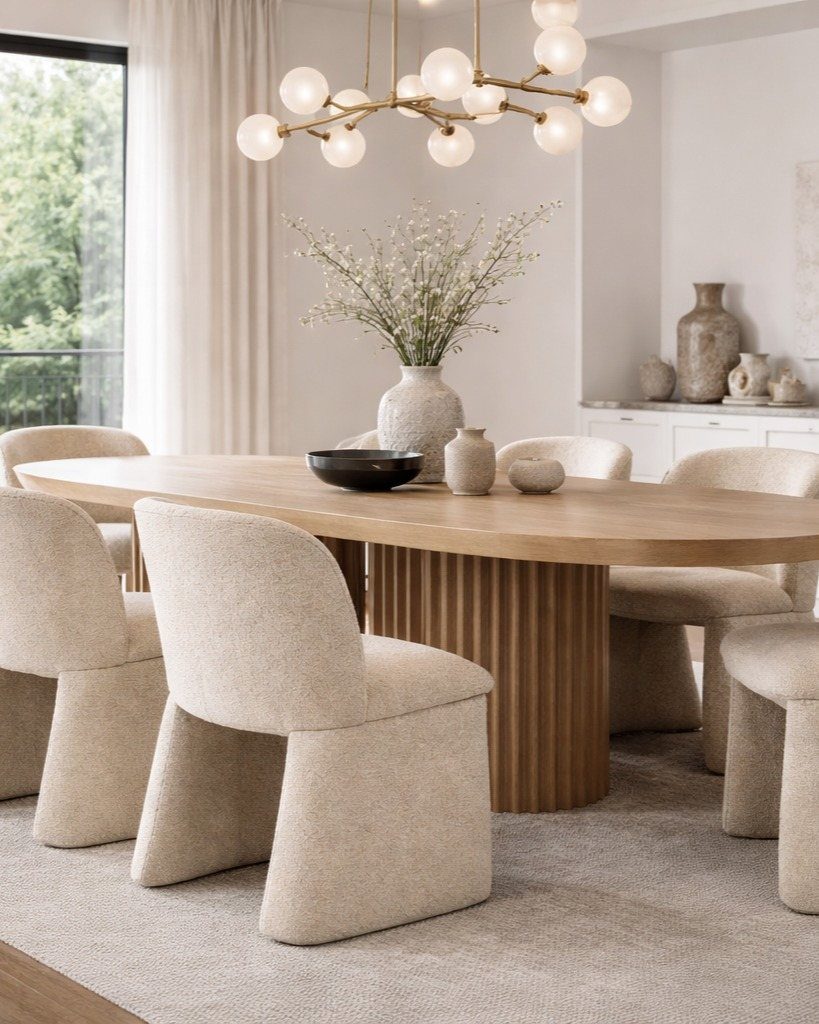
Wood, stone and textiles carry this look, and each one needs a job. The oval light wood top is the anchor, the stone vases add weight and a cool surface, and the cream chair fabric softens everything.
I would keep to three materials and let one lead. If you already have a wood table, buy the stone and fabric pieces second-hand or in small sizes: vases and seat cushions are the cheapest places to start.
3. Sculptural Dining Table
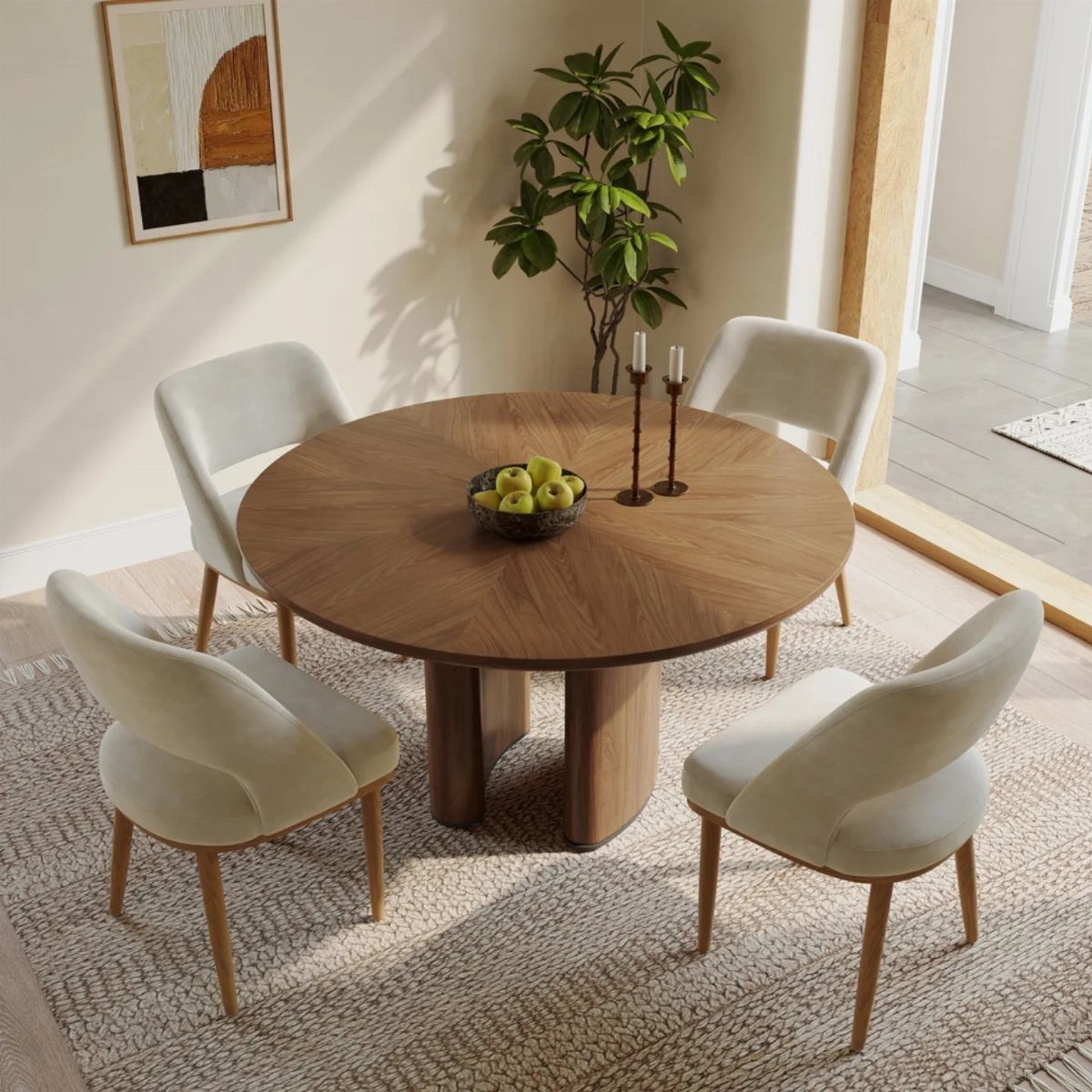
Sculptural tables put the design in the base. A pedestal with real shape lets you skip a busy tabletop, and I would leave it nearly bare so the form stays the focus.
Sculptural bases cost more than basic legs, so spend there and save on everything around it.
4. Earthy Tones Modern Organic Dining Table
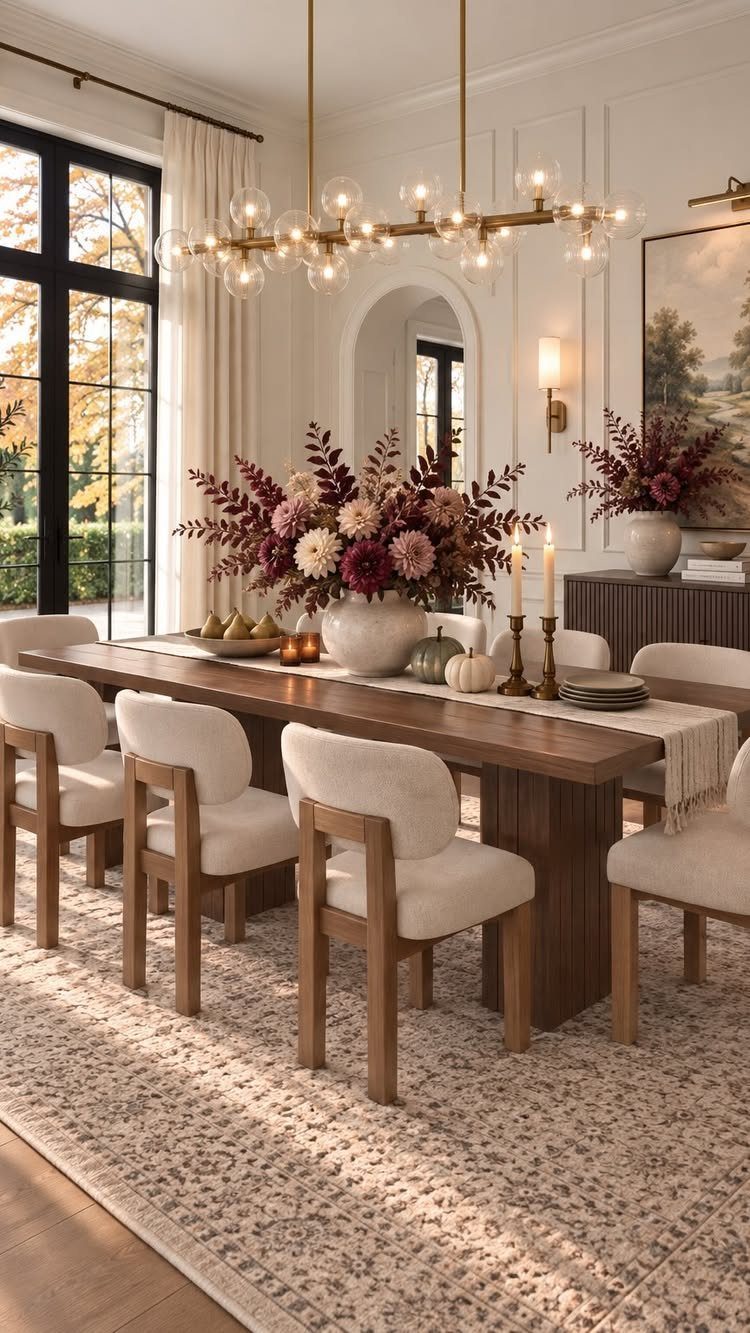
Depth comes from layering several earthy tones instead of repeating one. Natural wood, cream chairs, a patterned rug and a floral centerpiece each sit at a slightly different warmth, and that difference is what stops the room from reading flat.
Pick one tone to dominate, such as the wood, then add two supporting shades through the rug and the flowers. Dried stems in clay or rust shades last longer than fresh and cost less over time.
5. Table Centerpiece
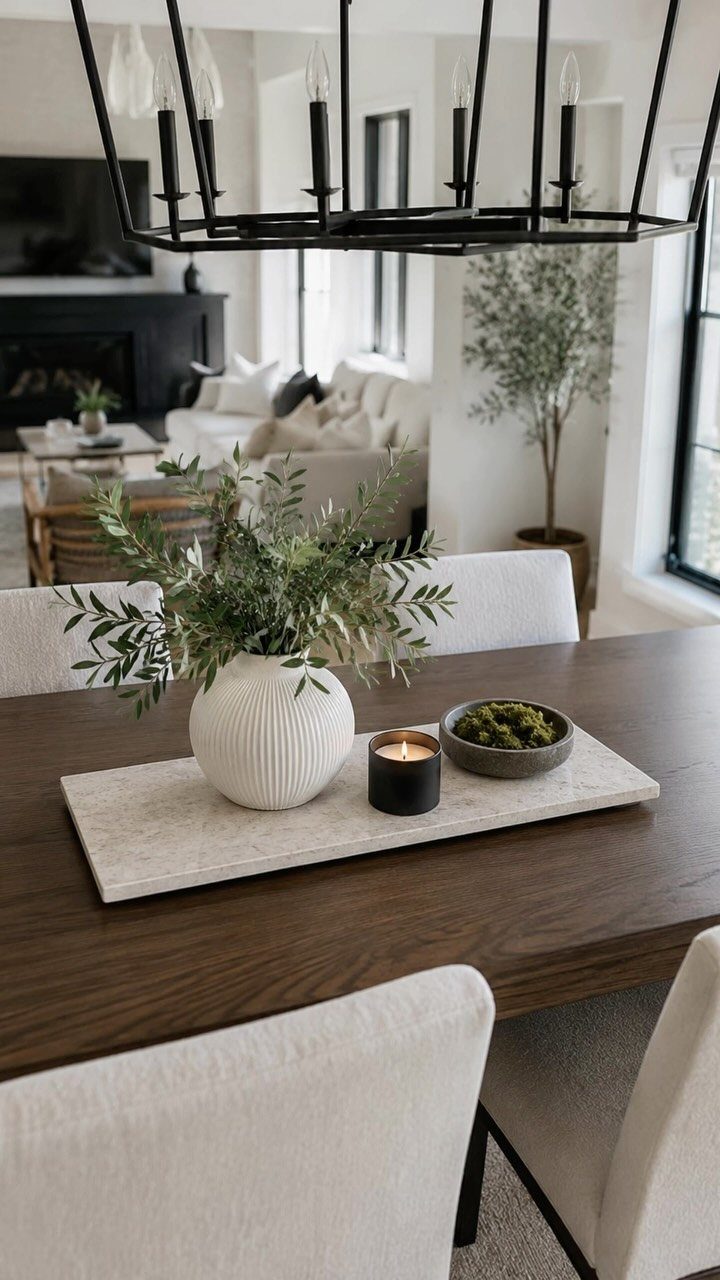
Varied height makes a centerpiece look arranged rather than set down. A tall vase of greenery, a mid-height black candle and a low small bowl form a stepped line the eye can travel along.
Corral them on a tray so they read as one group and can be lifted off for meals.
6. Oval Beige Dining Table
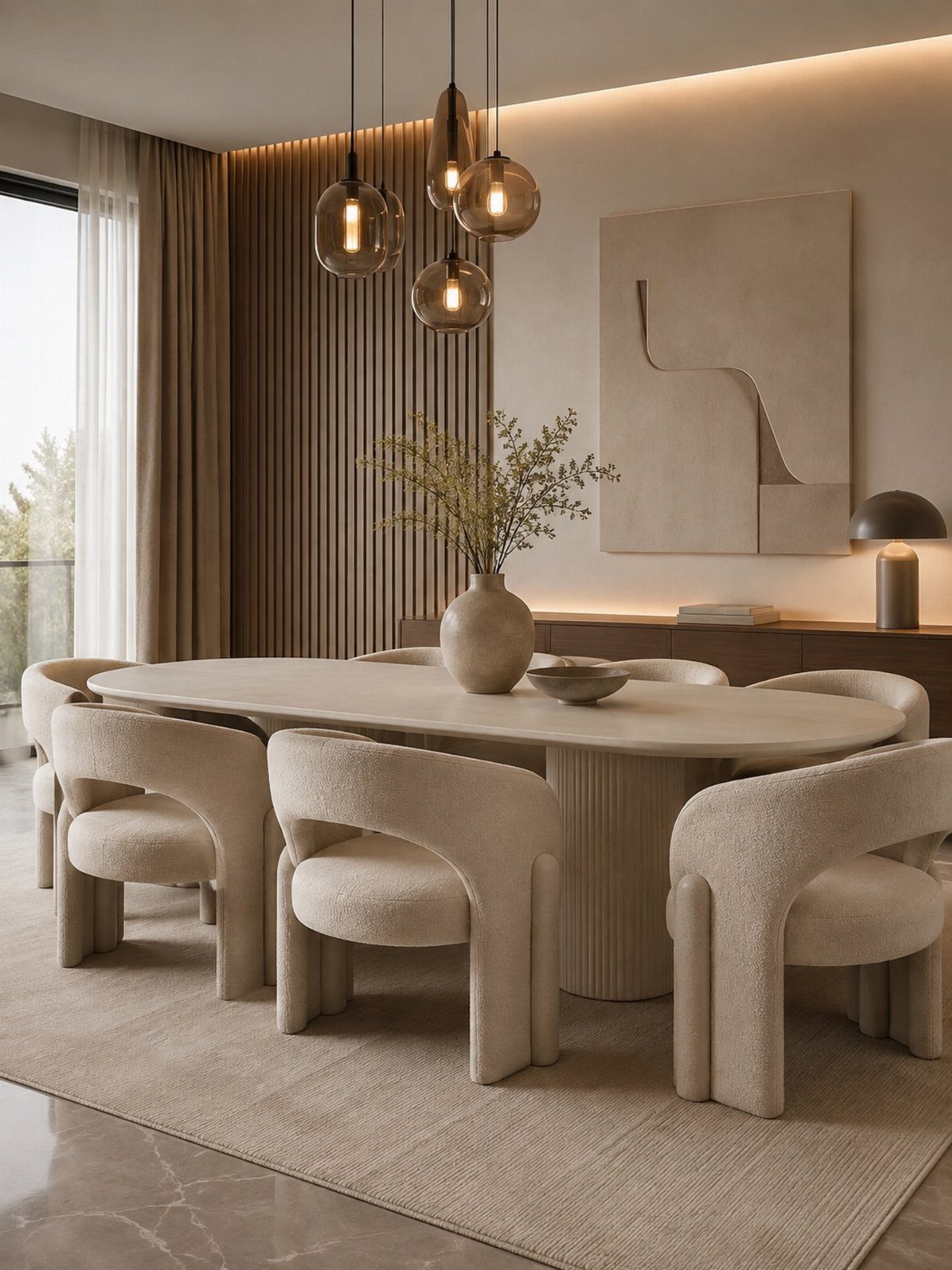
An oval in light beige gives you the softness of a round with more seating along the sides. Curved upholstered chairs echo the table’s edge, which is why the set feels calm instead of matched by force.
Keep walls and lighting in the same quiet range, and let texture do the work: wood slats on the wall, glass globe pendants overhead. I would hang the pendants centered over the table, not the room.
Creating a Cohesive Look
Contrast keeps an earthy room from going flat. Blend deep browns, warm beiges, soft grays and muted greens instead of picking one shade and repeating it.
One dark element does a lot of work against a light, neutral palette. Painting a door a deep bronze tone is a cheap way to get it, and a quart of paint fits a weekend and a small budget.
Plain areas near the table can use softness too. Linen-cotton curtains in an oat shade add texture without adding color, so the palette stays calm.
Mismatched pieces also help the room feel relaxed. A set that matches perfectly can read stiff, so let the chairs and table differ a little in material.
Importance of Lighting
Use more than one light source, because a single overhead fixture lights the table but leaves the room flat. Layers let you dim the mood for dinner and brighten it for homework or bills.
Wall sconces in brass, wood or ceramic add soft ambient light. In a rental, plug-in versions skip the wiring.
Sconces that hold a candle throw a soft, wavering light from the wall, and they keep the tabletop clear. Pillar candles or tea lights in neutral holders can sit on the table, and I would never leave any flame unattended.
Choose materials that echo the earthy look, and the lighting will feel part of the room.
Emphasizing Organic Shapes
Start with the table, since it anchors everything else. Solid wood, reclaimed wood or concrete all give a natural but modern feel, and a visible grain with a light wash keeps it from looking heavy.
Chairs are where you can loosen up. Velvet chairs on gold legs, for instance, bring a little polish to a plain wood top without fighting it.
Mix natural materials like wood, stone and rattan with metal or velvet, and add texture through woven details or matte finishes.
Keep colors to browns, creams, greens and blacks so the mix stays grounded. Shop slowly, and check secondhand marketplaces, because pieces that feel chosen beat a pre-matched set.
Lena Gierasinska, Head of Product at Barker and Stonehouse, explains the appeal of this look. ‘Organic shapes are proving increasingly popular in interiors, especially in the dining room. They bring a sense of fluidity and natural harmony that feels both calming and inviting.
Frequently Asked Questions
What is organic modern dining room design?
It pairs natural textures and earthy tones with clean, modern lines.
Pick one lead material, whether that’s oak, travertine or a heavy linen, and let the other two play supporting roles. Pieces that differ a little, like chairs that don’t exactly match the table, keep the room relaxed instead of stiff.
How do you choose a dining table shape?
Start with the room and how you want it to feel. In a small dining area I’d pick round: with no corners to catch a hip, each chair pulls in from whatever angle is closest.
Oval keeps those softened edges but stretches the length, so you get extra seats along each side when the guest list grows.





