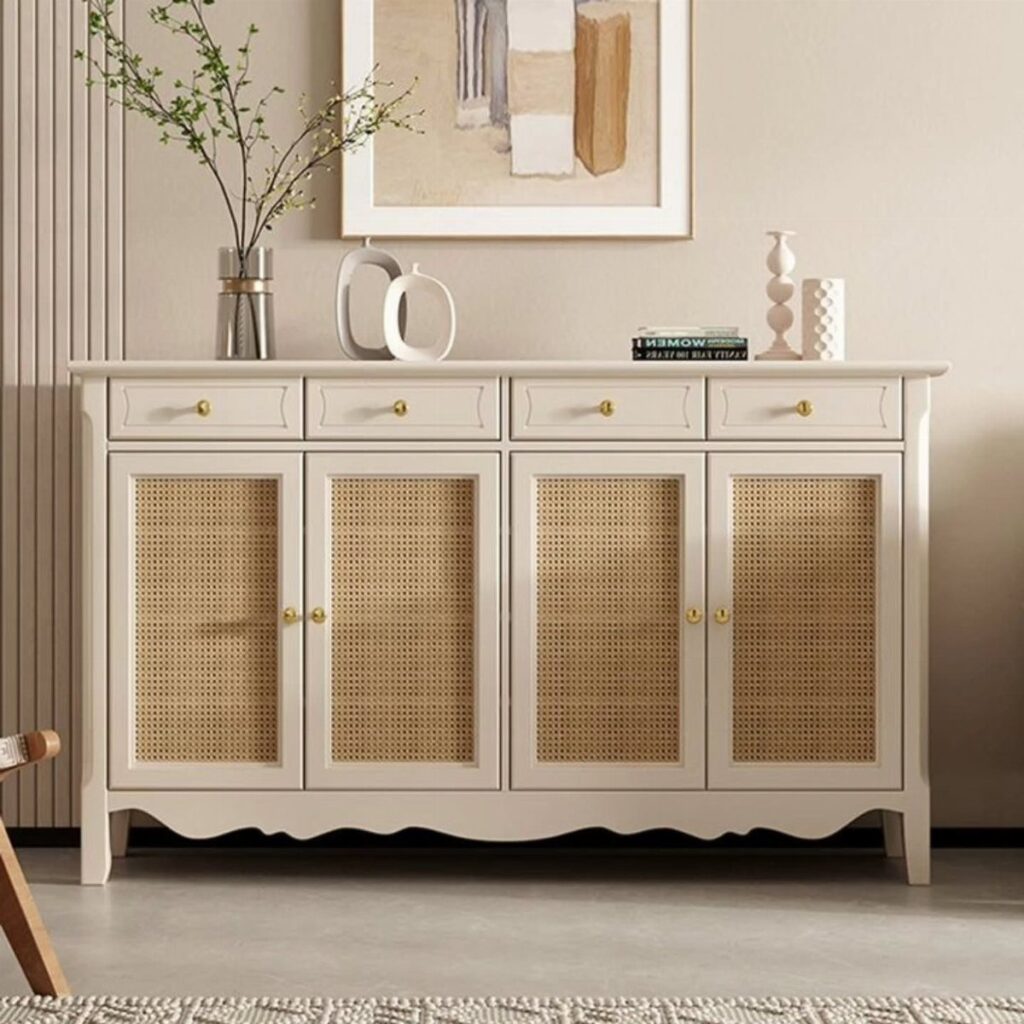
The ideas here range from wallpaper and a bold color against neutrals to pendant lights, a fireplace, a cozy nook and a frosted glass partition, and the cost and effort climb quickly as you go.
What decides your pick is whether you rent or own: renters can get most of the look from wallpaper, statement art, a rug and a glossy dining set, while owners can take on a fireplace, a built-in nook or a frosted glass partition.
1. Dining Room Rugs
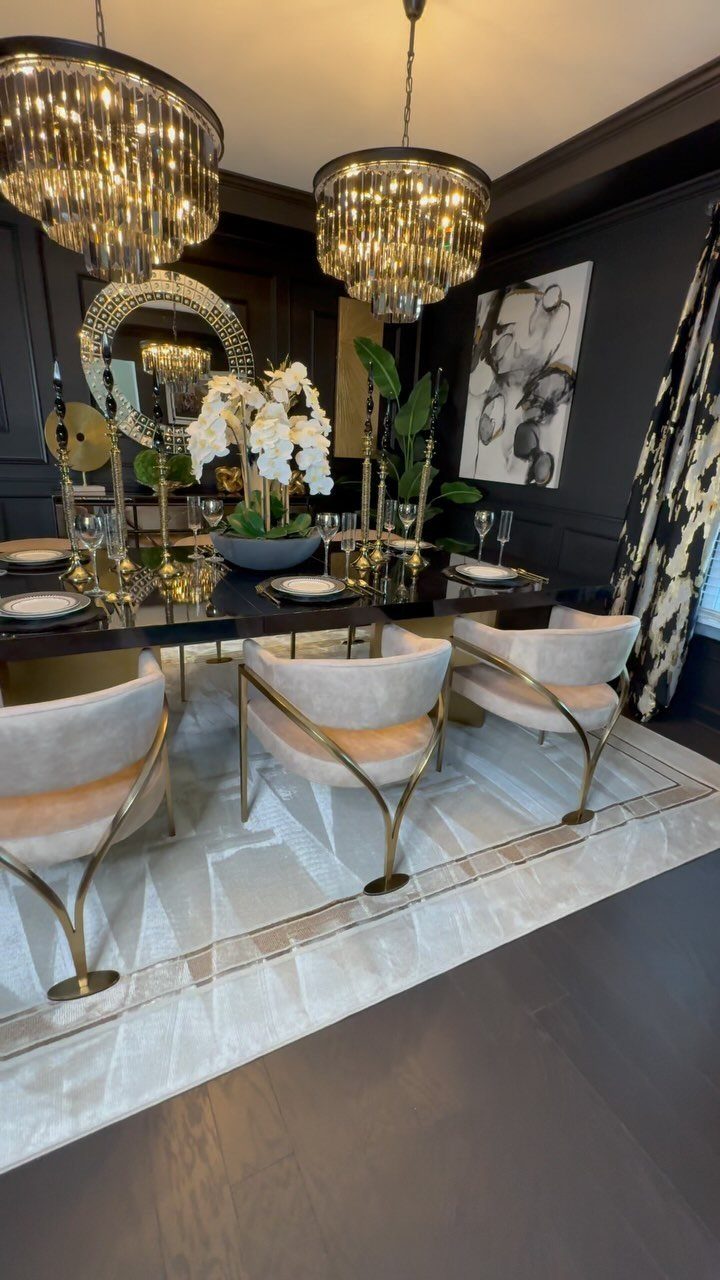
A light geometric rug under a black table gives the eye a pale shape to land on, so the dark wood stops reading as a hole in the room.
I like that the pattern is quiet: a busy design under chairs gets noisy fast.
Pick a size that lets the chairs stay on the rug when they’re pulled out, and choose a flat weave that slides easily. Light color shows spills, so a pattern helps hide the small stuff.
2. Dining Tables
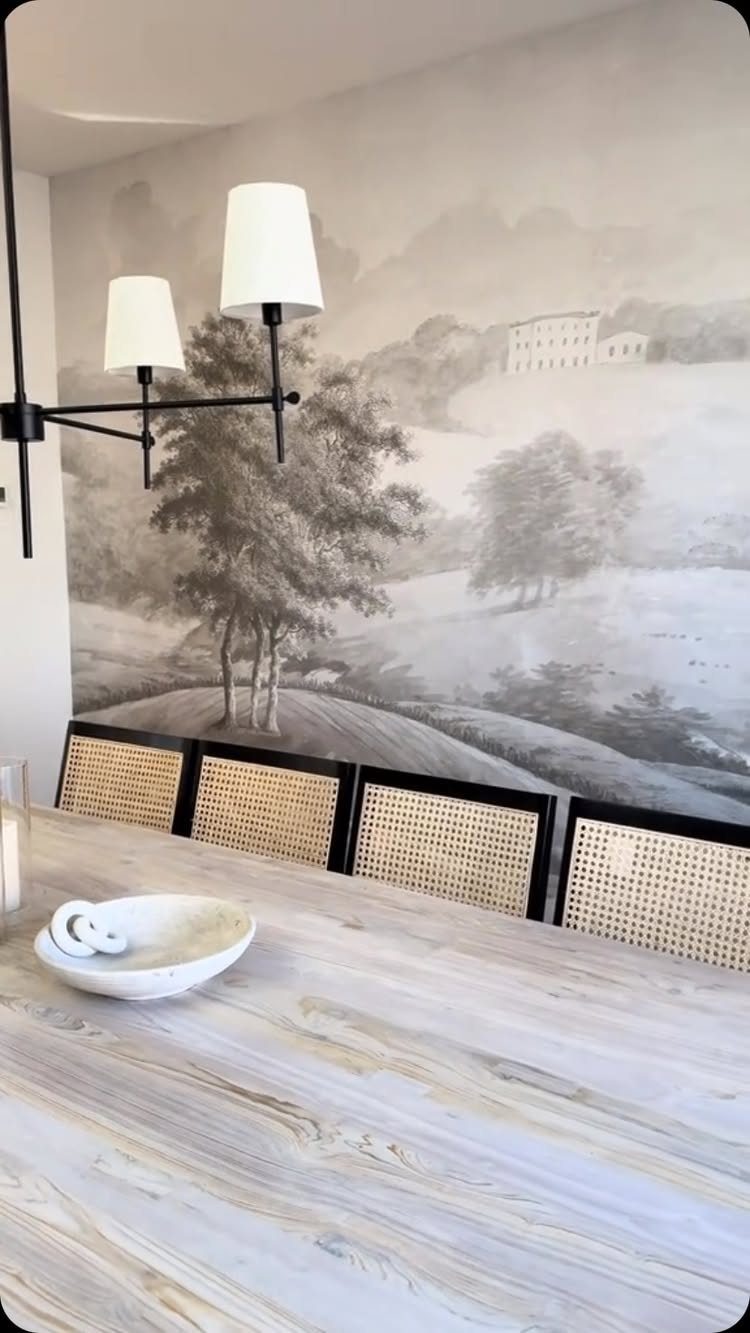
A table and the art behind it should share a color family, and a pale wood top set against a grayscale wall mural is a clean way to do it.
Nothing competes with the mural, so the space stays calm even at that scale.
If a mural is out of budget, a single oversized print in matching tones does the same job.
Limit the chairs and light fixture to one or two finishes, such as cane and black, so the eye travels across the wall and table without snagging.
Small dining rooms present both a challenge and an opportunity. On the one hand, you’re working with limited space that’s just one ill-sized dining chair or bar cart away from feeling overwhelmed and cluttered.
3. Incorporate a Sideboard
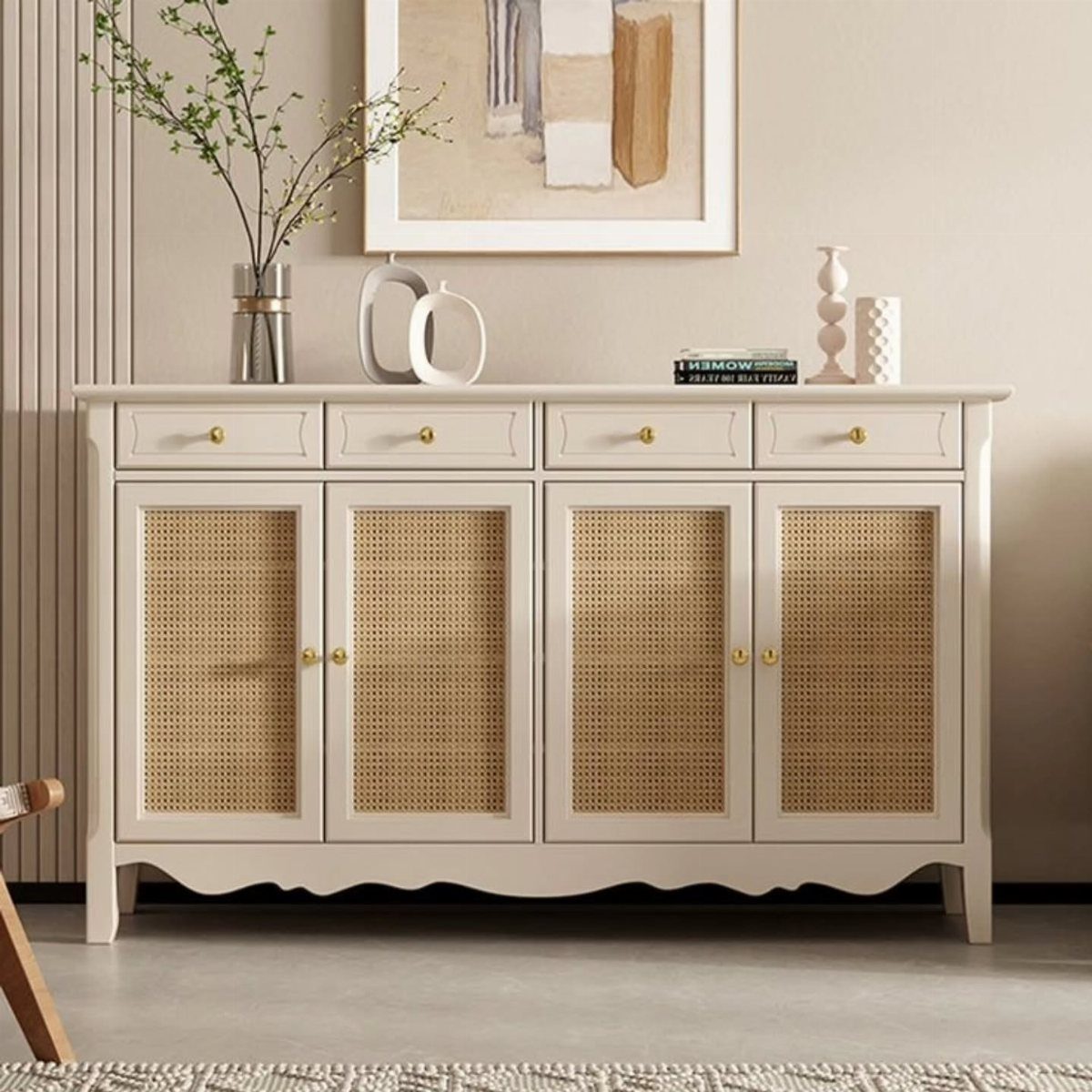
Cane door fronts on a cream sideboard soften a room full of hard edges, and gold knobs add a small flash of warmth without much cost.
Storage for linens and serving dishes sits behind the doors, so the top stays free for display.
Stop there. A crowded surface undoes the calm a light piece brings.
4. Choose a Round Dining Table
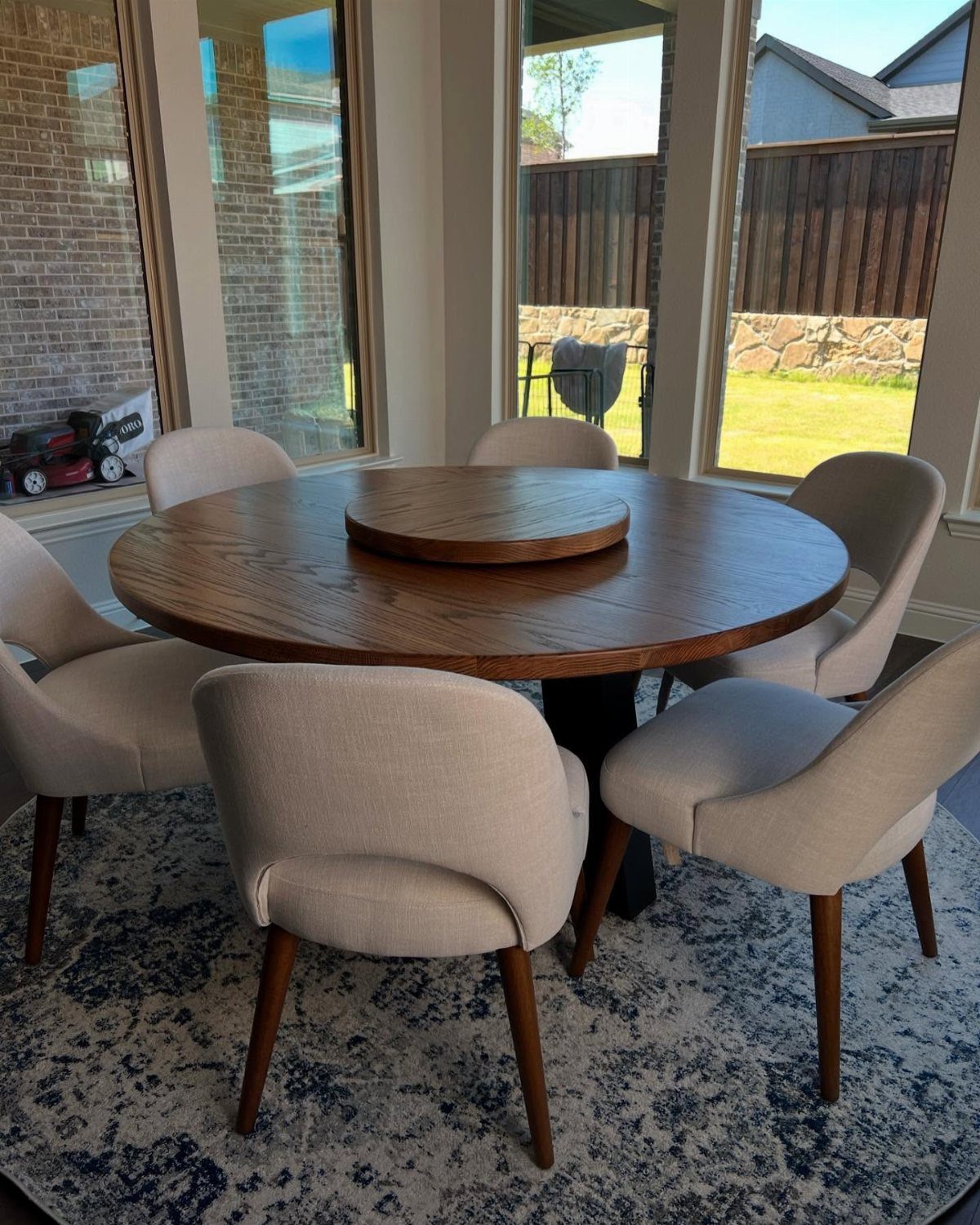
Round tables put everyone at the same distance from everyone else, which is why conversation flows better than at a long rectangle. A Lazy Susan in the middle makes passing dishes easy and keeps the center tidy.
Anchor it with a patterned rug so the circle doesn’t float in a big room.
Blue and white works well against warm wood. Pick a rug that extends beyond the chairs, and choose chairs in a soft neutral so the pattern gets the attention.
5. Use Wallpaper
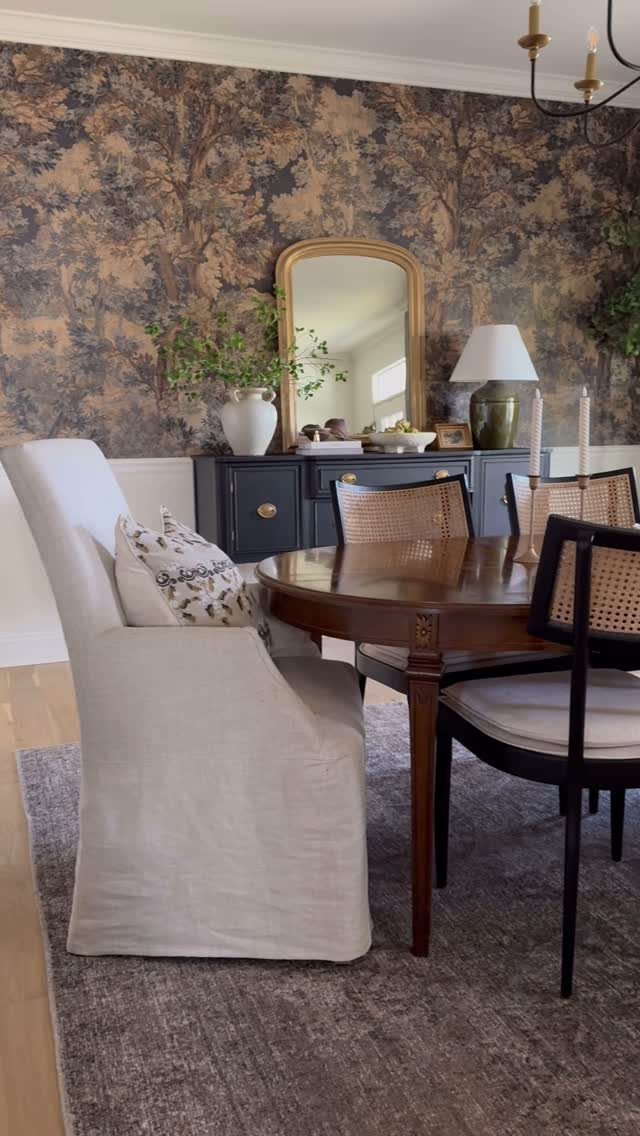
Forest-print wallpaper turns one wall into a backdrop, and a round wooden table in front of it keeps the scene grounded. Pairing a dark sideboard and a gold-framed mirror with the pattern adds depth and bounces light around.
Paper just one wall, the one behind the sideboard, so the room doesn’t close in. Peel-and-stick is the renter’s choice because it comes off, though it costs a bit more per roll than traditional paper.
6. Use Statement Art
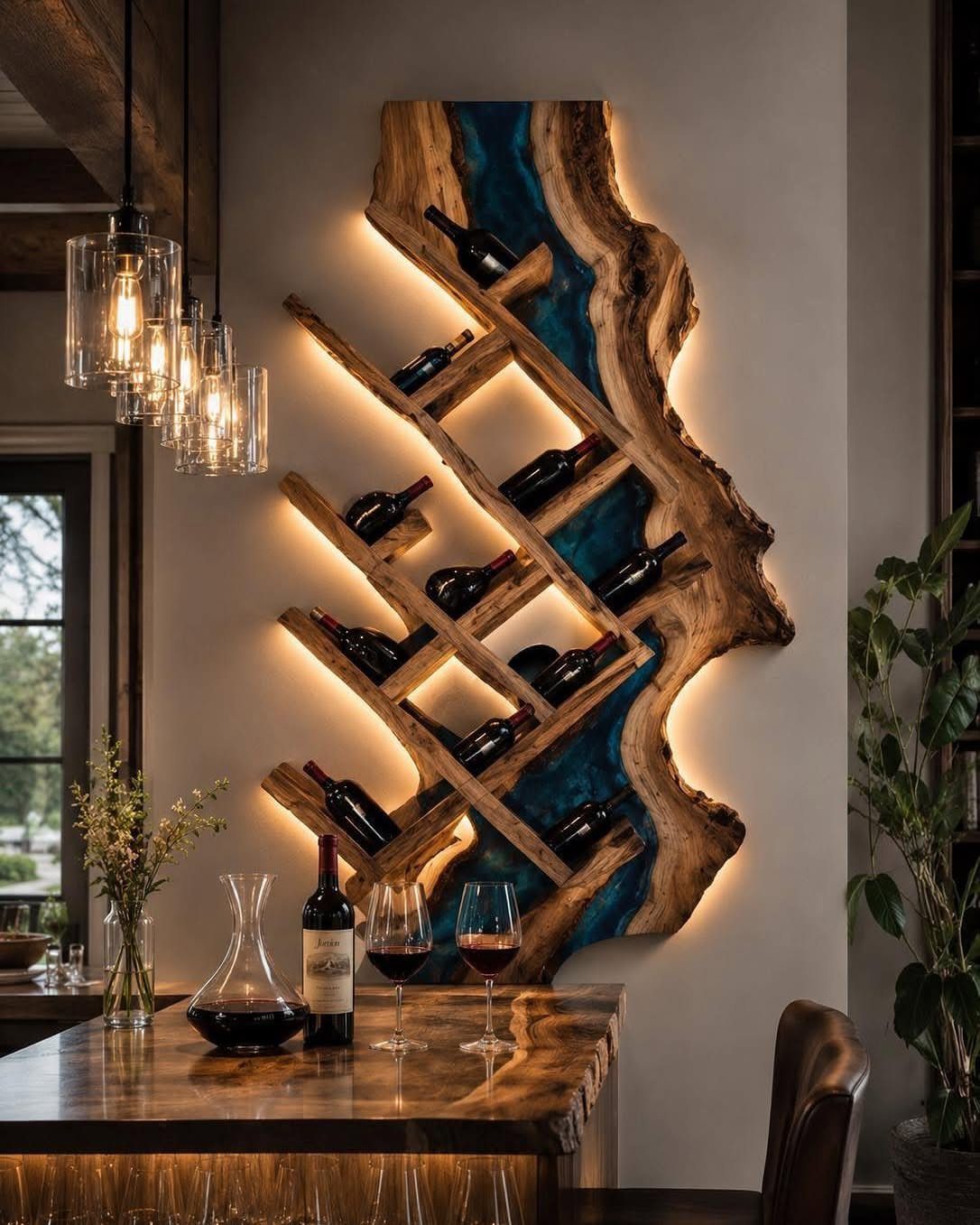
The glow makes the resin look deep, and matching the wood to the table ties the two together.
This is a showpiece, so give it a clear wall with nothing beside it. If a custom piece costs too much, a simple wall shelf with LED strip lighting behind it gets part of the effect for far less.
7. Bold Colors with Neutrals
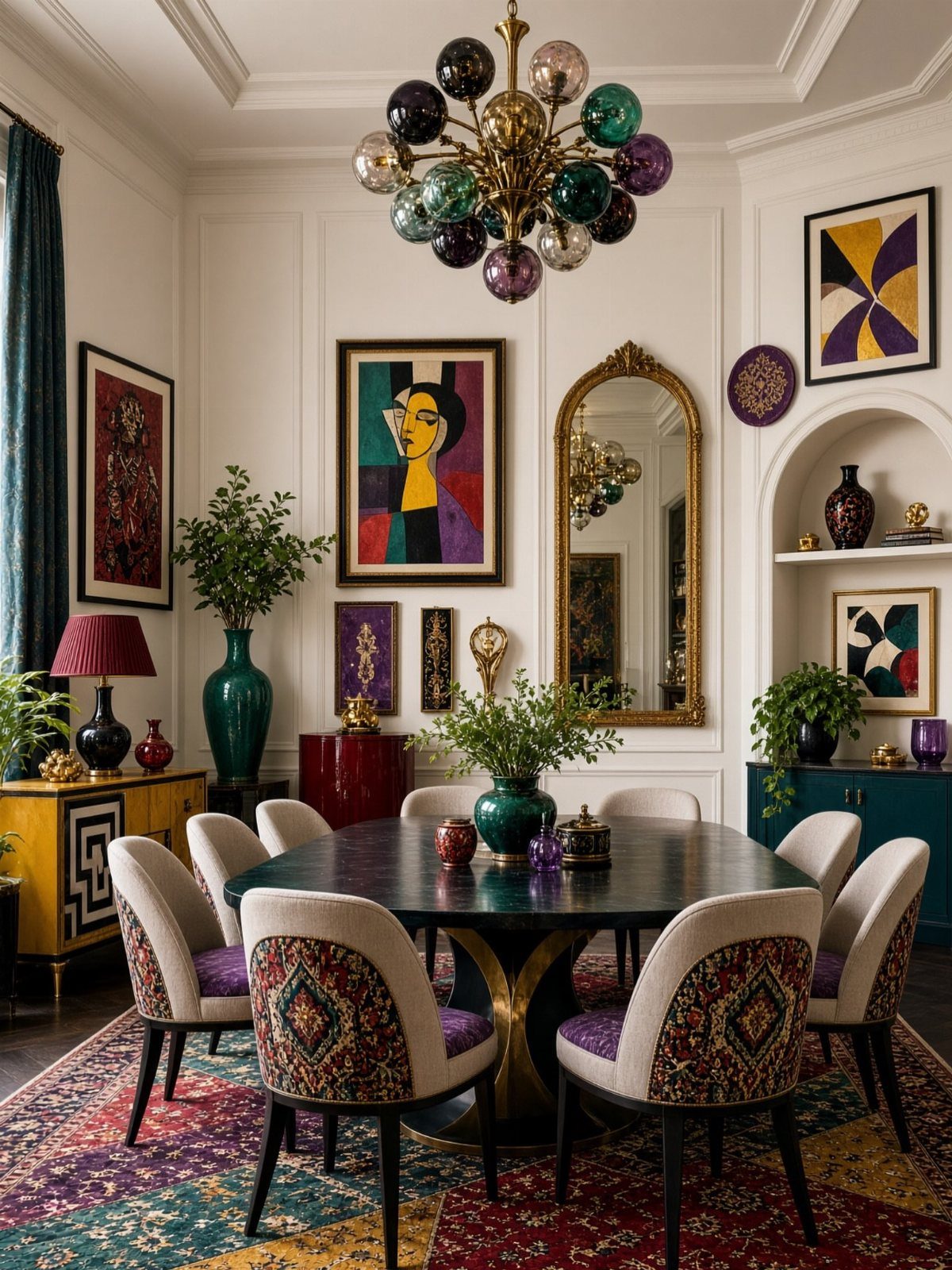
White walls let one loud element carry the room, and here the color lives in the art, the chandelier and the chair pattern while the table stays dark. That split keeps the brights from fighting each other.
Limit the accents to a small set of colors, then repeat each at least twice, say once in the art and once on the chairs.
Repeats read as a plan. Keep the walls plain white so the color has somewhere to rest.
8. Rectangular Table with Sculpted Seating
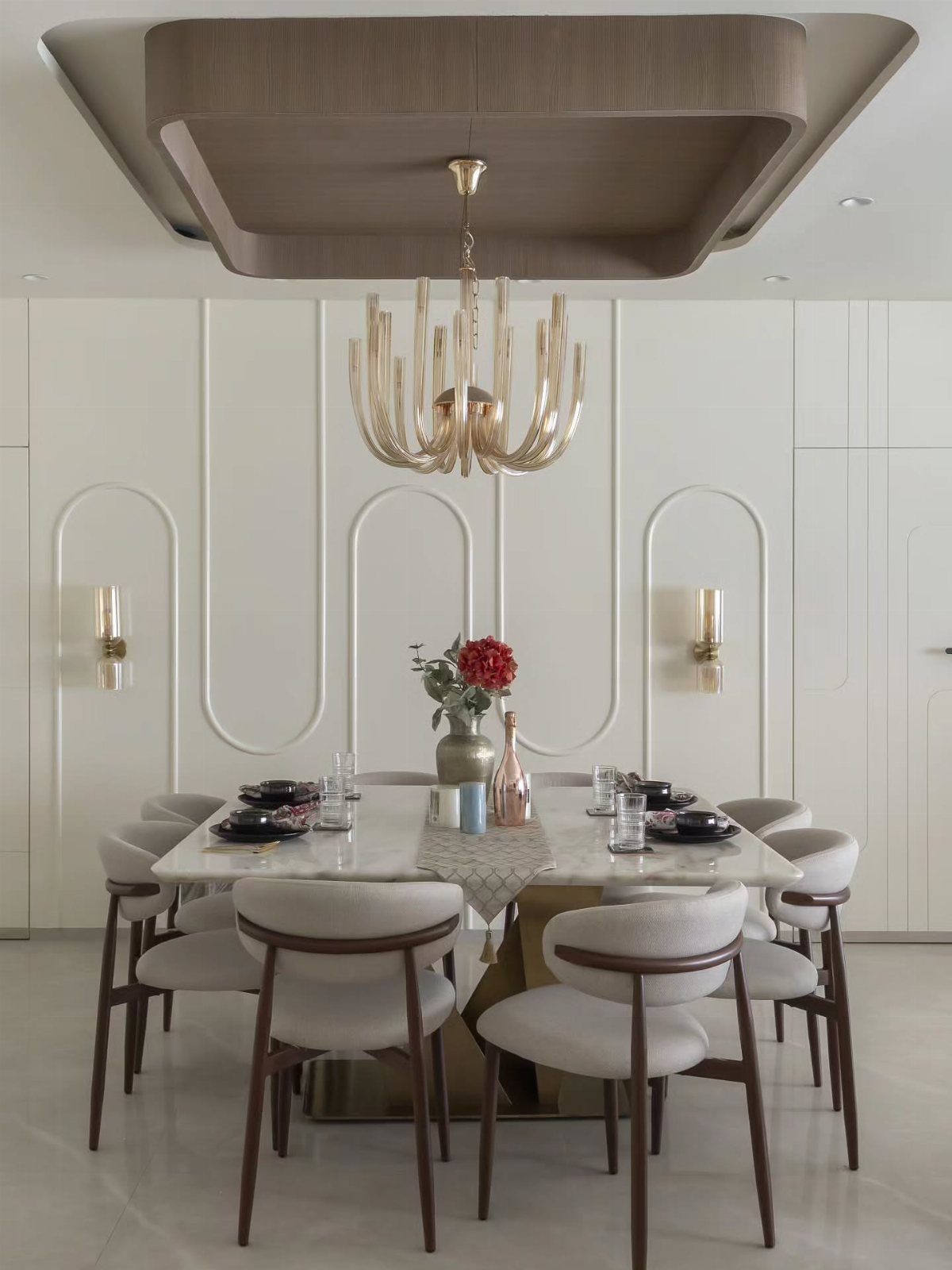
A white marble top with gray sculpted chairs works because the 2 tones sit close together, so the curved seat shapes get the attention instead of a clash of colors.
Gold on the chandelier adds the warmth that an all-gray scheme lacks.
A marble-look laminate or a white top with a thin veining pattern gets the same pale surface for far less.
Choose chairs with a rounded back that you can sit in for a full dinner, not just admire.
9. Illuminate with Pendant Lights
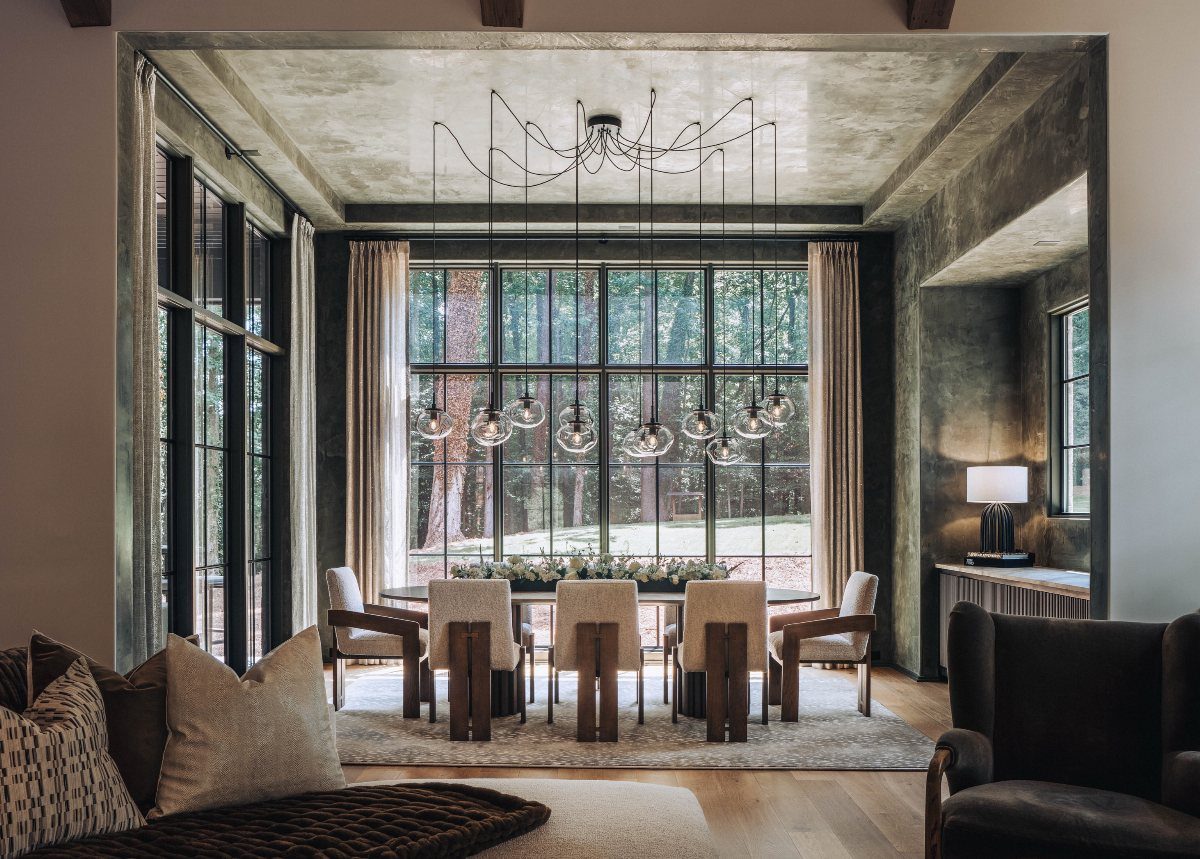
Glass globe pendants over a long wooden table give a room soft, warm light, and the many bulbs read like jewelry against a bare concrete ceiling. Warm bulbs matter here; a cool white one would flatten the effect.
Hang a cluster over the table’s center, not over the room’s center, so the light follows where people actually sit. Plug-in versions with a ceiling hook are the renter’s route, since no wiring is needed.
10. Experiment with Monochrome
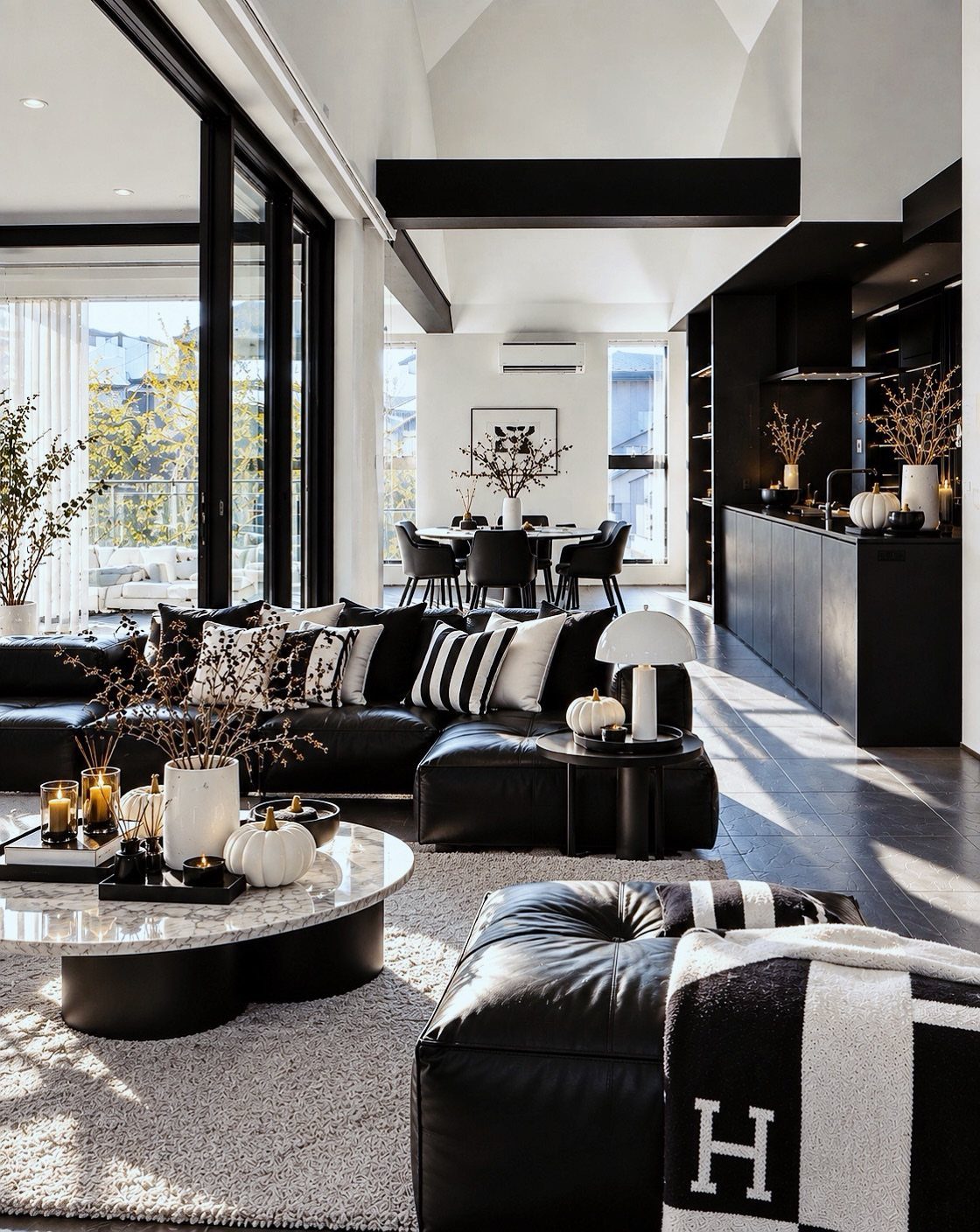
Black and white only, repeated from the kitchen cabinets to the dining set to the sofas, makes an open room feel like one decision instead of three. White walls keep all that black from getting heavy.
Texture does the work that color can’t: leather, marble and matte paint each catch light differently. Add one small organic touch, like the white pumpkins, so the palette doesn’t turn cold.
I’d keep every black piece to one finish, all matte or all glossy.
11. Wood, Metal, and Textiles
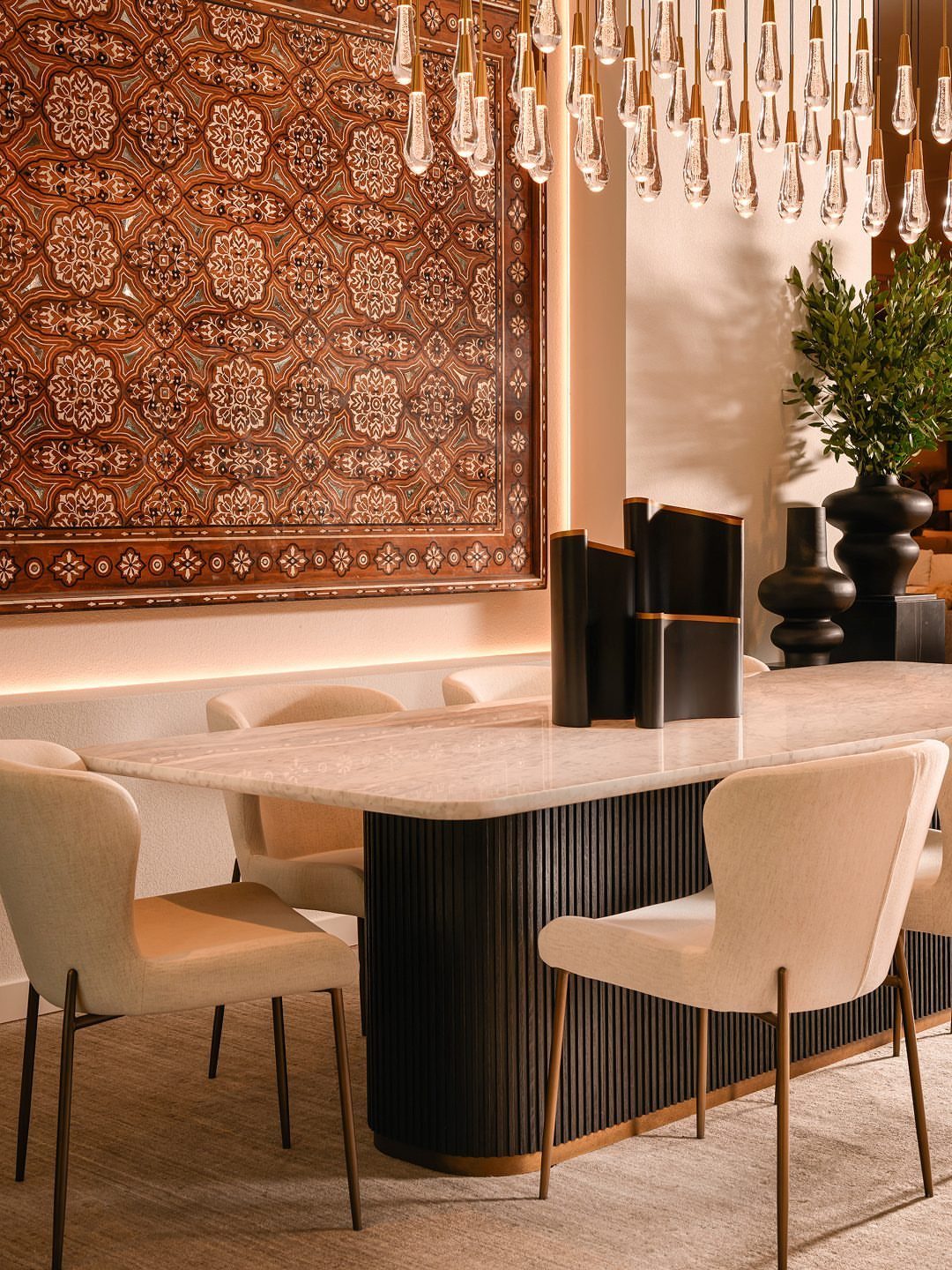
A fluted wood base under a marble top brings in 2 materials before anything else arrives, and cream upholstery softens both.
The large patterned textile on the wall then adds a third layer, which keeps the space warm instead of showroom-hard.
A fabric hanging is the cheap part of this idea.
Mount it on a wooden rod and you can swap it later. Gold on the chandelier ties the metal to the wood tones nearby.
12. Incorporate a Fireplace
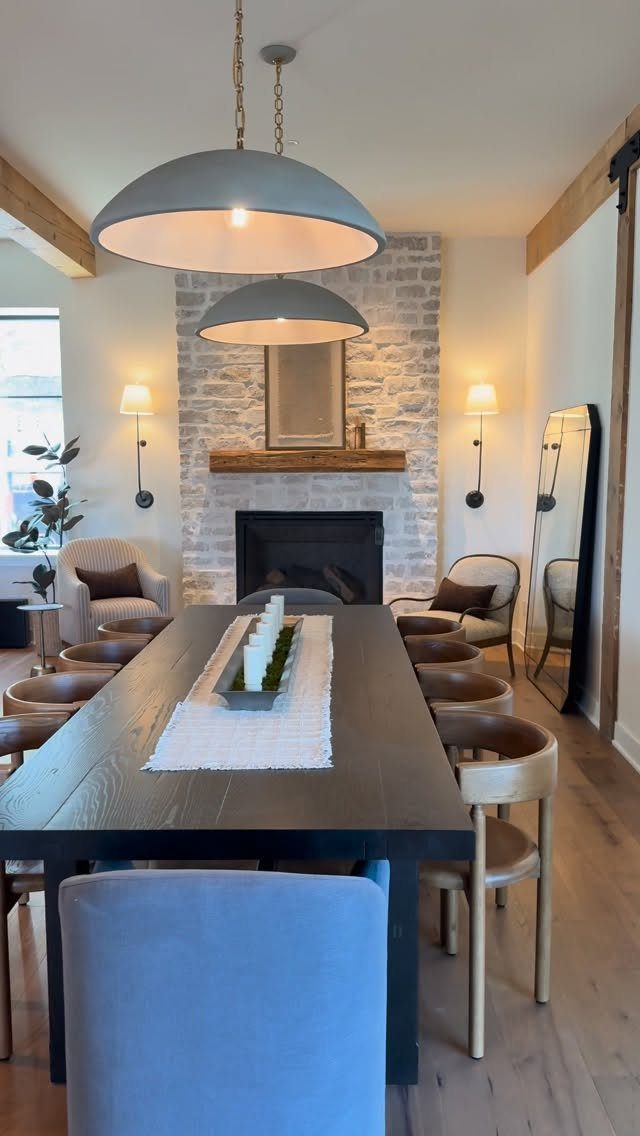
A white brick fireplace with a wooden mantel gives a long black table a focal point at the far end, and the light wood chairs keep the dark top from feeling heavy. 2 dome pendants echo the table’s length.
Set the table so its end points toward the fireplace; that makes the hearth the view from every seat. If you rent and can’t add a fireplace, a mantel-style shelf against a brick-look wall hints at the same effect.
13. Cozy Dining Nook
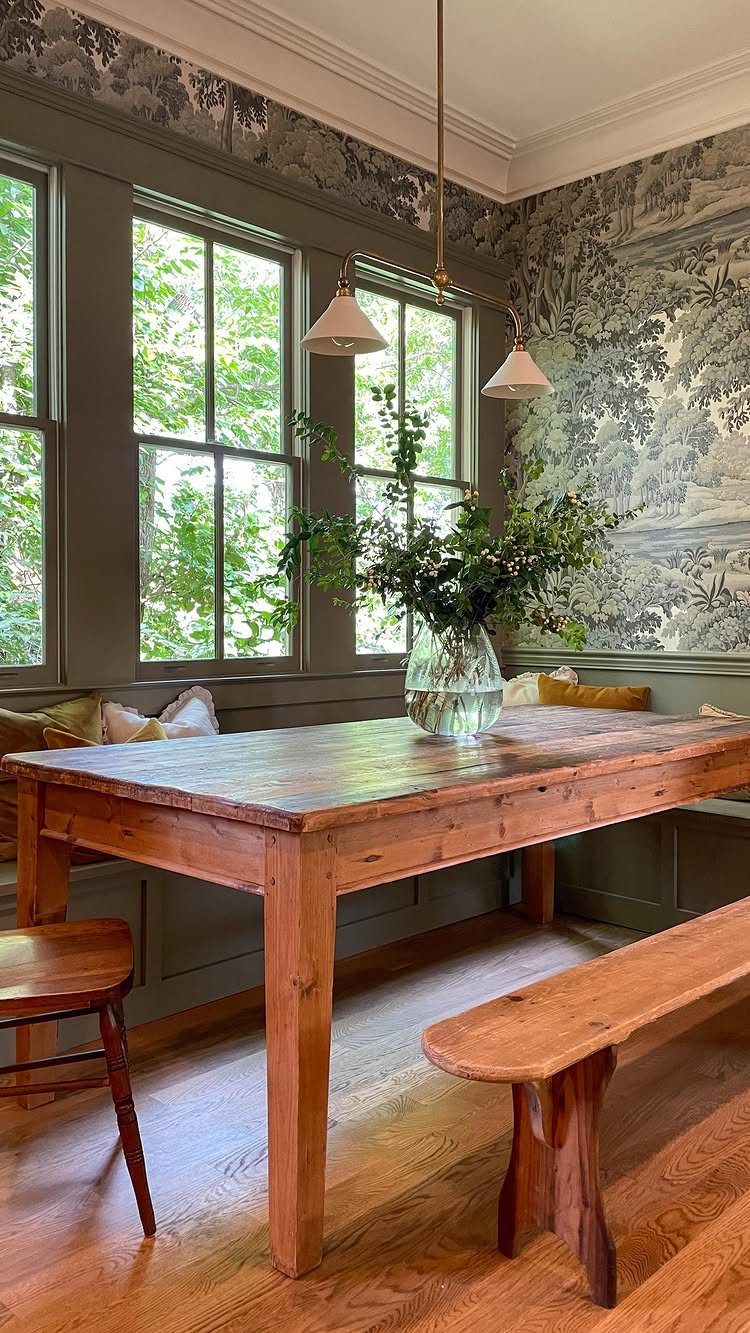
A bench tucked under a window seat gives a small corner a built-in feel, and patterned wallpaper behind a wooden table makes the nook read as its own room.
Green trim picks up the greenery in the vase, so the color feels planned.
Match the bench to the table by building both from the same wood, so the nook reads as one piece. Add a seat cushion if you plan to linger, since wood gets hard after a long meal.
14. Frosted Glass Partition
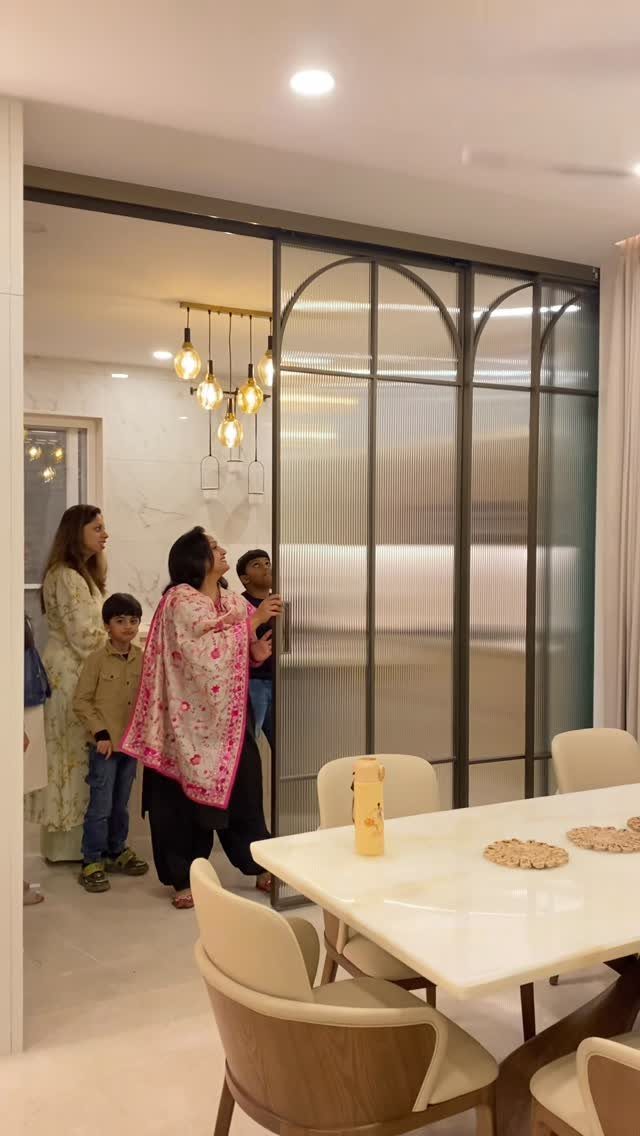
Frosted glass lets light pass while hiding the clutter of a hallway, which is why an arched sliding partition suits a dining room that needs separation without a solid wall.
Sliding panels take no swing space, a real plus in a tight plan. Frosted glass costs more than a plain wall, so I’d use it only where you want borrowed daylight.
15. Glossy Geometric Dining Set
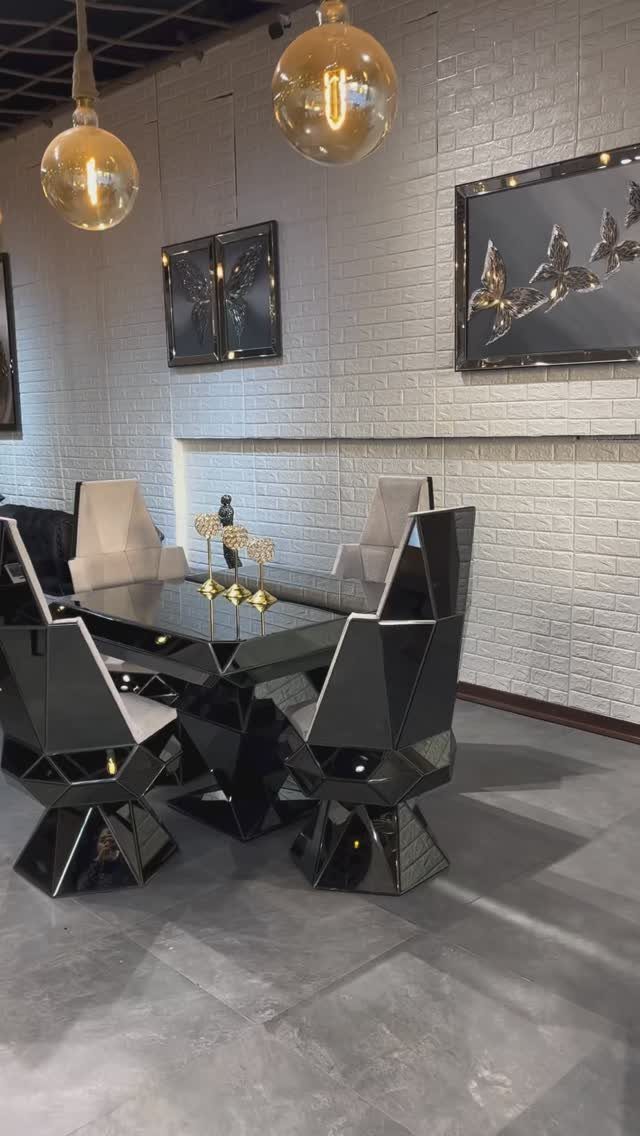
Glossy black angular furniture needs a calm room around it, and white-painted brick does that job well. The sharp table edges and sculptural chairs are the show, so 2 paintings and a pair of gold globe pendants are plenty.
Gloss shows fingerprints and dust, so keep a microfiber cloth nearby. Pick chairs you have sat in; angular shapes can look better than they feel.
16. Terracotta Seating Accents
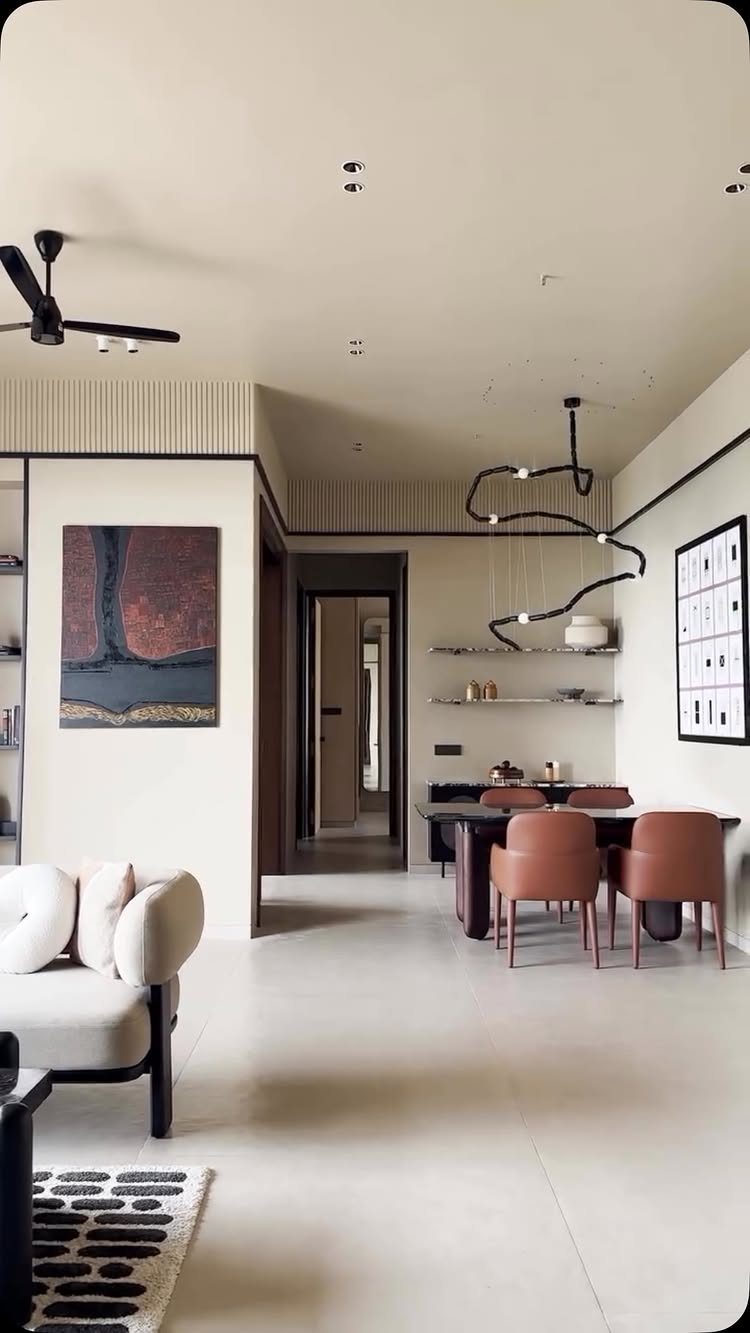
Terracotta chairs around a dark table add earthy warmth to a room of neutral walls, and the contrast is strong without being loud. A sculptural black light overhead repeats the table’s depth so the color doesn’t float alone.
In an open plan, the chairs also mark the dining zone from the rest of the room. If new chairs are out of budget, slipcovers or reupholstered seat pads in a terracotta shade get you most of the look.
Current Dining Room Trends
Natural materials are the backbone of a modern dining room right now, and a natural wood table is the easiest place to start.
Build the supporting colors around it: white, cream, beige, brown, gray and black all sit comfortably next to wood.
Deep reds, inky blues and rich greens suit a dining room because people gather there, and they read as sophisticated rather than loud. Warm neutrals and muted greens give a calmer, classic result.
For a finish that feels wrapped around you, carry one shade across the walls and trim. If you want more definition, paint the trim a crisp white and keep the wall color clearly different from it.
Dining Room Color Trends
Earth tones lead the color conversation, and the reason is simple: they make a room feel warm, and a dining room should.
A natural wood table makes a good anchor, and white, cream, beige, brown, gray or black all work around it.
If you want more drama, deep red, inky blue and rich green all work in a room made for gathering. Muted green is the gentler choice, and warm neutrals sit comfortably beside it.
Test any paint on the wall and look at it at night, since dinner is when this room gets used.
One shade across walls and trim makes a small room feel enclosed in a good way, so I’d try that before buying a second can.
Dining Table Design Trends
Round tables are a strong pick for conversation, and a sleek white round table gives you a clean base to design the room around. In a space where you host, a round top also feels welcoming to guests.
Unfinished natural wood is the other trend worth considering, and it has stayed popular for a long time. It suits a room built on earth tones, and it is easy to refinish later if your taste changes.
If you entertain often, I’d also look at an extendable top, since it lets one table handle both a weeknight meal and a crowd.
Measure the room with the leaves open as well as closed, and do it ahead of the purchase.





