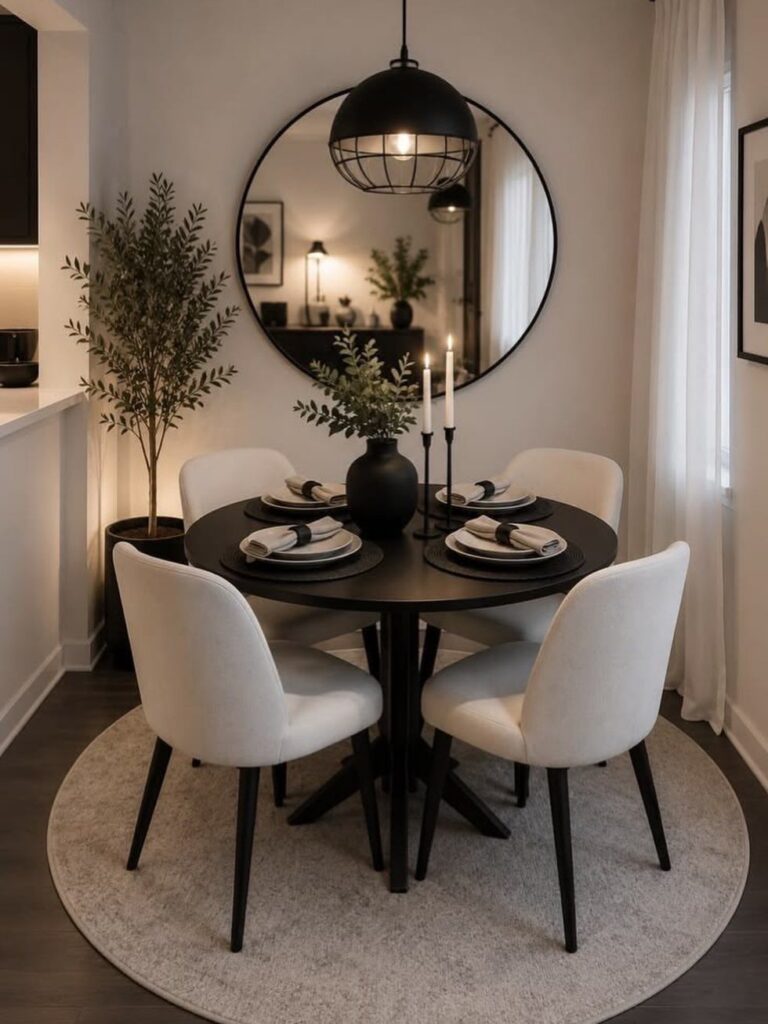
The shape that suits a dining room comes down to the room and the headcount: a square room or a small group of 4 calls for a round table, while a long room or a bigger crowd calls for a rectangle.
The ideas here run from a round table under a single centered pendant to a rectangular one with extension leaves that open only when guests come.
Before buying either, mark the footprint on the floor with painter’s tape and walk around it, because clear space on every side matters more than the shape.
1. Cozy and Intimate Feel
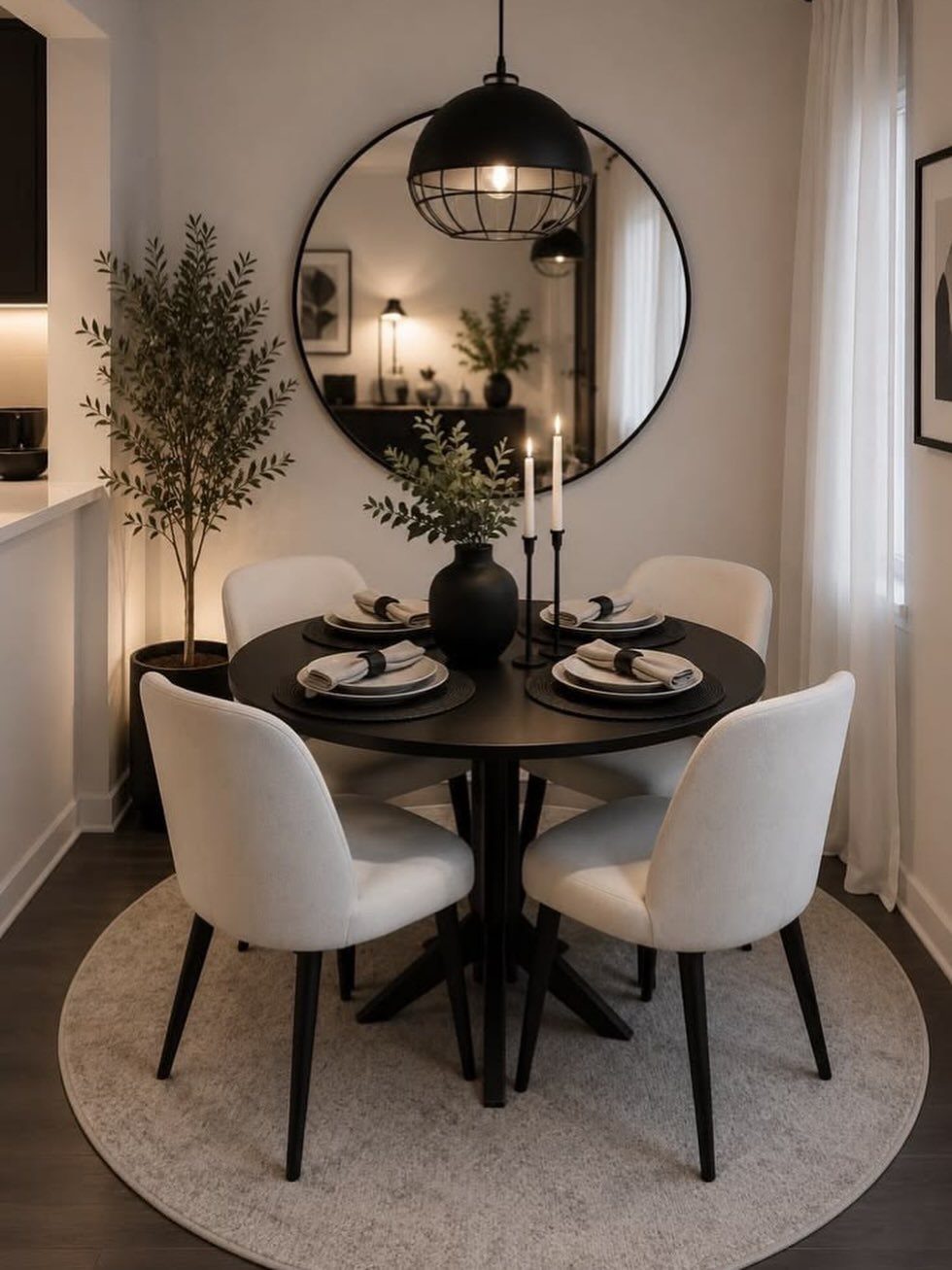
Round tables pull people toward each other, so I pick one for a dinner that should feel warm. Nobody sits at an end, so conversation travels across the whole table instead of down its length.
A round rug under the table, as visible here, echoes the shape and keeps the setting tidy. Candles on the table finish the mood for very little money.
2. Rectangular Dining Tables
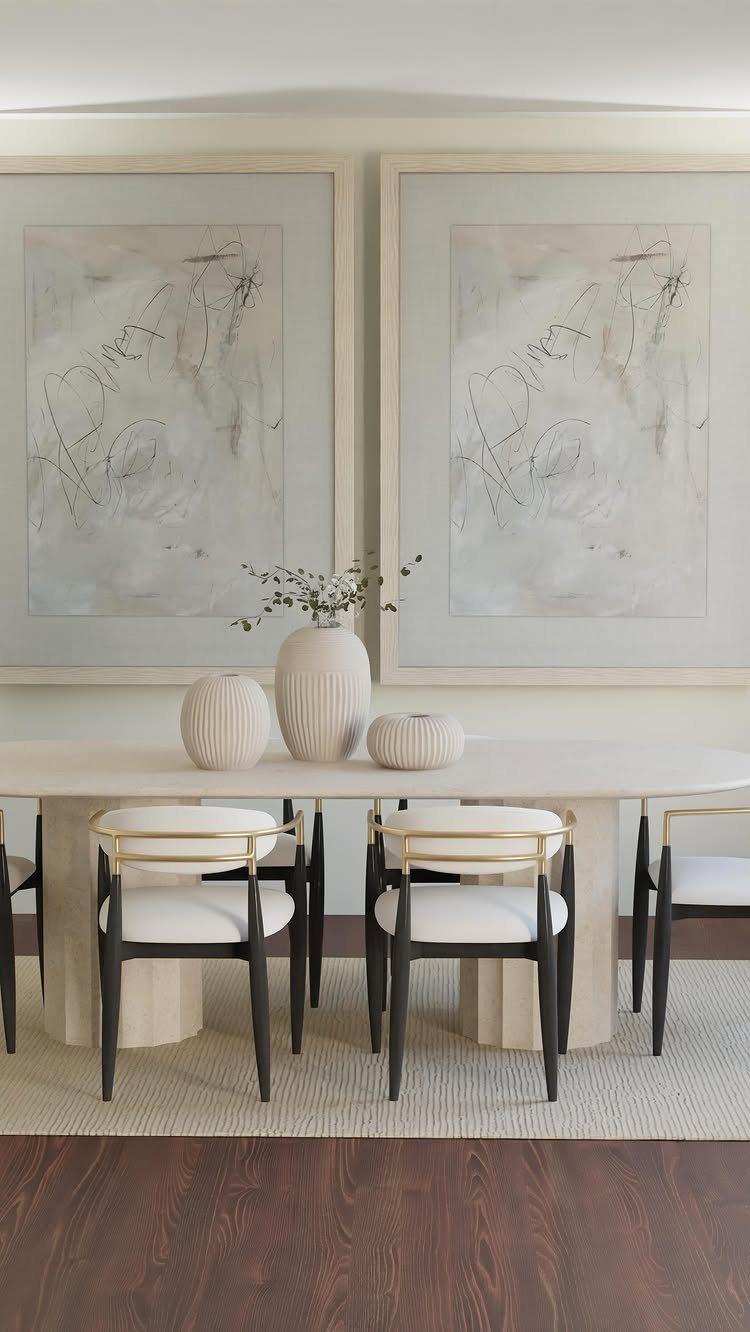
A rectangular table is the shape I recommend for a long room, or for a spot where the eating space runs along one wall. It reads as formal and orderly, and it gives every place setting a clear edge.
Keep the rug larger than the table so chairs stay on it when pulled out. Skip the tall centerpieces; a couple of low vases keep sight lines open so guests can talk to the person opposite.
A rectangular dining table is perhaps the most popular design. ‘Most dining rooms are rectangular, and it makes sense for the table to echo its surroundings,’ says interior designer Kathy Kuo.
3. Round Dining Tables in Square Rooms
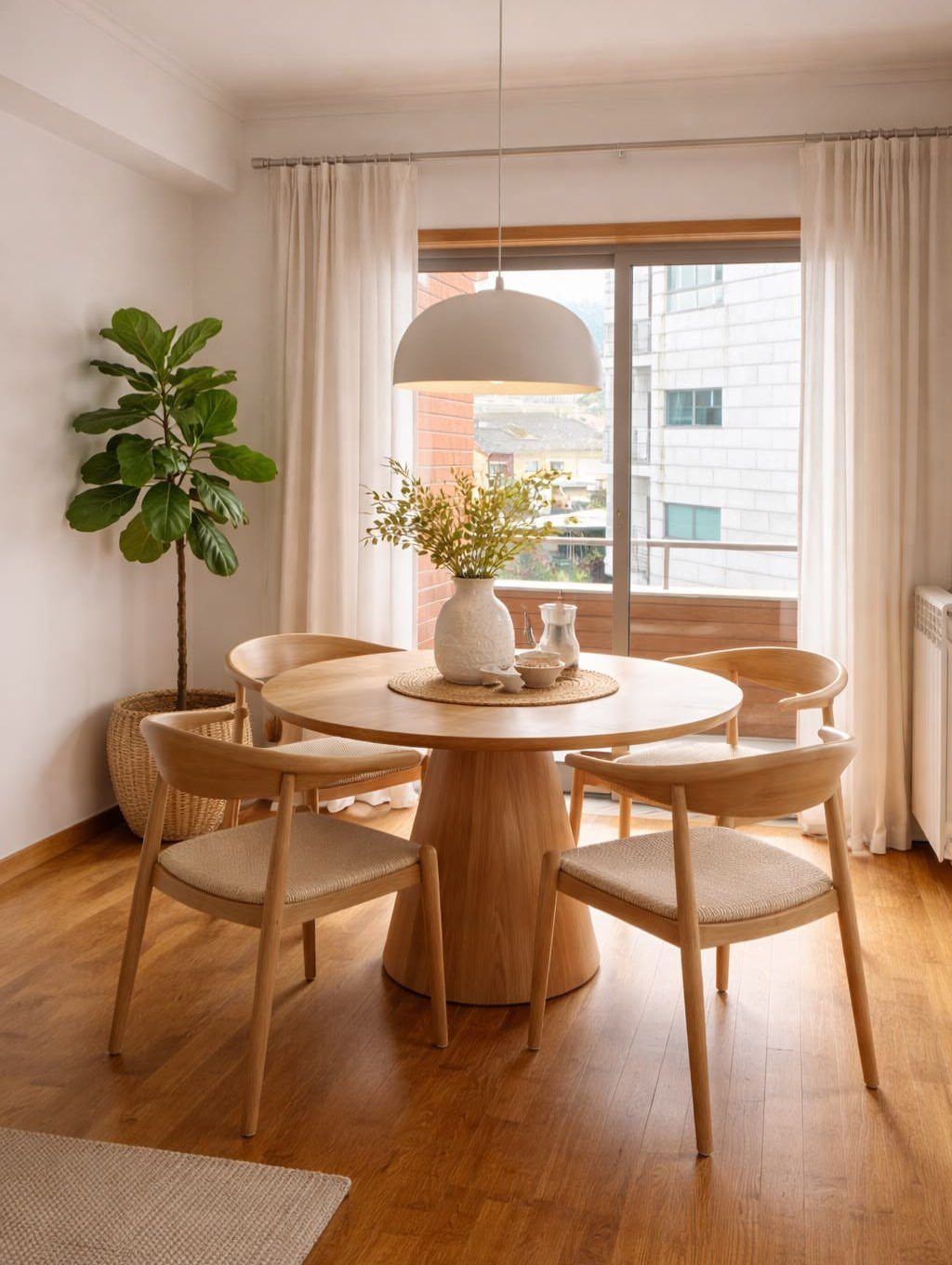
In a square room, a round table matches the proportions of the space, so nothing points at a wall or leaves one corner empty.
I like it best with a single pendant centered above, since the circle and the light line up.
4 chairs fit comfortably. Pick a pedestal or a slim-legged base if you can, because legs at the edge of the table crowd the chairs.
4. Rectangular Tables with Extension Leaves
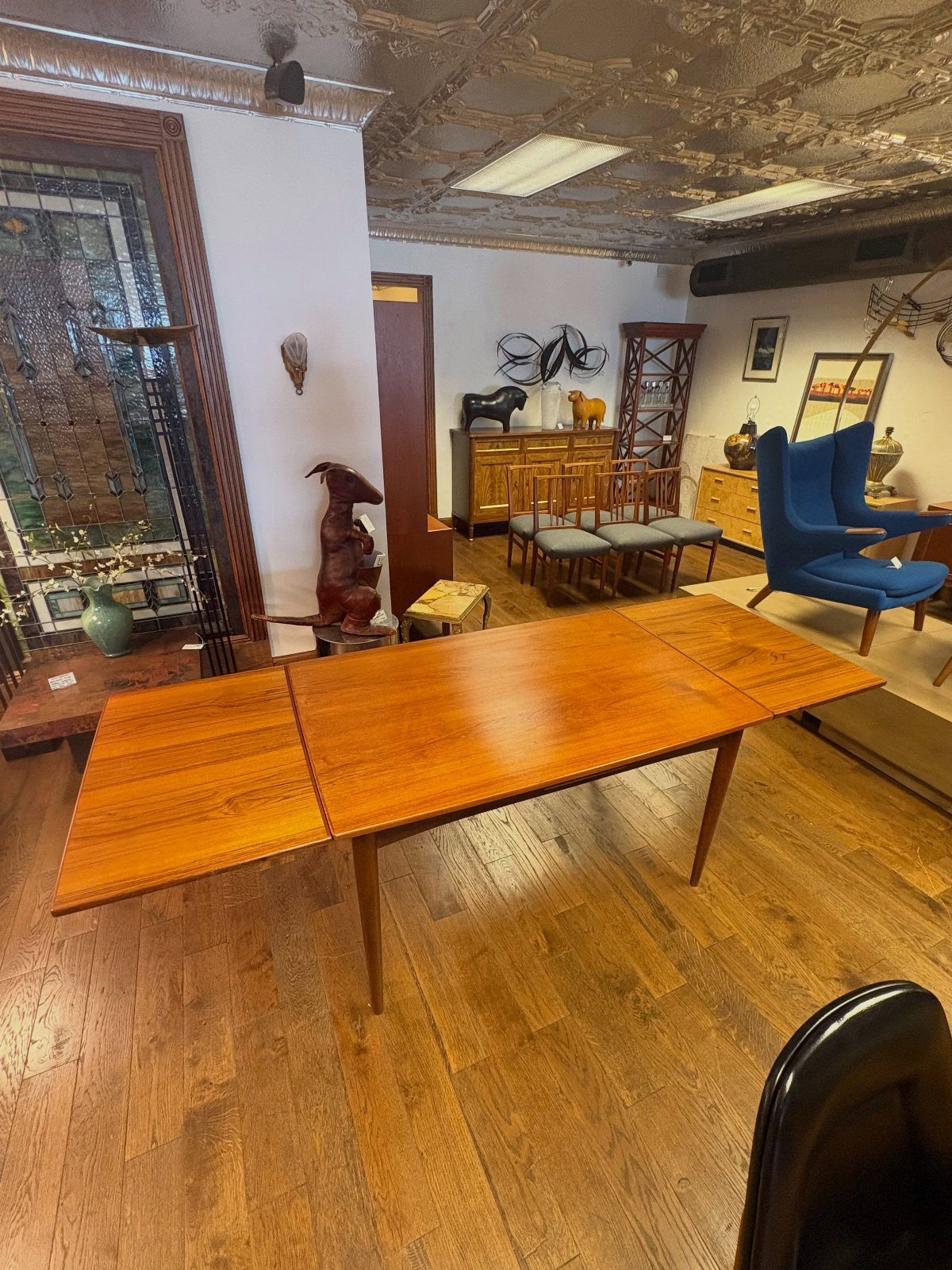
Leaves are the reason I steer anyone who hosts only a few times a year toward a rectangular table. Close it for everyday meals, then open the leaves when guests come.
Before buying, check how the leaves store, since they need a closet or a spot behind a door.
Open the table fully in the store and confirm the seams sit flush, because a gap or a lip is hard to fix later.
Room Layout Considerations
Before you fall for a shape, measure the room and mark the table’s footprint on the floor with painter’s tape.
Walk around the outline a few times, because a table can look right on paper and still block a doorway or a path to the kitchen.
Leave clear floor space all the way around the table so people can pull out chairs and still walk behind them.
That gap matters more than the shape, and it is the first thing to check if a room feels tight.
A long, narrow room can also take an oval, which keeps the length of a rectangle but softens the corners where people walk past.
In a large, open room, a bigger round table can anchor the dining zone and break up all the straight lines around it.
Functionality and Use
Start with how many people sit down on a normal night, then think about the biggest group you host. A round table suits a small group because everyone sits close enough to talk across it without raising a voice.
Rectangular tables give each person a defined slice of space, so they handle a larger group or a formal meal better. They also make a set table easy to lay out, since every place lines up.
Chairs follow the same split. A rectangular table looks best with tall-backed chairs that echo its long lines, while a round table feels more relaxed with lower chairs that have a gentle curve to the back.
Whatever you pick, check that the chairs tuck fully under the table so they don’t look too big or too small for it.
Maintenance and Cleaning
Cleaning depends on who eats at the table. With kids and pets, the shape changes how often you wipe, so weigh that first.
Material and finish deserve as much thought as shape, since they decide how well a table handles spills and daily wear. A sealed, smooth top wipes clean in seconds, while a textured or open-grain surface holds crumbs.
On an extendable rectangular table, check the leaf seams and the track after meals, because crumbs collect there. Modern mechanisms are built for smooth, one-person operation, but they still run better when kept clear of debris.
Frequently Asked Questions
Is a round dining table better than a square?
In a square room, a round table is usually the better pick. Its shape matches the room, so no edge points at a wall and no corner sits empty.
A single pendant centered overhead lines up with the circle, and 4 chairs fit comfortably. A pedestal base or a set of slim legs keeps your knees clear and lets chairs slide in at any angle.
Are round dining tables in style in 2026?
Yes, round tables remain popular because they feel casual and inviting. With no head of the table, conversation moves across the whole group, which is a big part of the appeal.
Can a round dining table go in a rectangular room?
Yes, it can, especially a larger round table that acts as a focal point for the dining zone.
In a long, narrow room, though, a rectangular table or an oval often fits better, since an oval keeps the length and softens the corners.
What shape dining table takes up the least space?
Round tables generally take up the least space and make tight rooms easier to move through. With no corners to bump, they fit well in square or narrow spots and near walls.





