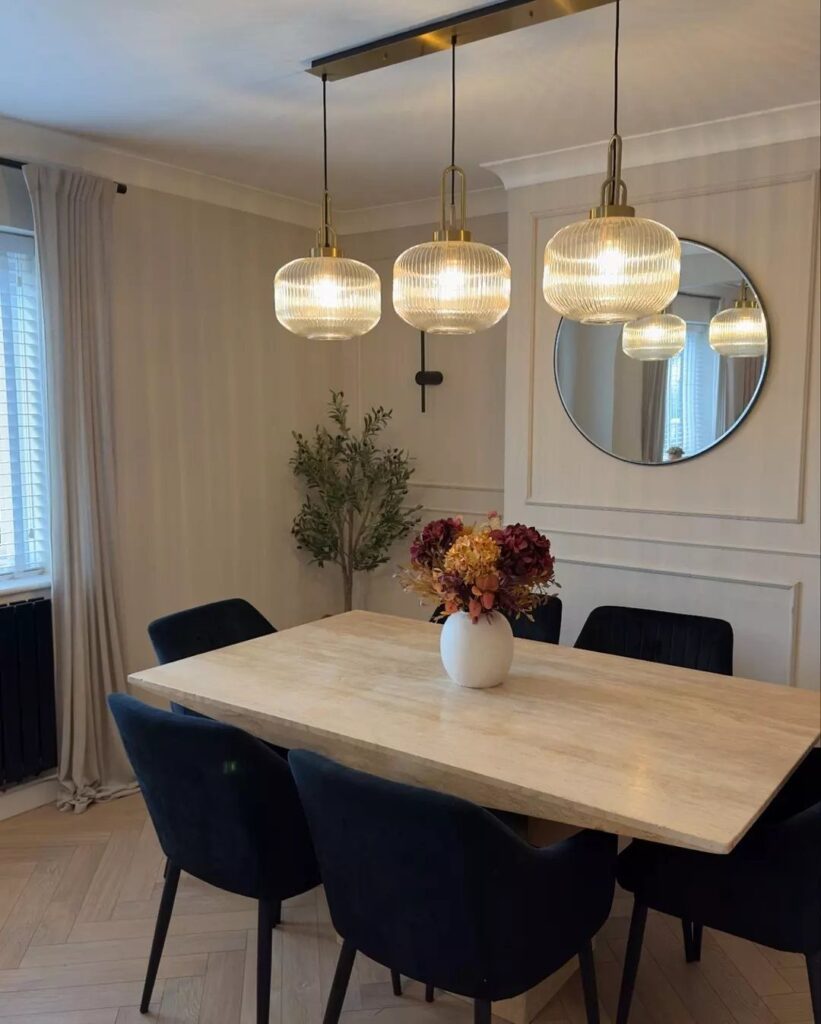
The ideas here run from pendant lights over the table to a built-in bench along the wall, so cost and effort stretch a long way.
What picks one is how much floor the living room can give up: a tight room wants a round table, a corner spot or a pull-out sideboard table, while a roomier one can handle an oval or a fluted base table.
Whichever you choose, painter’s tape on the floor will show the table’s outline before you commit.
1. Pendant Lights Over Dining Table
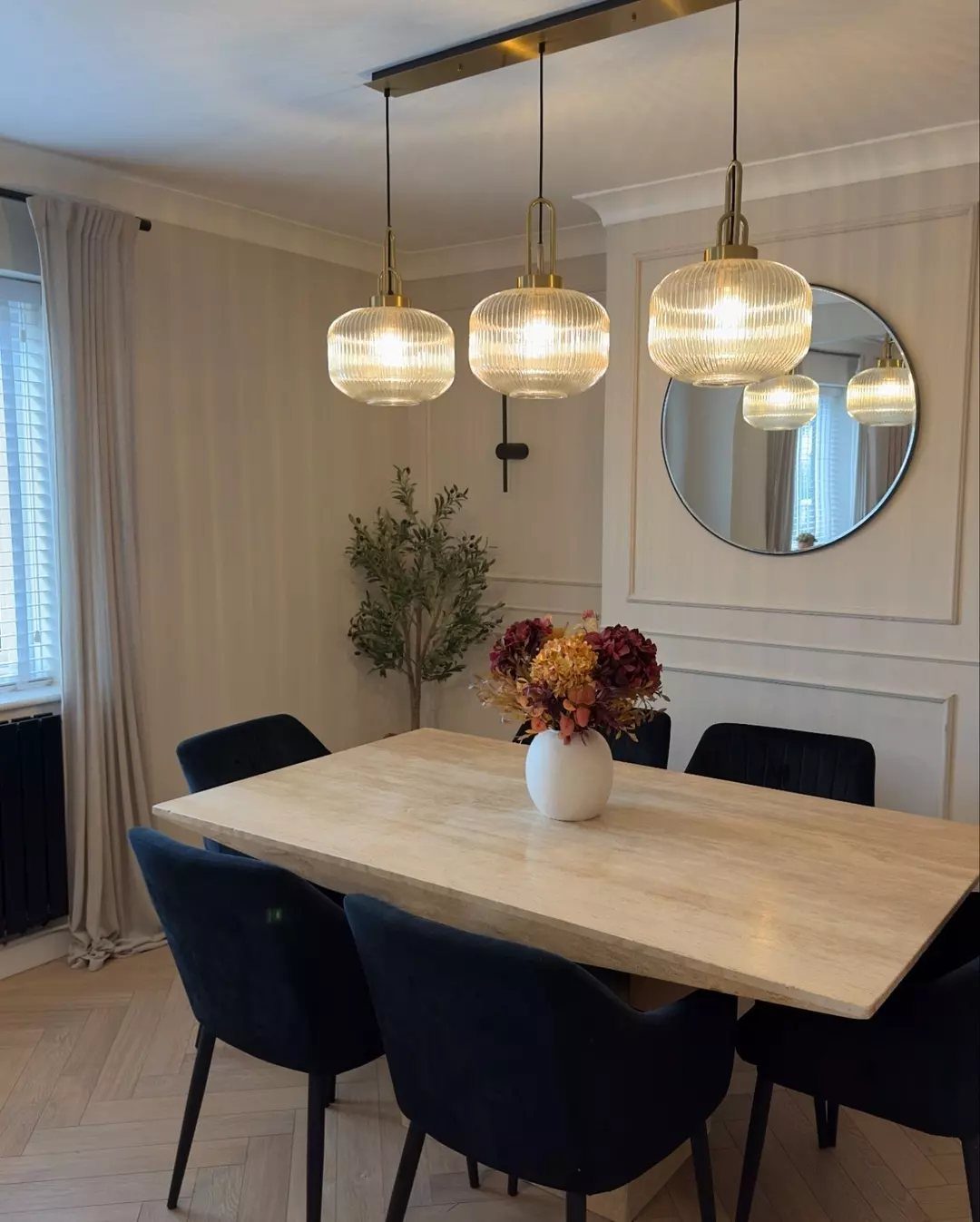
3 pendants hung in a row do the work of a wall.
The light pools over the table and tells the eye where dining starts, so the sofa side of the room reads as a separate zone without any furniture moving.
I like an odd number of fixtures over a rectangular table, and glass shades keep the look light in a small room.
Hang them low enough to feel intimate but high enough that nobody ducks. Plug-in versions with a ceiling hook suit renters.
2. Dining Table in a Corner
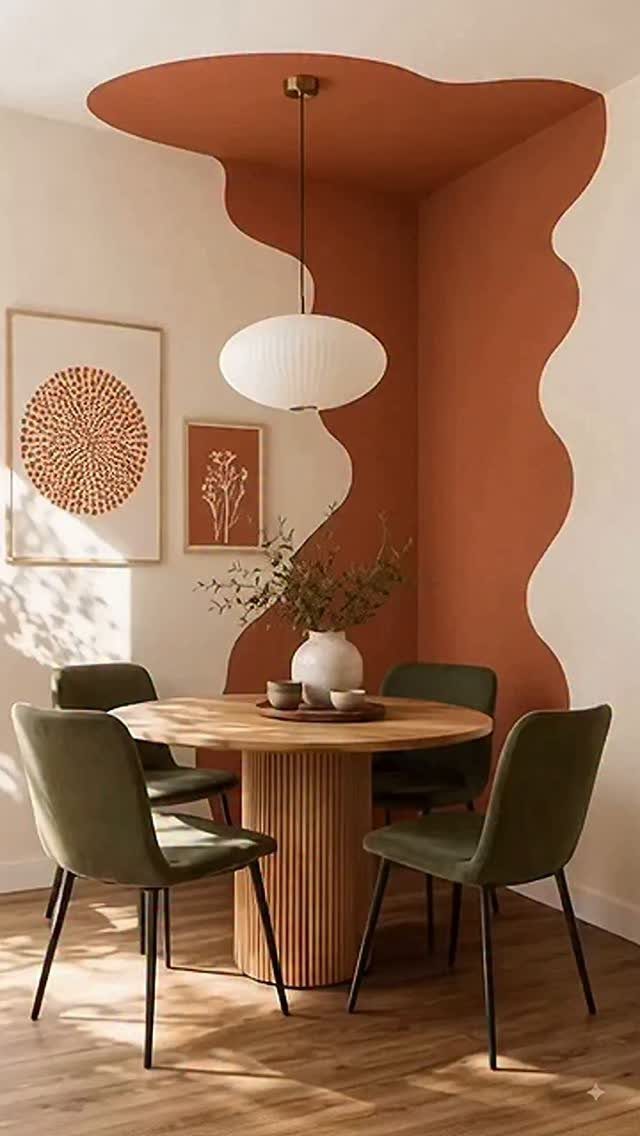
A round table pushed into a corner gives up the least floor space of any dining setup, and 4 chairs still fit around it. Corners are usually dead zones in a living room anyway, so this puts them to work.
Paint can finish the job.
Carrying one color from the walls onto the ceiling makes the corner feel like its own nook, and a single pendant overhead plus one piece of wall art is enough. Velvet chairs add softness against the hard angles.
3. Rug Under the Dining Table
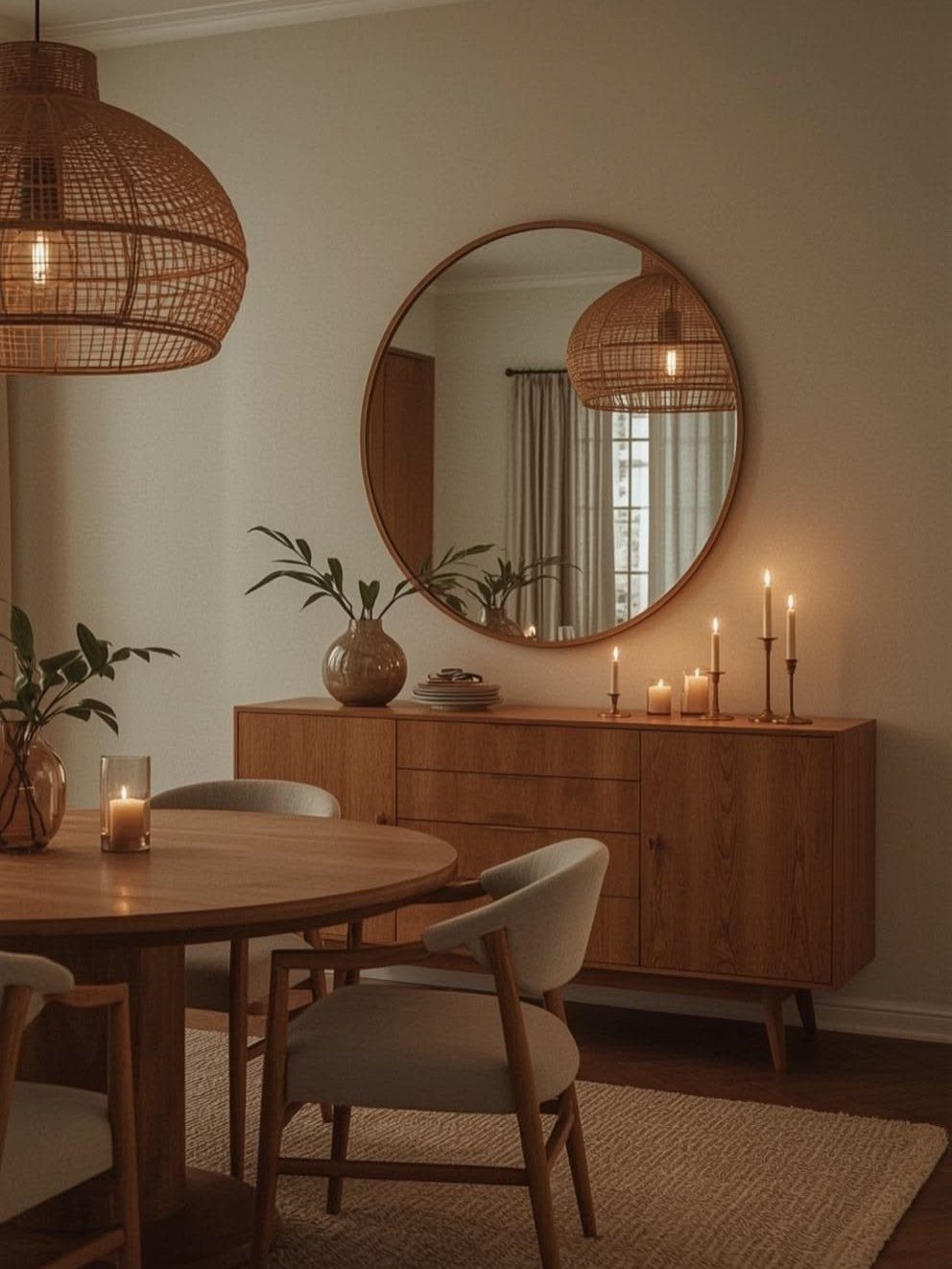
A rug under the table marks off the spot where you eat as clearly as a doorway would. Pick one that differs from the living room rug in texture or tone, or the two will blur into one big patch.
A flat woven rug in a neutral shade is my pick: chairs slide over it easily and crumbs shake out.
Size matters, so choose one big enough that the chairs stay on it when pulled back from the table. Otherwise the legs catch on the edge.
4. Dining Table That Doubles as Workspace
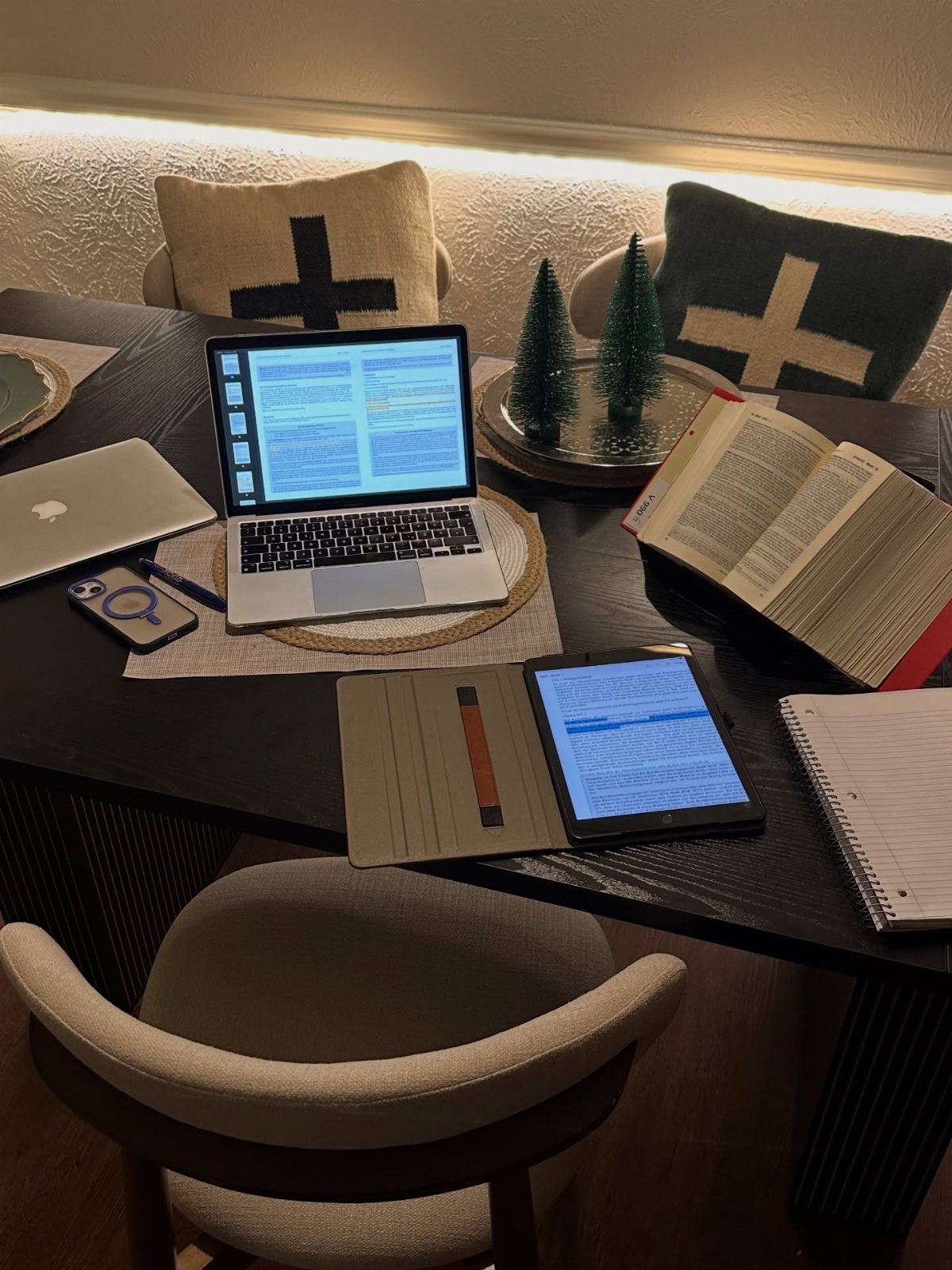
Dining tables make good desks because they’re already the biggest flat surface in the home.
A dark wood top hides pen marks and coffee rings better than a pale one, and it holds two laptops, a tablet and a notebook without crowding.
Keep a lidded basket or tray nearby so work clears away in a minute before dinner.
Chairs with a bit of cushioning help during long calls. A power strip tucked under the table saves you from running cords across the floor.
5. Dining Table Close to the Kitchen
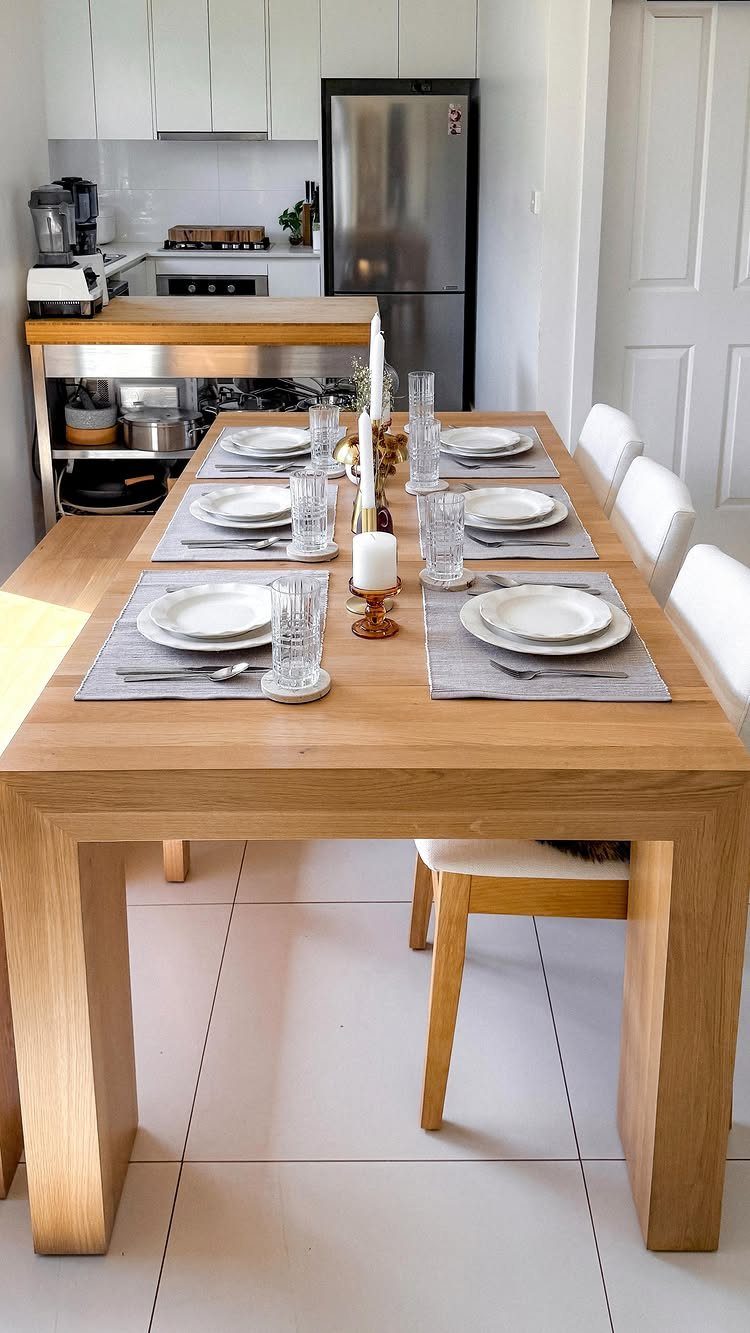
Setting the table right beside the kitchen shortens the trip from stove to plate, and that alone makes it the most practical placement. Serving, clearing and refilling glasses all happen within a few steps.
In an open plan, let the table sit just past the kitchen edge so it reads as part of the cooking zone rather than the sofa zone.
Matching the wood tone to your cabinet hardware or floors makes the 2 areas look planned. Plain white dishes keep the view calm from the living room.
6. Bookshelf Perpendicular to the Wall
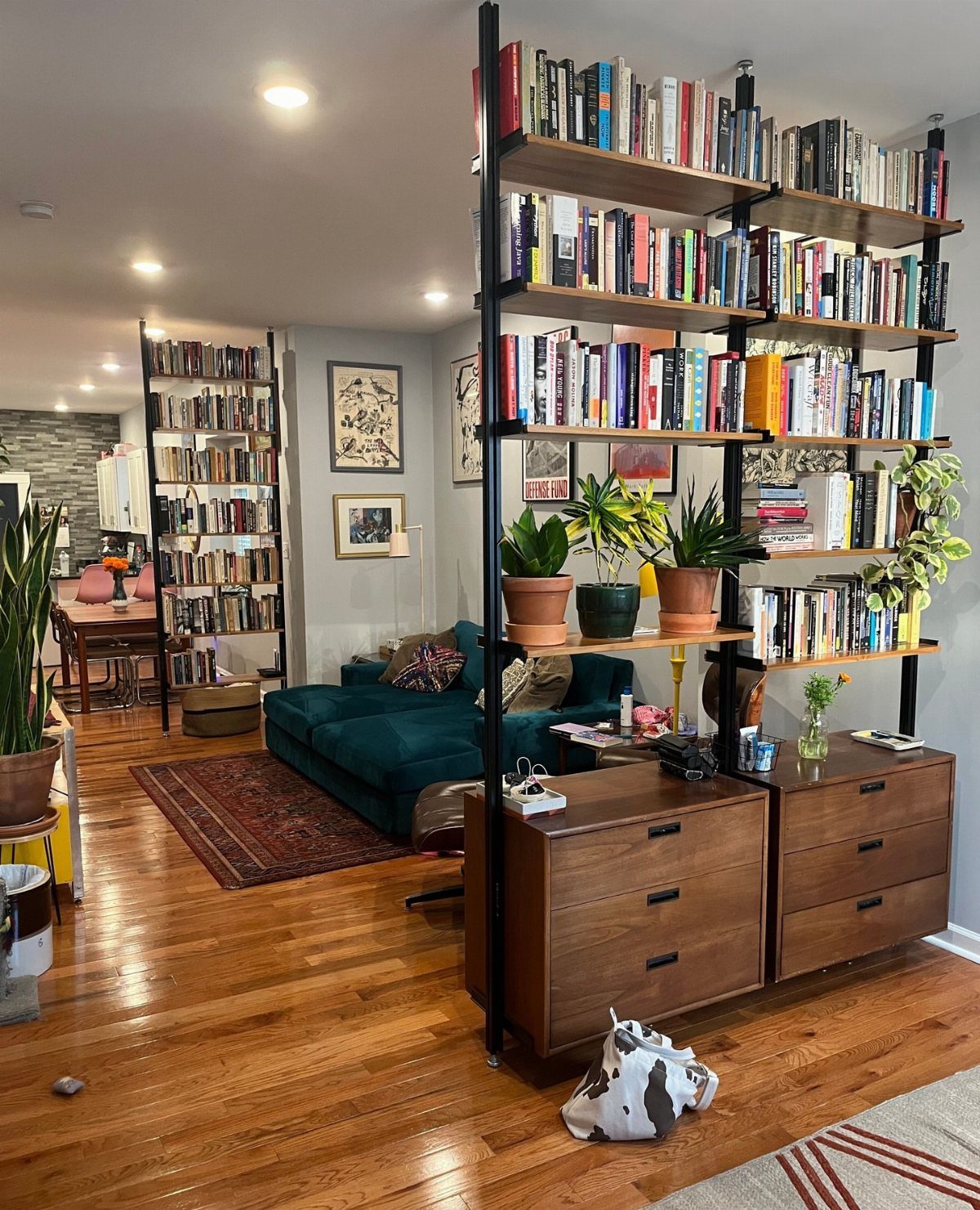
Set a bookshelf at a right angle to the wall and it becomes a divider that still stores things. The open back lets light pass, so the dining side doesn’t turn dark the way it would behind a solid partition.
Black metal frames with wood shelves keep the piece looking airy.
Fill it with a mix of books and plants, and leave a few gaps so the table stays visible through it. Anchor a tall unit to the floor or wall before loading it.
7. Try Armless Dining Chairs
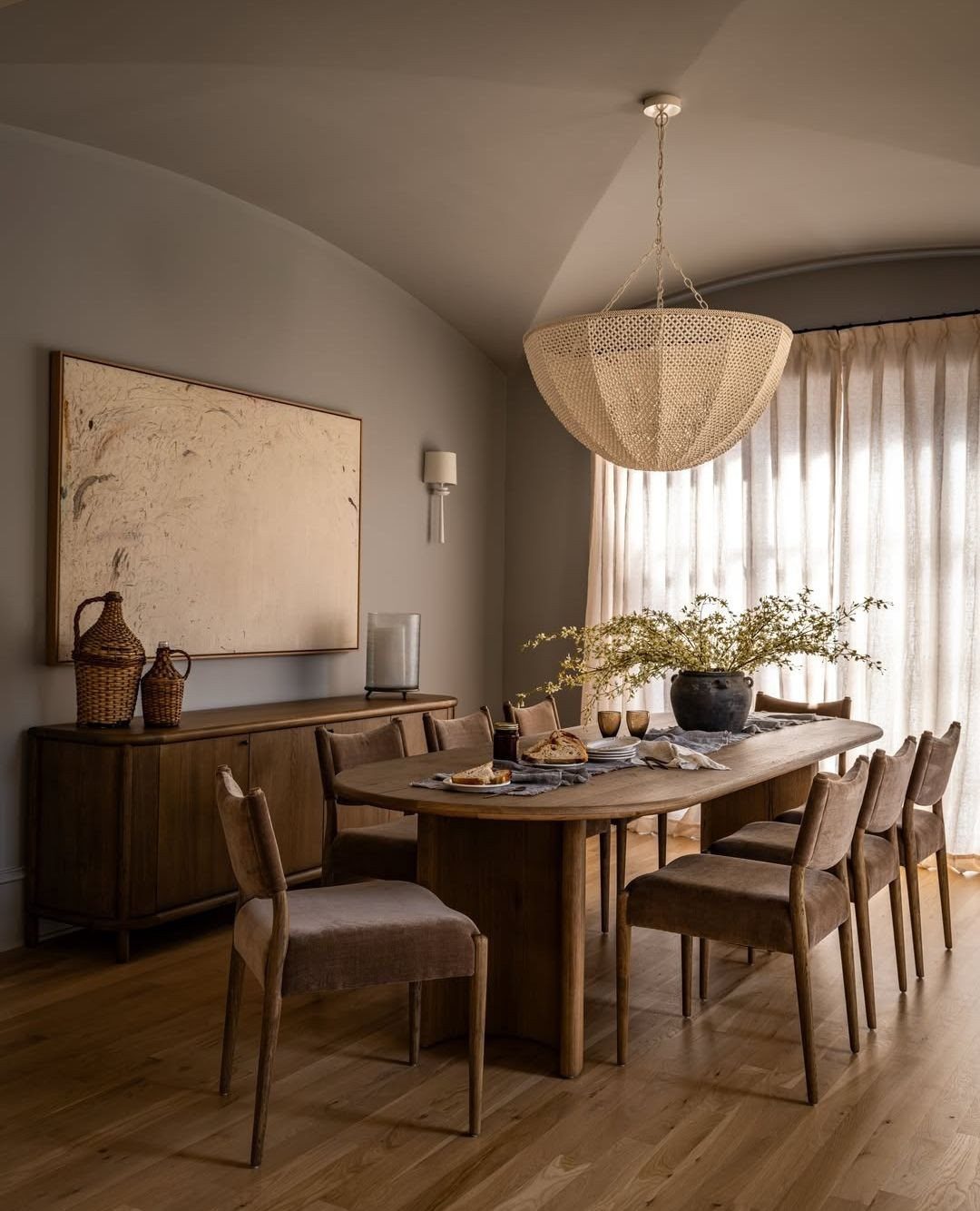
Armless chairs slide in under the table, so a living room that doubles as a dining room keeps more open floor when nobody is eating.
Upholstered seats with a low, gently curved back feel softer next to a sofa than hard wood frames do.
Pick a fabric in the same tone as your walls and the chairs fade into the room instead of crowding it. Without arms, you can also pull in an extra seat at the table ends for guests.
8. Create Built-In Bench Seating
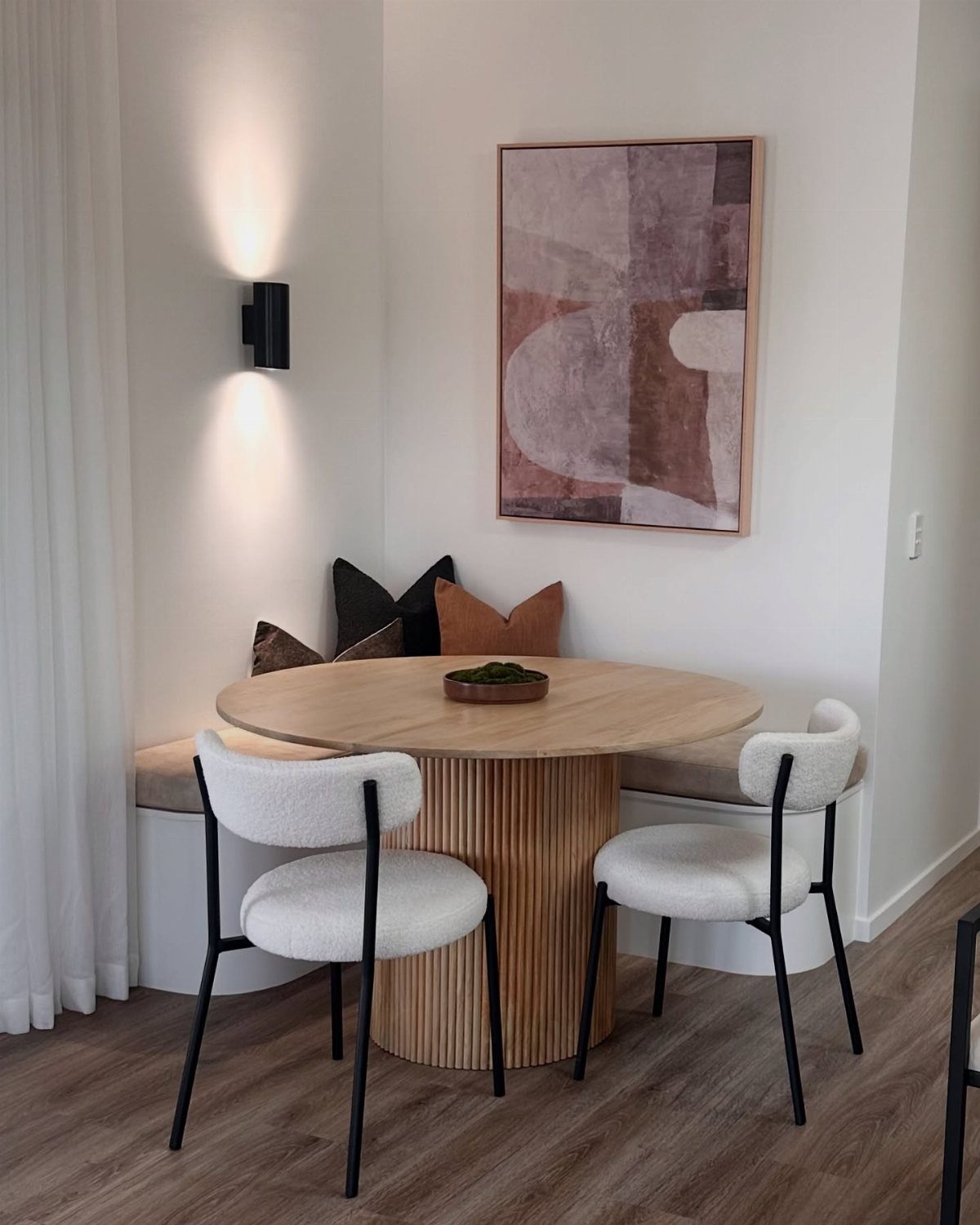
A built-in corner bench turns 2 walls into seating, and a round table pulled up to it needs only a couple of loose chairs to finish the group. That leaves the middle of the room open.
Cushions make the bench comfortable for a long dinner, so choose a washable cover.
I like a wall lamp above the bench instead of a floor lamp, since it takes no floor space. Keep the bench seat and table height close enough that knees clear the edge.
There’s less than a foot of floor space between Gabriella Picone and Daniel Marion’s six-person table and their seating area, but the arrangement totally works.
— Domino
9. Use Nesting Tables in the Living Area
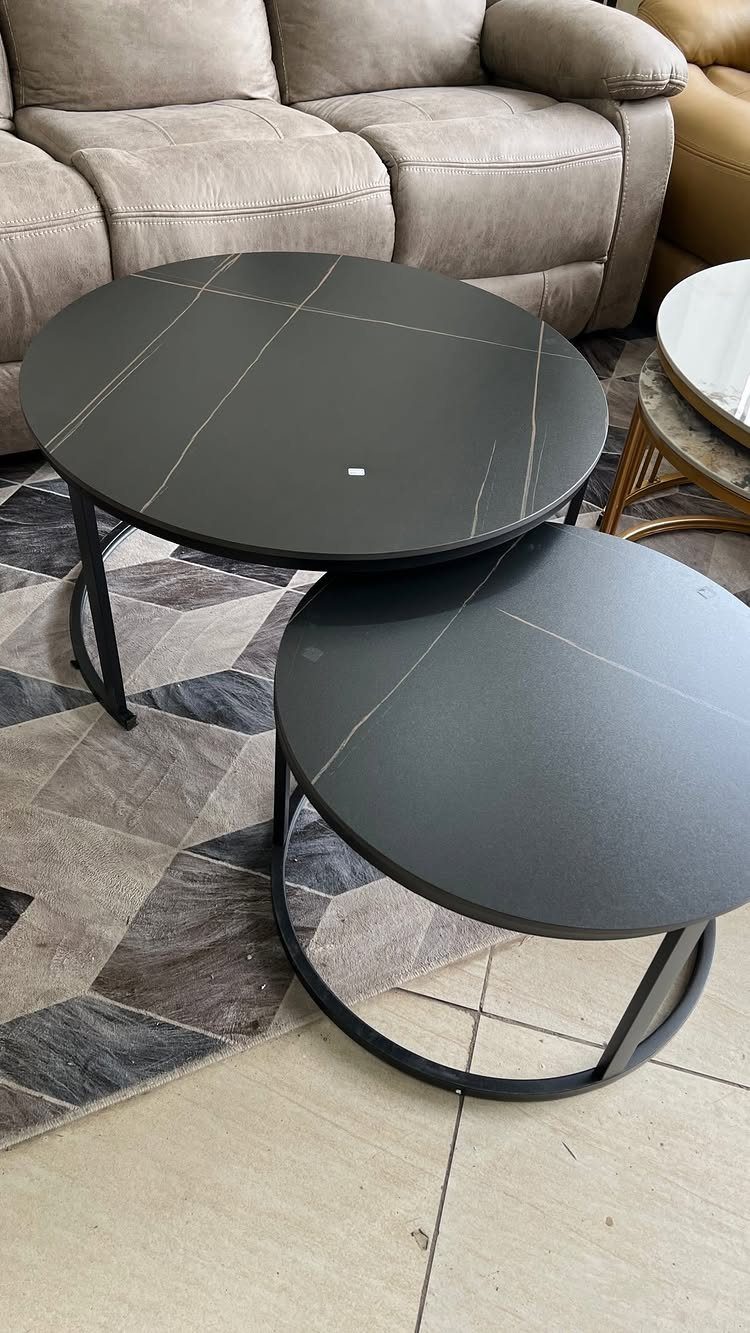
Two nesting tables of different heights do the job of one coffee table, and they can be pulled apart when you need more surface.
Stack them tight on a quiet night, then spread them for drinks or an overflow dinner plate.
A dark marble-effect top hides rings and crumbs better than a pale one. Set them on a rug so the pair reads as one group, and keep the taller one nearest the sofa arm for easy reach.
10. Choose a Round Dining Table
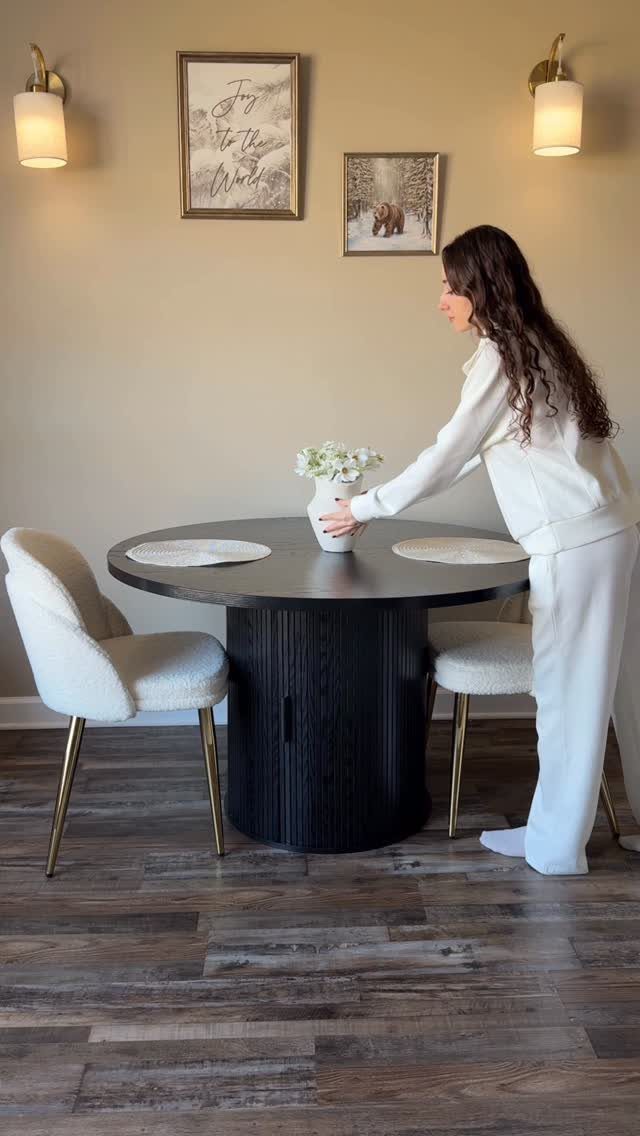
Round tables have no corners to bump, so people can walk around them with less squeezing in a room that also holds a sofa. Everyone also sits at the same distance from the center, which makes conversation easier.
A black top gives a small table real presence, and white chairs keep it from feeling heavy.
Leave a gap behind each chair so it can be pulled out without hitting furniture. A bowl of flowers in the middle is all the decoration it needs.
11. Oval Dining Table
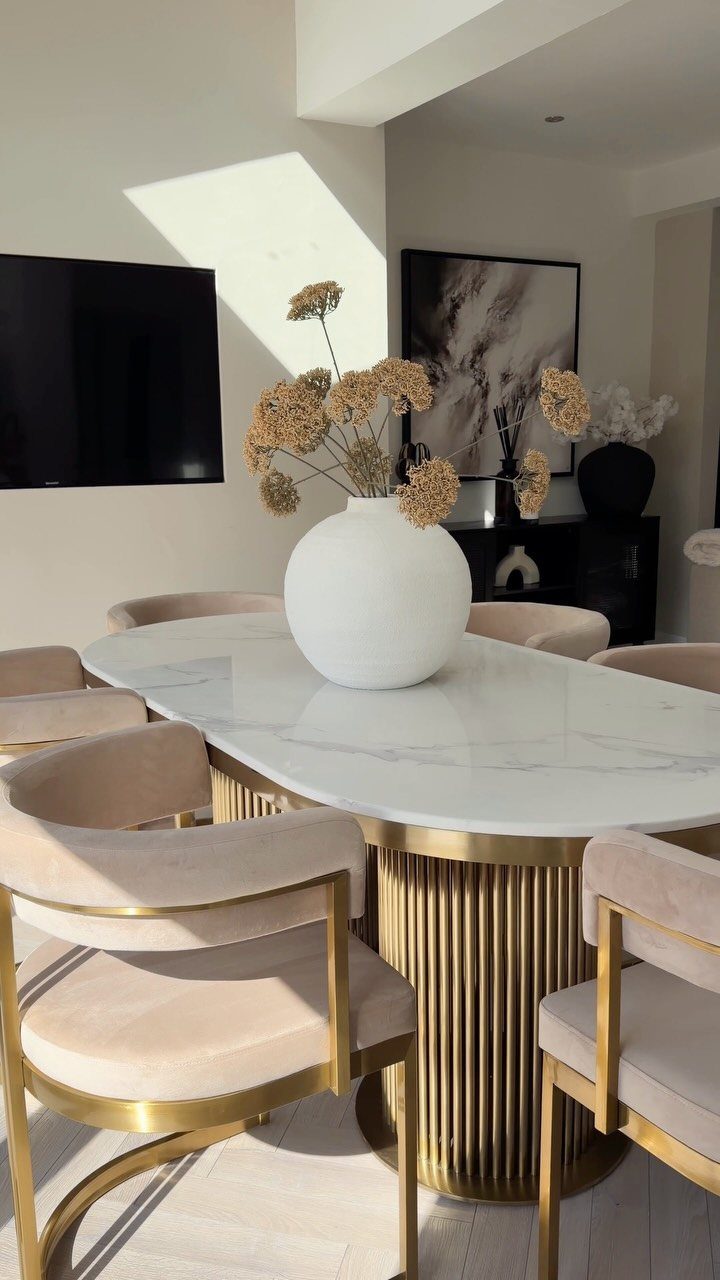
An oval table keeps the length of a rectangle but loses the sharp corners, which helps in a living room where people walk past the seats. The curved ends also leave space for a couple more chairs.
A marble top with a gold fluted base looks polished but costs more than wood, so a marble-look laminate is my budget pick.
Beige chairs keep the whole set quiet next to a TV. A single vase of dried flowers is enough on top.
12. Pull-out Sideboard Dining Table
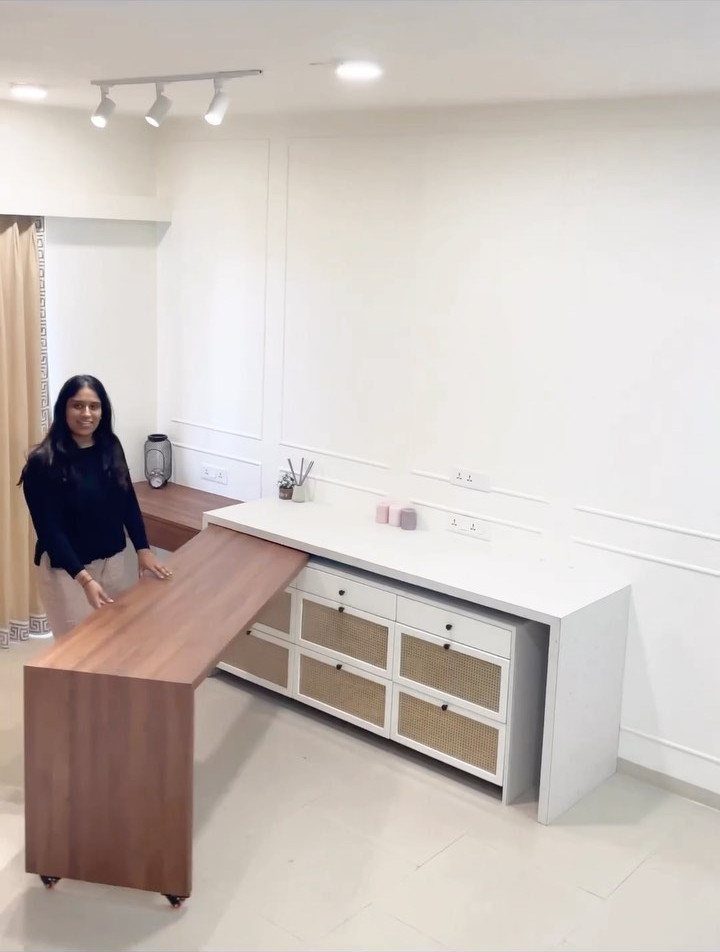
A compact sideboard with a table that slides out is dining furniture that looks like storage the rest of the week. Pushed in, it sits against the wall and holds dishes; pulled out, it gives you a place to eat.
I like it best for studios and tight living rooms where a permanent table would eat the floor.
A white body with a wood extension stays light. Expect a small surface, so it suits one or two people, not a dinner party.
13. Fluted Base Dining Table
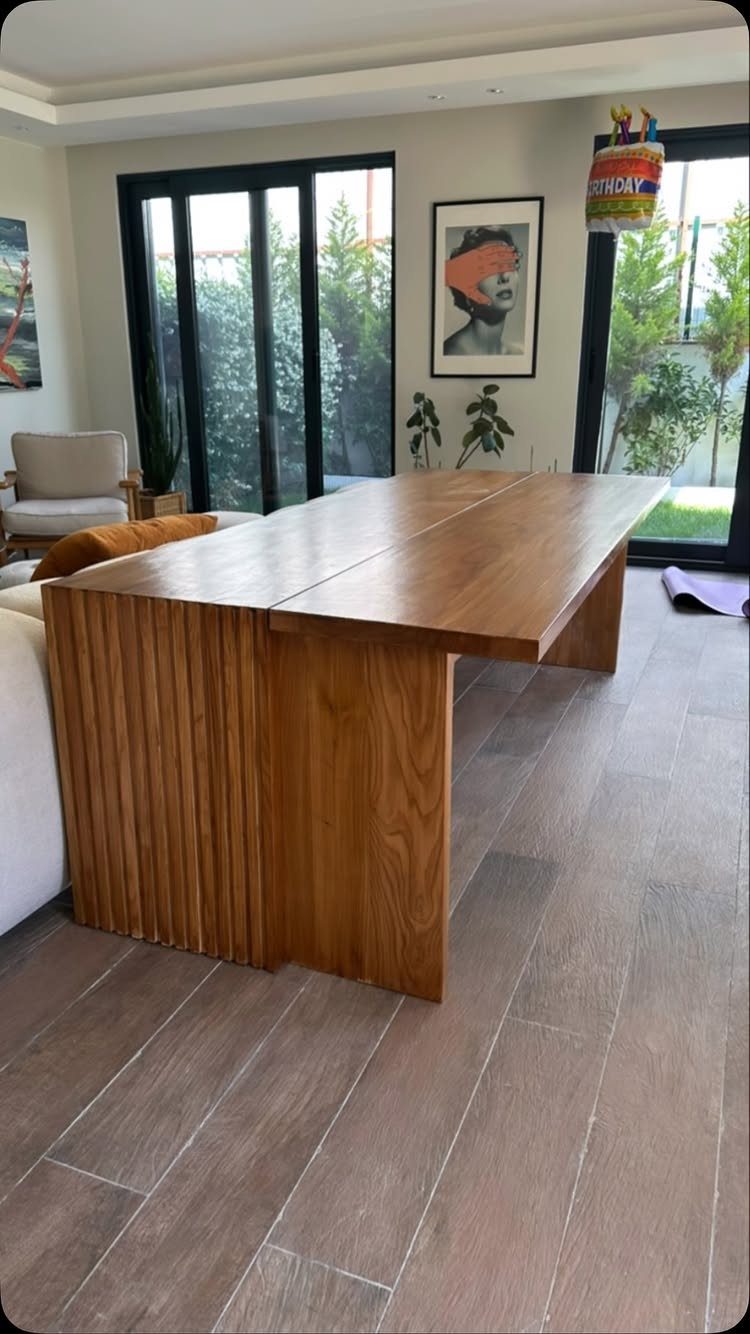
Fluted pedestal bases give a long table a sculpted look without a single extra accessory.
The vertical grooves catch light and shadow through the day, so the table reads as a design piece even in a room dominated by a sofa and TV.
Light wood suits a living room because it keeps a long surface from looking heavy.
A pedestal base beats a legged table in a living room, because chairs can sit anywhere along the sides with no corner leg in the way.
Keep the top clear apart from one runner or a few small items, so the base stays the focus.
Traffic Flow Considerations
Leave enough clearance around the table that someone can walk behind a seated person without turning sideways.
A common rule of thumb is to leave a generous gap between the table edge and the nearest wall or furniture, and to give the most room to any path people use all day.
Walk the route from the front door to the sofa and from the kitchen to the table before you settle on a spot. If the table sits on either path, shift it or turn it a quarter turn.
A round table is the easiest fix in a tight combo room. It has no sharp corners to catch a hip, and its shape takes up less visual space than a rectangle of the same seating.
Test it with painter’s tape on the floor. Mark the table outline, then live with it for a day before you commit.
Maximize Natural Light
Few spots suit a table better than a bay window, where the light wraps around everyone sitting there. The nook gives the table its own corner, and it frees the main room for the sofa and TV.
Without a bay, paint can carry the light.
Keep window sides clear of tall furniture so daylight reaches the table. Sheer curtains soften glare at midday without cutting the brightness, and they cost little, which suits a rental.
Frequently Asked Questions
Can I put a dining table in the living room?
Yes, and it works best when the table gets its own zone.
A rug in a different texture or tone, a pendant light hanging over it, or a bookshelf set at a right angle to the wall can each mark where dining starts.
Round tables and pedestal bases are easiest in a room that also holds a sofa and TV.
What kind of table goes in a living room?
For a living room, I reach for a round table first: no corners to catch a hip or a shin, and a 42-inch top seats 4 while looking lighter than a rectangle that seats the same number.
If the room is long and narrow, an oval gives you the length of a rectangle with softened ends, so people can pass by without a bruise.
In a studio or very tight room, a sideboard with a pull-out table looks like storage when it’s pushed in, though its surface only suits one or two people.





