Table shape and size decide which of these fixtures is yours, because a pendant should run about 2/3 of the table’s width and the shape above it should echo the shape below: rings over a round table, a row of pendants or a bar over a long one.
The list runs from exposed cords a renter can hang and swap in a weekend to recessed lighting that needs the landlord’s approval, with crystal, glass globes, clustered metallic spheres and bare 2200K–2700K filament bulbs in between.
1. Modern Fixtures with Rustic Tables
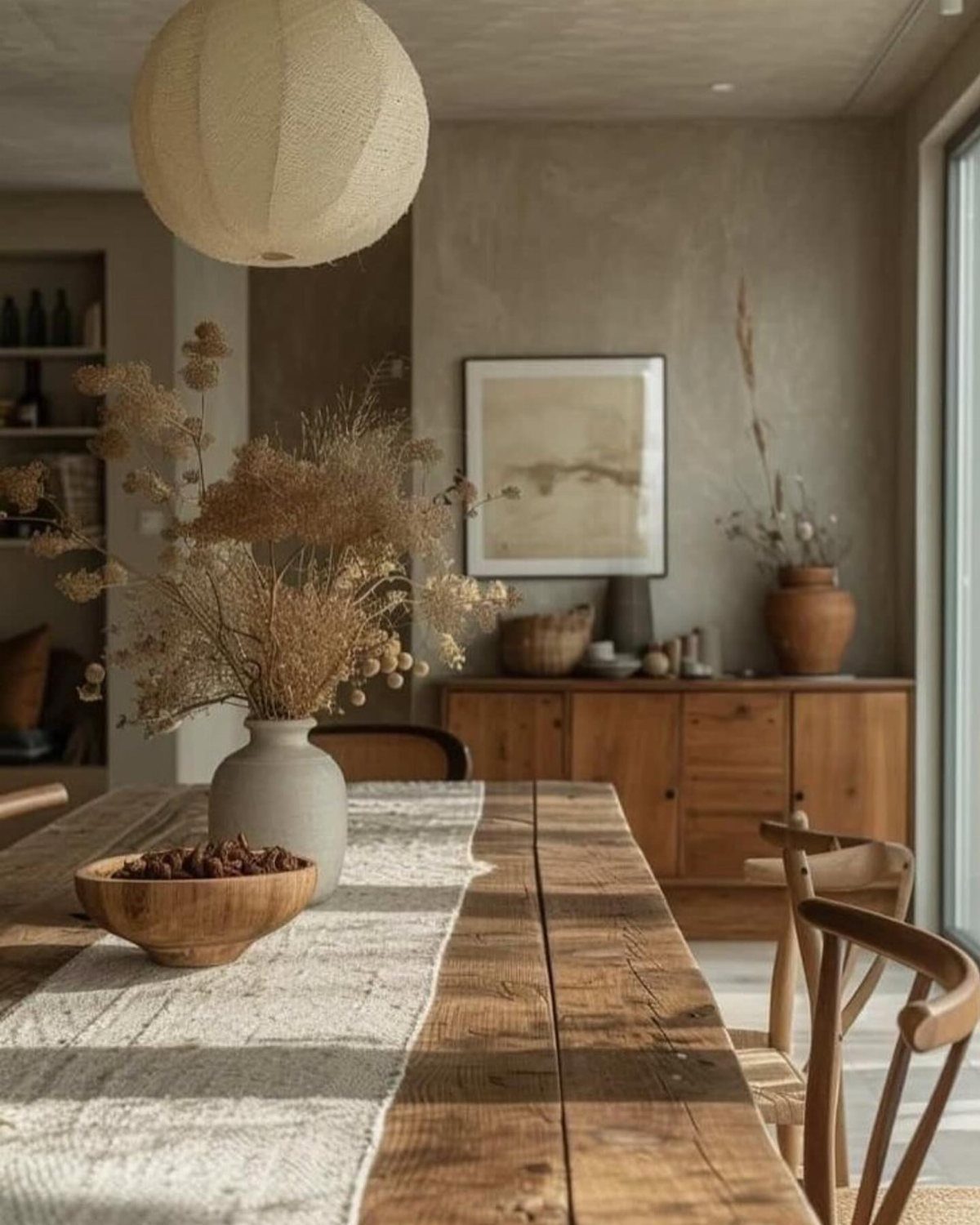
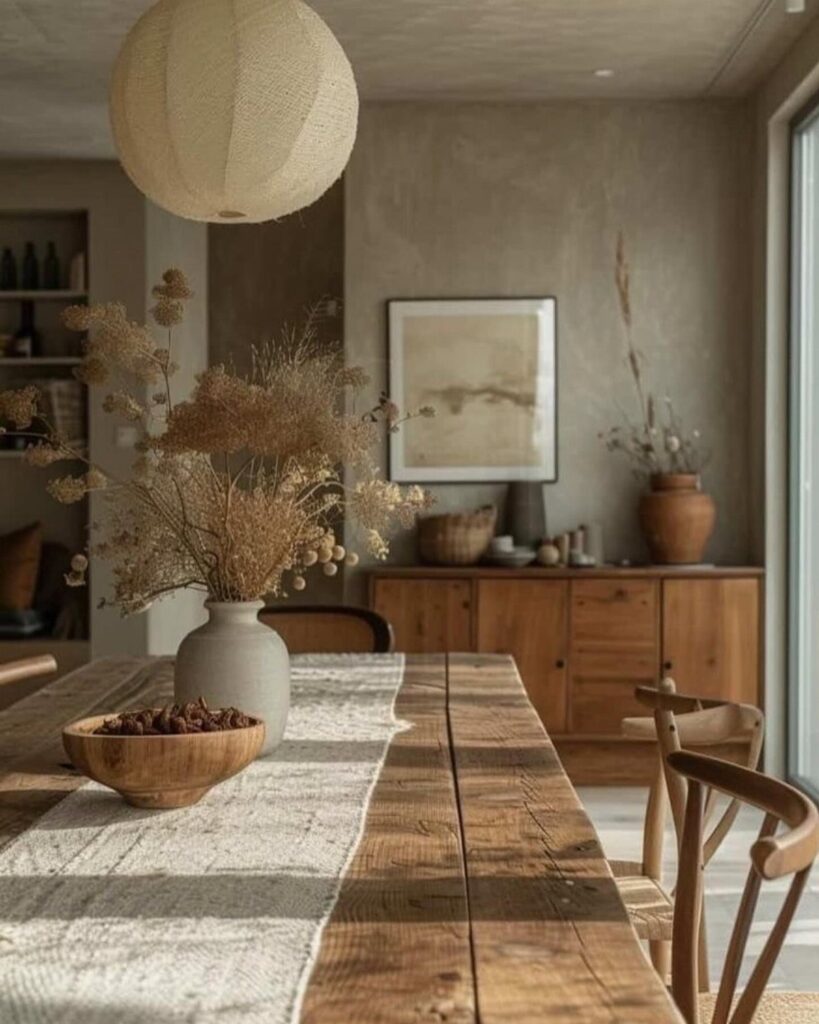
A round white paper pendant softens a rustic wood table better than most metal fixtures do, because its smooth curve plays against the grain and knots below it.
I like that the shade stays quiet while the table does the talking.
Keep the shade’s color neutral so it matches the pale wall, and hang it centered over the table. Paper lanterns cost little, which suits a renter’s budget and a weekend swap.
2. Sculptural Light
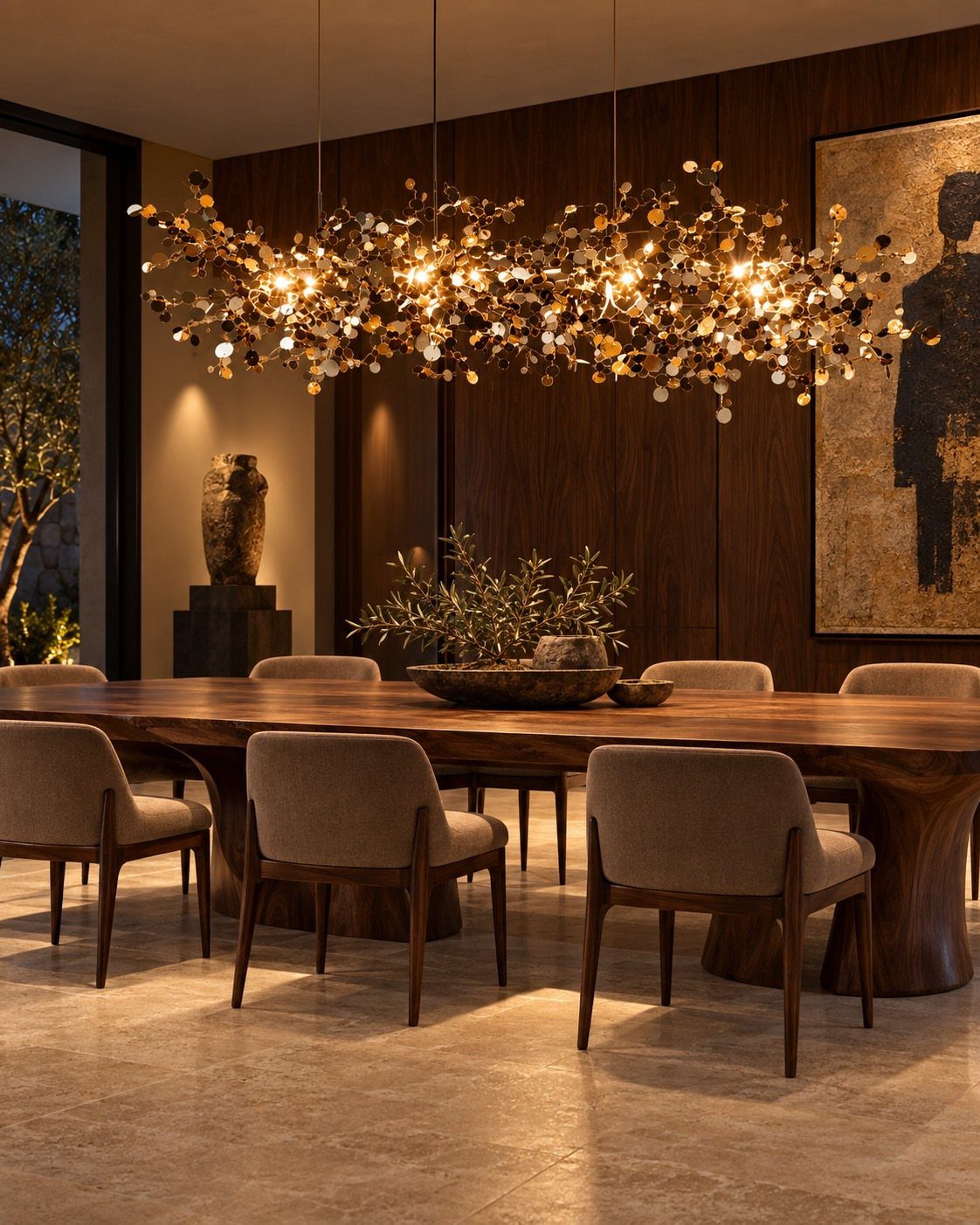
Branch-shaped gold fixtures work as art first and light second, so give them a room that can hold the attention. Over a long wooden table, one big piece beats several small ones.
Dark walls make gold fixtures glow, and grey chairs stay quiet enough that the lighting gets the attention.
I would center the fixture along the table’s length and choose it for its silhouette, since a shape this busy needs plain surroundings.
3. Modern Industrial Fixtures
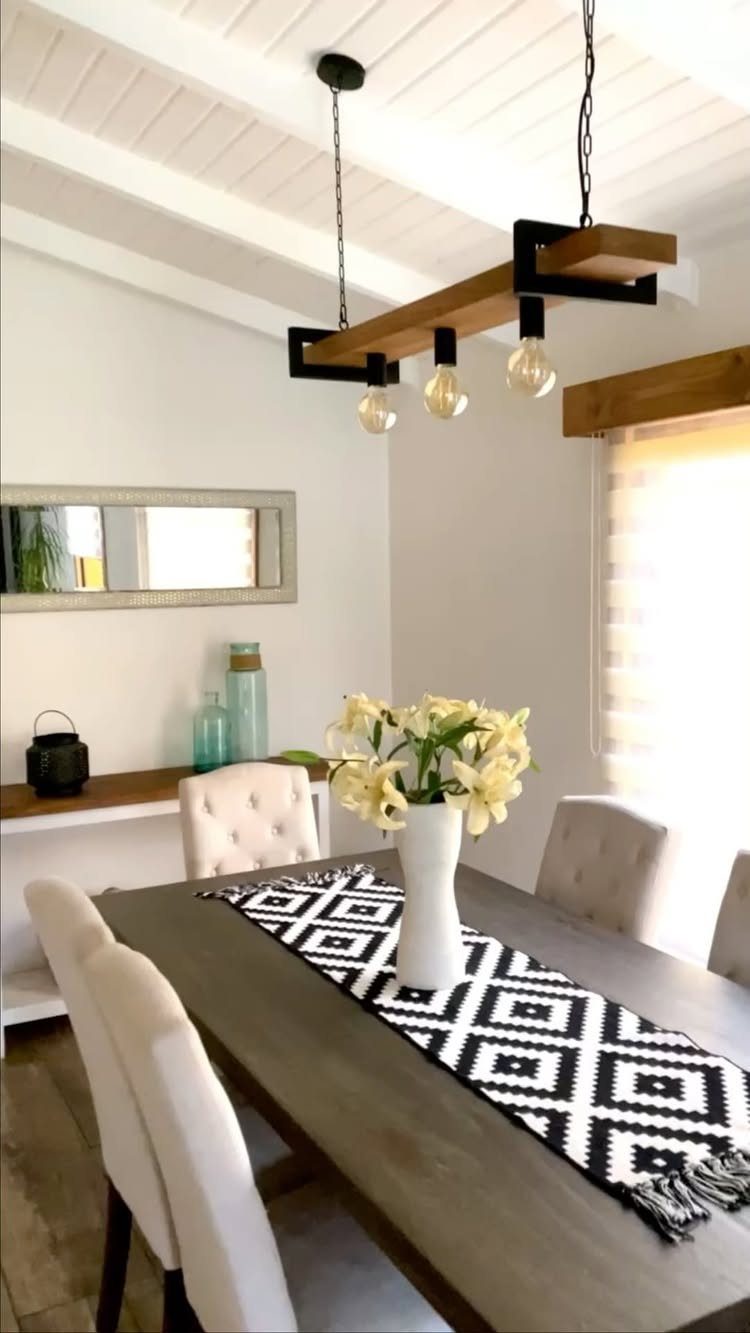
With exposed bulbs, the bulb is half the look, so choose it as carefully as the frame: a warm 2200K–2700K filament style reads soft, while a cool clear bulb looks harsh over a table.
A warm, soft-glow bulb keeps a wooden industrial fixture from feeling like a workshop.
Wood and bare bulbs together read gentler than black metal cages, and white chairs under a white beamed ceiling keep the room bright. Put the fixture on a dimmer, because bare bulbs get harsh at full strength.
4. Ring Light
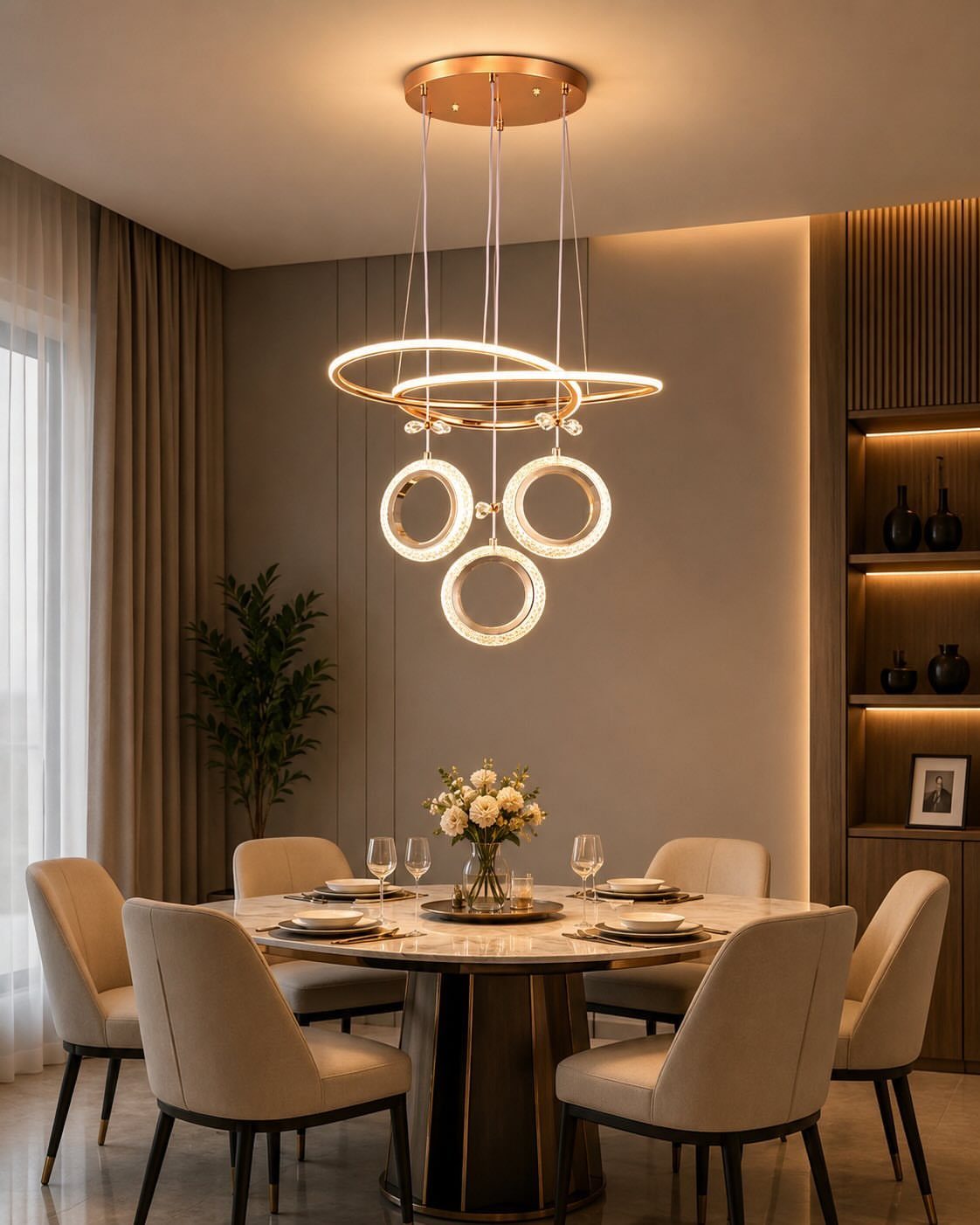
Interlocking gold rings give a round table a light that echoes its own shape. I find this one of the easiest pairings in the list: circle over circle, with no guessing about proportion.
Choose a ring cluster narrower than the tabletop so it doesn’t loom over the chairs. Gold against marble looks rich without extra decor, which helps when the budget is tight.
5. Crystal Chandelier
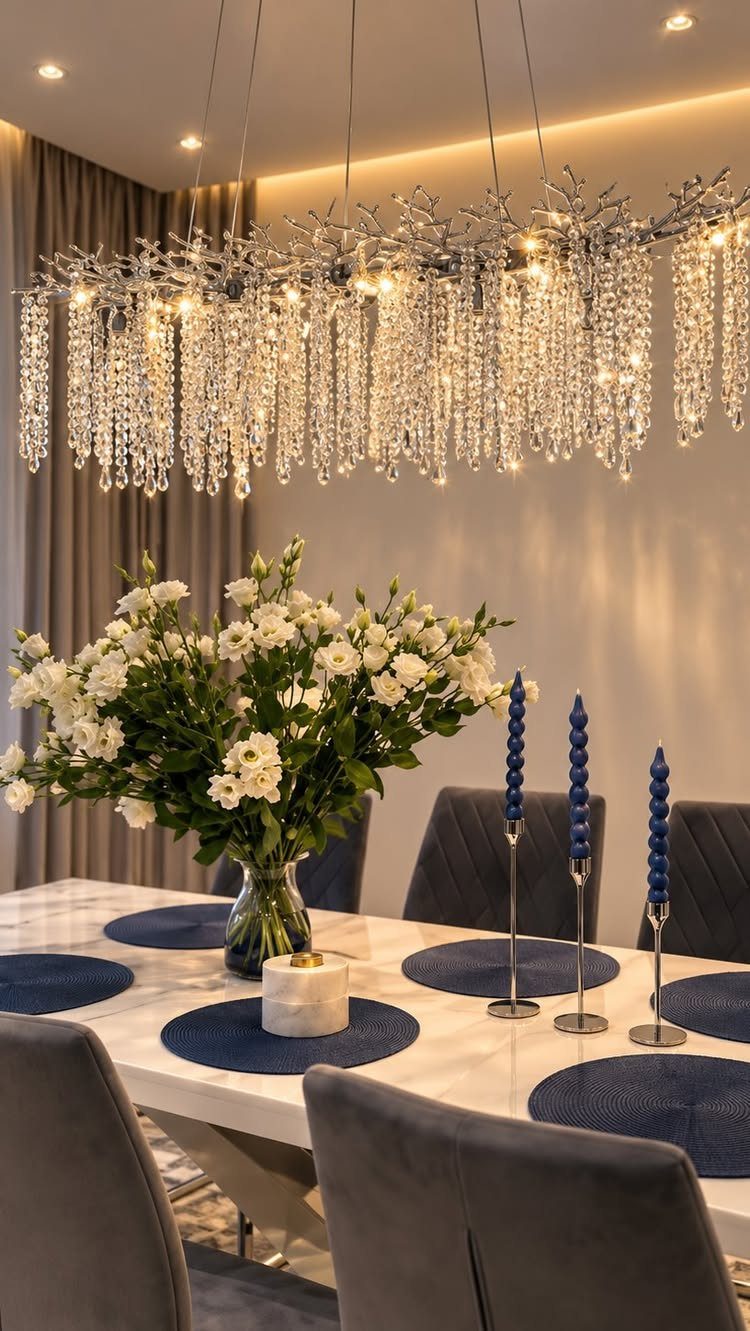
Crystal doesn’t have to mean fussy. A crystal chandelier works best against soft, matte surfaces like grey velvet chairs and plain white flowers, which let the sparkle do the talking.
If you want the effect on a budget, choose a smaller crystal fixture and keep everything under it simple. One dramatic piece is enough; a calm table lets the chandelier take the credit.
6. Main Fixture Complemented by Wall Sconces
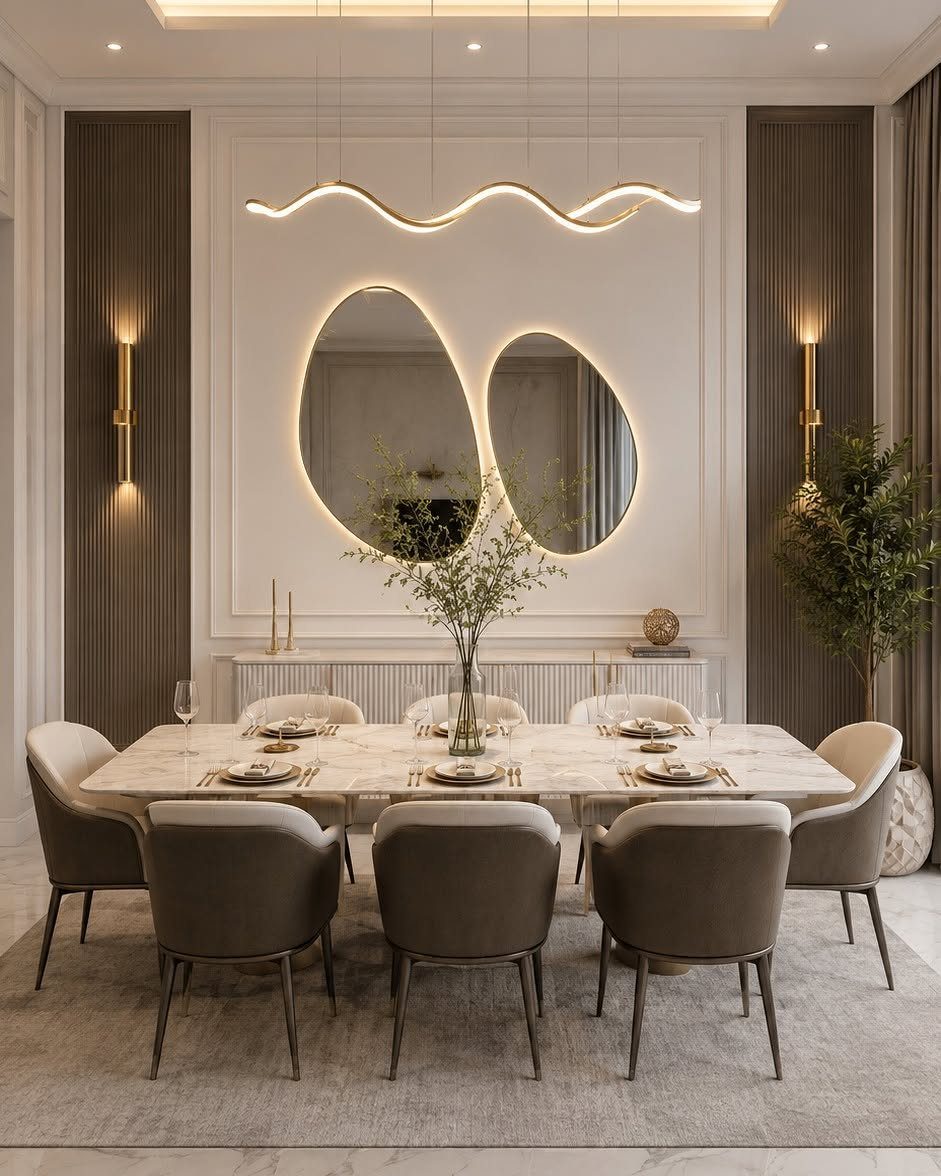
Pairing a ceiling fixture with matching wall sconces spreads light across the room instead of dropping it all in one spot. Matching finishes matter more than matching shapes, so a wavy gold pendant and gold sconces read as one set.
Sconces are a good renter upgrade if you choose plug-in styles. I would flank a mirror or art, since the glow at eye level flatters faces better than overhead light alone.
7. Recessed Lighting
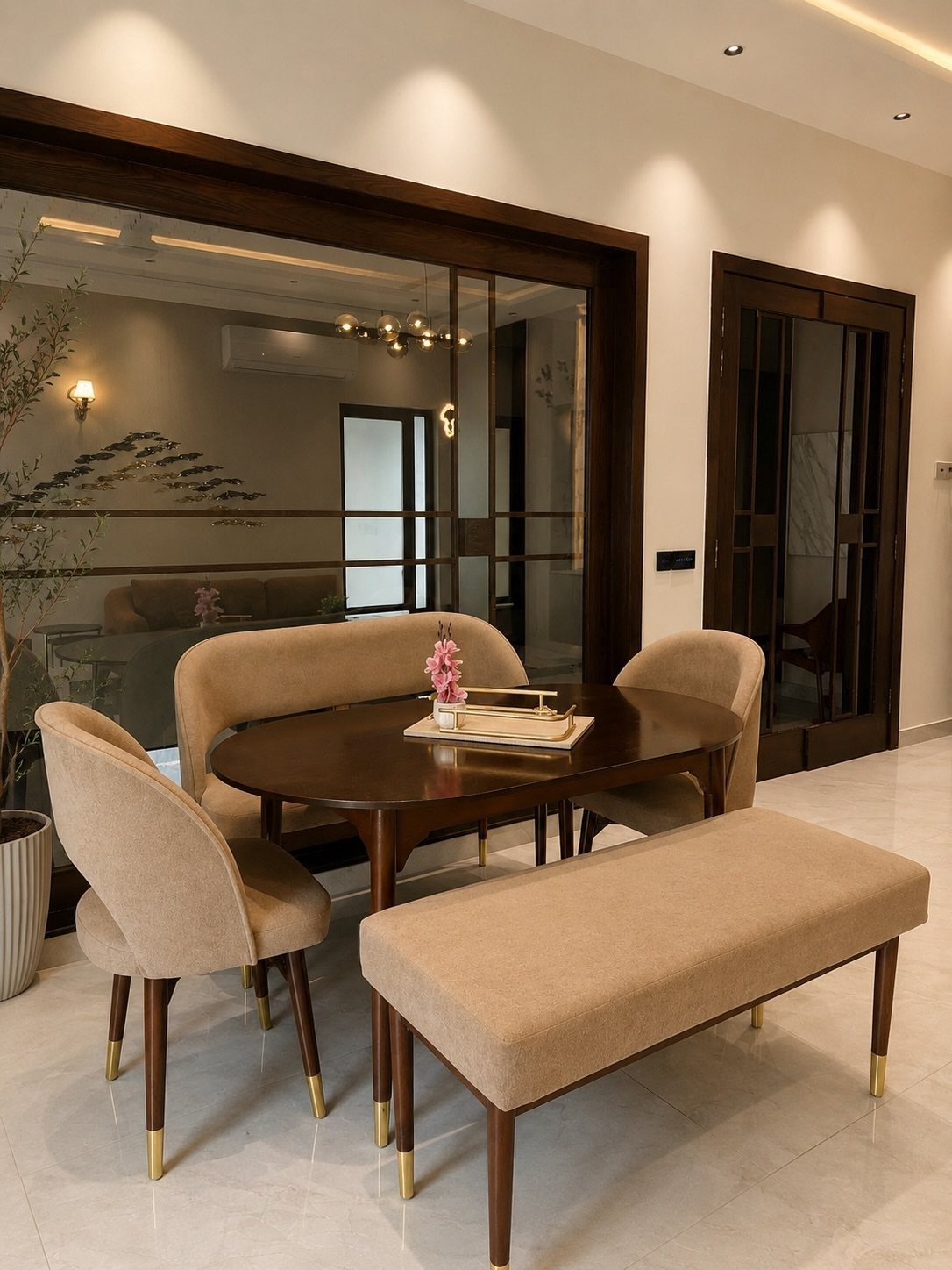
Recessed lights disappear into the ceiling, so the table and chairs stay the only things in the room that draw the eye.
Recessed lighting suits a plain setup like a wooden table with beige seating, because the fixtures stay out of the way and let the wood and fabric carry the look.
Space the lights so they wash over the table instead of sitting in one hard line, and put them on a dimmer. Installing them is a bigger job than swapping a pendant, so renters should check with the landlord first.
8. Exposed Cords
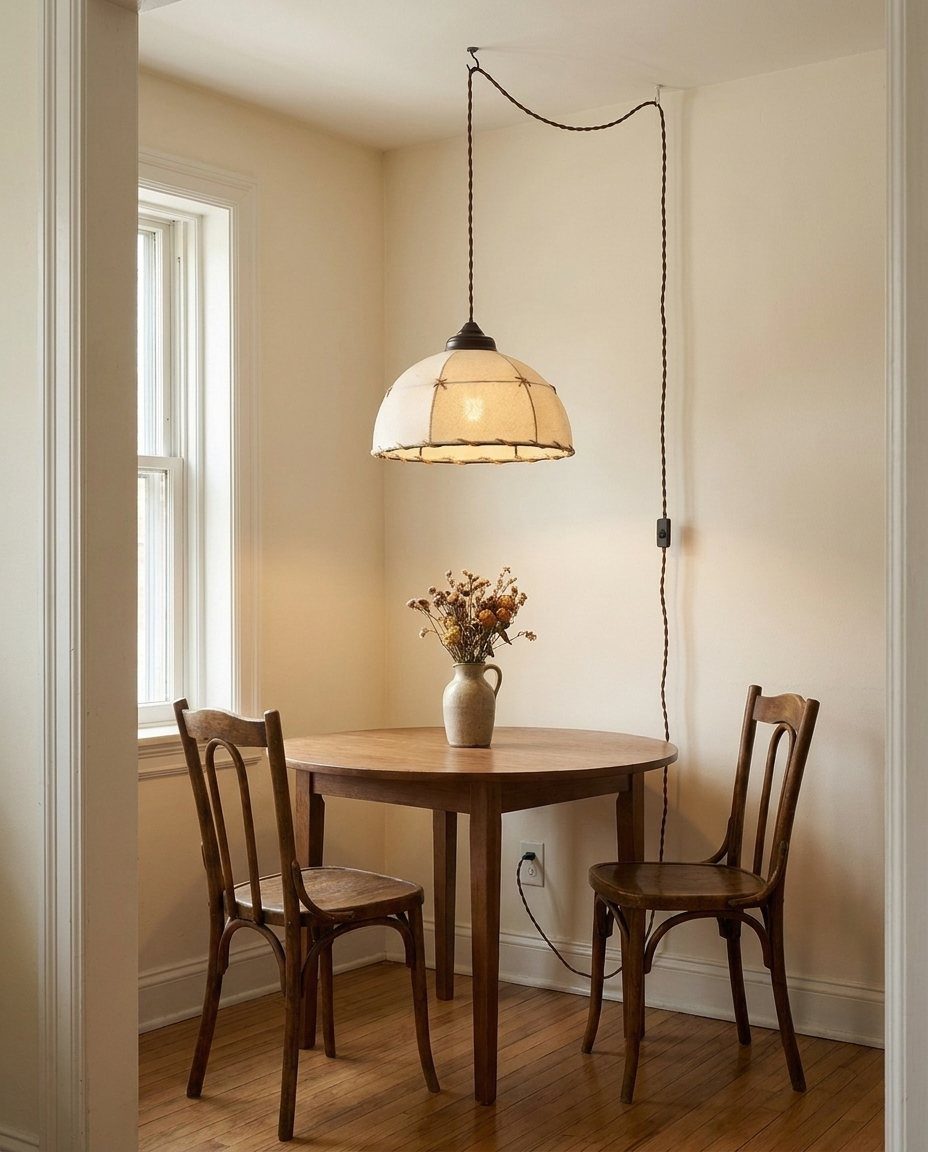
A fabric or dark cord left visible turns a plain pendant into a loose, bohemian detail. Over a small round wooden table, I prefer the cord hanging straight down so it reads as a deliberate line.
Pick a cord long enough to hang the lamp over the table’s center, then hook it to the ceiling. A plug-in version needs no wiring, which keeps this a weekend renter fix.
9. Textured Lighting Options
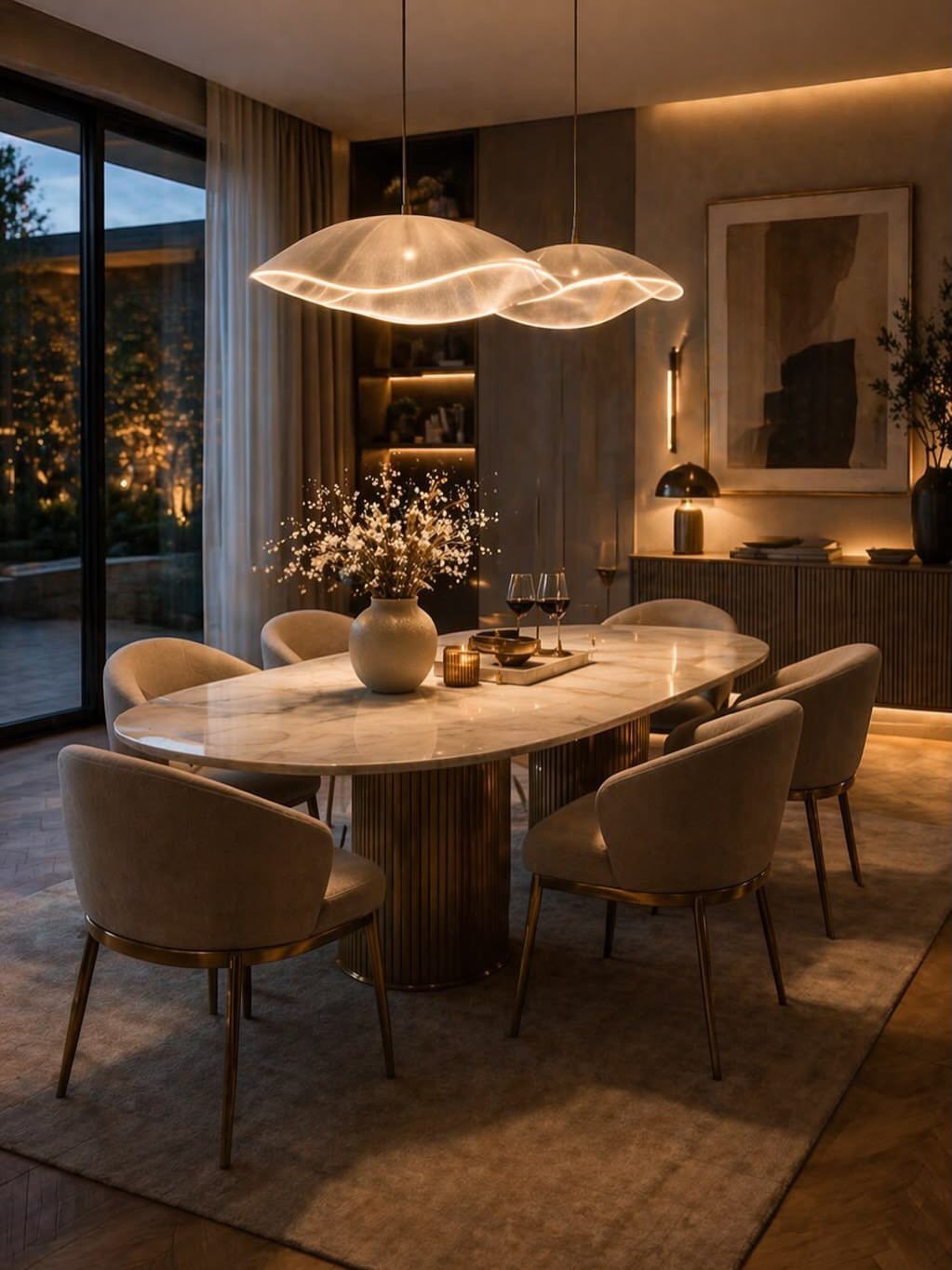
Wavy, textured shades give a minimalist room something to look at without adding clutter. Two of them over an oval table follow its length, and white shades stay soft against marble and grey chairs.
I would hang a pair rather than one big fixture, spaced evenly along the table.
Keep everything else in the space plain, since the texture does the work. Surface ridges also catch dust, so wipe them now and then.
10. Glass Globe Chandeliers
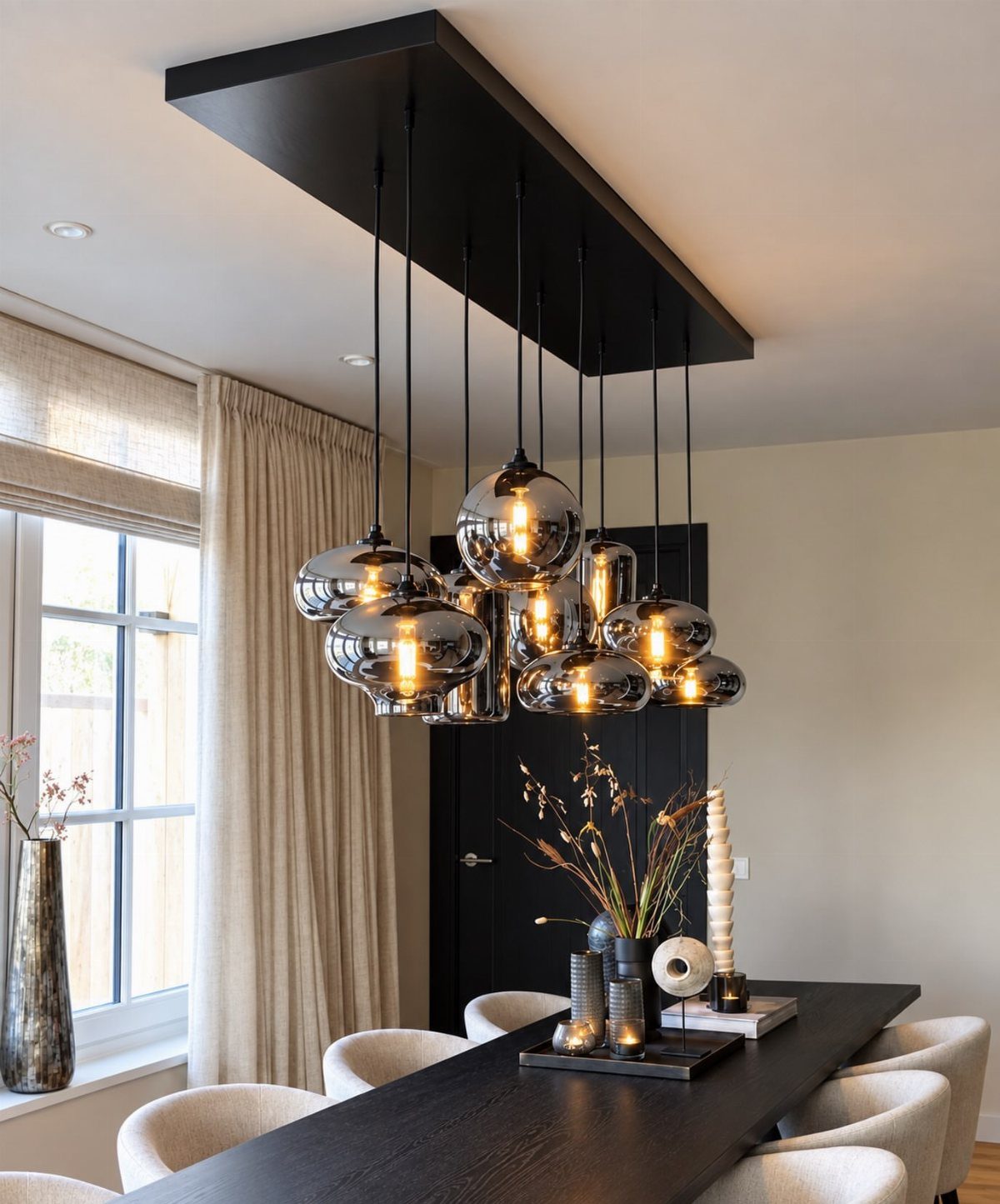
Smoked glass globes soften the light that falls on a table, which means fewer harsh shadows across faces and plates. Hung from a black rectangular canopy over a dark wood table, they feel calm and a little moody.
I like several globes on one canopy better than a single big one, because the spread covers a longer table. Choose warm bulbs so the smoke tint reads as glow, not gloom.
11. Clustered Metallic Spherical Pendants
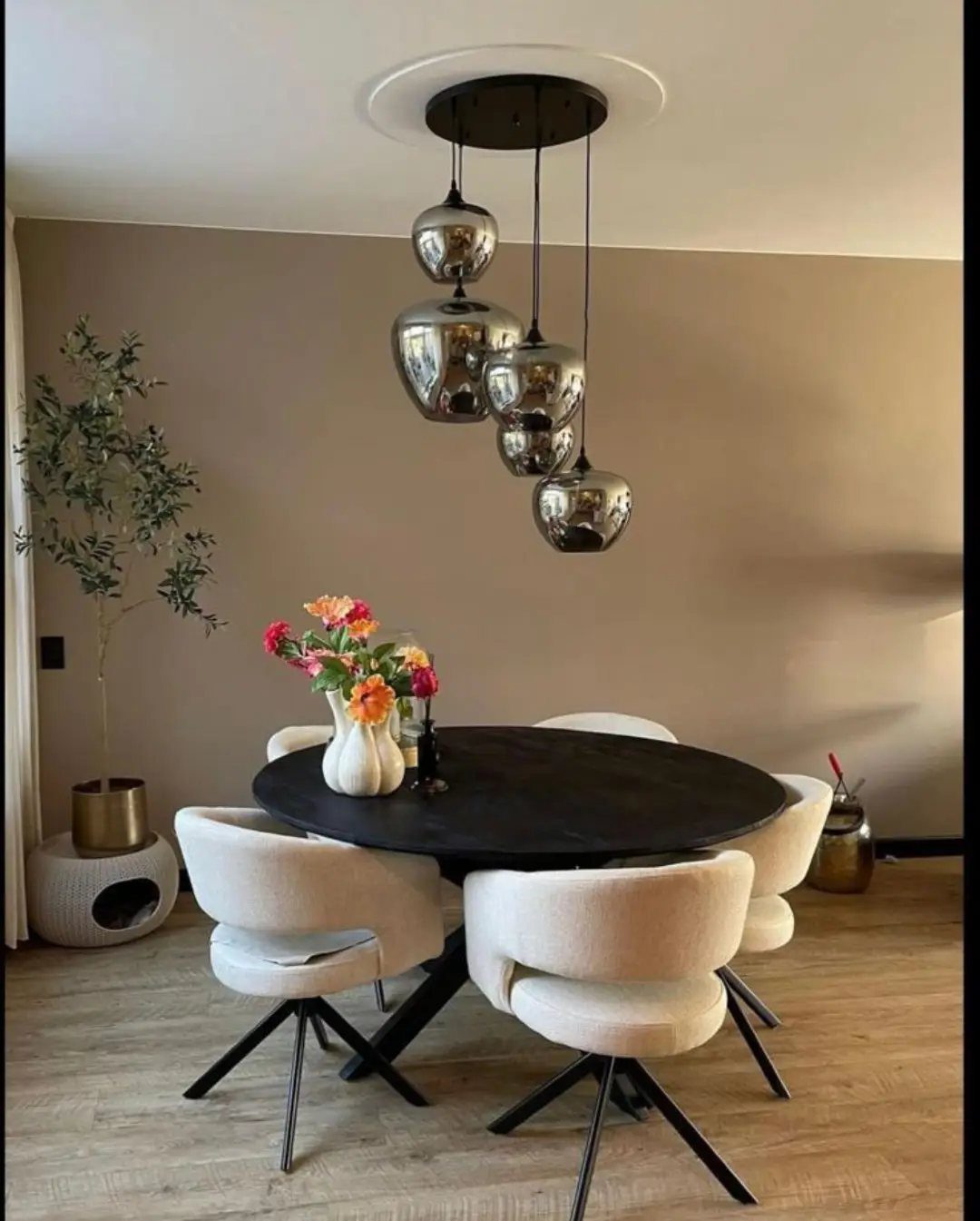
4 mirrored spheres hung at staggered heights turn a round table into a small installation. The reflections pick up the white chairs and the flowers, so the table itself looks fuller.
Stagger the drops by several inches, then make the whole cluster narrower than the tabletop so no sphere hangs near anyone’s head.
A black table gives the chrome-like finish a strong backdrop. Mirrored finishes show fingerprints, so keep a cloth handy.
12. Linear Multi-pendant Lighting
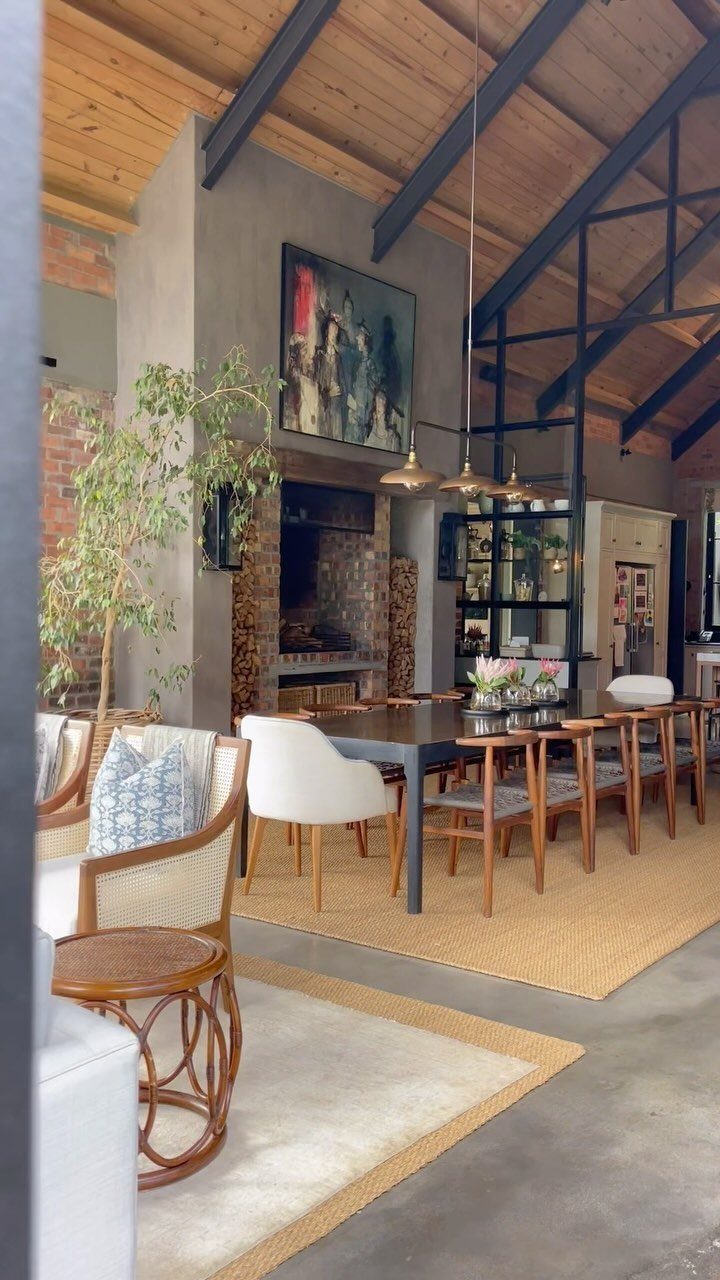
A row of gold pendants follows a long table’s length and ties the room together, which matters under a high vaulted ceiling with exposed beams. Gold warms up a dark table and an industrial space.
Space the pendants evenly and center the row on the table, not the room. With a ceiling this high, hang them lower than feels natural so the light stays close to the table and the row reads as one fixture.
13. Linear Chandelier with Conical Shades
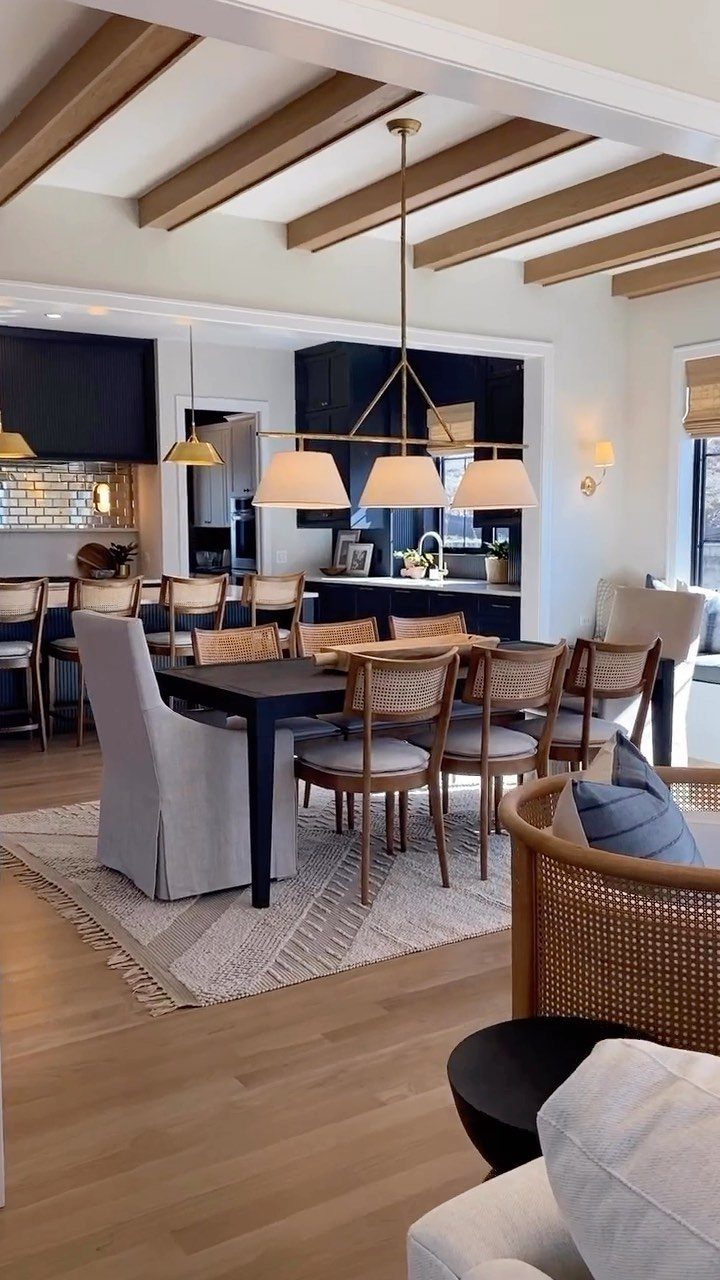
A gold bar with three white conical shades gives a black table a light that runs the same direction as the table. Cane chairs and a beamed ceiling bring warmth, so the black and gold read sleek without turning cold.
Center the bar over the table’s length and keep it a bit shorter than the tabletop so the shades don’t crowd the ends.
White shades keep the glow soft, and I would choose them over metal ones against a dark table.
On a beamed ceiling, make sure the canopy sits flush against the wood, because a gap or a tilt will show once the fixture is up.
Importance of Lighting Scale
Size the fixture to the table before you fall for a finish.
Size a pendant or chandelier at roughly 2/3 of the table’s width. Go smaller and it floats lost above the chairs; go larger and it crowds the people sitting under it.
Smaller rooms do better with flush or semi-flush ceiling lights. Over a larger table, an oversized pendant or a grouped set gives the room more presence.
I work in this order: table shape first, then the type of fixture, then hanging height and the dimmer. Measure the tabletop first and write the number down before you shop.
Layering Lighting
One light hanging alone over the table tends to flatten the whole room.
Build in a second and third layer. Wall sconces give a soft glow from the sides, and a dimmer on every circuit you can reach does the most for the money.
If the table sits in a room that opens onto a living space, add a few spotlights as well.
The dimmer does the most work. Run it bright during meal prep, then low for late conversation.
Fixtures don’t have to match. If you repeat one metal and one geometric style, different shapes still read as a set, so a kitchen light and a dining light can differ without looking messy.
Lighting can make or break a design scheme, so it’s worth aiming for a standout fixture, especially in a dining room. The perfect union of style and function, lighting never fails to set the mood.
Fixture Height Recommendations
Ceiling height sets the drop. Measure from the tabletop up to the bottom of the fixture, and aim for these heights:
- With an 8 ft ceiling, hang it 30–36 inches above the table.
In an open plan where the table shares a large volume of space, keep to the same height range but pick a bigger fixture, since a small one gets swallowed.
Then sit down at the table. If you see a bright bulb at eye level, raise the fixture or switch to diffused shades or globes.
Frequently Asked Questions
Which light is good for a dining room?
For most tables, I’d pick a pendant or chandelier about two-thirds as wide as the table; that ratio is where I start.
Go smaller and the fixture floats awkwardly over the chairs, and go bigger and it presses down on whoever is seated beneath it. Add wall sconces or other softer light around the room so the fixture isn’t working alone.
How do I layer dining room lighting?
Begin with the main fixture centered over the table, then add wall sconces on the sides to soften the light. Repeating one metal finish ties mismatched fixtures together.
Are chandeliers only for formal dining rooms?
No.
Globe or linear styles in gold or smoked glass also suit casual tables. Keep everything under the fixture simple and let one dramatic piece carry the room.





