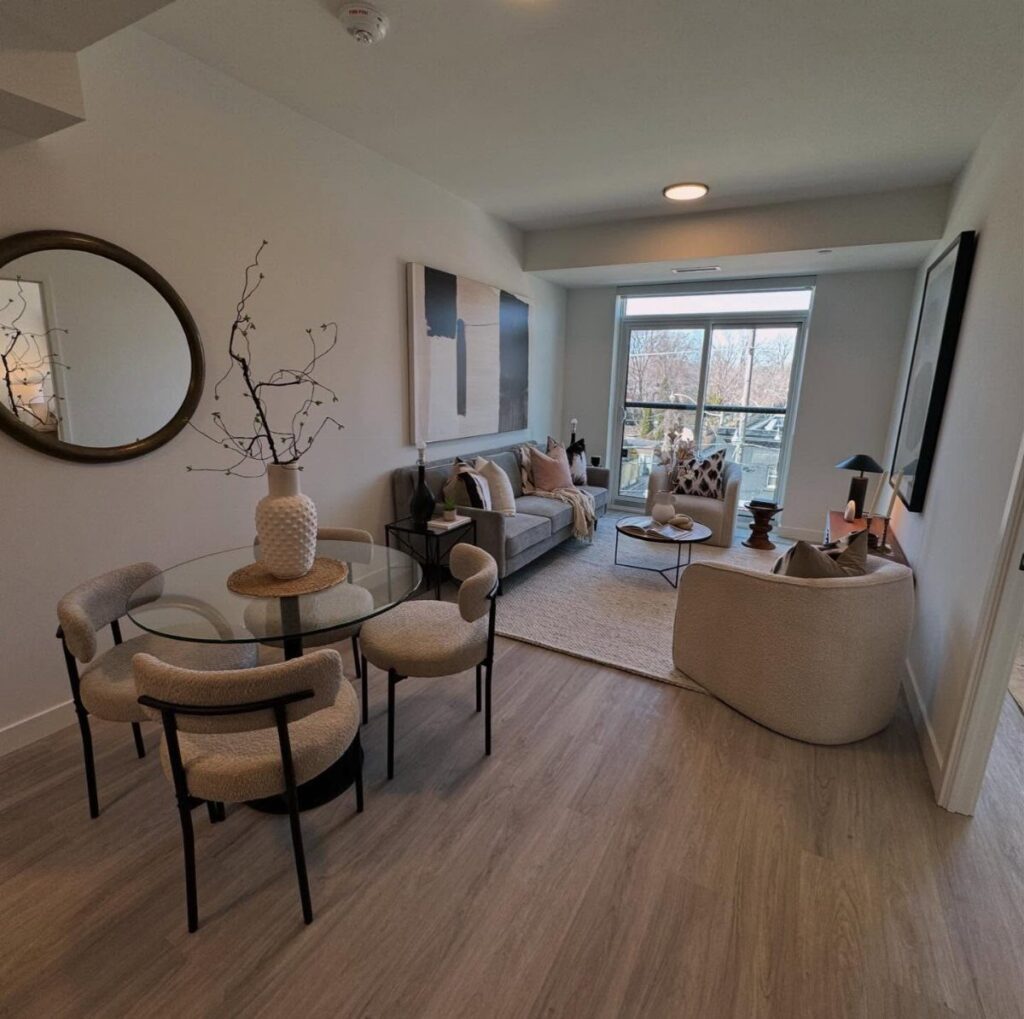
Ideas for a living dining room combo run from a sofa turned to face the other way, which costs nothing, to a wood-framed fluted glass partition with built-in shelves, a bigger project that costs more than a slat screen.
How much separation the room can take decides which one is yours: in a small space, anything that blocks light shrinks it, so rugs, pendant lights and a sofa back do the dividing while the view stays open.
Keeping the whole room to 2–3 colors is what holds every version together.
1. Cohesive Color Palette
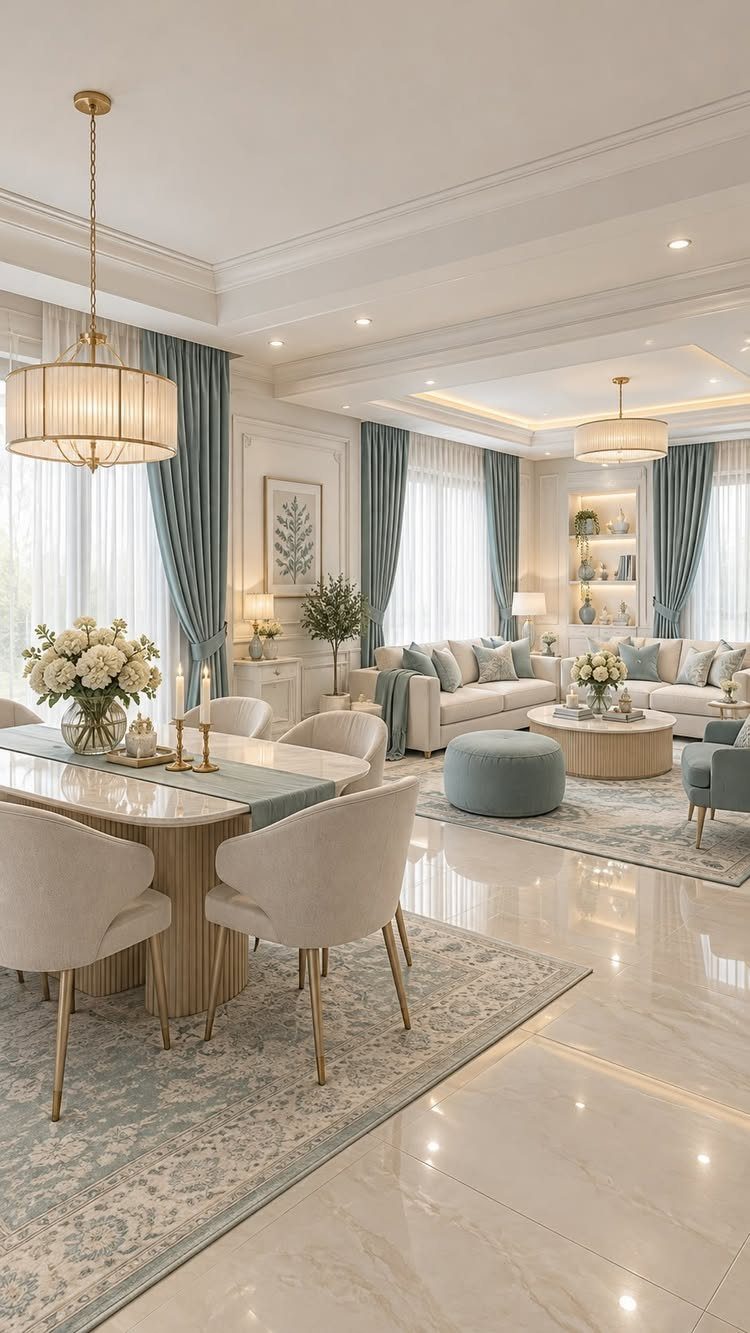
Choose a short palette of 2–3 colors and repeat them across both halves of the room.
Here, cream furniture, light blue curtains and matching rugs carry one scheme from the sofa to the dining table, so the eye reads a single space instead of two.
On a budget, curtains and rugs are the cheapest places to repeat a color. I’d keep the big pieces neutral and let the blue show up in softer items you can swap later.
A shared palette also makes a small room look larger, since nothing stops the eye halfway across.
2. Area Rugs
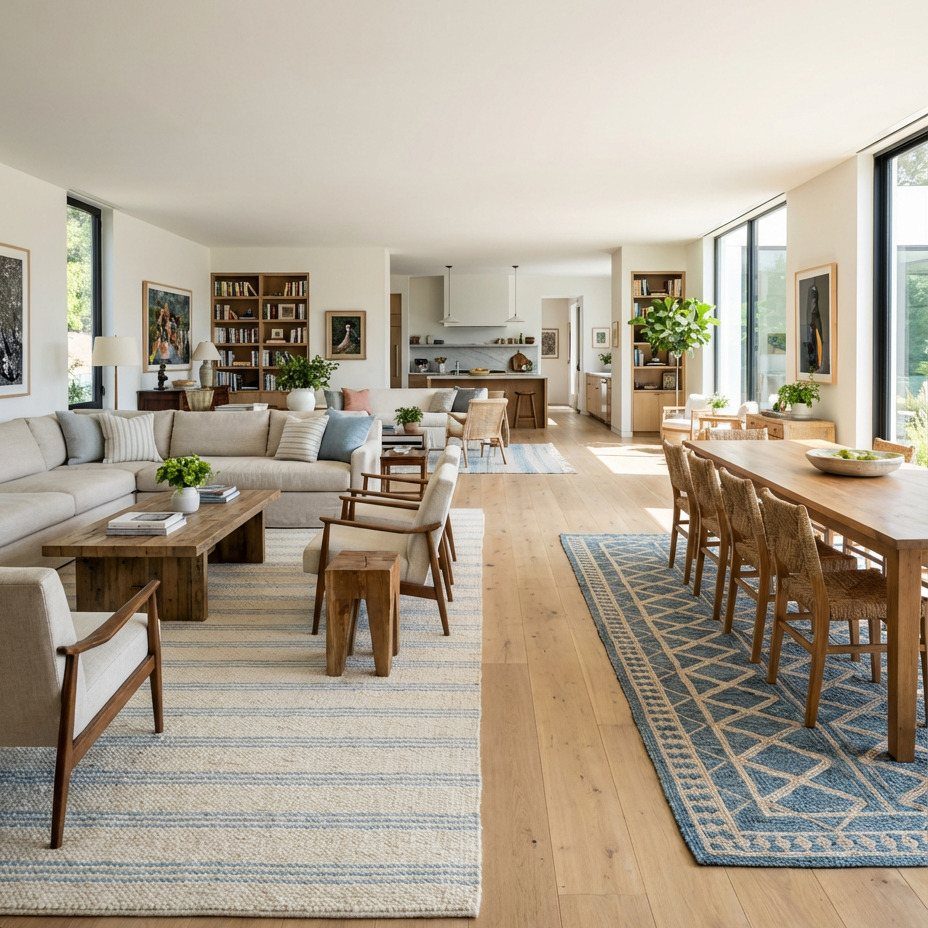
Two rugs, one for each zone, do the dividing work without a single wall.
Give the sectional one rug and the dining table another, and pull the same blue and cream through both so the pair reads as a set instead of competing.
Rugs should differ in pattern but match in tone. I’d choose that over 2 identical rugs, which can look like a showroom set.
Leave the table’s chairs on the rug where you can, so they don’t catch on the edge when pulled out. A rug on light wood floors also costs far less than any built divider.
3. Pendant Lights
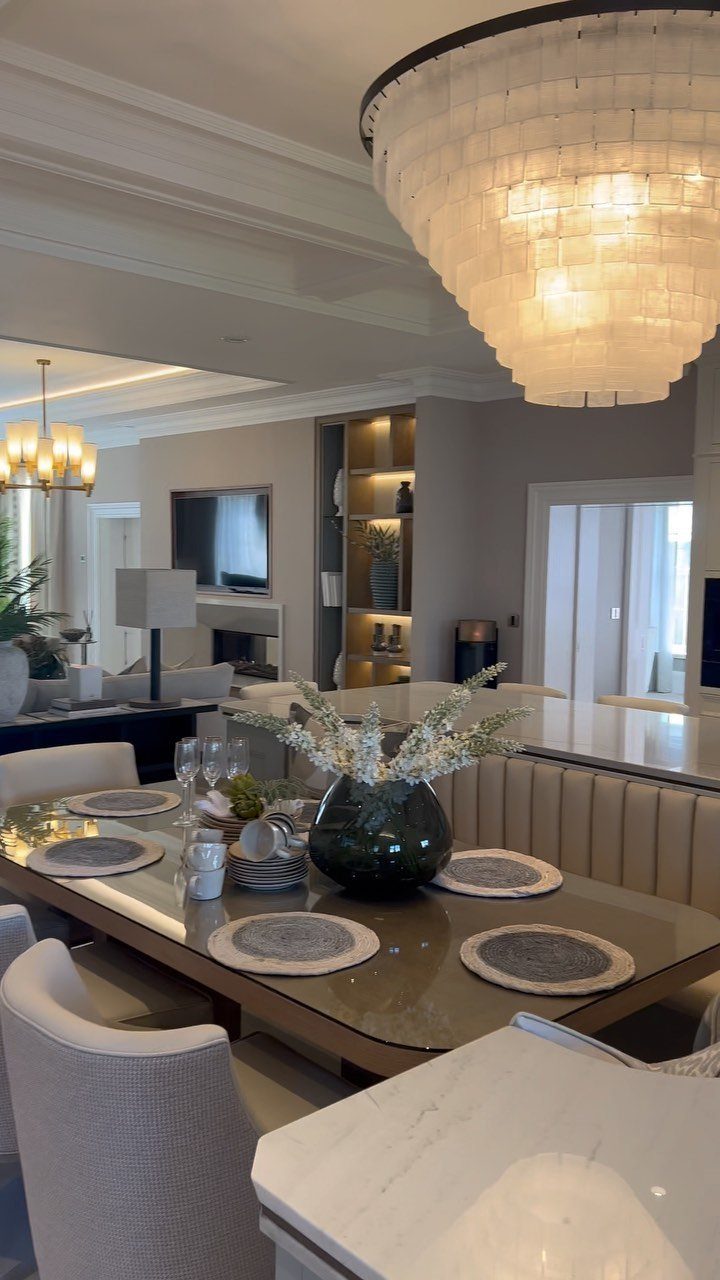
Hang a different fixture over each zone, and the ceiling starts drawing the room’s borders. A large tiered pendant over the dining table claims that area, while a separate chandelier in the living space marks where the lounge begins.
The 2 fixtures don’t need to match, but they should share a finish or color so they feel related. I like a bigger, statement piece over the table, since it anchors the eating area.
Swapping a fixture is a weekend job for many renters and homeowners, though wiring may call for an electrician.
4. Distinct Art Pieces
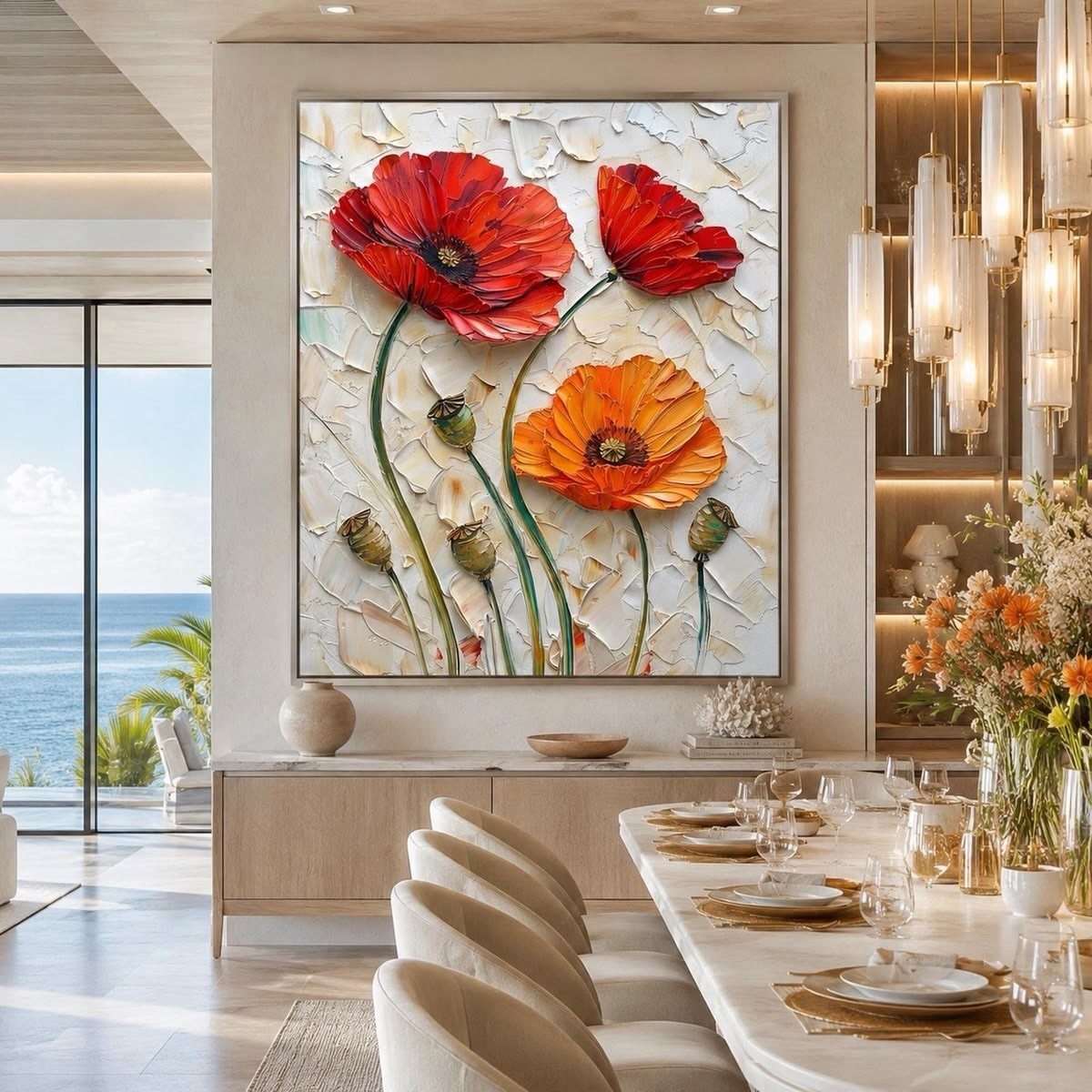
A single oversized painting can hold a dining wall by itself. The textured poppy canvas in red and orange pulls attention to the table, and its color stands out against the bright room and ocean view.
Choose one big piece rather than a cluster of small frames. In a combined room, a large work gives the dining side an identity that the living side doesn’t share.
Pick colors from your sofa or rug, and the art will tie both halves together.
5. Open Concept Layout
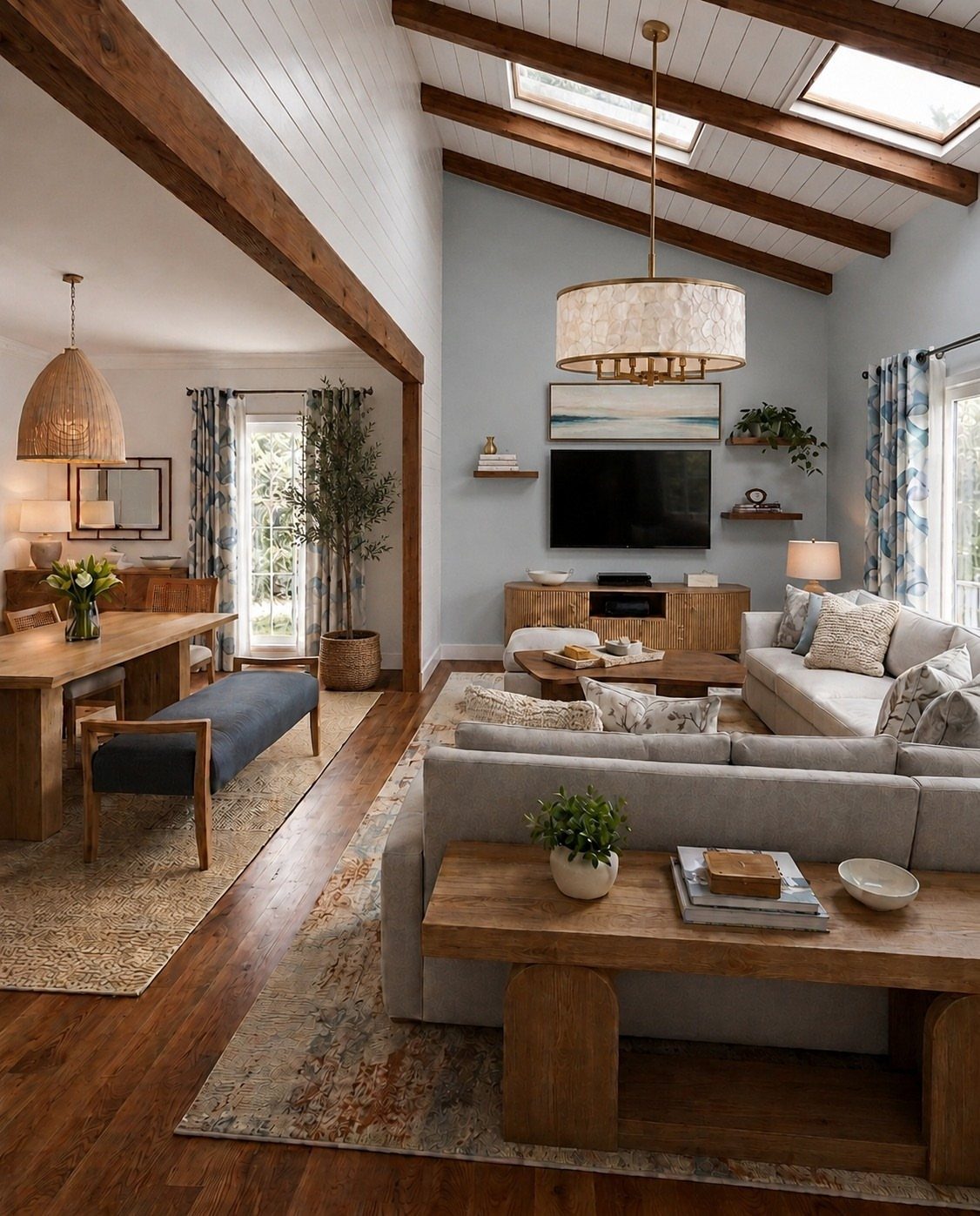
Leaving the space open works best when each zone has its own furniture grouping.
Float the sofa so it faces away from the table, and keep a clear walking path between the groups. A bench is my pick for the dining side because it tucks under the table and saves floor space.
Vaulted beams add height, but a flat ceiling works fine with this layout.
In this home, a soaring great room contains both the dining and living areas. Designer Marie Flanigan focused on establishing a multifunctional space that feels open yet cozy at the same time.
6. Vertical Slat Room Divider
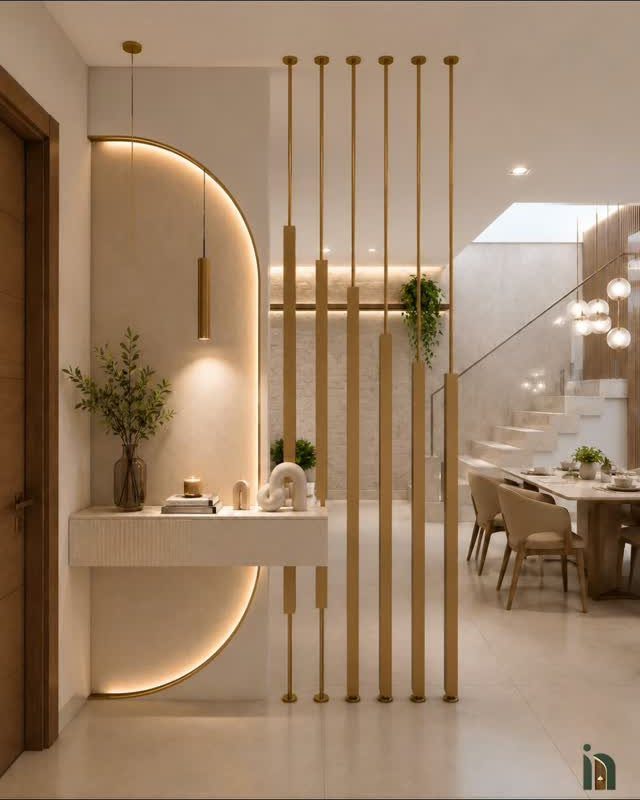
A gold slat screen gives you separation without blocking light. Narrow vertical bars let the eye pass through, so the eating zone feels set apart from the console table beside it, yet the room stays open.
I’d choose slats over a solid wall in a small space for exactly that reason. The warm metal tone also adds a finish that reads as deliberate rather than makeshift.
Place the screen where the 2 zones meet, and tidy the console behind it, since you’ll see it through the gaps.
7. Built-in Banquette Seating
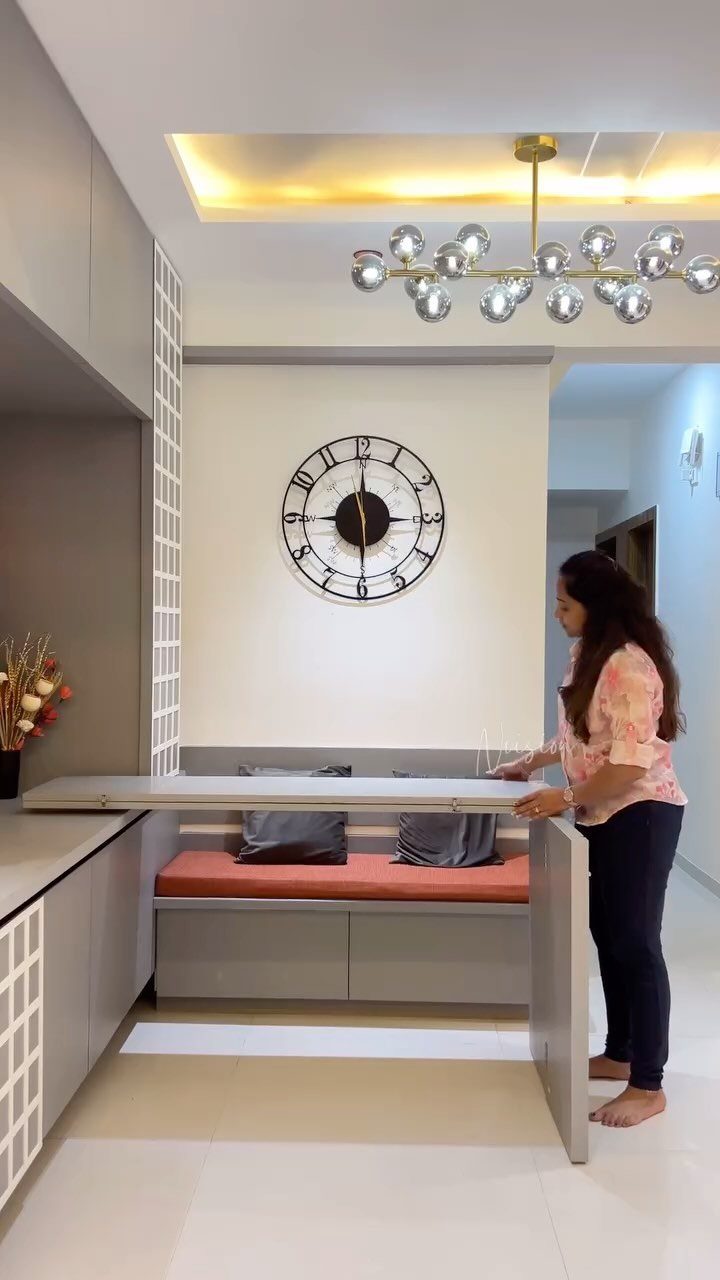
A built-in bench along one side of the table frees the floor that dining chairs would take up. That matters in a combined room, where every foot of walkway counts.
I’d choose the bench over chairs on that side, and I like it set against the living area cabinetry so the storage and seating read as one built run.
A bold cushion color, such as orange, gives the dining corner its own identity against a grey table.
Real built-ins take carpentry, so a renter can fake the look with a freestanding bench plus some cushions.
8. Fluted Glass Partition
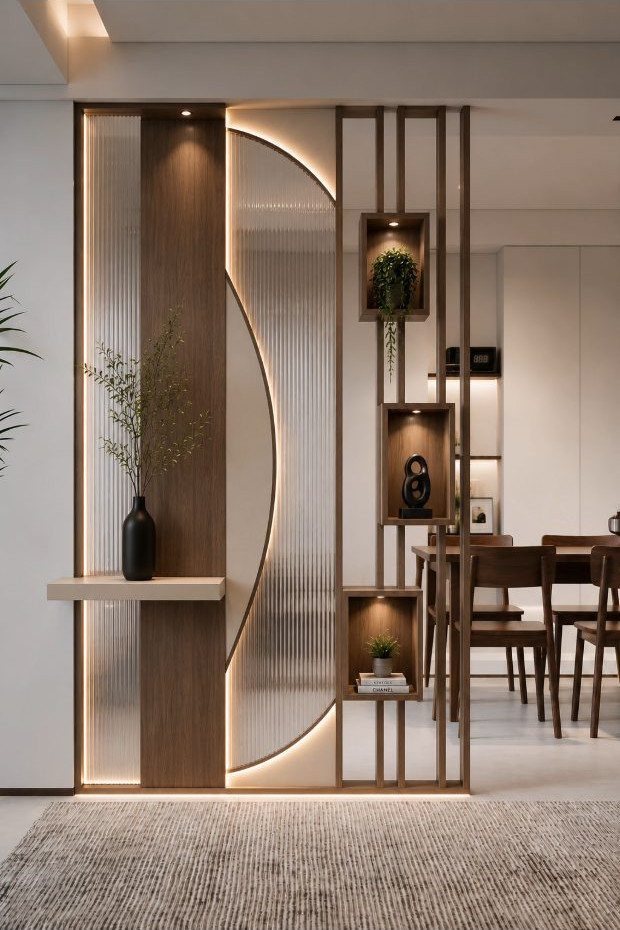
Wood framing with fluted glass panels gives you a divider that blocks the view but still passes light. The ribbed glass blurs the dining table from the sofa side, so the 2 zones feel separate without going dark.
Built-in shelves are what I’d add to the frame. They turn the divider into storage and display space, so it earns its footprint.
A piece like this is a larger project than a rug or a pendant, and glass panels cost more than a slat screen. Match the wood tone to the dining table so the divider looks planned.
9. Sofa Back Room Divider
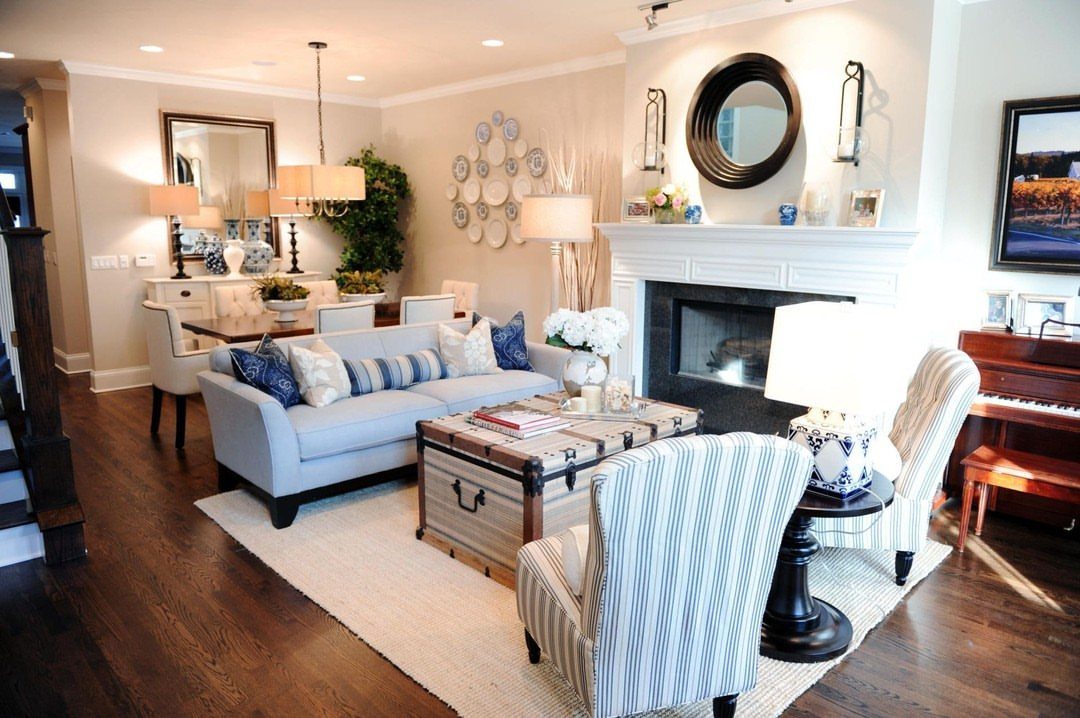
Turn the sofa so its back faces the dining table, and the furniture itself draws the line between zones. No wall, screen or extra purchase is needed, which makes this the cheapest divider on the list.
I’d keep the sofa back low enough to see over, so the table stays visible and the room doesn’t feel chopped in half.
Anchor the lounge with a coffee table and a pair of armchairs, so the sofa has a defined group to face.
Leave a clear path at each end of the sofa for walking through.
Minimize Clutter for Openness
In a room that does double duty, clutter shows up faster: a crowd of small trinkets, too many frames on the wall, and a stack of unopened mail will make it feel messy before anything else does.
When in doubt, go minimalist, because one room is doing two jobs and has no spare visual space.
Closed storage is the fix I trust most. Closed cabinets, wall-mounted shelves, and pieces with hidden storage give remotes, mail, and table linens a place to land, which keeps the tabletop and counters empty.
Scale matters too.
A room can look huge while empty, then shrink once the sofa, table and chairs go in. Low furniture helps keep sightlines open, so choose pieces that sit close to the floor over tall, bulky ones.
A quick habit: clear the table and the coffee table each evening, since those 2 surfaces show clutter first.
Consider Family Needs
Start with how the room actually gets used. A household that eats at the table every night needs different things than one that mostly hosts on weekends, and the layout should follow that.
Each zone should read as its own space while still belonging to the same room. A sectional, a window and a light fixture can mark the living side, while a sideboard and a different fixture mark the dining side.
A calm shared palette ties the halves together. I’d stick with wood tones, brass, and a range of grays and whites, then bring in rattan or stone for texture so the room has depth without adding more color.
I’d pick the sideboard with daily life in mind: it holds serving pieces for guests and everyday items for the family.
Frequently Asked Questions
How to separate an open living room and dining room?
Two rugs, one per zone, do most of the separating, and repeating a shade or two between them keeps the pair from fighting.
A different light fixture over each area also draws the borders from the ceiling, and a sofa turned with its back to the table works as a divider that costs nothing.
If you want something more solid, a slat screen separates the zones without blocking light.
What is the best color for a living room and dining room?
A short palette of 2–3 colors repeated across both halves works best, because the eye then reads one space instead of two.
Soft blue works well in curtains, pillows and a rug, since those are the cheapest pieces to change when the color gets old and the sofa and table stay neutral.
Because nothing breaks the line of sight, one shared palette also makes a small room feel wider.
How to connect kitchen and living room?
Keep the room open, give each zone its own furniture grouping, and repeat one palette across all of them.
A sofa floated with its back to the table marks the edge of the living area, and about 3 feet of open floor beside it keeps a clear path between the two groups.
Matching a finish or color between light fixtures, plus wood tones, brass and grays or whites throughout, makes the areas feel related.





