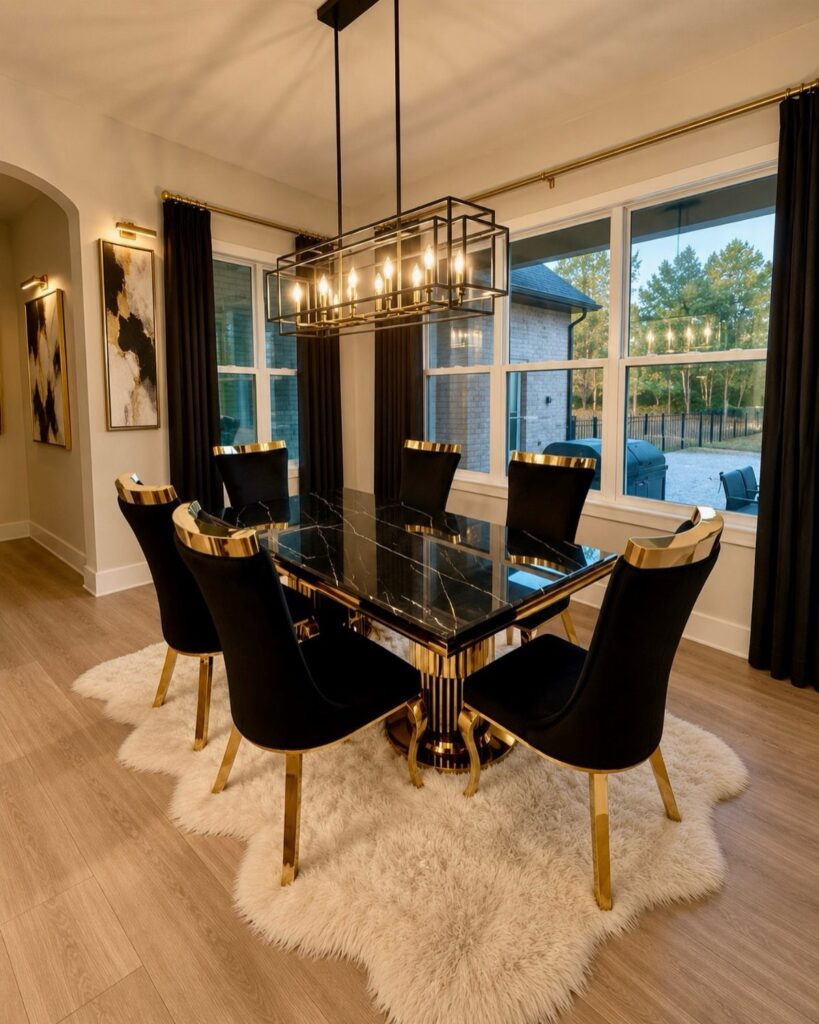
These dining room ideas run from new chairs or a weekend of peel-and-stick wallpaper to a built-in banquette, and what decides between them is how much of the room you’re allowed to change.
Renters can get a lot from reversible moves like bold removable wallpaper, a gallery wall hung with Command strips and a mix of chairs, while owners with a narrow room or a corner can commit to banquette seating along the wall.
Orange velvet chairs against dark blue walls show how far a single swap of seating can go.
1. Colorful Chairs
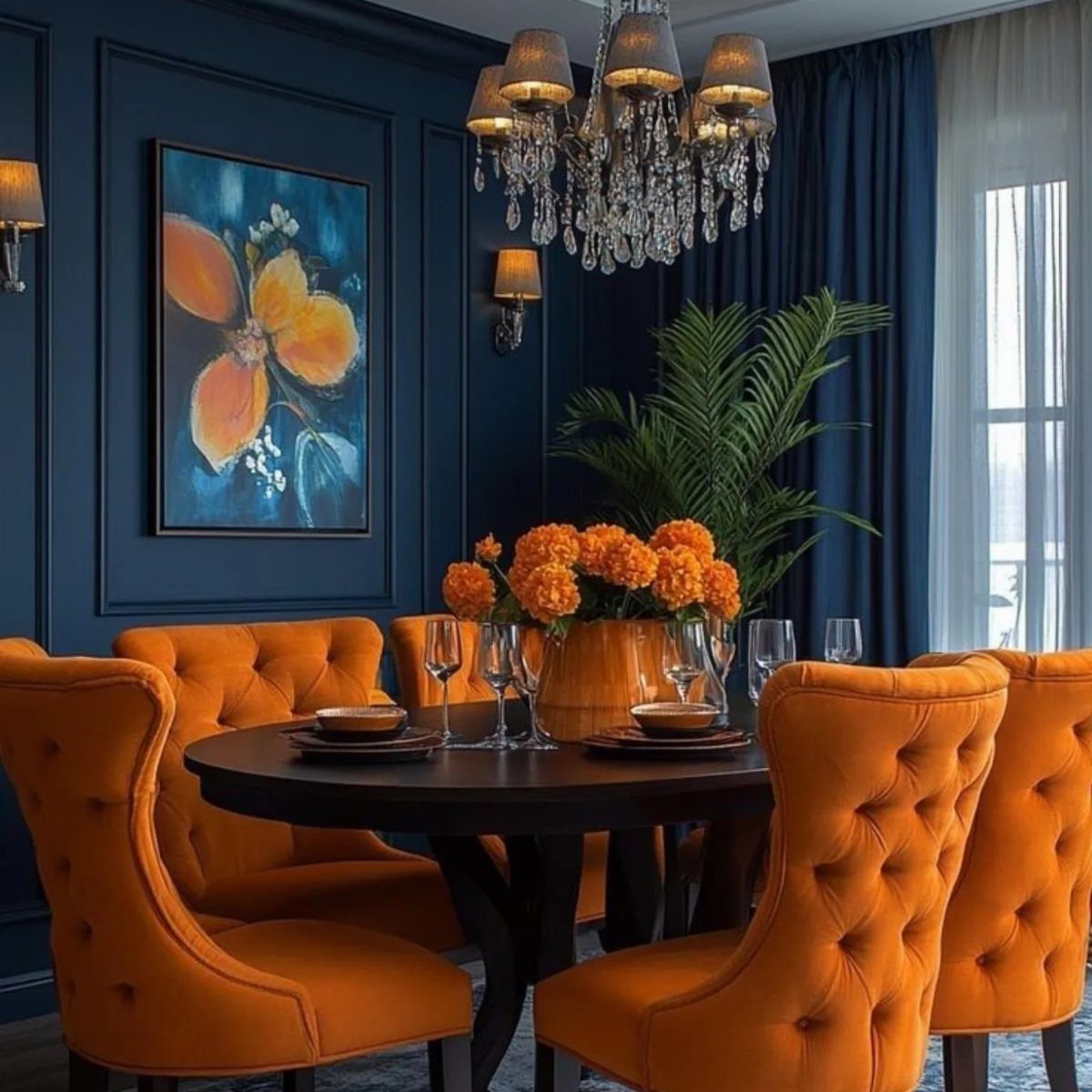
Orange velvet against dark blue walls is a high-contrast pairing, and it works because the 2 colors sit opposite each other.
Chairs are the cheapest place to try a bold color, since you’re changing the seating instead of repainting a room.
I’d keep the table dark and plain, as it is here, so the seats do all the talking. If full orange feels like too much, start with two upholstered end chairs and leave the sides neutral.
2. Mix and Match Furniture
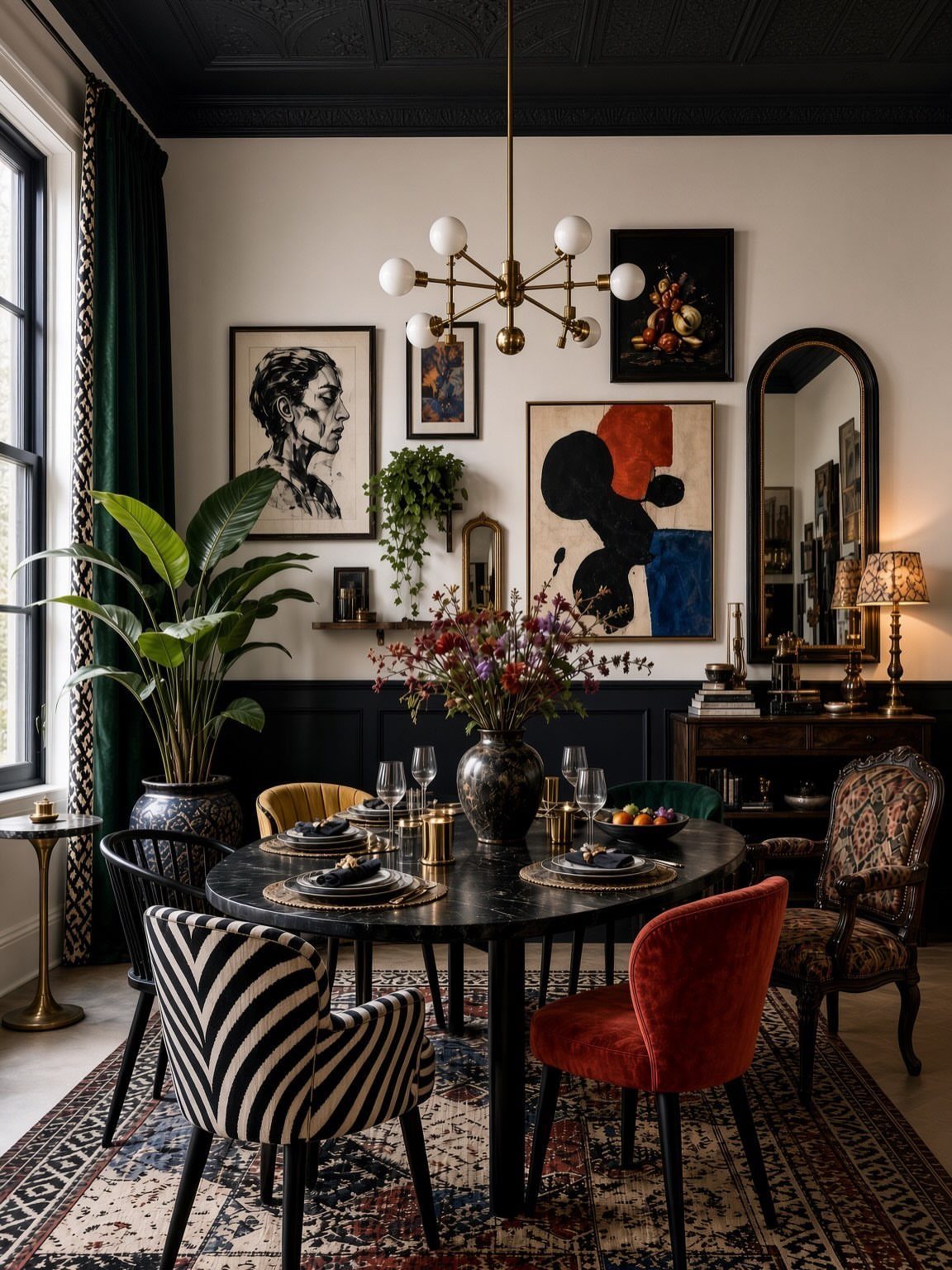
A black oval table gives mismatched chairs something steady to gather around, and that’s the trick I’d copy. Pick one anchor piece, then let the seating vary.
Keep one thing consistent so the mix reads as chosen rather than accidental: a shared color family, similar seat height, or a common wood tone.
Secondhand chairs are the budget route, and a patterned rug underneath helps the variety feel intentional. I’d skip mixing too many styles at one table.
3. Bold Wallpaper
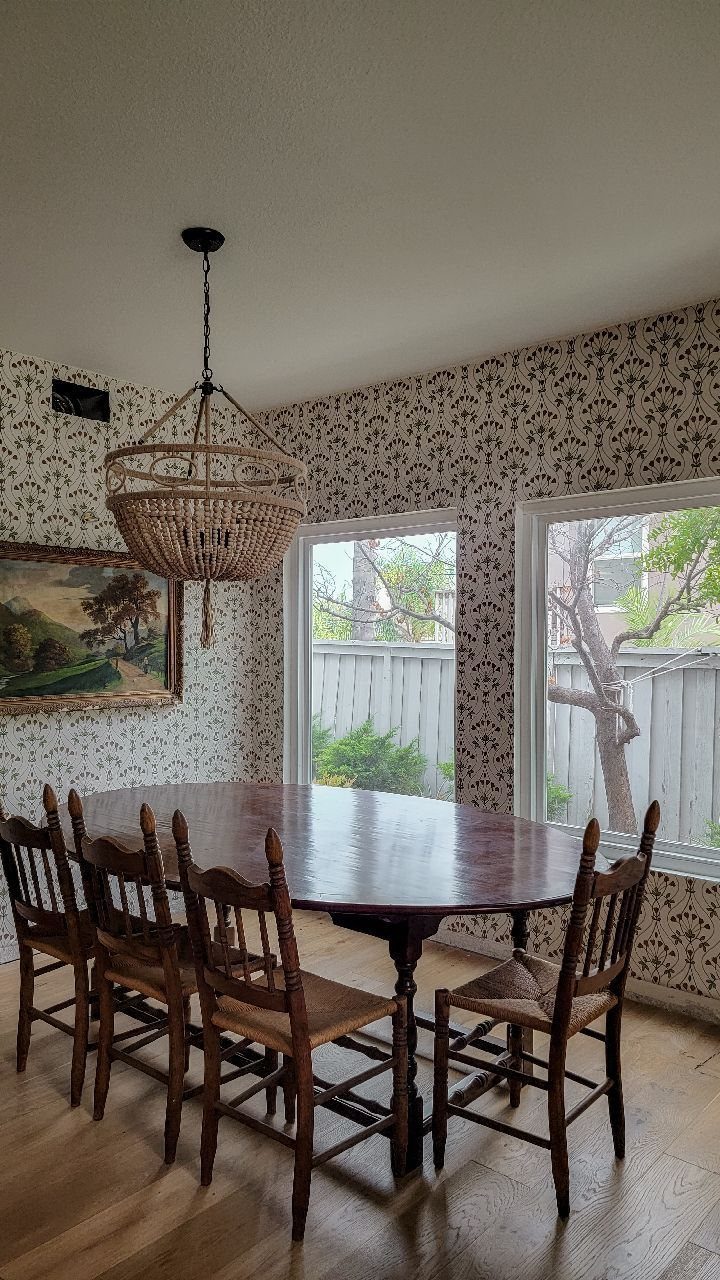
Walls in black and white floral do the decorating for you, which means the rest of the room can stay quiet.
For renters, peel-and-stick paper is the weekend option, and one wall costs far less than a full room.
I like a two-color pattern because it fits almost any chair color. Hang art sparingly; a single framed piece holds its own against a busy print.
4. Banquette Seating
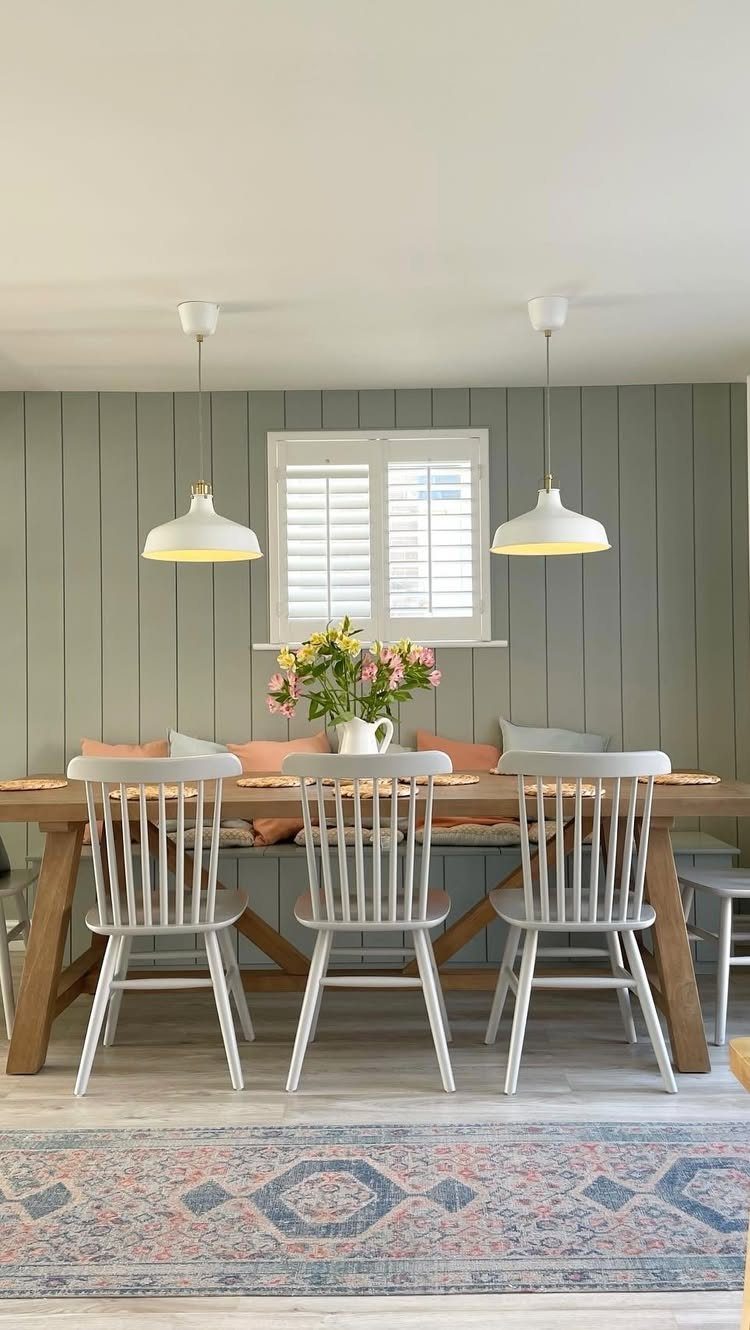
A banquette tucks seating against the wall, so the table needs less room around it than one ringed with chairs. That makes it a smart move for narrow dining rooms and corners.
A shallow seat depth will feel cramped, and anything too deep makes it hard to reach the table.
Add a cushion in a washable fabric, since a built-in bench gets sat on daily. Keep chairs on the open side to make serving easier.
5. Mix Materials
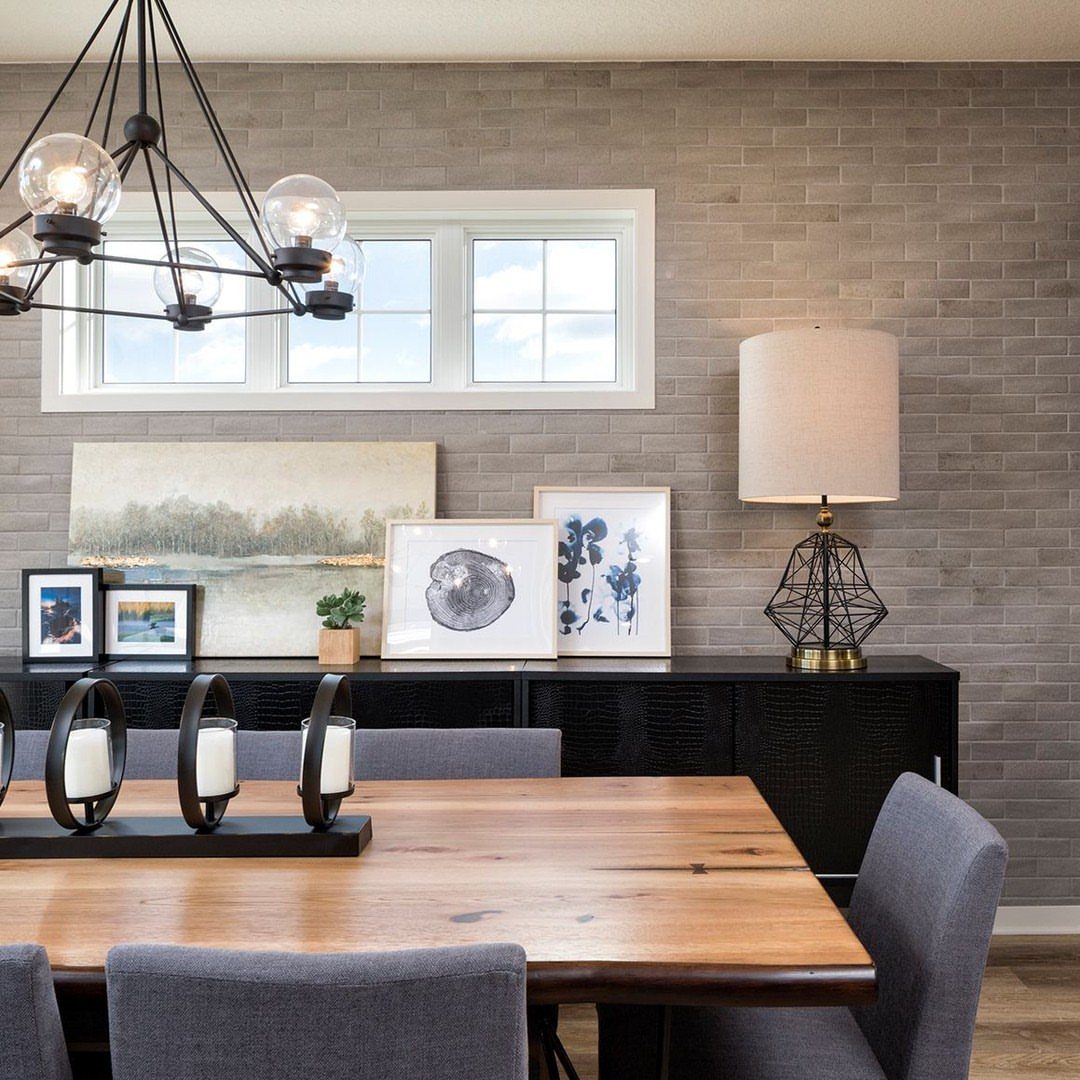
Warm wood against cool grey is the pairing I’d reach for when a room feels flat.
Aim for a few materials, no more. Repeat each one at least twice, such as black on both the sideboard and the light, so the mix feels planned.
6. Unique Chandeliers
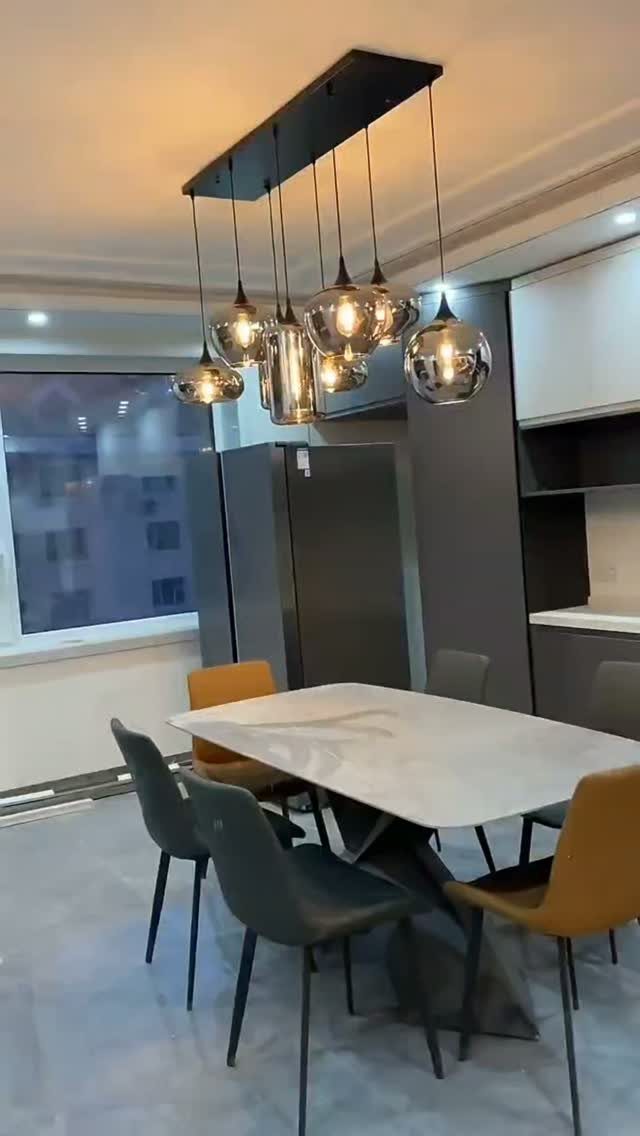
A chandelier with chrome globes gives a plain white table a focal point without adding clutter below. Because the fixture carries the drama, the chairs and tabletop can stay simple.
Hang it so the bottom sits well above the table, leaving clearance for anyone seated.
A plug-in version is the renter-friendly route if you can’t touch the wiring. Chrome bounces light around, so I’d choose it for rooms that run dim.
7. Gallery Wall
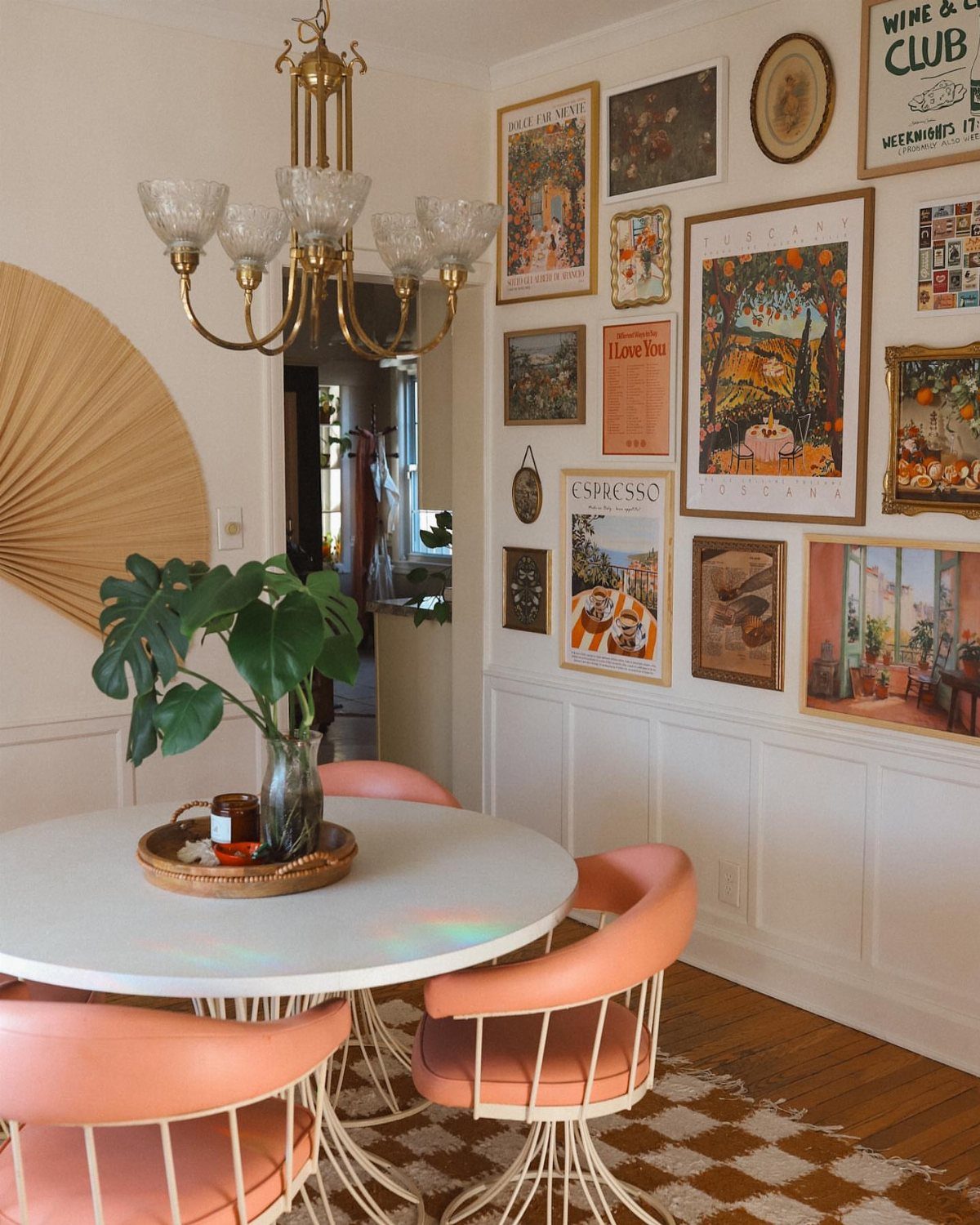
A gallery wall of framed prints gives a dining room personality for the price of the frames and a few evenings of arranging.
Pink chairs and a gold chandelier already carry a lot of color, so a mix of prints in a calmer palette keeps the wall from competing.
Lay the frames on the floor first and shuffle them until the spacing feels even. Then trace each one on paper, tape the paper to the wall, and adjust before you drive a single nail.
Food-themed or travel-themed prints suit a dining room, since the art then relates to the table. Command strips are the renter-friendly way to hang them.
Now, clients are embracing the idea of the dining room as a destination again. They’re taking more risks with wallpaper, statement lighting, and bold fabrics, creating rooms that feel layered, intentional, and worthy of gathering.
Choosing Dining Room Materials
Most sets are built from wood, metal or glass, and each one behaves differently under daily use.
Wood is the classic and the most durable of the three, so it’s the one I’d pick for a table that gets daily use.
Metal reads more modern and blends easily with what you already own. Glass is contemporary and adds elegance, though it asks for more wiping than the others.
The dining room needs a table and chairs; everything else is optional. A sideboard or buffet is a good next addition, and a pair of lamps on top gives softer light than the ceiling fixture alone.
Put the lighting on dimmers. A dimmer switch is cheap, and it changes the room more than most purchases at that price.
Dining Room Styles
Traditional sets pile on the ornament: turned legs, molding, scrollwork along the apron. Modern sets strip that away and rely on proportion and clean edges.
Pick the direction before you shop, because the extras follow from it.
If you’re unsure, I’d lean simple. A plain-lined table takes on character from whatever you add around it, while a heavily carved one pushes the whole room toward a single look.
An area rug underfoot suits either style and ties the pieces together.
Seating Options
Chairs fall into 4 types: upholstered with padding, plain wood, metal or molded plastic, and benches.
For long dinners, I’d choose upholstered. Wood and metal look sharp but get tiring after an hour.
Benches save space and suit larger groups, since people can squeeze in a little closer. They work best on the long sides of a table.
Check 2 things before buying.
Measure the chair height against the table so seats slide under comfortably. Check that someone seated can push back without catching the wall or a console behind them.
If the room doubles as an office, a banquette gives you space to spread out papers and a laptop.
Frequently Asked Questions
How should a dining room be set up?
A table and chairs come first; every other piece in the room can wait. Pick a direction, traditional or modern, before you shop, then add a sideboard, a rug and lamps.
What size dining room set should I choose?
Measure the room first, then match the set to how many people you usually host.
Allow 36 inches or more between the table edge and the nearest wall or furniture piece, and count on roughly 24 inches of tabletop width for each person. That gives guests room to push back their chairs without hitting anything.
What are the trending dining room sets?
Bold color, unusual shapes and mixed materials are leading right now. Mismatched chairs around one dark anchor table, or warm wood paired with cool grey, also read as current when something repeats to tie them together.
What are the dining room trends for 2026?
Dining rooms are getting bolder, with high-impact color and pattern on walls and chairs.
They’re also working harder: people use the table for homework or working from home as well as meals. A table that looks good and handles daily use fits both trends.
How much should a dining room set cost?
I can’t give a reliable price range from what I have, since it swings with material and size.
For a table that gets used every day, solid wood holds up best of the usual choices, so that’s where my money would go.





