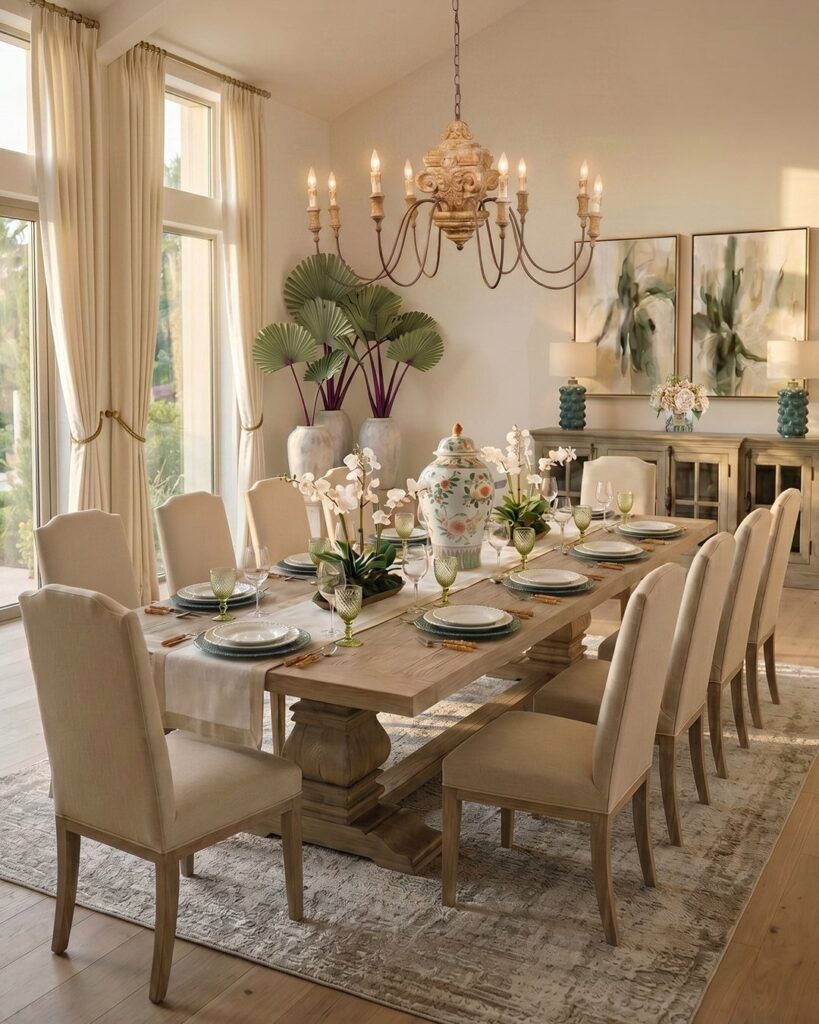
The ideas here run from a solid wood buffet and a dark one set against light walls to a full built-in along one wall, and the cost and time climb with each step toward custom.
What decides which one is yours is whether the piece has to move with you: in a rental, a freestanding solid wood buffet gets most of the look of a built-in, while owners can justify the cabinetry.
Either way, plan the surface as carefully as the cabinet, because a mirror above the buffet doubles whatever sits in front of it.
1. Sculptural Vases
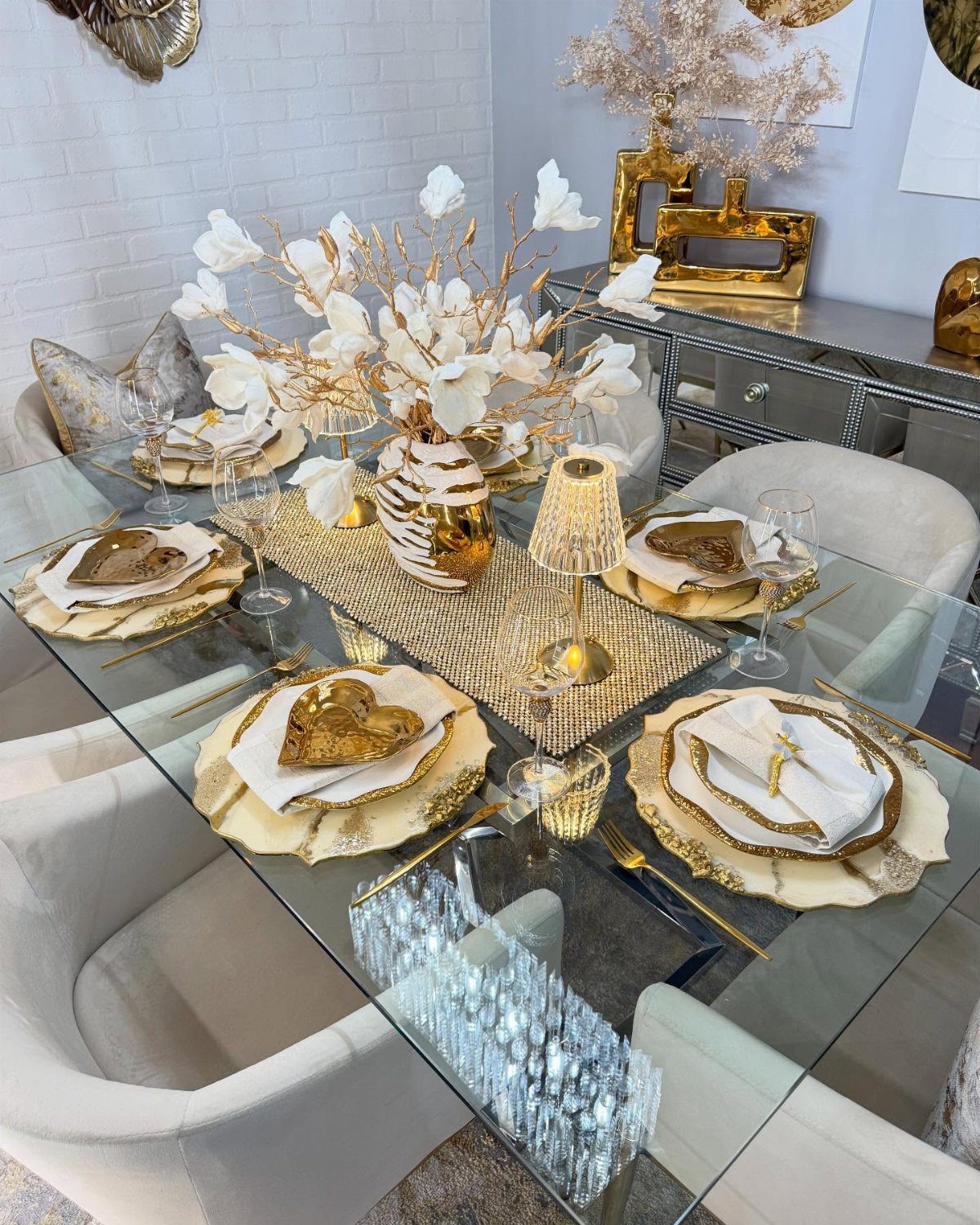
A single sculptural vase does more for a dining space than a row of small accessories. Pick the one with the strongest outline and let it set the scale for everything else on the surface.
Gold works well here because it picks up the metallic tones on the table and in the mirrored buffet behind it. Keep the flowers simple and in one color, so the vase’s shape stays the main event.
I’d place it off-center, then build a lower group of objects beside it. Centered, it competes with the table arrangement instead of echoing it.
2. Glazed-fronted Sideboards
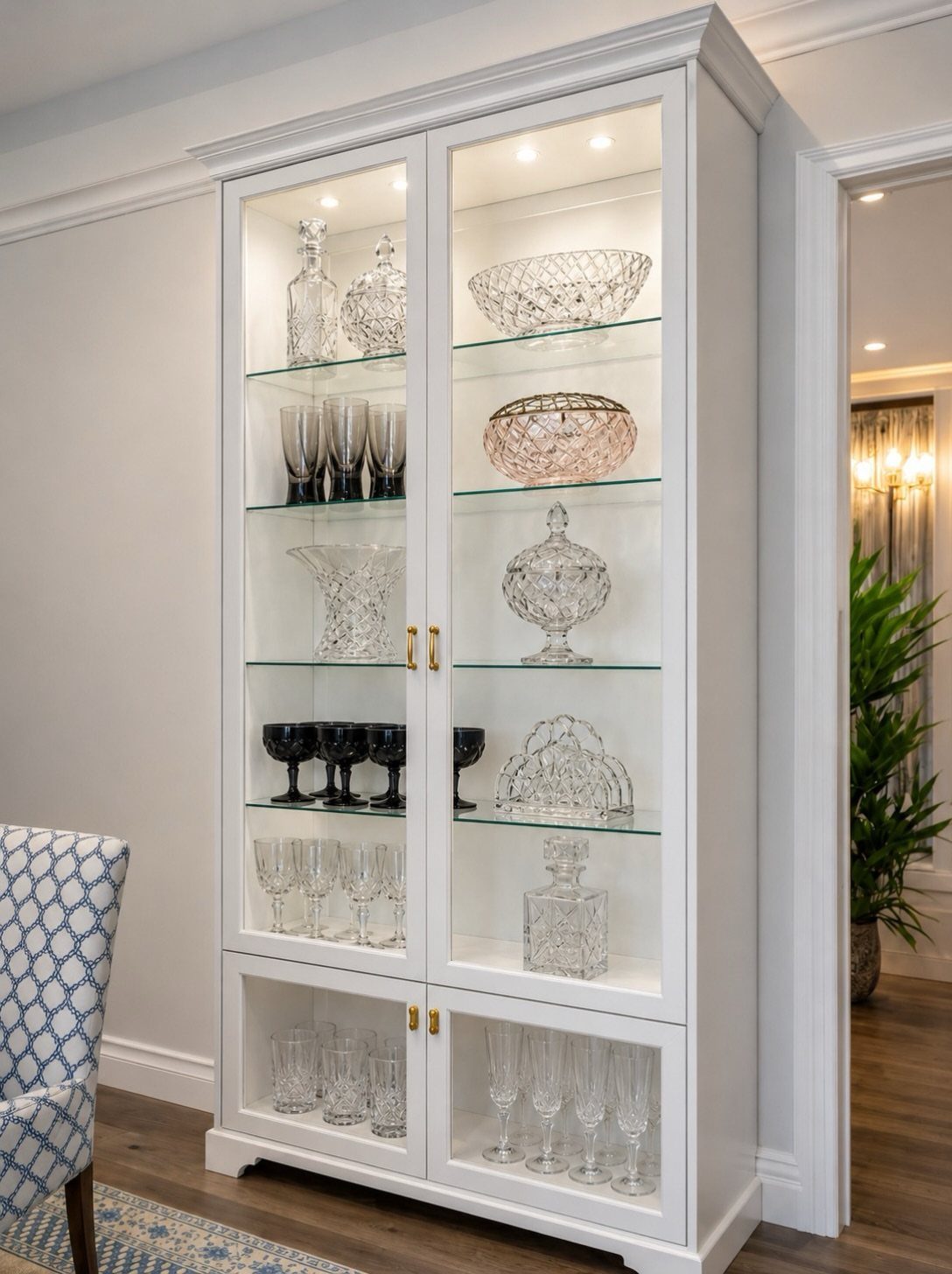
A glazed-fronted sideboard turns your glassware into the decor, so the shelves need to look good before you ever set a table.
Edit hard. Group pieces by type and leave a little empty shelf space, because a packed cabinet reads as storage, not display.
Glass doors mean every shelf is on display, so plan on tidy stacks and a short list of pieces that earn their spot.
Keep the plain, mismatched everyday items in a closed cabinet elsewhere, and save this one for the pieces you actually like looking at.
3. Lamps on the Sideboard
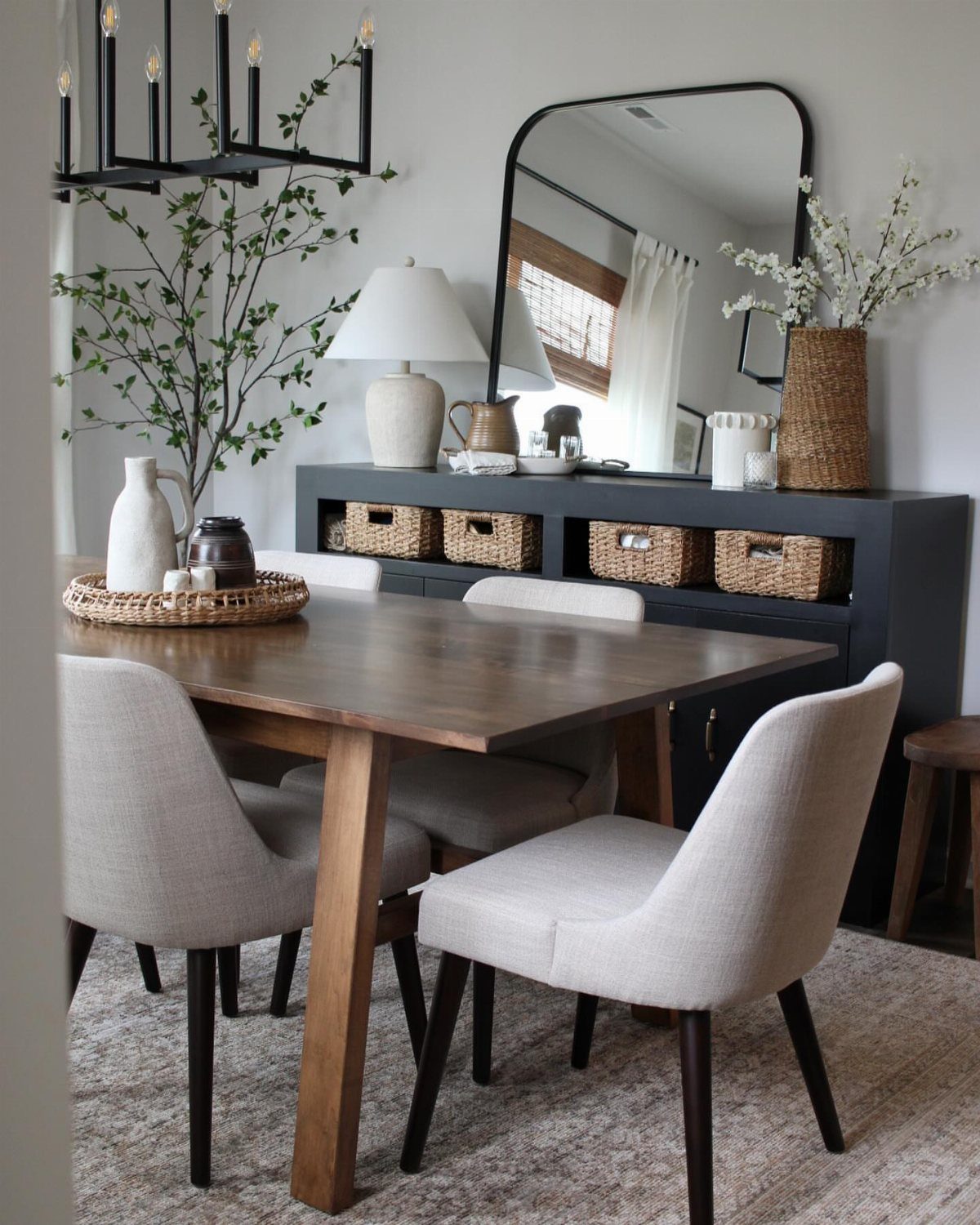
Lamps give a dark buffet a job after dinner is cleared. A table lamp on a black sideboard adds a warm pool of light at eye level, which the overhead chandelier can’t do alone.
Pair it with an arched mirror behind and the glow doubles. Baskets on the surface add texture and hide clutter.
Choose a lamp with a base slim enough to leave room for other pieces. Then put it on a dimmer or a warm bulb, and you can keep the chandelier off for quiet evenings.
4. Art Above the Sideboard
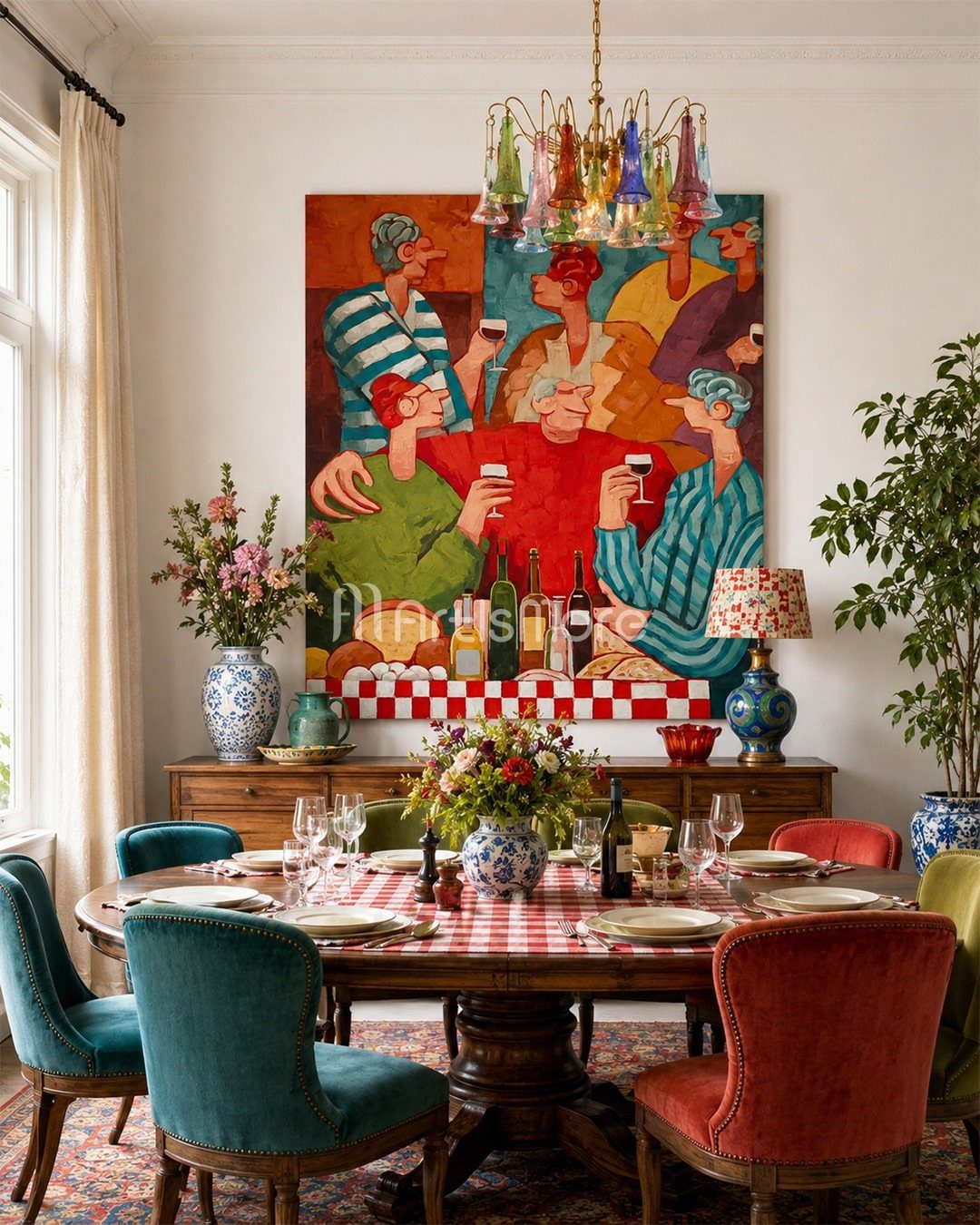
Hang a painting big enough to matter. Over a wooden sideboard, one large piece beats a cluster of small frames, because it gives the wall a single clear focal point.
Color is the easy way to tie it in: pull one or two shades from the artwork into your chairs or table accessories, as the colorful seating does here. Art about dining suits the room naturally.
Keep the frame a little narrower than the buffet below so the 2 read as a pair. Leave some wall between them, too.
5. Tall and Short Items
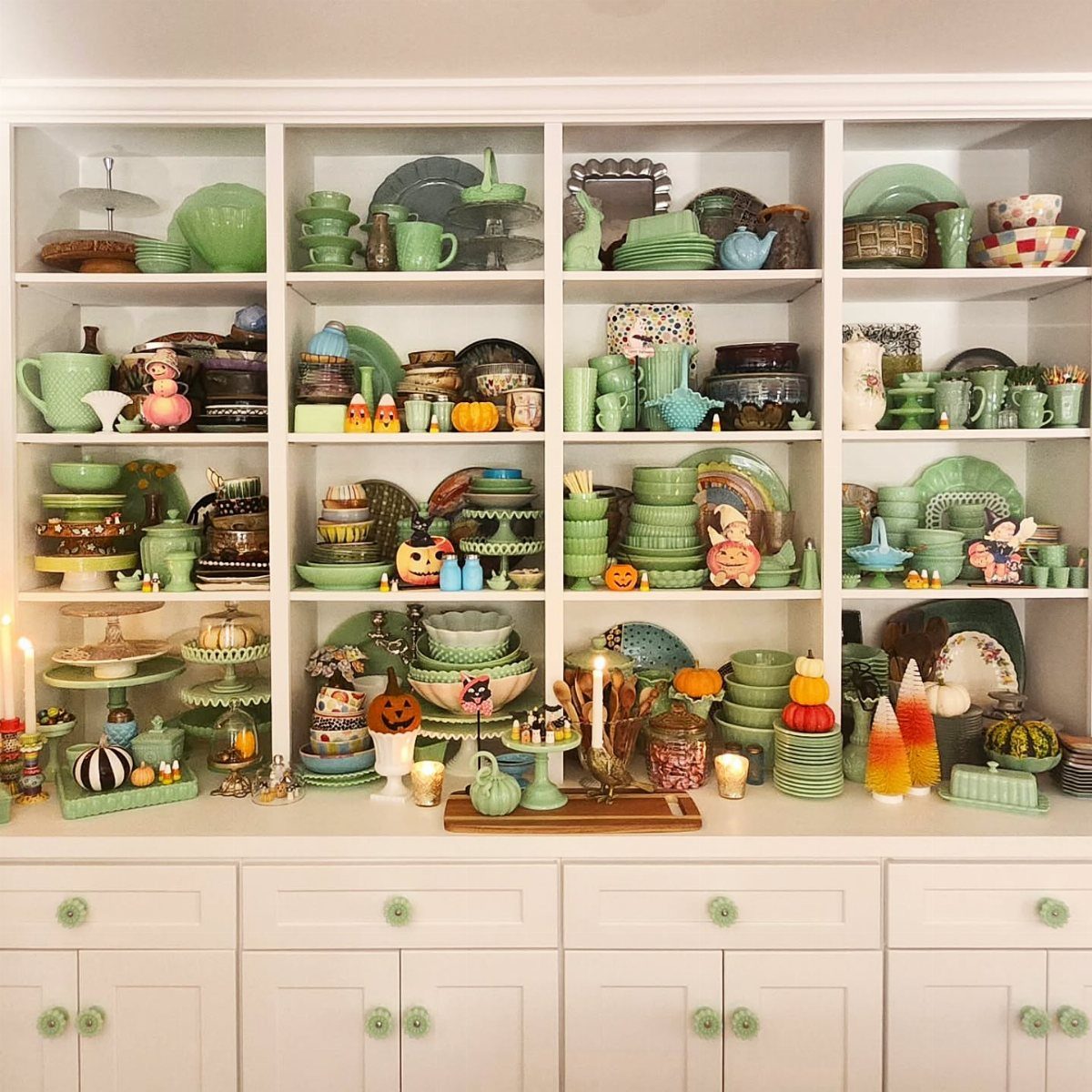
Varying height is what keeps a long shelf of dishes from looking flat. Stack plates and bowls low, then add a few taller pieces so the eye moves up and down along the shelf.
Pottery in a narrow palette, say green and brown on white shelves, reads as one collection even when the shapes and heights vary. Seasonal extras, like the pumpkins, slot in as a swap rather than a rebuild.
I’d start with the tallest items spaced unevenly, then fill gaps with mid-height bowls. Step back and squint; any hole or clump will show right away.
6. Antiques with Modern Pieces
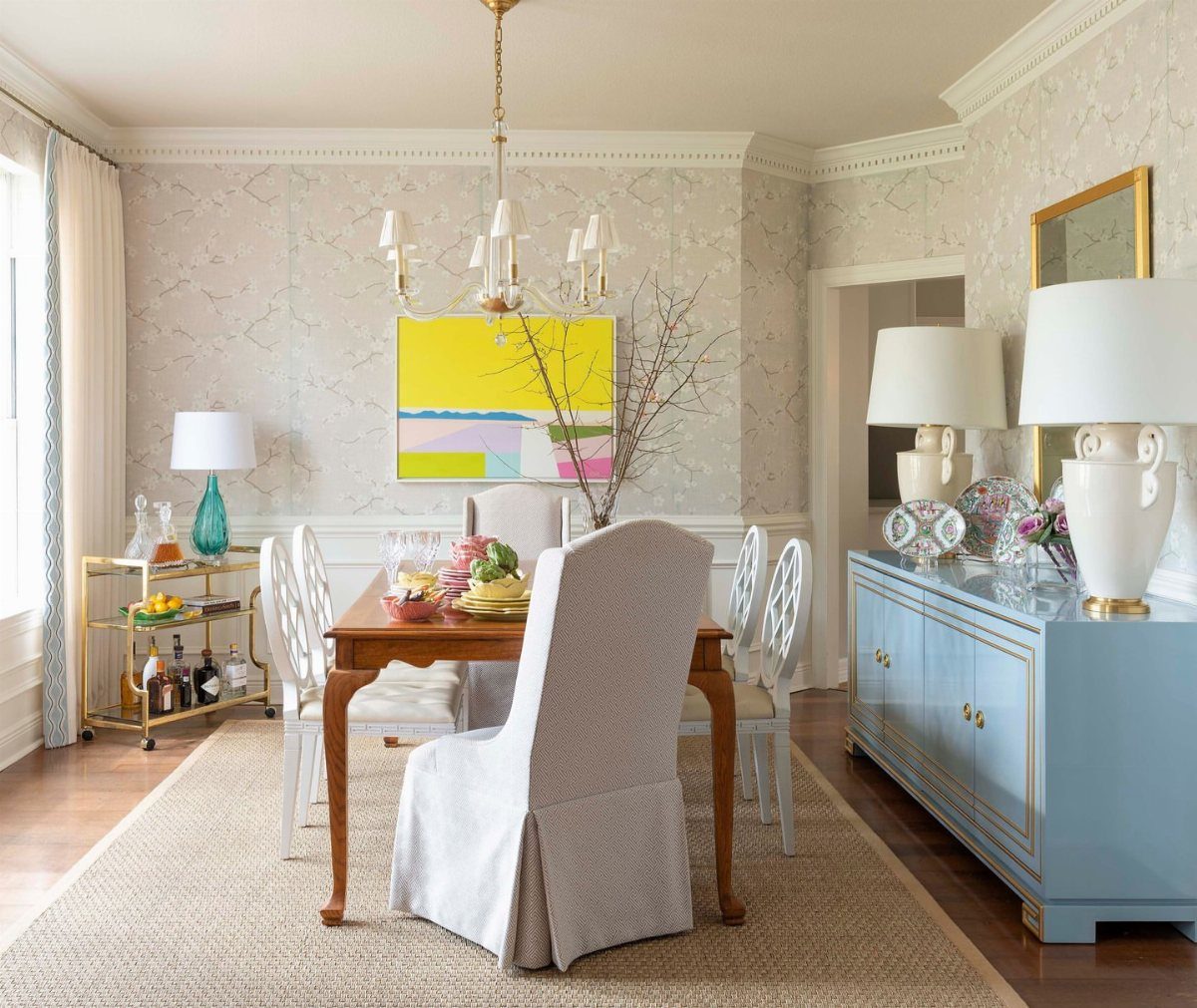
An old piece looks best when something modern sits beside it. A blue buffet with gold trim carries traditional lines, and a bold abstract painting on patterned wallpaper keeps the whole corner from feeling like a museum.
Let one element be the loud one. Here the yellow art does it, so the other pieces can stay calm.
For a budget version, look for a secondhand buffet and paint it a strong color. A gold bar cart or similar accent nearby repeats the trim and links the pieces.
7. Solid Wood Buffet in Dining Room
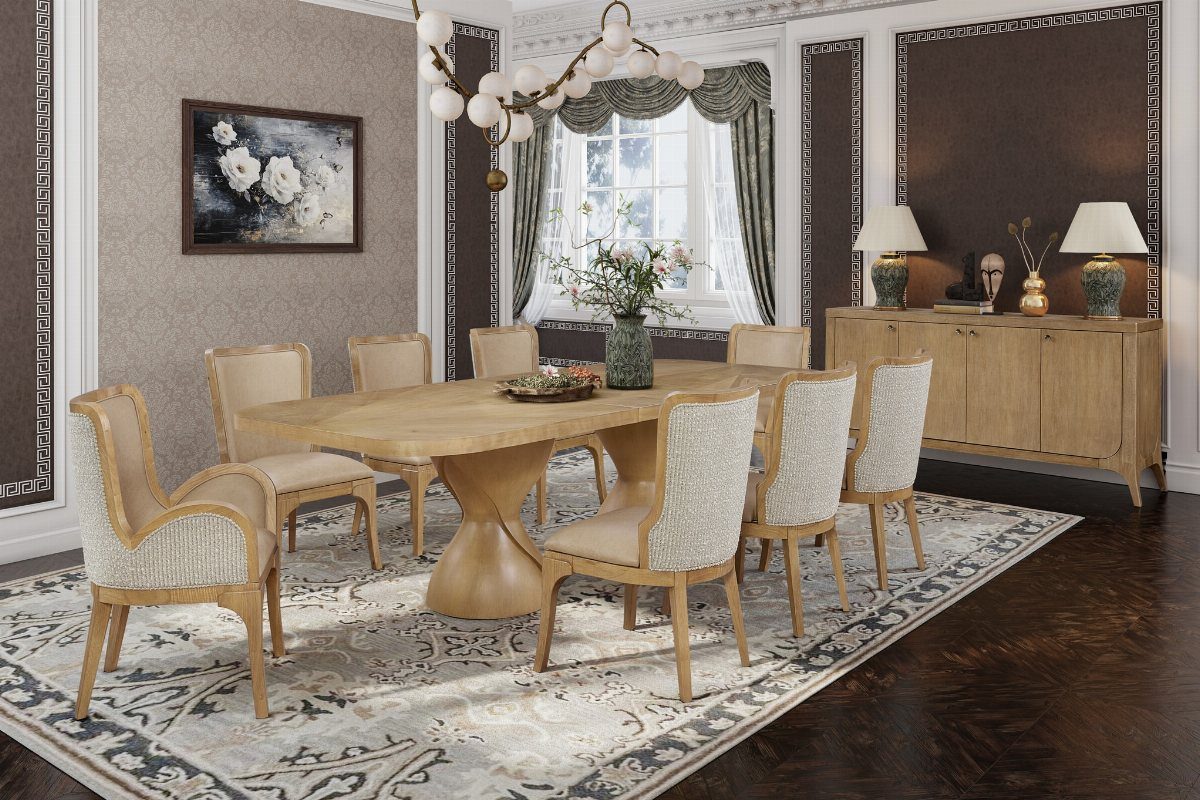
A solid wood buffet in the same tone as the table and chairs makes the room read as one set.
A light finish on a solid wood buffet keeps it calm against a dark wall, since the contrast lets the grain show without the piece fighting the paint.
Matching wood is the easy route, but a perfect match can feel flat. I’d keep the tones close and let the grain do the talking, so the buffet looks collected rather than bought as a boxed suite.
Leave the top fairly bare. Wood this good needs only one or two pieces, and a runner or tray is enough to protect the surface.
If your table and buffet don’t match, a rug in a similar tone ties them together.
8. Built-in Dining Room Buffet
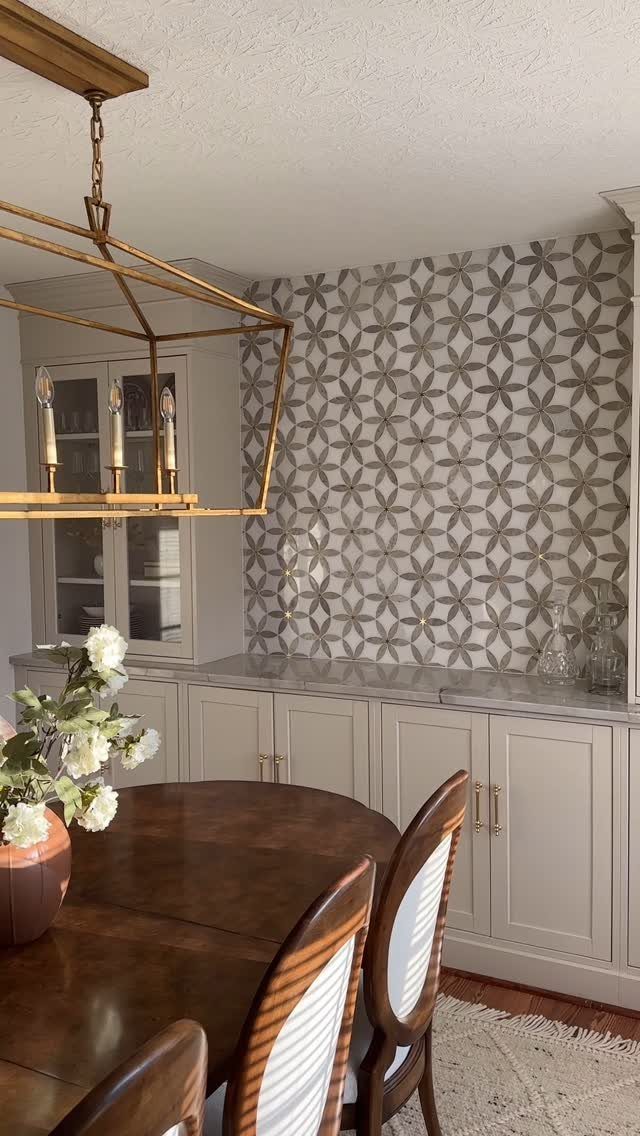
Built-in cabinetry along one wall gives a dining room a long countertop and closed storage in a single clean run. Painted light grey, it fades into the wall instead of crowding the table.
Patterned wallpaper behind the counter is a smart pairing, since the cabinet color stays quiet and the pattern carries the personality. I’d keep the countertop mostly clear so it works as a serving surface on dinner nights.
A full built-in costs real money and time. On a rental budget, a long freestanding buffet in a similar grey gets you most of the look, and it moves with you.
9. Mirror Above the Buffet
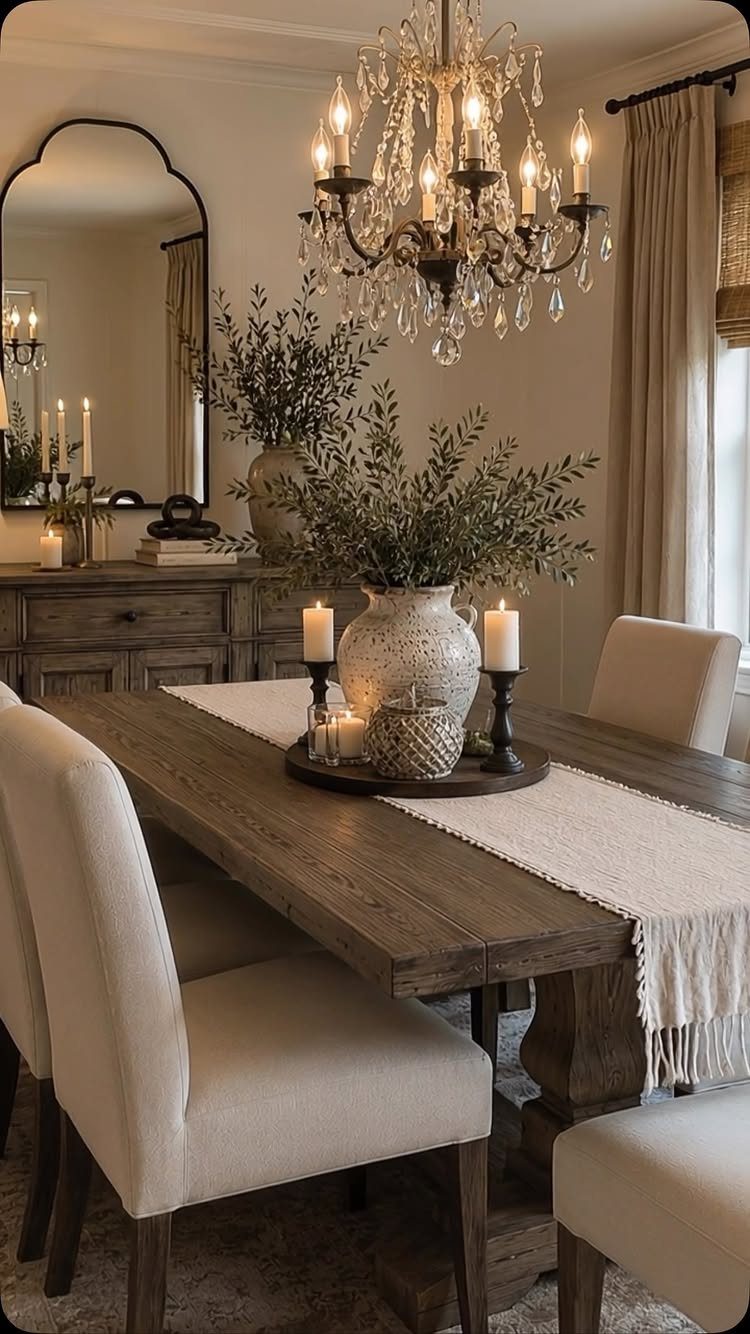
An arched mirror over a wooden buffet is the quickest way to give a wall height and bounce light back into the room. Here it also sits well under the crystal chandelier, which catches in the glass.
Hang it low enough to leave only a few inches above the surface, or the decor underneath will float away from it.
Keep the buffet styling to a few pieces, since the mirror doubles whatever sits in front of it. A clutter of small items looks twice as busy.
10. Dark Buffet Against Light Walls
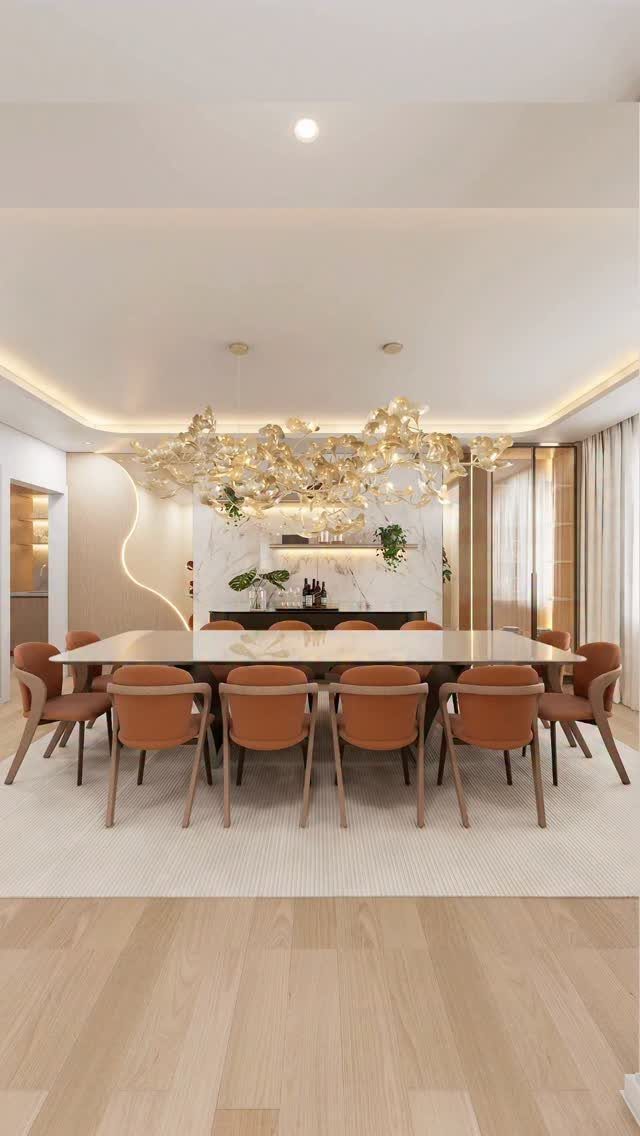
A dark buffet against a light wall gives a bright room one anchor. The dark cabinet stands out against the pale wall, and the white table and gold fixture keep everything else airy.
I like this best when the buffet is the only heavy piece. With a white table and warm chairs already in the room, one dark cabinet adds contrast without making the space feel closed in.
Keep the wall behind it plain and light. Then hang one piece of art or add a single lamp, and stop there.
For a budget version, paint a secondhand buffet black or charcoal.
Choosing Between Sideboards and Buffets
Sideboards and buffets are functionally identical; the names split along tradition more than design.
A sideboard is the flexible one and works in a living room, hallway or dining room. A buffet is the more formal choice, made for the dining room, usually with larger cabinets and a broader top.
If you want storage for serving dishes, silverware and linens, a buffet is the better pick. If the piece might move to another room in your next place, a sideboard is safer.
The sideboard got its name in Georgian and Victorian England, where it sat waist-high along the dining room’s back wall. That height is still a good guide when you shop.
Check the construction before the style.
Hardwood is the most popular material, and it ages well and takes many finishes. Glass doors brighten a room, while metal hardware leans contemporary.
Styling Tips for Buffets
A buffet doesn’t have to match the dining set. If the table didn’t come with matching storage, look for something that shares the same finish or leg style instead of hunting for an exact set.
For a more modern, eclectic look, go the other way and pick something vastly different.
A buffet painted in a bold color that contrasts with the rest of the room can shift a traditional space toward something more current in one move.
Before you style anything, think about what you actually use in the room. Cookbooks, magazines and vases all need a home, and a buffet with doors keeps them close but out of sight.
Then decide how much stays on top. Serving ware, a few personal treasures and one decorative piece are plenty, and the surface stays free for entertaining.
Functionality of Buffets
A buffet holds serving dishes during the meal and table linens between them. Inside, it holds serving dishes, silverware, linens and other dining essentials, so the table stays uncluttered on ordinary nights.
On holidays, dinner parties and family gatherings, the broad top becomes the place to set out food and drinks. Clear it before guests arrive so you have the full surface.
Sort the storage by how often you reach for things. Daily items go where your hand lands first, and the serving pieces you use a few times a year go deeper in.
When you shop, compare the drawer layout and cabinet size to what you own. Solid wood buffets are sold in finishes that range from espresso to pale oak, and some manufacturers let you choose drawer layouts and pulls.
Frequently Asked Questions
What is a sideboard?
Picture a long, low cabinet that stands on its own against a wall, usually raised on short legs, and you have a sideboard.
It works in a dining room, living room or hallway, so it moves easily if you change homes.
The piece started out in Georgian and Victorian dining rooms, built to sit about waist-high against the back wall, and that height still works as a shopping guide.
What is the difference between a sideboard and a buffet?
In practice the two do nearly the same job, and the names come from tradition more than from any real design split.
A sideboard is more flexible and fits other rooms too. If you want space for serving dishes, silverware and linens, pick the buffet; if the piece may change rooms later, pick the sideboard.
How can I decorate my sideboard?
Start with one large piece, such as a sculptural vase, and let it set the scale, then build a lower group beside it.
Keep the top to a few items, since serving ware, a personal treasure or two and one decorative piece leave room for serving.
Vary the heights so the top doesn’t read flat, and anchor the spot with a table lamp or a piece of art on the wall behind.





