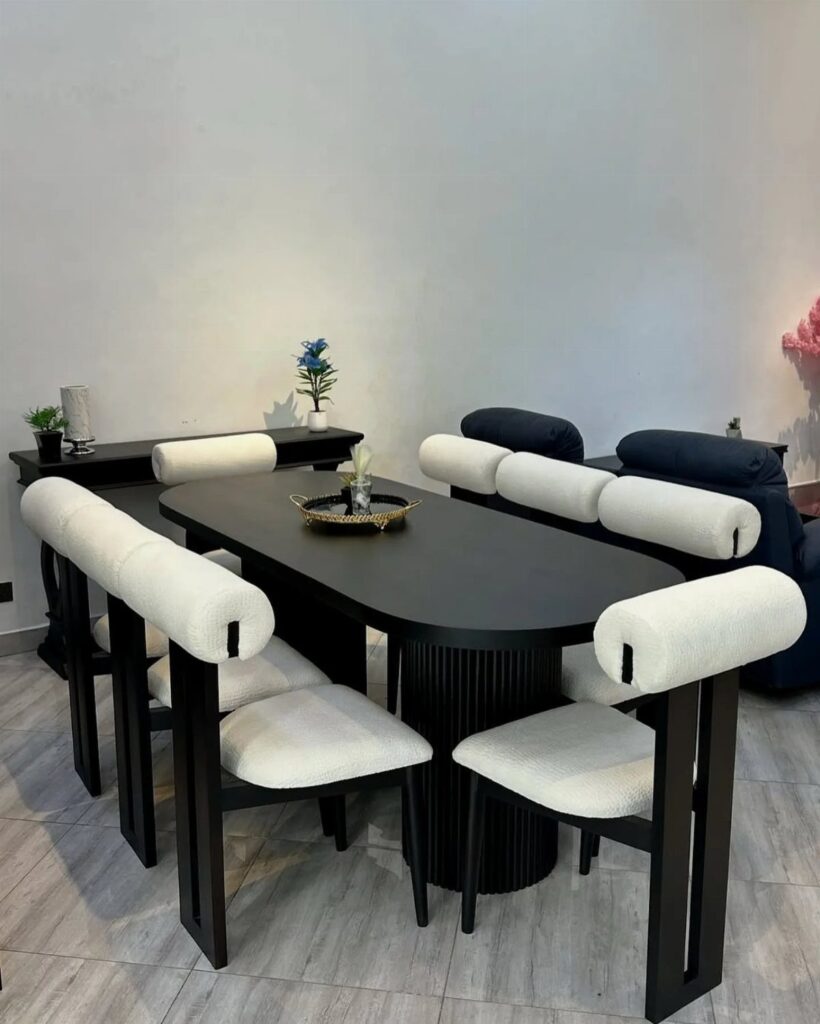
Before style comes the room itself: its shape, its square footage and the route people take through it should pick your table first.
A square nook suits a round or hexagonal top, a walkway wants an oval, and an open plan does well with a rectangle or oval to mark where dining starts.
The ideas run from painting a set of chairs in bold colors to a live-edge slab on glass, with rugs, a central chandelier and low centerpieces in between. Whatever you pick, plan on 24 inches per seat.
1. Oval Dining Room Table
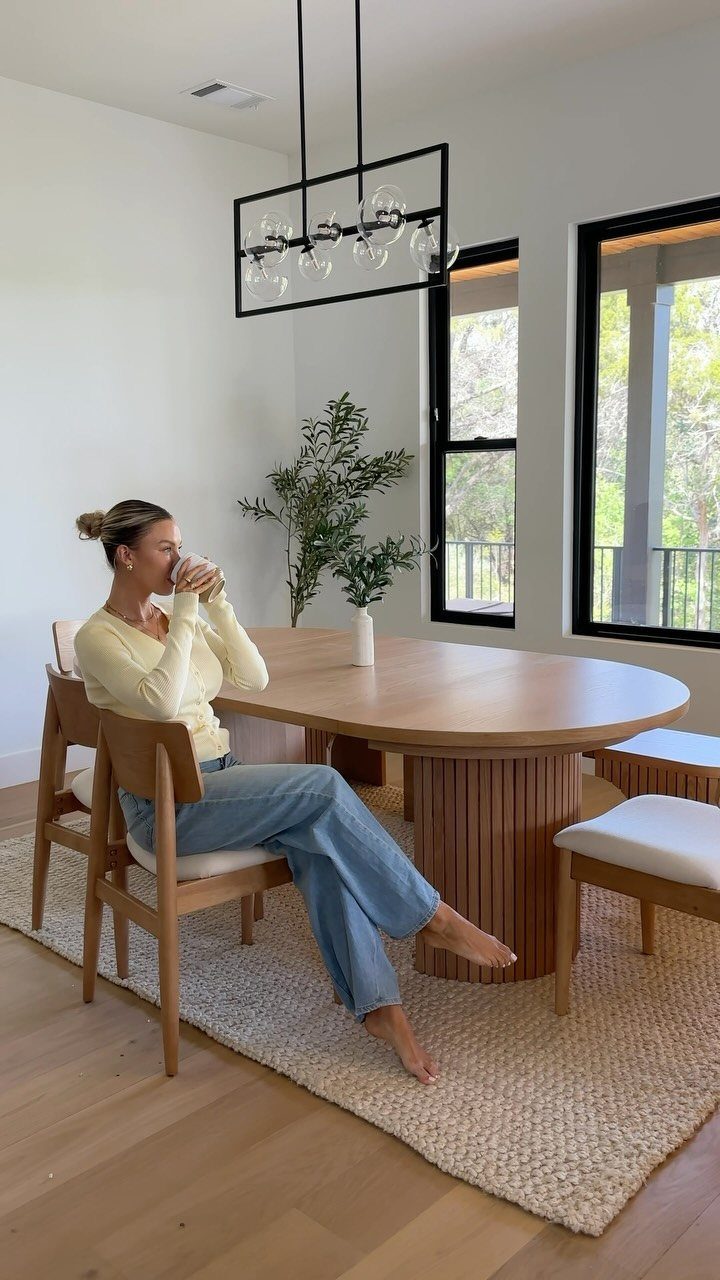
Soft corners are the whole argument for an oval. Nobody gets jabbed by a table edge, and the curve lets chairs slide in at slightly different angles without the rigid, lined-up look a rectangle forces.
Light wood keeps a big oval from dominating a room, which is why I’d pick it over a dark finish if the space is already full of windows and a black fixture overhead.
Hang the chandelier over the center of the curve so the 2 shapes echo each other.
2. Hexagonal Dining Room Table
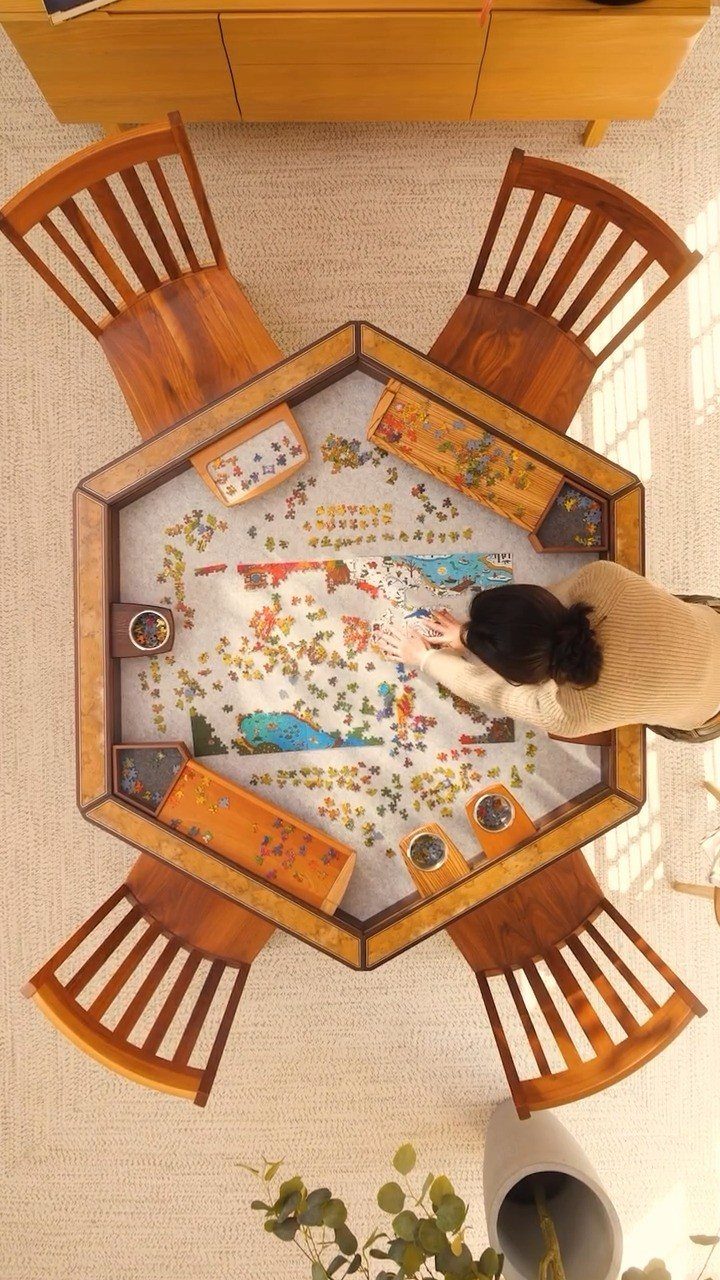
6 equal sides mean no head of the table, and that changes how a meal feels. Everyone faces the middle, which suits a family that plays puzzles, cards or board games between courses.
A hexagon in wood with 4 chairs leaves some sides empty, so I’d keep the extra sides open for a bench or a pair of added chairs later.
Measure the floor around it before buying: the corners stick out farther than a round table’s edge does.
3. Choose Colorful Chairs
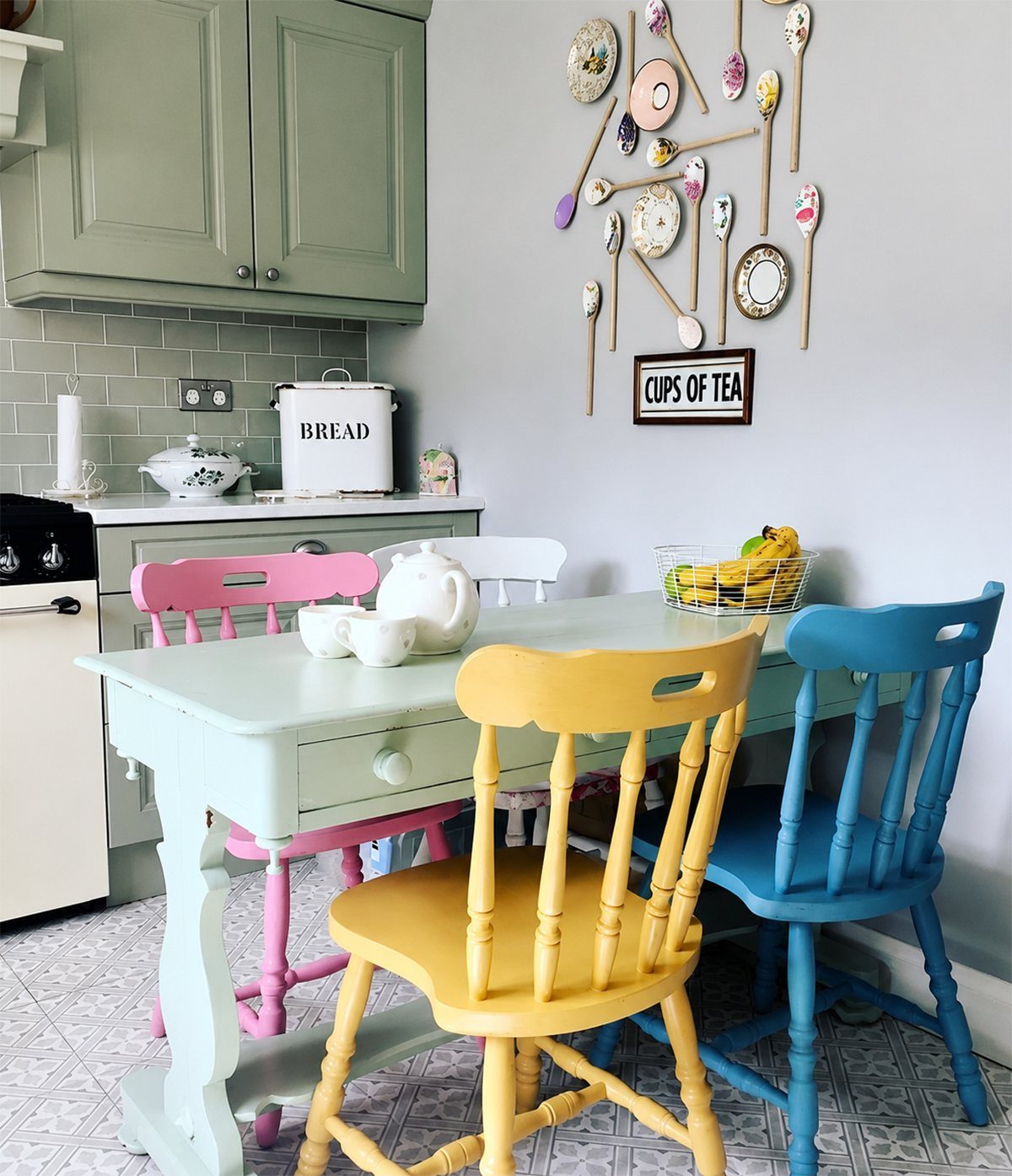
Mismatched chairs let you keep a plain table and still get a room with personality.
Pink, yellow and blue around a pale green table work because each chair is a solid, single color, so the set reads as playful and not chaotic.
Paint is the cheap route.
Sand thrift-store wooden chairs, prime them, and brush on a color each. Painting or reupholstering a mismatched set is a weekend job and costs a fraction of what a new set would.
My rule: let the table stay quiet, and keep wall art simple.
4. Low Centerpieces
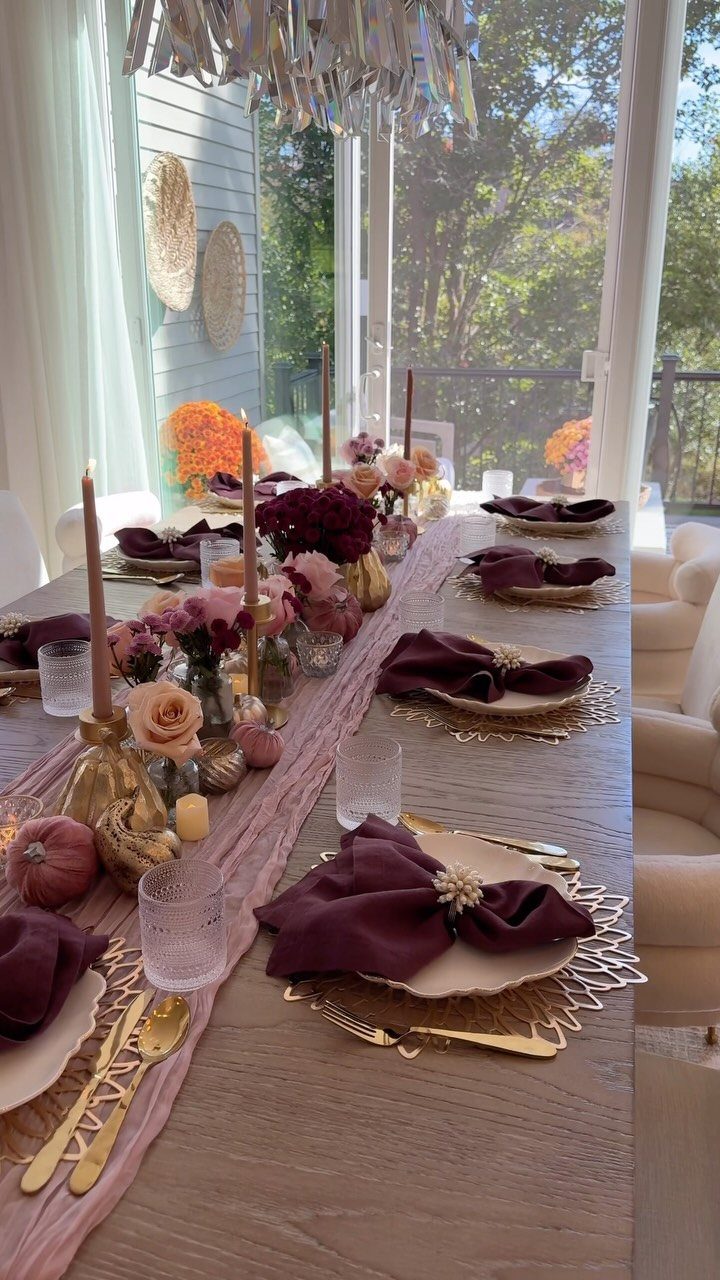
Low arrangements keep sightlines open over the whole tabletop, so people can talk without leaning around a vase. Short florals with some candles in a row down the middle do that job well.
A runner gives the arrangements a lane to sit in and ties the napkin color to the rest of the table. I like repeating one tone from the flowers in the napkins, as burgundy does here.
Keep everything below eye level when seated, and leave room for the serving dishes.
5. Woven Placemats
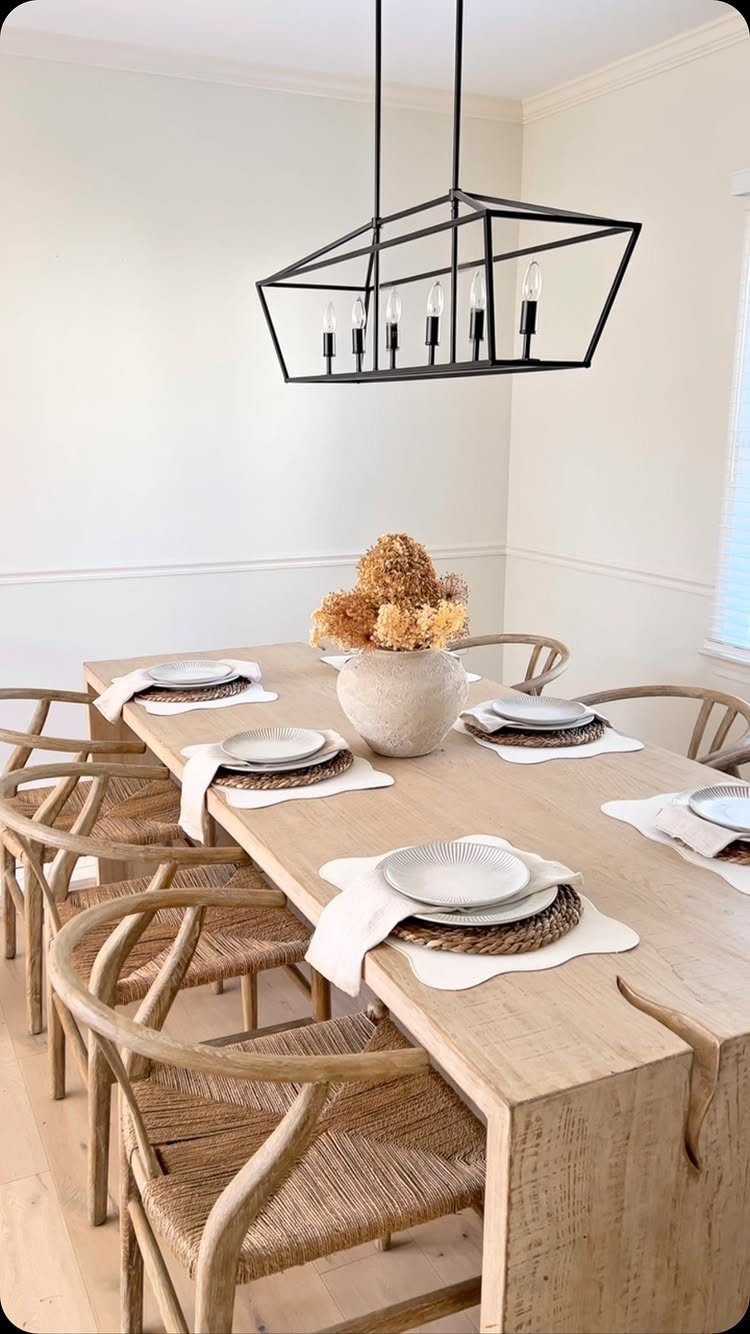
Round woven placemats add texture without adding a pattern fight. Set under white plates on a light wood table, they bring warmth and a little grain that plain wood alone can’t.
Natural fiber suits a dried-flower vase in the center, because the materials share one earthy palette. I’d choose a tone close to your tabletop so the mats read as layers, not as spots.
Wipe them clean rather than soaking them, since woven fibers hold on to damp.
6. Extendable Dining Room Table
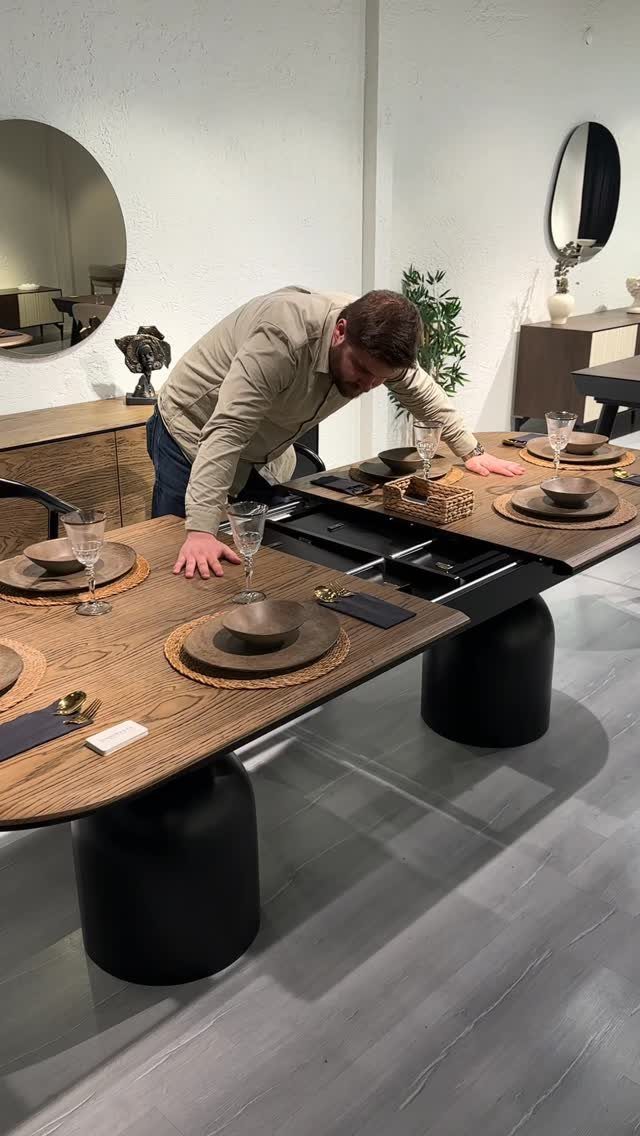
An extendable table is the answer when the room has to handle a Tuesday dinner for two and a holiday for ten. Closed, it keeps floor space free; opened, it seats the crowd.
Before buying, test the mechanism by hand: it should pull apart smoothly and lock without wobble. A wood top in a warm brown pairs well with neutral plates and glassware, so the extra length doesn’t need extra styling.
Measure the clear floor with the table fully extended, not just closed.
7. Layered Table Decor
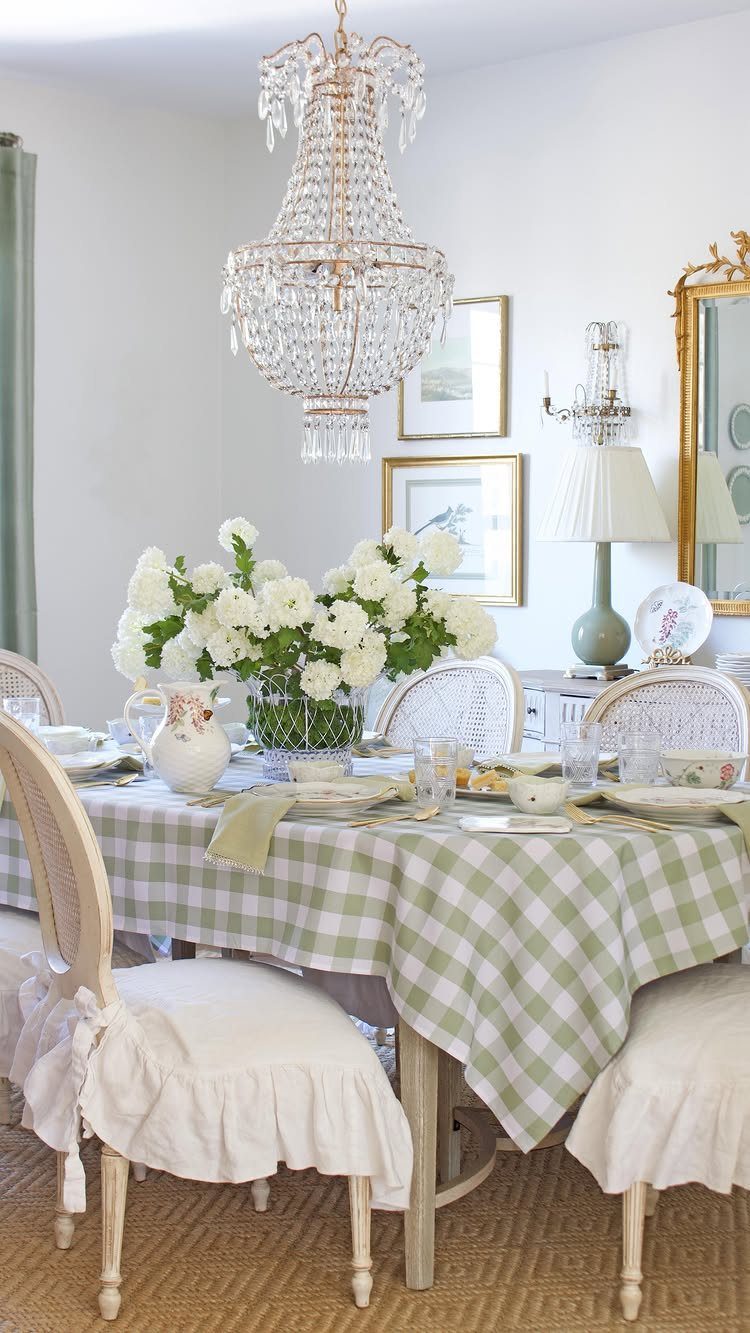
A checkered cloth, a runner and place settings stacked on one table give a meal the feel of a spread. Each layer adds a little height or pattern, so the table looks generous before anyone sits down.
I’d start with the cloth, then lay the runner across it, and keep the white flowers as the one calm element. Under a crystal chandelier, simple white dishes let the green check do the talking.
Keep the layering to a few pieces, such as a charger, plate and napkin, so every place setting still has room to breathe.
8. Central Chandelier
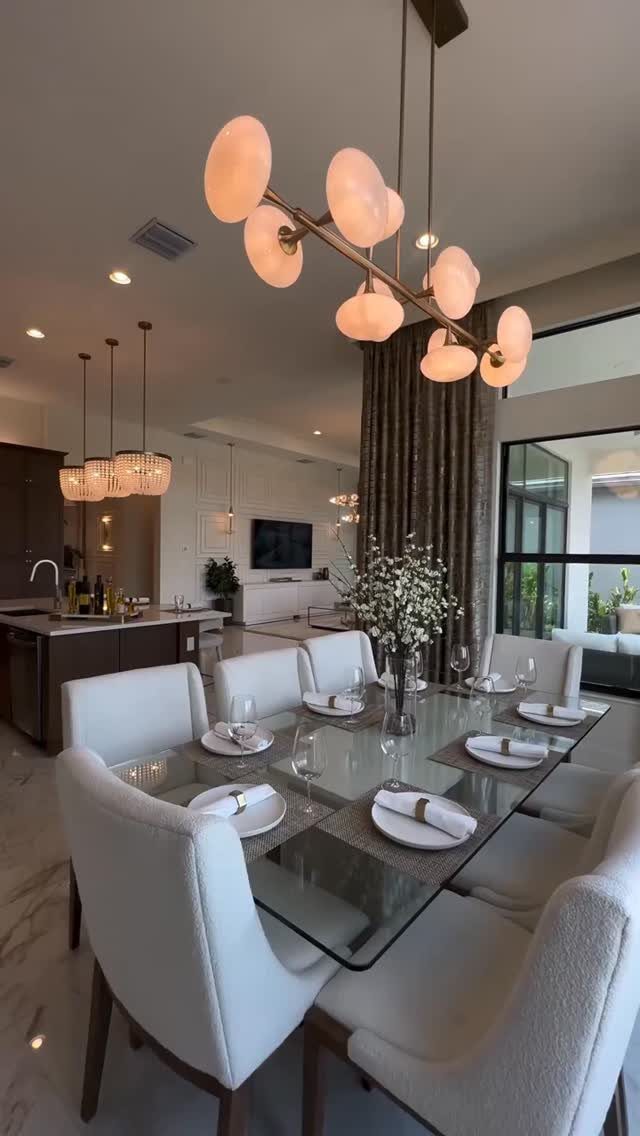
A sculptural gold chandelier with frosted globes works as the room’s jewelry. Over a glass table it doubles up, because the glow reflects off the top and the light seems to come from 2 places.
Center it over the table, not the room, and choose frosted globes over clear bulbs if glare bothers you at dinner. I like gold here because it warms white chairs and cool glass without competing.
Match the fixture’s width to the table so it doesn’t look lost.
9. Comfortable Seating
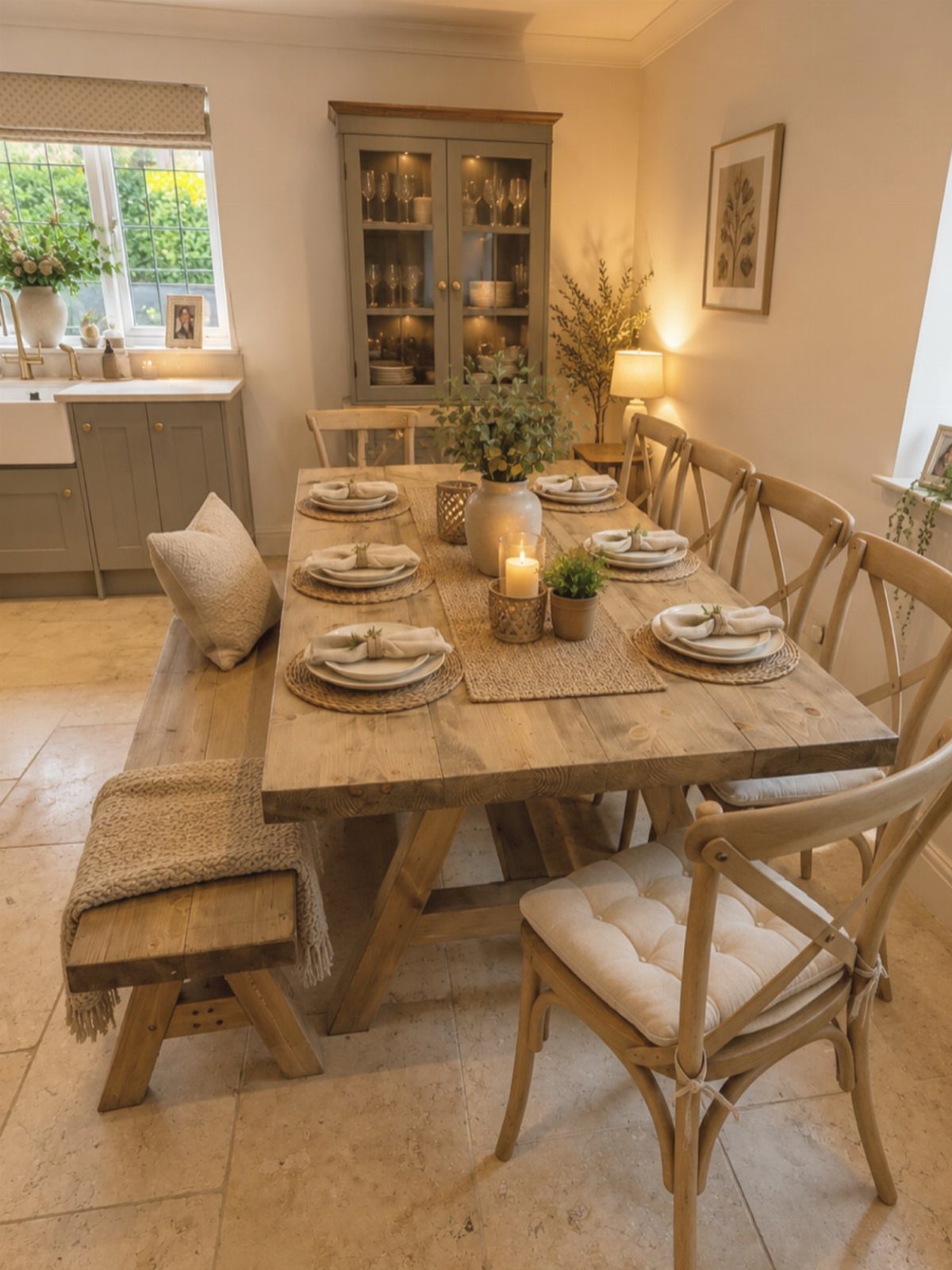
People stay at a table as long as the seat lets them, so cushions matter more than most styling choices.
White seat cushions on wood chairs soften a rustic table, and a bench with a beige throw adds a relaxed spot for kids or an extra guest.
I’d pick cushions with ties or non-slip backs, and a throw you can toss in the wash. Keep the colors close to the wood so the room stays warm and calm.
Sit in any chair for a good while before you commit, because a seat that feels fine for a minute can start to ache by dessert.
10. Rectangular Dining Room Table
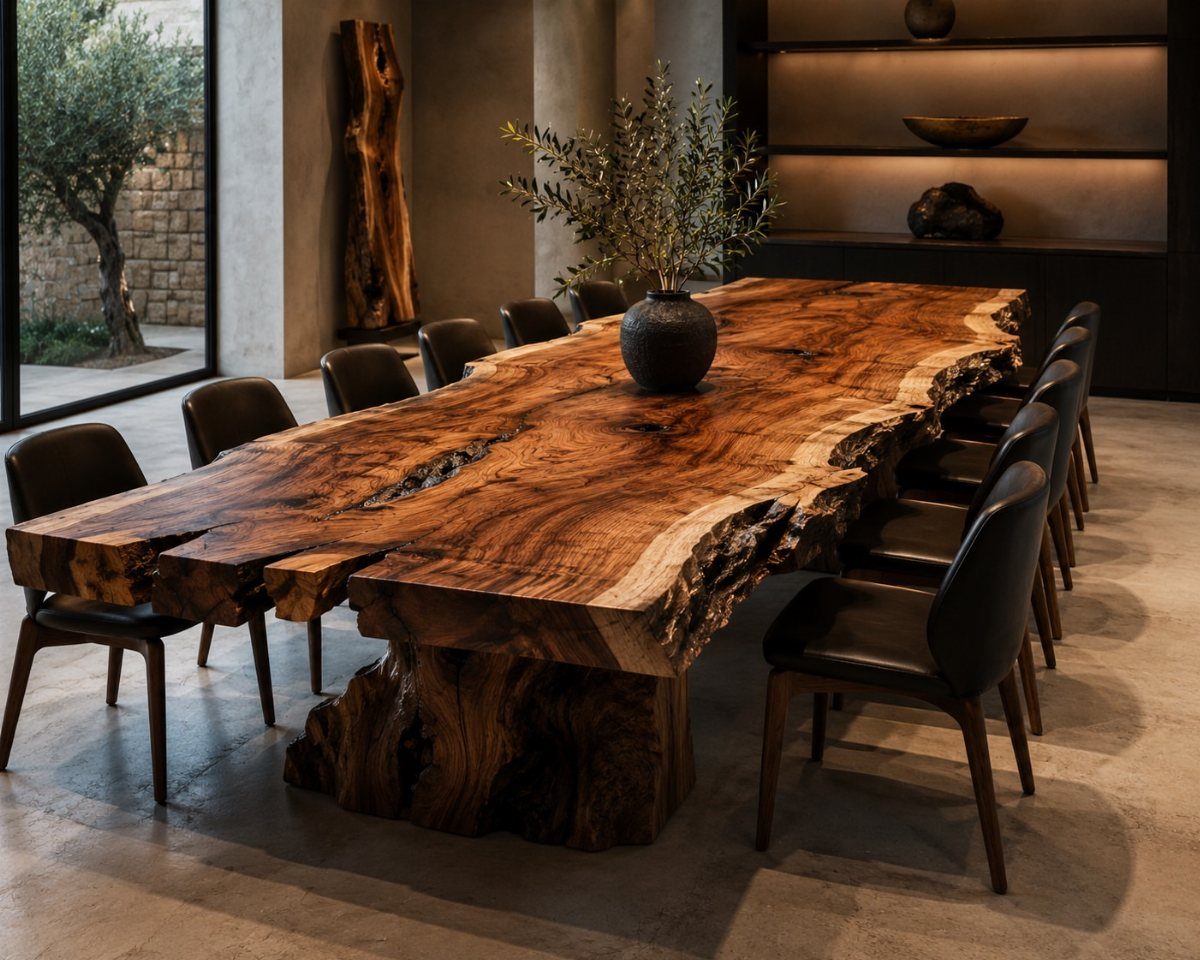
A long rectangle fits a long room better than any other shape, and it lines up neatly in an open-plan layout, where one edge can run parallel to the kitchen. A live-edge top keeps that straight shape from feeling stiff.
A single dark vase with greenery is enough on top, since the grain is already the decoration.
Leave walking space around the whole table before you order a length, since a table that fits on paper can still pinch the room.
11. Use Rugs to Anchor the Space
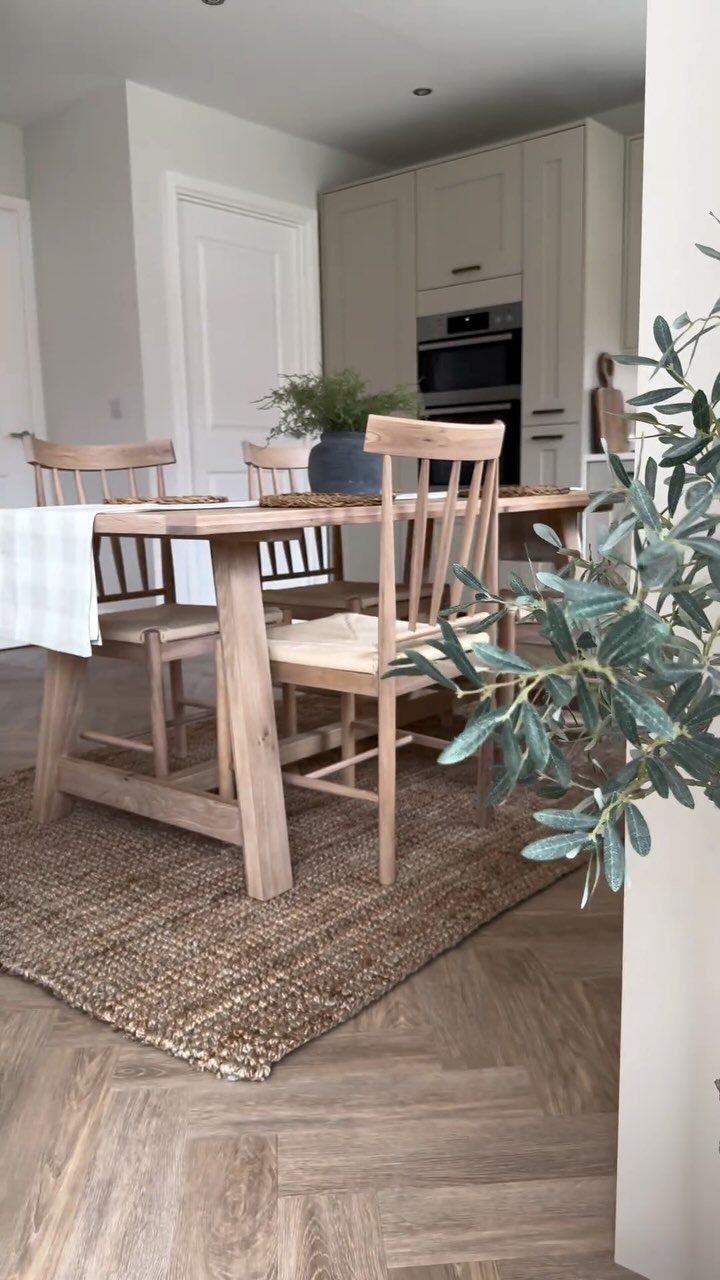
A brown jute rug marks where the eating zone starts and stops in a room that also holds a kitchen. The woven texture adds warmth under a wood table, and it’s an easy swap if you rent.
Choose a rug big enough that the chair legs stay on it even when someone pushes back to stand. Jute is rough underfoot and holds crumbs, so I’d vacuum it often and skip it if you have messy eaters.
Size up before you settle on a rug.
12. Wood Dining Room Table
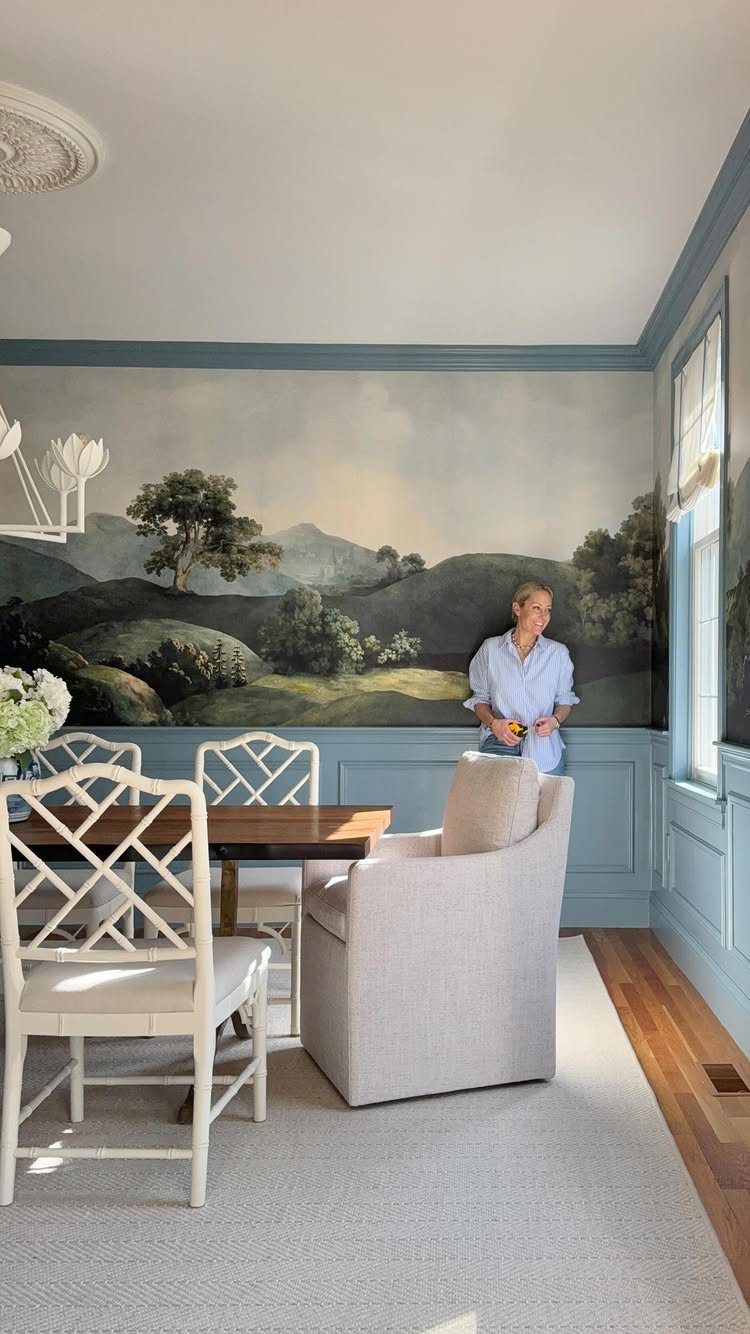
A wood table with white chairs is an easy pairing: the wood brings warmth and the chairs keep it light. Plan around the maker’s rule of thumb of 24 inches per seat, so no one rubs elbows.
The same maker’s lighting advice is useful too: in rooms with standard 8 or 9 foot ceilings, hang the chandelier 30 to 36 inches over the tabletop.
A beige armchair at one end, as here, gives the table a softer finish than another chair would.
13. Create a Multi-Functional Space
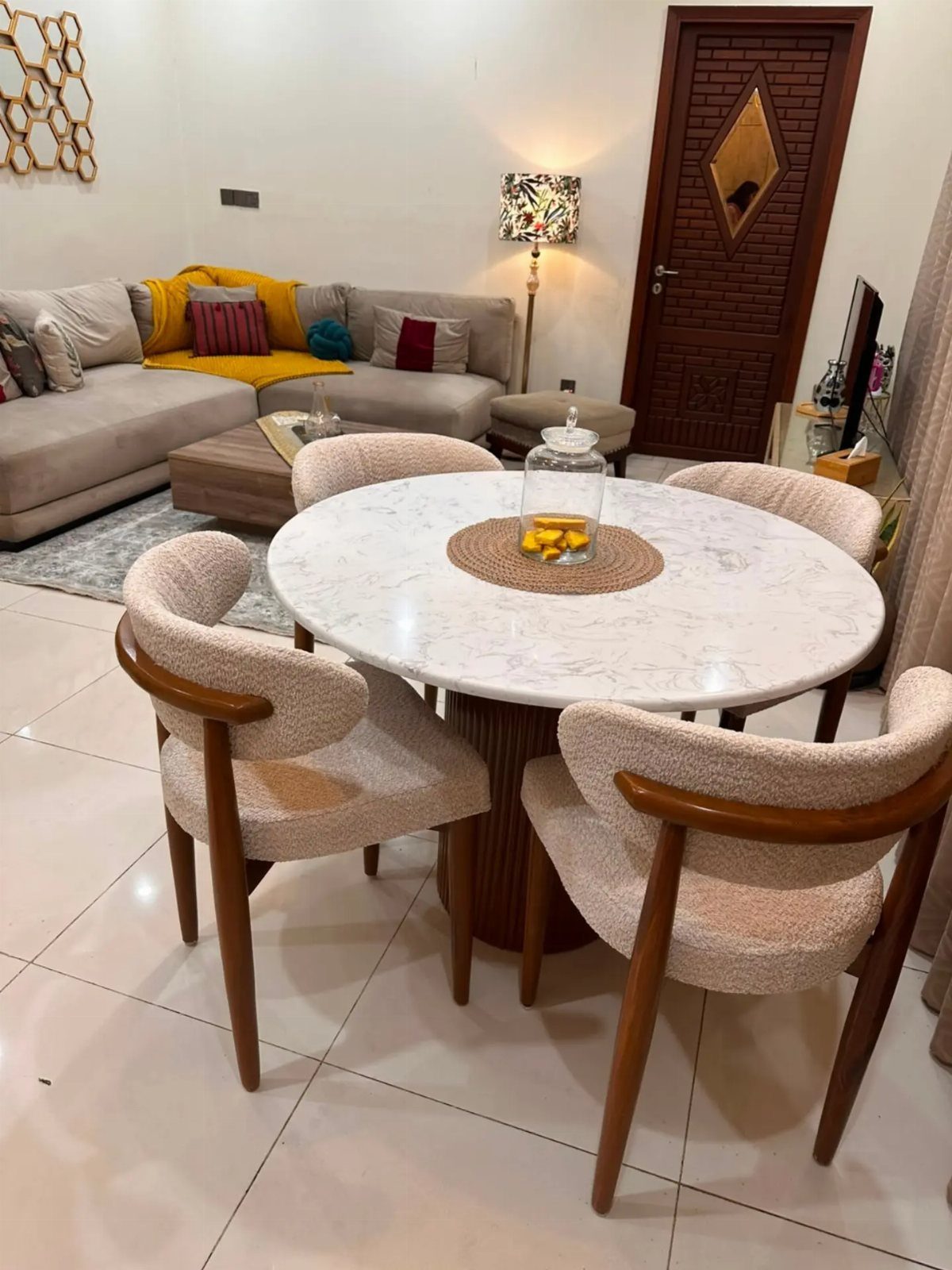
A round marble table set beside a sofa lets one open room do two jobs without a wall between them, as long as the table’s footprint and the placement of the furniture mark where dining ends and lounging begins.
The table anchors dinner, and the grey sectional keeps its own corner for the evening.
Keep the palette tight so the zones read as one room. Beige chairs and a pale top stay quiet next to grey upholstery, and a round shape leaves walking paths open on every side.
I’d use the table for more than meals: homework, laptop work, a puzzle. Choose chairs you can sit in for hours.
14. Choose a Color Palette
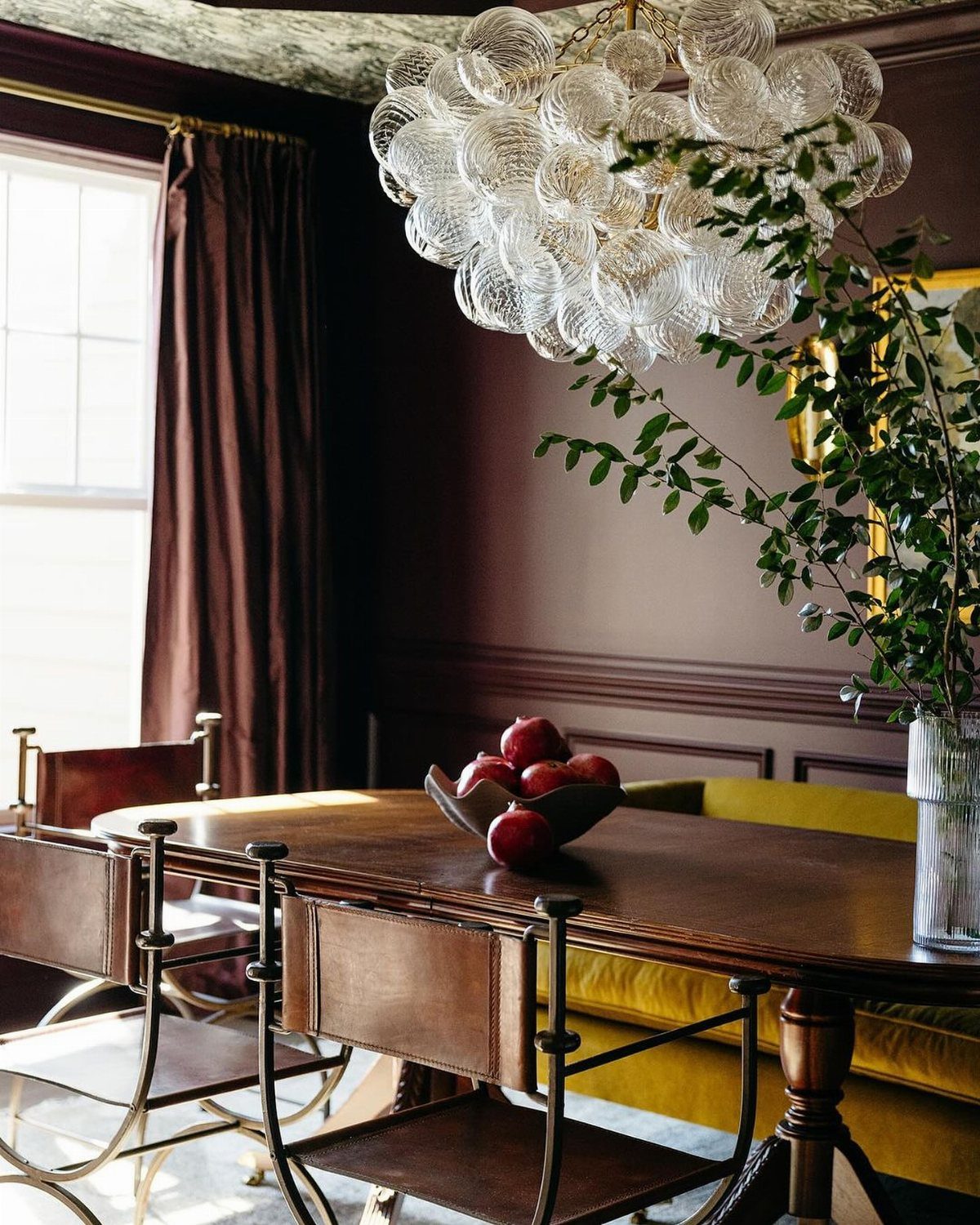
Burgundy walls, a yellow banquette and wood leave no doubt that a dining room can carry a bold palette.
Pick one deep wall color first, then give a single contrasting color, like yellow, to the seating so the chairs do the talking.
The wood table and leather chairs act as neutrals between the two. A bowl of red apples repeats the wall color on the table for almost nothing, so I’d borrow a tone from the walls for the centerpiece.
Test paint samples on the wall and look at them at night, since dark colors shift under a chandelier.
15. Live-Edge Glass Dining Table
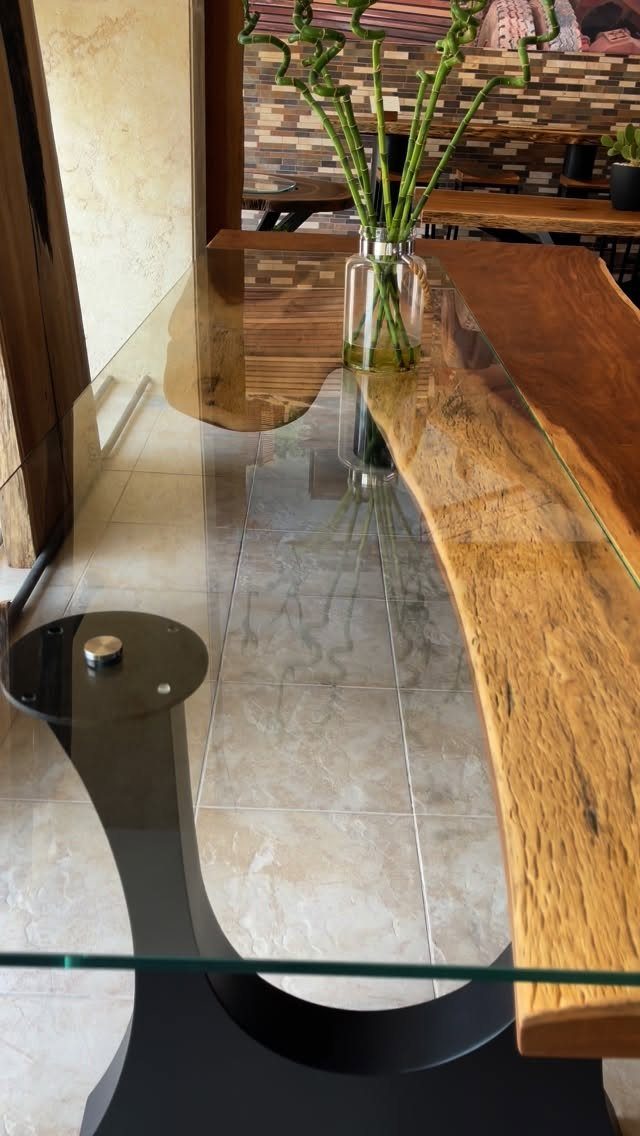
Glass around a live-edge slab lets the wood’s rough outline show up as the whole design. The clear top keeps the room feeling open, and the black curved base gives the piece a sculptural look without any extra decor.
I’d leave the top bare or use one low vessel, because the slab is already the centerpiece. Wipe glass often, since fingerprints show up faster on it than on wood.
This is a pricier style to buy, so check the slab sits flush and the glass edges are smooth before you commit.
16. White Marble Dining Table
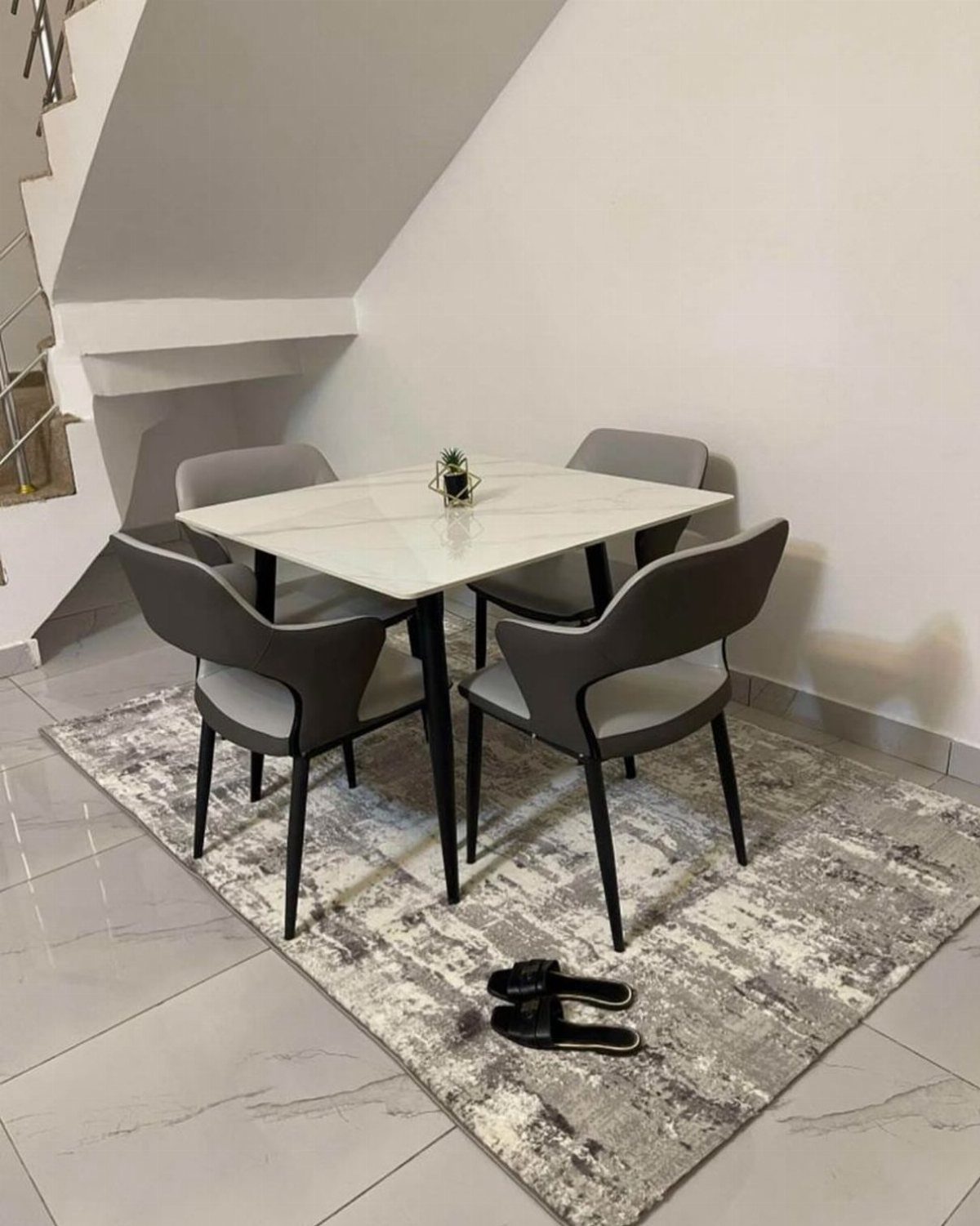
Polished white marble on slim black legs gives a square table a crisp, graphic look. A square or round top seats 4 chairs, one per side, and that suits a tight nook far better than a long rectangular table would.
Gray chairs and a patterned gray rug soften all that white and black, so the space reads as layered instead of stark. I’d choose a rug with some pattern because marble shows every contrast around it.
Use coasters and wipe spills quickly. Marble is a stone, so it asks more care than a wood top does.
17. Dark Stone Dining Table
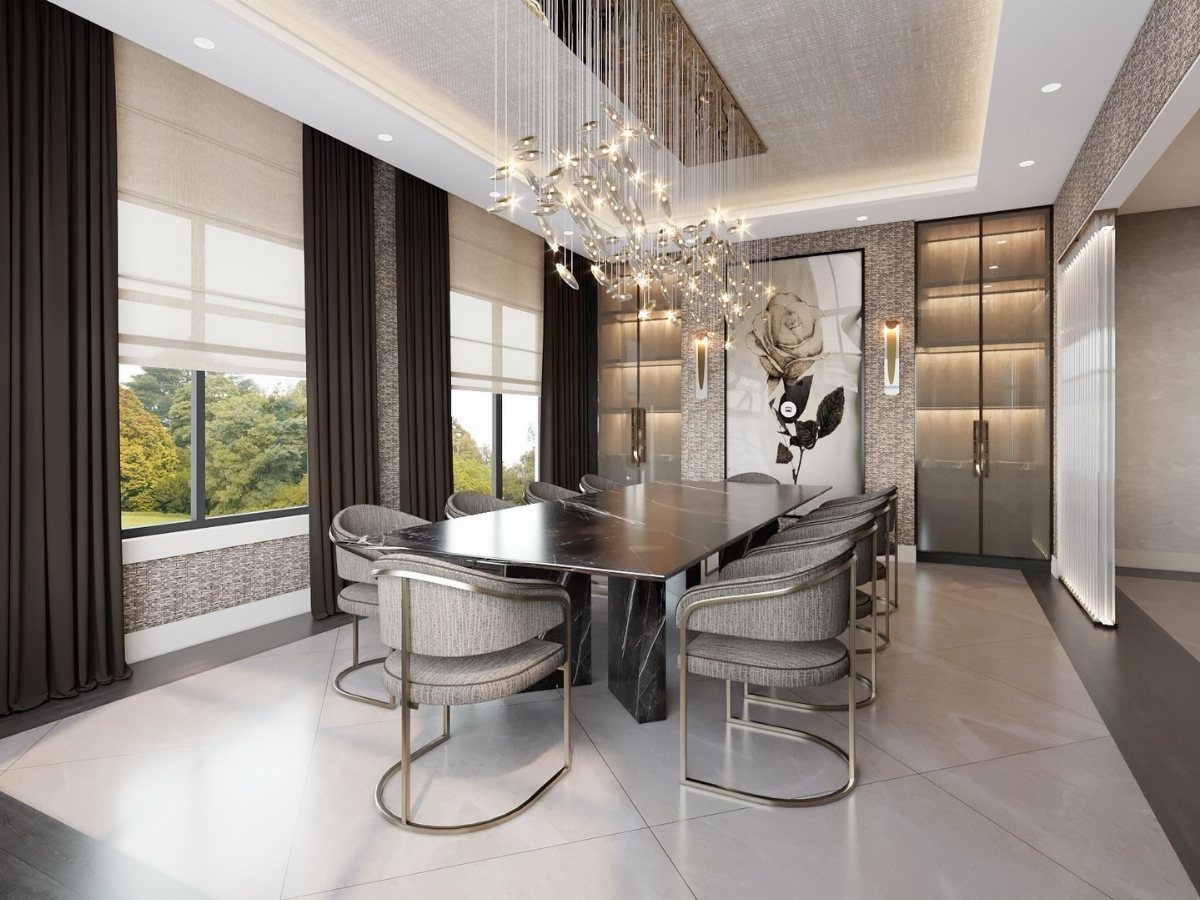
Dark stone makes a long table feel like a solid, calm block in the room. Grey upholstered chairs keep the look minimal, and a crystal chandelier overhead adds sparkle against the deep surface.
Let one large piece of art carry the wall, as a big floral painting does here, since a dark table already commands attention.
I’d keep the rest of the tabletop nearly empty: a runner or a single low vase is plenty.
Pick a chandelier whose light bounces off the surface, and wipe the stone regularly so dust doesn’t show.
Choosing the Right Table
Start with the room, not the catalog. Its shape, its size and the path people walk through it should narrow your choices before style ever does.
A square dining area or breakfast nook suits a round table, since it softens corners and keeps movement smooth. A rectangular or oval table marks off the dining zone in an open plan without walling it in.
Next to a patio door or a walkway, I’d pick an oval: you keep the seating length, and nobody clips a hip on a sharp corner.
Small household that still hosts now and then? A round or oval table with a leaf lets you keep the everyday size small and expand only for guests.
Shape does more than set the style. It determines where the chairs fit, and whether the room feels welcoming or tight.
Styling Tips
Tabletop decor should clear fast.
Keeping it that simple leaves the table ready for a regular weeknight meal, not set up like a shelf of props.
Keep the middle of the table clear so there’s room for platters, coasters and elbows.
Rugs, lighting and small accents round out the room, but each should make the space more comfortable or easier to use. If a piece only adds clutter, I’d leave it off.
Maintaining the Dining Area
Once the table, shape and seating are settled, let every extra layer earn its place.
In a kitchen-diner, choose materials that look good and hold up: sealed timber, honed stone or a composite top. Pair them with wipeable seating, because daily life is hard on fabric.
Rounded corners or an oval table soften the line where the kitchen units end and the eating space begins. A slim sideboard or drinks cabinet close by holds serving pieces and bottles without crowding the walkway.
Now, clients are embracing the idea of the dining room as a destination again. They’re taking more risks with wallpaper, statement lighting, and bold fabrics, creating rooms that feel layered, intentional, and worthy of gathering.
Frequently Asked Questions
What table design is trending now?
Unusual shapes and bold materials are leading right now.
An oval or hexagon breaks from the standard rectangle, and live-edge slabs, glass tops, white marble and dark stone bring in strong material. A hexagon has 6 equal sides and no head of the table, so everyone faces the middle.
How do you clean a wood dining table?
Wipe it with a damp cloth and mild soap, then dry it right away so the finish stays intact.
Skip soaking and standing moisture. Sealed timber is a smart pick for a kitchen-diner because it holds up to daily use.
What do you put in the middle of a dining room table?
For the center of the table, I reach for a low row of florals mixed with a few candles; nobody has to lean around a tall vase to talk to the person across from them.
Other good choices are a dried-flower vase, a bowl of red apples, a single low vessel or a runner.
What size rug goes under a dining table?
Choose a rug big enough that the chair legs stay on it even when someone pushes back to stand.
That means sizing up, not matching the tabletop. In an open floor plan, the rug also draws the line around the eating area so it reads as its own zone.





